
PODCAST · history
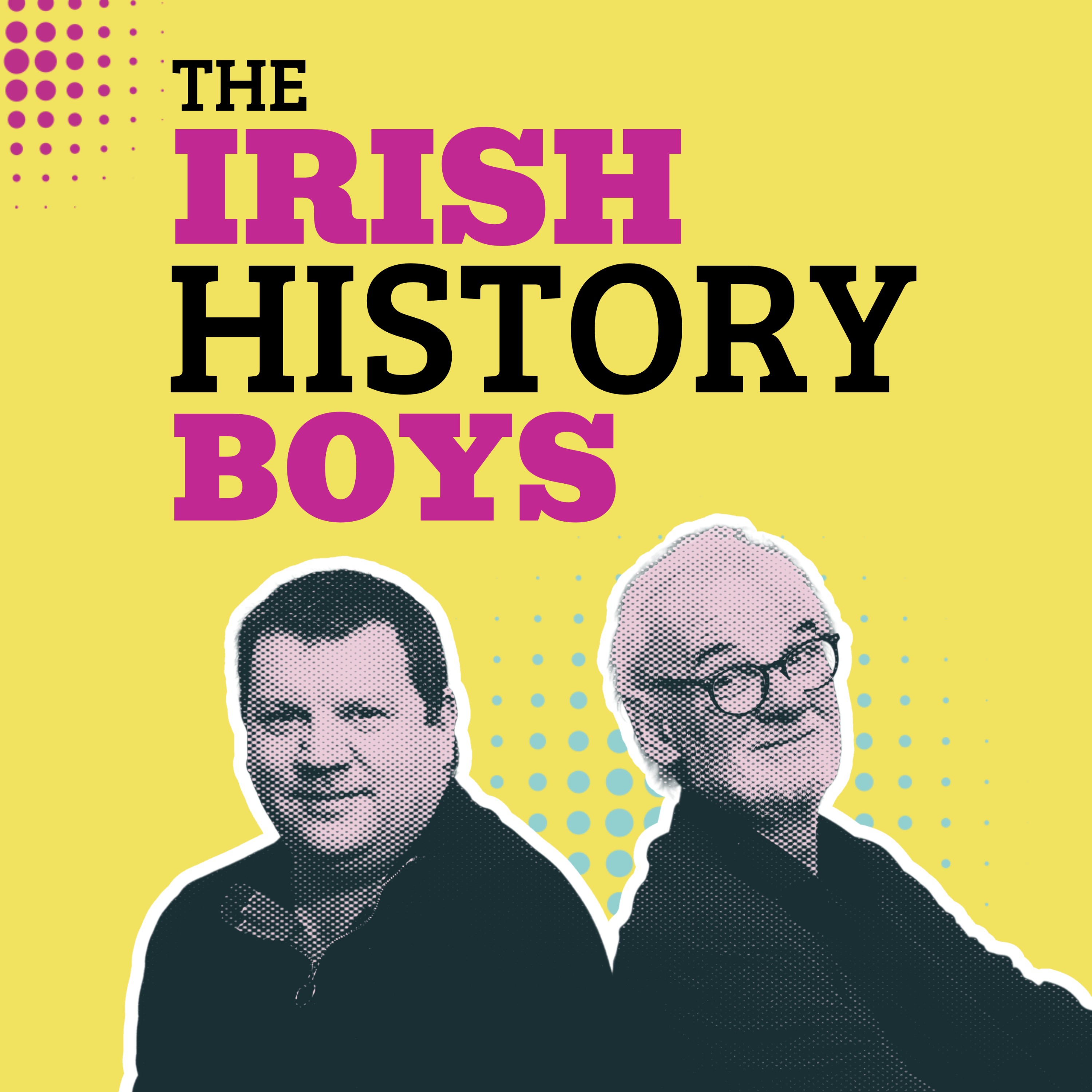
The Irish History Boys
by The Irish History Boys
Comedian Tim McGarry and Historian Cormac Moore select the stories from the archives of The Irish News that bring Irish history to life in enlightening and amusing ways. Hosted on Acast. See acast.com/privacy for more information.
-
60
Defending the Republic: The Siege and Execution of Rory O'Connor
In this episode of the Irish History Boys, we reflect on the momentous and tragic final year of Rory O’Connor, culminating in the "completely illegal" reprisal executions of O’Connor, Liam Mellows, Joe McKelvey, and Dick Barrett in December 1922. We examine these state-sanctioned killings—described as an act of "literal revenge" for the assassination of TD Seán Hales—as a pivotal and controversial moment in the birth of the Irish state.We examine O'Connor's role within the context of the Irish Civil War's escalating bitterness, tracing his journey from the IRA's head of engineering to the "most public face" of anti-Treaty opposition. We discuss the "split within a split" that saw former comrades turn their guns on one another and the ways in which the 1916 tradition of martyrdom influenced the fateful decision to occupy the Four Courts.Additionally, we explore the Irish Free State's struggle to legitimise its authority through the controversial "Army Special Powers Resolution". We discuss the tactical decision to avoid formal legislation—which would have required the British monarch's signature—in favour of a resolution that empowered military courts to hand down death sentences to Republican prisoners. This highlights the stark tension between the burgeoning state’s democratic aspirations and its descent into what some critics viewed as a "military dictatorship".To conclude, we tackle the deeply personal tragedy of the conflict, specifically the haunting story of Kevin O’Higgins sanctioning the execution of his own best man, Rory O’Connor. We reflect on the "moral" cost of the 81 state executions, debating whether the Free State's pursuit of stability through "vengeance" allowed it to win the war while ultimately "losing the peace". Hosted on Acast. See acast.com/privacy for more information.
-
59
The Secret Bomb-Maker of Ireland: How Rory O'Connor Fueled the Revolution
In this episode of the Irish History Boys, we reflect on the life and radicalization of Republican figure Rory O’Connor, drawing on Jerry Shannon’s new biography, To Defend the Republic. We examine O’Connor’s transition from a "wandering spirit" working on Canadian railroads to a central, albeit enigmatic, figure in the Irish Volunteers and the IRB.We explore O’Connor’s surprising personal background, born into a "castle Catholic" family with a father who supported the British regime. We discuss his elite education and early radicalization at UCD, where he first met key figures like Joseph Plunkett. We also delve into his clandestine work at the Larkfield Chemical Company, ostensibly making aspirin but actually "creating bombs for the volunteers" ahead of the 1916 Rising.Additionally, we trace O’Connor’s "Damascus conversion" from wanting to join the British army in 1915 to becoming a tireless worker in the shadows of the revolutionary movement. We highlight his role as the Director of Engineering for the IRA and his activities as OC of the IRA in Britain, including spectacular jailbreaks and operations in Liverpool.To conclude, we explore the deep, complex friendship between O’Connor and Kevin O’Higgins, his former colleague in the Department of Local Government. We reflect on the irony of O'Connor serving as O’Higgins's best man in 1921, set against the backdrop of the looming Civil War and the political fractures that would eventually lead to their tragic estrangement and O'Connor's execution Hosted on Acast. See acast.com/privacy for more information.
-
58
Ireland’s 100-Year Secret: What the 1926 Census Finally Reveals
In this episode of the Irish History Boys, we anticipate the historic release of the 1926 Census, a "huge treasure trove of information" becoming available for the first time under the hundred-year rule. We reflect on its immense value for social historians and those tracing family trees, offering a unique "color to that story" of Irish life following a decade of unprecedented upheaval between 1911 and 1926.We examine the 1926 Census as the first taken in a post-partition Ireland and discuss the "awful shame" of the lost Northern records, which were destroyed in the Second World War during the Belfast Blitz. We also explore the dramatic decline of the Protestant population in the South during this period, debating whether this shift was due to "ethnic cleansing," the natural withdrawal of British forces, or the general "upheaval of the War of Independence and the Civil War".Additionally, we delve into the complex legacy of Seán Lemass, the "pragmatic" Taoiseach often considered the architect of modern Ireland. We trace his extraordinary path from a teenage rebel in the GPO to the founding of Fianna Fáil and his role in dragging the state out of isolationism toward EEC membership. This journey is framed by the profound personal tragedies that shaped him, including the accidental shooting of one brother and the brutal 1923 abduction and murder of another, Noel, by a Free State "murder gang".To conclude, we reflect on the 1976 commemorations of the Easter Rising at Milltown Cemetery, examining the "long war" rhetoric of the Provisional IRA and the "hollow" promises of being on the "threshold of victory". Finally, we attempt to settle the lighthearted "Snowballgate" debate: was it Seán Lemass or his successor, Jack Lynch, who was targeted by Ian Paisley’s snowballs during the high-stakes cross-border meetings of the 1960s? Hosted on Acast. See acast.com/privacy for more information.
-
57
The Irish Woman Who Shot Mussolini
In this episode of the Irish History Boys, we delve into the heated 1976 debate surrounding integrated education in Northern Ireland. We examine a scathing letter from a "very concerned" parent to the Irish News, which denounced the burgeoning movement for integrated schools as a threat to Catholic culture and traditions. This correspondence highlights the deep-seated fears and sectarian tensions of the era, where even the classroom became a battlefield for religious identity, marked by allegations of intolerance and the perceived surrender of "treasured customs".We also travel back to April 1926 to recount the extraordinary story of Violet Gibson, the Dublin-born daughter of a prominent unionist peer, who attempted to assassinate Benito Mussolini in Rome. We discuss how Mussolini exploited this "lone wolf" attack to consolidate his fascist grip on power and project an image of "coolness" and bravery. The discussion explores Gibson’s complex background—from her conversion to Catholicism to her history of mental health struggles—and her eventual fate of being declared insane and confined to an English asylum for the remainder of her life.To conclude, we explore the fractures within the Irish trade union movement following partition, specifically the split between the Irish National Teachers' Organisation (INTO) and the Ulster Teachers’ Union (UTU). We analyse how the constitutional question often trumped "bread and butter" labour issues, leading to a "chasm" between workers of different backgrounds. Finally, we address the removal of Proportional Representation in Northern Ireland, a move that marginalized the labour movement and further cemented the "siege mentality" of the partitionist state. Hosted on Acast. See acast.com/privacy for more information.
-
56
The Mandela Connection: How a Global Icon Almost Changed Northern Ireland Forever
In this episode of the Irish History Boys, we reflect on the 1976 assassination of Sinn Féin Vice President Máire Drumm, who was shot dead by loyalist gunmen while recovering from an eye operation in Belfast’s Mater Hospital.We examine the chilling allegations that Secretary of State Merlin Rees "set her up" as a target through a series of unprecedented personal public attacks just months before her murder.We place this high-profile killing within the context of the "collective madness" of 1976—historically the second bloodiest year of the Troubles—characterised by devastating 400-pound landmine attacks in South Armagh and a relentless cycle of sectarian violence that seemed to offer no escape.We also contrast this grim reality with the global hope surrounding Nelson Mandela, discussing the 1976 reports of his potential release from Robin Island and the eventual inspirational "rainbow nation" template he offered for reconciliation.Additionally, we explore the deep-seated grievances of nationalists "west of the Bann" in 1926, who felt systematically ignored and "neglected" by a Belfast-centric Unionist government in matters of trade, infrastructure, and education.We discuss the pivotal political dilemma of the era: whether to maintain a policy of abstentionism or enter the Northern Parliament to fight for a "fair crack" for regions like Derry and Newry.To conclude, we address the "heartless order" of 1926, which saw political exiles barred from returning home for family funerals under the threat of arrest, a striking historical precursor to the modern "On The Run" (OTR) letters controversy.Finally, we examine the Irish Free State's early experiments with economic protectionism, specifically the struggle to cultivate an indigenous tobacco industry through heavy tariffs and the blending of "fairly good" homegrown leaves with American imports. Hosted on Acast. See acast.com/privacy for more information.
-
55
Why Ireland Banned These Workers: The 1926 Donegal Scandal Revealed
In this episode of the Irish History Boys, we delve into the 1926 Donegal County Council controversy, where a resolution was passed requiring all council officials to reside within the county or face dismissal. We analyze this move—described as a "further slight" to Northern Nationalists—against the backdrop of the Boundary Commission debacle, which left many feeling abandoned by the Free State government and subjected to a "partitionist" policy. We also explore the complex naming debate that has plagued the island for a century, examining why terms like "Ireland," "Ulster," and "The Six Counties" remain such a significant "bugbear" for different political identities. This leads to a fascinating look at the technicality of December 1922, questioning whether there was a "brief moment" of a legally United Ireland during the month Northern Ireland was given to opt out of the Free State. Shifting to the 1970s, we reflect on the stunning political conversion of Bill Craig. Once a hardline leader of the Vanguard movement who "flirted with paramilitarism," Craig’s 1976 meeting with Dublin government leaders signaled a shocking shift toward power-sharing that was "formerly unthinkable" and ultimately led to his political obscurity. To conclude, we address the "economic blizzard" of 1976, a year when Northern Ireland hit a grim milestone of 50,000 unemployed workers amidst the IRA's deliberate policy to make the state "economically unviable". We also examine the border security tensions of the era, specifically the Irish government's refusal to allow joint patrols with the British Army, highlighting the "politically unacceptable" nature of cross-border military cooperation. Hosted on Acast. See acast.com/privacy for more information.
-
54
The Real-Life "Psycho": Why 3 Sisters Kept a Skeleton in Their Kitchen in Ireland
In this episode of the Irish History Boys, we delve into the shock resignation of British Prime Minister Harold Wilson on St. Patrick’s Day 1976, a move that left the political world reeling and remains shrouded in mystery. We explore the real reasons behind his departure—from economic exhaustion to private fears for his health—and examine the secret "Doomsday scenario" files that contemplated Britain pulling out of the North to create an independent Ulster. We analyze the volatile relationship between Wilson and Northern Ireland, reflecting on his infamous 1974 televised address where he branded unionists as "spongers" off the British state. We also discuss the "dirty tricks" and rumored coup attempts involving Lord Mountbatten, before looking at how his successor, Jim Callaghan, ushered in a new era of "criminalisation" and "Ulsterisation" that would fundamentally alter the course of the Troubles. Additionally, we revisit the macabre international sensation of 1926: the story of the three Nixon sisters who kept their mother’s skeleton on a kitchen couch for four years, claiming to be guided by the "singing of birds". We use this "real-life Psycho" mystery to frame the social and "moral panic" of the 1920s, examining the rigid Sabbatarian debates in Portadown and Coleraine where even the Sunday trading of newspapers was seen as a threat to the Lord’s Day. We also tackle the contentious intersection of sport and identity, using the 1926 Ireland vs. Wales rugby match as a lens. We debate the "intrinsically linked" nature of politics and athletics, discussing the controversies surrounding national anthems and flags, the "foreign games ban," and how sports like rugby and football became pillars of differing national expressions. To conclude, we reflect on Liam Cosgrave’s 1976 address to the US Congress, a pivotal moment where he warned that American "pennies, dimes, or dollars" were directly funding the IRA’s campaign of violence. We examine how this speech reinforced the "principle of consent", a policy that insisted the North’s constitutional position would only change through the will of its majority, a concept that would not be fully accepted by all sides until the 1998 Good Friday Agreement. Hosted on Acast. See acast.com/privacy for more information.
-
53
The 5-Vote Defeat That Changed Ireland
In this episode of the Irish History Boys, we reflect on the harrowing 1976 UVF attack on the Golden Pheasant restaurant—a "mass murder attempt" that claimed the lives of brothers Tony and Miles O’Reilly. We examine these senseless killings within the context of 1976’s grim violence, a year that saw the second-highest death toll of the Troubles and was defined by a "political vacuum" following the collapse of the Sunningdale Agreement. We also discuss Seamus Mallon’s famously inaccurate 1976 forecast of power-sharing within two years—a vision that would ultimately take 22 years to become "Sunningdale for slow learners".Additionally, we explore Éamon de Valera’s 1926 struggle to "unshackle" his movement from the "politically limp" policy of abstentionism. We discuss his narrow five-vote defeat within Sinn Féin over the oath of allegiance—a pivotal moment that led to the founding of Fianna Fáil and a new era of political pragmatism that sought to attract a broader base of supporters. To conclude, we tackle the "moral panic" of the 1920s, examining the social crusade against "American-style" beauty shows, which an Irish News editorial condemned as symbols of "decadence" and "materialism" that lacked spiritual value. We also address the early accusations of BBC bias in 1926 and 1976, highlighting the "pitiable" lack of Irish cultural programming and the contentious refusal to use the name "Derry," which listeners felt ignored the identity of the nationalist community. Hosted on Acast. See acast.com/privacy for more information.
-
52
The Irish "Football Team" That Was Actually an IRA Hit Squad
In this episode of the Irish History Boys, we delve into the seismic political shift of 1926—the split within Sinn Féin that birthed the Fianna Fáil party. We examine Éamon de Valera’s pragmatic yet controversial move to abandon abstentionism, provided the oath of allegiance was removed, and the pivotal role of his protege Seán Lemass in driving this new movement. We also draw parallels between this 1926 rupture and the Republican movement's similar debate over entering the Dáil sixty years later in 1986.Additionally, we revisit the 1922 arrest of the Monaghan football team in Tyrone, an event still sparking heated debate in 1926 over whether it was a "wild act" or a legitimate revolutionary mission. We trace the dark consequences of this incident, including retaliatory kidnappings and the escalation of sectarian violence in Belfast, specifically reflecting on the forgotten horror of the Weaver Street massacre, where a grenade attack claimed the lives of children playing in the street.To conclude, we transition to the cultural tensions of 1976, examining the "mini-referendum" in Craigavon regarding the opening of recreational facilities on Sundays—a direct challenge to the rigid Sabbatarianism of the time. Finally, we reflect on the 1976 Trócaire Lenten campaign, the iconic "Trócaire box," and the enduring, if complicated, legacy of Bishop Eamonn Casey in Irish charitable life. Hosted on Acast. See acast.com/privacy for more information.
-
51
Northern Ireland in 1976: The Collapse of the Convention and the Move to Direct Rule
In this episode of the Irish History Boys, Tim McGarry and Dr. Cormac Moore reflect on the "obituary" of the 1975–1976 Constitutional Convention, a failed British attempt to find a political solution that instead left Northern Ireland in a "complete political vacuum". We examine how the refusal of unionists to share power led to a period of "violence and stagnation," with 1976 becoming one of the bloodiest years of the Troubles. We also dive into the financial "insolvency" of Northern Ireland, tracing it back to 1926 when the statelet first required a "free gift" from the British Treasury to avoid bankruptcy and pay unemployment benefits. We discuss the myth of the North as a self-sustaining industrial powerhouse and reveal how it has evolved into the highest per-head drain on UK resources, now costing an estimated £14 billion a year. Additionally, we explore the social and legislative landscape of the mid-70s, from the introduction of sex discrimination laws to the "watered down" Fair Employment Act of 1975. We also discuss the historical "security lapse" of 1981, where the IRA came remarkably close to assassinating the Queen during a visit to the Shetland Islands. To conclude, we tackle the modern-day debate over a United Ireland, questioning whether the British truly want to leave and if the Republic of Ireland is prepared to inherit a "partition statelet" that has never truly paid its own way. Hosted on Acast. See acast.com/privacy for more information.
-
50
Judicial Robes and Jazz Panics
In this episode of the Irish History Boys, we reflect on the barbaric 1976 murders of Mary Sloan, May Sloan, and Doris McGrath—a tragedy described at the time as a "new low in barbarity". We examine these senseless killings within the context of 1976's grim violence and the ways in which such horrific events were often "hazed over" by the relentless cycle of conflict during the Troubles.Additionally, we explore the Irish Free State's struggle to "unshackle" itself from the British judicial yoke in 1926. We discuss the debate over judges’ wigs and gowns as a symbol of burgeoning statehood and the tension between adopting the inherited British system versus the more egalitarian, indigenous Dáil court system.To conclude, we tackle the "moral panic" of the 1920s, examining how both Catholic and Protestant leaders waged a social crusade against the perceived evils of jazz, modern dancing, and "evil literature". We also address 1926 proposals for border tolls on heavy lorries, highlighting how economic disputes further cemented the reality of partition. Hosted on Acast. See acast.com/privacy for more information.
-
49
Hunger Strikes and Splenetic Denunciations
In this episode of the Irish History Boys, we commemorate the 50th anniversary of Frank Stagg’s 1976 hunger strike—a 60-day ordeal that ended in a "cloud of controversy" and left his family deeply divided. We examine the harrowing physiological toll of the strike and the Irish government's extraordinary tactical decision to intercept Stagg's remains via helicopter to prevent the IRA from achieving a "propaganda coup".Additionally, we travel back 100 years to 1926 to analyze the "splenetic denunciation" of the Irish Free State by the Unionist press. We discuss how the Irish News exposed this as a "political trick" used by leaders to distract their own public from domestic grievances by focusing on the "business worries" of their neighbours.To conclude, we address the international stage of the mid-1920s, specifically Benito Mussolini’s aggressive "Italianization" of South Tyrol. We examine his defiant stance against the "toothless" League of Nations, a bold assertion of power that signaled the darkening political climate of early 20th-century Europe. Hosted on Acast. See acast.com/privacy for more information.
-
48
Asserting Irish Independence with Coins and Customs
In this episode of the Irish History Boys, we examine the poignant death and funeral of Anthony Reavy in 1976—the third brother in one family to perish following a loyalist shooting. We place this tragedy within the broader context of the era's relentless sectarian violence and the prevailing "political vacuum" of the time.Additionally, we highlight the growth of indigenous Irish commercial entities, such as IPB Insurance, as symbols of burgeoning statehood and the drive to move away from British-run systems.To conclude, we address a listener's strategic question regarding the partition of Ireland: specifically, whether the unionists' decision to secure six counties instead of four ultimately created the demographic conditions for a future reunification. Hosted on Acast. See acast.com/privacy for more information.
-
47
Pacts and Prisoners: The 1926 Release and the death of Frank Stagg
his week we explore the fallout of the tripartite agreement of 1926, which led to the release of 33 political prisoners in Northern Ireland—though three "Derry prisoners" remained behind bars due to their roles in a fatal rescue attempt. We examine how political status served as a recurring bargaining chip, tracing the history of Republican resistance from the 1918 "German Plot" to the daring escapes of the Civil War.Finally, we discuss the harrowing death of hunger striker Frank Stagg in 1976 and the British government's "callous" refusal to grant him a transfer to a Northern Irish prison. We also look at the Irish government's extraordinary measures to prevent a Republican funeral, including the use of helicopters and concrete to secure his final resting place against his family's wishes Hosted on Acast. See acast.com/privacy for more information.
-
46
Bans and Bandits: The GAA’s "Foreign" Struggle and the Stigma of "Bandit Country"
This week we explore the pivotal year of 1926 for the Gaelic Athletic Association, as delegates from Louth and Tipperary pushed for the removal of the compulsory ban on "foreign games" such as soccer, rugby, cricket, and hockey. We look at the systemic issues regarding the enforcement of these rules, including the 1938 removal of Ireland's first president, Douglas Hyde, as GAA patron and the deployment of vigilante committees to ensure members did not attend rival sporting events. We also discuss why Northern members were the strongest advocates for maintaining these bans, as they felt abandoned by the Free State and faced continued obstruction and British rule within the six counties. Finally, we chat about the controversial "bandit country" label applied to South Armagh in the 1970s, while examining a local citizen’s poignant letter protesting the "blackening" of their peace-loving community’s name. Hosted on Acast. See acast.com/privacy for more information.
-
45
1926 & 1976: Red Routes and the Darkest Days
Tim McGarry and Dr Cormac look back at the significant news stories of 1926 and 1976. Regarding 1926, they explore the complexities of the cross-channel postal service and the unionist desire for a "red route" to bypass the Irish Free State, highlighting Northern Ireland's unique status as a "polity". They also examine the legacy of the Belfast boycott—a counterproductive campaign that may have accelerated the start of the Civil War—and a prophetic letter to the Irish News bemoaning the "lost art of conversation" in the face of new technologies like radio and cinema.Moving to 1976, they reflect on a "bleak and miserable" period defined by "pure evil" and a "total political vacuum" following the collapse of the Sunningdale agreement. They delve into the horrific sectarian atrocities in South Armagh, specifically the Reevy and O'Dowd family murders and the retaliatory Kingsmill massacre. The hosts discuss the long-term impact on survivors like Alan Black, the lack of formal inquests, and the unsettling questions regarding potential British collusion and the mysterious role of Robert Nairac. Hosted on Acast. See acast.com/privacy for more information.
-
44
1925 & 1975: A Unionist Triumph and the Miserable Year
Tim McGarry and Dr Cormac look back at the significant news stories of 1925 and 1975. Regarding 1925, they delve into the Boundary Commission, which established the permanent border of Northern Ireland and was seen as a "triumph for unionism" under James Craig, alongside social issues like the emancipation of women smoking in public and a largely "forgotten" famine in the West of Ireland. Moving to 1975, they reflect on a "miserable year" defined by a political vacuum, horrific sectarian violence such as the Miami Showband murders, and the unexpected political conversion of hardliner William Craig to the idea of power-sharing. Hosted on Acast. See acast.com/privacy for more information.
-
43
At the Crossroads: The London Agreement and the "Factory of Grievances"
This week we explore the pivotal moment for Northern Catholics following the 1925 London Agreement, which firmly established the six-county border and left many feeling "stuck" and abandoned by the Free State. We look at the systemic issues that followed, including the "factory of grievances" born from gerrymandering, the removal of Proportional Representation, and the stark lack of Catholic representation in the judiciary and civil service. We also chat about the staggering unemployment figures of 1975 in border areas like Strabane and Newry, while answering a listener’s question regarding the Troubles' impact on Scotland Hosted on Acast. See acast.com/privacy for more information.
-
42
The Specials' Legacy: The 1925 Disbandment and the Survival of the B Specials
This week we explore the controversial legacy of the Ulster Special Constabulary, tracing its 1920 origins as a multi-tiered force. We look at the the group's involvement in sectarian violence and the subsequent disbandment of the A and C Specials following the 1925 London Agreement, despite vocal protests from members over their severance terms. We also chat about the B Specials long-term survival until 1970, while contrasting the era’s news with the political despair felt in Northern Ireland fifty years later. Hosted on Acast. See acast.com/privacy for more information.
-
41
Ireland's Customs Barriers & Chaos: The 11-Plus Exam Scandal and 70 Years of Irish Partition
This week we dive into President WT Cosgrave’s reliance on neighbourly feeling rather than written guarantees for the safety of Northern Catholics and the establishment of customs barriers in 1923 and their controversial persistence for over 70 years. Illicit pig smuggling in the mid-1970s makes an appearance and Tim relives the 11-plus exam. Hosted on Acast. See acast.com/privacy for more information.
-
40
The Tripartite Agreement and the Final Irish Border Settlement
Following the leak of the Boundary Commission's report, the high-stakes Tripartite Agreement of 1925 established that the border would remain unchanged, ensuring Northern Ireland conceded no territory. In exchange for accepting the existing boundary, the Irish Free State was relieved of its crippling obligation to pay a share of the UK's imperial debt, estimated at roughly £150 million. However, W.T. Cosgrave’s government faced severe backlash and a major political crisis for prioritising this financial reprieve over the interests of Northern nationalists, who were effectively abandoned by the deal. Hosted on Acast. See acast.com/privacy for more information.
-
39
Selling the Border for Financial Freedom
This episode centers on the crisis created by the leaked award of the Irish Boundary Commission in November 1925, which was abysmal for nationalists as it suggested the Free State would lose parts of Donegal and Monaghan, leading to the resignation of Free State Commissioner Eoin MacNeill and creating the biggest crisis Cosgrave’s government faced since the Civil War. President Cosgrave rushed to London to attend conferences with British Premier Stanley Baldwin and Northern Premier Sir James Craig, determined to bury the report because the findings were politically unacceptable, despite being in a weak negotiating position. Free State negotiators, particularly Kevin O'Higgins, leveraged the threat that their government’s collapse would result in a Republican regime to shift the negotiation focus towards shelving the boundary issue (Article 12) in exchange for waiving the Free State’s substantial financial contribution to imperial debt under Article 5. Hosted on Acast. See acast.com/privacy for more information.
-
38
Eoin MacNeill's SHOCK Resignation and the Boundary Commission Collapse
This episode concentrates on the 1925 Boundary Commission crisis and its fallout for the Free State, triggered by the dramatic resignation of Free State representative Eoin MacNeill around November 22nd. We also discuss the concurrent debate among anti-Treaty Republicans, including Éamon De Valera, about whether to abandon their abstentionist policy and enter the Free State parliament amidst the political instability. Finally, we address a listener query on the distinct development of healthcare systems, particularly the role of religious hospitals, in Northern Ireland and the Free State following Partition. Hosted on Acast. See acast.com/privacy for more information.
-
37
Ireland's Forgotten Sacrifice & How the First World War Changed Everything
The episode explores the immense influence of World War I on Irish history from setting the stage for the Easter Rising and War of Independence to motivating over 200,000 Irish volunteers (Catholic and Protestant) to enlist, often for economic reasons or in anticipation of Home Rule. Tim & Cormac discuss the 1918 anti-conscription campaign, which powerfully united nationalist Ireland against British rule. They also address the difficulties faced by returning veterans and the challenges confronting Protestant communities in the Free State post-partition, including antagonism and violence. Hosted on Acast. See acast.com/privacy for more information.
-
36
The Boundary Commission's Collapse: The 1925 Morning Post Leak
This episode of the Irish History Boys is dedicated to dissecting the political fallout generated by the explosive November 7th, 1925, Morning Post leak—the event described by sources as the climax of the entire Irish Boundary Commission saga.The Morning Post's forecast, initially met with skepticism, proved almost on the money, revealing that the Commission was planning only rectification on lines convenient to both sides and not at any large transfers of territory. This outcome, involving mere tiny little tinkerings with the border, was instantly recognised as a complete unionist victory.Join us as we examine how a single newspaper leak derailed the Boundary Commission and solidified partition. Hosted on Acast. See acast.com/privacy for more information.
-
35
Irish Independence, League of Nations, & Spanish Dictator Franco
This week, we're uncovering historical drama that still echoes today. We dig into the League of Nations, the toothless tiger whose failures against big bullies like Mussolini's Italy made people question its power—a debate still relevant when looking at the UN today. We also celebrate the Irish Free State's successful 1923 entry into the League as a massive power move to assert its independence, despite attempts by the British to shut it down. Finally, we jump ahead to 1975 to examine the end of the brutal regime of Spanish dictator Francisco Franco, who outlived all his wartime peers, before concluding with the shocking, tragic, and often forgotten 1925 story of Irish politician Darrell Figgis TD. Hosted on Acast. See acast.com/privacy for more information.
-
34
Asserting Irish Independence, Border Incursions and the Guildford Four
This week on The Irish History Boys, the discussion covers the controversy surrounding the Free State granting major contracts, such as the vital hydro-electric scheme on the Shannon, to foreign companies like the German firm Siemens, instead of British firms. Fast forward to 1975 and the border between North and South Ireland transformed into a security border during the Troubles, complete with physical barriers and watchtowers. Tim and Cormac detail the "grave concern at border trespass", focusing on an incident where five British soldiers crossed two miles into the Republic, allegedly raiding a farmhouse and commandeering a car while pursuing men on a tractor. Finally, the episode examines the notorious 1975 conviction of the Guildford Four—three men and a young girl—for the Guildford and Woolwich pub bombings. Judge John Johnson famously warned 21-year-old Paul Hill that "life meant life", a devastating sentence for a crime they did not commit, though their innocence was later supported when the Balcombe Street IRA gang confessed to the bombings. Hosted on Acast. See acast.com/privacy for more information.
-
33
Ireland's Partition and Saint Oliver Plunkett
This week, the Irish History Boys explore the messiness, the craziness and the unrealism that surrounded the Partition of Ireland. We discuss the intense speculation and rumors surrounding the Irish Boundary Commission's report in October 1925, highlighting the complications caused by duplicated services and the controversial interpretation of Article 12 that ultimately cemented the six-county border. The episode also shifts focus to the 1975 canonization of St. Oliver Plunkett, who became the first Irishman granted this honour in over 700 years. We recount the history of the Catholic Archbishop of Armagh, detailing his condemnation in a show trial and his gruesome execution in 1681 by being hanged, drawn, and quartered. Hosted on Acast. See acast.com/privacy for more information.
-
32
Siege and Injustice
This episode of the Irish History Boys explores two significant and controversial events that unfolded in 1975, beginning with the curious, unsanctioned kidnapping of Dr.Tiede Herrema, a Dutch industrialist, in County Limerick by rogue IRA members.The kidnappers, led by Eddie Gallagher, sought the release of Republican prisoners like Rose Dugdale, leading to a massive, internationally covered siege.Simultaneously, an infamous trial was concluding across the water regarding the 1974 Guildford and Woolwich pub bombings. Hosted on Acast. See acast.com/privacy for more information.
-
31
The Outlier Judge and the Legal Paramilitaries
This week explores events spanning a century, including the unexpected death 100 years ago of Sir Dennis Henry and the first Lord Chief Justice of Northern Ireland. Considered an outlier, he faced the gargantuan task of establishing the entire judiciary and legal system of the new jurisdiction following Partition. The episode also turns to 1975, a time of escalating violence during the Troubles, discussing the political vacuum created when William Craig, leader of the Vanguard Unionist Party, resigned as deputy leader of the United Ulster Unionist Council (UUUC). This collapse followed his proposal to allow the constitutional nationalist SDLP to share power. In the same crucial week, the Secretary of State, Merlyn Rees, decided to outlaw the UVF (Ulster Volunteer Force) in October 1975. And finally, an appearance by silent film superstar Charlie Chaplin, who successfully sued an imitator in Los Angeles to protect the rights to his character’s distinctive garb and mannerisms. Hosted on Acast. See acast.com/privacy for more information.
-
30
Clones Hope and the 1925 Border
This episode of The Irish History Boys goes back 100 years to examine the high stakes of the 1925 Boundary Commission, which was established following the 1921 Anglo-Irish Treaty to determine the final boundaries between the Irish Free State and Northern Ireland.We explore the intense hopes in border areas, such as Clones, that large sections of the North would be transferred south. While nationalists were completely in the dark and relied on wild kind of guesses based on rumours of customs posts moving, the unionist leaders appeared a lot more relaxed as they seemed to know what was going on.Additionally, the episode delves into the history of Proportional Representation (PR) in the North, noting its initial introduction as a safeguard for minority representation, but explaining how it was systematically abolished by unionists in local and parliamentary elections to maintain their political dominance and control.Finally, we discuss the mysterious fate of the lost 1926 Northern Ireland census, a significant historical collection that disappeared soon after the boundary settlement. Hosted on Acast. See acast.com/privacy for more information.
-
29
Belfast 1975: A Bishop's Plea Amidst Sectarian Terror
On this episode, we're getting into a really serious part of Irish history. We'll be looking at the sad history of sectarian violence on the streets of Belfast in 1975. Then, we'll fast forward to 1925 and the curious story of Ireland's upper chambers, north and south. Finally, we'll dive into the bizarre case of US heiress Patty Hearst, who was kidnapped in 1974 by the revolutionary Symbionese Liberation Army (SLA). Hosted on Acast. See acast.com/privacy for more information.
-
28
Calling the Shots, Evading Tariffs, Threatening Bombards
Cormac and Tim delve into the deep political divisions within unionism and the significant influence of loyalist paramilitary groups in 1975 Northern Ireland, where anti-power-sharing unionists held sway and paramilitaries publicly backed William Craig's call for talks, contributing to a decade of political stagnation. The discussion also delves into the economic landscape of the 1920s, revealing how Northern Ireland and British companies established factories in the Irish Free State to circumvent new customs duties, highlighting the early economic impacts of partition. Finally, they explore the "spiky spicy language" used by the British press in 1925 to influence the Irish Boundary Commission, even suggesting extreme measures like military action and the "naval bombard" of Belfast if the Northern government resisted its decisions, underscoring the intense political pressure of the era.View the full episode on YouTube Hosted on Acast. See acast.com/privacy for more information.
-
27
Customs History: Beyond Brexit Borders
Tim McGarry and Dr. Cormac Moore delve into the surprising history of trade barriers and customs forms between Northern Ireland and Great Britain – a century before Brexit and the Protocol! Discover how, in September 1925, Northern Ireland goods faced "vexatious restrictions and impediments," requiring detailed declarations and even chemical analysis for items like silk and artificial silk, a stark contrast to trade within other parts of the UK.Watch the full episode on YouTube. Hosted on Acast. See acast.com/privacy for more information.
-
26
Éamon de Valera
This episode of the Irish History Boys offers an in-depth and often critical look at Éamon de Valera, a "titan of Irish political life" and a "very divisive figure" who died 50 years ago on 29th August 1975. Tim and Cormac explore the pros and cons to some of his actions over his long and prolific career, moving beyond simplistic portrayals often seen in popular culture, such as the film Michael Collins. Hosted on Acast. See acast.com/privacy for more information.
-
25
Dancing, excommunication & the SDLP
Cormac and Tim consider the evils of dancing, yes dancing, as seen by the eyes of the top Catholic churchmen in Ireland a century ago. Drawing from the archives, they discover an editorial reporting on the terrible consequences being threatened on the faithful who allow themselves to be seduced by this new craze including full scale excommunication from the Catholic Church for those who failed to heed the warnings from the pulpit. "Dance halls, filthy newspapers and bad pictures threatened to ruin the Irish people. Things had come to such a pass that it had been said that in a few generations they would be as Pagan as the Ancient Romans,” were the reported words of one incandescent cleric. And fifty years ago the archives were reflecting on the formation of the new political force, the SDLP. Cormac and Tim consider the impact of the party then and now. Hosted on Acast. See acast.com/privacy for more information.
-
24
Daniel O’Connell: The Liberator Who Shook an Empire
In this episode of The Irish History Boys, Cormac and Tim turn their attention to one of Ireland’s greatest political giants, Daniel O’Connell. . The lads explore how he became a towering figure on the world stage through his fight against the Penal Laws, securing Catholic Emancipation, and using the power of mass non-violent protest to challenge the British Empire itself. The Lads also discuss the often-overlooked Council of Ireland, the short-lived body intended to unite north and south. They also turn their attention to another towering figure, Michael Collins, following a distasteful speech by a Northern MP in the same year of his death. leading to a discussion on Collins legacy. Hosted on Acast. See acast.com/privacy for more information.
-
23
The Anglo-Irish Treaty: Freedom or Betrayal?
In this episode of The Irish History Boys, Cormac and Tim dive into one of the most divisive moments in Irish history: the Anglo-Irish Treaty of 1921. Would they have signed it given the choice? The lads explore the impossible choices faced by Michael Collins and de Valera, and unpack the deal that split the country and sparked a brutal civil war. Later in the episode, the conversation turns global as they discuss the U.S. decision to drop nuclear bombs on Hiroshima and Nagasaki during World War II. What were the justifications, the consequences, and really moved on from the threat of nuclear warfare? Hosted on Acast. See acast.com/privacy for more information.
-
22
Miami Showband Massacre: A Tragedy That Shook Ireland
In this powerful episode of The Irish History Boys, Cormac and Tim revisit one of the most haunting tragedies of the Troubles, the Miami Showband Massacre.They unpack the horrifying night when band members were ambushed at a fake British Army checkpoint, and gunned down in cold blood. The guys explore how the attack unfolded, who was responsible, and how it highlighted the bleak reality of the Troubles. They also discuss who were the most influential Protestant and nationalist figures over the last century, sparking debate around Ian Paisley's legacy, asking why some are celebrated while others have been forgotten Hosted on Acast. See acast.com/privacy for more information.
-
21
IRA Prison Escapes EXPLAINED: How Did They Pull It Off?
In this gripping episode of The Irish History Boys, Cormac and Tim unravel the most daring IRA prison escapes of the Troubles, from the legendary 1983 Maze breakout to the 1975 incident where three priests entered a prison but four walked out. Next, the lads dive into a bizarre 1925 court case where a teacher was nearly sued for punishing a student, a claim the judge swiftly dismissed, sparking a lively conversation about the brutal discipline of old-school Ireland. Cormac and Tim share their own jaw-dropping memories of schooldays that were anything but gentle, and debate whether any of that harsh culture could ever return. Finally, they turn to 1925 once more, where nationalist MPs entered the Northern Ireland Parliament for the first time, only to be met with hostility, resistance, and an outcome that would shape nationalist politics for decades. Hosted on Acast. See acast.com/privacy for more information.
-
20
Partition's Other Victims: Protestants in the South
In this episode of The Irish History Boys, Cormac and Tim uncover a lesser-known chapter of Ireland’s partition: the forced displacement and discrimination faced by Protestants and Loyalists in the South. While history often focuses on the oppression of Catholics in the North, this episode asks a provocative question — were Southern Protestants also victims of violence, boycotts, and cultural erasure? Plus they also dig into the cultural shifts that followed independence and how both sides of the island shaped — and silenced — different versions of Irishness.🎟️Live show tickets - https://shorturl.at/AbQKn📧Mailing list - https://shorturl.at/BX6fu Hosted on Acast. See acast.com/privacy for more information.
-
19
The 12th of July & the Orange Order: History, Controversy & Culture Wars
In this episode of The Irish History Boys, Cormac and Tim explore the deep history and controversy behind the 12th of July, Orange Order parades, and the ongoing battle over flags and identity in Northern Ireland. From sectarian tensions to cultural traditions, they unpack how these issues still shape Irish life today. They also answer your questions on two major historical moments: the influence of Charles Stewart Parnell and the significance of the often-overlooked 1780 Rebellion.🎟️Live show tickets - https://shorturl.at/AbQKn📧Mailing list - https://shorturl.at/BX6fu Hosted on Acast. See acast.com/privacy for more information.
-
18
The Forgotten Famine and Faith in Football
In this revealing episode of The Irish History Boys, Tim and Cormac revisit the ever-controversial Boundary Commission, explore the fall of the Sunday football ban in 1970s Northern Ireland, and uncover the forgotten famine that struck the West of Ireland in 1925.🎟️Live show tickets - https://shorturl.at/AbQKn📧Mailing list - https://shorturl.at/BX6fu Hosted on Acast. See acast.com/privacy for more information.
-
17
Bloody Sunday & The Wrongfully Convicted Birmingham 6
In this gripping episode of The Irish History Boys, Cormac and Tim take a hard look at two of the most defining events in Ireland’s recent past: the wrongful conviction of the Birmingham Six and the deadly injustice of Bloody Sunday. They explore how the British state failed, how public trust was broken, and how the pursuit of truth continues decades later. They also discuss Derry City FC’s ambition to re-join the football League in the 70s, and the long wait that ensues. Plus a huge announcement - The Boys will be taking the podcast outside of the studio for the first ever live event!🎟️Live show tickets - https://shorturl.at/AbQKn📧Mailing list - https://shorturl.at/BX6fu Hosted on Acast. See acast.com/privacy for more information.
-
16
Power, Promises & Patriotism: 1975 Convention, George Best’s Court Case & Ireland 100 years later
In this episode Cormac and Tim discuss Northern Ireland's failed constitutional convention in 1975, producing an anti-power sharing, unionist majority. They also explore the time football legend George Best was taken to court for breaking a promise to marry (yes, really), and reflect on the highs and headlines of Ireland’s 2016 centenary year.🎟️Live show tickets - https://shorturl.at/AbQKn📧Mailing list - https://shorturl.at/BX6fu Hosted on Acast. See acast.com/privacy for more information.
-
15
Education Divided: Why Northern Ireland Never Achieved Integration
In this episode, the boys dive into the complex and often painful history of integration in Northern Ireland, exploring the 1925 Education Act and its failed impact. They also discuss the assassination of JFK and how without this pivotal moment in history, Cormac would not be with us today.🎟️Live show tickets - https://shorturl.at/AbQKn📧Mailing list - https://shorturl.at/BX6fu Hosted on Acast. See acast.com/privacy for more information.
-
14
Ireland's WW2 Neutrality: Isolation or Strategy?
In this episode, the boy are exploring Ireland's complex history of neutrality. The WWII decision is tackled in response to a audience question, highlighting its "pro-ally" nature despite limited military capacity and post-war criticism from Churchill. Hear about De Valera's controversial condolences on the death of Hitler and a prophetic 1925 call for Ireland to maintain neutrality against aerial war. This episode also covers the UK's 1975 EEC referendum, Fermanagh's changing politics, and the modern New Ireland debate, questioning neutrality's future. Hosted on Acast. See acast.com/privacy for more information.
-
13
The Ulster Covenant: Ireland's Forgotten Turning Point
In this episode, Cormac and Tim dive into the turbulent years before Irish independence — asking whether Home Rule could have prevented decades of violence. They explore the origins of the Home Rule movement, the rise of Edward Carson and the Ulster Covenant, and why unionists in Donegal, Cavan, and Monaghan ultimately felt abandoned. The episode also touches on the historic Queen of Denmark's 1975 visit to the Soviet Union, the first royal visit since the Romanovs' execution. Listener questions are answered throughout. Hosted on Acast. See acast.com/privacy for more information.
-
12
GAA Politics, No Funding For The North, & Britain's First Brexit Debate
In this episode, Cormac and Tim trace the political roots of the GAA, focusing on how the association maintained its all-Ireland identity — even as the Ulster counties faced unique challenges under a hostile Northern government. The conversation moves to Northern Ireland’s economic reality in 1975, when a struggling British Labour government left the region underfunded and overlooked — an issue that still echoes today. Finally, they break down the UK’s 1975 EEC referendum, a moment of European uncertainty that feels strikingly familiar in the post-Brexit world. Hosted on Acast. See acast.com/privacy for more information.
-
11
Ireland's £160 Million Debt & Church Scandals
In this episode Cormac and Tim explore Article 5 of the Anglo-Irish Treaty regarding the Free State's debt to Britain. They elaborate on how waving this £150m liability was linked to abandoning Northern nationalists after the failed Boundary Commission. Plus, they discuss Irish Catholic bishops' views on sexuality and marriage in 1975. Hosted on Acast. See acast.com/privacy for more information.
We're indexing this podcast's transcripts for the first time — this can take a minute or two. We'll show results as soon as they're ready.
No matches for "" in this podcast's transcripts.
No topics indexed yet for this podcast.
Loading reviews...
ABOUT THIS SHOW
Comedian Tim McGarry and Historian Cormac Moore select the stories from the archives of The Irish News that bring Irish history to life in enlightening and amusing ways. Hosted on Acast. See acast.com/privacy for more information.
HOSTED BY
The Irish History Boys
Loading similar podcasts...
Frequently Asked Questions
How many episodes does The Irish History Boys have?
The Irish History Boys currently has 50 episodes available on PodParley. New episodes are automatically indexed when they're published to the podcast feed.
What is The Irish History Boys about?
Comedian Tim McGarry and Historian Cormac Moore select the stories from the archives of The Irish News that bring Irish history to life in enlightening and amusing ways. Hosted on Acast. See acast.com/privacy for more information.
How often does The Irish History Boys release new episodes?
The Irish History Boys has 50 episodes. Check the episode list to see recent publication dates and frequency.
Where can I listen to The Irish History Boys?
You can listen to The Irish History Boys on PodParley by clicking any episode. We provide an embedded audio player for direct listening, and you can also subscribe via your preferred podcast app using the RSS feed.
Who hosts The Irish History Boys?
The Irish History Boys is created and hosted by The Irish History Boys.
URL copied to clipboard!