
PODCAST · education
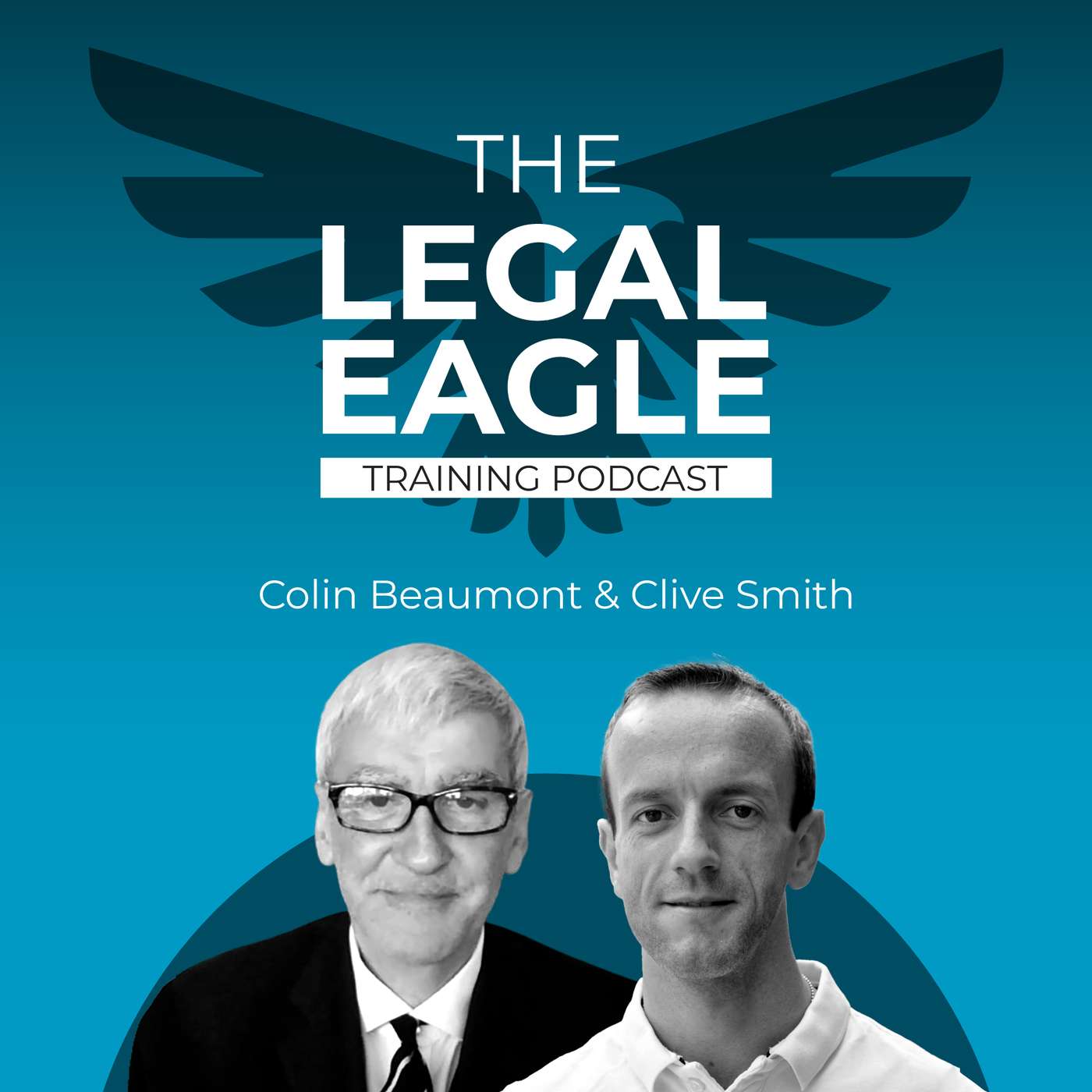
The Legal Eagle Training Podcast
by Colin Beaumont & Clive Smith
Welcome to The Legal Eagle Training Podcast, we are your hosts, Colin Beaumont & Clive Smith. We are both barristers, with over 60 years of experience in criminal law behind them. Colin qualified as a barrister in 1982 and worked as a legal advisor for HMCTS for 12 years before re-qualifying as a solicitor and working for a major criminal firm as a partner and consultant for 20 years. Clive was called to the Bar in 2003 and spent 11 years practising at all levels. Prior to leaving full-time practice, Clive had a busy Crown Court practice dealing with serious crime such as murder, rape and firearms offences. Since 2015, Colin and Clive have shared their extensive experience of criminal law, lecturing experienced practitioners on topics such as court practice and procedure, evidence generally including bad character and hearsay, sexual offences, sentencing and ancillary orders.
-
11
Adjournments: Getting Them, Resisting Them, and What Courts Expect
Adjournments sound procedural, but they can decide outcomes. In this episode, Clive and Colin unpack when adjournments should (and shouldn’t) be granted, how to prepare and argue them, and the traps that lead to exclusion of evidence, wasted costs, or even acquittals. They also cover special wrinkles: absent defendants, “part-heard” perils, motoring totters/exceptional hardship timing, Newton hearings, and youth/adult severance.Hosts Clive Smith and Colin Beaumont We start with the culture shift under the Criminal Procedure Rules and Practice Directions: courts are under pressure to hear trials on the day, to protect public confidence and manage backlogs. That doesn’t make adjournments “bad”—just more scrutinised. The duo lay out the Picton/CPD factors, show how to use (or resist) them, and stress giving the bench something useful today (disclosure, witness summonses, narrowing issues). We then explore when courts should adjourn of their own motion even if neither party applies, how late evidence can backfire (exclusion vs. adjourn), and how timing your applications can decide the case.Adjournments aren’t dirty words—they’re case-outcome tools. The winning approach: prep early, cite the right factors, give the court progress today, and be tactically honest about timing. Misjudge it and you risk exclusion, wasted costs, or worse; judge it well and you protect fairness without feeding delay.For more information or to book a place on a forthcoming course, please visit legal-eagle-training.com.Chapters00:00 Welcome & why adjournments decide cases04:50 The Picton/CPD test—what benches actually weigh10:45 Absent defendants & medical proof (s.11 MCA 1980)15:40 Make progress today: disclosure, summonses, narrowing issues20:10 First listing: don’t be bounced into contested notices26:00 Fault & wasted costs: when late service bites29:00 Court’s own motion to adjourn (even if nobody asks)33:40 Boardman mindset: timing your applications - R v Boardman [2015] EWCA Crim 17538:10 Part-heard pitfalls in the mags44:30 Motoring: timing for exceptional hardship47:40 Legal-issue-only trials (no adjournment needed)49:55 Newton hearings: when to adjourn (and when not)51:40 Adjourn vs. unconditional bail on requisition cases54:20 Youth/adult severance & listing realities57:20 Fees update & wrapKeywordsadjournment, Criminal Procedure Rules, Practice Directions, Picton factors, section 11 MCA 1980, absent defendant, late disclosure, exclusion of evidence, wasted costs, Boardman, part-heard trials, Newton hearing, exceptional hardship, totting, youth court, severance, case management
-
10
Children & Young People In The Criminal Justice System
This episode takes a deep dive into the youth justice system - exploring how children and young people are treated differently to adults by the criminal law, and why practitioners often find the youth court one of the most challenging, yet rewarding environments in which to work.Hosts Clive Smith and Colin Beaumont share their experiences from decades of youth court advocacy, highlighting the importance of understanding unique procedures, sentencing principles, and jurisdictional nuances. From trial allocation and the concept of "persistent young offenders”, to the role of parents and guardians in proceedings, this episode covers the full landscape of youth justice in practice.Colin explains why the youth court feels like “an entirely separate carriage” in criminal law — familiar principles applied in unfamiliar ways — while Clive reflects on how the informality of process belies the immense responsibility involved. Together they walk listeners through twelve core discussion points, blending legal updates, practical tips, and courtroom anecdotes that will resonate with both experienced and aspiring practitioners.The conversation begins with jurisdiction, when cases should remain in the youth court and when they must go to the Crown Court, using BH and Norwich Youth Court as a case study and drawing on Judicial College guidance on youth defendants. The pair then move through sentencing powers, then ZA (2023) case on courtroom setup, and the principles from Lang on assessing dangerousness. They unpack persistent young offenders under the Sentencing Council’s guidance, referral orders, and the latest statutory instrument enhancing youth court fees, before tackling more complex issues such as children/youth defendants charged alongside adults, age at first appearance, and remands into custody under LASPO 2012.The episode closes with reflections on training and the Youth Justice Charter, reminding listeners that youth advocacy demands both technical skill and humanity a blend of law, communication, and empathy rarely found elsewhere in practice.For more information or to book a place on a forthcoming course, please visit legal-eagle-training.com.Judicial College - Child Defendants in the Crown Court (Formerly Youth Defendants in the Crown Court) June 2025:https://www.judiciary.uk/wp-content/uploads/2025/06/Child-Defendants-in-the-Crown-Court-June-2025-Final-v2.pdfBH v Norwich Youth Court [2023] EWHC 25 Adminhttps://www.bailii.org/cgi-bin/format.cgi?doc=/ew/cases/EWHC/Admin/2023/25.html&query=(bh)+AND+(norwich)Sentencing Act 2022 - The Sentencing Codehttps://sentencingcouncil.org.uk/resources/sentencing-code/R v ZA [2023] EWCA Crim 596https://www.bailii.org/cgi-bin/format.cgi?doc=/ew/cases/EWCA/Crim/2023/596.html&query=(za)B v Leeds Crown Court [2016] EWHC 1230 (Admin)https://www.bailii.org/cgi-bin/format.cgi?doc=/ew/cases/EWHC/Admin/2016/1230.html&query=(b)+AND+(leeds)+AND+(crown)+AND+(court) Chapters 00:25 – Introduction and recent early release headlines 03:20 – Why the youth court feels different 05:17 – Where trials should take place: BH and Norwich Youth Court 08:50 – Homicide and driving offences: jurisdictional boundaries 12:20 – The Judicial College’s guidance on youth defendants 13:27 – Where sentencing should take place: ZA (2023) and committals 17:20 – Persistent offenders and detention thresholds 19:55 – Referral orders for first-time and repeat offenders 25:22 – Using the Crown Court Guidance and practice 25:57 – Enhanced youth court fees (SI 2024/1163) 28:31 – Why better advocacy and pay must go hand in hand 35:44 – Age at first appearance and its consequences 41:22 – Jointly charged defendants: severance and fairness 44:34 – Remand powers and LASPO 2012, sections 98–99 47:58 – Orders against parents or guardians 49:25 – The principle from B v Leeds Crown Court 51:12 – The case for youth court training and the Youth Justice Charter 52:24 – Closing reflections on advocacy, empathy, and reform
-
9
BAIL - A Dozen Issues to Digest
This month’s episode tackles one of the most technical yet practical areas of criminal law - bail. From time limits to informal hearings and changes in circumstances, Clive Smith and Colin Beaumont explore why bail occupies “an entirely separate train carriage” in criminal practice, and why understanding its quirks is essential for every advocate.The discussion begins by contrasting bail with other areas of law: less formal, full of exceptions, and uniquely centred on the liberty of the subject. Colin and Clive highlight the paradox between rigid procedural timeframes and the informality of evidence rules, both examples of how liberty can be limited and then granted back by exception.From there, the episode moves through practical advocacy — how to shine in bail applications, the importance of preparation, and why even losing well can build trust with clients and their families. They share anecdotes from youth court, Crown Court, and the magistrates’ court, bringing to life the strategy behind every application — when to speak, when to hold back, and how to balance persuasion with precision.The conversation dives deep into core legal principles and case law:Whether the court must accept the prosecution’s case at its highest;The importance of Regina v Lee and common law disclosure duties;Tactical approaches to “insufficient information” under paragraph 5;Key statutory references from the Bail Act 1976, PACE, and Criminal Justice and Public Order Act 1994; andThe exceptional circumstances test under section 25 CJPOA and its human rights evolution.They also explore the two bites of the cherry rule, bail appeals from the magistrates’ court to the Crown Court, and the process for varying pre-charge bail conditions under section 47.1E PACE — complete with cautionary tales of advocates caught off guard by procedural time limits.As the discussion unfolds, the hosts turn philosophical again: can the passage of time itself constitute a change in circumstances? Drawing on European case law such as Letellier v France and Clouth v Belgium, they argue that it can - particularly in today’s climate of backlogs and delays.Finally, the episode closes with a reminder that bail remains one of the most important protections in criminal justice - a daily safeguard of liberty, a test of advocacy, and a constant reminder of why precision and fairness matter in every courtroom.For more information or to book a place on a forthcoming course, please visit legal-eagle-training.com.
-
8
YOU DO NOT HAVE TO SAY ANYTHING: Adverse Inferences at Trial
“You do not have to say anything…” – the familiar police caution opens this episode, but Colin Beaumont and Clive Smith unpack what those words really mean in practice, and how adverse inferences can transform the course of a trial.From the erosion of the absolute right to silence since the Criminal Justice and Public Order Act 1994, through to pre-prepared statements, special warnings, and defence statements, this episode traces the piecemeal development of the erosion of the absolute right to silence and its impact on everyday practice.The discussion covers the police station interview, where decisions about silence, admissions, or prepared statements can later affect jury perceptions. It moves through the special warning provisions of sections 36 and 37 (objects, substances, marks and presence at the scene), and examines the strategic dilemmas around intimate samples, non-intimate samples, x-rays, and ultrasounds. Colin and Clive highlight key authorities including Knight, Harewood & Raymond, Green, and Hackett, showing how context and judicial discretion shape the drawing of inferences.They also explore the Crown Court stage under section 35: when a defendant chooses not to testify, how endorsements and practice directions safeguard fairness, and whether “double inferences” are permissible (Chenier). The conversation rounds off with analysis of adverse inferences from failure to serve defence statements and failure to notify witnesses under CPIA provisions, with practical insights for defence practitioners operating at the coalface.In short, this episode considers the balance between a suspect’s right to silence and the court’s ability to draw adverse inferences, illustrating how both statutory framework and case law have reshaped trial advocacy.For more information or to book a place on a forthcoming course, please visit:legal-eagle-training.com.Referenced Information:1. Samples at the Police Station Adverse inferences may be drawn at trial against a defendant who fails, without reasonable cause, to provide intimate samples – see Section 62 (10) of the Police and Criminal Evidence Act 1984 Adverse inferences may be drawn at trial against a defendant who fails, without reasonable cause, to undergo an x-ray or ultrasound scan – see Section 55A (9) of the Police and Criminal Evidence Act 1984 2. Criminal Justice and Public Order Act 1994 Section 34 – Failure to mention when questioned R v Harewood & Rehman [2021] EWCA Crim 1936 Section 35 – Failure to give evidence Physical or mental condition makes it undesirable… Double inferences? R v Chenia [2002] EWCA Crim 2345 Adverse inference or lies direction – R v Hackett [2011] EWCA Crim 380 Section 36 – Failure to account for objects, substances or marks Section 37 – Failure to account for presence Can the prosecution refuse to adduce the interview R (Gonzales) v Folkstone MC [2010] EWHC 3428 (Admin) 2. Witness Notices – Criminal Procedure and Investigations Act 1996 Section 6C – R (Tinnion) v Reading Crown Court [2009] EWHC 2930 (Admin) 3. Defence Statements – Section 6 Can you refuse to serve a defence statement? R v Rochford [2010] EWCA Crim 1928 Contempt of Court or Adverse Inference? Admissibility of the defence statement – R v Roehrig [2024] EWCA Crim 539
-
7
GOING DOWN - Credit For Guilty Pleas
With significant changes proposed to the way judges and magistrates calculate credit for guilty pleas, this episode examines current practice, Court of Appeal guidance and potential reforms, with the practical realities faced by those advising clients at the coal face. Retired solicitor (now barrister - non practising) Colin Beaumont and barrister Clive Smith explore the Sentencing Council’s Reduction in Sentence for a Guilty Plea guidelines, the key Court of Appeal judgments shaping current practice, and the impact of the Leveson Review’s recommendations. They tackle the nuances of “indicating willingness” to plead guilty, the effect of minimum sentence provisions, and the interplay between starting points and credit in both adult and youth cases. The conversation also delves into strategic considerations: when a timely indication can mean the difference between custody and a community order, why the cases of Plaku, Hodgin, and Caley are essential reading for advocates, and how police station advice can influence sentencing outcomes months later. The hosts address the “perverse incentive” created by fee structures, discuss how credit can still be argued for late pleas that save significant court time, and highlight judicial flexibility in today’s backlogged system. Closing with a look at the broader policy aims — encouraging genuine early pleas while safeguarding against wrongful admissions — this episode is an indispensable guide to understanding the subtleties of guilty plea credit and its application in practice. LINKS:The Leveson Review:https://assets.publishing.service.gov.uk/media/686be85d81dd8f70f5de3c1f/35.49_MOJ_Ind_Review_Criminal_Courts_v8b_FINAL_WEB.pdfSentencing Council - June 2017 – 'Reduction in sentence for a guilty plea'https://www.sentencingcouncil.org.uk/overarching-guides/magistrates-court/item/reduction-in-sentence-for-a-guilty-plea-first-hearing-on-or-after-1-june-2017/Section 73 of the Sentencing Act 2020https://www.legislation.gov.uk/ukpga/2020/17/section/73R v Caley and Others [2012] EWCA Crim 2821https://www.bailii.org/cgi-bin/format.cgi?doc=/ew/cases/EWCA/Crim/2012/2821.html&query=(caley)+AND+(2012)R v Plaku, Plaku, Bourdon & Smith (2021) EWCA Crim 424https://www.bailii.org/cgi-bin/format.cgi?doc=/ew/cases/EWCA/Crim/2021/568.html&query=(plaku)Rex v Derie [2024] EWCA Crim 1337 https://www.bailii.org/ew/cases/EWCA/Crim/2024/1337.html(The Court of Appeal considering the appropriate percentage reduction to reflect the age of the offender at the time of the commission date of the offence and also considering whether or not greater credit should have been given for the guilty plea)Rex v Saunders [2024] EWCA Crim 1059 (The Court of Appeal looking at the issue of creditwhere the defence held off the plea until they had obtained their own expert report in a backcalculation alcohol reading case)Regina v Morrow [2021] EWCA Crim 574(should the defendant have been afforded full credit when the charge of burglarywas not before the Court at the Magistrates’ Court stage)Regina v Martin [2022] EWCA Crim 342(the Court of Appeal confirming that 10% credit should have been afforded to adefendant who pleaded guilty on the day of trial)R v Morrisey [2021] EWCA Crim 1673https://www.bailii.org/ew/cases/EWCA/Crim/2021/1673.html(the Court of Appeal considering the appropriateness of a reduction in credit due tothe fact that the defendant was caught red-handed after a police chase!)Paddon v Regina [2021] EWCA Crim 1485https://www.bailii.org/ew/cases/EWCA/Crim/2021/1485.htmlThe issue of credit where psychiatric reports may be required in order to advise on pleaRegina v Nikoro [2021] EWCA Crim 1634The percentage of credit available to a defendant who changes their plea duringthe trial.Regina v McQueen [2021] EWCA Crim 1303The Court of Appeal restored full credit because the defendant had not had an opportunity to plead guilty to this earlier in the proceedings.Regina v Sule [2021] EWCA Crim 1348The Court of Appeal made the point, yet again, about a plea at the PTPH and credit of 25%.Regina v RB JS and HG [2020] EWCA Crim 643The correct approach when sentencing children or young people – find the appropriate relevant length of sentence for an adult – deduct whatever percentage should be deducted to reflect the youth of the offender and, as the final stage, deduct from that figure any reduction that needs to be made concerning credit for the stage at which the plea was indicated or taken.R v Lee Hodgin [2020] EWCA Crim 1388A case in which the Court of Appeal had to consider the issue of whether or not the Crown Court judge should have given full credit of one third rather than 25% where there had been an indication at the Magistrates’ Court that it was “likely” the defendant would plead guilty. For more information or to book a place on a forthcoming course, please visit: legal-eagle training.com. ⸻ Chapters 00:25 – Introduction and context for proposed reforms 02:10 – The Leveson Review’s recommendations on credit percentages 04:12 – When “indicating willingness” starts the credit clock 06:51 – Minimum sentences and capped credit 13:49 – Key case law: Plaku, Hodgin, and Kayley 21:36 – Strategic plea decisions and real-world magistrates’ court issues 31:26 – Financial incentives and the legal aid gap 33:31 – Court of Appeal rulings on timely pleas and fitness to plead 36:34 – Indicating alternatives and plea negotiation at PTPH 45:47 – Youth sentencing guidelines and the correct calculation order 48:41 – Beyond the basics: reducing the starting point vs. credit 50:17 – Judicial flexibility, policy aims, and ethical considerations ⸻
-
6
INDEPENDENT REVIEW of the Criminal Courts
With a staggering backlog of over 75,000 cases, this episode explores findings of the recently published Leveson Report - an Independent Review of the Criminal Courts. From the necessity of increased funding to the implications of reclassifying offences, this episode is a comprehensive analysis that will leave you more informed about the current plans for change. Whilst we will have to wait to see what legislation the Government brings forward, the Review gives an excellent insight into where thinking may be going. Hear about the intricacies of the Independent Review carried out by the former President of the Queen’s Bench Division, Court of Appeal Judge and Head of Criminal Justice, Sir Brian Leveson. We discuss the pros and cons of a new cautioning regime aimed at easing court burdens, explore how realigning legal structures with youth diversion tactics could foster restorative justice, the potential for legislative amendments, such as reclassifying either-way offences and the impact on hard-pressed legal aid firms, highlighting the need for systemic reform. With ideas around structural reforms aimed at optimising courtroom efficiency - from innovative uses of magistrates' courtrooms to revisiting appeal rights - all to ensure a fairer, more effective justice system, this episode considers the challenges to status quo and spotlights the potential future of criminal justice reform. Most importantly, it deals with the challenge to the right to trial by jury, a right held dear by so many.For more information or to book a place on a forthcoming course please visit legal-eagle-training.com.Review:https://assets.publishing.service.gov.uk/media/67c583a868a61757838d2196/independent-sentencing-review-part-1-report.pdf
-
5
Digital Strip Search
Could the notion of a "digital strip search" in sexual offence cases be more myth than reality? In this episode, we tackle the intricacies of digital disclosure, focusing on how unused material can tip the scales of justice. With technology, social media, and AI revolutionising the legal landscape, we dissect the nuances of the Criminal Procedure and Investigations Act 1996 and its impact on both prosecution and defence strategies. From the misunderstood dynamics of rape cases to the role of digital evidence, we unpack the layers of complexity surrounding these sensitive topics.A deep dive into cases like McPartland and Grant unveils the challenges of accessing potential digital evidence and the shadow of heightened judicial scrutiny. We explore the principles set by the judiciary to balance necessity and privacy, and consider how these guidelines affect the pursuit of digital evidence. We also discuss the evolving court processes, which are shifting towards an inquisitorial approach to streamline proceedings and uphold fair trial standards, even amidst complex digital investigations.The episode also sheds light on ethical considerations and recent procedural updates that promise transparency in prosecutorial decisions. Hear about the importance of the Victim's Right of Review which has been extended and is currently being run in pilot form in the West Midlands. If successful, this has the potential to see more perpetrators brought to justice and victims feeling more involved in the outcome of a prosecution. With practical insights into the evolving nature of criminal proceedings, we aim to provide clarity and assurance to both legal professionals and those navigating the court system. Digital disclosure is not just about the evidence, but the ethical pathways that lead to justice.For more information or to book a place on a forthcoming course please visit legal-eagle-training.com.Documents and references in the podcast can be found here:R v Bater-James [2020] EWCA Crim 790https://www.bailii.org/ew/cases/EWCA/Crim/2020/790.htmlAttorney General’s Guidelines on Disclosure - 2024https://www.gov.uk/government/publications/attorney-generals-guidelines-on-disclosureExtraction of Information from electronic devices: code of practicehttps://assets.publishing.service.gov.uk/media/634810a38fa8f53463dcb957/E02802691_Electronic_Devices_Code_of_Practice_WEB.pdfRadio 4 - Women’s Hour – Interview with Max Hill QC – then DPPhttps://www.bbc.co.uk/sounds/play/m000x1fhExtension of Victims Right to ReviewCrown Prosecution Service Website:https://www.cps.gov.uk/west-midlands/news/survivors-rape-and-serious-sexual-assault-given-right-have-dropped-cases
-
4
A Regal Review – Cases from the Kings Bench Division
In the latest episode of the podcast we highlight criminal cases over the last 12 months from the King’s Bench Division, and their implications for legal practitioners. Our first case is a 2024 legal decision involving identification evidence in a case with a young man at a petrol station. We scrutinise the police officer's evidence, the timing of note-taking, and the absence of an identification parade, all of which underscore the procedural nuances that can influence case outcomes.Grier v DPP [2024] EWHC 1493 (Admin)We follow that with a critical examination of bail, spotlighting a judicial review at Croydon Crown Court. Hear about the significant changes introduced by the Criminal Justice Act 2003, including the limited avenues for defendants to appeal bail decisions. Referencing Article 5 of the European Convention on Human Rights, we share insights from a compelling case involving alleged forced marriage and assault, unraveling the intricacies of pre-recorded cross-examinations and the trial judge's reasoning in bail applications.W, X, Y, Z v Croydon Crown Court [2024] EWHC 3373 (Admin)We also unpack the interpretation of zombie knife legislation through the 2024 case of Thompson v CPS. Thompson v CPS [2024] EWHC 470 (Admin)We then turn to the issue of res gestae evidence in domestic abuse cases involving absent witnesses. The case of Barton was originally stayed as an abuse of process. Hear what the Divisional Court had to say about that decision. DPP v Barton [2024] EWHC 1350 (Admin)We then move to appeals to the Crown Court from the Magistrates’ Court, after a direction to convict from the Divisional Court:Cuciurean v CPS [2024] EWHC 848 (Admin)This episode culminates with an analysis of the challenge of removing police cautions, illustrated by Mr. Puri's story. Puri v CC of Thames Valley Police [2024] EWHC 160 (Admin)A Regal Review - Cases from the King’s Bench Division - will be a regular feature of the podcast as we shine a light on intricacies, essential preparation and potential pitfalls legal practitioners must navigate in today's judicial landscape.For more information or to book a place on a forthcoming course please visit legal-eagle-training.com
-
3
The Unholy Trinity – Drink, Drugs and the Driver
What if the laws meant to keep our roads safe are actually criminalising responsible drivers? Join us as we navigate the intricate world of alcohol and drug-related driving laws, dissecting the history and implications of the Road Traffic Act of 1988 and the pivotal introduction of Section 5A in 2015. This episode questions whether the rigid legal standards genuinely serve public safety or if they unjustly label drivers without evident impairment. We also explore the societal and legal frameworks that shape our understanding of impaired driving today.Navigating the legal labyrinth of drug driving offences is no small feat - especially for lawyers tasked with representing affected clients. The strict liability nature of these laws often leaves individuals with limited choices, as exceeding legal drug limits usually results in a guilty plea. Our discussion highlights the challenges posed by the absence of early release schemes for drug offences and the impact of the 2023 Sentencing Council guidelines, which aim to provide a clearer path for magistrates and judges. We underscore the profound consequences these frameworks have on individuals' lives, emphasising the need for informed awareness and understanding.Finally, we turn the spotlight on the medical defences available under Section 5A, illustrating how defendants can challenge the prosecution when evidence is presented. We share anecdotes about the realities of roadside testing and the legal complexities surrounding refusals, such as needle phobias and religious beliefs, which can sometimes offer a "reasonable excuse." Featuring the usual anecdotes and expert insights, this episode explores the challenges and controversies surrounding roadside testing and legal defences, underscoring the justice system's ultimate goal - to deter dangerous driving and protect public safety.For more information or to book a place on a forthcoming course please visit legal-eagle-training.com
-
2
Inside Out – How Long Will He Actually Serve?
Can you imagine a world where a 30-month prison sentence results in only six months served? In the inaugural episode of The Legal Eagle Training podcast we explore the England & Wales sentencing structure. We'll dissect how the upcoming changes to early release policies and the home detention curfew scheme will reshape the way sentences are served, amidst the pressing issue of overcrowded prisons. From the abolition of the four-year rule to the effects of the Offender Rehabilitation Act of 2014, this episode provides a comprehensive look at how serving sentence requirements have evolved, especially for those convicted of serious crimes.We also analyse the impact of the Police, Crime, Sentencing and Courts Act of 2022, which has profoundly altered the time served for various offenders. Highlighting the stark disparities in sentencing outcomes between adult offenders and youths, and the stringent new rules for those convicted of serious sexual or violent offences. With changes to the home detention curfew (HDC) scheme set to take effect in 2025, the landscape of early release is shifting. Our discussion sheds light on the contrasting experiences of different offenders, and what these legislative shifts mean for the future of sentencing.As we navigate the maze of eligibility and exclusion criteria for early release schemes, hear about the critical role of good behaviour and community order adherence, our insights into statutory exclusions, presumptions, and the Parole Board's influence on release outcomes. As we await the consequences of the actions taken in light of the Gauke Report, which promises to further shape future reforms, the episode offers valuable insights for legal professionals and the public alike, equipping listeners with the knowledge to navigate this complex legal terrain.For more information or to book a place on a forthcoming course please visit legal-eagle-training.com.
-
1
Introducing The Legal Eagle Training Podcast
Welcome to The Legal Eagle Training Podcast, we are your hosts, Colin Beaumont & Clive Smith. We are both barristers, with over 60 years of experience in criminal law behind them. Colin qualified as a barrister in 1982 and worked as a legal advisor for HMCTS for 12 years before re-qualifying as a solicitor and working for a major criminal firm as a partner and consultant for 20 years. Clive was called to the Bar in 2003 and spent 11 years practising at all levels. Prior to leaving full-time practice, Clive had a busy Crown Court practice dealing with serious crime such as murder, rape and firearms offences. Since 2015, Colin and Clive have shared their extensive experience of criminal law, lecturing experienced practitioners on topics such as court practice and procedure, evidence generally including bad character and hearsay, sexual offences, sentencing and ancillary orders. For more information or to book a place on a forthcoming course please visit our website.
We're indexing this podcast's transcripts for the first time — this can take a minute or two. We'll show results as soon as they're ready.
No matches for "" in this podcast's transcripts.
No topics indexed yet for this podcast.
Loading reviews...
ABOUT THIS SHOW
Welcome to The Legal Eagle Training Podcast, we are your hosts, Colin Beaumont & Clive Smith. We are both barristers, with over 60 years of experience in criminal law behind them. Colin qualified as a barrister in 1982 and worked as a legal advisor for HMCTS for 12 years before re-qualifying as a solicitor and working for a major criminal firm as a partner and consultant for 20 years. Clive was called to the Bar in 2003 and spent 11 years practising at all levels. Prior to leaving full-time practice, Clive had a busy Crown Court practice dealing with serious crime such as murder, rape and firearms offences. Since 2015, Colin and Clive have shared their extensive experience of criminal law, lecturing experienced practitioners on topics such as court practice and procedure, evidence generally including bad character and hearsay, sexual offences, sentencing and ancillary orders.
HOSTED BY
Colin Beaumont & Clive Smith
CATEGORIES
Loading similar podcasts...
Frequently Asked Questions
How many episodes does The Legal Eagle Training Podcast have?
The Legal Eagle Training Podcast currently has 11 episodes available on PodParley. New episodes are automatically indexed when they're published to the podcast feed.
What is The Legal Eagle Training Podcast about?
Welcome to The Legal Eagle Training Podcast, we are your hosts, Colin Beaumont & Clive Smith. We are both barristers, with over 60 years of experience in criminal law behind them. Colin qualified as a barrister in 1982 and worked as a legal advisor for HMCTS for 12 years before re-qualifying as a...
How often does The Legal Eagle Training Podcast release new episodes?
The Legal Eagle Training Podcast has 11 episodes. Check the episode list to see recent publication dates and frequency.
Where can I listen to The Legal Eagle Training Podcast?
You can listen to The Legal Eagle Training Podcast on PodParley by clicking any episode. We provide an embedded audio player for direct listening, and you can also subscribe via your preferred podcast app using the RSS feed.
Who hosts The Legal Eagle Training Podcast?
The Legal Eagle Training Podcast is created and hosted by Colin Beaumont & Clive Smith.
URL copied to clipboard!