
PODCAST · news
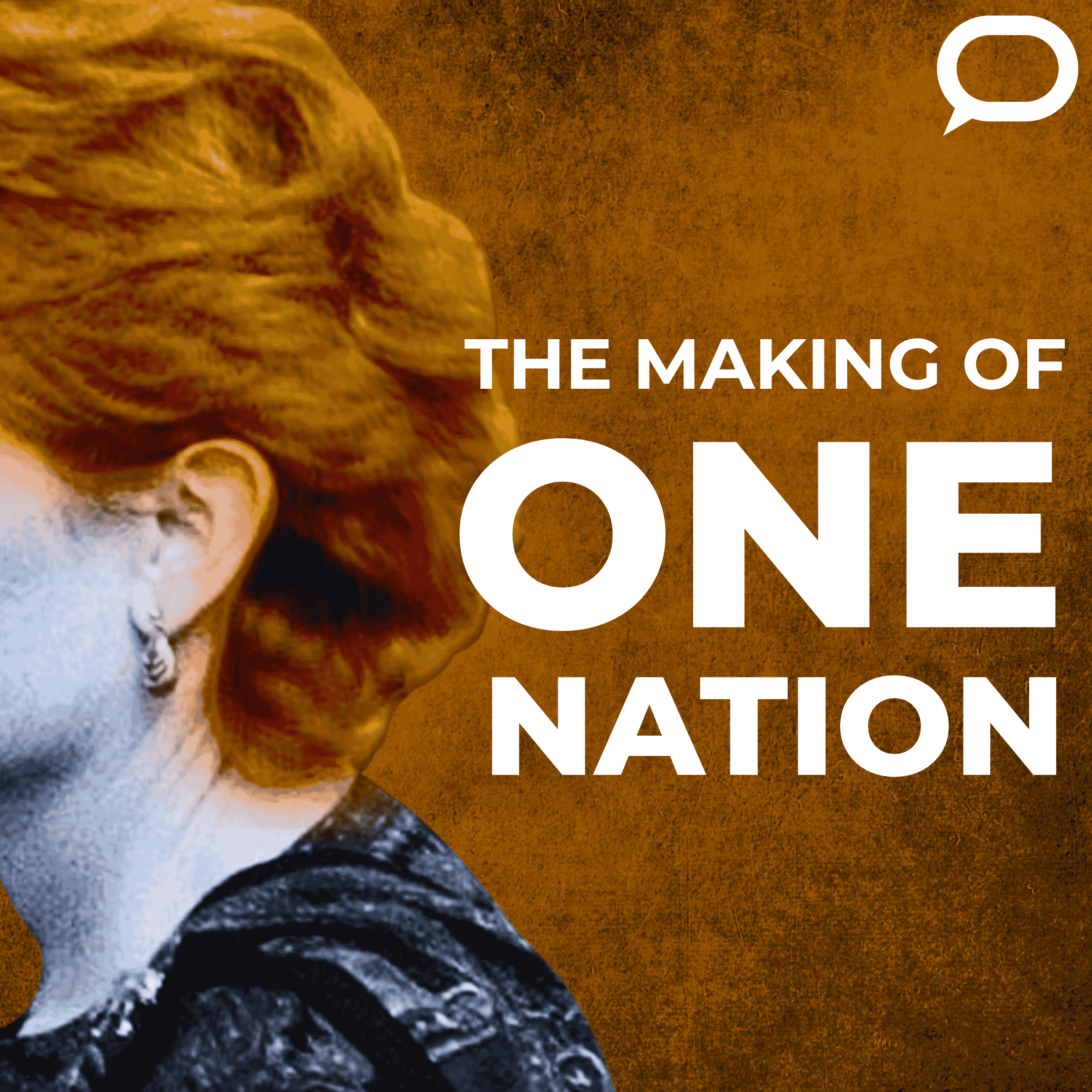
The Making of One Nation
by The Conversation
From a fish and chip shop in regional Queensland to the heart of Australian politics: this is the unlikely story of the country’s most controversial minor party.For thirty years, One Nation and Pauline Hanson have been ridiculed, dismissed and shut out. Now, no one is laughing. This is the story of how a party built on fear and grievance thrived, died and rose again to upend Australian politics.We go beyond the headlines and stunts to document how One Nation works and what it means for our future.
-
13
6 | The Making of One Nation: seize the moment?
One Nation didn't emerge in a vacuum, then or now. The global surge in right-wing populism has propelled the party and thirty years on, it’s arguably stronger than ever. But is its popularity a protest or a fundamental realignment of Australian politics? And what happens to Pauline Hanson’s One Nation, post Pauline?In the sixth and final episode of The Making of One Nation, we speak to Jill Sheppard, a political scientist and senior lecturer in the School of Politics and International Relations at the Australian National University. This episode was written and hosted by Ashlynne McGhee and produced and edited by Isabella Podwinski. Sound design by Michelle Macklem. Misha Ketchel is the editor of The Conversation Australia.If you are enjoying the series, please consider donating to The Conversation, an independent, not-for-profit news organisation.
-
12
5 | The Making of One Nation: master the media
The media made Pauline Hanson and One Nation, but now the party holds all the power.It’s a perfect storm for democracy: a shrinking and cowering traditional media, the toxic algorithms of the unmoderated social media cess pit and the warped reality of generative AI.But why is the party that once led the charge in the new internet age seemingly so restrained in weaponising AI?In the fifth instalment of The Making of One Nation, we speak to Kurt Sengul, a political scientist at Macquarie University who has researched the nexus between the media and the rise of far-right populism.This episode was written and hosted by Ashlynne McGhee and produced and edited by Isabella Podwinski. Sound design by Michelle Macklem. Misha Ketchel is the editor of The Conversation Australia.If you are enjoying the series, please consider donating to The Conversation, an independent, not-for-profit news organisation.Or, you can subscribe to one of our free newsletters.
-
11
4 | The Making of One Nation: move the centre
It’s never held government, or even opposition, yet One Nation’s managed to exert an outsized influence on the public policy agenda.From borders to migration, multiculturalism to Indigenous affairs, the far-right party has mastered mainstreaming and captured the masses fleeing the Coalition.In the fourth instalment of The Making of One Nation, we speak to Josh Sunman, Associate Lecturer in Public Policy at Flinders University and Tim Bale, a Professor of Politics at Queen Mary University of London.This episode was written and hosted by Ashlynne McGhee and produced and edited by Isabella Podwinski. Sound design by Michelle Macklem. Misha Ketchel is the editor of The Conversation Australia.If you are enjoying the series, please consider donating to The Conversation, an independent, not-for-profit news organisation.Or, you can subscribe to one of our free newsletters.
-
10
3 | The Making of One Nation: survive a scandal
We’d all like deeply considered policy and informed debate to be at the heart of politics, but unfortunately controversies and scandals tend to steal the show.For most parties, scandals are disastrous: they lose seats, ministers and elections — but not One Nation.It's weathered defections and punch-ups (including a memorable smearing of blood on a Senate door), jail and chaos, and thirty years on it's surging.This is a party that doesn’t just survive the chaos, but cultivates it and capitalises on it.---Subscribe to The Conversation's free newsletters.
-
9
2 | The Making of One Nation: define the enemy
You might remember this line in Pauline Hanson's maiden speech: "I'm afraid we're in danger of being swamped by Asians."It wasn't the first racist comment she'd made in public and it certainly wasn't the last.Over the years, her enemies have changed and she now targets Muslims and elites, but it's the same tactic and it's infiltrated Australian politics.---Subscribe to The Conversation's free newsletters.
-
8
1 | The Making of One Nation: enter the outsider
Nearly thirty years on, Hanson's infamous maiden speech — warning that Australia was "being swamped by Asians" — still echoes through Australian political life.But who was Pauline Hanson before she became a phenomenon, and what did she actually represent?Was she a cause of a new kind of politics, or a symptom of one already forming?Subscribe to The Conversation newsletter here.
-
7
The Making of One Nation: coming soon
From a fish and chip shop in regional Queensland to the heart of Australian politics: this is the unlikely story of the country’s most controversial minor party.For thirty years, One Nation and Pauline Hanson have been ridiculed, dismissed and shut out. Now, no one is laughing. This is the story of how a party built on fear and grievance thrived, died and rose again to upend Australian politics.We go beyond the headlines and stunts to document how One Nation works and what it means for our future.
-
6
The Making of an Autocrat: Co-opt the military
In November, six Democratic lawmakers recorded a video directed at members of the US military and intelligence agencies. In it, they issued a blunt reminder:"The laws are clear: […] You must refuse illegal orders."The lawmakers were issuing the warning against the backdrop of US airstrikes on boats off the coast of Latin America the Trump administration claims are suspected drug runners. Many Democrats and legal experts, however, argue these strikes are illegal.Since returning to office, Trump has successfully expanded his power over his own party, the courts and the American people. Now, like many autocrats around the world, he’s trying to exert control over the military.
-
5
The Making of an Autocrat: Suppress the people
The list of people Donald Trump has punished or threatened to punish since returning to office is long. It includes the likes of James Comey, Letitia James, John Bolton, as well as members of the opposition, such as Adam Schiff, Mark Kelly and Kamala Harris.In fact, he has gone so far as to call Democrats "the enemy from within", saying they are more dangerous than US adversaries like Russia and China.According to Lucan Way, a professor of democracy at the University of Toronto, when a leader attacks the opposition like this, it's a clear sign a country is slipping into authoritarianism.
-
4
The Making of an Autocrat: Beat the courts
In democratic systems, the courts are a vital check on a leader’s power. They have the ability to overturn laws and, in Donald Trump’s case, the executive orders he has relied on to achieve his goals.Since taking office, Trump has targeted the judiciary with a vengeance. He has attacked what he has called "radical left judges" and is accused of ignoring or evading court orders.The Supreme Court has already handed the Trump administration some key wins in his second term. But several cases now before the court will be pivotal in determining how much power Trump is able to accrue – and what he'll be able to do with it.
-
3
The Making of an Autocrat: Manufacture a crisis
Donald Trump has sounded the alarm, over and over again, that the United States is facing an “invasion” by dangerous gang members. He blames immigrants for the country's economic problems and claims protesters are destroying US cities.Trump is not the first would-be autocrat to manufacture a crisis to seize extraordinary powers.So, is the United States really facing a national emergency? Or is this just a tactic on Trump’s part to amass more power?
-
2
The Making of an Autocrat: Recruit an architect
Every autocrat needs a clan of loyalists, strategists, masterminds – these are the figures behind the scenes pulling the strings.They’re unelected and unaccountable, yet they wield a huge amount of power.This is the role Stephen Miller has played for Donald Trump – he is the architect in chief for the second Trump administration. He has so much power, in fact, he’s reportedly referred to as the "prime minister"So who is Stephen Miller? And why are architects so important in helping a would-be autocrat amass power?
-
1
The Making of an Autocrat: Hijack a party
We used to have a pretty clear idea of what an autocrat was. History is full of examples: Adolf Hitler, Joseph Stalin, Mao Zedong, along with Vladimir Putin and Xi Jinping today. The list goes on.So, where does Donald Trump fit in?In this six-part podcast series, The Making of an Autocrat, we are asking six experts on authoritarianism and US politics to explain how exactly an autocrat is made – and whether Trump is on his way to becoming one.
We're indexing this podcast's transcripts for the first time — this can take a minute or two. We'll show results as soon as they're ready.
No matches for "" in this podcast's transcripts.
No topics indexed yet for this podcast.
Loading reviews...
ABOUT THIS SHOW
From a fish and chip shop in regional Queensland to the heart of Australian politics: this is the unlikely story of the country’s most controversial minor party.For thirty years, One Nation and Pauline Hanson have been ridiculed, dismissed and shut out. Now, no one is laughing. This is the story of how a party built on fear and grievance thrived, died and rose again to upend Australian politics.We go beyond the headlines and stunts to document how One Nation works and what it means for our future.
HOSTED BY
The Conversation
CATEGORIES
Loading similar podcasts...
Frequently Asked Questions
How many episodes does The Making of One Nation have?
The Making of One Nation currently has 13 episodes available on PodParley. New episodes are automatically indexed when they're published to the podcast feed.
What is The Making of One Nation about?
From a fish and chip shop in regional Queensland to the heart of Australian politics: this is the unlikely story of the country’s most controversial minor party.For thirty years, One Nation and Pauline Hanson have been ridiculed, dismissed and shut out. Now, no one is laughing. This is the story of...
How often does The Making of One Nation release new episodes?
The Making of One Nation has 13 episodes. Check the episode list to see recent publication dates and frequency.
Where can I listen to The Making of One Nation?
You can listen to The Making of One Nation on PodParley by clicking any episode. We provide an embedded audio player for direct listening, and you can also subscribe via your preferred podcast app using the RSS feed.
Who hosts The Making of One Nation?
The Making of One Nation is created and hosted by The Conversation.
URL copied to clipboard!