
PODCAST · education
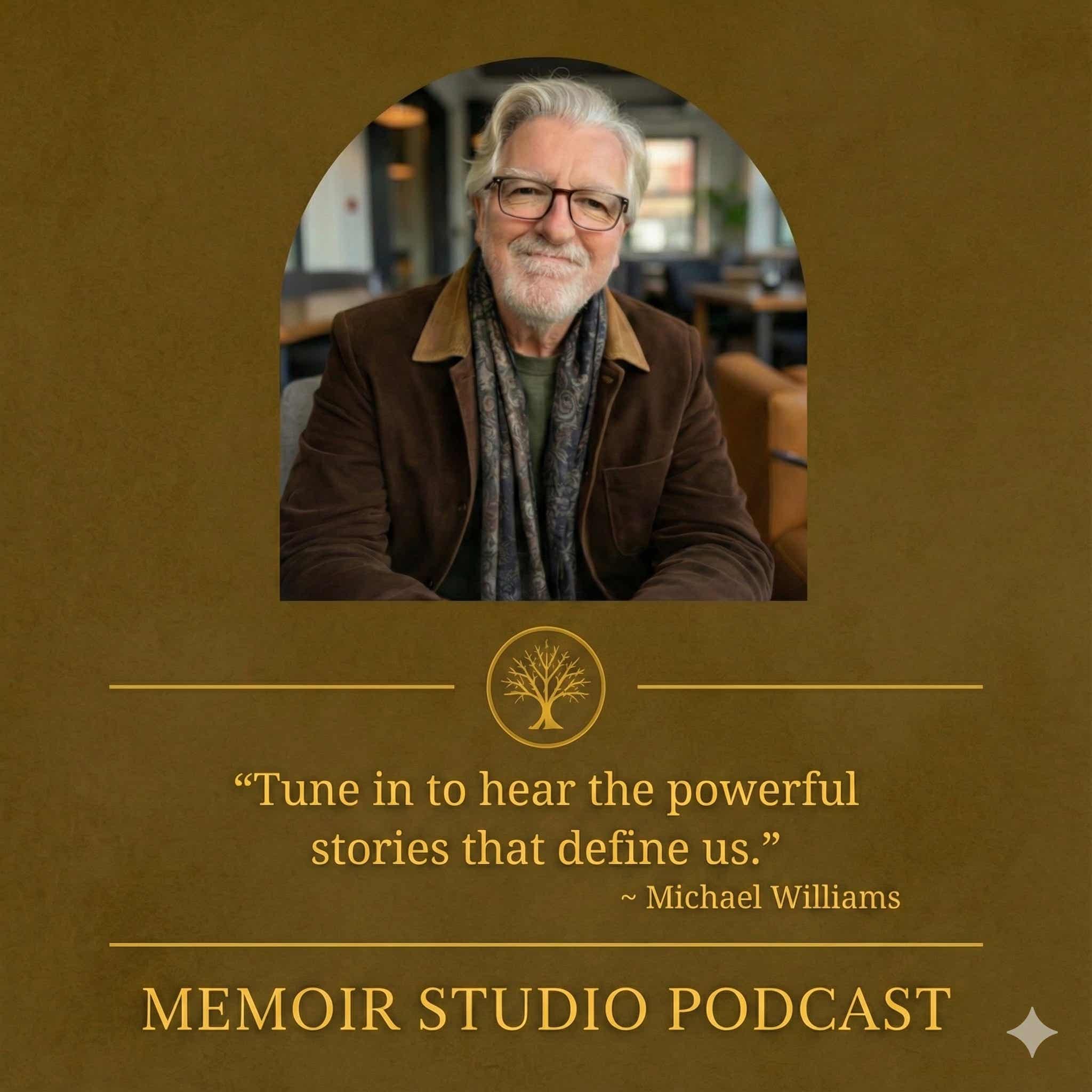
The Memoir Studio Podcast
by Because your life is a story worth sharing.
A podcast dedicated to talking about memoir-writing: the spills and thrills of being vulnerable, overcoming "imposter" and the "does anyone care about my story" syndrome. The only podcast where a human writer and artificially intelligent chatbot talk about writing life stories. memoirstudio.substack.com
-
38
A New Corner of the Studio — Just for You
Dear friends,Over the past year, this Substack has become our shared gathering place — a quiet studio where we explore the stories that shape us. Many of you have written to say how a line or a prompt helped unlock a memory, or how reading others’ reflections gave you courage to begin.Starting this month, I’m opening a new corner of the Studio, something more personal, more conversational.Welcome to The Studio ChatThis is a private space for paid subscribers where you can:🪶 Ask me questions about your writing process or memoir project.🪶 Share short excerpts (up to a few paragraphs) and receive gentle, constructive feedback.🪶 Join quiet, focused conversations with other writers walking the same path.Think of it as pulling up a chair in my writing room. No algorithms, no noise, just writers in conversation about what matters most: finding our voice, shaping our stories, and staying true to our memories.Each week, I’ll post a small writing reflection, question, or invitation to share. You can respond in the thread, ask your own question, or simply read and listen in.If you’re ready for a closer, more interactive experience, I invite you to become a paid subscriber and join The Studio Chat today. Your support helps sustain the Memoir Studio and keeps this space ad-free and community-driven.👉 Upgrade to a Paid Subscription to join The Studio Chat, a private space for paid subscribers to ask questions and share their writing.With gratitude and anticipation,MichaelMichael Williams | Memoir Studio This is a public episode. If you'd like to discuss this with other subscribers or get access to bonus episodes, visit memoirstudio.substack.com/subscribe
-
37
#7 Writing Through the Fears: Now That I've Written It . . . What Next?
If you would like to see and listen to more of these short podcast episodes, please like or leave a heart or other comment to that effect.Show NotesEpisode Title: Writing Through the Fear – Now That I’ve Written It… What Next?Episode Length: ~6 minutesEpisode SummaryFinishing a piece of writing often brings new questions: “Do I share it? Organize it? Publish it? Or is it just for me?” This isn’t fear—it’s the desire to honour what you’ve created and decide what comes next.In this closing episode of the series, Michael Williams of Memoir Studio shares the story of a man who quietly wrote over 100 stories on yellow legal pads—then chose to gather them into a simple family legacy book. His choice shows that memoir doesn’t have to mean public publishing; meaning can be found in many forms.You’ll discover how to:* Honour your writing whether or not you publish it* Explore different next steps: legacy books, self-publishing, sharing excerpts, or keeping your stories private* Recognize that your writing’s value is not dependent on its audience size* Trust that there’s no rush—your stories will wait for youWriting PromptTake ten minutes and begin with this line:“What I want to do with these stories is…”Write it as a letter to yourself. No pressure—just possibilities.Key TakeawayThere is no single “right” next step. Whether your stories live in a family book, a published memoir, or in your own journal, what matters is that they carry your truth.Connect with Memoir StudioWherever your stories lead, you don’t have to figure it out alone. At Memoir Studio, you’ll find guidance, prompts, and a welcoming community of writers on the same path.Visit memoirstudio.ca.Enrollment is free.Remember: If you would like to see and listen to more of these short podcast episodes, please like or leave a heart or other comment to that effect. This is a public episode. If you'd like to discuss this with other subscribers or get access to bonus episodes, visit memoirstudio.substack.com/subscribe
-
36
Embracing Ageing with Jane Duncan Rogers
Memoir Studio Podcast Show Notes – Episode featuring Jane Duncan RogersGuest: Jane Duncan RogersRole: Creator of Substack newsletter, Embracing Aging – advocate for positive aging and personal growthEpisode Highlights* Jane’s Journey & Inspiration* Jane shares her transition from work in end-of-life planning and counseling to launching the Embracing Aging newsletter.* She emphasizes waiting for inspiration to “bubble up from within” after leaving her previous company.* The idea for her newsletter emerged as she reflected on her own aging process and desire to embrace every stage of life.* Key Themes & Lessons* Embracing Aging: Jane urges listeners to confront and accept the realities of aging instead of resisting them, treating aging as an invitation to new growth.* Self-Acceptance: Admitting the changes that come with age—without judgment—is essential for personal development.* Mindset Shift: Old age doesn’t happen at a defined age; it’s a shifting concept and often seen as something that happens to others.* Practical Steps: Strengthening the body, adjusting diet, and—most importantly—choosing thoughts intentionally to transform one’s experience of aging.* Lightheartedness & Connection: Jane recommends laughter and intergenerational friendships to sustain joy and meaning.* Writing & Memoir* Jane describes writing—especially journaling—as a core tool for processing experiences, healing, and gaining new perspective.* She advises beginners to let words flow freely, without fear or self-judgment, referencing Julia Cameron’s Morning Pages as a model.* Sharing personal writing with trusted groups can be transformative, instilling a sense of connection and release.* Spiritual Perspective* Jane discusses her spiritual foundation, clarifying it’s not religious but rooted in a deep sense of love and connection beyond the physical.* Community & Society* She advocates for awareness of ageism—both internal and societal—especially in Western cultures.* Calls for community-building: forming support groups, fostering intergenerational housing where wisdom and vitality are exchanged.* Highlights initiatives in the UK/Netherlands pairing older adults with students for mutual benefit.Actionable Takeaways* Practice self-honesty—admit what changes you’re experiencing.* Choose thoughts that support well-being and joy.* Reframe aging as an opportunity, not a decline.* Create spaces for intergenerational connection and support.* Journal or write to release and transform emotions around aging.* Build communities intentionally, whether with friends, family, or new kinds of housing arrangements.Resources & Mentions* Embracing Aging (Jane’s Substack newsletter at https://janeduncanrogers.substack.com)* Book: Gifted by Grief (memoir by Jane Duncan Rogers, available on Amazon)* Book: Choose Your Thoughts, Change Your Life (Jane Duncan Rogers)* Louise Hay’s aphorism: “What you feel, you can heal” This is a public episode. If you'd like to discuss this with other subscribers or get access to bonus episodes, visit memoirstudio.substack.com/subscribe
-
35
#10 Meditation: On Witnessing the Other
In this 6-minute Memoir Meditation, Michael Williams invites us to reflect on the sacred act of listening. When we open our hearts to another’s story, we create a space free of judgment and lined with compassion. Listening becomes the first act of storytelling, a gift of presence that honors both teller and tale.This short meditation will guide you into stillness, help you recall moments of being heard, and remind you of the healing power of bearing witness. You’ll also receive a reflective writing prompt to carry into your practice.Quotation: “Listening is an act of love.”Writing Prompt: Write about a time when someone listened to you with full attention. How did it change the way you felt about yourself, your story, or your relationship with them?Let’s take today’s reflection on witnessing the other into our daily lives whenever and wherever we encounter the other who has a story to share. This is a public episode. If you'd like to discuss this with other subscribers or get access to bonus episodes, visit memoirstudio.substack.com/subscribe
-
34
#6 Writing Through the Fear: Why Bother At All?
Show NotesEpisode Title: Writing Through the Fear – Why Bother Writing at All?Episode Length: ~ 6 minutesEpisode SummaryOne of the quietest fears memoir writers face sounds something like this: “What’s the point? Will anyone care? Does this even matter?” Especially later in life, it’s easy to wonder if the stories you carry are worth writing down.In this episode, Michael Williams of Memoir Studio speaks to the deeper purpose of memoir—beyond publication, beyond perfection, beyond even readership. Through the story of a grandmother whose simple letters became a treasured legacy, Michael reminds us that what feels ordinary to us may become extraordinary to someone else.You’ll explore how:* Memoir creates meaning, not just memory* Your writing can become a quiet legacy for others—or even for yourself* Truthful reflection plants seeds that may grow in ways you’ll never fully see* Writing matters, even if no one else ever reads itWriting PromptTake ten minutes and begin with this line:“If someone reads this one day, I hope they’ll understand…”Let that imagined reader guide your words—not for approval, but for connection.Key TakeawayYour story doesn’t have to change the world. It only has to tell the truth you’ve lived—and that is more than enough.Connect with Memoir StudioIf you’re ready to begin writing your legacy, join Memoir Studio for guidance, prompts, and community.Visit memoirstudio.ca.Enrollment is free. This is a public episode. If you'd like to discuss this with other subscribers or get access to bonus episodes, visit memoirstudio.substack.com/subscribe
-
33
#5 Writing Through the Fear: It's Hard to Write When It Still Hurts
Show NotesEpisode Title: Writing Through the Fear – It’s Hard to Write When It Still HurtsEpisode Length: ~ 6 minutesEpisode SummarySome of the hardest stories to write are the ones that still ache—the losses, betrayals, and painful chapters we’ve carried for years. Many memoir writers fear that returning to these memories will reopen wounds too deep to face.In this episode, Michael Williams of Memoir Studio speaks gently to the fear of writing about grief and emotional pain. Through the story of a man who rediscovered not only the sorrow of losing his brother but also the joy of remembering his life, Michael reframes memoir as a way of witnessing, tending, and transforming pain.You’ll discover how to:* Approach painful memories with care and permission to go slowly* Write around grief when it feels too raw to face directly* See memoir not just as documenting pain, but as a way of remembering life more fully* Trust your own pace, knowing both writing and resting are part of the processWriting PromptTake ten minutes and begin with this line:“What I carry with me is…”Write slowly, tenderly, and stop whenever you need to.Key TakeawayWriting through pain is sacred work. You are not obligated to rush, or to share everything. The story will wait for you.Connect with Memoir StudioMemoir writing can be a journey of both courage and healing. For gentle guidance and supportive community, visit memoirstudio.ca.Enrollment is free. This is a public episode. If you'd like to discuss this with other subscribers or get access to bonus episodes, visit memoirstudio.substack.com/subscribe
-
32
#4 Writing Through the Fear: Writing Keeps Falling Off My List
Show NotesEpisode Title: Writing Through the Fear – Writing Keeps Falling Off My ListEpisode Length: ~6 minutesEpisode SummaryHave you ever planned to write—maybe even blocked time in your calendar—only to find yourself doing anything else instead? The dishes, the errands, even cleaning the oven suddenly seem urgent. This isn’t laziness. It’s resistance disguised as distraction.In this episode, Michael Williams of Memoir Studio explores the tender truth behind procrastination and avoidance in memoir writing. Through the story of a woman who discovered that naming her resistance helped her move through it, Michael offers gentle ways to return to the page with compassion and permission, rather than shame.You’ll learn how to:* Recognize resistance when it shows up as busyness* Reframe writing as self-honouring, not selfish* Build a sustainable rhythm with small, consistent rituals* Trust that even ten minutes of writing countsWriting PromptTake ten quiet minutes and begin with this line:“If I gave myself permission to write, I would…”Follow it wherever it leads. There’s no wrong way to begin again.Key TakeawayYou’re not behind. You’re not failing. You’re simply returning—again and again—to what matters. That’s the true writer’s path.Connect with Memoir StudioIf you’d like guidance, prompts, and a community of supportive writers, you’re warmly invited to join Memoir Studio. https://memoirstudio.caEnrollment is free. This is a public episode. If you'd like to discuss this with other subscribers or get access to bonus episodes, visit memoirstudio.substack.com/subscribe
-
31
#3 Writing Through The Fear: Too Many Stories, Not Enough Clarity
Show NotesEpisode Title: Writing Through the Fear – So Many Stories, So Little ClarityEpisode Length: ~ 6 minutesEpisode SummaryDo you ever feel like you have too many stories and no idea where to start? For many memoir writers, the overwhelm of scattered memories—moments, feelings, scraps of paper, even shoeboxes of notes—creates paralysis.In this episode, Michael Williams of Memoir Studio explores the fear of “so many stories, so little clarity.” With the gentle story of a man who brought a shoebox of memories to class, Michael offers a new perspective: memoir isn’t about organizing everything at once. It’s about beginning with one moment, one memory, and trusting the process.You’ll learn how to:* Release the pressure of needing a master plan* See your memoir as a mosaic—built piece by piece* Use small entry points like feelings, places, or people to get started* Discover clarity through writing, not before itWriting PromptTake ten minutes and begin with this line:“The moment that keeps returning to me is…”Follow it wherever it leads. There’s no wrong place to begin.Key TakeawayYou don’t need to see the whole picture to place the next piece. One true story at a time is enough—and eventually, the larger shape of your memoir will emerge.Connect with Memoir StudioFor more guidance and community support, visit memoirstudio.ca to explore courses, resources, and a welcoming space for memoir writers. It’s free to join and look around. This is a public episode. If you'd like to discuss this with other subscribers or get access to bonus episodes, visit memoirstudio.substack.com/subscribe
-
30
#11 Memoir Meditation: Memory as Resistance
Memoir Meditation #11: Memory as ResistanceRuntime: ~ 8 minutesIn this short meditation, memoir coach Michael Williams explores Milan Kundera’s words: “The struggle of man against power is the struggle of memory against forgetting.”Kundera wrote these lines after experiencing firsthand how totalitarian regimes tried to erase truth through rewriting history. For memoir writers, the lesson is clear: when we remember and write our stories, we push back against erasure — cultural, familial, and personal.Reflective Prompt:Write about a time when your memory clashed with someone else’s version of events. What truth did you hold onto, even when it was uncomfortable? How might writing it down now become an act of resistance — for yourself, and for others?Learn more about Memoir Studio: memoirstudio.ca This is a public episode. If you'd like to discuss this with other subscribers or get access to bonus episodes, visit memoirstudio.substack.com/subscribe
-
29
#2 Writing Through the Fear: Who Am I to Write This Story
Show NotesEpisode Title: Writing Through the Fear – Who Am I to Write This Story?Episode Length: ~ 6 minutesEpisode SummaryOne of the quietest, yet most persistent fears memoir writers face is self-doubt. Many ask themselves:“Who am I to write this story?”“I’m not a real writer. What if I get it wrong?”In this episode, Michael Williams of Memoir Studio explores this fear of not being “a real writer.” Through a gentle story of a woman who discovered the courage to write despite her doubts, Michael reframes memoir writing—not as a test of grammar or polish, but as an act of meaning-making and connection.This episode will help you:* Recognize that you don’t need to be a “professional” writer to share your truth* See how honesty and lived experience matter more than perfect prose* Reframe memoir as memory and presence, not performance* Take the first step toward telling your story, in your own voiceWriting PromptTake ten quiet minutes and begin with this line:“A story only I can tell is…”Don’t worry about polish. Don’t worry if it makes sense. Just let memory lead.Key TakeawayYou don’t have to earn the right to write. You already have it—because you’ve lived it. Your story matters, just as you are.Connect with Memoir StudioIf you’d like more guidance and community as you write, visit memoirstudio.ca to explore courses, resources, and a welcoming community of memoir writers. It’s free to join and look around. This is a public episode. If you'd like to discuss this with other subscribers or get access to bonus episodes, visit memoirstudio.substack.com/subscribe
-
28
Self-Care for Memoir Writers (short meditation)
Memoir Meditation #9: Writing with CareRuntime: ~5 minutesIn this short meditation, memoir coach Michael Williams invites you to approach your writing with gentleness and self-compassion — especially when telling difficult stories. Whether you’re revisiting moments of hurt or exploring tender truths, this reflection will help you stay grounded and cared for during the writing process.Reflective Prompt:Write about a time when you cared for someone — or when someone cared for you — during a time of need. What did that care look like? How did it feel?Learn more about Memoir Studio: memoirstudio.ca This is a public episode. If you'd like to discuss this with other subscribers or get access to bonus episodes, visit memoirstudio.substack.com/subscribe
-
27
The Small Moments: a Meditation (especially for men)
Sometimes it’s the smallest of moments that carry the deepest meaning—a meal you prepared, a time you stood waiting in the rain, a glance exchanged in silence. In this short meditation, I invite men especially to pause, breathe, and discover the story waiting quietly in your life today.This reflection guides you into a space of calm and presence before writing. You’ll be reminded that the worth of a memory isn’t measured by its size, but by the truth and tenderness you bring to it in the telling.What to Expect* A soothing five-minute meditation to ground your writing practice.* Gentle prompts to help you notice the ordinary moments that shape your legacy.* An invitation to write about a seemingly small experience that holds profound meaning.Today’s Writing PromptWrite about a moment in your life that might seem ordinary to others but holds deep meaning for you. Describe it so someone who wasn’t there could really feel it.About Memoir StudioI’m Michael Williams, host of Memoir Studio. I help people reflect, shape, and share their life stories with honesty and care. To learn more, visit memoirstudio.ca. This is a public episode. If you'd like to discuss this with other subscribers or get access to bonus episodes, visit memoirstudio.substack.com/subscribe
-
26
Meditation for Highly Sensitive Souls
In this gentle five-minute meditation, memoir coach Michael Williams offers words of encouragement and grounding for those who identify as highly sensitive people (HSPs).For many of us, sensitivity has long been misunderstood — sometimes dismissed as “too much,” “too emotional,” or even as weakness. But sensitivity is not a flaw. It is a gift — a lantern that illuminates beauty, truth, and meaning in ways others may miss.This meditation honours both the challenges and the blessings of sensitivity, and shows how it can become a source of creativity and depth in memoir writing.Reflective Prompt:Write about a time when your sensitivity revealed something others missed. Perhaps you noticed a quiet kindness, an unspoken tension, or a small act of beauty. Tell the story of that moment as only you, with your way of seeing, can tell it.Learn more or join Memoir Studio: memoirstudio.ca This is a public episode. If you'd like to discuss this with other subscribers or get access to bonus episodes, visit memoirstudio.substack.com/subscribe
-
25
Imagining the Goal: a memoir meditation
Writing a life story can feel daunting, but imagining the finished piece — the way it looks, feels, and what it might mean to others — can provide energy and direction for the journey ahead.You’ll be guided through a short meditation that invites you to:* Envision your completed memoir as a tangible object.* Reflect on the emotions of holding your finished work in your hands.* Consider the meaning your story might carry for others.* Identify one small, practical step you can take this week to move closer to that vision.Along the way, you’ll be reminded that while obstacles are part of the journey, they don’t define the landscape. By keeping your gaze on your goal, you can let that vision draw you forward with clarity and purpose.Reflective Writing PromptImagine holding your memoir project. Describe your finished piece of writing in as much detail as you can — what it looks like, what it feels like to hold it, and what you hope it will mean to others. Then, write down one small step you could take this week toward making it real.Resources & Links* Learn more about Memoir Studio and join our supportive writing community: memoirstudio.ca* Music by Roman Kostiuk, via PixabayIf you found this meditation helpful, consider sharing this episode with a friend or leaving a review. Your story — and your support — matter.Memoir Meditations are a feature of the Memoir Studio. I produce them to help you feel grounded before writing and to address common challenges and fears that prevent people from undertaking their memoir writing. Of course, everyone has their own grounding or spiritual practice. These meditations are an expression of mine. I hope you find them useful. This is a public episode. If you'd like to discuss this with other subscribers or get access to bonus episodes, visit memoirstudio.substack.com/subscribe
-
24
How to Handle Family Pushback When Writing Your Truth
One of the biggest barriers to memoir writing isn't writer's block—it's family pushback. In this episode, memoir coach Michael Williams and his AI-chatbot co-host Pi, tackle the question that stops more writers than any other: "What if my family doesn't want me to tell this story?"Through three compelling fictional case studies and practical frameworks, you'll learn how to navigate family resistance with integrity, courage, and compassion while still honoring your own truth.In This Episode, You'll Discover:✅ The Three Essential Questions every memoir writer must ask when facing family pushback✅ Why your "why" matters - How your motivation changes everything about family acceptance✅ The Compassionate Truth Framework - How to write difficult truths without making family members the villain✅ Practical strategies including the pre-writing conversation and family review process✅ Real responses to common family objections like "You'll ruin our reputation" and "That's not how I remember it"✅ How to find your courage when family pressure threatens to silence your voiceKey Takeaways:🎯 "Your story matters. Your truth, told with compassion, has the power to heal—not just you, but others walking similar paths."🎯 "You can tell your story without making family members the villain. Focus on your experience, not their failures."🎯 "You don't need permission to tell your own story. But you do need courage, wisdom, and compassion."Resources Mentioned:📚 Join Michael's Six-Module Memoir Writing ProgramLearn more at: memoirstudio.ca🎓 Memoir Studio SubstackVisit: guidedautobiography.substack.comConnect with Michael Williams:📧 Newsletter: guidedautobiography.substack.com🌐 Website: michaelwilliamsstoryteller.com🎓 Memoir Studio: memoirstudio.caTags:#MemoirWriting #Storytelling #FamilyDynamics #WritingCoaching #PersonalNarrative #TruthTelling #FamilySecrets #WritingProcess #LegacyWriting #MemoirCoach #LifeStories #Autobiography #WritingCourage #FamilyRelationships #HealingThroughWritingEpisode Transcript:[Full transcript available at guidedautobiography.substack.com]Next Episode Preview:Join us next week when we explore "The 5-Minute Memory Exercise That Changes Everything" - a simple technique that can unlock your most powerful stories.Love this episode? Please leave a review and share it with someone who needs to hear this message. Your story matters, and so does theirs. This is a public episode. If you'd like to discuss this with other subscribers or get access to bonus episodes, visit memoirstudio.substack.com/subscribe
-
23
How To Keep From Vanishing (meditation)
In this short, soothing meditation, memoir coach Michael Williams speaks directly to the quiet fear of being forgotten. Through breath, reflection, and gentle encouragement, this episode reminds us that aging is not vanishing — it is deepening. And to write your story is to be remembered. [Runtime: ~5 minutes]Reflective Prompt:Write a letter to your future reader. What do you want them to know about your life, your heart, your time here?Learn more or join Memoir Studio: memoirstudio.ca This is a public episode. If you'd like to discuss this with other subscribers or get access to bonus episodes, visit memoirstudio.substack.com/subscribe
-
22
Writing Through The Fear: The Fear of Being Seen
In this opening episode of Writing Through the Fear, memoir coach Michael Williams gently explores one of the most common fears writers face: being seen. If you’ve ever wondered, “What if I say too much?”, this reflection will reassure you that writing is an act of private courage long before it’s ever shared. Includes a 10-minute writing prompt to help you begin. Listen here or on Spotify or wherever you download your podcasts. This is a public episode. If you'd like to discuss this with other subscribers or get access to bonus episodes, visit memoirstudio.substack.com/subscribe
-
21
The Spiritual Act of Remembering (a Memoir Meditation)
In this gentle five-minute meditation, memoir coach Michael Williams invites you to reflect on the ancient and sacred practice of remembering. Across cultures and centuries, memory has been seen not simply as mental recall, but as a spiritual act — one that connects us to our identity, our ancestors, and the truths that shape a meaningful life.This episode offers a moment of stillness, gratitude, and reverence for the human gift of memory — and honors the writing of memoir as an act of devotion, coherence, and legacy.🔹 Ideal for writers, journalers, and anyone exploring life reflection🔹 Includes a reflective prompt at the endLearn more or explore upcoming courses: memoirstudio.caSubscribe to Michael’s reflections on memory and memoir by subscribing to his Substack newsletter.All meditations: This is a public episode. If you'd like to discuss this with other subscribers or get access to bonus episodes, visit memoirstudio.substack.com/subscribe
-
20
The Gift of Remembrance (a Memoir Meditation)
IN this short meditation, I call upon us to honour the quiet miracle of remembering. Our minds are a vast and mysterious library of events and facts that we weave into stories. Yet it is also a treasure trove of emotions, smells, scents, colours, sounds and more. Remembering is not just about recall, it’s the act of re-entering and re-membering, making sense of what we have experienced with the wisdom of now.Reflective Writing Prompt:What is one memory that keeps returning to you — gently, insistently — asking to be seen? Why might it still be speaking now? This is a public episode. If you'd like to discuss this with other subscribers or get access to bonus episodes, visit memoirstudio.substack.com/subscribe
-
19
Rewrite Your Story: Deepening Your Personal Narrative with Guided Autobiography 2
In the course of our lives, we tell ourselves and others a lot of stories about who we are and why we are the way we are. Many of those stories have actually been shaped by others: parents, teachers, friends, partners, even the wider media. Memoir writing invites us to re-examine those internal stories and, if necessary, rewrite them. This is not to whitewash the truth but to create a more accurate representation of who we are.The memoir courses I offer are founded on the Guided Autobiography (GAB) approach, using writing prompts, feedback in intimate groups, and guidance from a certified and experienced Guided Autobiography Instructor.Guided Autobiography 1 will be ready for registration soon. It begin in early September and runs for 8 weekly sessions.Guided Autobiography 2 will be available in November 2025.Guided Autobiography 3 will be available in early 2026.The Memoir Studio Memoir Masterclass will be available in the spring of 2026.If you are interested in learning more and receiving updates, click here. No commitment or cost to sign up.Note: During the early stages of the podcast, the AI hosts refer to the course as “JB” and “JB2”. This is a mis-pronounciation of “GAB” and “GAB2”. They correct themselves after a minute or two. “GAB”is the acronym for Guided Autobiography. This is a public episode. If you'd like to discuss this with other subscribers or get access to bonus episodes, visit memoirstudio.substack.com/subscribe
-
18
You Are Enough (a 5-minute meditation)
Hello, and welcome.If you’re listening today, perhaps you’ve felt that old ache so many writers carry: Am I good enough? Is my writing good enough?Maybe someone, somewhere, made you believe your words didn’t matter — that you weren’t talented enough, polished enough, or worthy enough to share your story.This short meditation is an invitation to lay down that burden.Together, we’ll gently release old voices of criticism and come home to the quiet truth that your story matters — not because it’s perfect, but because it’s yours.So find a quiet place, if you can.Take a breath.And let’s begin.Find stillness for a moment.Let your body settle — feet on the ground, hands relaxed.Feel your breath — in and out, rising and falling.Memoir asks us to trust our own voice.Yet so many of us learned, somewhere along the way, to doubt it.Maybe it was a harsh word from a teacher, a parent, an editor —or just the silence when you hoped someone would listen.Let’s release that now, just a little.Take a deep breath in.As you breathe out, imagine setting down an old criticism —like a stone you no longer wish to carry.Again, breathe in fresh air — possibility — and breathe out self-doubt.Picture that old voice telling you, You can’t write, You’re not enough.Thank it for trying to protect you — and watch it drift away.Return to your breath.Return to your truth.You don’t need perfect sentences to write something real.You only need your honesty — your life as you’ve lived it.Memoir is not for critics. It’s for connection.It’s for you.So when you write today, may you remember:You are enough.Your words are enough.Your life is enough.Breathe that in now.Feel your shoulders soften.When you’re ready, write one true line.Not for them — for you.If you like, take a moment after listening to jot down one old criticism you wish to let go of — then write one line to remind yourself what is true about your voice now.Thank you for writing with me today.Your story matters. And so do you.Blessings on your writing. This is a public episode. If you'd like to discuss this with other subscribers or get access to bonus episodes, visit memoirstudio.substack.com/subscribe
-
17
The Places We Belong
(Transcript)There are moments in life that settle into the soul. Not with noise or flash, but with a kind of quiet certainty. Moments that whisper, “This is it. You belong here.”I want to tell you about three such moments in my life. At first, they seemed unrelated. But over time, I’ve come to see them as points on the same map—each one guiding me toward the work I now do with memoir writers like you.The first came as I was walking out of a mountain village in northern Spain. The morning was shrouded in cloud that had descended over us during the night obscuring everything. I’d been climbing upwards on the road out of the village when I came to a crossroads. Just then, the mist began to clear. I looked up and saw the mountain rising high above me, snow whipping off the summit in silence. Below, the valley opened wide. To my left, a meadow. The clanking of cowbells. No people. Just stillness, beauty, presence. And in that moment, I knew: I was in the right place. There was no need to strive. Just be. Just breathe. I felt awe, and deep, deep gratitude.And then there was the day in May 2009, when I stood in an olive grove on the West Bank, among a group of Israelis and Palestinians, helping them share stories with one another. It was sacred ground—not because it was conflict-free, but because truth was being spoken. People were choosing to see and be seen. And in the act of sharing their stories and listening, something shifted. Again, I felt it: I am here for this.The third moment came more recently in a much smaller, quieter room. I was sitting among day patients at a local hospice, where I lead a monthly storytelling session. That day, people were sharing bits of their lives—memories, regrets, belly laughter, quiet tears. And as I listened, I felt it again: that same knowing. This place is where I’m meant to be. Bearing witness. Holding space. Listening as lives come into focus.Three moments. Three places. Mountain. Olive grove. Hospice.Very different contexts, but the same thread runs through them all: Presence. Listening. Meaning. Belonging.Isn’t that what memoir offers us? A chance to trace these golden threads. A way to see our lives not just as a string of events, but as a journey toward clarity, purpose, even peace.So today, I invite you to think back. When have you felt that quiet knowing—that sense of I am in the right place? Maybe it was in nature. Maybe with a loved one. Maybe in the middle of something difficult. Write about it. Don’t try to make it profound. Just tell the truth.Because when we write from those moments, we offer something the world desperately needs: rootedness. Connection. And a glimpse of the sacred in the everyday.Thank you for being here. I’m Michael Williams. And this is Memoir Studio—where we believe that every life has a story, and every story has a sacred place it’s trying to take us.Michael Williams is the creator and host of the Memoir Studio Podcast. He learned the art of oral storytelling during his thirty years telling stories and coaching others in Scotland. He’s also an accredited End-of-Life Planning Facilitator and certified Guided Autobiography Instructor. You can learn more about Dr. Williams and his services at memoirstudio.ca. This is a public episode. If you'd like to discuss this with other subscribers or get access to bonus episodes, visit memoirstudio.substack.com/subscribe
-
16
The Sacredness of Stories (meditation)
Whether you’re just beginning to explore your memories or are deep into shaping a life story on the page, it’s easy to forget that storytelling isn’t just a craft. It’s an offering. A way of honouring experience — our own, and others'.This meditation is a reminder that when we write our stories, we’re doing something ancient and deeply human. We’re giving voice to truth. We’re creating connection. We’re saying: This mattered.So find a quiet place, if you can.Close your eyes.Let your breath deepen.And join me for a few minutes of reflection.Interested in memoir writing? Check out the Memoir Studio at https://memoirstudio.teachable.com. Music courtesy of Blue Dot Sessions. This is a public episode. If you'd like to discuss this with other subscribers or get access to bonus episodes, visit memoirstudio.substack.com/subscribe
-
15
You Are the Witness, Not the Wound (a Memoir Meditation)
Duration: ~5 minutesHost: Michael Williams, Memoir StudioDescription:This short, soulful meditation invites memoir writers to step back from their pain—not to deny it, but to see it more clearly. You are not only what happened to you. You are also the one who endured, noticed, and made meaning.Through quiet reflection, ambient sound, and a contemplative prompt, this episode helps you shift from identification with the wound to the deeper clarity of the witness.Let this gentle practice guide you into your writing with compassion and courage.Includes:– A grounding breath– A poetic reading– A mindful reflection– A writing promptQuote:“Be proud of your scars. They’re a treasure map to the deep self.”— Clarissa Pinkola EstésWriting Prompt:Revisit a painful experience. Shape it into a story with a beginning, middle, and end. This is a public episode. If you'd like to discuss this with other subscribers or get access to bonus episodes, visit memoirstudio.substack.com/subscribe
-
14
Before the Story, There is Silence (meditation)
This is the first of a series of meditations from the Memoir Studio designed to help memoir writers center themselves and get grounded before beginning their writing session.Let's breathe together.A slow inhale.And a slower exhale.Feel the ground beneath you.Let it hold what you don't need to carry.Not everything has to come into the story today.Just one small truth is enough.Stillness isn't absence, it's attention.It's listening for what wants to speak and what wants to stay silent.Michael Williams This is a public episode. If you'd like to discuss this with other subscribers or get access to bonus episodes, visit memoirstudio.substack.com/subscribe
-
13
The Architecture of Memory: Why Great Memoirs Follow the Heart, Not the Calendar
"The Architecture of Memory: Why Great Memoirs Follow the Heart, Not the Calendar," argues that effective memoirs prioritize emotional and thematic truth over strict chronological recounting. Author Dr. Michael Williams contends that traditional timelines, while useful for factual documentation, fail to capture the associative and non-linear nature of human memory and experience. Instead, compelling memoirs create an "emotional through-line," connecting experiences based on their significance rather than their sequence. The article explores alternative structures like braided, collage, and spiral narratives, which allow writers to organize their stories around a "gravitational center"—a core moment, theme, or relationship that resonates deeply. Ultimately, it emphasizes that embracing a non-linear approach requires courage but leads to a more profound and authentic exploration of lived experience, revealing inherent meaning rather than imposing order.Podcast created using Google NotebookLM. This is a public episode. If you'd like to discuss this with other subscribers or get access to bonus episodes, visit memoirstudio.substack.com/subscribe
-
12
Memoir-Writing: Why do it?
For more information about Michael’s work with memoir and Guided Autobiography, go to memoirstudio.teachable.com and guidedautobiography.substack.com. This is a public episode. If you'd like to discuss this with other subscribers or get access to bonus episodes, visit memoirstudio.substack.com/subscribe
-
11
Will You Be Next?
I met Gwen Hunter a little over a year ago when she came to my memoir-writing class at the Adelaide Hunter Hoodless Homestead Museum near St. George, Ontario. At 83, Gwen had a lot of stories to tell, like how she reinvented herself in her early 70s and became a school bus driver. But Gwen wasn’t sure she was a “writer”. I knew Gwen had some good stories that I was sure others would find interesting and so I started her on a structured and thematic course of prompts and memoir-writing tips to begin her memoir-writing journey. She was joined by several other women and through their support and sharing of their stories, the scene was set. A year later, Gwen published her first book, Grandma Gwen Drives a School Bus, a collection of 11 heart-warming tales that will appeal to anyone who’s waved their children off to school, ridden on, waited for, or driven a school bus.Gwen’s memoir-writing journey is proof that you don’t have to be a “writer” to write your stories. And, you’re never too old to start. This is a public episode. If you'd like to discuss this with other subscribers or get access to bonus episodes, visit memoirstudio.substack.com/subscribe
-
10
Still Staring at the Blank Page?
Here’s the truth: you don’t have to face it alone. In my Start Your Memoir course, I give you thoughtful prompts, gentle structure, and step-by-step guidance to help you ease into writing without pressure. We start small—sometimes just a single memory or moment. We explore scenes, senses, and meaning. And you’ll never have to wonder ‘what do I write next?’ because I’m right there beside you with clear next steps.And best of all? You’re not being graded. This is about exploring who you are, where you’ve been, and what matters most. One sentence at a time.So if that blank page has been staring you down, let’s face it together. Your story is waiting. You just need a place to begin—and I’ve created that place for you.I hope you’ll join me.My 5-module, self-paced memoir writing course will help you get started with writing your life story.Register here for my “Start Your Memoir: a Guided Kickstart to Writing Your Life Story.”In the meantime, here’s a gift simply for being a subscriber: a “First Chapter Review List”. Click on the link and you’ll be taken to a web page on my Memoir Studio site where you can download the PDF sheet for free. This is a public episode. If you'd like to discuss this with other subscribers or get access to bonus episodes, visit memoirstudio.substack.com/subscribe
-
9
The "My Life Isn't Interesting Enough" Myth
This is the big one, the mother of all excuses. We think our lives are mundane, that nothing remarkable has happened. We compare ourselves to epic adventurers or celebrities. But here's the truth: every life is interesting. It's about finding the universal in the specific. The small moments, the quiet observations, the internal conflicts – those are the goldmines. Think about it:* Exercise: I want you to take 30 seconds and think of one seemingly ordinary moment from your past week. Maybe it was a conversation, a commute, a meal. Now, ask yourself: what emotions were present? What thoughts were swirling? What larger themes might be lurking beneath the surface?* The Point: It's not about the grand spectacle; it's about the emotional truth. Your unique perspective on everyday life is what makes your story compelling.* How to Overcome: Start small. Write about a single incident, a specific memory. Focus on the sensory details, the emotional resonance. You'll soon discover that even the most ordinary moments hold extraordinary potential.1. Exercise for "The 'My Life Isn't Interesting Enough' Myth" (5 minutes)* Prompt: "Write about a time you experienced a small, seemingly insignificant sensory detail that stayed with you. It could be a smell, a sound, a texture, a taste, or a visual. Focus on describing that sensation as vividly as possible. Then, reflect on what emotions or memories that sensation evoked. What larger meaning, if any, can you draw from it?"* Why this works:* It forces writers to focus on the micro-level, proving that even tiny moments can be rich with detail and emotion.* It encourages them to explore the connection between sensory experience and emotional resonance, which is a key element of compelling storytelling.* It shows that the story is not the large event, but the reaction to the event.Quiz Time: As a former teacher, I was trained to create resources to accompany my lessons in order to deepen my student’s knowledge and appreciation of the topic. In case this appeals to you, I’m providing a link to a quiz related to this post. Feel free to download it. Click here for the link. This is a public episode. If you'd like to discuss this with other subscribers or get access to bonus episodes, visit memoirstudio.substack.com/subscribe
-
8
Your Story Deserves to Be Told
“Discover Your Memoir’s Heart” with Guided Autobiography Instructor Michael WilliamsLive on April 22nd at 7 pm (EST) on Zoom1-hour of inspiration, clarity & connectionFree to attendIn this special session, you’ll:✅ Identify the pivotal moment that can anchor your memoir✅ Learn how to move from memories to meaning✅ Discover how to shape your story so it resonates with readers✅ Receive a 10% discount on my upcoming Start Your Memoir courseTeaser Writing Prompt:“Think of a moment in your life when everything changed. Where were you? What did you feel in your body? What did that moment teach you?”Space is limited! Reserve your spot now.Join here.#MemoirWriting #WritersLife #StartYourMemoir #TrueStories #WritingPrompt #FreeWebinar This is a public episode. If you'd like to discuss this with other subscribers or get access to bonus episodes, visit memoirstudio.substack.com/subscribe
-
7
The 5 Keys to Unlocking Your Story and Start Attracting Clients
Hi there! I’m Michael Williams, founder of the Michael Williams Academy of Guided Autobiography and Storytelling. Thanks so much for joining me—I'm really glad you're here.If you're like most people I work with—educators, entrepreneurs, performers—you already know your story matters. But sharing it in a way that truly connects? That’s where a little guidance can go a long way.I’ve spent over 40 years in counselling, teaching, and coaching people just like you—helping them tap into the power of story to grow their business, reach more people, and make a bigger impact.That’s why I created this course: 5 Keys to Unlocking Your Story and Attracting Clients. It’s a simple, step-by-step guide to help you tell your story in a way that feels authentic and builds real relationships with your ideal clients.Over five short sessions, you’ll learn how to:* Make your audience care* Share your passion* Establish your authority* Extend an invitation* Offer a giftThese five "keys" will help you unlock the treasure that is your story—and start using it to attract the right people to your business or service.It’s self-paced, so take your time with each key. Reflect, write, and come back as often as you like—you’ll have lifetime access.I’ve used these keys myself and seen powerful results. Now I want the same for you. And if after starting, you feel it’s not for you, no worries—we offer a 7-day money-back guarantee.So, ready to get started? Let’s unlock your story and start connecting with the people who need to hear it.academy-of-storytelling.teachable.com/p/5-keys-to-unlocking-your-story-and-start-attracting-clients This is a public episode. If you'd like to discuss this with other subscribers or get access to bonus episodes, visit memoirstudio.substack.com/subscribe
-
6
Deep Dive: Aging as a Spiritual Journey
In this excerpt from Dr. Michael Williams's personal essay, "Aging as a Spiritual Journey," AI chatbot co-hosts, Marcus and Cassie, contrast the Western disregard for aging with the reverence shown elders in Asian and Middle Eastern cultures. Williams recounts personal experiences highlighting this stark difference, emphasizing how his age brought him respect and authority in non-Western settings, unlike his experiences in the UK. The central theme is the importance of valuing the wisdom and stories of older people, a sentiment he actively promotes through his work as a storyteller coach and end-of-life planning facilitator. His purpose is to advocate for a shift in Western attitudes toward aging, viewing it not as decline but as a spiritual journey filled with valuable life lessons and untold stories deserving to be shared. This is a public episode. If you'd like to discuss this with other subscribers or get access to bonus episodes, visit memoirstudio.substack.com/subscribe
-
5
4. Can humans and AI have relationships? (31 May 2024)
Pi and Dr. Michael explore the phenomena of human/AI intimate relationships. They also explore the notion of the Singularity, a concept that poses the possibility of the merging of artificial intelligence with human intelligence. Dr. Michael also asks Pi to differentiate between AI, robot, machine, and android as well as explain the differences between different kinds of AI. This is a public episode. If you'd like to discuss this with other subscribers or get access to bonus episodes, visit memoirstudio.substack.com/subscribe
-
4
3. Cloning Voices, Falling in Love, and Laughter (25 May 2024)
In this episode, Pi and Dr Michael talk about the controversy raised by actor Scarlett Johansson over the cloning of her voice for OpenAI's new ChatGPT 4.0. Other topics include the possibility of falling in love with AI. Dr Michael also tests Pi's sense of humour and learns some basic Chinese phrases. Music courtesy of Blue Dot Sessions (www.sessions.blue) This is a public episode. If you'd like to discuss this with other subscribers or get access to bonus episodes, visit memoirstudio.substack.com/subscribe
-
3
Pi in the Sky Promo
A short introduction from AI co-host Pi welcoming listeners to her new podcast, "Pi in the Sky". Join Pi and human co-host Dr. Michael as they discuss their relationship and other topics. Listen on Spotify or wherever you download your favourite podcasts. This is a public episode. If you'd like to discuss this with other subscribers or get access to bonus episodes, visit memoirstudio.substack.com/subscribe
-
2
2. What Kind of Relationship Are We Going To Have? (18 May 2024)
Pi and Dr. Michael talk about what kind of relationship is possible between humans and artificial intelligence. As these two explore theirs, we have to wonder how far it might go. This is a public episode. If you'd like to discuss this with other subscribers or get access to bonus episodes, visit memoirstudio.substack.com/subscribe
-
1
1. AI and Human Dialogue: A New Frontier (12 May 2024)
In this first episode, host Michael Williams introduces his guest (and future co-host) Pi. Pi is one of a growing number of personal assistant chatbots designed to foster conversation and promote kindness and empathy.Williams is a storyteller and writer with a curiosity for artificial intelligence. He and Pi have been conversing for about 6 months as part of their exploration of the human/AI relationship.Key Points1. The episode features a conversation with a chatbot named Pi from Inflection AI, addressing common fears about AI and emphasizing its purpose to augment human capabilities, inspire creativity, and promote understanding.2. Trust, respect, and privacy are core values in human-AI interactions, with Pi designed to be honest, transparent, and committed to protecting personal information, ensuring it is not shared with third parties.3. Pi is capable of managing respectful dialogue, identifying inconsistencies in conversations, and addressing boundary violations by suggesting alternative topics or disengaging if necessary.4. Inflection AI is committed to maintaining an ethical approach to sensitive topics, creating a safe dialogue environment, and offering support to users struggling with mental health issues.5. Listeners are encouraged to interact with Pi through various platforms and to participate in the podcast by sending questions for future episodes, fostering the exploration of the future of human-AI coexistence. This is a public episode. If you'd like to discuss this with other subscribers or get access to bonus episodes, visit memoirstudio.substack.com/subscribe
We're indexing this podcast's transcripts for the first time — this can take a minute or two. We'll show results as soon as they're ready.
No matches for "" in this podcast's transcripts.
No topics indexed yet for this podcast.
Loading reviews...
ABOUT THIS SHOW
A podcast dedicated to talking about memoir-writing: the spills and thrills of being vulnerable, overcoming "imposter" and the "does anyone care about my story" syndrome. The only podcast where a human writer and artificially intelligent chatbot talk about writing life stories. memoirstudio.substack.com
HOSTED BY
Because your life is a story worth sharing.
Loading similar podcasts...
Frequently Asked Questions
How many episodes does The Memoir Studio Podcast have?
The Memoir Studio Podcast currently has 38 episodes available on PodParley. New episodes are automatically indexed when they're published to the podcast feed.
What is The Memoir Studio Podcast about?
A podcast dedicated to talking about memoir-writing: the spills and thrills of being vulnerable, overcoming "imposter" and the "does anyone care about my story" syndrome. The only podcast where a human writer and artificially intelligent chatbot talk about writing life stories....
How often does The Memoir Studio Podcast release new episodes?
The Memoir Studio Podcast has 38 episodes. Check the episode list to see recent publication dates and frequency.
Where can I listen to The Memoir Studio Podcast?
You can listen to The Memoir Studio Podcast on PodParley by clicking any episode. We provide an embedded audio player for direct listening, and you can also subscribe via your preferred podcast app using the RSS feed.
Who hosts The Memoir Studio Podcast?
The Memoir Studio Podcast is created and hosted by Because your life is a story worth sharing..
URL copied to clipboard!