
PODCAST · education
The October Revolution
by David Searle
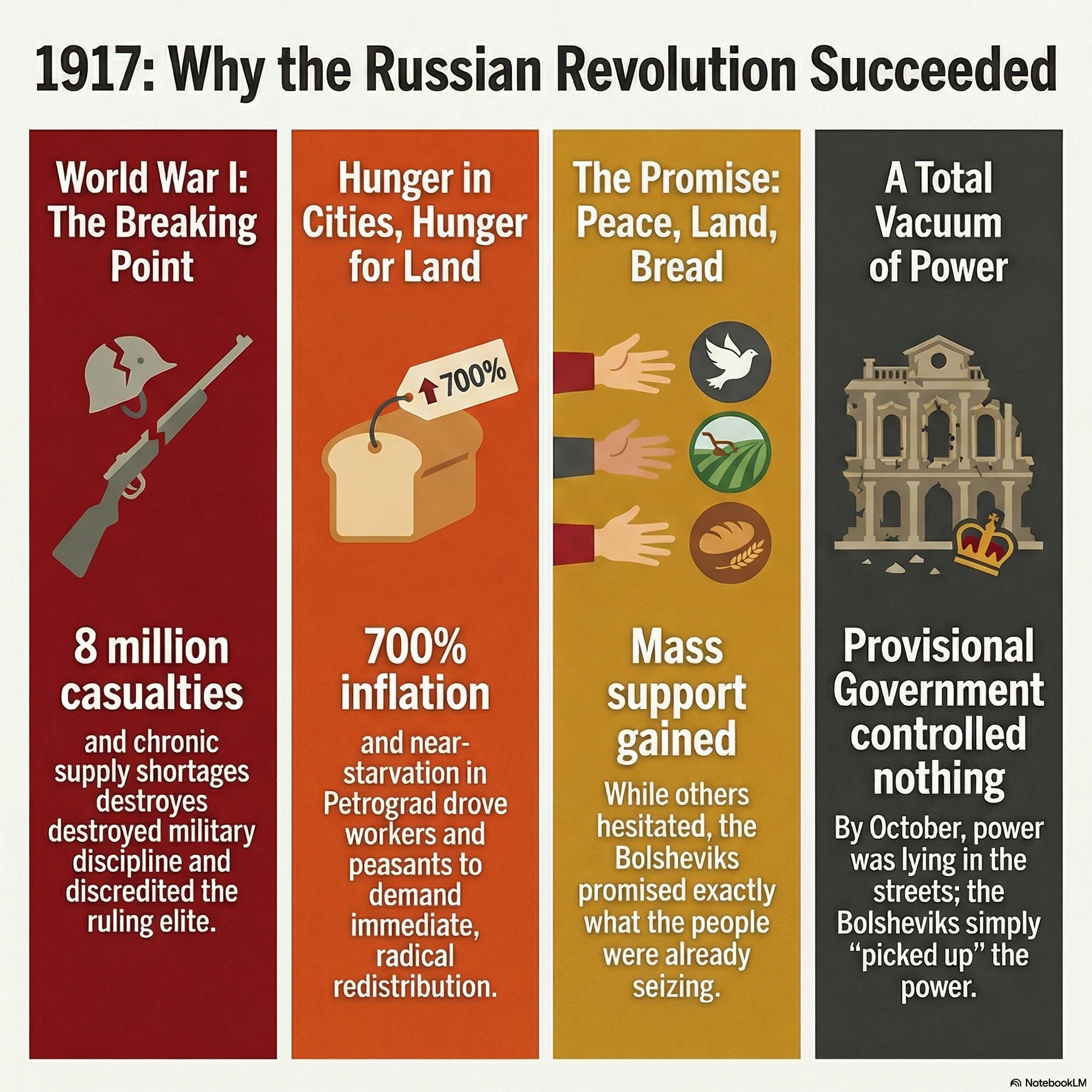
This detailed analysis explores the multifaceted origins of the 1917 October Revolution, tracing Russia’s transition from Tsarist autocracy to Bolshevik rule. The text identifies long-term structural failures, such as the lack of democratic tradition and intense agrarian distress, as the foundation for social unrest. It emphasizes World War One as a critical catalyst that destroyed military morale and triggered a total economic collapse within major cities. Furthermore, the source evaluates the Provisional Government’s inability to resolve urgent issues like land reform and peace, which created a power vacuum. The narrative concludes by highlighting the Bolsheviks' superior organization and their strategic use of the popular "Peace, Land, and Bread" slogan to successfully seize control.
-
1
37:13
This detailed analysis explores the multifaceted origins of the 1917 October Revolution, tracing Russia’s transition from Tsarist autocracy to Bolshevik rule. The text identifies long-term structural failures, such as the lack of democratic tradition and intense agrarian distress, as the foundation for social unrest. It emphasizes World War One as a critical catalyst that destroyed military morale and triggered a total economic collapse within major cities. Furthermore, the source evaluates the Provisional Government’s inability to resolve urgent issues like land reform and peace, which created a power vacuum. The narrative concludes by highlighting the Bolsheviks' superior organization and their strategic use of the popular "Peace, Land, and Bread" slogan to successfully seize control.
We're indexing this podcast's transcripts for the first time — this can take a minute or two. We'll show results as soon as they're ready.
No matches for "" in this podcast's transcripts.
No topics indexed yet for this podcast.
Loading reviews...
ABOUT THIS SHOW
This detailed analysis explores the multifaceted origins of the 1917 October Revolution, tracing Russia’s transition from Tsarist autocracy to Bolshevik rule. The text identifies long-term structural failures, such as the lack of democratic tradition and intense agrarian distress, as the foundation for social unrest. It emphasizes World War One as a critical catalyst that destroyed military morale and triggered a total economic collapse within major cities. Furthermore, the source evaluates the Provisional Government’s inability to resolve urgent issues like land reform and peace, which created a power vacuum. The narrative concludes by highlighting the Bolsheviks' superior organization and their strategic use of the popular "Peace, Land, and Bread" slogan to successfully seize control.
HOSTED BY
David Searle
CATEGORIES
Loading similar podcasts...
Frequently Asked Questions
How many episodes does The October Revolution have?
The October Revolution currently has 1 episodes available on PodParley. New episodes are automatically indexed when they're published to the podcast feed.
What is The October Revolution about?
This detailed analysis explores the multifaceted origins of the 1917 October Revolution, tracing Russia’s transition from Tsarist autocracy to Bolshevik rule. The text identifies long-term structural failures, such as the lack of democratic tradition and intense agrarian distress, as the foundation...
How often does The October Revolution release new episodes?
The October Revolution has 1 episodes. Check the episode list to see recent publication dates and frequency.
Where can I listen to The October Revolution?
You can listen to The October Revolution on PodParley by clicking any episode. We provide an embedded audio player for direct listening, and you can also subscribe via your preferred podcast app using the RSS feed.
Who hosts The October Revolution?
The October Revolution is created and hosted by David Searle.
URL copied to clipboard!