
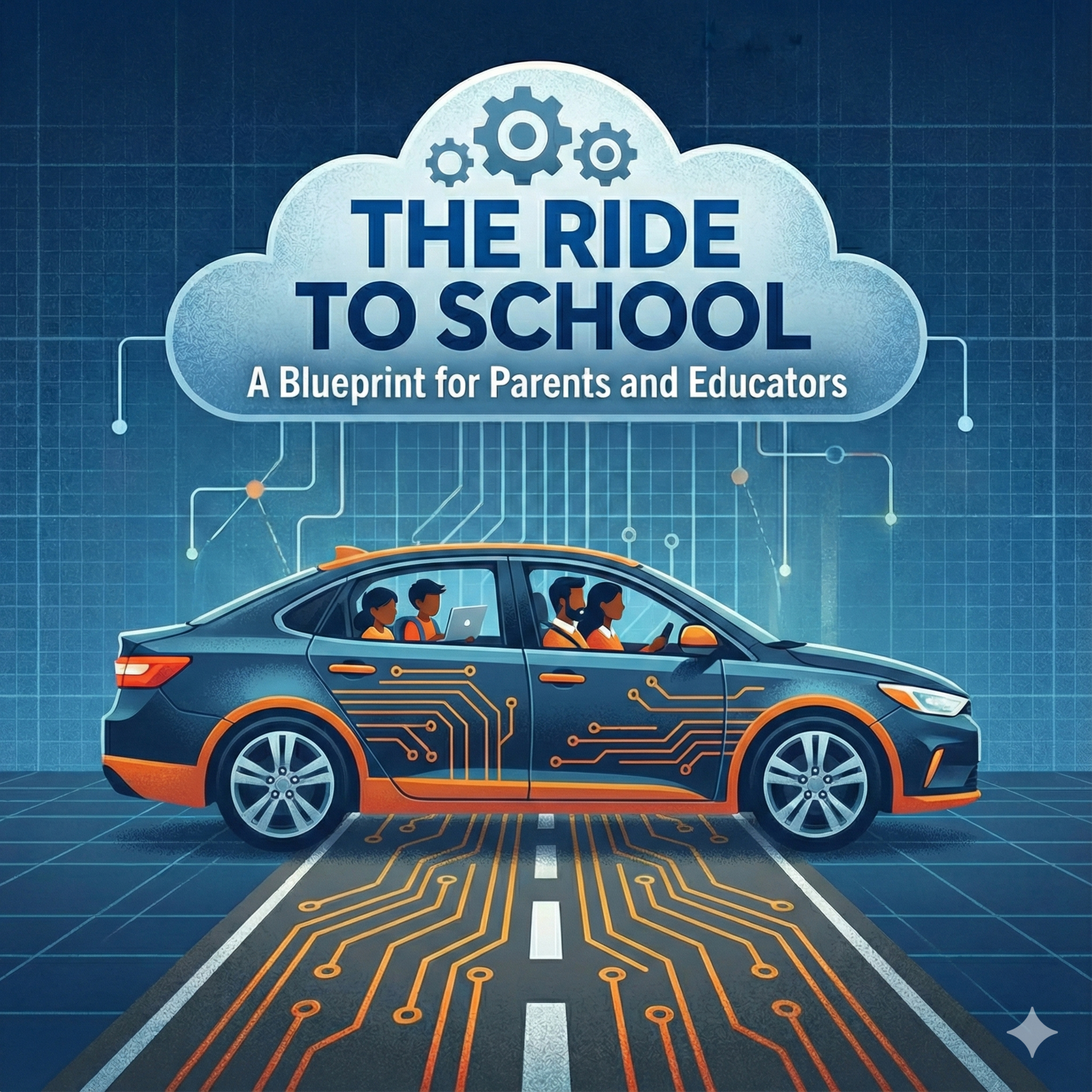
PODCAST · education
The Ride to School: Navigating the Digital World of our Students
by Jerry N. Allen, M. Ed.
A deep dive for parents, educators, and students about the challenges and best practices of navigating the digital world that our students face every day. This podcast, curated by Jerry N. Allen, M. Ed.
-
18
IRS Tax AI Scams
This annual advisory warns taxpayers about AI-enhanced threats, such as voice cloning and sophisticated phishing, that target individuals, small businesses, and educators.
-
17
Travel Safe, Stay Secure: School Breaks
Essential cybersecurity protocols for students and staff to follow during the 2026 spring break. They emphasize protecting Personally Identifiable Information and biometric data from sophisticated AI-driven threats, such as deepfakes and automated phishing. Practical strategies include using the SIFT method for evaluating online content, delaying social media posts to hide one's location, and avoiding school accounts on public Wi-Fi. Educators are specifically encouraged to audit their AI tool usage and utilize secure VPNs to maintain the integrity of school systems.
-
16
Spotting AI Generated Media
A comprehensive guide for identifying AI-generated media, focusing on the specific visual and auditory flaws found in deepfakes. To detect synthetic audio, listeners are advised to listen for robotic intonation, unnatural breathing, and errors in speech patterns while using specialized classification tools. Artificial images and videos can often be spotted by inspecting anatomical inconsistencies, such as distorted hands, misaligned teeth, or unsynchronized lip movements.
-
15
AI Phishing: New Red Flags
A comprehensive overview of how Artificial Intelligence has modernized phishing scams, making them harder to detect by eliminating traditional red flags like poor grammar. Digital attackers now use AI tools to mimic the specific voices of school officials, personalize messages with private details, and create convincing deepfake audio or video. To combat these threats, the guides identify persistent "behavioral glitches," such as artificial urgency, unexpected requests for sensitive data, and mismatched sender email addresses. They recommend a "Pause, Pivot & Report" strategy, which encourages individuals to ignore suspicious prompts and instead verify information through trusted, official channels. Families are also encouraged to establish a secret word to quickly authenticate the identity of a caller in the event of a potential voice scam.
-
14
How Social Media and Micro Hooks Hijack Student Attention
AI-driven "micro-hooks" are designed to fragment a student's attention span by creating a "Dopamine Loop".This fragmentation makes it difficult for students to engage in "deep work," such as reading long-form text or solving complex math problems. This impact is particularly pronounced in "heavy users" (those on platforms for 3+ hours a day). Additionally, these algorithms can induce "scroll-fatigue," a state where a student keeps scrolling due to habit and algorithmic pressure, even when they are bored and no longer want to use the app.
-
13
The Phantom in the Classroom: Ghost Students
Schools warn that phishing scams are targeting students through fake job offers to steal PII. Since AI makes these emails look professional, users must verify sources, avoid clicking unsolicited links, and remain skeptical of offers that seem too good to be true.
-
12
Social Media on Trial
A landmark trial has commenced in Los Angeles to determine if social media corporations are legally responsible for fueling a mental health crisis among children. The litigation focuses on whether platforms like Instagram and YouTube were intentionally engineered with addictive features that prioritize corporate profits over the well-being of young users. While some companies like TikTok and Snapchat recently settled out of court, Meta and Google face a jury to defend their product designs and algorithms. Plaintiffs argue that these technological choices lead to severe issues such as depression and self-harm, drawing parallels to historic legal battles against the tobacco industry. Conversely, the tech giants maintain that their products are protected by free speech and that no proven clinical link exists between app usage and psychological disorders. The final verdict could fundamentally restructure the internet by forcing platforms to dismantle the very mechanisms that keep users engaged.
-
11
The Ownership Illusion of Family Photos
Modern digital stewardship requires a fundamental shift in how parents and educators view the permanency of online content. Uploading personal images often involves a legal surrender of rights, granting platforms irrevocable licenses that compromise a child's future privacy foundation. Beyond simple over-sharing, there are emerging AI threats where public data is harvested to create harmful, synthetic exploitative material.
-
10
Student Data Privacy in the Age of AI
An audio overview for parents and teachers of public school students that will help them and educate them on how implementing artificial intelligence in the classrooms and at the district provide both new challenges and and benefits to student privacy.
-
9
Digital Connections & Wellness
A guide to maintaining a healthy relationship with technology. It begins by defining digital wellness as intentional use of technology to protect mental, physical, and social-emotional well-being. The report identifies four key symptoms of imbalance, ranked by impact: increased stress, reduced focus, sleep disruption, and blurred boundaries, and provides data on how different groups (students, parents, and teachers) are affected by digital overload.
-
8
Your Defense Against AI Scams
An audio overview meant to be an informative Public Service Announcement intended for broad distribution to parents and teachers. This is educational and enlightening, using information from the provided documents to outline the most prevalent holiday scams, especially those leveraging AI and targeting vulnerable groups like seniors and holiday shoppers. It includes social media advertisements and scams as well as cybersecurity like email, phishing, text messages, and others. Emphasizing clear, actionable steps consumers can take to protect themselves and report fraudulent activity, reflecting the advice from entities like the FTC, IRS, and National Consumers League.
-
7
The Attention Economy - The Renaissance Institute
Dr. Andrew W. Berning and The Renaissance Institute, offers a comprehensive overview of digital wellness for PK-20 education, emphasizing the need for a balanced relationship with technology. The document defines digital wellness as using technology in ways that support mental, emotional, and physical health, while critically analyzing the critical need for digital wellness given high screen time usage and the correlation between social media and mental health issues. A significant portion of the material is dedicated to outlining a curriculum and framework, including age-appropriate strategies for PK-12 students and young adults covering topics like cybersecurity, media literacy, the biochemistry of technology (e.g., dopamine), and the impact of algorithms and the attention economy. Finally, the excerpts present practical exercises and strategies for schools and parents, such as digital detoxes, self-binding techniques, and fostering digital citizenship to leverage technology's power while mitigating its risks.
-
6
Artificial Intelligence for Parents
The threat wasn't a monster; it was an invisible engine. We call it Artificial Intelligence. The evidence showed it was already inside the homes of the parents we interviewed—running Alexa, powering Google Search, choosing YouTube videos. It's not science fiction; it’s a machine performing human-like intelligence tasks. A tireless apprentice.The spark was lit in 1956. The Dartmouth Conference. A small group dared to ask: Can machines think? They created the blueprint. Decades later, the tool has become revolutionary.We isolated two key elements of the new threat:Generative AI (The Artist): This isn't just searching; it's creating. Essays, images, code. It analyzes vast amounts of data and synthesizes something brand new.Prompt Engineering (The Director): This is the crucial skill. It's not what you ask, but how. Giving the Artist crystal-clear, specific instructions to get the exact result you need. Precision is power.This tool is in the classroom. The stakes are integrity.Rule One: Appropriate Use. AI is a tutor or a brainstorming partner, not a ghostwriter.Rule Two: Accountability. AI makes mistakes (hallucinations). The student must verify every fact. The student is responsible, not the machine.Rule Three: Transparency. If AI helped draft the work, the teacher needs to know. No submission of AI work as original content. No cheating.Parents have their role: Turn the threat into an advantage. Use AI to create personalized quizzes, craft customized explanations for tough concepts, and—most importantly—practice Prompt Engineering with their kids.The case is clear. The future is here. The job now is to teach them to lead it.
-
5
Artificial Intelligence for Teachers
It's simple. Three crucial facts.Artificial Intelligence IS HERE: Artificial Intelligence isn't coming. It's in the classroom. You need a deeper understanding to ensure its use is ethical and responsible. This is about survival.THE BREAKDOWN: AI is machines thinking. Machine Learning is how they learn the patterns. Generative AI is how they create the content. You are already using this system every day in your Google searches and smart speakers.THE BLUEPRINT: Don't ban it. Master it. Use the Blueprint Mentality to design assignments that demand human critical thought, which AI can't fake. Use the tool for scaffolding and differentiation to save time. Teach the ethics—citation, bias-checking, and privacy—or risk losing their minds to the machine.
-
4
Software Updates .... Why?
You bought the device. You rely on the device. But nothing stands still in the digital world. Updates are not a suggestion—they are a survival requirement. They are a triple threat against digital disaster.Security: Your house needs new locks. Updates are the deadbolt against the hackers, slamming the door shut on vulnerabilities. Stay safe.Performance: Your old sports car needs a tune-up. Updates clear the digital grime, ensuring speed and stability. Stay fast.Compatibility: Your system needs a translator. Updates ensure your device can talk to the newest apps and gadgets. Stay connected.Don't ignore the pop-up. The update is the difference between a secure, lightning-fast machine and a slow, hacked mess. Fix it now.
-
3
Stop the Phish
The enemy? They're not wearing ski masks; they're sitting behind a screen, and they're attacking our schools. This isn't small-time stuff. It’s about stealing W-2s, student data, and the school district's wire transfer funds. They’re going for the jackpot.Their weapon of choice is the lie. They use phishing and social engineering—it's just a fancy way of saying they trick people. They know Principal Gable is busy, so they send an "URGENT" email to create panic. They know parents worry, so they send a fake "unpaid fee" notice to create urgency.The solution? It's simple, but you gotta be tough about it:Stop and Call. If an email demands passwords or money, STOP. Don't reply. Call the person using a number you know is real.Use the Deadbolt. That's Two-Factor Authentication (2FA). Turn it on for everything. It's non-negotiable.Trust Your Gut. If it smells fishy, it is fishy. Delete it.The schools are a soft target. We have to be the hard wall. Train your faculty, warn your parents, and teach your students. Because in this fight, awareness is the only firewall that truly works.
-
2
Holiday Shopping Safety
The holidays are here. And so are the sharks.It’s an unseen war fought on the dark web, in your inbox, and right on your front porch. We're talking about Porch Pirates—thieves who don't care about the Nice List.This is a deep dive into the digital abyss: a brutal, essential guide for Parents, Faculty, and Students on surviving the holiday shopping season. We'll strip back the layers on secure sites, the chilling truth of your location tells on social media, and the best practices to keep your hard-earned gifts from vanishing.Stay safe. Don't be the next victim.We hope you have a safe and happy holiday shopping season.Thank you for listening. Now, let’s get to work.
We're indexing this podcast's transcripts for the first time — this can take a minute or two. We'll show results as soon as they're ready.
No matches for "" in this podcast's transcripts.
No topics indexed yet for this podcast.
Loading reviews...
ABOUT THIS SHOW
A deep dive for parents, educators, and students about the challenges and best practices of navigating the digital world that our students face every day. This podcast, curated by Jerry N. Allen, M. Ed.
HOSTED BY
Jerry N. Allen, M. Ed.
CATEGORIES
Loading similar podcasts...
Frequently Asked Questions
How many episodes does The Ride to School: Navigating the Digital World of our Students have?
The Ride to School: Navigating the Digital World of our Students currently has 17 episodes available on PodParley. New episodes are automatically indexed when they're published to the podcast feed.
What is The Ride to School: Navigating the Digital World of our Students about?
A deep dive for parents, educators, and students about the challenges and best practices of navigating the digital world that our students face every day. This podcast, curated by Jerry N. Allen, M. Ed.
How often does The Ride to School: Navigating the Digital World of our Students release new episodes?
The Ride to School: Navigating the Digital World of our Students has 17 episodes. Check the episode list to see recent publication dates and frequency.
Where can I listen to The Ride to School: Navigating the Digital World of our Students?
You can listen to The Ride to School: Navigating the Digital World of our Students on PodParley by clicking any episode. We provide an embedded audio player for direct listening, and you can also subscribe via your preferred podcast app using the RSS feed.
Who hosts The Ride to School: Navigating the Digital World of our Students?
The Ride to School: Navigating the Digital World of our Students is created and hosted by Jerry N. Allen, M. Ed..
URL copied to clipboard!