
PODCAST · history
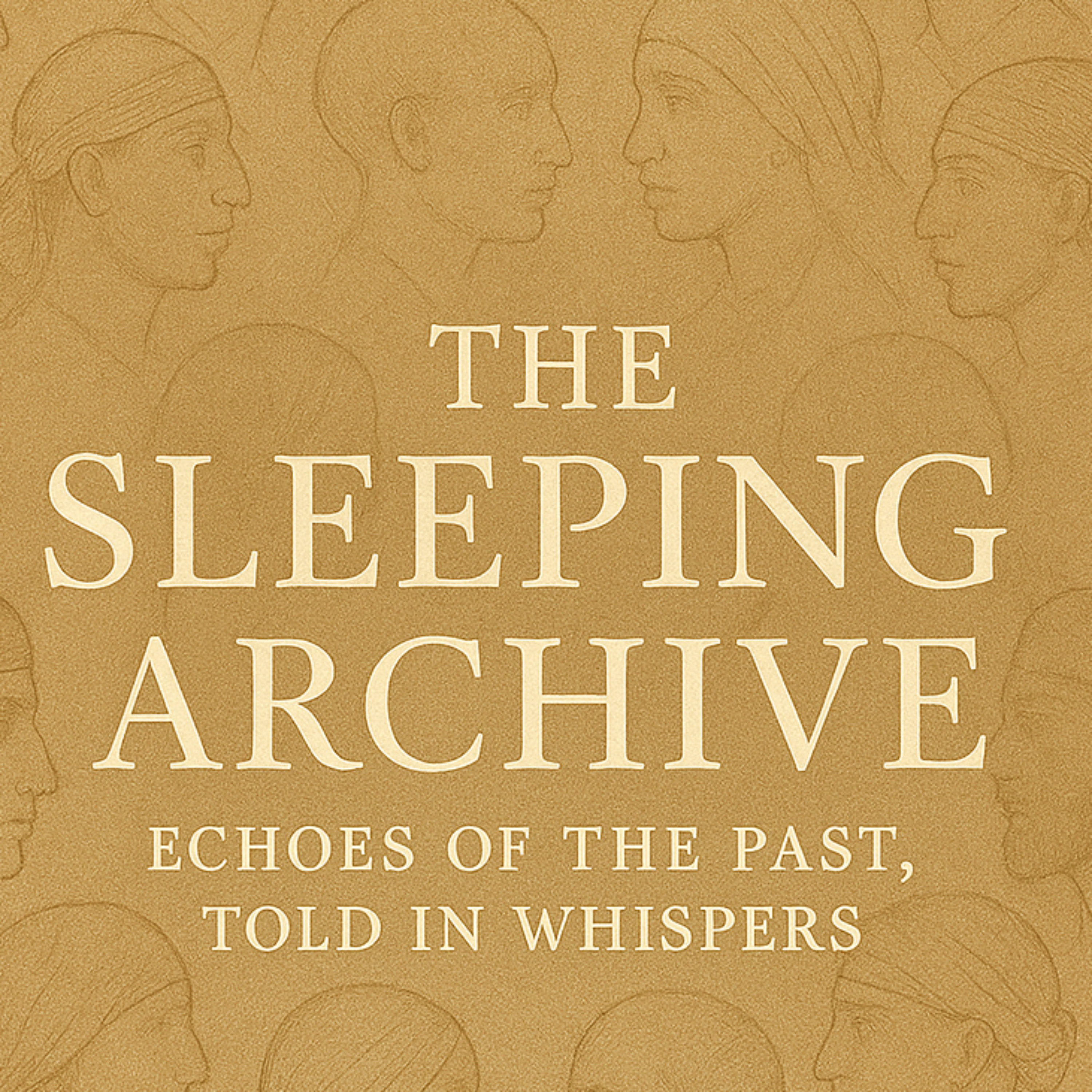
The Sleeping Archive
by The Sleeping Archive
Fictional bedtime stories inspired by real history. Softly told, deeply researched, and designed to help you fall asleep curious and wake up calm. Discover forgotten lives and quiet moments across time — one peaceful story at a time.
-
31
EP30 - The Sound that Survived | Music During the Great Depression (1936)
Step into the winter of 1936, in the quiet center of a neighborhood record shop during the Great Depression. Outside, money is scarce and uncertainty lingers in the air. Inside, shellac records spin steadily beneath a needle, and the sound of music offers something harder to quantify — stability, memory, and a reminder of who people were before the world shifted.In the midst of economic collapse, music did not disappear. It adapted. It gathered people into small rooms. It traveled through radio waves and record grooves. And in one record shop, it became an anchor for a community trying to endure.This is not a story of headlines or stock markets. It is a story of everyday life — of listening, of choosing what is worth preserving, and of the quiet power of sound during one of the most difficult decades in American history.—What to Expect:• Immersive narrative history set in 1936• A first-person account from inside a neighborhood record shop• Historically grounded storytelling within the Great Depression• Calm, reflective pacing designed for evening listening• Suitable for Charlotte Mason and classical learners—This is not a documentary. It’s history, as if you were there.
-
30
EP29 - The Girl Who Sold Pencils | Life in New York During the Great Depression
Step into a winter street in New York City in 1932. The Great Depression has settled into the bones of the city. Storefronts glow faintly in the early dusk. The cold comes early. And at the corner of Broadway, a young girl stands beside a wooden crate filled with pencils, waiting for someone to stop.This episode is set in New York during the height of the Great Depression — a time when unemployment soared, families struggled to survive, and children often worked to support their households. Through a first-person narrative account, we enter the daily reality of survival, dignity, and quiet endurance in one of the hardest economic periods in American history.This is not a documentary. It is a historically grounded fictional narrative, told as if you were there — calm, immersive, and faithful to the social realities of the time.—What to Expect:• Immersive narrative history• First-person storytelling• Historically accurate fictional account• Sleep-friendly pacing• Suitable for Charlotte Mason & classical learners—This is not a documentary. It’s history, as if you were there.
-
29
EP28 - The Dust Bowl and Great Depression (1934) — A Farmer’s First-Hand Account
Step into the Oklahoma plains in 1934, where your narrator is Thomas Avery, a farmer whose family has worked the same land since the Land Run of 1889.For decades, the soil had answered every season of labor with wheat and hope. But during the early years of the Great Depression, drought and wind began to change the land itself.Across Oklahoma and the surrounding Great Plains, years of aggressive plowing combined with severe drought left the soil exposed. By the mid-1930s, enormous dust storms were sweeping across the region, burying crops, choking livestock, and forcing families to confront a devastating reality: the land they trusted could no longer sustain them.In this episode of The Sleeping Archive, Thomas Avery recounts life on the plains as the Dust Bowl begins to take hold. Through his daily routines, family life, and quiet observations of the land, we witness how ordinary farming communities experienced one of the most severe environmental disasters in American history.This calm historical narrative follows the slow unfolding of that crisis — from failing crops and rising dust to the storms that would come to define the Dust Bowl years.––––––––––––––What to Expect• Immersive narrative history• First-person storytelling• Historically accurate fictional narrative• Calm, sleep-friendly pacing• Suitable for Charlotte Mason and classical learners––––––––––––––This is not a documentary.It’s history, as if you were there.
-
28
EP27 - The Bank Teller’s Last Day | Black Tuesday 1929 | The Great Depression
Step into New York City, October 29, 1929.The marble is still cool. The chandeliers are lit. The doors will open at nine.Edward Whittaker, twenty-two years old, is a junior teller at First National Bank. Thirteen minutes remain before the crowd returns — before the mathematics of panic begin to unfold across the counter in stacks of bills and shaking signatures.On Black Tuesday, the day the stock market collapse became undeniable, bank runs spread through the financial district. Depositors lined the streets. Confidence — that fragile agreement holding the system together — began to fracture.This is one day inside that fracture. From the early count in the vault to the moment the bronze doors swing inward, stand behind Station One and witness what happens when belief falters.Told as a third-person narrative, this episode follows the lived experience of a bank teller during the 1929 crash — not from the trading floor, but from the marble counter where ordinary people demanded their savings back.The lights remain warm. The ledger is balanced. The doors will open again tomorrow.For now.––––––––––––––What to Expect:• Immersive narrative history• First-person storytelling• Historically grounded depiction of Black Tuesday (1929)• Calm, measured pacing suitable for sleep• Ideal for Charlotte Mason and classical learners––––––––––––––This is not a documentary. It’s history, as if you were there.
-
27
EP26 - The Man Who Saved the Forbidden Files (Chernobyl Soviet Cover Up, 1986) | The Iron Curtain
Step into April 1986.In the days following the Chernobyl nuclear disaster, a quiet state archivist in Lviv is ordered to remove medical files from the public record. What begins as routine bureaucratic work slowly reveals a systematic effort to erase evidence of radiation exposure, illness, and death. As hospitals fill and official silence deepens, one man faces an impossible choice: obey orders—or preserve the truth.This immersive, first-person historical narrative follows Mykola Kravets, a Soviet archive clerk who secretly documents the medical consequences of Chernobyl as records are altered, relocated, or destroyed. Through testimonies, hidden notebooks, and suppressed diagnoses, the story traces how truth survived beneath layers of political denial.Told with calm, cinematic pacing, this episode is designed for deep listening, study, or sleep. It unfolds slowly, faithfully, and without sensationalism—allowing history to breathe, and memory to endure.
-
26
EP25 - The Man Who Drew Maps (Cold War Czechoslovakia Border Changes, 1977) | The Iron Curtain
Step into Czechoslovakia in 1977. Tonight, you’ll hear the quiet testimony of a state cartographer, told in the first person, who was ordered to redraw the map of his own country under Soviet oversight. As borders shifted and entire towns disappeared under official silence, he became one of the many civil servants forced to participate in Cold War censorship and geographic erasure.This episode immerses you inside the dimly lit drafting rooms where maps were no longer records of truth but instruments of control. Through his eyes, you’ll witness how borders were rewritten, how forbidden maps circulated in whispers, and how the smallest pencil stroke could determine what was allowed to exist.The story you’ll hear is fictional, but every detail is grounded in real Cold War documentation practices, cartographic censorship, and the political manipulation of geography across the Eastern Bloc. The tone remains calm, cinematic, and sleep-friendly, designed to bring history alive gently while staying true to the lived experience of those who served the state in silence.Whether for study, sleep, or simple reflection, this first-person narrative offers an intimate window into Cold War Czechoslovakia, its atmosphere, its tension, its erasures. It’s history made human, told softly, as if you were truly there.
-
25
EP24 - Marriage Under Surveillance (Stasi Surveillance in East Germany, 1970s) | The Iron Curtain
Step into East Germany in the mid-1970s.Anna Fischer is a librarian living a quiet, orderly life in Berlin. She is married, raising children, and accustomed to the small silences that shape everyday existence in the German Democratic Republic. One winter morning, she discovers something she was never meant to see — a file bearing her own name. What follows is a slow, unsettling realization that her marriage, her home, and even her private thoughts exist within a system of constant surveillance.In this calm, cinematic, first-person narrative, you experience daily life under the Stasi not through prisons or interrogations, but through kitchens, family dinners, and ordinary routines. The story traces how surveillance seeped into intimate spaces, how loyalty became ambiguous, and how love itself was shaped by fear and restraint. This narrative is fictional, yet grounded in the documented realities of East Germany’s secret police — where observation was woven into the fabric of domestic life.Use this episode to study, to sleep, or to rest with history unfolding quietly around you.It is paced gently, written with emotional clarity, and shaped for Charlotte Mason and classical learners who prefer to inhabit history rather than analyze it from a distance.Above all, it is a reflection on what it meant to live — and love — under watch.⸻🕯️ What to Expect– Immersive narrative history– First-person storytelling– Historically accurate fictional narrative– Sleep-friendly pacing and tone– Ideal for Charlotte Mason and classical learners⸻This is not a documentary. It’s history, remembered gently.
-
24
EP23 - The Sound of Revolution (The Hungarian Uprising of 1956) | The Iron Curtain
Step into Budapest, 1956.You are Éva Vas, a young cellist whose life is overturned the moment students rise against Soviet control and the streets begin to shake with the first sounds of the Hungarian Uprising. Through your eyes—and your music—you witness how a city under the shadow of the USSR finds the courage to resist. This gentle first-person narration brings you into kitchens, courtyards, basements, and hospital wards as the revolution unfolds around you.As the uprising intensifies, the story follows the moments that shaped the Hungarian Revolution: the torn flag with its emblem cut out, secret gatherings of students, radio broadcasts calling for freedom, and the brutal response that echoed across the Cold War world. Told as a calm, immersive historical narrative, this episode blends intimate memory with historically accurate detail, allowing you to experience 1956 not as a list of events—but as if you lived it.This first-person account is written to help you study, understand, and feel the Hungarian Uprising with emotional clarity and sleep-friendly pacing. Whether you are exploring the Cold War, the rise of student movements, life under Soviet occupation, or simply want to experience history in a quiet, cinematic way, this episode invites you to listen, learn, and remember.
-
23
EP22 - When Printing Became a Crime (Martial Law in Poland, 1981) | The Iron Curtain
Step into December 1981.A quiet print technician in Gdańsk begins his morning shift without knowing the world around him is about to collapse. As Poland falls under martial law, Marek Nowak must choose between the safety of his family and the dangerous truth he helps circulate through the underground press. What begins as routine work becomes a clandestine battle for information, dignity, and survival.In this calm, cinematic, first-person narrative, you experience the tightening control of the regime, the silence of occupied streets, the fear inside family kitchens, and the desperate courage of ordinary people who continued to print what could not be said aloud. This story is fictional, yet every detail is rooted in the historical reality of Poland under martial law — where paper and ink became a form of resistance.Use this episode to study, to sleep, or to breathe deeply through living history.It’s paced gently, written with emotional clarity, and shaped for Charlotte Mason and classical learners who prefer to feel history rather than memorize it.Above all, it is a reminder of what it once meant — and still means — to tell the truth.
-
22
EP21 - The Teenage Dissident ( Soviet Surveillance & Student Resistance, 1976) | The Iron Curtain
Step into Leningrad, 1976.Through the eyes of sixteen-year-old Irina Volkov, discover a quiet rebellion unfolding inside the walls of a Soviet school. This is a first-person account of censorship, poetry, and courage — a young girl’s defiance against ideological conformity in the heart of the Cold War.As Irina and her friend Misha copy forbidden poems by candlelight, the line between truth and survival blurs. Surveillance tightens, loyalty fractures, and every word becomes an act of resistance. This story captures the weight of silence, the cost of beauty, and the courage it takes to think freely under totalitarian watch.Told in the calm, cinematic style of The Sleeping Archive, this fictional yet historically accurate narrative evokes the tension and tenderness of living history — where one student’s notebook becomes an archive of forbidden dreams.
-
21
EP20 - The Letter That Didn’t Arrive (Censorship in Cold War Bulgaria, 1969) | The Iron Curtain
Step into Bulgaria, 1969.Inside a dim postal office under the Iron Curtain, a government censor opens a letter that was never meant to be read — and makes a choice that will change two brothers’ lives forever.Told in the first person, this immersive Cold War story explores censorship, compassion, and the quiet rebellion of a man whose job was to silence others.As the envelopes pile up and the red CENSORED stamp falls again and again, one letter refuses to disappear.What begins as a routine inspection becomes a dangerous act of mercy — and a secret that will test the boundaries between duty and humanity.This calm, cinematic narrative blends historical truth with emotional storytelling — a first-person journey through the hidden machinery of Cold War surveillance.
-
20
EP19 - The Street that Forgot Its Name (Life Behind the Berlin Wall, 1961-1989) - The Iron Curtain
Step into East Berlin, 1961.Margot Schneider has lived on Karl-Marx-Straße for most of her life. Through her eyes, we witness the morning her street changes its name, the slow rhythm of careful days under watch, and the quiet defiance of ordinary people living behind the Berlin Wall.This immersive, first-person historical narrative carries us from the Wall’s construction to the night it fell — a life told in small acts of adaptation, love, and endurance across nearly three decades of division.Written and narrated in The Sleeping Archive style — calm, cinematic, and historically faithful — this story brings history to life for study, rest, or reflection.
-
19
EP18 - A Secret Beneath Parliament (Guy Fawkes & the Gunpowder Plot, 1605) | The Reformation
Step into London, 1605.Joan Rennett is a cellar keeper’s wife—quiet, invisible, and used to being overlooked. But when barrels begin to appear beneath the Palace of Westminster and a strange black powder clings to the air, she becomes the silent witness to something far more dangerous than anyone suspects. This is the Gunpowder Plot, told not from above—but from below.Based on true events and inspired by the infamous November 5th conspiracy to blow up Parliament, The Cellar Keeper’s Wife is a first-person historical narrative. It offers a fictional yet deeply grounded account of one woman’s descent into a web of secrets, suspicion, and the thin line between faith and treason.This calm, sleep-friendly story invites you into the shadows of the Reformation era—where the most dangerous place to stand is the one no one sees.
-
18
EP17 - The Friend I Never Saw Again ( The St. Bartholomew Massacre, Paris, 1572) | The Reformation
Step into August 1572.Mathieu Lenoir is twelve years old, a Catholic boy living on Rue des Barres in the heart of Paris. His closest friend is a Huguenot — a bond forged in childhood and kept secret from those who would tear it apart. When the church bells ring early one morning, Mathieu assumes there’s been a fire. But what follows is something far more horrifying. As he watches from his window, the city he thought he knew erupts into chaos. His friend disappears. No one will explain why.This immersive, first-person narrative brings to life the events surrounding the St. Bartholomew’s Day Massacre, a dark turning point in the French Wars of Religion. Through the eyes of a child, we experience the confusion, grief, and slow realization that sometimes the most terrifying stories are the ones people tell in God’s name.This episode is calm and cinematic in tone — designed for study, reflection, or restful listening. The story is fictional but historically grounded.
-
17
EP16 - Her Sister the Heretic (The Italian Inquisition, 1546) | The Reformation
Step into the late 1540s, in Northern Italy, as the shadow of the Roman Inquisition deepens. Chiara Bellini, a Catholic widow, is summoned with quiet urgency. Her sister fled to Geneva years ago — and now lies dying. The questions come hard. The answers might cost everything.This is The Sister’s Confession, a fictional first-person account set during the Council of Trent era, when Reformation ideas crossed borders and tore through families. Told with calm, cinematic clarity, this historically grounded narrative explores the tension between institutional loyalty and personal love.Perfect for study, sleep, or reflection, this immersive episode brings the past to life — not as a documentary, but as a living memory.
-
16
EP15 - A Book Worth Dying For (Smuggling the Tyndale Bible, 1536) | The Reformation
Step into 1536 England.Margery White, a Kentish cloth weaver and quiet mother, never asked for danger. But when a forbidden English New Testament—translated by William Tyndale—arrives smuggled within the wool she spins, Margery begins a quiet rebellion. As she reads the Gospel of Matthew in her own tongue for the first time, the world around her begins to shift: the Church’s grip, her husband’s rule, even her own understanding of faith.This immersive historical narrative brings to life the cost and courage behind Bible translation during the English Reformation. Told in Margery’s voice, it is a story of hidden truth, silent resistance, and a flickering candle in the dark.Perfect for sleep, study, or gentle learning.
-
15
EP14 - The Manuscript They Couldn’t Burn (Dissolution of Westminster Abbey, 1521) | The Reformation
Step into Westminster Abbey in 1539.Brother Oswin, a 55-year-old scribe and monk, watches as Henry VIII’s commissioners arrive to dismantle the Abbey and strip it of its sacred books. As the Dissolution of the Monasteries sweeps across England, he makes a quiet choice—to preserve what he can. Together with a young clerk, he begins a secret manuscript, recording centuries of scribal knowledge before it’s erased forever.Told as a first-person historical narrative, this calm, contemplative episode brings you into the heart of Tudor England during the English Reformation. It is fictional, but grounded in historical fact.Ideal for listeners seeking:– The Dissolution of Westminster Abbey– The English Reformation and Henry VIII– Historical fiction and first-person storytelling– Sleep-friendly history and immersive narration– Westminster Abbey history and monastic life
-
14
EP13 - The Day the Church Was Defied (Martin Luther at Worms, 1521 | The Reformation
Step into the year 1521.Niklas Brandt, a 29-year-old imperial secretary, has just arrived in Worms. His duty is simple: transcribe the proceedings of a trial. But the man on trial is Martin Luther — and as the words echo through the chamber, Niklas begins to question everything he once thought neutral.This calm, cinematic narrative retells the Diet of Worms, where Martin Luther was summoned to answer for his writings before Emperor Charles V. Told from the perspective of an imperial stenographer, the story explores the quiet tension between truth and duty — and what happens when a witness begins to care.The story is fictional, but grounded in historical accuracy and drawn directly from eyewitness accounts, trial records, and letters.
-
13
EP12 - The Man France Didn’t Choose (The Rise of Napoleon (1799) | The French Revolution
Step into November 1799.Laurent, a weary Parisian bookseller, once drunk on the language of liberty, now watches dust gather on unread pamphlets as a general’s name begins to replace them.The slogans are fading. The crowds are thinning. The boots are getting louder.As the echoes of revolution turn to whispers, Napoleon Bonaparte rises — not with chants, but with signatures. Laurent, who once shelved dreams beside slogans, listens now to the corridors of power.In this episode of The Sleeping Archive, we witness the quiet coup that ended a decade of upheaval. Told in the first person, this is the story of a man who once believed, now watching a uniformed silence replace the noise of freedom.
-
12
EP11 - The Priest in Hiding (Catholic Resistance in France, 1793) | The French Revolution
Autumn 1793. Father Étienne Morel, a 63-year-old priest in the Vendée countryside, slips through hedgerows at dusk to offer Mass in a candlelit barn.He has refused the oath. The churches are shuttered. The Republic calls his ministry a crime. But the people still come — barefoot, whispering, crossing themselves by memory.As the flames of civil war rise around him, Father Morel tends to quieter fires: grief, hope, and the long endurance of faith.In this immersive, first-person historical narrative from The Sleeping Archive, we step into the woods and fields of a forgotten resistance. Through the voice of a hunted priest, we remember that conscience leaves its mark not only in protest, but in prayer.
-
11
EP10 - The Pen That Betrayed Paris (The Fall of Robespierre, 1794) | The French Revolution
Summer 1794. Geneviève wakes before dawn to the smell of smoke and ink — not from her desk, but from the streets.The names come faster now. The robes grow heavier. The ink blots spread. She no longer knows if she’s writing history or hiding it. Outside, voices chant. Inside, she keeps her head down, her pen moving, her conscience blurred by duty.In this immersive first-person sleep story, we follow one woman’s reckoning in the final days of the Terror. Through her eyes, we witness how fear seeps into ink — and how memory survives beneath the stains.
-
10
EP09 - The Paper that Silenced Paris (Reign of Terror, 1793) | The French Revolution
October 1793. Geneviève, a 25-year-old clerk for the Committee of Public Safety, copies names beneath the soft scrape of quill on parchment.Each evening, she writes in candlelight — the same names they speak in whispers. Once, she transcribed minutes. Now she transcribes deaths. The room smells of ink and damp wool, and the only thing sharper than the pen is the silence.In this immersive first-person sleep story, we step into the quiet eye of the Reign of Terror. Told from inside the mind of one civil servant, this fictionalized but historically grounded narrative invites you to witness how revolutions aren’t only shouted — they’re written.
-
9
EP08 - The King’s Last Ride (The Execution of Louis XVI) | The French Revolution
January 21, 1793.Pascal, once a royal coachman, stands at the edge of the Place de la Révolution as a wooden cart creaks toward the scaffold.In this immersive first-person historical narrative, we witness the execution of King Louis XVI through the eyes of someone who once drove his carriage — a quiet man watching the final procession with heavy memory and solemn grace.Told in a calm, cinematic tone, this sleep story blends historical detail with gentle storytelling. A fictionalized eyewitness account designed to help you unwind while remembering one of the most dramatic turning points of the French Revolution.Whether for sleep or study, The Sleeping Archive brings history to life — softly, and from the inside out.
-
8
EP07 - Bread and Blood (Women’s March on Versailles, 1789) | The French Revolution
Step into October 5, 1789.Through the eyes of Madeleine, a 32-year-old widow and baker, witness the Women’s March on Versailles — a protest born not of politics, but of hunger.This immersive first-person historical narrative brings you inside one of the French Revolution’s most pivotal events: the October Days, when thousands of women walked through rain and mud to confront the king. Shoulder to shoulder, they carried the weight of their children’s empty stomachs — and the future of France.Told in a calm, cinematic tone designed for rest and reflection, this is not a textbook reading. It’s living history, told as if you were there.Whether you’re studying the French Revolution, using Charlotte Mason methods, or simply winding down for the night, The Sleeping Archive brings the past to life — one human story at a time.
-
7
EP06 - The Mob that Shook Paris (Storming of the Bastille, 1987) | The French Revolution
Step into July 14, 1789.Through the eyes of Étienne, a seventeen-year-old apprentice caught in the storming of the Bastille, this immersive first-person historical narrative takes you inside one of the most iconic moments of the French Revolution.Told in a calm, cinematic tone designed to help you wind down, this is a first-hand account crafted from real historical details.Whether you’re exploring history for learning or sleep, The Sleeping Archive offers living history told the way it should be: personal, emotional, unforgettable.
-
6
EP05 - The Baker Who Heard the Reformation (1517) - Martin Luther’s 95 Thesis | The Reformation
Step into October 31, 1517 — the day Martin Luther’s 95 Theses were nailed to the Wittenberg church door.In the shadow of Wittenberg’s church doors, Margaretha Töpfer — a widowed innkeeper — pours beer for students arguing about indulgences and Latin. She doesn’t speak Greek. But she knows the sound of conviction when a man’s voice starts to tremble. And one morning, when she watches a monk pass her window with parchment tucked under his sleeve, something stirs within her too.Through her quiet eyes, we witness the beginning of the Protestant Reformation — not from the pulpit, but from the table. This immersive first-person narrative brings the 95 Theses to life in a new way: deeply human, sleep-friendly, and grounded in historical truth.Whether you’re studying history or winding down, this story draws you into the firelit world of faith, reform, and quiet courage.
-
5
EP04 - Whispers in Versailles (October Days, 1789) | The French Revolution
Step into October 5, 1789.Élise Dufour, a 28-year-old lady-in-waiting to Marie Antoinette, pins the Queen’s ribbon as murmurs rise beyond the palace gates. Outside, women march through the rain toward Versailles. Inside, the mirrors are still polished, and the gowns are still pressed. But something has changed.In this immersive first-person narrative, the October Days of the French Revolution are seen not from the streets — but from the gilded stillness within the palace. Through Élise’s quiet loyalty, we witness the unraveling of court life — not in chaos, but in silk, suspicion, and ceremony.This sleep-friendly story explores the silence before the storm — when history turned, but no one yet dared to name it.
-
4
EP03 - The Mold that Saved Millions (Discovery of Penicilin, 1928)
In 1928, Alexander Fleming returned to his London lab to find a forgotten petri dish — and changed the course of history. This is the quiet story of how penicillin was discovered: a mold, an accident, and the chance observation that saved millions of lives.Told in a calm, immersive style, this episode invites you into the hospital corridors and cluttered benches where the future of medicine began. Perfect for listening as you fall asleep, or for gentle historical study.
-
3
EP02 - The Day The Mountain Painted Back (Eruption of Mount Vesuvius, Pompeii)
The Day the Mountain Painted BackPompeii, 79 ADLucia, a young painter’s apprentice, recalls the final day before Mount Vesuvius buried her city. Through her eyes, beauty and terror blur as ash silences Pompeii.A first-person historical sleep story from The Sleeping Archive — calm, cinematic, and true to history.🎧 Ideal for rest, reflection, or quiet study.
-
2
EP01 – By the Grace of Her Majesty (The Coronation of Elizabeth II, 1953)
On June 2, 1953, Queen Elizabeth II was crowned at Westminster Abbey in a ceremony broadcast around the world. This episode offers a gentle, immersive retelling of that historic day — seen through the quiet eyes of Thomas Ridley, a young Grenadier Guard standing outside the Abbey.As the golden coach passes and church bells ring, he bears witness to the coronation not in triumph, but in posture, silence, and pride.A soft, sleep-friendly story for adults — made to be heard at rest. Let memory and meaning unfold, one quiet moment at a time.
-
1
Trailer - Welcome to The Sleeping Archive
Welcome to The Sleeping Archive — a place to slow down, drift off, and rediscover the past through quiet storytelling.This trailer introduces the idea behind the podcast: fictional bedtime stories inspired by real history. Each episode is a calm, immersive glimpse into another time — drawn from real people, places, and events.This isn’t a documentary. It’s not a history lecture. It’s a space to rest, imagine, and explore the quiet side of history.Fall asleep curious. Wake up calm.New episodes coming soon.
We're indexing this podcast's transcripts for the first time — this can take a minute or two. We'll show results as soon as they're ready.
No matches for "" in this podcast's transcripts.
No topics indexed yet for this podcast.
Loading reviews...
ABOUT THIS SHOW
Fictional bedtime stories inspired by real history. Softly told, deeply researched, and designed to help you fall asleep curious and wake up calm. Discover forgotten lives and quiet moments across time — one peaceful story at a time.
HOSTED BY
The Sleeping Archive
CATEGORIES
Loading similar podcasts...
URL copied to clipboard!