
PODCAST · history
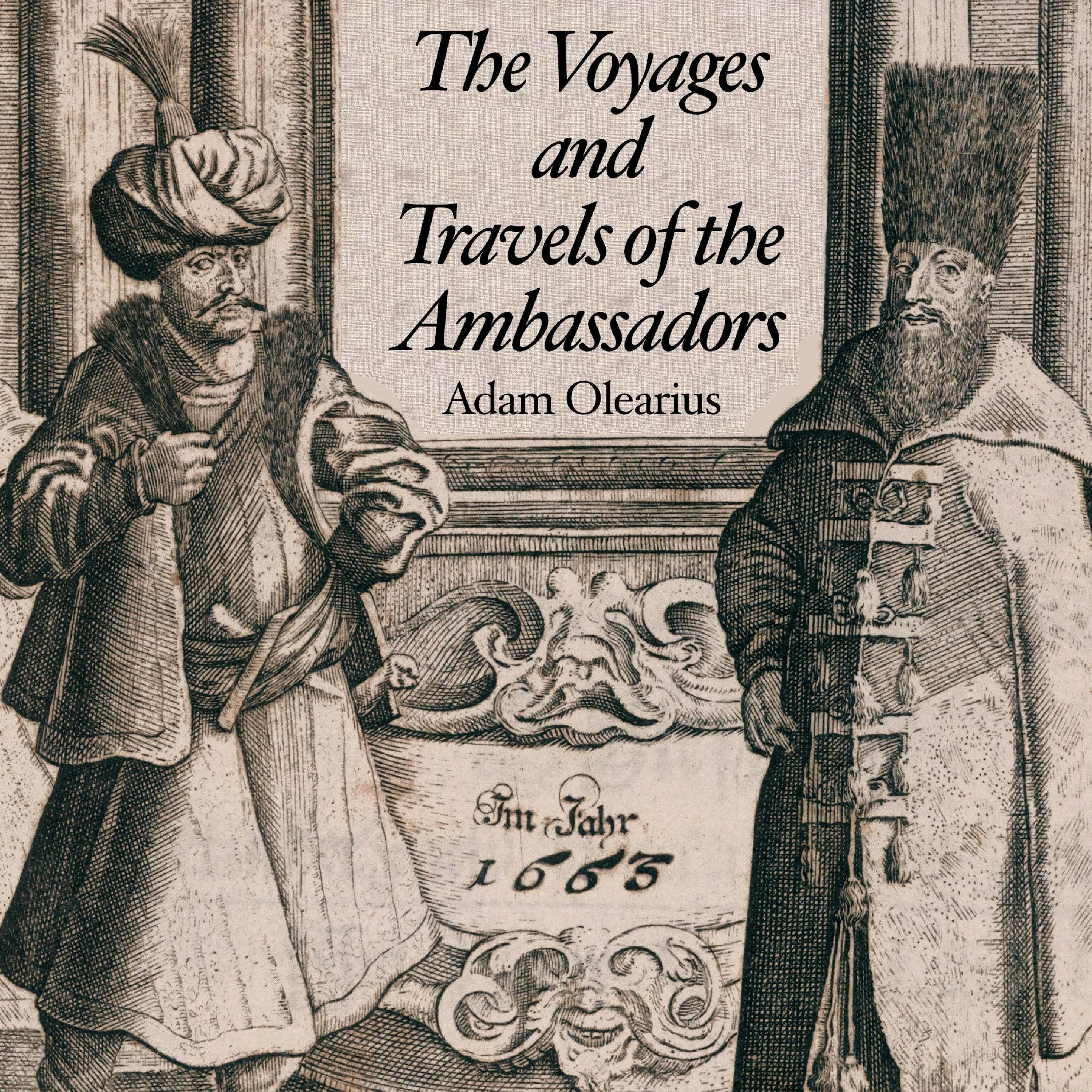
The Voyages and Travels of the Ambassadors
by Steven W. Aunan
The epic story of a 17th century trade expedition from Germany to Persia that failed so completely its leader was publicly executed upon his return. semipropilgrim.substack.com
-
26
Episode 31: Home, and Execution
Our ambassadors arrive in the Russian city of Astrakhan on June 15, 1638, and stay until September 7. Bruggeman has a guilty conscience for his “many imprudent actions” during the journey. He also fears being punished by Duke Frederick upon returning to Holstein, a fear which causes him to make even more bad decisions.They leave Astrakhan on September 7, after being informed by some local rogue Cossacks that they have successfully robbed so many people on the river that they are eager to see if they can also rob the Germans.The Volga is beginning to freeze, and the three ships barely make Casan on November 6. The river is impassable the next morning, and the mayor of the city – who has a decidedly unfriendly view of the German trade mission – prohibits them from coming ashore.They reach Moscow on January 2, 1639, staying at the ordinary house appointed for the reception of ambassadors.Everyone is back at Duke Frederick’s home at Schloss Gottorp on August 1, 1639.Olearius writes: “And so they concluded their Travels into MUSCOVY, TARTARY, and PERSIA. FINIS.” This is a public episode. If you would like to discuss this with other subscribers or get access to bonus episodes, visit semipropilgrim.substack.com
-
25
Episode 30: The Most Dangerous Place in Europe
It is the middle of April, 1638, and our German trade ministers are roughly two-thirds of the way through their 9,000-mile round-trip to Isfahan.They are stuck in the city of Tarku, on the coast of the Caspian Sea, which today bears the name of Makhachkala and is the capital of Russia’s Republic of Dagestan.They are stuck because independent warlords control every village, city, and river crossing in Dagestan, all of them have their own plans for robbing or killing the Germans, none of them want to let the other warlords get the upper hand, and none of them want to supply the Germans with the food they need to reach the Russian city of Astrakhan.All of this makes Tarku most dangerous place of the entire journey. This is a public episode. If you would like to discuss this with other subscribers or get access to bonus episodes, visit semipropilgrim.substack.com
-
24
Episode 29: Barbarians of Dagestan
Our ambassadors leave the city of Schamachie on March 30, 1638, keeping an eye out for highway robbers, and a week later arrive in Derbent. The coastline of Derbent is pure rock, and serves as the foundation of the city wall, which is so broad that a wagon easily be driven on top of it. The city is sometimes called the Gate of Persia, since it lies on the extreme northwestern edge of the empire, and its walls extends from the sea to the top of a nearby mountain.This long defensive wall is known as Dagh Bary, which literally means “Mountain Wall” from the Turkish word for mountain and the Persian word for wall. According to the Encyclopedia Iranica, it stretched “many kilometers” into the mountains and had numerous fortresses and towers of its own.It is also called Alexander’s Wall because legend has it that Alexander the Great built the wall to defend against the tribes of Gog and Magog to the north.An order comes down from the ambassadors that no one should tempt any citizen of Derbent to quarrel with them, lest the locals fall upon the whole company and murder them.Before leaving, the ambassadors take stock of their weapons, counting 52 muskets and firelocks, 19 cases of pistols, two brass cannons, and four murdering-pieces (the stone-firing cannons), all fit for service. This is a public episode. If you would like to discuss this with other subscribers or get access to bonus episodes, visit semipropilgrim.substack.com
-
23
Episode 28: The Sign of the Seven Stars
“Having travell’d two leagues, we were got to the Caspian Sea-side, whence we saw the Countrey, which is all cover’d with Trees and Forests towards the North and South, spreading itself like a Crescent a great way into the Sea, on the right hand, from about Mesanderan and Ferahath, and on the left, from about Astara. We travell’d about a league along the Caspian Sea-side, and lodg’d at night upon the Torrent Nasseru, in a house call’d Ruasseru-kura, which had but two Chambers in all, so that being streightned for room, most of our people were forc’d to lie abroad, at the sign of the Seven-Stars.”The date is February 1, 1638, and our ambassadors are roughing it on the coastal road of the Caspian Sea. That is, Secretary Olearius and the other gentlemen are sleeping in a two-room roadhouse while everyone else sleeps under the stars. This is a public episode. If you would like to discuss this with other subscribers or get access to bonus episodes, visit semipropilgrim.substack.com
-
22
Episode 27: Paradise and Punishment
Our ambassadors are in the northern Persian city of Caswin, about 50 miles from the Caspian Sea, and near their lodgings is a tree full of nails and ribbons. A saint who once performed miracles is buried under the tree, and a holy man at the site collects alms and offerings from people who come for healing from toothaches, fevers, and other diseases.The healing is not free, of course, and the alms collected by the holy man encourage impostors to set up shop at other trees where no saints are buried.The Germans leave Caswin on January 20, 1638. Fifteen miles to the west, they spend the night in the small town of Achibaba, which, we are told, was named after an old man who lived there in the time of Sheikh Sefi, the mystic Sufi master whose name was taken by the Safavid dynasty.Allah performed a miracle for the old man and his wife – who were then near 100 years old – by reviving what Olearius calls “the heat of younger years” and giving them a son.The modern name of the town is Aghababa, but some sources refer to it as Aqbaba. Aside from census data and weather reports, there is very little information about the town, but one nugget makes up for all that is missing. To find it, we have to travel forward in time to the year 1921. For in 1921, the little town of Aqbaba served as the launchpad for a mostly-bloodless coup by Col. Reza Shah Pahlavi and the Persian Cossack Brigade that ended the reign of the Qajar dynasty, which had ruled the country since 1785.Achibaba, Olearius tells us, is at “the foot of the mountain” – the mountain being part of the Alborz range between Caswin and the Caspian Sea – and the road passes through fruitful country where the people of Caswin graze their cows on plentiful, excellent good grass.On January 23, the road leads through a forest of olive trees to a narrow passage, anciently called the Fauces Hyrcaniae, that leads to Kilan province and thence to the Caspian.On the last day of January, the khan of Kurab greets the Germans with 100 horsemen, accompanies them to their lodgings, and sends them a gift of four wild boars. This is a public episode. If you would like to discuss this with other subscribers or get access to bonus episodes, visit semipropilgrim.substack.com
-
21
Episode 26: Eclipse, Insurrection, and Murder
The date is December 21, 1637, and we have made our way to Book 7 of the travel journal of Adam Olearius, the last of the series. Our trade ambassadors have survived the dangerous journey from Germany to the capital city of Persia, but, as we will see, Ambassador Otto Bruggeman’s actions have made the return trip even more dangerous.On New Year’s Day they fire their cannons three times in celebration, listen to a sermon, make what Olearius calls “the ordinary prayers,” and then travel another five leagues to the village of Sensen.As they leave Kom early on the morning of January 5, Olearius reports a near-total solar eclipse. The sun was “not quite three degrees above the horizon when the moon deprived us almost of all sight of it,” he writes, “and so overshadowed it, that, to my judgement, in the greatest obscurity, the eclipse was three parts of four.”Sometime on January 6, Adam Olearius’ horse falls down dead in the harsh winter weather of the Persian plateau, and they slog through six inches of snow for the next 150 miles until they pass through the coastal mountains on the southern shore of the Caspian Sea.Ambassador Bruggeman’s horse falls down under him, too, and not only is his right arm put out of joint, but he hits his head on the ground and his brains are so disordered that they fear he might never recover. They reach Saba that night, some 180 miles from Isfahan, and stay there all the next day in the hope that Bruggeman will recover his senses.They reach the city of Caswin on January 11, and stay more than a week waiting for fresh horses and mules. This is a public episode. If you would like to discuss this with other subscribers or get access to bonus episodes, visit semipropilgrim.substack.com
-
20
Episode 25: Dogs, Pigs, Camels and Silk
Welcome to The Voyages and Travels of the Ambassadors, the epic story of a 17th century trade expedition from Germany to Persia that failed so completely its leader was publicly executed upon his return. This is Episode 25: Dogs, Pigs, Camels and Silk.Last time we heard about the suburbs and agriculture of Isfahan, and now we will learn why, according to Persian lore, certain animals hate each other.The best silk is white, but yellow silk could also be quite good as long as it is clean and of good quality. Production estimates vary widely. At the turn of the 17th century, Robert Sherley said Persia’s total yield of silk was 34,000 bales. In 1635 the Dutch East India Company said a “normal” year’s production was 4,000 bales. Olearius claimed an annual harvest of 20,000 bales, but it is not clear where he obtained that figure.Silk production in Persia was a local affair but a national business, and much of the trade was conducted door to door, bale by bale. Although transportation costs could have been minimized by going overland, Holstein was starting from scratch and paying significant tariffs to both Russia and Persia.Some caravans traveled west to Aleppo, in modern day Syria, or northwest through Anatolia to Istanbul. Others west south, crossing mountains and deserts on the way to the Persian Gulf. The journeys typically took two to four months.If the Holstein mission had succeeded, their caravans would have traveled north to the Caspian, up the Volga, and thence to the Baltic. The Caspian shipping season extended from April to October, and Russian winters dictated that the last ship had to leave Persia by late August. The cargo vessels typically used by the Russians each had a capacity of 250 bales and followed the coastline to Astrakhan, where the silk was reloaded onto smaller riverboats and sent upstream to Saratov. From Saratov, which our ambassadors saw in episode 6, merchandise was loaded onto wagons for the trip to Moscow.The entire return trip on this new Silk Road envisioned by Duke Frederick would have taken about six months. But it never did happen, and as we reach the end of Book 6 and the end of 1637, our ambassadors are preparing for a discouraging trek back to Holstein. This is a public episode. If you would like to discuss this with other subscribers or get access to bonus episodes, visit semipropilgrim.substack.com
-
19
Episode 24: Suburbs, Inflation, and the Great Pox
We continue our exploration of Isfahan, which is the most commodious of any Persian city, Olearius writes, and is just as good in winter or summer because the mountains are nearby and there is always some wind stirring, which cools the air in all the homes of the city.Surrounding Isfahan there are nearly 1500 villages, many of them engaged in manufacturing textiles. Every province in the country produces cotton, and the fields around Isfahan are intentionally flooded when the river rises with melting snow. If not for this, Olearius writes, the region would not be habitable because of the “excessive heats which reign there.”In winter, although it does freeze, the ice is not even as thick as a man’s finger, and it thaws as soon as the sun appears over the horizon.The city also has many large suburbs, and the fairest of all is New Julfa, which we have seen in several previous episodes and is occupied primarily by the Armenian Christians. No Christians live within the walls of the city, but Olearius says this is because they like it that way, preferring to “settle themselves in a place, where they might live quietly and enjoy the freedom of their conscience.”In Kasan, the air is unwholesome and the pox is common even though that city is geographically “excellently well seated.” They also have tarantulas and the most dangerous scorpions in all of Persia.The ordinary money of Persia is of silver and copper. Gold is rare, and available only in foreign coins. Olearius describes the different minting marks, and tells us that every Persian city has its own money that is changed every year, and that such money can be spent only in the place it was minted.Centralized government control of economies is a history of failure, and inflation ravaged the entire region of Turkey, Persia, and India beginning in the late 1500s. Arriving from Europe, it was exacerbated by the Ottoman-Safavid wars and other factors.By 1677, French traveler Jean Chardin said, “The money itself has been altered. One no longer encounters good coins.” He also called the Indian moneylenders in Isfahan “true bloodsuckers [who] draw all the gold and silver out of the country and send it to their own."By 1684, most of the coins remaining in circulation were seriously debased, the bazaars at Isfahan were closed, and the shah ordered new money to be minted. By 1694, the population was suffering from heavy increases in taxation, a sharp decline in wealth, and a severe lack of gold and silver coin.Trade had been irreparably damaged. Inflation increased even further. The shah was unable to pay the army. And the famed security of Persian roads – enjoyed by our ambassadors from Holstein – disappeared as caravans were attacked even within sight of the capital.The Safavid Empire fell in 1722. This is a public episode. If you would like to discuss this with other subscribers or get access to bonus episodes, visit semipropilgrim.substack.com
-
18
Episode 23: Isfahan, Ispahan, or Spaam?
They say that the City of Isfahan was once called Hecatonopolis, and that 2nd century Roman astronomer Ptolemy referred to it as Aspadana. In old Persian, the city was known as Sipahan, the plural form of a word meaning “the gathering place for armies,” and plural because the original city consisted of seven villages.Tamerlane conquered the city in 1387 AD and named it Ispahan – with a p – by switching the first two letters of the old Persian name. The Persians call it Isfahan – with an f – from an Arabian word meaning rank or battalion.The ambassador of Venice to Persia in 1473, Ambrogio Contarini, called the city Spaa, Spaam, and Aspacham. For our story, of course, the year is still 1637, and according to our intrepid author, Adam Olearius, Isfahan’s real name is Ispahan with a p. We will continue to call it Isfahan with an f.The city lies in the province of Erak, which is ancient Parthia, on a spacious plain with mountains on all sides, making the city look like a geographic amphitheater. Counting all of its suburbs, the city is more than eight German Leagues in circumference, or some 36 miles, which is about as far as a man can travel in one day. There are 12 city gates, of which only nine are open, more than 18,000 houses, and about 500,000 inhabitants, which works out to nearly 25 persons per house.What contributes most to the greatness of this city are the markets, the bazaar, the public baths, and the palaces, Olearius writes. But even better are the city’s gardens, and many houses have two or three gardens and most have at least one. This is a public episode. If you would like to discuss this with other subscribers or get access to bonus episodes, visit semipropilgrim.substack.com
-
17
Episode 22: Pleasure and Pain
Shah Safi I is the grandson of Shah Abbas I, and he had succeeded to the throne only because Abbas had murdered his eldest son and blinded his younger sons. Like the sons, the grandson spent his youth in his grandfather’s harem, where he was regularly given large amounts of opium and alcohol.Abbas took the throne from his father in 1587 with a military coup. Upon seizing power, he sent his father to die in prison and blinded his two surviving brothers to prevent them from mounting their own coup. His harem consisted of up to 500 women, three or four of whom were wives he had officially married. The rest were concubines – mainly from Georgia, Armenia and Circassia – slaves who had been taken in war, purchased, or received as gifts from local governors.In the early years of Safi's reign, almost all the royal princes, including some of Safi’s cousins, were systematically blinded or murdered. Between 1630 and 1634, a large number of leading figures in the empire and servants of the court were murdered, including – to name just a few – the commander-in-chief of the armed forces, all the generals of the royal guard, and the Grand Vizier.Opium most likely originated in Asia minor. It was cultivated in lower Mesopotamia around 3400 BC. In Persia, it is cheap, legal, and – unlike alcohol – carries no negative religious connotations. It also suppresses the appetite, and so makes a good substitute for food.Following a failed diplomatic mission or defeat in battle, Persian officials seem to have frequently taken their lives to avoid the wrath of the shah and possible execution. Opium is less common as a murder weapon, but on November 24, 1577, Persian Shah Ismail II, after a night of wandering about town with his companion, may have been murdered by enemies who laced his opium with poison. A eunuch is a castrated male. In ancient China and the Middle East, eunuchs were hired as both harem guards who acted as intermediaries with the male world of the court, and as high-ranking officials. In some jurisdictions, eunuchs required an annual license that could be renewed by producing the jar containing their genitals. Those who had lost their own jar were known to borrow or rent one to avoid losing their license.Under Islamic law, their status as slaves makes eunuchs the adopted sons of their owner. The shah trusts them implicitly, and by the time Safi takes the throne, these slave eunuchs govern eight of the fourteen biggest provinces in Persia, and 20% of the high administrative posts.All the eunuchs are slaves, but the white eunuchs from the Caucuses are employed outside the harem, while the black eunuchs – some from Africa, but most from India, Malabar, or the Gulf of Bengal – have exclusive charge of the women inside the harem.The shah invites the ambassadors to dinner on December 3, and Olearius tells us this is the final time they visit court. After dinner, the shah explains his decision about the trade negotiations. He will send an ambassador back to Holstein with the Germans, at which time he will deliver the shah’s recommendations to Duke Frederick.They leave Isfahan on the evening of December 21, 1637. This is a public episode. If you would like to discuss this with other subscribers or get access to bonus episodes, visit semipropilgrim.substack.com
-
16
Episode 21: Dying, Drinking, Hunting, and Killing
Last time, we heard the tale of watchmaker John Stadler’s execution for murdering a Muslim citizen of Isfahan. This time we will hear the same tale as told in 1678 by French jewel merchant Jean-Baptiste Tavernier, who made six voyages to Turkey, Persia, and India over the course of his 40-year career.Tavernier is perhaps most famous as the man who brought the Hope Diamond from India to Europe, probably during his sixth and final voyage between 1664 and 1668. The stone originally weighed 112 carats, and was known as the Tavernier Blue. He sold the diamond to Louis XIV of France for 220,000 livres, or the equivalent of 16,500 English pounds.John Stadler arrives in Persia six years before we meet him. He is often seen in the company of our Germans. After killing a Muslim, Stadler is sent to prison, and the shah tries three times to rescue him: the first time offering him two thousand tumans to convert, and the second time offering ten thousand tumans and a woman from his harem with all her jewels. He is executed at the end of October, 1637. This is a public episode. If you would like to discuss this with other subscribers or get access to bonus episodes, visit semipropilgrim.substack.com
-
15
Episode 20: Wedding, Betrayal, Execution
The Armenian community in Isfahan was created in 1604 when Shah Abbas conducted a scorched earth military campaign against the Ottomans in the Caucuses, left many villages and the city of Julfa as smoking ruins, and deported the Armenians to Persia for his strategic and economic benefit.Our ambassadors have their first public audience with the shah occurs on August 8, 1637, and the first private audience three weeks later. They attend many of the best parties ever, but the English merchants throw a party that surpasses the magnificence of all previous entertainments. The Prior of the Augustine monastery complains about debauchery to Adam Olearius. Olearius complains to Ambassador Bruggeman and is threatened with murder. This is a public episode. If you would like to discuss this with other subscribers or get access to bonus episodes, visit semipropilgrim.substack.com
-
14
Episode 19: Isfahan Throwdown
Our ambassadors arrive in Isfahan on August 3, 1637, and immediately get into a running street battle with servants of the Indian ambassador. The shah demands someone's head.Olearius tells us that, in general, the Indians are good natured, civil, friendly, and their conversation not unpleasant, provided that no one does them any injury. But they are also apt to resent any kind of insult, they are never satisfied without taking the blood of those who do the offending.The first audience with Shah Safi occurs on August 16. Forty horses from the shah’s own stables arrive to take them to dinner. Shah Safi sits on a satin cushion, behind the fountain, his back to the wall. He is about 27 years old, Olearius says, “handsome bodied, having a graceful aspect, and of a clear and smooth complexion, somewhat hawk-nosed, as most of the Persians are,” with a little black moustache on his upper lip.The Germans are seated near 13 very handsome women dancers, and some of them are the most beautiful courtesans of the city who pay a yearly tax to conduct their business and must come to court whenever the shah sends for them. “We were told,” Olearius writes, “that a man might have had his choice of them for a tuman.” You will remember from episode 13 that a tuman is not an actual coin, but a unit of accounting. In the 1930s, one tuman was equivalent to about five American dollars.The Germans discover afterward that a spy had been hidden nearby during dinner, observing their demeanor, listening to whatever they said among themselves, and reporting back to the shah. Bruggeman is critical of the paintings, the entertainment, and the manners of the Persians, and that this works to his disadvantage and prejudice during the later negotiations. This is a public episode. If you would like to discuss this with other subscribers or get access to bonus episodes, visit semipropilgrim.substack.com
-
13
Episode 18: Across the Persian Desert
The Holstein trade mission leaves Caswin on the evening of July 13, 1637, the baggage and sick people leaving first and the gentlemen following later that night.This is the final leg of their outbound journey from the German port city of Hamburg to the Persian capital of Isfahan that began almost four years ago. Along the route they’re taking, Persia is about 500 miles wide from the Caspian Sea to the Persian Gulf, and although the 300-mile road to Isfahan does not cross the harshest deserts in the country, the conditions described by Adam Olearius are still very harsh indeed.Our ambassadors are crossing the western edge of this desert in Caswin province toward the city of Kom and a great dry salt lake. Ambassador Crusius falls ill. Not able to ride on horseback, he is carried on a litter for several days. At a caravanserai named Choskeru, the names of travelers are carved on the walls, like people from every era in history who want to leave some evidence that they had been there. The heat is so bad they strip down to their underwear. They pitch tents to acquire some shade, but wind out of the mountains comes in blasts that are hotter than the heat of an oven. They escape into the caravanserai and Olearius tells us they cannot walk five or six steps without burning their feet.Several of the Germans are plagued by the “bloody flux,” which he says is caused by eating too much fruit and drinking too much water. Three men die of the disease, and their bodies are carried to the next stop, the city of Kaschan.Because of the scorpions, the locals never sleep on mattresses laid on the ground, as they do in other cities, using a bed frame instead. Olearius is the only member of the trade mission to get stung by one. The Persian remedy for scorpion bites is to apply a piece of copper money to the wound, leave it there for 24 hours, and then replace it with a plaster made of honey and vinegar.They reach Isfahan on the morning of August 3, 1637. This is a public episode. If you would like to discuss this with other subscribers or get access to bonus episodes, visit semipropilgrim.substack.com
-
12
Episode 17: Immortality and Brain-Eating Snakes
The Persian city of Caswin, where our trade ambassadors from Holstein are now, is about 50 miles from the south shore of the Caspian Sea. They have traveled almost 500 miles overland after being shipwrecked on the west shore near the small town of Nisavay, and they have roughly another 300 miles to go before reaching their destination – the capital city of Isfahan.The perimeter of Persia is almost entirely mountainous, while the center is a vast desert plateau that sits below the mountains but two or three thousand feet above sea level. The country might be described as a saucer, and the central desert is sometimes called “Qanat Civilization” due to its long historical use of irrigation systems.Caswin, at the extreme northwestern edge of that great desert, is snuggled into a pocket right up against the Alborz mountain range. The kings of Persia once had their ordinary residences here after Shah Tamasp transferred his court here from Tauris.It is said that Caswin was once the home of a famous physician named Lokman, a black Arabian who had acquired a great reputation because of the many books he had written about medicine and other works that endeared him to the inhabitants of the city. One day, the wise Lokman was asked how he had attained such great learning, and he said it was due to the ignorant and uncivil people, for he had always done the opposite of what he had seen them do. This is a public episode. If you would like to discuss this with other subscribers or get access to bonus episodes, visit semipropilgrim.substack.com
-
11
Episode 16: Apricocks, Cowcumbers, and Home Invasions
As the trade mission from Duke Frederick of Holstein prepares to leave Ardebil, our author investigates the local religious institution built by the city’s founder and expanded by his son. Its wealth amounts to many millions in gold, that it could supply more ready cash than the Shah of Persia himself, and that it is capable of raising and maintaining a powerful army all on its own. The tomb of Sheik Sefi has the additional critical function of providing certificates that can be used to prove a pilgrim’s Islamic faith, protect the bearer against disgrace and misfortune, and even save them from execution.They leave Ardebil on June 10, with 160 horses and 12 camels, and eight days later reach the village of Kamahl and find their assigned lodgings to be unacceptable. So they force their way in to several occupied homes, evicting families of men, women and children into the night. As you might expect, this does not end well.At the little city of Senkan, they encounter a man with wooden hands and no feet, although he appears to ride as well as anyone else. The son of an important family in the city, the young man had been guilty of “strange debauches and extravagances” including the frequent rape of women and girls in their own homes. His behavior had become so bad that the shah could have ordered his execution. But his father’s good reputation at court saved his life, and the penalty was merely that his hands and feet were cut off, and the stumps thrust into boiling butter to stop the bleeding.In Sulthanie, 15 members of the embassy get sick from the sudden changes in temperature – extreme cold at night to the excessive heat of the day – and all suffer fits and a violent burning fever. This is a public episode. If you would like to discuss this with other subscribers or get access to bonus episodes, visit semipropilgrim.substack.com
-
10
Episode 15: Oh Husayn!
"By God’s wisdom, because cats in Ardebil have short lives, there are very many rats, more than in other regions. The mice chew up the people's clothing – their woolen cloaks, for example. So this city has a royal auction for cats. There are professional cat-brokers, much in demand, who sell cats in cages. The Divrigi cat is a particular favorite, fetching a price of up to 100 gurus; still, it does not live long here. When the brokers cry their wares, this is the patter they sing in a loud voice: ‘You who seek a feline, A cat to hunt your mice: To rats it makes a beeline, but otherwise it’s nice; An enemy to rodents, And yet it’s not a thief; A pet to share your grief.’”At least that’s the story from Evliya Celebi, an Ottoman citizen who was born in 1611, died around 1683, and documented 40 years of travels in a manuscript that apparently remained unknown until 1742. A complete edition in Turkish did not appear until 1938, and – as unbelievable as it may seem – critical translations had to wait until the 1970s.The city of Ardebil is located in the midst of a great plain and surrounded by mountains. Mount Sabalan to the west is always covered with Snow, and mount Bakru lies to the southwest. The air from these mountains is sometimes extremely hot and sometimes extremely cold, so that autumn can even begin in August and the air brings what he calls “epidemical diseases” that kill a great number of persons every year.The ambassadors take a tour of Sheik Sefi’s tomb, but only after giving up their personal weapons, for anyone who carries even a knife into the tomb is subject to execution.On May 14, the citizens of Ardebil begin a 10-day festival celebrating the memory of Husayn ibn Ali – grandson of Muhammad himself – killed at the battle of Karbala in the year 680 AD. The battle marked an important milestone in the schism between the Sunni and Shia sects of Islam, and the Safavid state used it and other observances in a government-run operation to convert its majority Sunni population to the Shia faith.Over the years, Safavid shahs gradually instituted forms of piety specific to their brand of Shi‘ism, and some historians say the reforms begun by Abbas I “created a new dependency of the monarchy on a greatly strengthened Shia clergy for its legitimacy – a development which could be said to have led eventually to the overthrow of the monarchy in the Islamic revolution of 1978-9.” This is a public episode. If you would like to discuss this with other subscribers or get access to bonus episodes, visit semipropilgrim.substack.com
-
9
Episode 14: 6000 Batmans of Wine
This is the first episode of the year 2024, and I am recording it on January 1. On the Islamic calendar, the current year is 1445, and it is 1402 on the Iranian calendar.In Persia, the date is March 30, 1637, and our travelers are in the Kur River valley near the modern-day border of Azerbaijan and Iran. After days of freezing in the mountains, they now encounter “nothing but fair weather, a sky clear, and without any cloudiness,” except for a light haze in the mornings that is quickly burned off by the sun.They cross the river on April 2, and are met by a guide from the city of Ardebil. They transfer their belongings to 40 camels and 300 horses, being informed that wagons are not suitable for the next 120 miles of road through mountains and valleys. Each day on the road to Ardebil, they are supplied with 10 sheep, 30 batmans of wine, along with rice, eggs, almonds, raisins, and as much fruit as they please.They arrive in Ardebil – where they will stay for two months – on April 10 and with greater pomp and magnificence than they had met in Schamachie. About a league from the city, Governor Kelbele Khan – described as “a low man, but of a good aspect and pleasant humor” – meets them with more than a thousand horse-mounted troops. This is a public episode. If you would like to discuss this with other subscribers or get access to bonus episodes, visit semipropilgrim.substack.com
-
8
Episode 13: The Great Persian Replacement Theory
The worst day of the Persian year is the Wednesday before New Year’s Day. Nothing good ever happens on that day, so no one does business, no one signs contracts, no one holds a party, and – perhaps most important of all – no one pays anyone any money. Some people spend the entire day counting whatever money they have, while others go without speaking. Many people sprinkle their homes and possessions with river water, hoping to fend off any misfortune. If they meet anyone they know on the way home from the river, they throw water into his face. If they meet a best friend, they may pour a whole jug of water on him, the theory being that anyone so doused with water cannot fail to be happy for the rest of the year.Islam has a fierce reputation for opposing alcohol, but – as we have seen since our ambassadors arrived in Persia – that reputation was hardly warranted in the 1600s. Historically, some shahs, caliphs, and sultans took it more seriously than others, and historians also note that Muhammad had a progressively negative take on drinking: from calling wine good nourishment, to a warning against abusing it, to insisting that wine leads to sin, to a prohibition on attending prayer while drunk, and only then banning alcohol altogether.Farrukhi Sistani, one of the most prominent court poets in the history of Persian literature, wrote in the 11th century that, “Although wine is forbidden, I believe that it becomes licit for lovers when spring arrives. God gives us His blessings as we drink. Come and don’t regret it.”Safavid Shah Isma’il, who at the age of 15 declared himself the ruler of Persia in 1501, suffered a catastrophic defeat by the Ottomans in 1514 and was never the same man again. Instead of governing, he took to hunting, drinking wine, spending time with young boys, and alternately trying to legitimize Islam and engaging in ritual drinking combined with sex orgies.His son, Shah Tahmasb, was more devout. Ruling from 1524-1576, he gave up drinking wine and instituted the practice of enslaving Christians from the regions west of the Caspian Sea. This is a public episode. If you would like to discuss this with other subscribers or get access to bonus episodes, visit semipropilgrim.substack.com
-
7
Episode 12: Gunpowder Empires
Welcome to The Voyages and Travels of the Ambassadors, the epic story of a 17th century trade expedition from Germany to Persia that failed so completely its leader was publicly executed upon his return. This is Episode 12: Gunpowder Empires.It is still early February, 1637, and our voyagers are still in the city of Schamachie, Persia, just a few days by horseback from where they were shipwrecked on the Caspian Sea. They have been drinking their way across two continents, carrying barrels of the stuff by land, river, and sea, and 22 of them are in bed with “burning fevers” caused by the "abundant drinking of wine."But this episode is mostly about gunpowder and trade, epitomized by two adventurous British brothers, Sir Anthony and Sir Robert Sherley, soldiers of fortune who traveled to Isfahan to persuade Shah Abbas to form a military alliance with the Christian kingdoms. When they arrive in Persia in 1599, their first meeting with Shah Abbas occurs as he returns from an eastern campaign against the Uzbeks. According to Anthony, the Shah’s soldiers carry no less than 24,000 decapitated enemy heads on pikes. This is a public episode. If you would like to discuss this with other subscribers or get access to bonus episodes, visit semipropilgrim.substack.com
-
6
Episode 11: Death and Astronomy
It is now January 1637, and the new year begins with a funeral for the Persian man who drank himself to death at the welcome party for our ambassadors in the town of Schamachie.Olearius visits various schools and mosques on his walks in the city, and sometimes carries with him a small celestial globe which he has made himself. Teachers and students tell him that “astrology and the mathematicks” must be taught better in Germany than Persia, for they are “not acquainted with the invention of globes, and make use only of the astrolabe for instruction.”He demonstrates certain uses of the astrolabe to an Arab astrologer named Khalil, who "desired me to show him how I could set down the degrees so exactly." Khalil is so much obliged that he lets no opportunity pass to assure Olearius of his friendship, “expressing it by frequent visits and by offering all the service that lay in his power.”And we hear the story of the Gottorp Globe built in Holstein after Olearius returns to Germany, and discover how Japanese sailors reached St. Petersburg in 1803 and proceeded to circle the earth on their way home. This is a public episode. If you would like to discuss this with other subscribers or get access to bonus episodes, visit semipropilgrim.substack.com
-
5
Episode 10: Mountains, Mausoleums, and Music
It is now December 1636, and our adventurers are making their way south along the coast of the Caspian Sea, in what is still one of the most dangerous places on earth.We ended the last episode with a brief history of the major conquests of the region. As I write this episode, the most recent military conflict has ended in the old way: a prolonged siege with all the suffering that entails, followed by conquest, the expulsion of civilians, and celebration by the victors.This particular chapter of the ancient story started with the fall of the Soviet Union, when Azerbaijan and Armenia both claimed the mountainous region of Nagorno-Karabach, some 150 miles from Nisavay where our ambassadors are currently located. This is a public episode. If you would like to discuss this with other subscribers or get access to bonus episodes, visit semipropilgrim.substack.com
-
4
Episode 9: How Many Miles to Babylon?
How many miles to Babylon? Threescore miles and ten.Can I get there by candle-light? Yes, and back again.If your heels are nimble and light,You may get there by candle-light. – Songs for the Nursery (1805)The date is November 15, 1636, and the wrecked Friedrich has deposited them in a very pleasant country, green and filled with birds who sing until the middle of December. The village of Nisavay has only 15 or 16 poor houses, built of clay and absolutely square, with turf roofs you can walk on. In summer, the Persians erect tents up there so they can enjoy the cool air.The weather is good, and on December 1 “a little society” of gentlemen find a place near Nisavay “so pleasant and inviting, that the fairest meadows in Europe afford not anything so delightful in the best season of the year.” A stream circles the meadow. Pomegranate trees invite them to “rest ourselves under their shade, and divert ourselves with the memory of our dear country.” They all bring what food and drink they have, and enjoy a picnic that lasts several days.They depart Nisavay on December 22, 1636. This is a public episode. If you would like to discuss this with other subscribers or get access to bonus episodes, visit semipropilgrim.substack.com
-
3
Episode 8: Hyrcanian Sea
It is now October 10, 1636, and the Friedrich is sailing down the shallow Volga delta, guided by a new pilot from Astrakhan and preceded by a boat of Tatars who are supposed to help them avoid the sandbars.Incredibly big plants grow along the river, Olearius says. Esula, today listed among the world’s 100 most invasive species, grows as tall as a man, and Angelica as big as a man’s arm. Angelica has been cultivated in northern climates since the 10th century, and can be used to make candy and flavor various kinds of liquor including aquavit, gin, and absinthe.They pass the best fishing grounds in the country and a place the Muscovites call “The Sacrifice of the Tatars.” It is a settlement on the island of Perul, where a long pole is kept with a sheep’s skull at the top of it. Whenever the inhabitants take a voyage, they sacrifice a sheep. The skull remains on the pole until the next voyage, or until it falls off on its own accord.They also see great white pelicans, and Olearius says the “great bag of shriveled skin” under their beaks can hold nearly three gallons of liquor. The locals use them for fishing, tying strings around their legs and throats, and if we are to believe the tale of one Franciscus Sanctius, the bird eats children on the coasts of Africa. The Persians make musical instruments out of their skin. This is a public episode. If you would like to discuss this with other subscribers or get access to bonus episodes, visit semipropilgrim.substack.com
-
2
Episode 7: The Venice of the South
The date is September 16, 1636. After an exhausting voyage down the Volga, our ambassadors are anchored off the Russian city of Astrakhan, and Paul Fleming is writing a 200-line poetic monument to his friend and fellow poet, Adam Olearius.He relates how he and Olearius are wont to go down to the edge of the Caspian to contemplate the tempestuous sea, describing its fury and the events that culminated in the Baltic shipwreck described in Episode 4. And he exclaims that he wishes all his unhappiness had been destroyed and sunk to the bottom of the sea in the storm.Olearius measures the city at 8,000 feet in circumference, and the side towards the river at 2,216 feet across. He says the city “affords a pleasant prospect, by reason of the great number of turrets and steeples of stone, which look very delightful at a distance.” The houses are made of wood and not well built, and thus the city is not so beautiful when viewed up close. This is a public episode. If you would like to discuss this with other subscribers or get access to bonus episodes, visit semipropilgrim.substack.com
-
1
Episode 6: The Cossacks
Welcome to The Voyages and Travels of the Ambassadors, the epic story of a 17th century trade expedition from Germany to Persia that failed so completely its leader was publicly executed upon his return. This is Episode 6: The Cossacks.We are now in Book 4, the date is July 30, 1636, and the ambassadors are about to board the Friedrich, and leave Nizhny Novgorod for Astrakhan, where the Volga River empties into the Caspian Sea.But they discover that a labor dispute has been simmering among the shipbuilders, and a reckoning of construction costs is required. Upon investigation, they find two issues. One, that the recruiter who had hired the workers is getting a kickback of 40 rubles in exchange for securing higher wages. And two, that a blacksmith who had cheated the company is now threatened with punishment that might include a death sentence. This is a public episode. If you would like to discuss this with other subscribers or get access to bonus episodes, visit semipropilgrim.substack.com
-
0
Episode 5: To the Volga
It is now the spring of 1636. For the past two-and-a-half years, our ambassadors from Holstein have traveled to Moscow twice over land and sea. Not only have they been shipwrecked, shot, kicked by horses, and thrown off sleds into the snow, they’ve been attacked by Russian insects and German mercenaries. And they’ve partied with Livonian nobles, with Swedish ambassadors, and with working-class Russians on the frontier.Ambassadors Bruggeman and Crusius are negotiating the company’s departure to Persia, imploring the Tsar to confirm everything previously agreed with Duke Frederick, and invoking the family ties between the two men.On April 3, Crusius addresses the Tsar on behalf of the Duke. The abbreviated version is: “His Princely Excellence now requests Your Tsarist Majesty, as a friend, uncle, brother-in-law, to grant us a secret audience, to hear our plea, and to act upon it favorably.” This is a public episode. If you would like to discuss this with other subscribers or get access to bonus episodes, visit semipropilgrim.substack.com
-
-1
Episode 4: Back to Moscow
Welcome to The Voyages and Travels of the Ambassadors, the epic story of a 17th century trade expedition from Germany to Persia that failed so completely its leader was publicly executed upon his return. This is Episode 4: Back to Moscow.So far, our trade ambassadors from Holstein have sailed up the Baltic, traveled overland to Moscow, and been granted permission by Tsar Mikhail I to cross Russian territory into Persia. But Duke Frederick of Holstein must also sign the treaty and approve a first-year payment to the Tsar of 600,000 reichthalers. The ambassadors make the return trip in the dead of winter.They spend three weeks in Reval, the modern city of Tallinn, and the journey is going well until February 2, when our intrepid author, Adam Olearius, is almost killed by friendly fire in the small city of Parnau. This is a public episode. If you would like to discuss this with other subscribers or get access to bonus episodes, visit semipropilgrim.substack.com
-
-2
Episode 3: To Moscow
Welcome to The Voyages and Travels of the Ambassadors, the epic story of a 17th century trade expedition from Germany to Persia that failed so completely its leader was publicly executed upon his return. This is Episode 3: To Moscow.It is now the end of July 1634, and the company is, once again, eager to get moving, but they are forced to remain in a small island fort on Lake Ladoga, called Nöteburg because it is shaped like a nut, for another three weeks. They arrive in Great Novgorod on July 29, where Paul Fleming and others in the advance group have been waiting since February.On August 7, the citizens of Budovo release swarms of bees among the caravan, causing the horses to “stand upon their hinder feet, and beat the ground, as if they had been bewitched.” They make camp in a field. A week later they arrive in Moscow.The entrance into Moscow is comical, but obviously serious in the same way our modern processions of politicians arrive in a caravan of black SUV’s. Upon entering the city, they see whole streets burned down by a fire so violent it had reduced 5,000 homes to ash, forcing many inhabitants to take shelter in tents and huts. The pristav installs them in their assigned quarters, two ordinary homes made of wood, and apologizes that the fire has also burned down the ambassadorial residence usually used for such visits. This is a public episode. If you would like to discuss this with other subscribers or get access to bonus episodes, visit semipropilgrim.substack.com
-
-3
Episode 2: Waiting for the Tsar
In Episode 1, we followed the Ambassadors on their winter voyage up the Baltic Sea from Lubeck to Riga, and then overland to Narva in a convoy of horse-drawn sleds. We pick up the story as Adam Olearius and his companions are waiting for Tsar Mikhail I to authorize their entry into Russia. It is now January 1634, and as the company waits to get moving, I will introduce the ambassadors chosen for the journey by Frederick, Duke of Holstein. This is a public episode. If you would like to discuss this with other subscribers or get access to bonus episodes, visit semipropilgrim.substack.com
-
-4
Episode 1: The Fortune
On the night of Nov. 11, 1633, a ship named Fortune, 34 passengers aboard, was making her way up the Baltic Sea from Lubeck to Riga, when a storm forced the crew to take in all sails.In the bowels of the convulsing ship, one of the passengers was keeping a journal. “Those among us who were not used to the sea were so sick that some vomited blood,” he wrote.That passenger was Adam Olearius, a 31-year- old university-educated Master of Philosophy, who was now on a 6-year, 7000-mile journey to Moscow and Persia. After less than 48 hours aboard ship, it looked like the Baltic Sea might never let them leave.Welcome to the first episode of The Voyages and Travels of the Ambassadors, the epic story of a trade expedition that failed so completely that its leader was publicly executed upon his return. This is a public episode. If you would like to discuss this with other subscribers or get access to bonus episodes, visit semipropilgrim.substack.com
We're indexing this podcast's transcripts for the first time — this can take a minute or two. We'll show results as soon as they're ready.
No matches for "" in this podcast's transcripts.
No topics indexed yet for this podcast.
Loading reviews...
Loading similar podcasts...
Frequently Asked Questions
How many episodes does The Voyages and Travels of the Ambassadors have?
The Voyages and Travels of the Ambassadors currently has 31 episodes available on PodParley. New episodes are automatically indexed when they're published to the podcast feed.
What is The Voyages and Travels of the Ambassadors about?
The epic story of a 17th century trade expedition from Germany to Persia that failed so completely its leader was publicly executed upon his return. semipropilgrim.substack.com
How often does The Voyages and Travels of the Ambassadors release new episodes?
The Voyages and Travels of the Ambassadors has 31 episodes. Check the episode list to see recent publication dates and frequency.
Where can I listen to The Voyages and Travels of the Ambassadors?
You can listen to The Voyages and Travels of the Ambassadors on PodParley by clicking any episode. We provide an embedded audio player for direct listening, and you can also subscribe via your preferred podcast app using the RSS feed.
Who hosts The Voyages and Travels of the Ambassadors?
The Voyages and Travels of the Ambassadors is created and hosted by Steven W. Aunan.
URL copied to clipboard!