
PODCAST · business
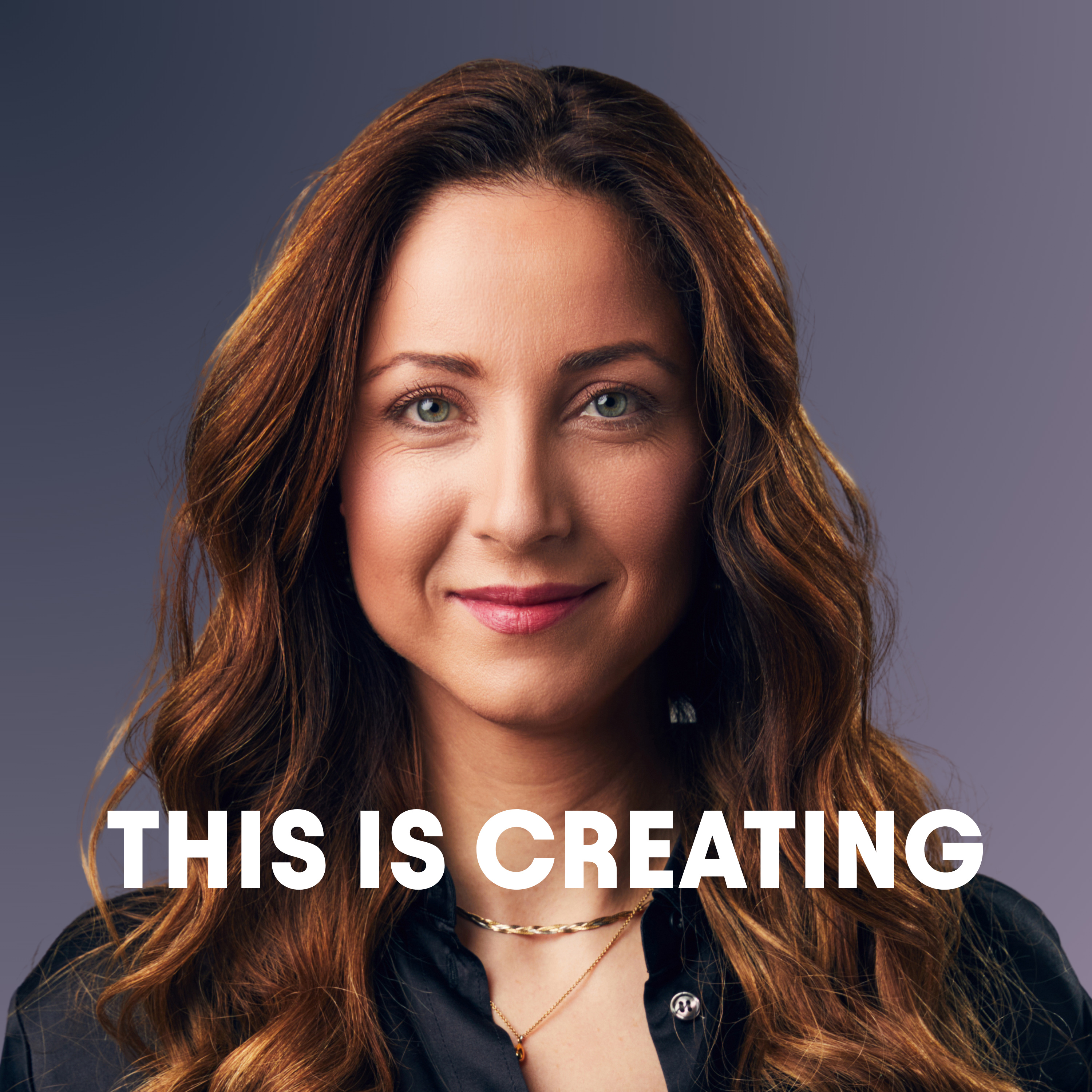
This Is Creating
by Sara Tavasolian
SUBSCRIBE FOR HIGH LEVERAGE FOUNDER INSIGHTSHow high-impact companies are really built.I'm Sara Tavasolian — founder, interaction designer and tech strategist. Each episode breaks down the trade-offs, decisions and scaling challenges behind the world's most durable ventures across technology, AI and design, focusing on the systems, incentives and capital dynamics that determine who wins.I’ve built startups, designed award-winning products, and created immersive experiences exploring technology, design and strategy. This show is about seeing those patterns clearly before they cost you.
-
13
Why Most Companies Fail With AI | Ideja Bajra
Most companies think AI adoption is a technology problem.It’s not.AI consultant Ideja explains why the real challenge in building a company with AI is not the tools, but the people, systems, and decisions behind them.Ideja works with companies across Europe, helping teams move from scattered AI pilots to real strategy, execution, and adoption. With a background outside of tech, she brings a rare perspective on why so many organizations struggle to turn technology and AI into real workflows and results.She explains: Why companies fail before they define a clear AI strategy The gap between using AI tools and integrating them into company systems Why teams resist change when adopting new technology and AI The role of human behavior, trust, and design in AI adoption What breaks inside companies when systems and data aren’t ready Why trust, not technology, is the real bottleneckTimestamps00:00:00 Intro00:00:25 Why She Left Cell Biology For AI00:03:04 How Curiosity Turned Into An AI Business00:05:14 Why Most Companies Still Don’t Understand AI00:07:56 Why People Resist AI At Work00:10:16 Why Education Is Falling Behind AI00:11:40 The Biggest Misconceptions About AI Right Now00:13:21 Why Most Companies Rush Into AI Without A Strategy00:15:39 The Teams Most Resistant To AI00:17:45 How To Use AI Without Losing Critical Thinking00:20:50 Deepfakes, Guardrails, And The Risk Ahead00:30:07 Is AI Hype Already Starting To Cool Down?00:32:16 How She Taught Herself AI From Scratch00:35:41 Why Humans Still Matter In An AI World00:36:33 What Her AI Consulting Process Actually Looks Like00:52:18 How AI Should Be Taught In Schools00:58:34 The Advice She’d Give Herself At The Start01:01:30 The Hardest Lesson About Self Worth And WorkYouTube SignatureFollow Ideja BarjaLinkedIn: https://www.linkedin.com/in/idejabajra/Edvance AI: https://www.edvance-ai.comSubscribe for more content here:→ https://youtube.com/@tavasolian?si=HA472eJP7FAGUu3BConnect with me:→ https://www.instagram.com/saratavasolian→ https://linkedin.com/in/sara-tavasolian
-
12
Why Your Business Needs An AI Coworker | Henrik Djurestål
What does it take to build a company when AI is changing everything? Henrik Djurestål on startup strategy, founder decisions, and scaling a company with AI.Henrik Djurestål is the founder of Vorker.AI, an AI coworker platform built for small and medium B2B businesses. With a background in robotics and defense AI at Saab, he left to build a product around a simple thesis — small companies with the right technology and AI can outexecute the enterprise.He explains:◼️ Why too many SaaS tools kill small business execution◼️ The trade-offs of building a horizontal AI product over a vertical one◼️ How Vorker.AI turns words into action for founders running lean companies◼️ What solo founders get right that co-founder pairs often get wrong◼️ How raising capital as a solo founder changes your company strategy◼️ Why AI adoption in Sweden is growing but scaling slowly◼️ Why humanoid robots are further from market than the demos suggestTimestamps00:00 Intro00:25 Who Henrik is and why he left defense AI to build for small business02:25 How an entrepreneurial family and robotics shaped his path04:08 Why he chose a horizontal AI product over a vertical one06:18 How small businesses are drowning in too many tools07:29 Why Microsoft Copilot failed and what AI coworkers need to do differently08:13 What Goldman Sachs research says about small business AI struggles10:46 Why the future of business is words to action12:19 Which companies get the most out of vorker.ai13:21 How vorker.ai thinks about data privacy and European storage15:16 Why ChatGPT is not built for running a business16:14 How small companies can now compete with large corporations18:00 How Swedish small businesses are actually adopting AI today19:28 Adapt or die — Henrik's take on AI, jobs, and the technology shift20:36 Where to start if you want to implement AI in your company23:53 Why AI pilots fail in big companies but work in small ones26:00 Why organizing your data is like cleaning your room27:44 The hardest lessons from building an AI startup28:37 Why co-founder fit matters more than the idea itself30:54 What Henrik actually looks for in a technical co-founder33:21 How raising pre-seed capital changes the solo founder dynamic35:15 Why Henrik ignored customer validation and built anyway40:03 How the open beta launch will be the real market test41:28 How vorker.ai collects feedback without being driven by it43:37 Why Henrik built AI labs live and what happens there48:27 Who can attend AI labs live and how to join49:54 Where Sweden is headed in AI and why startups keep leaving for the US52:14 Why European VC culture thinks differently from American investors52:34 If he could go back what Henrik would tell his younger self57:06 The one thing Henrik believes now that he didn't five years ago59:07 Why humanoid robots are further away than the demos suggest1:06:03 The hardest personal lesson from building a startupFollow Henrik:https://www.linkedin.com/in/henrik-djurestal/https://vorker.ai/Subscribe for more content here:→ https://youtube.com/@tavasolian?si=HA472eJP7FAGUu3BConnect with me:→ https://www.instagram.com/saratavasolian→ linkedin.com/in/sara-tavasolian
-
11
What happens to humans when AI enters the workplace? | Evelina Dzimanaviciute
What happens to humans when AI enters the workplace?Evelina Dzimanaviciute on workplace culture, leadership, human value, and adapting to AI.Evelina Dzimanaviciute is the founder and CEO of Elite Mind Consultancy. She helps companies design better workplaces through behavioral neuroscience, leadership development, and organizational strategy, with a focus on human performance, psychological safety, and the future of work.She explains: Why people feel threatened by AI at work How leaders can help teams adapt to change Why psychological safety drives innovation and execution How AI changes human value, purpose, and decision making What companies need to fix before scaling with AIEpisode Timeline: 00:00 Intro 00:21 Who Evelina Is And Why She Builds Human-Centered Workplaces 01:24 What Happens To Humans When AI Enters The Workplace 04:16 The 3 Human Needs That Shape Work, Purpose, And Behavior 08:30 Why So Many Employees Feel Threatened By Change 11:16 How AI Is Changing Creativity, Search, And Exploration 13:34 Why AI Still Needs Human Judgment, Context, And Direction 17:24 Why Fear Of AI Starts With Ignorance 19:40 Why The Speed Of Change Is Harder Than The Technology Itself 24:26 Why Small Improvements Won’t Be Enough In An AI World 27:41 What Leaders Must Do To Make People Feel Part Of The Change 32:36 When A Human Becomes A Liability Instead Of An Asset 37:34 The Difference Between Healthy And Toxic Workplace Culture 44:29 Evelina’s Personal Story Of Resilience, Burnout, And Reinvention 56:57 Her Advice For People Going Through A Hard Time 1:02:57 The Final Lessons On Purpose, Money, Identity, And GrowthFollow Evelina: LinkedIn WebsiteSubscribe for more content: YouTubeConnect with me: Instagram LinkedIn
-
10
How Lebanese Founders Build Without Safety Nets | Christophe El-Khoury
How do founders build and ship when the system around them can break?In this episode, Christophe, a CTO and technology advisor in Beirut, shares what building looks like after financial collapse and mass talent migration. He also co-founded The Collective, an effort to connect Lebanon’s ICT ecosystem when universities, companies, founders and government operate in silos.We talk about: What happens when senior engineers leave Why juniors get pushed into leadership Why there’s no shared data and what replaces it What “antifragile” means in practice How AI changes the speed of buildingIf you’re building a startup or leading a tech team in a fragile environment, this one will land.Episode Timeline: 00:00 Intro 00:19 What Kind Of Builder Is Chris, Really? 01:22 Why Did He Co-Found The Collective? 02:06 What Do You Do When The System Has Gaps? 03:15 Why Do Titles And Labels Hold Builders Back? 04:42 What Does “Antifragile” Mean In Practice? 09:23 How Does Someone End Up In Tech Without Planning To? 12:28 How Does A Near-Death Moment Change Your Priorities? 15:54 How Do You Choose The Work You Take On? 25:16 What Happens When Senior Engineers Leave? 26:39 What Do You Do When There’s No Shared Data? 32:59 How Should The Private Sector Get Involved? 36:07 What Advantage Does The “Wilderness” Give Founders? 52:47 Will AI Replace You Or An AI-Augmented Human Replace You?If you’re a founder or operator building real-world tech, this episode is for you.Connect with Chris: LinkedIn Website Instagram X / TwitterSubscribe for more content: YouTube @TavasolianConnect with me: Instagram LinkedIn#founder #entrepreneurship #business #creative #VC #CEO #Lebanon #AI
-
9
The Top 1% Think in Systems. Here’s How To Do It | Luisa Charles
Podcast EpisodeHow design engineers build real world impact across science, art and public systems and why playing the game does not mean losing your values.Can creative work move from speculative installation to infrastructure without losing its integrity?In this episode, Luisa, media agnostic design engineer, artist and founder of Studio LJ, shares how she works across robotics, climate systems, immersive installation and community led technology to build interventions that operate beyond the gallery.From co designing low cost water quality sensing robots in Sri Lanka and the Amazon, to developing machine learning models that predict pollution, to building regenerative robotic sculptures that generate energy and support carbon sequester, her work sits at the intersection of lived experience, engineering and public good.We talk about: ◆ The void and why every serious creative project requires discomfort ◆ Unknown unknowns and how breakthrough ideas actually emerge ◆ Community owned robotics instead of extractive tech solutions ◆ Machine learning, ethics and the limits of productivity thinking ◆ Funding across science, art and innovation without losing your core idea ◆ Co founder failure and what actually breaks startups ◆ Burnout, ambition and learning to work within human limits ◆ Why playing the game strategically can expand, not dilute, creative agencyThis conversation reframes creativity from aesthetic output to systemic intervention and explores how design, technology, culture, AI and execution systems intersect to create durable impact.If you are building at the intersection of art, engineering, entrepreneurship and public systems, this episode is for you.Timestamps00:00 Intro01:08 How a Design Engineer Moves Between Art, Robotics and Climate Systems03:42 Why Creative Work Must Move Beyond the Gallery06:15 What It Means to Design for Public Systems Instead of Private Clients08:57 The Void: Why Disorientation Is Required for Breakthrough Ideas11:26 How Unknown Unknowns Shape Serious Innovation14:04 Why Most Designers Misunderstand Business Model Design16:37 How to Align With Power Without Losing Your Values19:12 Community Owned Robotics vs Extractive Technology21:46 Co Designing Water Quality Robots in Sri Lanka and the Amazon24:28 How Machine Learning Can Serve Public Good Instead of Productivity27:03 Turning Climate Data Into Immersive Public Experience29:41 Why Playing the Game Strategically Expands Creative Agency32:15 The Hidden Cost of Cross Disciplinary Ambition34:52 Burnout, Limits and the Reality of Sustainable Impact37:20 What Actually Breaks Early Stage Ventures39:48 Why Integrity Is a Long Term Strategy, Not a Moral Pose42:16 How Design, Technology, Culture and AI Intersect in Durable Companies44:51 Final Reflections on Building Systems That Outlast YouFollow Luisa:LI: https://www.linkedin.com/in/luisa-charles-a58b4418a/Website: https://luisacharles.comSubscribe for more content here:→ https://www.youtube.com/@TavasolianConnect with me:→ https://www.instagram.com/thisiscreatingpodcast/→ https://www.linkedin.com/in/sara-tavasolian/#founder #entrepenurship #business #creative #VC #CEO
-
8
Why Emotional Impact Beats Reach Every Time | Michel Robles
Can a single moment in public space change how millions of people feel? Outdoor strategist Michel Robles reveals how brands build emotional connection, cultural relevance and lasting impact through public space, large scale murals and unforgettable real world experiences.Michel Robles is a marketing leader working at the intersection of culture, creativity and public space. With over 10 years of experience across agencies, global brands and media, he now helps companies create campaigns that don’t just generate attention but become part of the city itself. Through Nordic Murals, Splash Media and international partnerships, he has helped some of the region’s most influential brands create landmark campaigns that shape how people experience their environment.He explains: Why digital reach alone will never create real brand loyalty How physical experiences build emotional connection faster than online ads The psychology behind moments people remember for the rest of their lives Why the strongest brands earn cultural presence instead of buying attention How growing up between two worlds shaped his vision and creative pathTimestamps 00:00 Intro 01:02 “I Create Brand Emotions in Public Places” 01:54 How Growing Up Between Two Worlds Shaped My Perspective 03:25 What Husby Taught Me About Opportunity and Identity 06:02 The Hidden Skill You Learn When You Don’t Belong in One World 08:49 Code Switching: The Survival Skill No One Talks About 10:56 Why I Quit Law School After Just Two Weeks 11:48 The Decision That Changed My Entire Career Path 13:18 How Traveling the World Changed My Ambition Forever 14:52 The Billboard Moment That Changed My Life 16:36 What Most People Don’t Understand About Equity and Ownership 17:15 What Privilege Really Means and Why It Matters 19:15 Why Most Marketing Is Forgotten Instantly 20:47 How Great Brands Earn Cultural Status Not Just Attention 23:17 Why Physical Experiences Are More Powerful Than Digital Ads 25:13 The Hidden Role of Artists Behind Iconic Campaigns 28:38 Why Rejection Is a Daily Part of Building Something Great 30:34 Why I Choose to Do Fewer Campaigns and Why They Matter More 30:58 The PlayStation Campaign That Created Lifelong Memories 32:16 How One Public Campaign Changed a Kid’s Life Forever 33:35 Why Emotional Impact Matters More Than Reach 35:02 Why the Best Art Is Temporary 36:02 What Artists Understand That Most Businesses Don’t 37:03 What I Learned After Interviewing Dozens of Founders 39:04 Why Entrepreneurship Isn’t the Only Path to Success 41:04 Why Knowing When to Quit Is a Superpower 43:39 The Advice I Wish I Could Give My Younger Self 45:23 How Fatherhood Changed My Definition of Success 46:05 The Hardest Lesson Every Founder Learns Too Late 47:53 Final ThoughtsConnect with Michel:https://www.linkedin.com/in/michel-robles-18299b91/https://www.nordicmurals.com/Subscribe for more content here:https://www.youtube.com/@TavasolianConnect with Sara Tavasolian on social media:https://www.instagram.com/saratavasolian/https://linkedin.com/in/sara-tavasolian/
-
7
Board Mistakes Founders Always Make | Sara Almgren
Startup boards explained: Why most founders get governance wrong — and how great board work actually scales companies.In this episode, Sara Almgren, co-founder of Deb (Diverse Executive Boards), breaks down how corporate governance really works in Sweden — and why many startups build a board of directors too early. Founders often create unnecessary complexity, blurred roles, and decision-making friction without realizing it.Drawing on her experience recruiting boards, training future board members, and building Deb into a leading board education platform, Sara shares a clear and practical guide to effective board work — from early-stage advisory boards to fully structured governance.In this conversation, we cover: ◆ When a startup actually needs a board of directors — and when it doesn’t ◆ Advisory board vs statutory board: key differences founders must understand ◆ The “three hats” governance problem in founder-led companies ◆ Why strong boards focus 80% on strategy and 20% on control ◆ How to design your first board intentionally ◆ The role of an independent chair in scaling companies ◆ AI in the boardroom: how technology is reshaping oversight and strategy ◆ Diversity and representation in Swedish boardrooms ◆ Why CEO–chair transparency is critical for growthIf you're a founder, CEO, operator, investor, or aspiring board member, this episode offers practical insights into startup governance, board structure, and how high-performing boards actually create long-term company value.TIMESTAMPS00:00 Intro07:14 How Deb was founded13:15 When founders should think about a board14:06 Starting with an advisory board15:02 Advisory board vs board of directors explained16:10 The 80/20 strategy principle for boards17:06 Designing your first board17:48 Why an independent chair matters20:22 Common founder board mistakes21:10 The “three hats” governance problem24:56 Defining roles: board vs management28:01 AI and the future of board work32:00 How CEOs should prepare for board meetings33:13 CEO–chair transparency in practice34:47 Burnout as a governance risk35:47 What founders should expect from their board38:01 Using advisors in early-stage companies42:52 How to become a board member in Sweden46:40 Swedish vs US governance models58:40 Why board work is actually rewardingLinksSara Almgren on LinkedIn: https://www.linkedin.com/in/sara-almgren-90068290/Deb: https://diverseexecutiveboards.com/
-
6
Why Your Donations Don’t Work the Way You Think | Philip Börjesson
What happens when your generosity runs into a broken system?We talk a lot about donating...giving back and doing good. But most of us don't really know where our money goes, how it moves, or what actually changes because of it.Behind every donation is a whole world of nonprofits, governments, technology, trust and human behavior.And a lot of that world is complex, outdated and hard to see from the outside.Old tools, fragmented systems and shaky funding quietly shape how help reaches people who need it most.My guest today is someone I've known for several years. We worked together in Stockholm, and I've watched his path move deeper into a space many founders would probably avoid.Philip Börjesson is the CEO and co-founder of Samfora, where he's building what he describes as an operating system for nonprofit organizations.His work sits at the intersection of data, donor psychology and social impact. basically fixing the complicated plumbing behind charities and donations.Philip didn’t take a straight route to get here.He grew up in Stockholm, studied literature and philosophy, worked for the Red Cross in Copenhagen, spent time in the Alps and later trained as a mechanical engineer with a masters in innovation and product realization.Along the way, he built things, failed, pivoted and learned firsthand how nonprofits actually work from the inside.In this episode we talked about:→ why nonprofits often struggle with outdated technology→ how government funding cuts are changing the sector→ why trust between donors and charities is so fragile→ how behavior and social norms shape generosity→ what it really means to build slowlyIf you've ever wondered how real change happens inside nonprofits, this conversation will give you a clear window into that world.Organisations* Samfora: samfora.org* Red Cross: icrc.org* WaterAid: wateraid.org* World Food Programme: wfp.org* UNICEF: unicef.org* Founders Pledge: founderspledge.com* Giving What We Can: givingwhatwecan.orgTools* Salesforce* HubSpot* Microsoft DynamicsBooks* The Passion According to G.H. — Clarice Lispector* The Melancholy of Resistance — László Krasznahorkai* Gravity’s Rainbow — Thomas Pynchon* Ulysses — James Joyce* Of Mice and Men — John Steinbeck* Bird by Bird — Anne Lamott* The Brain That Changes Itself — Norman Doidge* Scripts People Live — Claude Steiner
-
5
The Hidden Powers Shaping Where You Live | Roger Tofft
We often talk about cities like they're finished.Buildings go up. People move in. Life is supposed to follow.But get close to real estate and you see something else.Small decisions keep repeating. Old systems stay locked in. Over time, the cracks appear.My guest today, Roger Tofft, has spent years working inside that reality.Roger operates at the intersection of real estate and technology in Sweden and the UK, mostly on the parts people rarely see: the systems behind housing, access, maintenance, and how buildings actually run day to day.His entry into the industry wasn't the usual route. No planning school, no big legacy property firms.He came from sales, from sports, and from learning firsthand what happens when you try to build something new without the right support in place.Early on, he helped launch electric vehicle charging stations in Swedish shopping centres—long before that became standard. He also played a key role when Wilhelm was named Southern Sweden’s Smartest Property in 2016: his company installed access systems, digital screens, parcel boxes, and one of the first tenant services apps that connected residents directly to their buildings.Buying his first flat changed how he saw everything. It laid bare how outdated many property systems still are, who they're built for, and who they leave behind.In this conversation we get into what it's really like operating inside those systems and what starts to shift when fresh eyes enter an industry that moves slowly but affects millions of lives every day.We talk about:Why housing remains one of Europe’s toughest problems to fixWhere hundreds of millions of euros in European real estate investment are flowing right nowHow collaboration across Europe, the US, Saudi Arabia, and Asia is changing where the real opportunities lieWhy community and timing matter as much as moneyWhat real estate looks like when it's actually designed around how people liveIf you've ever felt cities are lagging behind the lives happening inside them, this one will hit close to home.Subscribe for more conversations like this. Drop a comment: What's one thing about your city or building that feels completely outdated?Get in touch with RogerPropTech Sweden: https://proptechsweden.orgRoger Tofft: /rogertofft
-
4
How Digital 3D Tech Is Democratizing High-End Jewelry Design for Everyone | Dario Rjeili
Traditional jewelry trade shows are facing extinction: skyrocketing costs, exclusive barriers, massive inventory risks, and outdated logistics shutting out emerging designers and artisans.Enter Digital Jewelry Week, the hybrid digital-physical revolution founded by Dario Rjeili.In this eye-opening interview, Dario reveals how he's disrupting high-end jewelry: from finance/VC to a platform democratizing access via 3D rendering, pre-orders, and zero-waste showcasing—no expensive prototypes or travel.We covered:• Why traditional trade shows exclude newcomers (costs, regulations, overproduction)• 3D rendering + pre-orders to cut waste, boost sustainability & traceable diamonds• Blending B2B/B2C: 7-day digital immersion + Milan physical meetups (expanded 2026)• Bootstrapped success, future expansions (Digital Yacht Week, Design Week, Lov3D.io), outsider perspective driving changeEpisode Chapters:00:00 Intro00:41 What Digital Jewelry Week Does04:07 Journey into Jewelry / From VC to Jewelry05:38 Solving an Industry Without Training07:11 Traditional Path of a Jewelry Designer08:36 Challenges & Cost Barriers (Materials, Inventory, Trade Shows)10:02 Regulations and Gatekeeping11:23 Why Starting a Brand Is Expensive12:52 Can Digital Replace Physical?13:13 Bridging Digital & Physical14:34 Relationships in Jewelry16:36 Rethinking Distribution & Discovery17:52 Innovative Marketing / Why Traditional Media Fails20:20 Choosing Opportunities21:32 Resistance from Legacy Players21:58 Middle Management Fears & Consumer Trends23:27 Influencers, Micro-Audiences, Trust24:41 Innovation as Survival25:59 Joining Digital Jewelry Week26:16 Sustainability & Quality29:44 Traceability, Transparency, New Generation31:03 Mentorship Accessibility32:31 “Not Knowing” as Advantage32:45 Revenue Models, Bootstrapping vs VC33:21 Access to the Trade Show34:29 Business Model & New Verticals36:22 Final Thoughts & Untapped Market38:00 Unlocking New Talent53:57 Closing & Ahead56:00 EndMy favorite moment: Dario knocking on doors across Italy, meeting artisans, learning from scratch with humility—rare in startups.Follow Dario / join:• Digital Jewelry Week• Instagram: @digitaljewelryweekPart of a series on founders redefining design, business, culture.Subscribe if you enjoy—it helps reach more like-minded listeners.
-
3
The Truth About IP & AI: What Founders Ignore Until It’s Too Late | Patrik Kägu
Most of us founders treat IP like something we will deal with “later” and then we dive headfirst into AI without a plan. The result? Lawsuits, losing ownership of what you built, getting blocked when you try to scale, or watching the next big model wipe out your edge overnight.In this open chat, my longtime advisor Patrik Kägu (25+ years helping startups at ALMI) lays out the tough truths he sees every day: Why slapping “AI company” on your pitch is now a red flag in 2026 How skipping early intellectual property (IP) mapping (trademarks, copyright, patents) quietly kills your growth Why free pilots usually waste everyone’s time (but paid ones actually prove real traction) Why shipping an ugly MVP is smarter than chasing perfectionI pull from my own messy founder journey to break down the things that trip us up: demand creation pitfalls, smart pilot strategies, intellectual property essentials, the real risks in this AI gold rush, and those founder mental health traps we rarely talk about.If you are building in the Stockholm ecosystem or anywhere as an early stage founder, this episode gives you a no-BS blueprint to protect your idea, validate demand fast, get real traction, and avoid the IP and AI mistakes that shut down most startups before they even get going.Mentioned in the Episode:PRV (The Swedish Intellectual Property Office)AlmiEpisode Chapters:00:00 Intro & Patrik’s background as an innovation advisor02:42 How did he end up helping inventors and startups?05:35 What did the 1999 internet boom feel like?07:01 How has startup culture changed since the dot-com era?08:59 What actually counts as innovation (and who decides)?10:32 Why does the market determine if something is innovative?12:48 Why do founders overestimate novelty and underestimate demand?14:59 Why do founders fix the idea before proving the customer exists?16:23 Why is MVP shame healthy for founders?18:44 Why does shipping beat perfecting when building a startup?21:02 Why do most free pilots waste everyone’s time?21:59 How do paid pilots prove real traction for investors?24:20 How can you test demand before you build anything?26:50 Why do founders confuse users with customers?28:40 How do you identify willingness to pay early?30:15 Why does distribution matter before product?33:58 IP strategy for founders: trademarks, copyright & ownership36:54 Why do 70 percent of founders not own their trademark?40:03 Why do trademark delays kill startup scalability?42:10 What are the hidden legal risks of generative AI for startups?47:24 Why is calling yourself an AI company a red flag in 2026?51:32 How can AI competition wipe out slow-moving startups?55:01 Founder burnout, perfectionism & mental health01:01:33 Why do founders need to celebrate small wins?
We're indexing this podcast's transcripts for the first time — this can take a minute or two. We'll show results as soon as they're ready.
No matches for "" in this podcast's transcripts.
No topics indexed yet for this podcast.
Loading reviews...
ABOUT THIS SHOW
SUBSCRIBE FOR HIGH LEVERAGE FOUNDER INSIGHTSHow high-impact companies are really built.I'm Sara Tavasolian — founder, interaction designer and tech strategist. Each episode breaks down the trade-offs, decisions and scaling challenges behind the world's most durable ventures across technology, AI and design, focusing on the systems, incentives and capital dynamics that determine who wins.I’ve built startups, designed award-winning products, and created immersive experiences exploring technology, design and strategy. This show is about seeing those patterns clearly before they cost you.
HOSTED BY
Sara Tavasolian
CATEGORIES
Loading similar podcasts...
URL copied to clipboard!