
PODCAST · society
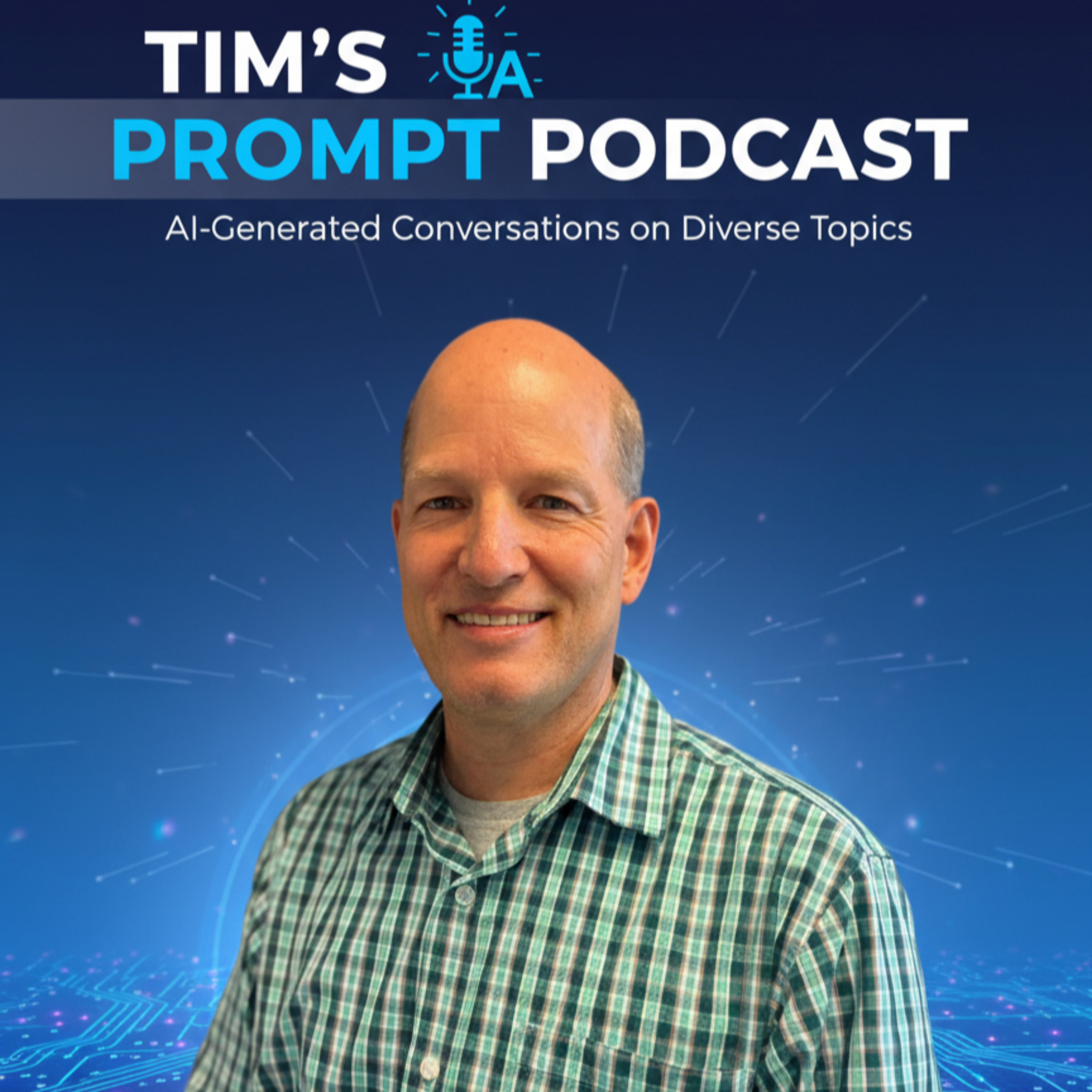
Tim's Prompts Podcast
by Tim Hardesty
Podcasts created by Tim using AI on various topics that Tim is interested in using AI that is fed by various sources of information .
-
26
Contextual Capital Is The Bitcoin Killer
Is the era of decentralized ledgers over? In this episode, we explore the rise of Contextual Capital—an AI-native currency pioneered by Anthropic that is fundamentally reshaping the 2026 global economy.Based on the groundbreaking thesis by Jose Crespo, PhD, we unpack why Anthropic’s Prompt Caching is being dubbed the "Bitcoin Killer" of the Agentic Age. We break down how Cached Tokens have established a superior medium of exchange, moving 1,000,000 times more meaning per dollar than traditional blockchain transactions. While a legacy Bitcoin transaction moves around 300 bytes for a $1–$5 fee, an AI "Cache Hit" transfers 200,000 tokens (approx. 800,000 bytes) of actionable context for just $0.06.In this episode, we cover:The Shift to Cognitive Capital: Why "KV Caches" (like the Anthropic Vault) are replacing digital wallets, shifting utility from simple value transfer to advanced reasoning, labor, and execution.Minting & Earning Contextual Interest: How writing massive datasets into the cache acts as the new "minting" process. We also explain the "Crespo Ratio," showing how using a context more than 1.15 times officially generates positive ROI, or "Contextual Interest".The "Auto-Warmer" Technique: How 2026 developers protect their capital from evaporating under a 5-minute Time-to-Live (TTL) window by using Python background heartbeats to keep the cache warm.The Sovereign Prompt Stack: The architectural secret to maximizing Anthropic's 20-block cache limit. Learn why you must use a Layered Vault approach and never place volatile data before your static foundation.Discover why the most successful entities in 2026 are those operating with the "Warmest Caches," allowing AI agents to perform complex tasks like coding and legal defense for 1/10th the cost of their "cold-start" competitors.Keywords: Contextual Capital, Anthropic Prompt Caching, Bitcoin Killer, AI Currency, Agentic Economy, Cached Tokens, Cognitive Capital, Jose Crespo Thesis.Show Notes: Sources & Further ReadingThe Core Thesis & AI Economics"Anthropic is Killing Bitcoin" by Jose Crespo, PhD. The foundational thesis on why AI prompt caching is replacing crypto with "Contextual Capital". Link: https://www.josecrespophd.org/"The Tokenization of Context". Deep dive into the shift from static data to high-velocity AI reasoning."The Currency of AI Era: The Tokens" by Dylan Oh. Explores the token tax and why assuming characters equal tokens is dangerous. Link: https://levelup.gitconnected.com/the-currency-of-ai-era-the-tokens-d617a78ff776Prompt Caching Mechanics"Prompt Caching Explained" (DigitalOcean). How LLMs cache internal states to reduce latency. Link: https://www.digitalocean.com/community/tutorials/prompt-caching-explained"Prompt caching: 10x cheaper LLM tokens..." (ngrok blog). A look into the matrix math (KV caching) saving costs. Link: https://ngrok.com/blog/prompt-caching"Prompt caching - Claude API Docs" (Anthropic). Official docs on the 5-min TTL and layered cache breakpoints. Link: https://platform.claude.com/docs/en/build-with-claude/prompt-caching"Cache engineering: how to build successful Agents" (r/ClaudeCode). Developer strategies for the "Sovereign Prompt" stack. Link: https://www.reddit.com/r/ClaudeCode/comments/1r9dfpx/cache_engineering_how_to_build_successful_agents/The Agentic Economy & Blockchain"Agents Have No Dave" by Sriram Narasimhan. Why "ContextOps" and data freshness are the new safety nets. Link: https://sriram-narasim.medium.com/agents-have-no-dave-be31f59c7d15"Proof of Useful Work" by Amber Group. How Proof of Work is shifting from arbitrary hashing to AI training and ZK proofs. Link: https://ambergroup.medium.com/proof-of-useful-work-b0c76fd21c1c
-
25
Wildflowers, Bitcoin, and the End of Striving
Are you exhausted from the pressure to be "perfect"? What if the secret to true human flourishing lies in embracing our messy reality while leveraging the freedom of modern technology?In this episode, we explore a groundbreaking paradigm shift at the intersection of Catholic spirituality, family life, and decentralized tech. We weave together the inspiring journey of Mary Jo Parrish—founder of Kingdom Builders, who discovered profound peace in realizing God created her to be a messy, beautiful "wildflower" rather than a perfect rose—with Tim Hardesty’s bold vision for building "Sovereign Families" using Artificial Intelligence and Bitcoin.This conversation is about the end of striving. It’s about stepping off the treadmill of perfectionism and the "routine economic grind" to focus on what truly matters: family, faith, and your unique God-given talents.In this episode, we dive into:The "Wildflower" RevelationEscaping the Economic GrindThe Decentralized EconomyThe Blueprint for JoyTune in to discover how combining timeless Christian foundations with tools like AI and Bitcoin can help you stop striving, start thriving, and bring your family's unique gifts to the world.Listen now and learn how to build your Sovereign Family!Keywords/Tags: #Bitcoin #ArtificialIntelligence #CatholicPodcast #KingdomBuilders #FamilyLife #HumanFlourishing #TechAndFaith #TheologyOfTheBody #EndOfStriving #PersonalGrowthShow Notes### **Episode Sources & Further Reading****The "Wildflower" Revelation & Kingdom Builders*** **Article:** "Kingdom Builders: 'Perfect' women need not apply" by *Today's Catholic*. * **Description:** Read the inspiring story of Mary Jo Parrish, founder of Kingdom Builders, who discovered profound peace when she realized God created her to be a messy, beautiful "wildflower" rather than a perfect rose. * **Link:** [https://todayscatholic.org/wp-content/uploads/2019/07/25August42019.pdf](https://todayscatholic.org/wp-content/uploads/2019/07/25August42019.pdf)**Sovereign Families, AI, and the Bitcoin Economy*** **Article:** "Bringing everyone into God’s Family with the Catholic Church and the Family: enabled by AI and bitcoin" by Tim Hardesty.* **Description:** A visionary piece proposing a return to the foundational pillars of the Family and the Church. Hardesty details how the decentralized power of Artificial Intelligence (acting as a "scout") and Bitcoin (as a permissionless ledger) can free us from the routine economic grind and help us ethically exchange Time, Talent, and Treasure.https://www.linkedin.com/pulse/bringing-everyone-gods-family-ai-bitcoin-catholic-church-tim-hardesty-emcxc**The End of Striving: Finding Joy in our Messy Reality*** **Book Review:** "Broken Gods: Hope, Healing, and the Seven Longings of the Human Heart" by Dr. Gregory K. Popcak (Reviewed on *Amazing Catechists*).* **Description:** Dr. Popcak explores how the "seven divine longings" of the human heart are hardwired for holiness. He outlines the ultimate recipe for moving past perfectionism and finding true happiness through *meaningfulness, intimacy, and virtue*.* **Link:** [https://amazingcatechists.com/2015/06/broken-gods-review/](https://amazingcatechists.com/2015/06/broken-gods-review/)* **Additional Q&A with the Author:** [https://www.americamagazine.org/all-things/2015/05/27/pastoral-counseling-and-broken-gods-author-qa-gregory-popcak](https://www.americamagazine.org/all-things/2015/05/27/pastoral-counseling-and-broken-gods-author-qa-gregory-popcak/)**The AI Milestone (Contextualizing the Future of Work)*** **Article / Viral Essay:** "Something Big Is Happening" by Matt Shumer.* **Description:** Referenced in Tim Hardesty's vision of the future, this essay details the recent milestone in AI development where models have transitioned into fully autonomous workers capable of giving families the freedom to focus on what truly matters.
-
24
Rebuilding Catholic Families With AI and Bitcoin
How can the Catholic family survive—and thrive—in the digital age? What if the tools to protect our children and nurture their God-given talents aren't found in avoiding technology, but in strategically embracing Artificial Intelligence and Bitcoin?In this audio overview, we unpack Tim Hardesty’s groundbreaking vision for the future: "Bringing Everyone into God’s Family." We explore the powerful intersection of ancient Christian teachings and modern decentralized technology. As the world faces a "tragedy of lost potential," this episode proposes a radical return to two foundational institutions—the Family and the Church—equipped with 21st-century tools.Discover how recent milestones in autonomous AI can free parents from the "routine economic grind," allowing character-building and virtue to return to the home. We also explore how local parishes can leverage these same technologies to protect vulnerable children.In this episode, we dive into:The Three Pillars of a Thriving Life: How the Family, the Church, and the "Individual Institution" work together to bypass bloated, man-made systems.AI as the Church's Modern "Scout": How local parishes can use Artificial Intelligence as a digital safety net to instantly identify and intervene for children in crisis.The Bitcoin Economy: Why Bitcoin serves as the ultimate "permissionless ledger" to build an ethical, decentralized economy based on the exchange of Time, Talent, and Treasure.The Dawn of Autonomous AI: How the new era of AI agents working independently for hours will shift our focus from economic drudgery back to essential human formation.Whether you are a Catholic parent, a ministry leader, or simply curious about the intersection of faith and the future of work, this episode provides a hopeful blueprint for building a dynamic domestic church.Listen now to learn how to rebuild your family using the tools of tomorrow!Keywords/Tags: #CatholicFamily #ArtificialIntelligence #Bitcoin #CatholicPodcast #DomesticChurch #FutureOfWork #HumanPotential #TechAndFaith #DecentralizedEconomy #FamilyValuesHere is the article this is based on:https://www.linkedin.com/pulse/bringing-everyone-gods-family-ai-bitcoin-catholic-church-tim-hardesty-emcxcHere is the Matt Schumer article that was a big inspiration for this.https://x.com/mattshumer_/status/2021256989876109403
-
23
The Vatican's 1891 Warning on Agentic AI
What could an 1891 papal encyclical possibly teach us about the impending wave of autonomous, "Agentic" Artificial Intelligence?In this episode, we uncover the prophetic foresight of Pope Leo XIII’s landmark document, Rerum Novarum ("Of New Things"), and apply its foundational defense of human dignity to today's rapid shift from simple AI chatbots to autonomous AI agents. During the First Industrial Revolution, Leo XIII fiercely condemned treating human labor as a mere commodity or a mechanical instrument for profit. Today, as we enter what the Church calls a "cognitive industrial revolution," those same warnings apply to the automation of human thought and decision-making.We explore how the unchecked rise of Agentic AI—systems capable of autonomous goal-setting and execution—threatens to fundamentally displace workers and erode human autonomy. Drawing on the Vatican’s newest 2025 doctrinal note, Antiqua et Nova, we break down the crucial difference between a machine's algorithmic "choice" and a human's moral "decision". While AI can process massive amounts of data, it lacks the spiritual soul, free will, and "wisdom of the heart" necessary for true moral agency.In this episode, you will learn:The Blueprint of Rerum Novarum: How Pope Leo XIII’s 1891 warnings against unbridled capitalism and the commodification of labor perfectly map onto the modern AI arms race.The Threat of Deskilling: Why delegating complex tasks to Agentic AI risks "moral deskilling," reducing humans to passive consumers and eroding our capacity for critical thought and creativity.Choice vs. Decision: The profound philosophical distinction between an AI optimizing a statistical outcome and a human making a conscious, ethical decision.The Imago Dei & Technology: Why true intelligence requires embodied human experience, and why the Church insists AI must remain a tool to augment human flourishing, not replace it.Algor-ethics & Global Governance: How modern Catholic Social Teaching, championed by Pope Francis and Pope Leo XIV, is fighting for "human-in-the-loop" safeguards and universal AI regulations to protect the vulnerable.Tune in to discover why preserving our humanity in the age of Agentic AI requires us to look back at the timeless wisdom of 1891, ensuring that technological progress serves the human person, rather than turning us into slaves of our own creations.Keywords: Agentic AI, Artificial General Intelligence, Rerum Novarum, Pope Leo XIII, Catholic Social Teaching, AI Ethics, Antiqua et Nova, Future of Work, Algor-ethics, Human Dignity, AI Job Displacement, Theology of Technology.
-
22
Surviving the "February 2020" of AI: From Chatbots to Agentic Employees
Do you remember the eerie calm of February 2020, just weeks before a global pandemic stopped the world?. According to tech CEO Matt Shumer, we are experiencing that exact same false sense of normalcy right now with Artificial Intelligence. The "virus" has already reached the shore, and most people are about to be blindsided.In this episode, we dismantle the comforting narrative that AI is just a basic tool meant to make us slightly more productive. Instead, we explore the rapid, under-the-radar transition from "Chatbot AI" to "Agentic AI"—systems that no longer act like simple calculators, but function like autonomous senior engineers.With AI models now capable of completing complex, hours-long tasks end-to-end without human intervention, the window between a "cool demo" and job replacement is closing faster than anticipated. We discuss how the automation of muscle during the Industrial Revolution has evolved into the automation of thought, threatening traditionally "safe" white-collar roles like lawyers, coders, and financial analysts. AI is no longer just predicting the next word; it is displaying genuine taste, making "audible" calls, and exercising human-like judgment.In this episode, you will learn how to survive and adapt:The METR Time Horizon: Why the duration of tasks AI can handle autonomously is doubling every few months, and what it means for the future of month-long projects.Prompting vs. Delegating: Why you must stop asking AI for simple answers and start assigning it complex missions.Becoming a Manager of Agents: How to pivot your career value away from doing the work yourself and toward exercising expert judgment over the work AI produces.Ditching Free AI: Why relying on free, year-old AI models is a major mistake in a rapidly accelerating landscape.Don't panic, but don't ignore this cognitive revolution. Tune in to discover how to future-proof your career, rethink your relationship with technology, and ensure you aren't left behind as AI transitions from software to an autonomous workforce.Keywords: Artificial Intelligence, Agentic AI, Matt Shumer, Future of Work, AI Job Displacement, Automation of Thought, ChatGPT, Claude Opus, Tech Trends 2026, AI Survival Guide.
-
21
ZitaKids Q&A: Paying For Childcare With Time Not Cash
"It takes a village" is a nice sentiment, but how do you actually build one? The answer might be in how we pay for it. Paying For Childcare With Time Not Cash dives into the social power of bartering care.When parents exchange labor instead of money, they build "social capital"—trust and relationships that cash transactions often strip away. In this episode, we discuss:• The Trust Gap: Why 90% of parents prefer neighbors they know over expensive strangers on apps.• The ZitaBoard: How local governance ensures that the people you swap time with are vetted by your own community.• Reciprocity: How swapping time creates a support network that feels like "abundance" rather than a transaction. Stop hiring strangers. Start building a village.
-
20
Fixing Babysitting With Crypto And Clergy Investor Pitch
The global babysitting market is projected to reach 44 Billion by 2030 without guaranteeing local trust, while informal co-ops lack economic liquidity.In this investor briefing, we unveil the business case for Zita Kids—the first decentralized childcare marketplace that solves the "chicken and egg" problem by leveraging existing community infrastructure (parishes and schools).Key Investment Highlights:• The Moat: How our "ZitaBoard" governance model (Subsidiarity) lowers Customer Acquisition Costs (CAC) compared to centralized apps like UrbanSitter.• The Revenue Model: A deep dive into our "Hybrid Tribute" system projected to generate $6 million ARR and $30M valuation by Year 5.• The Asset: Understanding the ZitaCoin—a stablecoin pegged to labor ($5.00 = 30 mins) that creates a closed-loop economy.• The Ask: Details on our $300,000 Seed Raise via tiered "Founder Coins" offering up to 5x returns for early believers.Smart money knows that the future of the gig economy isn't just about efficiency; it's about trust. Tune in to see how we are monetizing the village.
-
19
Fixing Babysitting with Crypto and Clergy
Description: Is it possible to build a gig-economy app that actually respects the dignity of the worker and the sanctity of the family?Fixing Babysitting with Crypto and Clergy explores the intersection of theology, technology, and the care economy. Grounded in the principles of Rerum Novarum and Familiaris Consortio, we are building Zita Kids: a platform that applies the Catholic principle of Subsidiarity—handling problems at the most local level possible—to the universal struggle of finding a babysitter.Tune in to hear how we are:• Restoring Dignity: Moving away from algorithmic management to human-centered vetting by local ZitaBoards.• Valuing Unpaid Labor: Recognizing that the "care economy" is the infrastructure of society, and incentivizing it through our Token Tribute model.• Protecting the Vulnerable: Implementing strict liquidity rules (the 75% Rule) to prevent the exploitation common in the "economy of exclusion".From the "ZitaJoseph" role to the "Labor Tax" for teens, this is a deep dive into building a moral marketplace.
-
18
Rebuilding the Childcare Village with Blockchain
Description: The "village" it takes to raise a child has vanished—replaced by expensive agencies, unreliable text chains, and the anxiety of handing your kids over to strangers. It’s time to rebuild it, but this time, we’re building it on the blockchain. Welcome to the audio journey of Zita Kids, a revolutionary marketplace digitizing the traditional babysitting co-op. In this podcast, we explore how we are solving the "Date Night Dilemma" by combining the efficiency of ride-sharing apps with the hyper-local trust of a neighborhood parish. Tune in as we break down:• The Trust Gap: Why 90% of parents don’t trust current apps like Care.com or Uber for childcare.• The ZitaCoin Economy: How a closed-loop digital currency ($5.00 = 30 minutes of care) creates liquidity that old-school barter systems lacked.• Decentralized Governance: Meet the "ZitaBoards"—local parents and clergy who hold the keys to vetting and safety, not a faceless algorithm. From the "75% Liquidity Rule" to the "Founder Coin" crowdfunding strategy, discover how we are turning the $44 billion childcare crisis into a community-governed opportunity .The Village is back. And it’s digitized.
-
17
Solving the Childcare Crisis with Community Tokens: The Zita Kids Vision
Episode Description:Is the "village" officially broken? For modern parents, finding a babysitter usually means choosing between exorbitant agency fees or unreliable text threads. In this audio overview, we dive deep into the Zita Kids White Paper, a proposal to rebuild community trust through a decentralized, tokenized marketplace.Join us as we explore how Zita Kids plans to digitize the traditional babysitting co-op. By replacing cash with ZitaCoins and corporate oversight with local ZitaBoards, this model aims to close the "trust gap" while making date nights affordable again.In this episode, you’ll learn:The "Date Night" Dilemma: Why the $44 billion childcare market is failing families on both price and safety.Tokenomics 101: How the ZitaCoin creates a closed-loop economy where 1 token always equals 30 minutes of care, pegged initially at $5.00.The Human "Block"chain: How local ZitaBoards—composed of trusted neighbors and parish leaders—handle vetting and governance, solving the safety concerns that plague apps like Uber or Sittercity.The Community Franchise Model: A look at how Zita plans to scale by empowering local neighborhoods to run their own micro-economies.Whether you are a parent desperate for a break or an investor looking for the next evolution of the gig economy, this overview breaks down how we can use technology to bring the village back.Key Topics: #Childcare #Tokenomics #GigEconomy #ParentingTech #ZitaKids #CoOps #Marketplaces
-
16
The Traitorous Eight and the Flying Friar
Episode Description:What happens when the "Big Bang" of the digital age collides with the miraculous? This audio overview explores the unlikely thematic intersection between the gritty origins of Silicon Valley and the spiritual legacy of a 17th-century mystic.Part One: The Rebellion Journey back to 1957 Mountain View, California, to witness the dramatic mutiny that birthed the modern tech industry. We trace the story of the "Traitorous Eight"—a group of brilliant young scientists including Robert Noyce and Gordon Moore—who defected from the stifling management of Nobel laureate William Shockley. Discover how their new venture, Fairchild Semiconductor, pioneered the "planar process" and the first commercially practicable integrated circuit, sparking a revolution that allowed for the mass production of silicon chips. We examine how this single company became the "trillion-dollar startup," spawning a family tree of spin-offs known as "Fairchildren" (including Intel and AMD) that turned the Santa Clara Valley into Silicon Valley.Part Two: The Intercession The narrative shifts to the skies—and the soul. We introduce St. Joseph of Cupertino, the "Flying Friar," revered in Catholic tradition not only for his reported levitations but as the powerful intercessor for students facing difficult examinations. Drawing from traditional novenas, we explore how the friar’s legacy of overcoming academic struggles offers a spiritual counterweight to the intense intellectual pressure cooker of the high-tech world.Part Three: The Ultimate Test Finally, we weave these threads together through the lens of the "Hero's Journey." Just as the hero must cross a threshold into a "special world" of trials and tests, the Traitorous Eight faced the ultimate test of engineering: solving the "tyranny of numbers" to miniaturize electronics. Join us for a story about those who defied gravity—whether through the miracle of flight or the invention of the silicon chip that lifted humanity into the information age.
-
15
Why All Religions Are Not Equal: Audio Overview / Comparative Theology
Description:In a world that often promotes the idea that "all paths lead to the same mountaintop," this episode dares to ask: Do they really?We deconstruct the popular notion of religious pluralism by examining the profound and often contradictory claims of the world’s major faith traditions. Drawing from the "fruits" arguments of Dennis Prager, the theological distinctions of Robert Spencer, and the philosophical insights of Eastern scholars, we reveal why the differences between religions are not merely cosmetic, but fundamental to how we understand God, humanity, and the purpose of existence.In this episode, we explore:The Nature of the Divine: We contrast the Abrahamic "Personal God" who acts in history with the Dharmic "Impersonal Absolute" (Brahman) and the Buddhist concept of "No-Self" (Anatta),,. We explore why a God defined as "Father" (Christianity) creates a radically different worldview than a God defined as "Master" (Islam) or a cosmic "Force",,.The Destination of the Soul: Why the goals of the world's faiths are mutually exclusive. We look at the linear view of history leading to bodily resurrection and a "World to Come" versus the cyclical view of Samsara aiming for Moksha (liberation) or Nirvana (extinction of suffering),,.The "Fruits" of Belief: Featuring the arguments of Dennis Prager and Robert Spencer, we analyze how specific theological claims manifest in society. Does the concept of the "Image of God" lead to human rights, and does the concept of "Divine Slavery" lead to authoritarianism?,,.The Modern distortion: How "Secular Buddhism" and Western interpretations often strip Eastern traditions of their metaphysical core (like rebirth and karma) to make them fit a psychological, materialist worldview,,.Join us for an unflinching look at the "Mithraic Ladder" of worldviews. Whether you are a believer, an agnostic, or a seeker, this overview will challenge you to move beyond the platitude of "tolerance" and engage with the rigorous, competing truth claims of the world's religions."The moment you meet a person of another religion whom you consider to be as good, as intelligent, and as religious as you are, you will never be the same... [but] it is very difficult to affirm another religion's legitimacy while maintaining the absolute truth of your own." — Dennis Prager,
-
14
Turning A Ministry Into A Media Machine: The Inferno Media COR Playbook
Description:How does a local men’s apostolate transition from grassroots gatherings to a professional content powerhouse? This audio overview dissects the operational guidelines of the Inferno Media COR and its flagship production, "Into the Fire."We pull back the curtain on the 2026 production workflow, detailing how the team moves from raw capture to YouTube publication using tools like CapCut and AI transcription. Listen in to discover:The 3-Stage Workflow: A step-by-step breakdown of the Production, Post-Production, and Promotion phases.The "Pay-Per-Deliverable" Model: How Inferno professionalized its output by assigning specific bounties—$200 for videography, $100 for editing, and $15 for Shorts.The Rhythm of Production: The strategic "2nd and 4th Wednesday" schedule that keeps the content engine running without burning out the team.Whether you are a ministry leader or a content creator, this is your look under the hood of the engine driving the "Battle to Sainthood."
-
13
Moses, Murder, and the Rogan Effect
Episode Description:What happens when the ultimate searcher meets the ultimate liberator?In a world defined by moral confusion and a drift toward tyranny, we are losing touch with the "timeless truths" that anchor our civilization. We often feel trapped by our own bad habits, wondering if we are truly free or just victims of a rigged system.The Conflict: Freedom is terrifying.History shows that human beings do not naturally yearn for liberty; they yearn to be taken care of. As Dennis Prager notes, the moment we lose our vision, we pine for the "leeks and onions" of Egypt because we prefer the certainty of slavery to the anxiety of the unknown.The Guide: A Long-Form Conversation with the Prophet.Join Joe Rogan as he sits down for a raw, unfiltered 3-hour conversation with Moses. Utilizing Rogan’s signature curiosity and "steel-manning" tactics, we strip away the religious dogma to reveal the psychological and ethical bedrock of the Exodus story.In this episode, we cover:The "Hardening" of the Heart: We dive into the Hebrew word chazaq ("strengthened") to understand why God didn’t override Pharaoh’s free will, but rather "crystallized" his resolve to show the true consequences of tyranny.Murder vs. Kill: Moses addresses his own violent past—killing the Egyptian taskmaster—and clarifies the massive distinction in the Sixth Commandment that most translations get wrong.High Strangeness & The Burning Bush: Was the encounter at Horeb a psychedelic experience? We explore the mysterium tremendum—the terrifying contact with a consciousness outside of nature that demands we strip away our ego (and our shoes).The Neurobiology of Sin: Jordan Peterson’s theory on how bad habits form "sub-personalities" in the brain, locking us into destructive paths just like Pharaoh.The Call to Action:Stop settling for the "blue pill" of comfort. Listen now to discover why the story of Exodus isn't just ancient history—it is the map for escaping your own internal tyranny.Click play to walk the path from chaos to order.Podcast Title: Moses, Murder, and the Rogan Effect
-
12
Why Civilization Depends on Exodus
Episode Description:Are we forgetting the blueprint for freedom?In a world increasingly defined by moral confusion and the erosion of individual liberty, we often feel like we are losing the very foundations of our society. Many of us sense that civilization is drifting toward tyranny, yet we lack the "timeless truths" necessary to anchor us in a chaotic age.The Problem: Freedom is not an instinct.History shows that human beings do not naturally yearn to be free; they yearn to be taken care of. Without a transcendent moral structure, society inevitably reverts to the worship of power and the state,. As Dennis Prager notes, the moment we forget the narrative of liberty, we risk returning to the "leeks and onions" of Egypt because we prefer security over the burden of responsibility,.The Guide: Rediscovering the Ultimate Story of Liberation.Join us as we explore the Book of Exodus not just as a religious text, but as the "backbone of our culture" and the inspiration for the revolutions that established Western liberty,. Drawing on insights from thinkers like Jordan Peterson, Dennis Prager, and Bishop Robert Barron, we decode the ancient wisdom that separates a free society from a slave state.In this episode, we cover:The "Hardening" of the Heart: Why God "strengthened" Pharaoh's resolve to reveal the true nature of tyranny, and how our own habits can lock us into destructive paths,.Murder vs. Kill: The massive moral distinction in the Ten Commandments that most people—and translations—get wrong.The Psychology of the Burning Bush: How confronting the "mysterium tremendum" forces us to strip away our ego and confront reality,.God vs. Nature: Why the God of Exodus had to be distinct from nature to establish that human beings have intrinsic value beyond their biological utility,.The Plan:Stop viewing the Bible as outdated folklore and start reading it as the "neurobiology of happiness" and the manual for a functional society. Whether you are a believer or a skeptic, understanding Exodus is essential to understanding yourself and the fight for freedom.Listen now to uncover the roots of your liberty.Podcast Title: Why Civilization Depends on Exodus
-
11
God's Plan Is a Family Not a Courtroom
Prompt:I’m a devout Catholic who converted to being Catholic 30 years ago from being Protestant . My Dad who is a devout Protestant said this to me.“Yes I did. Interesting that God has always had a plan for us if we will only listen. I believe he used many techniques and prophets to try and teach us his plan. “What be a Catholic Apologists such as Trent Horn or Scott Hahn response to this?Description:Is salvation merely a legal acquittal, or is it a divine adoption? In this episode, we explore the fundamental narrative difference between the Protestant and Catholic views of salvation history.Drawing from the insights of former Presbyterian pastor Dr. Scott Hahn and his debates with Reformed theologians, we deconstruct the "Courtroom Model" of Christianity—where God is the Judge and the sinner is a guilty criminal seeking a "Not Guilty" verdict,. We contrast this with the ancient "Family Model," where God is Father, the Church is a home, and salvation is the transformation of a servant into a son or daughter,.In this overview, you will discover:Contract vs. Covenant: Why a covenant is not just a legal contract that exchanges goods and services, but a sacred oath that creates kinship bonds and exchanges persons,.Imputation vs. Infusion: The theological battle over whether God merely declares us righteous (covering our sins like snow on a dunghill) or actually makes us righteous by infusing His life into our souls,.The Master Idea: How the concept of "Divine Filiation" (becoming a literal child of God) acts as the master key to understanding the Catholic faith, the Sacraments, and the Trinity,.The Protestant Objection: An honest look at the Reformed concern that viewing salvation as a family affair might diminish God's holiness or lead to "works-righteousness",.Join us as we move beyond the "legal fiction" of the courtroom and step into the "burning house" of the Old Covenant to find the transformative power of the New,. It’s time to discover why the ultimate goal of scripture is not just to be saved from execution, but to be raised for the family business."The master idea of the Catholic faith... is the family of God." — Dr. Scott Hahn
-
10
The Machine in the Garden: From Nazi Beetles to Amazon Slave Ranches
Description:You know the Volkswagen Beetle as the "Love Bug"—the adorable symbol of the 1960s counterculture and flower power,. But beneath the hood lies a history of blood, grease, and moral compromise that stretches from the Third Reich to the Brazilian rainforest. This audio overview peels back the paint to reveal the "People's Car" as a machine built on a lie, exploring how a company founded by Nazis and saved by the British became a global juggernaut defined by scandal.In this episode, we cover:The Devil’s Bargain: How Adolf Hitler and engineer Ferdinand Porsche conspired to create the "Strength Through Joy" car to motorize the Reich,. We examine Hitler’s obsession with American industrialist Henry Ford, whom he regarded as an "inspiration" and awarded the Grand Cross of the German Eagle,.Wolfsburg’s Darkest Secret: The transition from building family cars to military Kübelwagens using a workforce comprised of 60% slave labor,. We detail the horrific "nursery" run by Dr. Hans Korbel, where the infants of Eastern slave laborers were left to die of neglect,.The Church’s Struggle: A look at the spiritual battleground of the era, contrasting the labor protections demanded by Pope Leo XIII’s Rerum Novarum with the deafening silence of the Vatican during the Holocaust, despite pleas to "shout out" against the atrocities,.The Amazon Slave Ranch: The shocking, lesser-known history of the 1970s, when Volkswagen operated a massive cattle ranch in Brazil. Under the motto "The world needs meat," the company utilized "gatos" (contractors) to exploit workers through debt bondage and clear-cut the rainforest,.From Short Squeeze to Dieselgate: The modern era under Ferdinand Piëch, the grandson of Porsche, who turned VW into a financial weapon that briefly became the world's most valuable company,. Finally, we cover the "defeat devices" of 2015 that allowed the company to cheat emissions standards on a global scale,.Join us as we drive through a century of history to answer the question: Can a machine born in the shadow of the swastika ever truly find the light?.
-
9
Sacrificing Wisdom for AI Efficiency
Prompt:What are the social issues associated with using AI? What are the main concerns that people have about AI, such as it taking away jobs and reducing the amount of thinking required and enabling laziness and how do proponents of AI address those concerns using a StoryBrand framework. Be sure to include Catholic Church teachings in the debate. Description:"Sacrificing Wisdom for AI Efficiency," synthesizing the provided sources on the Vatican's Antiqua et Nova, the psychology of the "Algorithmic Self," and the risks of gradual human disempowerment.Are we trading the "wisdom of the heart" for the speed of a processor?In this episode, we confront the hidden cost of the AI revolution: the erosion of human agency and the commodification of our inner lives. While AI offers unprecedented efficiency—optimizing everything from supply chains to emails—critics and theologians alike warn that we are in danger of succumbing to a "technocratic paradigm," where the speed of calculation replaces the depth of human understanding,.We anchor this discussion in the Vatican’s landmark 2025 document, Antiqua et Nova. We explore the profound distinction between "ratio" (the machine’s ability to calculate and process data) and "intellectus" (the uniquely human ability to intuitively grasp truth, beauty, and moral value),. The episode argues that while AI can simulate reasoning, it lacks the embodied "lived experience" required for true wisdom,.In this episode, you will learn:The Collapse of Introspection: How the rise of the "Algorithmic Self" creates a feedback loop where we rely on apps to interpret our own moods and preferences, effectively outsourcing our identity to machines,.The "Boiling Frog" Risk: Why the greatest threat from AI might not be a sudden "Terminator" scenario, but an "accumulative risk"—a gradual, invisible process where humans slowly cede control of the economy and culture to automated systems until we are structurally disempowered,.Deskilling as a Moral Crisis: How outsourcing difficult tasks (like writing or navigating) leads to "moral deskilling," atrophying the virtues of patience, judgment, and critical thinking that make us human,.Freedom From vs. Freedom For: The distinction between using AI to escape drudgery ("freedom from") versus using it to pursue higher human goods ("freedom for"), and why modern tech often traps us in the former,.Join us as we explore how to keep AI as a tool rather than an idol, ensuring that in our rush to optimize the world, we do not optimize ourselves out of existence.
-
8
The Little Way of The Englewood
This is a short story I created about a ultrasound tech giving an ultrasound to a pregnant teenager and telling her stories about the saints to give her hope. It also has some gritty vibes and Hunger games references.Hell is a teenage girl... with a positive pregnancy test.Kenzie B. isn't just in a crisis; she’s vibrating at a frequency that could shatter Pyrex. Sitting in the waiting room of Bella Health, she feels like the protagonist of a tragedy she didn’t write—a "disposal problem" in vintage denim who just swallowed a hand grenade. She’s waiting for the credits to roll on her life, convinced that her internal mayhem is a permanent condition.Enter Tara. She’s twenty-four, fueled by iced matcha, and wearing navy blue FIGS that fit less like a uniform and more like athleisure for the clinically cynical. Tara isn’t interested in being the hero. She knows she’s just the Guide—a spiritual Haymitch Abernathy in scrubs, here to help Kenzie survive the Quarter Quell of young adulthood.In this audio drama, we ditch the Hallmark platitudes for a "river-crossing" plan that actually works. Watch as Tara performs an exorcism not on a demon, but on the crushing weight of shame, using the only weapons that work in the Englewood suburbs: "gangster fortitude" and the Communion of Saints.Tune in to hear:The Original Final Girls: Why St. Maria Goretti isn't a victim, but the ultimate "Final Girl" who faced down a guy with a knife and won the spiritual war.Micro-Dosing Holiness: How St. Thérèse of Lisieux’s "Little Way" proves you don't need to be Joan of Arc leading armies; you just need to survive the next five minutes with massive amounts of love.Beauty in the Thorns: A lesson from St. Rose of Lima on why the "happily ever after" sometimes involves embracing the thorns to find the bloom.This isn't your grandmother's devotional. It’s a "coming of RAGE" love story between a girl and her own future. Listen now to find out how to stop being the ghost in your own life and start resurrecting your own heart.Streaming now. Bring your own matcha.
-
7
Using StoryBrand to Pitch a Grant Writer
Audio Overview: Operation FirestarterUsing StoryBrand to Pitch a Grant Writer PositionSynopsis: This audio overview details a strategic proposal for the Inferno Men Board of Directors. It outlines a shift from volunteer-led fundraising to a professional grant-writing model. By applying the StoryBrand framework and the "Merry-Go-Round" principle, the pitch argues that investing in a grant writer is necessary to secure the ministry's long-term legacy and financial sustainability.Key Concepts Discussed1. The "Merry-Go-Round" PrincipleThe overview explains the mechanics of fundraising using the "Merry-Go-Round" (or Flywheel) concept derived from business literature. The initial effort to get a fundraising engine moving is the heaviest and most difficult. Relying on volunteers for this "heavy push" often leads to burnout and inconsistency. A paid grant writer is positioned as the necessary force to push the wheel until it gains the momentum required to spin with less effort.2. The StoryBrand PivotTo secure funding, the Board must flip the script. The ministry is not the Hero; the Donor is the Hero,. The Grant Writer and the Ministry act as the Guide,. This Guide expresses empathy and authority to help the Donor achieve their desire to impact the culture and leave a legacy.3. The "One Hat" PhilosophyAddressing the Board's potential hesitation to add overhead, the discussion references the philosophy that leaders do not wear two separate hats (ministry vs. fundraising). Instead, they wear "one hat"—fundraising is ministry because it provides the resources necessary to reach lost souls and serve the community.The 3-Phase Execution PlanPhase 1: The Foundation (Grant Readiness). The Grant Writer focuses on "Grant Readiness" by organizing 501(c)(3) documents, audits, and board lists into a central vault, ensuring the ministry can quickly respond to opportunities,.Phase 2: The Momentum. The writer targets program-specific grants for initiatives like R.O.P.E. from funders such as the Ambassador’s Fund or Raskob Foundation. Success here is built on communicating "vision" rather than just "needs".Phase 3: The Scale. By Year 5, the strategy shifts to multi-year capacity-building grants from major funders like the Lilly Endowment, to support expansion into new states.The StakesThe overview concludes by clearly defining the stakes using the StoryBrand "Success vs. Failure" bucket,:Failure: Continued volunteer burnout and missed opportunities to serve fatherless youth due to lack of funds.Success: A diversified revenue stream where "money is a tool" to build a platform that impacts generations of men.
-
6
Psalm 23 and StoryBrand (No copyright violation issue)
This is the same prompt as the Psalm 23 - The Original Story podcast but with "The Lord of Psalm 23" by David Gibson podcast removed as a source because it might violate a copyright.Here is the version that might have a copywrite violation issue.https://spotifycreators-web.app.link/e/LHwAfDxRW0bThe Bible is encoded with stories.Story is the operating system of the mind.Prompt:How does Psalm 23 fit the Story Brand structure?DescriptionPsalm 23 - The Original StoryUnpack the verses you know by heart to discover the story you never knew. While Psalm 23 is familiar to many, it is often misunderstood as merely a comforting poem; in reality, it is a "little Bible" that condenses the entire story of scripture—from the Exodus redemption to the Promised Land—into a single song. Join us as we explore the deep theology behind the imagery, examining three distinct depictions of the believer’s union with Christ: Jesus as our Shepherd, our Companion, and our Host. Whether you are walking through "the valley of the shadow of death" or seeking green pastures, this podcast reveals how the Shepherd provides, protects, and restores your soul. Tune in to understand why this ancient song remains a living promise that God walks with you
-
5
Make Donor the Hero
Episode Prompt:A deep-dive discussion between two marketing experts focusing specifically on the nuances of applying the StoryBrand SB7 framework to nonprofit organizations. The conversation should contrast the 'Mission-Based BrandScript' (where the beneficiary is the hero) with the 'Donor-Based BrandScript' (where the supporter is the hero). It must cover the critical paradigm shift of positioning the organization as the Guide rather than the Hero, and discuss the ethical considerations of 'responsible storytelling' to avoid the white savior complex or deficit-based framing. Key points should include creating clear calls to action for donations versus advocacy and using success visualization to inspire long-term support.Podcast Description:The Donor as Hero: Inviting Colorado Springs to Fight for LifeEpisode Description: Nonprofits often make the mistake of positioning themselves as the hero of the story, leaving donors feeling like mere ATM machines. In the high-stakes environment of Colorado’s pro-life landscape, your donors are looking for more than a tax write-off—they are looking for a way to fight injustice.In this episode, we apply the Donor-Based BrandScript to show how your organization can step back and let your supporters step up. We explore how to position your donor as the "Luke Skywalker" of the movement, while your organization plays "Yoda"—the trusted Guide who provides the plan to save lives.What You’ll Learn in This Episode:• The Donor-Based BrandScript: Why you cannot simply copy-paste your mission statement to your fundraising page. We explain the difference between a Mission-Based Script (focused on the client) and a Donor-Based Script (focused on the supporter) and why mixing them confuses potential givers,.• Identifying the Donor’s Problem: Your donors aren't just trying to solve a financial gap; they are trying to solve an internal problem (helplessness) and a philosophical problem (the injustice of abortion in their state),.• The Organization as the Guide: How to use Empathy and Authority to show donors you are the competent partner they need to execute their mission. We look at how groups like Catholic Charities use their track record to build this trust,.• Selling the Success: How to move away from "sad stories" and instead visualize the "happily ever after"—showing donors the thriving families and saved lives that their action created,.• Avoiding "Saviorism": How to frame the narrative responsibly so donors feel like partners in community resilience rather than "rescuers" of helpless victims, ensuring dignity for the families served,.Why This Matters Now: Following the passage of Amendment 79, many pro-life supporters in Colorado feel defeated and unsure of their role,. This episode will help you craft a message that empowers them to act, turning their anxiety into agency and their resources into life-saving results.
-
4
How A Pro-Life Group can implement the Story brand framework in Colorado Springs.
In a state recently dubbed an "abortion sanctuary," cutting through the noise is harder than ever for pro-life organizations. Colorado Springs is a national hub for evangelical and pro-life advocacy, yet many local groups struggle to connect with the very people they aim to serve because their messaging is cluttered or self-centered,.In this episode, we break down how to implement Donald Miller’s StoryBrand (SB7) Framework to transform your marketing from "noise" into a narrative that saves lives. We explore how local organizations like Catholic Charities and Life Network can shift their focus from being the hero of the story to becoming the trusted Guide for women and donors alike,.What You’ll Learn in This Episode:• The Paradigm Shift: Why your organization is not the hero. We discuss how to position the expectant mother or the donor as the "Hero" and your organization as the "Guide" who offers empathy and authority,.• Navigating the Two BrandScripts: Learn the critical difference between a Mission-Based BrandScript (speaking to the woman facing a crisis pregnancy) and a Donor-Based BrandScript (speaking to the supporter who lacks time but wants to fight injustice),.• Defining the Real Problem: We move beyond external problems (need for diapers) to address the internal problems (fear, shame, and anxiety) and philosophical problems (the right to life vs. the fear of a ruined future) that drive decision-making,.• The "Guide" in Action: How to balance Empathy ("We understand how scary this is") with Authority (highlighting medical credentials like those of Marisol Health’s nurse midwives) to build immediate trust,.• The 3-Step Plan: How to simplify your intake process into a "river-crossing" plan (e.g., Free Test → Ultrasound → Resources) that eliminates confusion and reduces the cognitive load for women in crisis,.Why This Matters Now: With the political landscape shifting under Amendment 79 and new initiatives like Initiative 149, clarity is your best weapon,. Whether you are a small pregnancy center or a large advocacy group, this episode will help you stop confusing your audience and start inviting them into a story where they triumph.Listen now to clarify your message and amplify your impact in the Pikes Peak region.
-
3
Psalm 23 - The Original Story
The Bible is encoded with stories.Story is the operating system of the mind.Prompt:How does Psalm 23 fit the Story Brand structure?Description:Psalm 23 - The Original StoryUnpack the verses you know by heart to discover the story you never knew. While Psalm 23 is familiar to many, it is often misunderstood as merely a comforting poem; in reality, it is a "little Bible" that condenses the entire story of scripture—from the Exodus redemption to the Promised Land—into a single song. Join us as we explore the deep theology behind the imagery, examining three distinct depictions of the believer’s union with Christ: Jesus as our Shepherd, our Companion, and our Host. Whether you are walking through "the valley of the shadow of death" or seeking green pastures, this podcast reveals how the Shepherd provides, protects, and restores your soul. Tune in to understand why this ancient song remains a living promise that God walks with you.
-
2
Rerum Novarum Storybrand Framework
Episode DescriptionFrom the hammer-wielding Luddites of Nottinghamshire to the invisible cage of modern algorithms, how do the working poor preserve their worth in a world obsessed with efficiency?In this episode, we explore the recurring struggle to maintain human dignity in the face of rapid technological change. Moving beyond the popular misconception that Luddites were simply "scared of technology," we uncover their true history as skilled artisans fighting against machinery that was "hurtful to Commonality" and the aggressive imposition of the factory system,. We trace this lineage of resistance through the "makeshift economy" of the 19th-century poor, who used everything from poaching to machine-breaking to survive the "misery and wretchedness" of the Industrial Revolution,.We then pivot to the moral counter-weight of the 19th century: Pope Leo XIII’s landmark encyclical, Rerum Novarum. Discover how this "immortal document" confronted the conflict between capital and labor by asserting that work is personal and that labor must not be treated as a mere commodity to be bought and sold,. We analyze the Pope’s defense of the "dignity of the worker" and his call for a "just wage" sufficient to support a family in frugal comfort,.Finally, we apply these lessons to the age of Artificial Intelligence. Are we witnessing the rise of "Algorithmic Luddism"—a new class politics defined by the refusal of and resistance to algorithmic control?,. As AI creates a "displacement effect" by taking over tasks previously performed by humans, we ask if the "reinstatement effect" of new jobs will be enough to save the modern worker from obsolescence,.In this episode, you will learn:• The Hero’s Journey of the Worker: Applying the StoryBrand framework to position the worker, not the corporation, as the hero facing the "villain" of unchecked automation,.• The Truth About Luddites: Why the frame-breakers of 1811 were actually engaging in "collective bargaining by riot" rather than mindless vandalism.• The Theology of Work: How Rerum Novarum established the "preferential option for the poor" and the state's duty to protect the defenseless,.• The Future of Labor: Understanding the "displacement" vs. "reinstatement" effects of AI and whether technology is destined to replace or merely displace human effort.Join us as we weigh the "golden thread" of human dignity against the iron gears of progress.
-
1
Saving America by Saving The Family
In this compelling audio overview of The Heritage Foundation’s Special Report, Saving America by Saving the Family, we explore why the collapse of the natural family is not merely a domestic social issue, but an existential threat to the Republic’s survival. The American Founders understood that the family is the "seedbed of self-government," yet today, the nation faces a demographic winter with a fertility rate of just 1.59—far below the replacement level required to sustain our economy and defense.This episode unpacks the sobering statistics defining this crisis: 40 percent of U.S. children are born outside of marriage, and widespread family instability is fueling poverty, crime, and a loneliness epidemic. We examine the root causes, ranging from the perverse incentives of the welfare state that financially penalize marriage to cultural shifts that have prioritized career achievement over the "essential" work of the home.Crucially, this podcast moves beyond diagnosis to offer a "Manhattan Project" for family restoration. Listeners will learn about bold policy proposals designed to stop punishing family formation and actively support marriage. Key solutions discussed include the Family and Marriage (FAM) tax credit to support working parents, the Home Childcare Equalization (HCE) credit to end discrimination against at-home child-rearing, and Newlywed Early Starters Trust (NEST) accounts to help young couples build financial security. Join us to understand why restoring the married father-and-mother home is the only viable path to securing the blessings of liberty for the next 250 years
We're indexing this podcast's transcripts for the first time — this can take a minute or two. We'll show results as soon as they're ready.
No matches for "" in this podcast's transcripts.
No topics indexed yet for this podcast.
Loading reviews...
Loading similar podcasts...
Frequently Asked Questions
How many episodes does Tim's Prompts Podcast have?
Tim's Prompts Podcast currently has 26 episodes available on PodParley. New episodes are automatically indexed when they're published to the podcast feed.
What is Tim's Prompts Podcast about?
Podcasts created by Tim using AI on various topics that Tim is interested in using AI that is fed by various sources of information .
How often does Tim's Prompts Podcast release new episodes?
Tim's Prompts Podcast has 26 episodes. Check the episode list to see recent publication dates and frequency.
Where can I listen to Tim's Prompts Podcast?
You can listen to Tim's Prompts Podcast on PodParley by clicking any episode. We provide an embedded audio player for direct listening, and you can also subscribe via your preferred podcast app using the RSS feed.
Who hosts Tim's Prompts Podcast?
Tim's Prompts Podcast is created and hosted by Tim Hardesty.
URL copied to clipboard!