
PODCAST · business
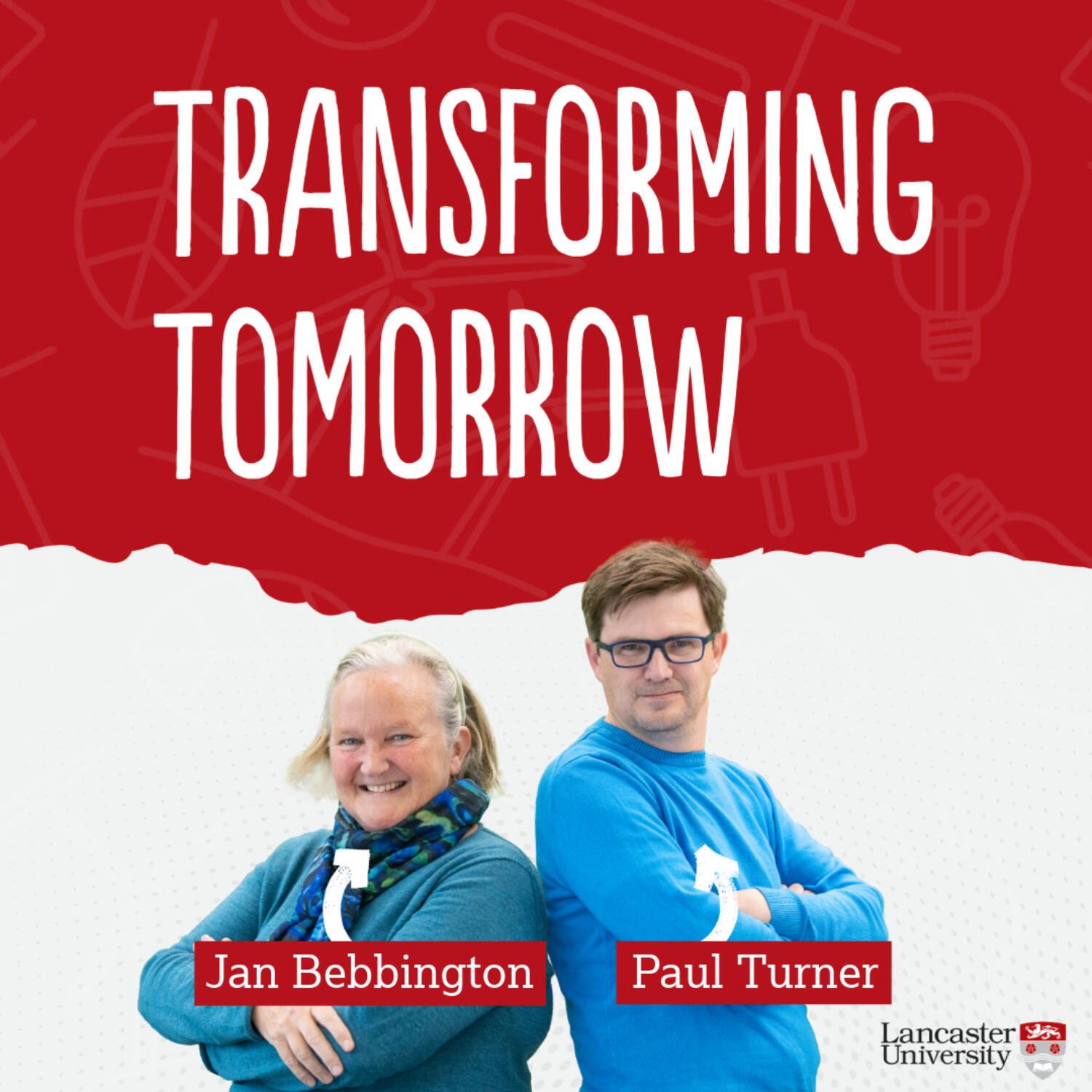
Transforming Tomorrow
by The Pentland Centre for Sustainability in Business
Sustainability is a key consideration for any contemporary business, from biodiversity to modern slavery, seabeds to factory floors. Transforming Tomorrow guides you through the complex, ever-changing and often exciting (yes, really!!) world of sustainability in business.Alongside members of the Pentland Centre, international research experts, and business leaders, we cover the theory and practice of mainstreaming sustainability into purposeful business strategy and performance.Whether you are leading change in your business, or just want to know more about how space weather, human trafficking or architecture may influence the future of sustainability, Transforming Tomorrow is the show for you.Taking you through it all, hosts Jan and Paul bring insight, perspective, and more than occasional disagreement to their topics.Professor Jan Bebbington is the Director of the Pentland Centre for Sustainability in Business at Lancaster University. Jan is an expe
-
121
Do You Know Your Employment Rights?
At a time when employment rights in the UK are evolving all the time, we look at how and why. Alice Martin, Head of Research at the Work Foundation thinktank at Lancaster University, joins us to talk about the Employment Rights Act of 2025, and why it is important for you if you are in a job, seeking a job or looking to employ someone. We look at the key issues around job insecurity, how this ties in with workers’ rights, the protections that are in place – and that are still needed – how health impacts working lives, and the struggles of finding jobs in an increasingly competitive (and restricted) market. Alice tells us how workers’ right have (and have not) changed over the years; what the Employment Rights Act does – and aims to do; what the Fair Work Agency (and fair work) is; and how the Act ties in with flexible working, unfair dismissals, and statutory sick pay. And we look at what might come next, how employers might look to circumvent some powers of the act through using gig workers, the need for working lives to be sustainable and not lead to burnout, and the potential for AI to help workers, not just take their jobs. Plus, do academics really like to complain all the time? Are employment tribunal PDFs really that interesting? And if there is no such thing as a zero-hours contract, then why do we hear so much about them?! Find out more about the Work Foundation here: https://www.lancaster.ac.uk/work-foundation/ Read a short piece from Alice on the potential future of workers’ rights: https://doc.your-brochure-online.co.uk/Lancaster-University_FiftyFourDegrees_Issue_25/18/ Discover the Fair Work Agency here: https://www.gov.uk/government/organisations/fair-work-agency The example of a regional approach to ensuring decent work that Jan mentioned from Manchester can be found here: https://www.gmgoodemploymentcharter.co.uk/ And this report (produced through a partnership between the UK Government and the Pentland Centre) presents an evidence summary of effective prevention and detection of labour exploitation: https://assets.publishing.service.gov.uk/media/69d4d224019a4faf2745b385/decent_work_a_review_of_evidence_for_effective_prevention_and_detection_of_labour_exploitation.pdf Episode Transcript
-
120
When Scientists Become Activists
Can you be a scientist and an activist at the same time? Where do you draw the line between being a detached expert and stepping on the front lines of climate change protests? Dr Samuel Finnerty, from Lancaster University’s Department of Psychology, joins us to discuss individual and group climate change activism from social and psychological perspectives. Sam explains how his background in anthropology, cognitive science and psychology brought him to have an interest in activism, and how and why scientists become involved in these activities. We learn about the shape of modern-day climate change protests, including Insulate Britain, Extinction Rebellion and Just Stop Oil in the UK; what it means to be disruptive in this activism; the importance of media coverage to their cause – and what this coverage looks like; how the public react to acts of civil disobedience; and if they might ever be counterproductive. We look at how have systems around the world have reacted to disruptive protests; the frustrations scientists feel in wanting to get their messages across; how academics can remain objective if they are also activists; whether the public can still trust researchers if they take these strong public stances; and consider potential comparisons with scientists speaking out on environmental issues and those who used to endorse alcohol or smoking. Paul wonders if Jan would have fitted in with Father Ted’s protest marches, we consider the difficulty of getting academics to agree on anything, and ask if you don’t have a white lab coat, are you still a scientist? For a summary of Sam’s work, see here: https://theconversation.com/how-climate-scientists-balance-the-tension-between-research-and-public-protest-new-study-274916 and here: https://journals.plos.org/climate/article?id=10.1371/journal.pclm.0000828 His co-authored research paper on Just Stop Oil that he mentions is here: https://www.nature.com/articles/s44168-026-00347-5 And his research profile is here: https://www.lancaster.ac.uk/sci-tech/about-us/people/samuel-finnerty Episode Transcript
We're indexing this podcast's transcripts for the first time — this can take a minute or two. We'll show results as soon as they're ready.
No matches for "" in this podcast's transcripts.
No topics indexed yet for this podcast.
Loading reviews...
ABOUT THIS SHOW
Sustainability is a key consideration for any contemporary business, from biodiversity to modern slavery, seabeds to factory floors. Transforming Tomorrow guides you through the complex, ever-changing and often exciting (yes, really!!) world of sustainability in business.Alongside members of the Pentland Centre, international research experts, and business leaders, we cover the theory and practice of mainstreaming sustainability into purposeful business strategy and performance.Whether you are leading change in your business, or just want to know more about how space weather, human trafficking or architecture may influence the future of sustainability, Transforming Tomorrow is the show for you.Taking you through it all, hosts Jan and Paul bring insight, perspective, and more than occasional disagreement to their topics.Professor Jan Bebbington is the Director of the Pentland Centre for Sustainability in Business at Lancaster University. Jan is an expe
HOSTED BY
The Pentland Centre for Sustainability in Business
Loading similar podcasts...
URL copied to clipboard!