
PODCAST · business
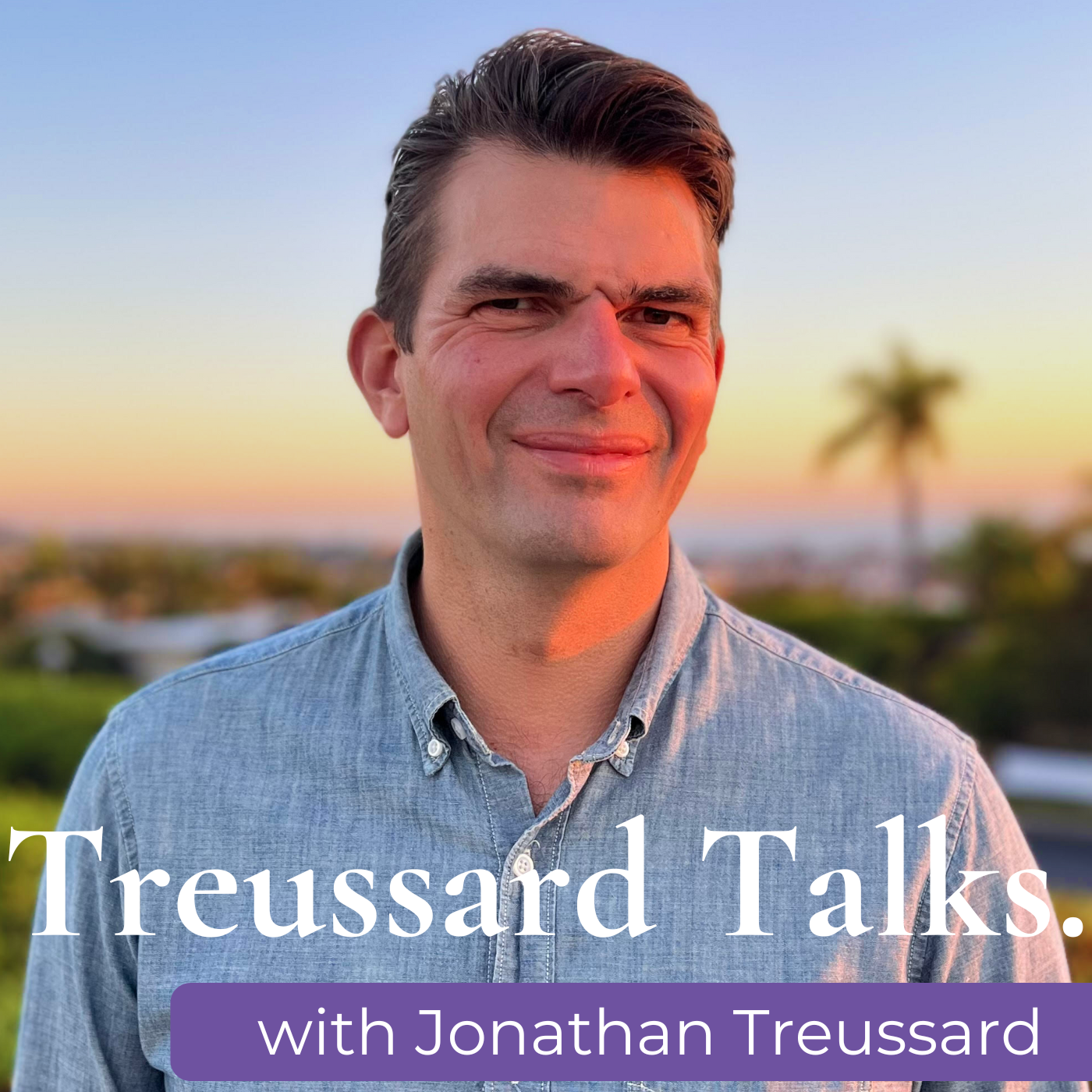
Treussard Talks.
by Jonathan Treussard, Ph.D.
Welcome to ”Treussard Talks,” where we cut through the complexity of wealth management to reveal what really matters in building and preserving your financial legacy.As a former partner at a $150B global asset manager and Founder of Treussard Capital Management, I’ve witnessed firsthand how the investment industry often prioritizes complexity over clarity. This podcast aims to change that narrative.Each episode, we’ll dive deep into the questions that sophisticated investors should be asking but often don’t. From demystifying investment strategies to exploring the psychological aspects of wealth management, we’ll provide you with actionable insights that go beyond traditional financial advice.Whether you’re navigating market uncertainties, seeking to align your wealth with your values, or looking to build a lasting legacy, this podcast offers the clarity and perspective you need to make informed decisions. Join me as we explore the intersection of wealth, purpose, and strategic thin
-
24
Capital, AI, and the Limits of Liquidity — with Andrea Eisfeldt | Treussard Talks (E24)
Andrea Eisfeldt holds the Laurence D. and Lori W. Fink Endowed Chair in Finance at UCLA Anderson and is a Research Associate at the National Bureau of Economic Research. She received her PhD in economics from the University of Chicago, trained under John Cochrane, Lars Hansen, and Doug Diamond — three names that account for multiple Nobel Prizes between them. Her research covers intangible capital, liquidity, human capital compensation, and what AI is doing to firm values and labor markets. The accounting data that underlies most factor investing was built for an economy that no longer exists. The companies that dominate markets today run on software, customer relationships, and engineering talent. None of it shows up on the balance sheet the way it should. Andrea has spent the better part of two decades building the tools to correct for that — and the implications are significant. We also get into liquidity. Why it dries up in bad times. Why that is structural, not accidental. And how the current stress in private credit fits a pattern that goes all the way back to her dissertation. Andrea is an eternal optimist. Her optimism is grounded in mechanisms, not sentiment. You'll hear us cover: Why accounting statements were designed to record transactions, not to serve as portfolio management inputs — and what that means for factor investing today The three categories of intangible capital: knowledge, customer, and organization — and how partial non-rivalry creates natural economies of scale Why market concentration and pricing power are not the same thing, and why conflating them leads to bad investment thinking The task-level research on AI and firm value: how workforce composition predicted abnormal stock returns in the weeks following ChatGPT's release in November 2022 The bottleneck model: why the human oversight still required by AI becomes both a constraint on growth and the most highly compensated skill in the economy Equity compensation beyond the C-suite: why ignoring it distorts what we think we know about labor's share of income and firm ownership Endogenous liquidity: why the greed-fear cycle has a structural explanation — and why liquidity disappears in bad times in ways that are entirely predictable in advance The frontier problem: why engineering liquidity from illiquid assets always runs into limits, and why private credit stress is a feature of that pattern, not an accident If this conversation is useful to you, the next step is the Wealth, Empowered newsletter — free, published every two weeks, written for people who want to think seriously about markets and wealth without the noise. Subscribe at wealth-empowered.beehiiv.com. Disclaimer: The content of Treussard Talks is for informational and educational purposes only and should not be considered financial advice. The views expressed are those of the host and guest and do not necessarily reflect the opinions of Treussard Capital Management or its affiliates. Listeners should consult with their own financial advisor before making any investment decisions. For full disclosures, visit treussard.com. Newsletter — Wealth, Empowered: https://wealth-empowered.beehiiv.com/ Website: https://www.treussard.com/
-
23
Debt, Inflation, and the Risky Macro Regime of Fiscal Dominance — with Jim Masturzo | Treussard Talks (E23)
The conventional tools of monetary policy assume the central bank is in charge. What happens when the debt burden gets large enough that it isn't? At some point — and no one knows exactly when — raising rates stops cooling the economy and starts feeding it, because the interest expense on the debt itself becomes a source of stimulus. That's fiscal dominance. It's not a theoretical curiosity. It's the logical destination of a decade of spending without restraint. Jim Masturzo has been thinking about this carefully. As CIO of Research Affiliates — the firm behind one of the most widely used asset allocation frameworks in the world — he spends his days asking what today's market and economic circumstances imply for the decade ahead. We recorded this conversation on February 25, 2026, days before the US–Iran war began. We weren't talking about the news. We were talking about the structure underneath it. That structure hasn't changed. If anything, it's more visible now. You'll hear us cover: Why starting conditions (yields, valuations) matter more than long-run historical averages How to think about expected returns without confusing "expectations" for "predictions" The CAPE ratio near 40: what it implies for US equities relative to the rest of the world Debt, deficits, and the logic of financial repression Fiscal dominance: when higher rates can become inflationary via interest expense dynamics Why non-US assets can benefit in a weaker-dollar regime Real assets and commodities as diversification in inflation-volatile periods Private credit, insurance balance sheets, and where the next fragilities might hide AI, software pricing power, and second-order risks to credit and cash flows If this conversation resonates, there's more where it came from. Wealth, Empowered is my newsletter — published twice a month. Just rigorous but accessible thinking about markets and wealth, and what it actually means to manage money with purpose. Written for people who want to understand what's happening, not just be told what to do about it. Subscribe: https://wealth-empowered.beehiiv.com/ More about Treussard Capital Management LLC and how I work with clients at: https://www.treussard.com/ Disclaimer: This content is for informational and educational purposes only and is not financial advice. Views are those of the host and guest. Consult your own advisor before making investment decisions. Full disclosures: https://www.treussard.com/
-
22
Tax-Advantaged Investing, Long-Short Strategies, and the Future of Wealth Management with Erkko Etula | Treussard Talks (E22)
Wall Street is building a trillion-dollar business around slashing the tax bills of wealthy investors. The innovations are real. So are the risks. This conversation is about how to think clearly about both. Erkko Etula built his career at the intersection of academic finance and institutional practice — MIT, Harvard, the Federal Reserve Bank of New York, a decade at Goldman Sachs rebuilding the wealth management investment process from the ground up, and ultimately founding Brooklyn Investment Group. We start where his research started: what broker-dealer balance sheets reveal about risk appetite in the system, and why the overnight repo market remains one of the most important and least-watched corners of finance. We then move to what Erkko spent his Goldman years solving — how to manage a taxable portfolio holistically, treating tax efficiency not as an afterthought but as a structural input from the start. That work led him to what he considers one of the most consequential innovations in wealth management since the invention of the ETF: tax-advantaged long-short strategies. We get into the mechanics carefully, because the mechanics matter — especially when markets are volatile and the institution renting you balance sheet capacity changes its mind. What We Cover: Risk appetite and balance sheets: Why broker-dealer leverage is a better real-time signal of systemic stress than many other economic indicators — and what that research revealed when Lehman collapsed. The ETF timeline: Mutual funds, ETFs, direct indexing — each step brings taxable investors closer to keeping more of what they make. Where long-short fits in that arc. Direct indexing 2.0: What happens when you combine tax-loss harvesting with long-short portfolio construction — and why the potential power of that combination is measured in months, not years. Risk management first: The three-layer framework — benchmark beta, tracking error, concentration risk — and why communicating tail risk matters in this context. Balance sheet as rented space: Why leverage works until it doesn't, and what that means for investors in these strategies right now. Building Brooklyn: What Erkko learned leaving Goldman — about humility, team, and the relationship between certainty and disappointment. Erkko Etula is CEO of Brooklyn Investment Group and winner of the Smith Breeden Prize for Outstanding Capital Markets Research. Want to go deeper? Jonathan's newsletter Wealth, Empowered. covers markets, wealth, and what it all means for sophisticated families. Free to subscribe at wealth-empowered.beehiiv.com Treussard Talks is for entertainment and education only. Nothing here is financial advice. Treussard Capital Management is a registered investment advisor. Visit treussard.com for additional information and disclaimers.
-
21
The Strait of Hormuz, Oil Markets, and the Futures Curve with Nic Johnson | Treussard Talks (E21)
The Strait of Hormuz was always the thought experiment. The scenario commodities traders ran when they needed a stand-in for the unimaginable. Fifteen to twenty miles of waterway. One fifth of the world's oil. Now it isn't a thought experiment anymore. Nic Johnson spent years at PIMCO as head of commodities, managing large commodities portfolios. Before that, he was a research fellow at NASA's Jet Propulsion Laboratory. He is one of the more technically grounded people I know on this topic — and a friend. We recorded this conversation two and a half weeks into the disruption. Not to predict what comes next. Neither of us knows. But to understand what is actually happening, and where to look if you want a clearer picture than the headlines are giving you. What we cover: The physical reality — how oil moves through the Strait, what limited storage capacity means for exporters, and why strategic petroleum reserves buy weeks, not months Why $100 oil is high but not crazy high — and what the shale revolution did to the long-run marginal cost of production How the US, Europe, and more financially fragile economies experience this shock very differently — and what a populist export restriction would and wouldn't actually accomplish The futures market versus the physical market — why systemic contagion is unlikely, and where localized blowups could still happen The one indicator worth watching: not the headline spot price, but the oil futures curve — and why the front month and the five-year forward are telling very different stories right now Why anyone thinking about reinventing themselves as a commodity trader should understand what variant perception means before placing a single bet Understanding your wealth requires understanding the world your wealth lives in. This is that conversation. The content of Treussard Talks is for informational and educational purposes only and should not be considered financial advice. The views expressed are those of the host and guests and do not necessarily reflect the opinions of Treussard Capital Management or its affiliates. Listeners should consult with their own financial advisor before making any investment decisions. For full disclosures, visit treussard.com. Stay Connected Newsletter — Wealth, Empowered: wealth-empowered.beehiiv.com Learn more: treussard.com This podcast is for entertainment and education only. Nothing here is financial advice. Treussard Capital Management is a registered investment advisor. Please visit our website treussard.com for additional information and disclaimers.
-
20
The State of Trump Economics in 2026 with Larry Kotlikoff | Treussard Talks (E20)
In this conversation, Larry Kotlikoff (https://kotlikoff.net/)—Professor of Economics at Boston University, Research Associate at the NBER, and former Senior Economist on Reagan's Council of Economic Advisors—and I go through the current administration's economic agenda one proposal at a time. Not from a partisan lens. From first principles. What follows is rigorous and at times surprising. You'll hear us cover: Why Kotlikoff sees genuine merit in capping credit card interest rates—and what it reveals about the tension between capital and consumer in American finance The 401(k) proposal to fund home purchases: what it misunderstands about saving, housing supply, and the purpose of retirement accounts Tariffs and the capital account: why the trade deficit is a symptom, not the disease—and why tariffs almost certainly can't fix what's actually broken The fiscal reckoning hiding in plain sight: why raising every federal and state tax by 25% today still might not be enough—and why the US is in worse long-term fiscal shape than Italy Immigration and demography: US population growth fell by half in 2025. What that means for labor, capital, and the long-term American economic project The Fed, Volcker, and the power of expectations Geopolitical realignment as economic policy: why the current international moment may be the most consequential—and least understood—economic story of our time Why this matters now: Every proposal in this conversation connects back to the same underlying tension—a fiscal system that has been quietly redistributing from young to old for 70 years, suppressing saving, distorting incentives, and mortgaging the future. The individual headlines are symptoms. Kotlikoff keeps bringing us back to the diagnosis. And understanding your wealth requires understanding the world your wealth lives in. This is that conversation. Disclaimer: The content of "Treussard Talks" is for informational and educational purposes only and should not be considered financial advice. The views expressed are those of the host and guests and do not necessarily reflect the opinions of Treussard Capital Management or its affiliates. Listeners should consult with their own financial advisor before making any investment decisions. For full disclosures, visit treussard.com. Stay Connected Newsletter — Wealth, Empowered: Subscribe https://wealth-empowered.beehiiv.com/ Learn more: treussard.com This podcast is for entertainment and education only. Nothing here is financial advice. Treussard Capital Management is a registered investment advisor. Please visit our website www.treussard.com for additional information and disclaimers.
-
19
Tail Risk, Market Structure, and Building Resilience with Vineer Bhansali | Treussard Talks (E19)
In this conversation, Vineer Bhansali—Ph.D. in theoretical physics from Harvard, former PIMCO portfolio manager, and founder of LongTail Alpha—and I explore why the tails of the distribution are where both some of the most misunderstood risks and opportunities reside. We connect the mechanics of options pricing, market structure changes, and risk management to the decisions that actually restore clarity and control for sophisticated investors. You'll hear us cover: Why diversification alone may not protect you when correlations converge (2022, Liberation Day 2025) The hidden dynamics driving call option mispricings in today's markets (passive flows, buybacks, gamma imbalances) How zero-DTE retail option trading can be rational—and what it reveals about wealth inequality Currency markets as early indicators of multi-decade macro realignment Volatility as a tradable asset class and why options are "on sale" for building portfolio resilience The ultra-marathon mindset: never get forced out of the game Why "the only thing worse than not having insurance is to think you do when you don't" (Bob Merton) Why this matters now: We're potentially exiting a 30-year regime of falling rates, low volatility, and credible central banking. In that new world, the strategies that worked—passive diversification, stocks-and-bonds—may not be enough. Bhansali offers a physicist's lens on probability distributions, market microstructure, and the practical tools for building portfolios that survive and compound through regime change. Disclaimer: The content of "Treussard Talks" is for informational and educational purposes only and should not be considered financial advice. The views expressed are those of the host and guests and do not necessarily reflect the opinions of Treussard Capital Management or its affiliates. Listeners should consult with their own financial advisor before making any investment decisions. For full disclosures, visit treussard.com. Stay Connected Newsletter — Wealth, Empowered: Subscribe Learn more: treussard.com Book an intro call: scheduler.zoom.us/jonathan-treussard-ph-d/intro-call This podcast is for entertainment and education only. Nothing here is financial advice. Treussard Capital Management is a registered investment advisor. Please visit our website www.treussard.com for additional information and disclaimers.
-
18
Passive Investing's Endgame and America's Hidden Precarity Crisis with Mike Green | Treussard Talks (E18)
In this episode, I sit down with Mike Green—Chief Strategist at Simplify Asset Management and one of the most rigorous thinkers on market structure today. We start with Mike's journey from Wharton to small-cap value, through Canyon Partners during 2008, to correctly predicting the XIV collapse in 2018, and eventually co-founding Simplify where the firm now manages $12 billion across 30 strategies. From there, we dig into two slow-burning crises that most people are getting wrong: how passive investing is reshaping market mechanics in ways that can't be sustained, and how we've systematically mismeasured economic precarity over the last 60 years. These aren't separate stories—they're symptoms of the same problem: asking systems to do things they weren't designed to do. You'll hear us cover: ON PASSIVE INVESTING AND MARKET STRUCTURE: The critical flaw in Sharpe's 1991 "Arithmetic of Active Management": passive funds trade continuously as cash flows in and out, making them perpetually active systematic strategies How the Pension Protection Act of 2006 accidentally created a market where over 100% of marginal capital became "passive"—and why regulators couldn't act due to regulatory capture Over 50% passive by market cap in US equities, and the physics predict accelerating volatility Why contributions (tied to income) and withdrawals (tied to asset values) create an unstable dynamic The fundamental mistake: we changed markets from pricing capital to providing retirement security—incompatible objectives The seeds of its own destruction ON AMERICA'S HIDDEN PRECARITY CRISIS: How Mike stumbled onto the poverty line calculation and "felt sick" when he understood what it meant The 1963 origin: families spent 1/3 of budgets on food, so HHS tripled the USDA minimum food budget to define poverty—then locked that number in place That same food budget now represents 5-7% of household expenditures, not 33%—making the poverty line meaningless The real number: for a family of four in Caldwell, NJ, the inflation-adjusted equivalent isn't $32K—it's $140K The "valley of death": benefit cliffs where earning more makes you functionally poorer Why childcare became the single largest budget item for young families—and what disappeared when informal support networks collapsed What we've forgotten: capitalism requires redistribution for system sustainability and provisioning the next generation The connection to markets: when we can't afford crashes because retirement security depends on asset values, we've painted ourselves into a corner ON INTELLECTUAL HONESTY: Why taking time off with no risk on the table is essential for seeing systems clearly What Earl Thompson taught me at UCLA: don't trust the "intellectual cartel" Why Mike's analysis isn't left or right—it's about hard-coding numbers in 1963 and watching the world change around them THE BOTTOM LINE: Markets weren't designed to provide retirement security—they were designed to price capital. We've grafted a social insurance system onto a capital allocation mechanism, and both are breaking under the strain. Mike's work matters because he's doing what few others will: following the math wherever it leads, even when it's uncomfortable. This conversation is about understanding the actual rules of the game—not the ones we wish existed, but the ones that actually govern outcomes. If you want to understand why markets feel unstable and why economic anxiety persists despite "strong" headline numbers, this episode explains the mechanics. Disclaimer: The content of "Treussard Talks" is for informational and educational purposes only and should not be considered financial advice. The views expressed are those of the host and guests and do not necessarily reflect the opinions of Treussard Capital Management or its affiliates. Listeners should consult with their own financial advisor before making any investment decisions. For full disclosures, visit treussard.com. STAY CONNECTED: Newsletter — Wealth, Empowered: https://wealth-empowered.beehiiv.com/ Learn more: treussard.com.
-
17
Incentives, Investor Behavior, and AI with Devin Shanthikumar | Treussard Talks (E17)
In this episode, I sit down with Devin Shanthikumar—faculty at the UC Irvine Merage School of Business and Associate Dean for Undergraduate Studies—to talk about how real-world market outcomes are shaped. We start with Devin’s path from UC Berkeley (engineering and computer science) to a PhD in finance at Stanford, and how the early-2000s dot-com boom and bust shaped the questions that became the foundation of their research. From there, we dig into what happens when smart people make painful investing mistakes—not because they lack intelligence, but because they don’t understand the incentives embedded in the financial system. We also zoom out to what AI means for the future of work and learning, and what that might imply for the next generation. You’ll hear us cover: Why Devin’s research became “behavioral finance” through a simple question: what mistakes are people making, and why? What individual investors often miss about sell-side analyst incentives. How analysts balance multiple audiences at once: institutional clients, individual investors, and the companies they cover (and the role that access plays). The “two tongues” idea: why analysts’ recommendations and earnings forecasts can reflect different constraints and objectives. What changes when investing commentary moves into more disintermediated, online spaces, including the risk of echo chambers. Devin’s working paper on financial blogs, and why engagement in comment threads can sometimes push people toward more moderate views. What Devin is studying now about AI’s impact on analyst research, including why analyst work is a powerful setting to study AI (clear, measurable outputs and outcomes). Early evidence on how AI can improve analyst performance: accuracy, speed of updating, and handling complex filings. A surprising finding: rather than forcing consensus, AI may enable analysts to be bolder, especially where human judgment matters most. How Devin approaches teaching and curriculum in the AI era, including the importance of foundational knowledge, critical thinking, and building real human community. A candid concern about the AI age: fewer entry-level roles, and what that means for the development ladder over time. Disclaimer: The content of “Treussard Talks” is for informational and educational purposes only and should not be considered financial advice. The views expressed are those of the host and guests and do not necessarily reflect the opinions of Treussard Capital Management or its affiliates. Listeners should consult with their own financial advisor before making any investment decisions. For full disclosures, visit treussard.com. Stay Connected Newsletter — Wealth, Empowered: Subscribe Learn more: treussard.com
-
16
Fifty Years Explaining Economics to America with Paul Solman | Treussard Talks (E16)
Fifty years explaining economics to America with Paul Solman | Treussard Talks (E16) Paul Solman (PBS NewsHour, eight Emmys, five Peabodys) has spent half a century translating markets and economics for millions. But this conversation isn't about predictions or portfolios. It's about how to think when you can't know what's coming. The Three-Body Problem of Everything Paul frames it plainly: the U.S. economy is 330 million moving parts changing their minds constantly. Financial markets multiply that complexity exponentially. Trying to predict any of it with certainty? Impossible. But that's not surrender — it's realism. The alternative to prediction isn't paralysis. It's strategy. Paul walks through his framework: costs versus benefits, current and prospective, with full acknowledgment of uncertainty and unintended consequences. The Conversation Economics as decision-making. Why the transaction costs of worry matter as much as the financial costs of preparation. How Russian immigrant parents, family tragedy, and being a "pathological explainer" converged when nobody understood economics in 1973. Paul shares four practices he actually follows for staying sane when the world feels overwhelming — including why he doesn't watch TV news despite working in television for 50 years. We discuss the non-profit American Exchange Project, sending high school seniors to entirely different American communities. Why small acts of human kindness compound. Why there's more good in the world than bad. Why It Matters Financial media trains you to want certainty. But nobody actually knows what happens next. The sophistication isn't pretending otherwise — it's building strategies that work across multiple scenarios while maximizing what you get from every moment you're alive. The framework scales. The humility matters. The human connection isn't soft — it's foundational. This conversation won't forecast where markets end 2025 or 2026. It will show you how a legendary journalist thinks about life, decision-making, and what matters after 50 years explaining the inexplicable. Subscribe to the newsletter Wealth, Empowered at treussard.com This content is for informational and educational purposes only. For full disclosures, visit treussard.com.
-
15
Tax Planning and Estate Governance with Frazer Rice | Treussard Talks (E15)
Tax Planning and Estate Governance with Frazer Rice | Treussard Talks (E15) In this conversation, Frazer Rice—author of Wealth Actually—and I cover two distinct, if related, topics. First, what H.R. 1 really changes for high earners, business owners, and wealthy households. Second, what a holistic framework for estate planning and family governance looks like for ultra-high-net-worth families. You’ll hear us cover: Part I — H.R.1: what’s changed and how to plan What “permanent” really means in tax law and why policy drift still matters PTET: the workaround made durable and why it favors owners over W‑2 earners QBI/Section 199A: who qualifies now and the expanded income bandwidth QSBS/Section 1202: 3–5 year milestones, per‑issuer limits, and avoiding status “poisoning” Estate and gift exemption at $15M per person and practical implications Part II — A framework for UHNW estate planning and governance Start with a living balance sheet: assets, ownership, liquidity, and document inventory Governance over documents: roles, backups, and why “oldest sibling as trustee” often fails Pre‑mortems and disaster recovery: the first 14–30 days playbook after a major event Coordinating income tax, capital gains, and estate tax across states with diverging regimes Culture, values, and communication so wealth supports purpose rather than conflict Why this matters: We cover H.R.1's tax provisions because you need to understand the rules. But if you think tax optimization is the hard part of estate planning, you may be optimizing the wrong variable. Frazer Rice has spent years working with ultra-high-net-worth families. His observation: wealth gets destroyed more often by family dysfunction, bad governance, and institutional knowledge gaps than by tax inefficiency. So yes, we decode PTET, QBI, QSBS, and estate exemptions. You'll understand what changed and who benefits. But we spend equal time on what matters even more for the long run: building governance structures that work under stress, staffing roles with the right people (not just the oldest sibling), and creating disaster recovery playbooks so a family crisis doesn't become a catastrophe. Disclaimer: The content of “Treussard Talks” is for informational and educational purposes only and should not be considered financial advice. The views expressed are those of the host and guests and do not necessarily reflect the opinions of Treussard Capital Management or its affiliates. Listeners should consult with their own financial advisor before making any investment decisions. For full disclosures, visit treussard.com. Stay Connected Newsletter — Wealth, Empowered: Subscribe Learn more: treussard.com
-
14
Tax Alpha, Mechanics over Magic with Brent Sullivan | Treussard Talks (E14)
Tax strategies sold as "alpha" often obscure their actual mechanics — and the investment risks you're taking to get the tax benefit. Brent Sullivan — "Tax Alpha Insider," formerly on PIMCO's trading floor and Parametric's quantitative team — decodes what's really happening beneath the marketing slides. For founders with embedded gains, executives navigating concentrated positions, and investors tired of advisors who dazzle with complexity rather than deliver clarity, this conversation cuts through the noise. The Framework That Matters Brent establishes the hierarchy up front: tax belongs after risk, return, diversification, and cost — not before them. In other words: "Don't let the tax tail wag the investment dog." Too many advisors lead with tax benefits because they're compelling, then reverse-engineer the investment justification. This conversation does the opposite — we start with what these strategies do, then examine whether the tax advantages justify the risks. What We Cover: ETF tax efficiency demystified: How in-kind redemptions move taxable events "outside the box" — the actual mechanics, not the marketing magic. Section 351 in-kind seeding: The path from concentrated positions to diversified portfolios without triggering capital gains, including the 25/50 diversification tests. Spoiler: if 100% of your wealth is in a single stock, this isn't your solution. Tax-aware long/short overlays: Margin rates, borrow costs, short rebates, haircuts — why these are investment strategies first with tax benefits as byproduct. Understanding this prevents expensive surprises when financing terms change overnight. Box spreads as synthetic borrowing: How they work, borrowing vs. lending mechanics, and the dangers of DIY'ing this unless you understand American vs. European options, collateral haircuts, and four-legged options execution. Dark-case thinking throughout: What breaks when markets dislocate, counterparties prioritize self-preservation, and the "temporary pain" you need to be prepared for. Not fearmongering — the adult conversation about sizing exposure appropriately. Why This Matters The industry has productized sophisticated tax strategies. But productization doesn't eliminate complexity — it just hides it. The stakes for investors with meaningful embedded gains: Avoidable taxes triggered by strategies you didn't fully understand Hidden costs in financing terms that change when you need stability most Investment risks dressed up as tax solutions Execution mistakes from attempting sophisticated trades without professional knowledge Counterparty exposure to institutions whose crisis priority is self-preservation, not your portfolio Who Should Listen This is for investors who: Have concentrated positions or embedded gains requiring sophisticated navigation Want to understand mechanics, not marketing promises Recognize that sophistication means knowing what can go wrong If you want reassuring generalities about tax alpha, this isn't your episode. If you want to understand the engineering behind these strategies so you can make informed decisions, this is exactly where to start. This conversation with Brent modeled what escaping the Wealth Management Industrial Complex looks like: mechanics over magic, clarity over complexity, understanding over being sold to. Continue the education: Subscribe to Wealth, Empowered at https://wealth-empowered.beehiiv.com/subscribe Explore your specific situation: For concentrated positions, embedded gains, or wealth complexity requiring more than education — schedule a complimentary strategic session. We'll review your situation and determine if family office-level thinking without classic institutional conflicts makes sense for you. Reach out: https://www.treussard.com/contact Disclaimer: This content is for informational and educational purposes only and should not be considered financial advice. Listeners should consult with their own financial advisor before making any investment decisions. For full disclosures, visit treussard.com. Connect: treussard.com
-
13
Active ETFs and the Multi‑Manager Model with Kristof Gleich | Treussard Talks (E13)
In this conversation, Harbor Capital Advisors President and CIO Kristof Gleich and I dig into how to find true skill in managers, why the ETF wrapper changed the game, and how to build more resilient portfolios in an inflation‑prone world. We connect the mechanics and psychology of investing to the decisions that restore clarity and control for sophisticated investors. You’ll hear us cover: How to separate signal from story in manager due diligence, including cultural “tells” and hard no’s The multi‑manager model: partnering with specialist boutiques vs. building in‑house Active ETFs 101: what changed in 2019, and why the wrapper can lower cost and improve tax outcomes if used well Mechanics that matter and operational oversight as investor protection Systematic vs. discretionary edges and how to assess each Psychology traps: performance chasing, timing mistakes, and setting risk so “I didn’t sign up for this” shouldn’t happen Why commodities may be underowned given today’s regime and what role they can play Why this matters now: Many investors still judge strategies by headline returns or brand names, not by process quality, alignment, and measurable sources of edge. In a world of rolling inflation shocks and fiat‑currency stress, getting structure right — manager selection, vehicle choice, fee drag, and tax handling — compounds more than hot dots. Disclaimer: The content of “Treussard Talks” is for informational and educational purposes only and should not be considered financial advice. The views expressed are those of the host and guests and do not necessarily reflect the opinions of Treussard Capital Management or its affiliates. Listeners should consult with their own financial advisor before making any investment decisions. For full disclosures, visit treussard.com. Stay Connected Newsletter — Wealth, Empowered: Subscribe Learn more: treussard.com Book an intro call: scheduler.zoom.us/jonathan-treussard-ph-d/intro-call
-
12
Fear, Not Risk: Rethinking the Equity Premium with Rob Arnott and Ed McQuarrie | Treussard Talks (E12)
Fear, Not Risk: Rethinking the Equity Premium with Rob Arnott and Ed McQuarrie | Treussard Talks (E12) In this conversation, Rob Arnott (Founder and Chairman, Research Affiliates) and Ed McQuarrie (Professor Emeritus, Santa Clara University) examine why fear—of loss and of missing out—better explains asset pricing than traditional “risk” frameworks. We connect the mechanics and psychology of investing to help sophisticated investors restore clarity and control over portfolio decisions. You’ll hear us cover: Why 20th‑century returns were a potential outlier and what 19th‑century data says about the equity premium Fear vs. risk: separating downside aversion from fear of missing out and why CAPM’s symmetry breaks What challenges “Stocks for the Long Run” as a belief system, and what drives long‑horizon returns Factor investing through a fear lens: value, size, and more Practical portfolio design: Tobin’s two‑fund separation, where TIPS might fit, and limits of target‑date funds Investor behavior in cycles: when fear of loss dominates vs. when FOMO dominates Why this matters now: Many investors implicitly assume an ever‑present equity premium. If fear is the true driver and premiums vary with cycles and starting yields, portfolio choices and client guidance might need to adapt, as historical patterns suggest that investor sentiment can influence market cycles and premiums. Disclaimer: The content of “Treussard Talks” is for informational and educational purposes only and should not be considered financial advice. The views expressed are those of the host and guests and do not necessarily reflect the opinions of Treussard Capital Management or its affiliates. Listeners should consult with their own financial advisor before making any investment decisions. All investments carry the potential for loss, including the loss of principal. For full disclosures, visit treussard.com. Stay Connected Newsletter — Wealth, Empowered: Subscribe Apple Podcasts: Listen to Treussard Talks Learn more: treussard.com
-
11
Alternatives, Diversification, and Investor Agency with Jane Buchan | Treussard Talks (E11)
Alternatives, Diversification, and Investor Agency with Jane Buchan | Treussard Talks (E11) In this conversation, Jane Buchan — CEO of Martlet Asset Management, co‑founder of PAAMCO (which grew to $32B AUM), former Dartmouth finance professor, and longtime CAIA leader — and I dig into what “alternatives” really are, how the space has evolved, and how disciplined due diligence restores clarity and control for sophisticated investors. We link market mechanics with investor behavior to focus on practical choices that drive outcomes. You’ll hear us cover: A working definition of alternatives and how they mature from frontier to mainstream Globalization, rising correlations, and why diversification still earns its keep Private equity vs. hedge funds: leverage, long/short mechanics, and capacity limits Private credit and direct lending: floating‑rate reality, regulatory arbitrage, and default plumbing Due diligence in practice: separate accounts, custody risk, and aligning control with ownership Bubble talk without the hype: being roughly right long‑term vs. perfectly timed Investor psychology in alts: expectation setting, story risk, and staying power Building the pipeline in finance and the power of asking better questions Why this matters now: High-net-worth investors face more products and stories than ever. Clear mechanics, sober risk management, and true diversification — not magical thinking — are what preserve agency over outcomes. Disclaimer: The content of “Treussard Talks” is for informational and educational purposes only and should not be considered financial advice. The views expressed are those of the host and guests and do not necessarily reflect the opinions of Treussard Capital Management or its affiliates. Listeners should consult with their own financial advisor before making any investment decisions. For full disclosures, visit treussard.com. Stay Connected Newsletter — Wealth, Empowered: Subscribe Learn more: treussard.com
-
10
Defining FinTech with Michael Imerman, Ph.D. | Treussard Talks (E10)
Defining FinTech with Michael Imerman, Ph.D. | Treussard Talks (E10) Join Jonathan Treussard, Ph.D. for a thoughtful conversation with Michael Imerman, Ph.D. — Professor of Finance at UC Irvine and author of The Economics of FinTech (2025). They define what truly counts as FinTech, map the ecosystem across verticals and horizontals, trace the post‑GFC innovation cycle, and separate durable signal from hype across AI, cloud, and blockchain. They also explore inclusion, alternative data, and fairness in credit decisions, and close with teaching, purpose, and the skills that create day‑one value in finance. Key Highlights What FinTech Really Is A clear definition that holds up in portfolios and policy, distinguishing finance‑adjacent tech from true FinTech. The FinTech Map Verticals from payments, digital banking, lending, and digital wealth to PropTech and InsurTech. Horizontals like risk, valuation, and regulation. Enablers include AI, cloud, distributed ledgers, and a forward look at quantum computing. After the GFC How cycles of hype, shock, and regulation shift risk and activity, and why technology firms moved from vendors to direct financial service providers. AI’s Breakout and Quantum’s Horizon What is driving adoption today, what’s realistic, and why quantum could matter over a five‑to‑ten‑year window. Blockchain Beyond Crypto Pragmatic applications like secured lending and collateral tracking that improve market plumbing and controls. Inclusion and Risk The promise and pitfalls of alternative data and AI in credit, including proxy variables and fairness challenges for regulators. Teaching and Purpose Bridging industry and classroom to build in‑demand skills and create day‑one value in finance. Why It Matters for Sophisticated Investors Purposeful wealth management demands context. Understanding how technology, incentives, and regulation reshape intermediation and credit helps investors separate durable innovation from “solutions in search of a problem,” position capital with prudence, and stay aligned with long‑term goals. Subscribe to Wealth, Empowered — practical, candid insight at the intersection of technology, markets, and purposeful wealth management. Built for operators, founders, and families who want clarity and control. Subscribe: https://wealth-empowered.beehiiv.com Disclaimer The content of Treussard Talks is for informational and educational purposes only and should not be considered financial advice. The views expressed are those of Jonathan Treussard and guests and do not necessarily reflect the opinions of Treussard Capital Management or its affiliates. Listeners should consult their own financial advisors before making investment decisions. Visit www.treussard.com for additional disclaimers.
-
9
When History Meets Markets: Geopolitics, Civility, and Capital with David Kotok | Treussard Talks (E09)
When History Meets Markets: Geopolitics, Civility, and Capital with David Kotok | Treussard Talks (E09) Join Jonathan Treussard for a thoughtful conversation with David Kotok. David’s decades of experience as CEO, CIO, and investor, along with his deep interest in history and geopolitics, provide powerful lessons for investors navigating uncertain times. Key Highlights The Grocery Store MBA David shares how ten years working in his family’s grocery store instilled practical lessons in humility, service, and human connection—arguably as valuable for leadership and decision-making as any advanced degree. Why Studying History Still Matters Drawing inspiration from Churchill, David emphasizes the importance of understanding history not just for context, but for insight into cycles of war, peace, and global economics—and how those play out in today’s markets. Financing Conflict in the Modern Era Jonathan and David dive into the economic realities of modern warfare—how governments fund defense through borrowing rather than taxation, what that means for inflation, and the long-term consequences for future generations. Civility in an Uncivil Age In a profession where many stay silent, David underscores the importance of being direct yet civil, candidly highlighting risks and trade-offs rather than hiding behind consensus. It’s a reminder of how leadership, whether in finance or public discourse, requires integrity and courage. The Investor’s Takeaway From debt-fueled defense spending to the inflationary implications of geopolitical conflict, this episode connects the dots between history, policy, and capital markets. For seasoned professionals and families managing wealth across generations, David’s perspective illustrates why disciplined analysis, humility, and long-term thinking matter most. Why It Matters for Sophisticated Investors David Kotok’s career and worldview reinforce timeless wisdom: successful wealth management is not just about beating benchmarks but about understanding context—how human behavior, history, and geopolitics shape the economic risks and opportunities we face today. These insights are especially relevant for business leaders, families, and professionals who must position capital with both prudence and purpose. If you enjoyed this episode and want access to thoughtful, unfiltered insight at the intersection of wealth and human behavior, subscribe to my free newsletter, Wealth, Empowered. Every two weeks, you’ll gain practical wisdom tailored for investors committed to long-term vision and purposeful wealth management. Sign up here: https://wealth-empowered.beehiiv.com/ Disclaimer The content of Treussard Talks is for informational purposes only and should not be considered financial advice. The views expressed are those of Jonathan Treussard and his guests and do not necessarily reflect the opinions of Treussard Capital Management or its affiliates. Listeners should consult their own financial advisors before making investment decisions. Visit www.treussard.com for additional disclaimers.
-
8
Economics That Matters: From Academic Theory to Real-World Solutions with Larry Kotlikoff | Treussard Talks (E08)
Economics That Matters: From Academic Theory to Real-World Solutions with Larry Kotlikoff | Treussard Talks (E08) Join Jonathan Treussard for a lively conversation with Larry Kotlikoff, Professor of Economics at Boston University, influential policy thinker, and longtime mentor. In this episode, Jonathan and Larry look back on the defining moments that shaped Larry’s career—from the early days at Penn and Harvard to the turbulence of academic politics and his groundbreaking work in fiscal and intergenerational accounting. Learn more about Larry's Maxifi Planner here: https://maxifiplanner.com/ Key Highlights Choosing the Road Less Traveled Larry shares how he was torn between law school and economics, and how encouragement from mentors like Steve Ross set him on an unexpected path to Harvard and an entire career driven by curiosity and creativity. Academic Hurdles and Speaking Your Mind Larry talks about the challenges he faced at top universities, including getting pushed out of positions after making waves with his research. He talks about why being authentic and asking tough questions matters— even when it means not always fitting in. Making Public Policy Count Larry explains how his work at the Council of Economic Advisors and his research on fiscal and intergenerational accounting grew from a desire to have real impact on society, not just on academic debates. Finding Value in Nonlinear Careers The discussion highlights the unpredictable nature of meaningful work—how taking risks and accepting setbacks leads to a more rewarding journey, especially in a field where playing it safe is the norm. Mentorship and Lasting Culture Jonathan credits Larry’s personal style and independent thinking for helping create the world-class economics department he experienced at BU. They reflect on how true leadership is about building a culture where others can thrive. Why It Matters for Sophisticated Investors Larry’s story is a reminder: real leadership, whether in academia or finance, means taking risks, embracing setbacks, and staying true to your own vision. This episode offers lessons in creativity, resilience, and the importance of asking big questions, tailored for business leaders, families, and professionals committed to purposeful wealth management. If you enjoyed this episode and want thoughtful, unfiltered insight at the intersection of wealth, purpose, and strategic thinking, sign up for my free newsletter, Wealth, Empowered. Every two weeks, you’ll get practical wisdom and commentary for business leaders, professionals, and families looking to align their wealth management with long-term vision and personal values. Sign up here: https://wealth-empowered.beehiiv.com/ Disclaimer The content of Treussard Talks is for informational purposes only and should not be considered financial advice. The views expressed are those of Jonathan Treussard and his guests and do not necessarily reflect the opinions of Treussard Capital Management or its affiliates. Listeners should consult their own financial advisors before making investment decisions. Visit www.treussard.com for additional disclaimers.
-
7
Purpose, Access, and the Modern Investor’s Journey with Anna Paglia | Treussard Talks (E07)
Purpose, Access, and the Modern Investor’s Journey with Anna Paglia | Treussard Talks (E07) Join Jonathan Treussard for a powerful conversation with Anna Paglia, Chief Business Officer at State Street Global Advisors, as they delve into the future of investing, leadership with purpose, and breaking down barriers to wealth creation. Anna’s inspiring story traces her journey from waiting tables in Rome while attending law school to her current executive leadership at a firm managing $4.7 trillion in assets. Key Highlights Breaking Down Barriers Anna discusses her working-class upbringing and how it fueled her commitment to democratizing access to sophisticated wealth-building tools, challenging an industry long defined by exclusion. From Law to Asset Management Hear how Anna’s shift from entertainment law in Italy to asset management exemplifies the value of a non-linear career—and why adaptability is key to professional success. The ETF Revolution Discover how Anna helped champion ETFs, bringing institutional-level diversification to everyday investors and making market access possible with as little as $25. Lessons in Leadership and Mentorship Anna recounts formative mentorship from surprising places—including a restaurateur’s crisis wisdom—and shares how those lessons inform her leadership and resilience. Purpose, Sacrifice, and Career Building The dialogue explores the difference between “having a job” and “building a career,” including the role of sacrifice, vision, and authentic purpose. Investment Psychology Gain actionable advice on managing financial emotions during times of market volatility, and why the discipline of “don’t just do something, sit there” is often the savviest move. Family Wisdom and Defining Success Anna offers insights from her two grandmothers—one who embraced tradition, one who blazed her own trail—illuminating diverse paths toward happiness and authentic achievement. The Future of Finance The episode examines opportunities in democratizing private markets and the risks posed by social media-driven misinformation in investing. Why It Matters for Sophisticated Investors Anna’s perspectives connect real-world experience to themes that matter for business leaders, legacy families, and professionals managing significant wealth. The conversation seamlessly blends strategic, behavioral, and personal insights, offering both practical advice and inspiration for those navigating complex financial landscapes. Listen to discover how purpose-driven leadership and industry innovation can transform financial complexity into clarity—and why empowering investors of all backgrounds is essential to the future of wealth management. Episode Timestamps 01:00 — Anna’s journey: from law school waitress to leading strategic initiatives at a $4.7 trillion asset manager 05:00 — Breaking down barriers: how working-class roots shaped a mission to democratize sophisticated investing 12:00 — ETF revolution: institutional-quality diversification accessible with just $25 20:00 — The psychology of meaningful career building: sacrifice, purpose, and betting on your vision 26:00 — Managing investment emotions during volatility: why patient discipline beats reactive decisions 35:00 — Grandmother wisdom: two different paths to authentic fulfillment and defining success 38:00 — The future of finance: private market access and social media-driven risks If you enjoyed this episode and want to receive thoughtful, unfiltered insight at the intersection of wealth, purpose, and strategic thinking, sign up for my free newsletter, Wealth, Empowered. Every two weeks, you’ll get practical wisdom and actionable commentary crafted for business leaders, professionals, and families looking to align their wealth management with their values and long-term vision. Sign up here: https://wealth-empowered.beehiiv.com/ Disclaimer The content of Treussard Talks is for informational purposes only and should not be considered financial advice. The views expressed are those of Jonathan Treussard and his guests and do not necessarily reflect the opinions of Treussard Capital Management or its affiliates. Listeners should consult their own financial advisors before making investment decisions. Visit treussard.com for additional disclaimers.
-
6
Reclaiming Control, Legacy, and Family Dynamics: Estate Planning with Anne Rhodes & Dave Haughton | Treussard Talks (E06)
On this episode, I sit down with Anne Rhodes, Chief Legal Officer at Wealth.com, and estate attorney Dave Haughton for an important conversation about reclaiming control, navigating family dynamics, and how proactive estate planning shapes our wealth, legacies, and relationships across generations. Anne and Dave share their journeys from major law firms to legal tech and public education. We dig into why estate planning is about much more than technical documents or tax savings—it’s about empowering families, resolving conflict before it starts, and connecting actions to the things that matter most. You’ll hear us cover: Anne and Dave’s paths from traditional law practice to digital estate planning and legal innovation Essential estate planning documents to have at every life stage, from powers of attorney for young adults to advanced trusts for complex family dynamics Probate, incapacity, and even the importance of sticky notes (literal and metaphorical) on personal possessions Why “everyone has a plan—the question is, who wrote it: you, or the state?” Family dynamics, inertia, and why tough conversations are actually an act of care Real stories about inheritance, meaningful heirlooms, and the ripple effects of legacy (monetary and otherwise) Procrastination and psychology: why we avoid planning, and the accessible paths forward The purpose behind planning: honoring true intentions, empowering the next generation, and repairing or deepening family relationships both now and after we’re gone Anne and Dave bring deep experience, candor, and commitment to making estate planning more accessible and human. Their perspectives help families tackle the hurdles, have the tough conversations, and make choices today that will outlast tomorrow. If you want to understand how estate planning shapes not just what you leave behind, but the very fabric of your family and your community, this episode is essential listening. Ready for more? If you found this conversation helpful and want more thoughtful, candid insight at the intersection of money, meaning, and modern wealth, sign up for my free newsletter, Wealth, Empowered. Get practical insights and stories in your inbox every two weeks: https://wealth-empowered.beehiiv.com/ DISCLAIMER: The content of “Treussard Talks” is for informational purposes only and should not be considered financial advice. The views expressed are those of Jonathan Treussard and his guests and do not necessarily reflect the opinions of Treussard Capital Management or its affiliates. Listeners should consult their own financial advisors before making investment decisions. Go to treussard.com for additional disclaimers. 01:00 — Anne & Dave’s backgrounds: law, technology, and family journeys 05:00 — What is estate planning? Powers of attorney, wills, and basic strategies for every stage of life 12:00 — Probate avoidance, sticky notes, and making your intentions clear 20:00 — Family dynamics, psychology, and approaching tough conversations 26:00 — The ripple effect of planning: legacy, meaning, community 35:00 — Rapid-fire questions: favorite word, fear, legacy, and more 38:00 — Closing thoughts: empowering the next generation, and the practical joy behind making a difference
-
5
Intergenerational Wisdom, Risk, and the Functions of Finance with Zvi Bodie | Treussard Talks (E05)
Intergenerational Wisdom, Risk, and the Functions of Finance with Zvi Bodie | Treussard Talks (E05) On this episode, I sit down with Zvi Bodie—economist, author, advocate for the American investor, and my father-in-law—to explore how the core functions of finance shape not just markets and policy, but also the way we live, save, and prepare for uncertainty across our lives. Our conversation takes us from Zvi’s journey growing up in Brooklyn and pursuing philosophy before discovering economics, to his pioneering research in risk, inflation-protected bonds, and the very real-world consequences of retirement planning and societal change. We dig into what it means for financial tools and policies to genuinely serve individuals and communities, how the theory-practice divide can be bridged, and why teaching and translation matter. You’ll hear us cover: - Zvi’s path from Brooklyn to MIT to decades of teaching and advocacy - How and why “stocks are not a hedge against inflation”—and the fallacy of “stocks for the long run” - The invention, economics, and purpose of inflation-protected bonds (like TIPS and I-Bonds) - Why understanding core financial functions matters more than fixating on products or institutions - How evolving societal needs gave rise (and death) to pensions, 401(k)s, and mutual funds—and why adaptability is essential - Lessons from crises (LTCM, tech bubble, GFC) about psychology, risk, and humility - The vital importance of saving, preparing for adversity, and building resilience—financially and emotionally - The power of clear communication, financial literacy, and the meaning that comes from teaching and nurturing the next generation Zvi brings intellectual honesty, historical context, and a deep commitment to making finance accessible—blending academic rigor with genuine care for families and everyday investors. If you want to understand how finance really underpins our lives—and how its core principles translate into better decisions for your future—this conversation is essential listening. If this resonates with you, consider subscribing to Wealth, Empowered (https://wealth-empowered.beehiiv.com/), my bi-monthly newsletter, where I share candid insights at the intersection of money, meaning, and modern wealth. DISCLAIMER: The content of “Treussard Talks” is for informational purposes only and should not be considered financial advice. The views expressed are those of Jonathan Treussard and his guests and do not necessarily reflect the opinions of Treussard Capital Management or its affiliates. Listeners should consult with their own financial advisors before making investment decisions. Go to treussard.com for additional disclaimers. 01:00 — Zvi’s early years, education, and path into economics and finance 10:00 — Foundational lessons at MIT: the rise of financial science 13:00 — Why stocks are not true inflation hedges or “safe in the long run” 19:00 — The creation and purpose of inflation-protected bonds (TIPS, I-Bonds) 23:00 — The functional perspective: why finance is about serving core human needs, not product labels 27:00 — Retirement: how and why pensions gave way to 401(k)s, and what’s lost and gained 32:00 — How psychology, herding, and surprise drive crises like LTCM, tech bubble, GFC 37:00 — Integrating finance, decision-making under uncertainty, and the next generation 40:00 — “Principles of Finance”: teaching core concepts and empowering new investors 44:00 — Market psychology, humility, and preparing for the unexpected 45:00 — The importance of saving, resilience, and community at every stage of life 48:00 — Why teaching, financial literacy, and nurturing others is at the heart of fulfillment 50:00 — Rapid-fire reflections: favorite words, sounds, fears, and hopes for the next generation
-
4
Capitalism, Agency, and Investing with Dave Nadig | Treussard Talks (E04)
Capitalism, Agency, and Investing with Dave Nadig | Treussard Talks (E04) On this episode, I sit down with Dave Nadig, one of the most thoughtful voices in asset management, to explore the roots and evolution of investing, the purpose and power of capitalism, and how trust and agency fit into today’s financial world. Our conversation goes beyond stocks and markets to look at the system itself: why we pool resources, how we decide who—and what—to trust, and what it means to “bet with the house” as individuals and as a society. We dig into the sweeping changes and recurring cycles in asset management, from mutual funds and ETFs to the rise of indexing and crypto, and examine how technology, generational attitudes, and societal trust keep shifting the ground beneath our feet. You’ll hear us cover: What capitalism is really for—and who it serves Why distrust and agency are at the heart of modern investing The journey from mutual funds to ETFs, index funds, and crypto What it means to “bet with the house”—and why it can feel like giving up agency How to navigate complexity by focusing on trust, transparency, and relationships in markets Personal reflections on risk, entrepreneurship, and finding meaning beyond returns Dave brings a rare mix of intellectual curiosity, lived experience, and industry wisdom. If you want to understand how the machinery of investing fits into the bigger picture of society—and your own life—this is a conversation you won’t want to miss. If these kinds of conversations resonate with you, you might also enjoy Wealth, Empowered, a bi-monthly newsletter where I share candid and authentic insights, frameworks, and reflections from the intersection of money, meaning, and modern wealth. DISCLAIMER: The content of ”Treussard Talks” is for informational purposes only and should not be considered as financial advice. The views expressed are those of Jonathan Treussard and his guests and do not necessarily reflect the opinions of Treussard Capital Management or its affiliates. Listeners should consult with their own financial advisors before making any investment decisions. Go to treussard.com for additional disclaimers. 01:00 — Capitalism and pooling resources 07:00 — The journey from mutual funds to ETFs 13:00 — Generations and institutional distrust 21:00 — Betting with the house: trust, risk, and agency 32:00 — Crypto, collapse, and “hyper-agency” 38:00 — Black hat/white hat: trust and transparency in asset management 44:00 — Dave’s story, lessons learned, and final thoughts
-
3
Raising Financially Fit Kids in Abundance with Joline Godfrey | Treussard Talks (E03)
Raising Financially Fit Kids in Abundance with Joline Godfrey | Treussard Talks (E03) On this episode, I sit down with Joline Godfrey—someone who deeply understands what it takes to raise a financial fit kids when they are surrounded with abundance, not just with assets, but with purpose and confidence. Our conversation focuses on what truly matters: empowering your children to be financially capable, values-driven, and resilient in a world that doesn’t always make it easy. We talk openly about the challenges of discussing money at home—and why it’s so important to push past that discomfort. Joline shares her journey from teaching young girls about money to developing 'Bounce 10,' a holistic program for families determined to be intentional about their wealth and legacy. You’ll hear us cover: Why your kids’ relationship with money starts with you, not a textbook Turning family values from aspirations into daily actions The real-life complexities that abundance brings to family conversations How to model healthy financial behaviors, even when it feels awkward Breaking the silence around money to help your kids grow up grounded and wise Learn more about Joline and Bounce 10 here: https://www.bounce-10.com/ DISCLAIMER: The content of ”Treussard Talks” is for informational purposes only and should not be considered as financial advice. The views expressed are those of Jonathan Treussard and his guests and do not necessarily reflect the opinions of Treussard Capital Management or its affiliates. Listeners should consult with their own financial advisors before making any investment decisions. Go to treussard.com for additional disclaimers. 00:00 — Introduction 00:50 — Joline’s journey in financial education 04:33 — The F.I.S.H. framework and rethinking wealth 08:45 — Psychology behind money conversations 13:19 — Modeling real-world financial values for your family 26:38 — Scaling learning with Bounce 10 34:49 — Reflections on what actually works 40:24 — Final thoughts and sign-off
-
2
Navigating Financial Crises and Building Career Resilience with Katie O'Dwyer | Treussard Talks (E02)
Navigating Financial Crises and Building Career Resilience with Katie O'Dwyer | Treussard Talks In this episode of Treussard Talks, Jonathan Treussard chats with Katie O'Dwyer about her dynamic career in finance. They revisit the 2008 financial crisis, sharing personal stories and key takeaways. Katie discusses her unexpected path from a Harvard physics graduate to a risk management strategist and highlights the vital role of relationships and liquidity in investing. They explore the psychology and mechanics of investing, touching on diversification, market timing, and the human side of financial decisions. Katie also shares her passion for mentoring students and her love for statistics. Tune in for a deep dive into financial systems, risk management, and personal growth. DISCLAIMER: The content of ”Treussard Talks” is for informational purposes only and should not be considered as financial advice. The views expressed are those of Jonathan Treussard and his guests and do not necessarily reflect the opinions of Treussard Capital Management or its affiliates. Listeners should consult with their own financial advisors before making any investment decisions. Go to treussard.com for additional disclaimers. 00:00 Welcome to Treussard Talks 00:24 Memories of the 2008 Financial Crisis 03:08 Katie's Journey into Finance 04:53 The Role of Risk Management 14:40 The Importance of Relationships in Investing 18:41 Exploring Liquidity and Market Mechanics 23:00 Psychology of Investing 30:07 Personal Passions and Mentoring 32:59 Rapid-Fire Questions
-
1
Investing Insights with Alec Crawford: From Computer Science to Wall Street and Beyond | Treussard Talks (E01)
Investing Insights with Alec Crawford: From Computer Science to Wall Street and Beyond | Treussard Talks Join Jonathan Treussard as he sits down with Alec Crawford to discuss the intersection of the mechanics of investing, the psychology behind investment decisions, and effective risk management strategies. Alec shares his journey from a computer science graduate to a distinguished Wall Street career, and lessons learned during the 2008 financial crisis. They also delve into the recent meme stock madness and Alec’s return to his computer science roots with his innovative AI governance venture. This episode offers a comprehensive look at investment practices, risk management, and the impact of technology on the financial world. Learn more about Alec and his firm here: https://www.aicrisk.com/ Artificial Intelligence Risk, Inc. provides world-class cybersecurity, risk governance, and compliance management of AI systems. DISCLAIMER: The content of ”Treussard Talks” is for informational purposes only and should not be considered as financial advice. The views expressed are those of Jonathan Treussard and his guests and do not necessarily reflect the opinions of Treussard Capital Management or its affiliates. Listeners should consult with their own financial advisors before making any investment decisions. Go to treussard.com for additional disclaimers. 00:00 Introduction to Treussard Talks 00:17 Meeting Alec Crawford 03:47 Alec's Background and Education 06:04 Transition to Wall Street 10:53 Risk Management Insights 14:22 The Importance of Financial Plumbing 21:15 The Role of Reputation in Financial Crises 22:32 Changes in Financial Institutions Over Time 23:02 The Impact of Desperation on Financial Decisions 23:49 Mortgage-Backed Securities during the GFC 29:40 The Dangers of Meme Stocks and Bad Investment Advice 31:57 Transitioning Back to Computer Science and AI 33:26 Rapid Development of AI Governance Tools 37:15 Fun and Insightful Q&A Session 39:31 Final Thoughts and Advice
We're indexing this podcast's transcripts for the first time — this can take a minute or two. We'll show results as soon as they're ready.
No matches for "" in this podcast's transcripts.
No topics indexed yet for this podcast.
Loading reviews...
ABOUT THIS SHOW
Welcome to ”Treussard Talks,” where we cut through the complexity of wealth management to reveal what really matters in building and preserving your financial legacy.As a former partner at a $150B global asset manager and Founder of Treussard Capital Management, I’ve witnessed firsthand how the investment industry often prioritizes complexity over clarity. This podcast aims to change that narrative.Each episode, we’ll dive deep into the questions that sophisticated investors should be asking but often don’t. From demystifying investment strategies to exploring the psychological aspects of wealth management, we’ll provide you with actionable insights that go beyond traditional financial advice.Whether you’re navigating market uncertainties, seeking to align your wealth with your values, or looking to build a lasting legacy, this podcast offers the clarity and perspective you need to make informed decisions. Join me as we explore the intersection of wealth, purpose, and strategic thin
HOSTED BY
Jonathan Treussard, Ph.D.
Loading similar podcasts...
URL copied to clipboard!