
PODCAST · arts
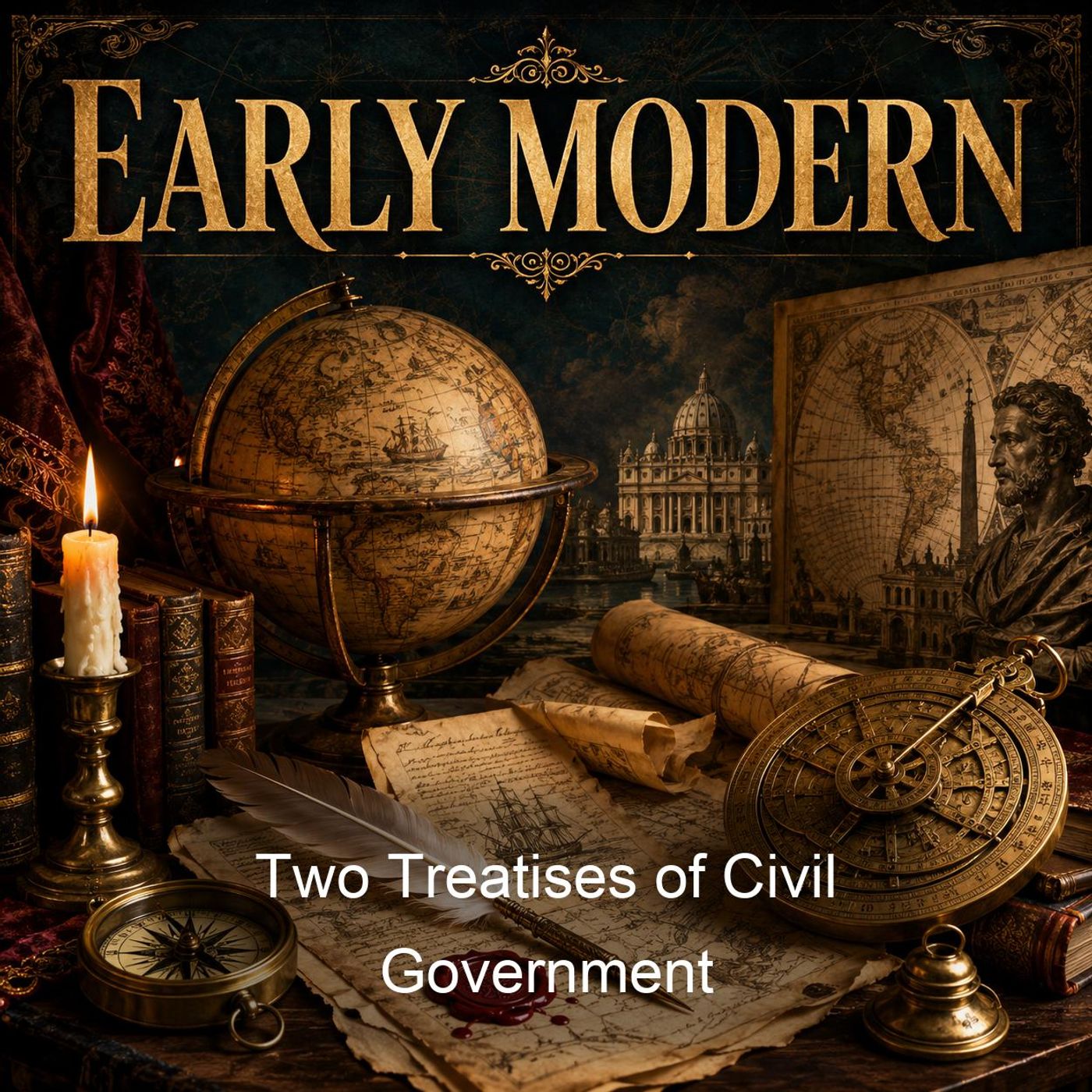
Two Treatises of Civil Government
by John Locke
The Two Treatises of Civil Government is a work of political philosophy published anonymously in 1689 by John Locke. The First Treatise is an extended attack on Sir Robert Filmer's Patriarcha, which argued for a divinely-ordained, hereditary, absolute monarchy. The more influential Second Treatise outlines a theory of civil society based on natural rights and contract theory. Locke begins by describing the "state of nature," and goes on to explain the hypothetical rise of property and civilization, asserting that the only legitimate governments are those which have the consent of the people.Locke's ideas heavily influenced both the American and French Revolutions. His notions of people's rights and the role of civil government provided strong support for the intellectual movements of both revolutions. (Summary adapted from Wikipedia)
No episodes available yet.
We're indexing this podcast's transcripts for the first time — this can take a minute or two. We'll show results as soon as they're ready.
No matches for "" in this podcast's transcripts.
No topics indexed yet for this podcast.
Loading reviews...
ABOUT THIS SHOW
The Two Treatises of Civil Government is a work of political philosophy published anonymously in 1689 by John Locke. The First Treatise is an extended attack on Sir Robert Filmer's Patriarcha, which argued for a divinely-ordained, hereditary, absolute monarchy. The more influential Second Treatise outlines a theory of civil society based on natural rights and contract theory. Locke begins by describing the "state of nature," and goes on to explain the hypothetical rise of property and civilization, asserting that the only legitimate governments are those which have the consent of the people.Locke's ideas heavily influenced both the American and French Revolutions. His notions of people's rights and the role of civil government provided strong support for the intellectual movements of both revolutions. (Summary adapted from Wikipedia)
HOSTED BY
John Locke
Loading similar podcasts...
URL copied to clipboard!