
PODCAST · business
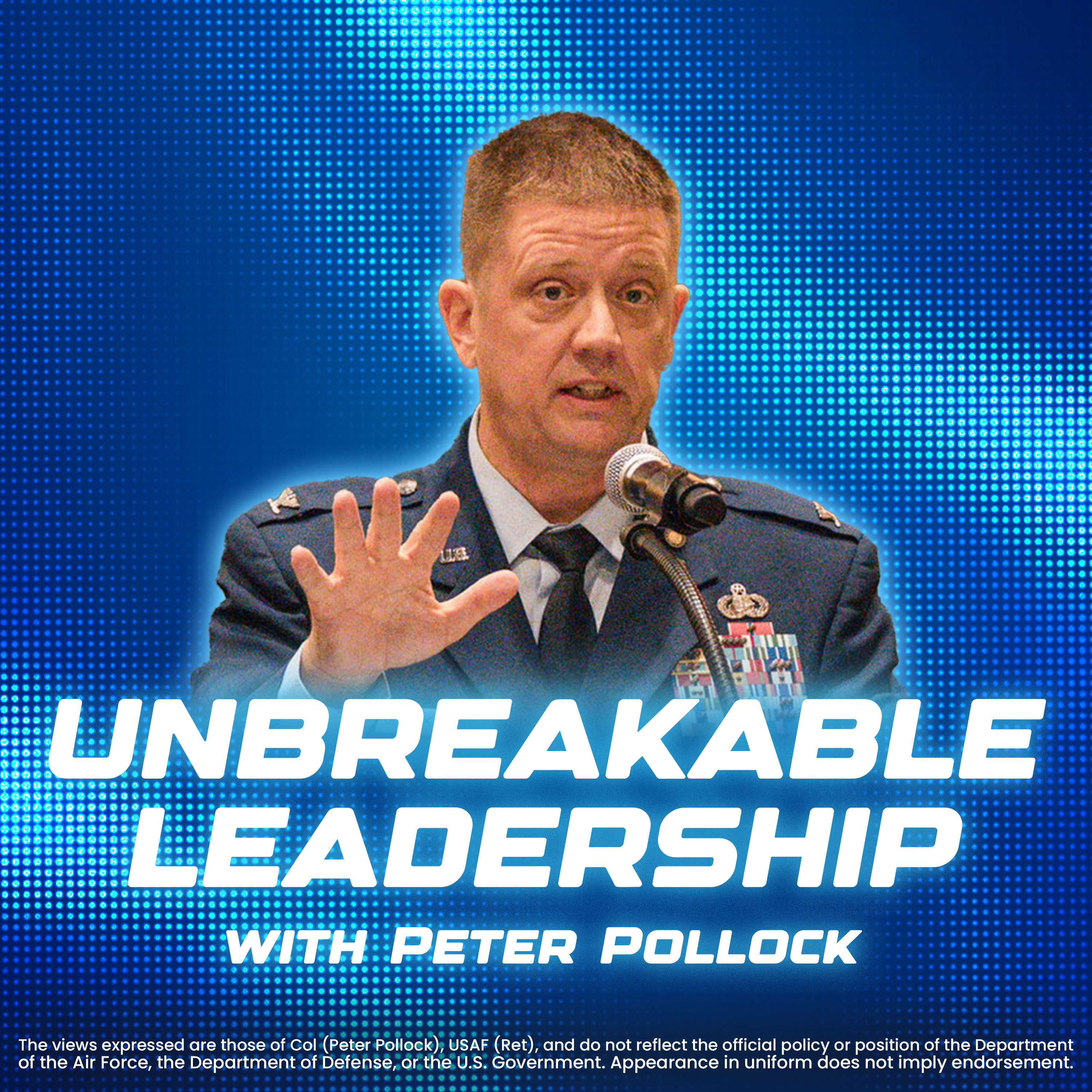
Unbreakable Leadership: No Perfect Leaders, Just Real Ones
by Peter Pollock
Unbreakable Leadership cuts past the clichés to explore what leadership really looks like, messy, demanding, and deeply human. Hosted by Peter Pollock, best-selling author, adjunct faculty member, and former military commander, the show blends hard-earned lessons from the battlefield and the boardroom. Each episode delivers real stories and candid conversations with veterans, executives, and everyday leaders who’ve learned that authenticity, resilience, and failure are the true foundations of growth and influence.
-
9
Marriage, Military, and Leadership with The Bostics
What does it really take to lead when the pressure is real and the answers aren’t obvious? How do you earn trust instead of demanding it? And what happens when you get leadership wrong?In this episode of Unbreakable Leadership, Peter Pollock sits down with Tony and Anita Bostic, a married couple who served 28 and 25 plus years in the U.S. Air Force. Tony, a Security Forces defender, and Anita, from Force Support, bring two very different career paths, one shared life, and a lot of hard earned leadership lessons. From their unforgettable first meeting at Kadena Air Base to the moment they both asked Peter to retire them, their story is personal, honest, and relatable.They dive into what it’s really like to become a first time supervisor, the mistakes that shape you, and the leaders you would follow anywhere. Tony opens up about a moment where his blunt approach backfired and forced him to rethink how he communicates and connects. Anita shares the experience of being removed from a role without explanation and how that moment later shaped the way she shows up for her own people.At the center of it all is trust. How it’s built, how quickly it can be lost, and why it matters more than anything else. They talk about the difference between book smarts and people smarts, why leaders who have never failed can be dangerous, and how transparency can turn even tough moments into trust building ones.Peter also shares a vulnerable leadership mistake that cost him trust and why he respects those who never gave it back. The episode ends with a simple truth from Anita on why she chose Peter to retire her. Because you were transparent. And I trusted you.Tune in for a real, no nonsense conversation on leadership, growth, and what it truly means to lead people.Key TakeawaysLeadership starts with connection, not authorityPeople receive messages differently, so communication must adaptConfidence builds trust, even when you don’t have all the answersUnderstanding your people is essential to leading them effectivelyWhat you intend to say and what people hear are often very differentDiscipline without context can damage trust and moraleAdvocating for your people matters, but accountability still appliesGreat leaders show transparency and take ownership of failuresIndecision at the top creates frustration and stalls progressRespect is earned through presence, not rank or force In This Episode[00:00] Introduction[00:36] Meet Tony & Anita Bostic[01:13] Anita’s story joining the Air Force[03:16] Tony’s story[04:56] How Anita and Tony met[06:10] What they do today post-service[07:31] How Peter met them at Kadena[09:19] First leadership lesson: Anita [10:23] First leadership lesson: Tony [11:54] Importance of connecting with people as a leader[12:14] Anita’s light-bulb moment and most interesting connections[14:07] Connecting with cops as a leader[15:33] Tony’s first and biggest mistakes and lessons learnt[21:35] Anita’s biggest failure[24:27] The troop she over-advocated for (and what she learned)[26:52] Anita disagrees with Peter on a promotion decision[30:46] Tony’s greatest commander[33:56] Tony’s worst leader[36:13] Anita’s best commander trait[37:38] Anita’s worst commander trait[38:23] Tony on Commander Nate Aiken[39:55] Love and empathy as human skills[40:48] Is Peter empathetic? [43:29] Tony’s question: degrees vs. people smarts[46:43] Anita’s question[49:38] Why did Anita ask Peter to retire her [51:56] Outro Resources and LinksAnita Bostichttps://www.linkedin.com/in/anita-bostic-2573378a/https://callitclosed.com/Tony Bostichttps://www.linkedin.com/in/tonybostic24/Peter PollockWebsite -https://gladiusconsultingtx.com/LinkedIn - https://www.linkedin.com/in/peterpollock1/ Book: Leadership: The Good, Bad and Ugly https://www.amazon.com/Leadership-Good-Ugly-Peter-Pollock/dp/108802842X
-
8
How a Command Chief Found Peace in Chaos
Where do you go when a 31-year military career ends and the uniform comes off? For retired Chief Master Sergeant Jay France, the answer began with a 2,653-mile walk along the Pacific Crest Trail.In this episode of Unbreakable Leadership, host Peter Pollock sits down with retired Chief Master Sergeant Jay France, former Command Senior Enlisted Leader of United States Transportation Command (USTRANSCOM) and author of Five Million Steps.Jay opens up about a 31-year Air Force career that began with a teacher who saw something in him no one else did. He shares the difficult conversation with a chief that brought him down a few notches, a conversation he didn't know he needed but one that shaped his entire leadership philosophy.Jay reveals his biggest leadership failure, not getting the mental health care he needed for years. After four deployments to Afghanistan and three to Iraq, the weight caught up with him. As a base command chief during a growing mental health crisis, he sat in rooms with senior leaders discussing the very problem he was hiding.Jay also walks through his remarkable transition, leaving the stage on April 1, 2021, and starting the Pacific Crest Trail just two weeks later. All 2,653 miles from Mexico to Canada, not as a stunt but as a deliberate act of self-discovery. He needed to figure out who "Jay" was without the chief stripes.The conversation explores how calm is contagious and so is chaos, why leaders must meet people where they are rather than forcing conformity, and how today's younger generation is more informed and inquisitive, which is a gift, not a threat.Peter also shares his own transition story, including the parking lot phone call that landed him his first post-military job, and offers hard-won advice for veterans: take the time you deserve and don't expect the corporate world to mirror the military.Listen now to learn how to lead with authenticity, build resilience, and navigate your own journey of growth, whether in the military, corporate world, or everyday life.Key TakeawaysCalm is contagious, but chaos spreads just as quickly in leadership environmentsDifficult conversations are part of caring for the people you leadSharing your story creates connection and helps others feel less aloneMentorship works best when leaders meet people where they areLeadership requires constant evolution, especially with younger generationsToo much information can lead to decision paralysis for leadersCombat experiences shape leadership perspectives for lifeTransitioning from military service requires time to rediscover purposeLeaders cannot care for others if they neglect their own well-beingThe corporate world does not value military leadership the same waySuccess isn't winning awards; it's having people call you years later to ask you to retire themIn This Episode[00:00] Introduction to the podcast and guest[01:14] Jay France’s background and Air Force career[03:09] Hiking the Pacific Crest Trail after retirement[05:25] One story that defines Jay’s leadership philosophy[09:11] Taking Five Million Steps[10:08] The one message behind the book Five Million Steps[16:08] A real example of calm leadership during a crisis[21:21] Why leaders must keep evolving with younger generations[28:46] The one piece of advice for transitioning life after a 30-year career[33:24] The one failure that shaped Jay’s greatest lesson[42:54] Peter’s advice about mistakes[44:40] Peter’s advice about success[47:16] Peter’s advice for veterans transitioning from serviceResources and LinksJay Francehttps://www.linkedin.com/in/jason-l-france/Five Million Steps: https://www.amazon.com/Five-Million-Steps-Pacific-Decades/dp/B0D94X9RXGPeter PollockWebsite -https://gladiusconsultingtx.com/LinkedIn - https://www.linkedin.com/in/peterpollock1/ Book: Leadership: The Good, Bad and Ugly https://www.amazon.com/Leadership-Good-Ugly-Peter-Pollock/dp/108802842X
-
7
How One Demotion Forged an Unbreakable Leader
What if getting demoted wasn’t the end of your leadership story, but the moment it actually began? Because most leaders don’t fail from lack of skill, they fail from leading behind a mask. In this episode of Unbreakable Leadership, host Peter Pollock sits down with David “Satch” Satchell, retired Air Force Command Chief and founder of CORE Leadership Development.Satch shares a raw and honest look at his leadership journey, including a defining moment early in his career when he was demoted for failing to lead responsibly. That experience shaped how he leads today, grounded in the belief that failure is not the end, but part of the process.The conversation dives into the difference between title-based and identity-based leadership, and why the best leaders are chosen by their people, not their position. They also explore emotional intelligence, not as a buzzword, but as a real leadership skill that starts with self-awareness. As Satch explains, once you truly see it, you cannot unsee it.Trust becomes a central theme throughout the episode. Most leaders look for tools and strategies to fix performance, but often overlook the real issue, a lack of trust.Peter also shares his own turning point after leaving the military. Seeing the gap in real leadership pushed him to start Gladius Consulting, built on experience, not theory. He explains that Unbreakable Leadership is not about being perfect. It is about being broken, learning from it, and continuing to lead anyway.This conversation is a powerful reminder that leadership starts within. No titles, no masks, just real growth.Key TakeawaysFailure takes time to heal. You cannot rush the bruising processTitle-based leaders rely on position, identity-based leaders earn followershipSelf-doubt is the most common blind spot leaders don’t seeArrogance often hides insecurity, not confidenceEmotional intelligence is intangible but once you see it, you can’t unsee itTrust is the foundation of team performance, not tools or strategyTrust people first, making them earn it creates distanceEvery leader needs a rupture point to drop the mask and become realGrowth requires failure, leaders must create space for bothYounger generations need to be stretched, not protected from failureLeadership hasn’t changed, only the language around it hasIn This Episode[00:00] Introduction to the podcast and guest[01:05] Satch’s Air Force journey and leadership background[03:58] What Core really means[05:57] Demotion and the lesson that changed everything[09:16] Learning through failure and the bruising period[10:08] Leadership identity vs title[12:01] Leadership and coaching connection[13:47] Emotional intelligence and self-awareness[16:08] Transition from military to Amazon[18:09] The 30-meter tower moment: Leaving Amazon to build Core[20:06] Empathy, grace, and the one “charity case” rule[22:02] Common blind spots and self-doubt in leaders[26:23] The "oh shit" moment of realizing the “leadership mask”[32:05] Trust first vs earn trust debate[35:43] Why “Unbreakable”? Peter’s story[39:56] Generational leadership and resilience[45:59] Peter on why leadership still matters after the militaryOur GuestDavid “Satch” Satchell is a retired U.S. Air Force Command Chief, leadership coach, and founder of Core, a company focused on developing leaders through the human side of leadership. After a distinguished 30-year military career, including service at the Pentagon, Satch now helps individuals and organizations unlock performance through trust, emotional intelligence, and authentic leadership.Resources and LinksDavid Satchellhttps://core-elc.com/https://www.linkedin.com/in/desatchhttps://www.instagram.com/callme_satch/Peter PollockWebsite -https://gladiusconsultingtx.com/LinkedIn - https://www.linkedin.com/in/peterpollock1/ Book: Leadership: The Good, Bad and Ugly https://www.amazon.com/Leadership-Good-Ugly-Peter-Pollock/dp/108802842X
-
6
The Greatest Lessons in Leadership
How do bad bosses, failed startups, and unexpected career turns shape the kind of leader you become? In this episode of Unbreakable Leadership, host Peter Pollock sits down with Steve Harden, a 37-year consumer packaged goods veteran who has led iconic brands like Adidas, Oakley, and K-Swiss. But this conversation goes far beyond corporate success. Steve shares the hard lessons behind the titles, including the ten terrible bosses who shaped his leadership philosophy, the startup dream that COVID crushed, and the rejection from the Naval Academy at 18 that unexpectedly redirected his life.After decades in executive leadership managing global brands and billions in revenue, Steve stepped away from the C-suite to start a consulting practice and teach entrepreneurship and brand strategy at Azusa Pacific University. Now he helps the next generation of leaders bridge the gap between classroom theory and real-world leadership.Peter and Steve dive into what leadership really looks like when things get messy. They talk about toxic bosses, why silos destroy organizations, and why culture beats strategy when it comes to building high-performing teams. Steve shares his “one team, everyone sells” mindset and explains why great leaders get caught doing the same things they ask of others.Peter also reflects on his transition from military to corporate leadership and the frustrations he encountered along the way, especially the tendency for companies to promote subject matter experts instead of developing real leaders.Throughout the conversation, one theme becomes clear. Leadership is not about titles or theory. It is about ownership, clarity, consistency, and the courage to keep moving forward even when things go wrong.If you have ever worked for a terrible boss, struggled with broken culture, or wondered what real leadership actually looks like, this episode will resonate.Key TakeawaysTen terrible bosses taught Steve more than one great oneCulture eats strategy for breakfastThe "do as I say, not as I do" leader is everywhereReturn calls, answer emails, follow upThe best leaders lead by example, not authorityBeing "busy" is often ego, not impactSilos destroy alignment and prevent organizations from achieving their missionEvery department contributes to revenue and brand successOwnership and accountability are essential leadership habitsClear communication prevents confusion and wasted timeOwn your failures, then move forward – One-off mistakes don't define youConsistency in performance matters more than occasional bursts of effortLeaders ultimately control their mindset, growth, and trajectoryAsk the dumb question – Clarity prevents failure. Assume nothingTake care of yourself first – You cannot lead anyone else until you do.In This Episode[00:00] Introduction and guest welcome[01:20] Steve’s background and career journey[06:39] Corporate leadership and lessons from bad bosses[09:57] Transition to entrepreneurship and consulting[11:58] Work-life balance and consulting lifestyle[13:47] Teaching and mentoring future leaders[15:06] One team and everyone sells mindset[17:02] Culture vs. strategy[20:04] Servant leadership and self-care[22:16] Bridging academia and industry[26:09] Habits that separate good from great leaders[28:47] Overcoming plateaus in entrepreneurship[32:56] Learning from failure and extreme ownership[37:12] The thrive method framework[38:04] Advice to 30-year-old self and red car theory[40:41] Performance reviews and asking tough questions[41:52] Military vs. corporate leadership[46:36] Final lessons and closing thoughtsResources and LinksSteve Hardenhttps://www.linkedin.com/in/stevehardenBook: Surpass Your LimitsPeter PollockWebsite -https://gladiusconsultingtx.com/LinkedIn - https://www.linkedin.com/in/peterpollock1/ Book: Leadership: The Good, Bad and Ugly https://www.amazon.com/Leadership-Good-Ugly-Peter-Pollock/dp/108802842X
-
5
The Weight of Command: When Leadership Decisions Never Leave You
What happens when the hardest leadership decisions don’t end when the mission does? In this episode of Unbreakable Leadership, Peter Pollock is joined by Army veteran and veteran advocate Adam Peters for an unfiltered conversation about leadership, failure, accountability, and the long shadow leaders carry after command.Adam shares his journey from enlisting straight out of high school in 2003 to serving four combat deployments across Iraq and Afghanistan, accumulating nearly 50 months of combat time as a conventional infantryman. Medically retired in 2015, Adam opens up about the physical toll of war, the identity loss that follows military service, and the years of self-destruction that came after leaving the Army.Together, Peter and Adam explore what leadership really looks like when the stakes are life and death. They talk candidly about analysis paralysis, fear of failure, and the pressure leaders feel to be liked instead of effective. Adam reflects on the regret of chaptering good soldiers out of the Army, wondering whether different choices could have saved lives. Peter shares a haunting story from his time as a young ROTC instructor, where a single missed moment still echoes decades later.If you have ever questioned a decision you made as a leader, struggled with the cost of command, or felt out of place after leaving the military, this episode will resonate deeply.Key Takeaways- Leadership decisions carry emotional weight long after authority ends- Fear of being wrong fuels analysis paralysis- Popularity is not the goal of leadership; responsibility is- Listening to junior voices makes leaders stronger- Good intentions do not erase the impact of hard decisions- Garrison leadership failures can hurt as deeply as combat mistakes- Military leadership and corporate leadership operate by very different standards- Being “busy” is often a mindset, not a reality- Boundaries create respect, even when they cost approval- Growth comes from owning regret, not avoiding itIn This Episode[00:00] Introduction[04:29] Transition and mental health journey[06:04] Comparing deployments and family military service[12:19] Popularity vs. effective leadership[18:55] Seeking input and team engagement[21:16] Toughest leadership decisions and regrets[25:21] Cannabis, responsibility, and post-service life[28:05] Corporate world vs. military leadership[32:00] Military vs. corporate culture[34:13] The myth of busyness and importance[41:22] Catharsis and authenticity in leadership[45:02] Closing reflections on leadership and purposeNotable Quotes"I found plant medicine that changed my life."– Adam Peters“People are afraid to be wrong. They’re afraid to make mistakes.” – Peter Pollock“If you want to be popular, don't be a leader. Go sell ice cream.” – Peter Pollock“We are leaders at a level where we're responsible for other people's lives. Literally. If you make the wrong decision, several of these people can lose their life. There is no consequence like that in the corporate world, period. End of story.” – Adam Peters“People think they're more important the busier they are.” – Adam PetersOur GuestAdam Peters is a U.S. Army veteran with four combat deployments to Iraq and Afghanistan and nearly 50 months of combat time as a conventional infantryman. Medically retired in 2015, Adam is now a veteran advocate, entrepreneur, and outspoken voice on leadership, accountability, and veteran transition. Through his personal brand and advocacy work, he challenges systems that fail veterans and calls leaders to take responsibility for the people they serve.Resources and LinksAdam Petershttps://www.linkedin.com/in/thestrategicveteran/https://www.thestrategicveteran.com/podcastPeter PollockWebsite https://gladiusconsultingtx.com/LinkedIn https://www.linkedin.com/in/peterpollock1/Book: Leadership: The Good, Bad and Ugly
-
4
The Unbreakable Leader: Bouncing Back When You're the One Who Fails
When you hold power, do you use it to control people, or to restore them through genuine connection? In this episode of Unbreakable Leadership, Peter Pollock sits down with his former colleague, Chief Master Sergeant (Ret.) Phil Easton, for a conversation about what leadership actually looks like when the titles fade away. With a 32-year career that culminated as the US European Command Senior Enlisted Leader, Phil has seen leadership from every angle, from the flightline to the highest levels of joint command.Peter opens by sharing a powerful story from his time at Kadena Air Base. It involves a troubled teenager, a desperate single mother, and a choice rooted in compassion rather than punishment. That decision led to a life-changing mentorship with Phil and revealed a truth many leaders miss. Real authority is not about flexing power. It is about using it to connect, heal, and restore.Most powerfully, both Peter and Phil share their biggest leadership missteps with raw honesty. These are not stories of failure for failure’s sake. They are lessons in growth, showing that unbreakable leadership is forged through mistakes, not perfection.Key TakeawaysThe secret sauce of leadership is approachability and connectionPeople don’t care how much you know until they know you care.Leadership is not about popularity. It is about responsibility.The higher the position, the more humility matters.Emotional intelligence determines how leaders perform under pressure.Failure is inevitable. Refusing to learn from it is optional.Accountability builds trust. Excuses destroy it.Leaders must know a little about a lot and rely on subject-matter experts.You are not your position.Someone is always watching. Your character is constantly on displayBeing a good human isn’t separate from leadership. It is leadership.In This Episode[00:00] Introduction and guest background.[04:38] The power of connection in leadership.[12:14] The impact and legacy of tough love.[13:59] Theory versus practical leadership.[15:53] Fear of failure and keyboard courage.[21:56] Position versus person using the ceramic mug story.[25:05] Taking over security forces and knowing a little about a lot.[28:41] Learning from leadership mistakes with a focus on emotional intelligence.[37:11] Biggest career mistake and accountability.[40:19] Supporting leaders after failure.[44:57] Final reflections and closing thoughts.Notable Quotes[05:48] “They don't care what you know until they know that you care.” – Phil Easton20:32 “I have been blessed to be in special positions… If I got run over by a truck, they were going to find a new superintendent the next day.” – Phil Easton23:48 “The ceramic mug goes with the position, not the person.” – Peter Pollock27:39 “Sometimes having too much knowledge is a bad thing… you start trying to micromanage.” – Phil Easton37:04 “They don't need you to be their friend. They need you to be their leader.” – (Recounted by Peter Pollock)38:58 “Nobody thinks you're a piece of shit, Peter. You made a human mistake and we've all done it.” – Recounted by Peter Pollock43:13 “How you treated that commander with dignity and respect… I think positive karma came around years later.” – Phil EastonOur GuestChief Master Sergeant (Ret.) Phil Easton served over 32 years in the United States Air Force, culminating as the Senior Enlisted Leader for U.S. European Command. His career included leadership roles at Malmstrom AFB, Ramstein AB, Third Air Force (USAFE), and operations during major global crises, including the early stages of the Russia–Ukraine conflict. Phil is widely respected for his people-first leadership philosophy, humility, and commitment to developing leaders at every level.Resources and LinksPhil EastonLinkedIn linkedin.com/in/phillip-easton-mba-shrm-scp-0713a280Peter PollockWebsite https://gladiusconsultingtx.com/LinkedIn https://www.linkedin.com/in/peterpollock1/Book: Leadership: The Good, Bad and Ugly
-
3
When Crisis Hits: Why Humility and Gut Instinct Matter
When a crisis hits, the pressure is on. The weight of command becomes real and the decisions made in those moments define a leader. But what if the key to effective crisis leadership isn't about having all the answers, but about knowing how to find them?In this powerful episode of Unbreakable Leadership, Peter Pollock is joined by Brig. Gen. (Ret.) John "Dragon" Teichert, a decorated F-15E and F-22 test pilot with a storied career commanding at the highest levels, including Joint Base Andrews and U.S. operations in Iraq. Together, they dive into the heart of what it takes to lead when the stakes are highest.Peter opens with a gripping story from his time deployed, where a personnel officer had to lead a multi-service Crisis Action Team (CAT) through an F-16 crash and recovery. The lesson? His greatest compliment came from a pilot who said, "Thanks for not pretending you know everything."John builds on this with his own harrowing tale of an F-16 crash in a Maryland neighborhood, highlighting the dual responsibility of managing the incident while proactively communicating with a nervous community and government officials. Their conversation is a masterclass in humble leadership, exploring how to tap into the expertise around you, create a culture that unleashes innovation, and why you have to break the rules.Key TakeawaysReal leaders listen first, ask for recommendations, and empower the experts around them.Crisis exposes character. Preparation creates confidence.Communication in crisis builds trust more than perfection ever will.Being a good human is not a soft skill, it is a leadership multiplier.Sometimes the right decision breaks a rule. You better be right and you better be accountable.Leaders must reduce barriers for their people by delegating authority and waiving unnecessary rules.Gut instinct is often accumulated experience speaking. Ignore it at your own risk.Culture changes fast when people see their ideas acted on and not dismissed.Hard moments bind teams together more deeply than success ever could.In This Episode[02:48] Humility in leadership and crisis action team story[06:54] Listening to experts and delegating authority[09:07] Leaders should know a little about a lot[11:09] Innovation, getting to yes, and waivers[15:32] Building a culture of open communication[18:18] Leader accessibility and feedback loops[28:30] Be a good human and trust building[32:32] Shared trauma and organizational bonding[38:13] Following your gut[45:04] Closing remarksNotable Quotes06:38 “As a leader, you don’t have to be the smartest person in the room.” – Peter Pollock09:04 “Your job as a leader is not to know everything about everything; your job is to know a little about a lot.” – Peter Pollock10:01 “Why should I make myself an expert when I can pick up the phone and call an expert?” – John Teichert16:19 “If people realize you’re just going to say no, it will stop all the good ideas from ever getting to you.” – John Teichert29:49 “Trust is the catalyst that allows organizations to do far more than they could otherwise.” – John TeichertOur GuestBrig. Gen. (Ret.) John “Dragon” Teichert is a decorated United States Air Force fighter pilot, F-22 test pilot, former commander of Joint Base Andrews and Edwards AFB, former Senior Defense Official to Iraq, Pentagon leader, author, keynote speaker, and leadership strategist. His career spans combat aviation, crisis leadership, international affairs, and innovation across the Air Force and Space Force. John is widely known for his principled leadership, community engagement, and commitment to building cultures where people and mission thrive together.Resources and LinksJohn Teicherthttps://www.af.mil/About-Us/Biographies/Display/Article/1607028/e-john-teichert/https://www.linkedin.com/in/johnteichert/Book Boom!Peter PollockWebsite https://gladiusconsultingtx.com/LinkedIn https://www.linkedin.com/in/peterpollock1/Book Leadership: The Good, Bad and Ugly
-
2
The Cost of Being in Charge: Lessons From the Front Lines
How do leaders keep their footing when every decision they make can affect careers, families, and entire futures? In this first episode of Unbreakable Leadership, Peter Pollock dives straight into that question with Maj. Gen. (Ret.) Jack Briggs, a decorated fighter pilot, former Director of Operations for U.S. Northern Command, university public safety executive, and lifelong servant leader.Peter opens up about three defining moments in his own career, moments that pushed him to wrestle with integrity, empathy, judgment, and resilience. He talks candidly about confronting an NCO who cut corners on her fitness test, the painful regret of not fully listening to a cadet who died later that night, and the emotional toll of working for one of the toughest bosses of his 24-year military journey.Jack brings his own hard-earned wisdom to each story, drawing from decades of leading in combat, crisis response, higher education, and mission-driven work. They explore what trust really looks like in leadership, how heavy authority can feel, where the line exists between empathy and accountability, and how some decisions echo long after they are made.If you have ever second-guessed a tough call, felt the weight of responsibility, or wondered whether compassion and discipline can live in the same moment, this episode is for you.Key TakeawaysTrust is the oil in the machine: Without trust, leadership failsThe "one-minute" rule: If someone asks for a minute of your time, give it to them.How empathy becomes toxic empathy and when compassion must give way to accountability.The real difference between a tough boss and an abusive one.Why leaders must make decisions based on principles, not fear of outcomes.The hidden weight of missed moments and how leaders grow through them without drowning in guilt.How to survive and learn from difficult leaders without losing your career or integrity.Decision-making is a privilege: Leaders are paid to choose, often from a set of bad options.In This Episode[00:03] Introduction and guest background[02:27] How Peter and Jack know each other[05:19] Purpose of the podcast and leadership topics overview[06:08] Lesson 1: Trust and ethical dilemmas[13:36] Empathy in leadership and its limits[16:20] Decision-making as a leadership skill[20:22] Lesson 2: The importance of being available[24:01] Learning from leadership regrets[27:07] Lesson 3: Dealing with difficult bosses[31:20] Jack’s advice on handling bad bosses[37:47] Peter’s closing thoughts on teaching and leadershipNotable Quotes17:30 “Decision making is the privilege of leadership... By the time it gets to the commander, all the good options have probably already been made.” – Jack23:16 “Approachability is a gift and a curse. But that approachability, I believe, makes a better leader.” – Jack31:46 “Your boss has the right to be wrong... It doesn't mean that you want them to be wrong. You don't. You want to serve them in a way where you're giving them the best options” – Jack37:43 “In my heart, I believe I'm a teacher. I want to teach people about my passion for leading, and hopefully spread the good word so they can become good leaders and not make the same judgments I made.”– JackOur GuestMaj. Gen. (Ret.) Jack Briggs is a retired United States Air Force fighter pilot and senior commander with more than 30 years of service, including leading operations for U.S. Northern Command. His career spans combat aviation, higher education leadership at New York University and the University of Colorado, and nonprofit service as CEO of a gospel rescue mission. Jack is known for his operational excellence, his heart for service, and his deep commitment to principled leadership.Resources and LinksJack Briggshttps://jackbriggs.co/https://www.linkedin.com/in/jack-briggs-maj-gen-ret-edd/https://www.colorado.edu/publicsafety/jack-briggsPeter PollockWebsite -https://gladiusconsultingtx.com/LinkedIn - https://www.linkedin.com/in/peterpollock1
-
1
Trailer
Unbreakable Leadership cuts past the clichés to explore what leadership really looks like, messy, demanding, and deeply human. Hosted by Peter Pollock, best-selling author, adjunct faculty member, and former military commander, the show blends hard-earned lessons from the battlefield and the boardroom. Each episode delivers real stories and candid conversations with veterans, executives, and everyday leaders who’ve learned that authenticity, resilience, and failure are the true foundations of growth and influence.
We're indexing this podcast's transcripts for the first time — this can take a minute or two. We'll show results as soon as they're ready.
No matches for "" in this podcast's transcripts.
No topics indexed yet for this podcast.
Loading reviews...
ABOUT THIS SHOW
Unbreakable Leadership cuts past the clichés to explore what leadership really looks like, messy, demanding, and deeply human. Hosted by Peter Pollock, best-selling author, adjunct faculty member, and former military commander, the show blends hard-earned lessons from the battlefield and the boardroom. Each episode delivers real stories and candid conversations with veterans, executives, and everyday leaders who’ve learned that authenticity, resilience, and failure are the true foundations of growth and influence.
HOSTED BY
Peter Pollock
CATEGORIES
Loading similar podcasts...
Frequently Asked Questions
How many episodes does Unbreakable Leadership: No Perfect Leaders, Just Real Ones have?
Unbreakable Leadership: No Perfect Leaders, Just Real Ones currently has 9 episodes available on PodParley. New episodes are automatically indexed when they're published to the podcast feed.
What is Unbreakable Leadership: No Perfect Leaders, Just Real Ones about?
Unbreakable Leadership cuts past the clichés to explore what leadership really looks like, messy, demanding, and deeply human. Hosted by Peter Pollock, best-selling author, adjunct faculty member, and former military commander, the show blends hard-earned lessons from the battlefield and the...
How often does Unbreakable Leadership: No Perfect Leaders, Just Real Ones release new episodes?
Unbreakable Leadership: No Perfect Leaders, Just Real Ones has 9 episodes. Check the episode list to see recent publication dates and frequency.
Where can I listen to Unbreakable Leadership: No Perfect Leaders, Just Real Ones?
You can listen to Unbreakable Leadership: No Perfect Leaders, Just Real Ones on PodParley by clicking any episode. We provide an embedded audio player for direct listening, and you can also subscribe via your preferred podcast app using the RSS feed.
Who hosts Unbreakable Leadership: No Perfect Leaders, Just Real Ones?
Unbreakable Leadership: No Perfect Leaders, Just Real Ones is created and hosted by Peter Pollock.
URL copied to clipboard!