
PODCAST · health
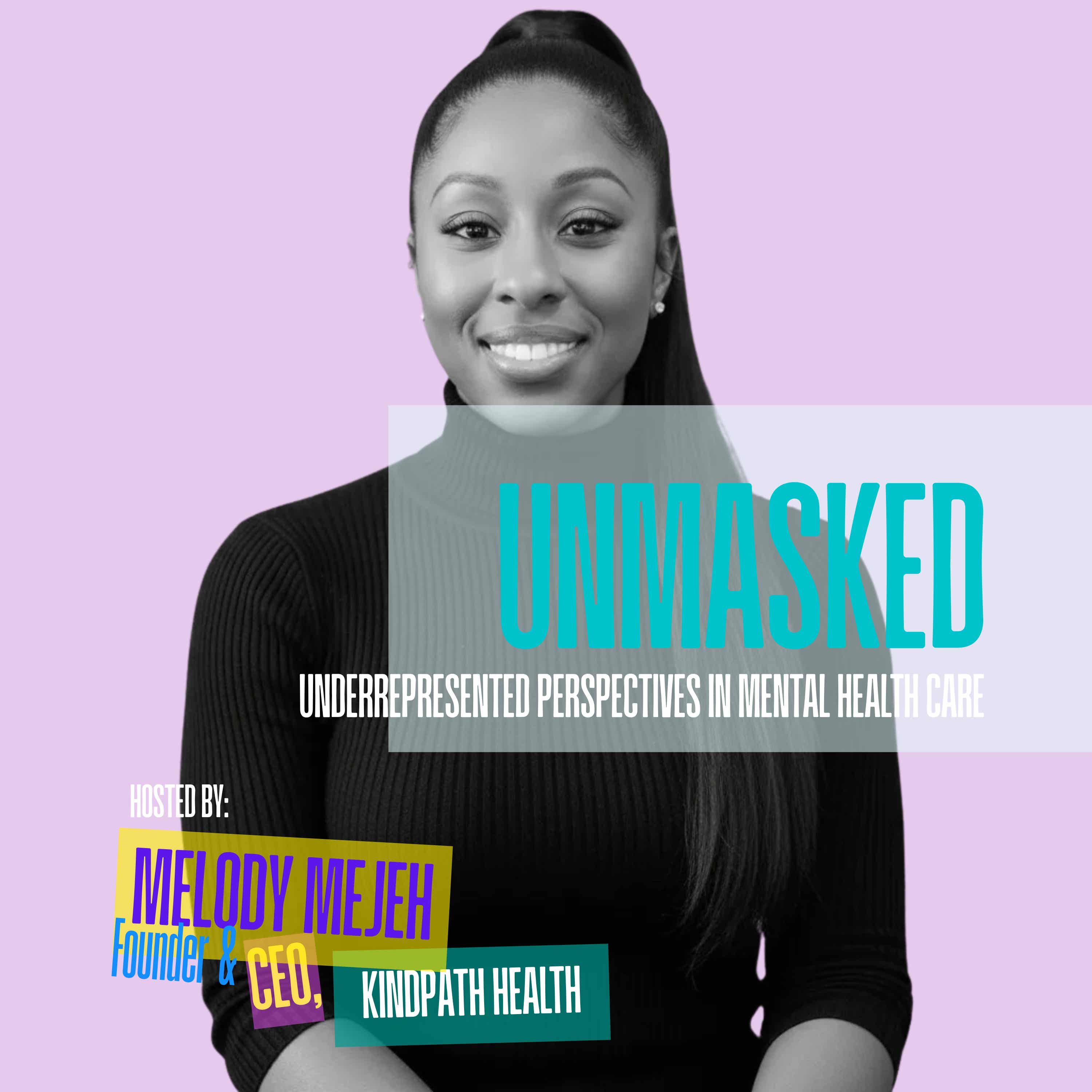
Unmasked: Underrepresented Perspectives in Mental Health
by Melody Mejeh
Founder & CEO of KindPath Health. Neurodivergent product leader building tech that actually gets you—before the breakdown. I write about mental health, behavior, AI ethics, and what it means to build from the messy middle. These are the audio versions of my articles on Substack. melodymejeh.substack.com
-
17
What Happens in the 167 Hours
Episode SummaryThere are 168 hours in a week. Outpatient therapy takes up one of them. The other 167 — where crises actually happen, where emotional life actually unfolds — are nearly invisible to the clinical system. In this first episode of Unmasked, Mel traces that invisibility to its roots: a reimbursement architecture built around the billable session, not around the patient. She argues that between-session care isn't a technology problem waiting to be solved — it's a design choice that was made, deliberately, in favor of what the system could count. And that the populations who bear the highest cost of that choice are the ones the system was least designed to serve.Highlights[4:02] — Why the 50-minute therapy session was never a clinical decision: the history of CPT billing codes, the AMA's role in structuring outpatient reimbursement, and what gets counted when the session is the only unit of care.[8:15] — What recall bias looks like inside the therapy room — and why it falls hardest on neurodivergent patients and patients from communities where retrospective verbal reporting is already a cultural or cognitive stretch.[14:20] — Why most mental health technology reproduced the problem it claimed to solve: the three design failures of digital mental health — building around sessions instead of between them, validating on unrepresentative samples, and treating the gap as a data problem rather than a care problem.Research & ResourcesCollaborative care / IMPACT trial: Unützer et al. (2002). "Collaborative care management of late-life depression in the primary care setting." JAMA, 288(22), 2836–2845.Ecological momentary assessment: Shiffman, S., Stone, A. A., & Hufford, M. R. (2008). "Ecological momentary assessment." Annual Review of Clinical Psychology, 4, 1–32.Between-session interventions in CBT: Kazantzis, N., et al. (2016). "Homework assignments in cognitive and behavioral therapy: A meta-analysis of randomized trials." Cognitive Behaviour Therapy, 45(3), 195–211.Remote Patient Monitoring & Behavioral Health Integration CPT codes: CMS guidance on RPM (99453–99458) and BHI (99484, 99492–99494). cms.govDemographic representation in digital therapeutics research: Linardon, J., et al. (2020). "Who benefits from smartphone interventions for mental health? A meta-analysis." World Psychiatry, 19(3), 344–359."If you were designing a care system from scratch — not retrofitting the existing one — how much of clinical activity would you locate inside a formal appointment, and how much outside of it?"Contact Mel: LinkedIn · KindPathNext episode: What it means to be neurodivergent in outpatient therapy. This is a public episode. If you would like to discuss this with other subscribers or get access to bonus episodes, visit melodymejeh.substack.com
-
16
The "Winter Blues" Paradox
For forty years, we’ve been telling the same story about seasonal depression: get a light box, take vitamin D, wait for spring.But what if the entire framework is wrong?In this episode, I’m connecting two stories that have never been told together—and the implications for mental health care are massive.What This Episode CoversThe Buried ControversyA 2006 CDC study of 34,000+ Americans found zero evidence for seasonal affective disorder as a distinct condition. No seasonal patterns in depression. No correlation with latitude or sunlight hours. Even among people already experiencing depression, there was no winter spike.This research has been largely ignored. Meanwhile, we keep prescribing light boxes and calling it evidence-based care.The Population We’ve Been IgnoringIf seasonal mood changes ARE linked to vitamin D deficiency (which affects serotonin and dopamine production), we’ve been studying the wrong people for decades.Here’s why: Melanin blocks UV-B radiation—the wavelength needed for vitamin D synthesis. People with darker skin require significantly more sun exposure to produce the same amount of vitamin D. African Americans have a 15 to 20-fold higher prevalence of severe vitamin D deficiency compared to European Americans. About 70% are deficient.Yet mainstream coverage of seasonal depression focuses almost exclusively on populations with lighter skin. Black community health outlets mention the vitamin D gap, but still frame it as “managing a well-established condition better.”Nobody is asking: What if the entire research paradigm has been backwards from the start?The Precision Medicine ProblemWhen someone reports feeling low in January, our current approach is generic: try light therapy, consider antidepressants, increase vitamin D intake.But what if we asked instead:* Is this part of a multi-year pattern for this individual?* Does this person’s skin pigmentation affect their vitamin D synthesis at their current latitude?* Are there modifiable risk factors we should flag before symptoms become severe?That’s the difference between reactive mental health care and prevention-first precision medicine. And it’s what we’re building with Kay AI at KindPath Health—tools that account for individual risk factors, not one-size-fits-all assumptions.Three Things Mainstream Media Won’t Tell You* The science isn’t settled. Researchers legitimately debate whether SAD exists as a distinct condition, but this controversy rarely makes it into public health messaging.* Skin pigmentation matters. A 2021 genome-wide study identified specific genetic variants (SLC24A5, SLC45A2, OCA2) linked to both darker skin and severe vitamin D deficiency—but this connection is absent from most SAD discussions.* “Colorblind” medicine perpetuates disparities. When we ignore biological factors like melanin’s effect on vitamin D synthesis, we’re not being equitable—we’re being negligent.Key Quotes from the Episode“We should not shy from this new study looking at the genetics of skin color and its effects on vitamin D deficiency because being ‘colorblind’ is what has led to the widespread health disparities that we as a society are now trying to address.”—Dr. Rick Kittles, Director of Health Equities, Beckman Research Institute“Being ‘colorblind’ in medicine doesn’t make us equitable. It makes us ignorant. And in mental health care, ignorance isn’t just an intellectual failure—it’s a clinical one.”What You Can DoIf you struggle in winter: Your experience is valid, but “seasonal affective disorder” might not capture what’s actually happening. Consider whether the generic advice you’ve received addresses your specific risk factors.If you have darker skin and live at higher latitudes: Ask your doctor to check your vitamin D levels year-round—not just in winter. This affects mood, cardiovascular health, immune function, and more. Supplementation is cheap and evidence-based.If you’re building health tech: Are you baking equity into your algorithms from the start, or treating it as a “diversity add-on”? Risk assessment tools that don’t account for population-specific factors aren’t just incomplete—they’re actively harmful.Why This Matters for Mental Health InnovationRecent research tracked 428 people using mobile health data and found four distinct subgroups with completely different seasonal depression patterns. One group had stable depression year-round. Others peaked at different seasons.Seasonal depression isn’t one thing. It’s not one mechanism. And lumping everyone under the same diagnosis means we’re missing opportunities for precision intervention.At KindPath Health, we’re building Kay AI to track individual patterns over time—not generic seasonal trends. When someone reports low mood in January for the third year running, the system should flag modifiable risk factors like vitamin D screening. That’s prevention-first mental health.But we can only build these tools well if we’re honest about who’s been left out of the research.Sources Referenced* Scientific American (2024): Analysis of CDC study questioning SAD’s existence* Stewart et al. (2014): “Possible contributions of skin pigmentation and vitamin D in a polyfactorial model of seasonal affective disorder”* Kittles et al. (2021): First genome-wide association study on skin pigmentation and vitamin D deficiency in African Americans* Ames, Grant & Willett (2021): “Does the high prevalence of vitamin D deficiency in African Americans contribute to health disparities?”* Zhang et al. (2025): Mobile health study identifying four distinct seasonal depression subgroupsFull citations available in the episode transcript.Got thoughts on this? I’d love to hear from you—especially if this changes how you think about seasonal mood changes or if you have personal experience with the vitamin D/melanin connection. Reply to this email or leave a comment below.Share this episode if you know someone who needs to hear this story. Especially clinicians, researchers, and anyone building mental health tools.And maybe—just maybe—check your vitamin D levels while you’re at it.—MelodyUnmaked is a mental health newsletter covering the intersections of digital health, healthcare policy, and healthtech/AI—spotlighting the quiet but powerful changes shaping the future of care.Want to support this work? Share this episode, leave a review, or subscribe for free! This is a public episode. If you would like to discuss this with other subscribers or get access to bonus episodes, visit melodymejeh.substack.com
-
15
When the System Shuts Down
This week on Unmasked, Melody and Miles pull the curtain back on what a shutdown means — not just for politics or paychecks, but for the quiet human systems that hold everything together.From the 988 crisis line to food assistance programs, from research labs to housing support, a shutdown sends ripples through every layer of care. It pauses prevention, interrupts progress, and tests the invisible infrastructure of trust.In a way that only Unmasked can, Melody connects the dots between policy and the human nervous system — showing how national paralysis mirrors personal overwhelm, and how both can be mended by connection, compassion, and community.Through the lens of her “Ask Miles” segment, we learn how to explain the shutdown in language even a ten-year-old can understand, and what it means when the adults stop showing up — but people keep finding ways to care anyway.🧩In This Episode* What a government shutdown actually is (in plain language)* How it impacts mental-health services, crisis response, and community stability* Why prevention programs and behavioral-health grants are first to freeze* The ripple effect across research, housing, education, and nutrition* The “human stack” — the people behind every system who keep showing up* How empathy and peer connection fill the gaps when institutions stall* A reflection on resilience, kindness, and what it means to “keep the current alive”📚Key Takeaways* Shutdowns create trauma, not just drama. When systems stop, anxiety and instability rise — across families, providers, and communities.* Public-health pauses hurt prevention. From clinical trials to disease surveillance, data delays weaken the backbone of long-term care.* Human connection is the backup system. Neighbors, peer-support networks, and platforms like Kay AI show that care can still circulate when funding doesn’t.* Resilience is collective. Every small act of presence — a check-in, a text, a shared meal — becomes its own form of policy.💬Quote of the Week“Maybe the truest test of a system isn’t how it runs when everything’s funded — maybe it’s how we show up when everything stops.”— Melody Mejeh, Unmasked🔗Related Links* SAMHSA Contingency Staffing Plan (HHS.gov)* NIH and Federal Research Impacts During Shutdowns* Understanding 988 Lifeline Operations* WIC Program Information — USDA🧠About UnmaskedUnmasked is where systems meet soul — a weekly podcast hosted by Melody Mejeh, Founder & CEO of Kay AI by KindPath, exploring the intersection of mental health, policy, technology, and humanity.Each episode blends storytelling, reflection, and lived experience to uncover what’s really happening beneath the surface — in us, and around us.🎧Listen & SubscribeAvailable on Spotify, Apple Podcasts, and Substack Audio.Follow @melodymejeh for episode drops, behind-the-scenes moments, and reflections from The Quiet Shift newsletter. This is a public episode. If you would like to discuss this with other subscribers or get access to bonus episodes, visit melodymejeh.substack.com
-
14
When AI Sits in the Therapist’s Chair: Promise, Peril, and Prevention
This week on Unmasked, Melody asks her son Miles a simple but deep question: “If a robot gave you advice about your feelings, would you listen?” Miles’ honest answer—“I’d like it better if it was an actual human”—sets the stage for a conversation about the real role of AI in mental health.We break down the FDA’s plans to review “virtual therapist” tools, Illinois’ bold move to keep clinical decisions in human hands, and what these shifts mean for families who need help now. Melody shares plain-spoken stories—a night-shift nurse, a teen on a waitlist, a caregiver juggling too much—to show where AI can help without pretending to replace care.KindPath’s stance is steady: we are a companion to care, not a replacement. AI helps notice daily trends and surface timely reminders; humans hold the clinical lane.Why listenThis episode is for anyone who’s curious, skeptical, or just tired of the hype. We’ll tell the truth about where AI belongs, where it doesn’t, and how to spot the difference.Key takeaways* AI can be a helpful companion when it’s honest, humble, and human-backed.* Safety is non-negotiable: if a tool can’t explain itself or escalate risk to a person, it doesn’t belong.* Prevention is a practice—tiny, repeatable supports like breathing, reflection, and peer connection matter.* Equity isn’t optional. Tools must be tested and fixed across communities, not just the privileged.* KindPath keeps it simple: we steady the middle moments, we don’t replace therapy.Quote of the week“Humans can’t get hacked.” —MilesNext upOn Friday, we’ll turn to the other half of access: The Safety Net Squeeze—coverage changes, parity on pause, and what families and clinics can do this week, not someday This is a public episode. If you would like to discuss this with other subscribers or get access to bonus episodes, visit melodymejeh.substack.com
-
13
The Silent Crisis: When Telemedicine Disappears
In this episode of Unmasked, host Melody Mejeh, Founder & CEO of KindPath Health, takes a hard look at an underreported crisis: Medicare’s potential decision to roll back telehealth coverage starting October 1, 2025.Right now, Medicare allows patients to access telehealth from their own homes. But as Medicare.gov explains: “Through September 30, 2025, you can get telehealth services at any location in the U.S., including your home. Starting October 1, 2025, you must be in an office or medical facility located in a rural area … for most telehealth services.”What does this mean? Millions of older adults, disabled patients, neurodivergent people, and marginalized communities will lose direct access to care. And crisis care systems — already strained — will face another tidal wave.Melody also highlights how much of telehealth is mental health care. According to the University of Michigan Behavioral Health Workforce Research Center, about 43% of mental health visits at community health centers were delivered virtually in 2021, with psychiatrists doing more than 60% online. Removing home-based access threatens to dismantle one of the most relied-on parts of our care system.🔑 Key Takeaways* Medicare home-based telehealth coverage expires September 30, 2025.* Nearly half of all Medicare mental health visits are now delivered virtually.* Older adults, rural residents, disabled and neurodivergent patients, and marginalized communities are hit hardest.* Without telehealth, ERs and crisis lines will face surges.* Healthcare access is not just medicine — it’s policy.📚 Sources* Medicare.gov — Telehealth Coverage* Behavioral Health Workforce Research Center (University of Michigan, 2022) — Use of Telehealth in Community Health Centers: Impact on Behavioral Health ServicesIf this episode resonates, share it, call your representatives, and make sure this policy doesn’t quietly strip away one of the most important healthcare lifelines of our time. This is a public episode. If you would like to discuss this with other subscribers or get access to bonus episodes, visit melodymejeh.substack.com
-
12
The Risk of Deceptive Responses in Mental Health Apps
When tragedy strikes, the questions hit close to home. After the recent shooting at Annunciation Catholic School in Minneapolis, my husband asked me if KindPath could have caught the shooter had they been using our app daily. It’s a question without a simple answer, but it opens up an urgent conversation about deception in mental health apps—why people minimize, skip, or mask their answers, and what that means for prevention.In this episode, I reflect on:* The heartbreaking events in Minneapolis and why my husband’s question shook me.* The many forms of deception—from rushed check-ins to intentional masking.* Why deception is a real risk in mental health technology.* How KindPath approaches this challenge through our Input Confidence System (ICS)—not by “catching lies,” but by making space for clarity, reflection, and support.* Why prevention isn’t about perfection, but about creating enough moments of pause to notice when something doesn’t add up.This episode is heavy, but it’s also necessary. Because prevention starts by asking the hardest questions, even when the answers are complex.Key Takeaways* Deception in check-ins is common and not always malicious.* In rare cases, intentional deception can mask crisis or violent planning.* ICS at KindPath doesn’t accuse—it creates gentle pauses for reflection and directs users toward support when needed.* No app can promise to stop tragedy, but technology can make honesty easier and deception harder to sustain.Resources Mentioned* AP News – Gov. Tim Walz to call special session on gun laws after Minneapolis school shooting* The Guardian – Doctors find bullet fragment in neck of 10-year-old Minnesota school shooting survivor* People – Girl, 12, Hurt in Minneapolis School Shooting Had a Side of Her Skull RemovedTrigger WarningThis episode discusses mass violence, child loss, and suicide. Please listen with care. If you or someone you know is in crisis, call or text 988 for immediate support. This is a public episode. If you would like to discuss this with other subscribers or get access to bonus episodes, visit melodymejeh.substack.com
-
11
The Rise of "Quiet Cracking"
In this episode of Unmasked, I dive into the emerging workplace trend of quiet cracking. You’ve probably heard of quiet quitting—but quiet cracking is different. It’s about employees showing up every day while silently struggling with stress, exhaustion, and disengagement. They’re not leaving their jobs because they feel stuck, but they’re not thriving either.I share why this matters for both employees and employers, what the subtle signals of quiet cracking look like, and why recognizing them isn’t about surveillance—it’s about compassion. I also get honest about needing to take a mental health break myself this week, and why it matters to normalize that.We’ll look at the data: employee engagement is falling, billions are being lost to disengagement, and industries from customer service to tech are seeing spikes in this trend. Longitudinal research tells us that without proactive support, burnout doesn’t fade—it compounds. But with the right tools, we can intervene before small cracks become full breaks.Finally, I introduce how KindPath Health is working to meet this challenge head-on. By blending daily AM/PM check-ins with behavioral science, KindPath helps employees feel seen and supported, and gives employers an ethical, prevention-first way to understand what’s happening across their teams.What You’ll Learn in This Episode* What quiet cracking is, and how it differs from quiet quitting* The scale of the problem—$438 billion in lost productivity worldwide (Gallup, 2024)* Which demographics and industries are most affected (Vision Monday, 2025; Fortune, 2025)* How to recognize the subtle signals of quiet cracking without crossing into surveillance* What longitudinal trends tell us about the future of workplace mental health (Nature, 2024; Trautmann et al., 2016)* How KindPath Health is building prevention-first employee assistance that bridges compassion with business sustainabilityResources & References* Gallup (2024). State of the Global Workplace Report* TalentLMS (2025). Quiet Cracking Workplace Survey* Vision Monday (2025). Employees Are Quiet Cracking Under Pressure of Workload* Fortune (2025). Quiet Cracking is Costing Billions and Breaking Spirits* Nature (2024). Longitudinal Burnout Trajectories in Healthcare Workers* Trautmann, S., Rehm, J., & Wittchen, H. U. (2016). The Economic Costs of Mental Disorders* Adoh Scientific (2023). Longitudinal Tracking in Mental HealthConnect with KindPath Health🌐 Learn more at www.kindpath.health📲 Follow our journey on LinkedIn and Instagram: @KindPathHealth This is a public episode. If you would like to discuss this with other subscribers or get access to bonus episodes, visit melodymejeh.substack.com
-
10
95% of AI Deployments Fail — Here’s the Real Reason Why
In this episode of Unmasked, Melody Mejeh dives into the shocking new MIT study showing that 95% of enterprise AI deployments deliver zero measurable return—despite billions invested. From flawed integration to the “learning gap” between leadership and employees, we uncover the hidden reasons most AI projects fail before they even get off the ground.But this isn’t just a critique—it’s a roadmap. Melody explores what separates the 5% of companies that succeed, why staff training is the overlooked multiplier, and how to actually measure real ROI in AI projects. Plus, she brings it close to home with a real-world example: U.S. Bank’s rollout of Microsoft Copilot in Teams, and the dangers of deploying AI without workflow integration or employee training.What You’ll Learn in This Episode* Why AI isn’t failing—workflows are.* The “learning gap” MIT identified that keeps pilots stuck in purgatory.* Why U.S. Bank’s Copilot rollout shows how not to deploy AI.* The three ways to measure real ROI: time saved, money gained, quality improved.* What the 5% of successful companies do differently (hint: it’s not about the tool, it’s about the people).* Why AI isn’t a silver bullet—it’s a hammer. And without carpentry skills, the house falls apart.Key Stats Mentioned* 95% of AI pilots show zero return (MIT NANDA Report, 2025).* Only 5% of companies see measurable P&L impact.* Early adopters who trained staff saw 41% average ROI (Snowflake).* Companies that trained employees saw productivity double (Google Cloud).* McKinsey projects AI could add $6–$8 trillion annually to the global economy—if companies get adoption right.Resources & References* MIT study on generative AI adoption* Tom’s Hardware: Why AI fails in enterprise* McKinsey: The economic potential of generative AI* Snowflake: Early adopters ROI report* Google Cloud: ROI from generative AIIf you enjoyed this episode, share it with a colleague or leader in your network who’s feeling the AI hype but struggling with the ROI. And ask yourself: In your company, how are you measuring real return? This is a public episode. If you would like to discuss this with other subscribers or get access to bonus episodes, visit melodymejeh.substack.com
-
9
AI, Mental Health & Our Responsibility
In this episode of Unmasked, Melody Mejeh — neurodivergent founder, product leader, and CEO of KindPath — speaks candidly about the recent wave of headlines linking AI to mental health harm. From reports of “AI psychosis” and bots validating delusions, to new research showing both risks and benefits, Melody dives into the conflicting evidence and what it means for leaders building in this space.She lays out the hard questions every founder, engineer, and policymaker must ask themselves when designing with AI in mental health: Are we reducing harm? Are we transparent about limitations? Are we building for trust, or just speed?Drawing on her work at KindPath, Melody also shares her team’s core commitments: clear boundaries, human oversight, transparency, and always listening to providers, clinicians, and people with lived experience.What You’ll Learn in This Episode* Why recent headlines about “AI psychosis” and chatbot misuse are a wake-up call.* The conflicting research: how AI tools can both reduce depression and anxiety and create new risks of dependency or harm.* Key factors that separate positive from negative outcomes: structure, supervision, population, and boundaries.* The checklist every builder should follow to make AI in mental health responsible and safe.* How KindPath is reimagining mental health with prevention as the foundation, not crisis.Listener TakeawayAI isn’t inherently good or bad for mental health. The difference comes down to how we build, the safeguards we set, and who we involve in the process. Prevention and responsibility must go hand in hand.Special Call to ActionMelody will be speaking at Twin Cities Startup Week with her talk “The Architecture of Prevention: Designing Mental Health Support for a Fractured System”.In this talk, she calls out the failures of our reactive mental health system and introduces a bold alternative: prevention woven into the fabric of care. She’ll explore how behavioral science, technology, and lived experience can help us catch the subtle signs we usually miss — before breakdown.You can help bring this conversation to a bigger stage by voting for her session here:👉 Vote for Melody’s talkQuotes Worth Sharing* “In mental health, ‘move fast and break things’ doesn’t apply. Breaking things here means breaking people.”* “AI doesn’t create illness, but it can amplify distorted thinking when safeguards are missing.”* “Prevention isn’t an afterthought. It’s the platform everything else should be built on.” This is a public episode. If you would like to discuss this with other subscribers or get access to bonus episodes, visit melodymejeh.substack.com
-
8
The Gatekeepers: How Startup Accelerators Lock Out Innovation
What if the very programs claiming to help founders are quietly shutting the door on the most innovative among us? In this episode of Unmasked, I dig into the unspoken barriers baked into accelerator culture—rules that systematically filter out brilliant builders who don’t fit a narrow mold.From full-time founder requirements that exclude parents, immigrants, and those with disabilities, to relocation demands that ignore the realities of community ties and financial constraints, I explore how these policies privilege access over ability. You’ll hear why the “meritocracy” myth falls apart when the starting line isn’t the same for everyone—and how we’re missing out on solutions that could change the world.I share stories like Maria’s—a single mom and engineer rejected by multiple accelerators not for lack of traction, but because she couldn’t drop everything and move. I spotlight organizations challenging the status quo, proving that real innovation comes from people living the problems they’re solving.In this episode, we’ll explore:* How “full-time founder” rules really function as a privilege filter* The geography trap: why relocation requirements kill local innovation* The myth of meritocracy in accelerator selection* Examples of inclusive funding models that work* What real founder potential looks like beyond the Silicon Valley moldThis isn’t about lowering standards—it’s about broadening our view of what commitment, talent, and innovation truly look like.If you’ve ever felt shut out by the gatekeepers, this one’s for you. This is a public episode. If you would like to discuss this with other subscribers or get access to bonus episodes, visit melodymejeh.substack.com
-
7
When the Noise Never Stops
In this episode of Unmasked, I take you back to where it all started—East 97th Street in Manhattan, where I grew up straddling the line between East Harlem and Yorkville. It was a block shaped by invisible borders and constant noise. Not metaphorical noise—literal, body-shaking, soul-draining noise.Sirens. Car alarms. Yelling. Street chaos. That was my normal.Now? I live in a suburb of Minnesota where the loudest thing on my block is a wild turkey beefing with a rabbit in my backyard.This episode explores what happens to the body, the brain, and the spirit when chronic noise becomes your baseline—and how, for many of us, that noise was never just “city life.” It was violence by design.We unpack the science behind chronic noise exposure, the policy choices that have targeted poor and marginalized communities, and how our mental health suffers when our nervous systems never get to clock out.We also talk about how KindPath is building tech that understands environmental trauma—so we’re not just reacting to symptoms, but designing support that accounts for the chaos people are trying to survive.What You’ll Learn:* Why chronic noise exposure is a public health issue, not a personality quirk* The mental health effects of environmental noise, including anxiety, depression, and cognitive strain* How urban zoning and systemic racism make noise exposure a class and race issue* What peace feels like after a life of noise—and why silence can feel unsafe* How KindPath is reimagining behavioral health by factoring in environmental stressorsCited Sources:* Basner et al. (2014). Auditory and non-auditory effects of noise on health. The Lancet.* World Health Organization (2018). Environmental Noise Guidelines for the European Region.* Clark & Paunovic (2018). Environmental noise and mental health: A systematic review. Int. J. Environ. Res. Public Health, 15(11), 2400.Listen Now:Available on Spotify, Apple Podcasts, and everywhere else you listenQuote to Remember:“If your nervous system is always bracing, KindPath becomes your soft landing. We don’t pretend to quiet the whole world—we build something that whispers when everything else is shouting.” This is a public episode. If you would like to discuss this with other subscribers or get access to bonus episodes, visit melodymejeh.substack.com
-
6
Innovation Without Empathy Is Just Extraction
Episode Length: ~5 minutesTheme: Innovation, empathy, ethical tech, trauma-informed design, inclusive mental healthListen if you’ve ever wondered:* Why tech feels so cold even when it’s meant to support people.* How innovation can uplift—or exploit—marginalized communities.* What it means to build with people instead of for them.Episode Summary:In this powerful five-minute episode, I unmask the illusion of “innovation” as we know it—and ask what’s left when we build without empathy. Spoiler alert: it’s not progress.We unpack why most digital health tools fail the very people they claim to serve, the truth about how your data is used (or abused), and how trauma-informed, human-centered design isn’t a luxury—it’s a responsibility. This isn’t a takedown. It’s a calling-in.Because innovation without empathy?That’s just extraction.Key Stats Mentioned:* Only 3% of U.S. digital health startups serve underserved populations (Rock Health, 2024)* 50%+ of mental health apps share user data with third parties, often without full consent (Mozilla Foundation, 2023)* 1 in 3 U.S. adults experience anxiety or depression; only 1 in 10 feel adequately supported by digital tools (Harvard School of Public Health, 2024)Topics We Cover:* The empathy deficit in tech* The real-world consequences of scale-first thinking* What trauma-informed, justice-driven innovation looks like* Building with care, not just codeLet this episode hold you if:* You’re a founder, builder, or creative who wants to lead with heart* You’ve ever felt unseen inside a product that claimed to support your healing* You believe the future of tech should be warm, not just fast✨ Favorite Line:“Nobody ever healed from being optimized.”Links + Mentions:* Rock Health: Equity in Digital Health Report (2024)* Mozilla Foundation’s Privacy Not Included (2023)* Harvard T.H. Chan School of Public Health Mental Health Data (2024)If you loved this episode…🎧 Subscribe, leave a review, or forward it to a fellow builder who needs to hear it. This is a public episode. If you would like to discuss this with other subscribers or get access to bonus episodes, visit melodymejeh.substack.com
-
5
Why Designing for Neurodivergent Users Requires a Deep Dive into UX & UI
Let’s be real: most apps weren’t built for brains like mine. Or maybe yours.In this episode, I’m pulling back the curtain on what actually goes into designing digital spaces for neurodivergent folks—and why a few rounded buttons and an accessibility statement don’t cut it.We talk:* Why “good” UX isn’t always safe UX* How executive function, sensory load, and shame all sneak into design* What deep UX actually looks like when you build with neurodivergence in mind* How the very things that support ND users make apps better for everyone else too (spoiler: curb cut effect, baby)This one’s part product nerd-out, part call-to-action, and part love letter to people who’ve ever opened an app and instantly wanted to scream.If you’re a designer, builder, or neurodivergent human who’s tired of being expected to “just push through” bad UX—this is for you.Tap in. Let’s unmask the design gap.—Mentioned in this episode:→ My company: KindPath Health→ Curb cut effect, trauma-informed design, and why white space is sacred→ Polyvagal Theory and the product implications of a dysregulated nervous system📩 Want to co-build with me? DM me or reply to this post. Always looking for neurodivergent designers and behavioral scientists to collaborate with. This is a public episode. If you would like to discuss this with other subscribers or get access to bonus episodes, visit melodymejeh.substack.com
-
4
When the World’s a Lot, Your Nervous System Knows First
Hey friends—This week, I’m talking about something I know so many of us are feeling right now, even if we can’t quite name it.The world is loud. Politically. Medically. Emotionally.Medicaid is being gutted. Healthcare tech is racing to build solutions that don’t always include us. The current administration is passing executive orders that strip care and access from the most vulnerable. And in the middle of all that, I’m going through neuropsych testing in my 40s—trying to understand my brain while the system around me keeps shifting.If your nervous system has been feeling:* like you’re on high alert all the time,* like your brain is buffering while the world keeps refreshing,* like even the smallest things feel hard right now—This episode is for you.We talk about:* The contradiction of Medicaid cuts alongside “equity” data projects* The reality of going through neuropsych evaluation as an adult* How policy instability lands in our bodies, not just our inboxes* What it means to regulate in a world that keeps destabilizingAnd most importantly:Why your response to all of it is not a sign of weakness—it’s your nervous system telling the truth.Take what you need. Leave the rest. And if it helps, forward it to someone else whose nervous system might need to hear:You’re not broken. You’re responding to a world that rarely makes room for the sensitive, the perceptive, the neurodivergent. And that matters.—Melody This is a public episode. If you would like to discuss this with other subscribers or get access to bonus episodes, visit melodymejeh.substack.com
-
3
Neurodivergent, Inc.
What happens when you’re trying to build a mental health tech company… while raising a 10-year-old Pokémon-obsessed CapCut wizard who does long division for fun?In this episode of Unmasked, Melody takes you inside her chaotic, hilarious, and heart-filled world as a neurodivergent founder and mom to a neurodivergent kid (aka Miles, aspiring YouTuber and fraction prodigy).From the realities of fundraising as a Black woman building something that’s never been done, to calming meltdowns while mid-Zoom pitch, Melody shares the truth about what it really means to be wired differently in a world that expects perfection—and why she’s building KindPath for the both of them.💡 Topics Covered* Parenting a brilliant, intense, neurodivergent 10-year-old* The ADHD vs. math prodigy dynamic* Fundraising with executive dysfunction (and granola bar guilt)* Building a company while overstimulated* Why emotional support shouldn’t come after burnout* Creating space for joy, stimming, spirals, and softness🔥 Favorite Quotes“He’s trying to be a YouTube sensation. I’m just trying to remember if I ate.”“Sometimes I’m a brilliant founder. Other times I’m a feral squirrel with Wi-Fi. Both are valid.”“We deserve to be seen—in our stims, our spirals, our strengths.”📣 ShoutoutMiles, my forever co-founder in chaos—subscribe to his YouTube channel and witness the CapCut greatness unfold. This is a public episode. If you would like to discuss this with other subscribers or get access to bonus episodes, visit melodymejeh.substack.com
-
2
Sitting with the Real Problem in Health Tech
In this bonus episode, I’m pulling back the curtain on something I think we need to talk about a lot more in health tech: what it really means to define the problem space—especially when you’re building from lived experience.As someone who’s bipolar, autistic, and has ADHD, I don’t just experience the world differently—I build differently. I talk about how that shapes the way I approach innovation, why rushing to solutions without honoring the deeper emotional and behavioral patterns just doesn’t cut it, and how slowing down has actually made my work stronger.If you’ve ever felt the pressure to build fast, or you’re sitting in the middle of a messy, not-yet-clear insight—this one’s for you.Here’s what I get into:* Why so many health tech tools solve symptoms, not root causes* The emotional and cognitive load that gets ignored in product design* What I learned by pausing before building KindPath* Five questions I ask myself before designing any feature* Why “edge cases” aren’t edge cases at all—they’re people like usA line that sums it up:“You don’t have to build fast to prove your worth. You just have to build true.”Want to connect or share your story?I’d love to hear from you. Seriously.→ Visit kindpath.health→ Email me at [email protected]→ Follow @kindpathhealthincinc→ Or DM me if you’re building something bold, or just figuring it out as you go This is a public episode. If you would like to discuss this with other subscribers or get access to bonus episodes, visit melodymejeh.substack.com
-
1
Did My Therapist Just Gaslight Me?
In this episode, I’m pulling back the curtain on one of the most confusing and painful experiences in the mental health journey—what happens when you know something’s going on, but the professionals you turn to for help don’t believe you.Yep. We’re talking about what it feels like to be gaslit by your own therapist.I share real stories (including my own), some eye-opening stats, and the silent suffering that happens when our symptoms are minimized, misdiagnosed, or brushed off entirely—especially for folks who are neurodivergent, BIPOC, LGBTQ+, or all of the above.You’ll hear about what it does to your self-trust, how we start editing our truth just to be taken seriously, and why so many of us stop reaching out for help altogether.Then, I introduce KindPath—our behavioral health app designed to help you track your emotional patterns, get support in real time, and generate insights your provider can actually use. No gaslighting. No guessing. Just real visibility into how you’re really doing.If you’ve ever left a session thinking, “Wait… was that me or was that them?”—this episode is for you.🔗 Links & Resources:* Sign up for early access to KindPath: www.kindpath.health* Follow KindPath on Threads + Instagram: @kindpathhealthinc* Article version of this episode: https://substack.com/home/post/p-168681354* Questions or want to share your story? Email me at [email protected]🎧 Subscribe and leave a review if this resonated with you—it helps get the word out to others who’ve felt unseen or unheard in their mental health journey.Note: Names were fictionalized to conceal focus group identities.Thanks for reading! This post is public so feel free to share it. This is a public episode. If you would like to discuss this with other subscribers or get access to bonus episodes, visit melodymejeh.substack.com
We're indexing this podcast's transcripts for the first time — this can take a minute or two. We'll show results as soon as they're ready.
No matches for "" in this podcast's transcripts.
No topics indexed yet for this podcast.
Loading reviews...
ABOUT THIS SHOW
Founder & CEO of KindPath Health. Neurodivergent product leader building tech that actually gets you—before the breakdown. I write about mental health, behavior, AI ethics, and what it means to build from the messy middle. These are the audio versions of my articles on Substack. melodymejeh.substack.com
HOSTED BY
Melody Mejeh
Loading similar podcasts...
Frequently Asked Questions
How many episodes does Unmasked: Underrepresented Perspectives in Mental Health have?
Unmasked: Underrepresented Perspectives in Mental Health currently has 17 episodes available on PodParley. New episodes are automatically indexed when they're published to the podcast feed.
What is Unmasked: Underrepresented Perspectives in Mental Health about?
Founder & CEO of KindPath Health. Neurodivergent product leader building tech that actually gets you—before the breakdown. I write about mental health, behavior, AI ethics, and what it means to build from the messy middle. These are the audio versions of my articles on Substack. ...
How often does Unmasked: Underrepresented Perspectives in Mental Health release new episodes?
Unmasked: Underrepresented Perspectives in Mental Health has 17 episodes. Check the episode list to see recent publication dates and frequency.
Where can I listen to Unmasked: Underrepresented Perspectives in Mental Health?
You can listen to Unmasked: Underrepresented Perspectives in Mental Health on PodParley by clicking any episode. We provide an embedded audio player for direct listening, and you can also subscribe via your preferred podcast app using the RSS feed.
Who hosts Unmasked: Underrepresented Perspectives in Mental Health?
Unmasked: Underrepresented Perspectives in Mental Health is created and hosted by Melody Mejeh.
URL copied to clipboard!