
PODCAST · tv
We Regret Nothing
by WeRegretNothing
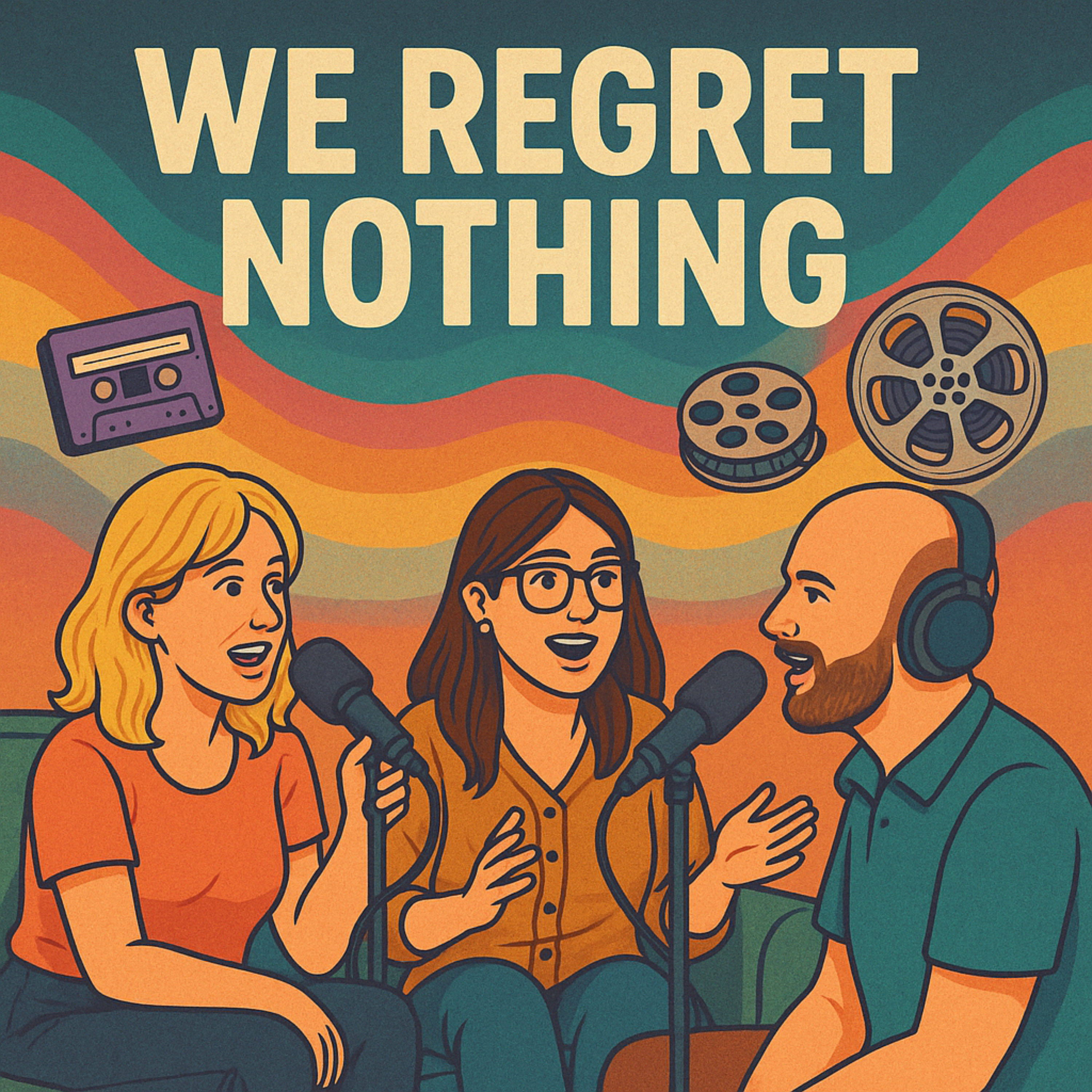
Welcome to your ride through the decades - where one host and two panelists debate the top five movies, songs, books, shows, toys, commercials, and more to perfectly define each era for an outer space bound time capsule. Expect quirky nostalgia, pop-culture deep dives, and laugh-out-loud banter. Whether it is the rise of Barbie, the buzziest jingles, or blockbuster films that shaped a generation, each episode is a hilarious, insightful journey into what truly defines a decade - humanity's best (and funniest) moments in under an hour.
-
33
1940s Movies Part 1
The conversation begins with an introduction to the 1940s movies, highlighting the shift towards more enjoyable storytelling. It then explores the evolution of movies in the 1940s, followed by an in-depth discussion of two iconic films: Casablanca and Citizen Kane. The conversation covers the controversial contract of Orson Welles, the impact of Citizen Kane on actors' careers, the battle against suppression of the film, the story of It's a Wonderful Life, the casting of His Girl Friday, and the dark world of Double Indemnity. The conversation methodically explores the themes of film noir voiceover, the impact of the Hays Code, casting challenges, and marketing misrepresentation in classic movies. Each theme is discussed in detail, providing insights into the creative and industry-related aspects of filmmaking. The conversation covers the negotiation of film rights for the movie 'Rebecca', the challenges of adapting the novel to a movie, and reviews of classic movies such as 'The Philadelphia Story' and 'Meet Me in St. Louis'.TakeawaysMovies of the 1940s marked a shift towards more enjoyable and top-notch storytelling, reflecting less on the war and more on escapism.Casablanca and Citizen Kane are two iconic films from the 1940s, each with its own unique impact and legacy. Artistic control in film contractsImpact of Citizen Kane on actors' careers Film Noir VoiceoverHays Code ImpactCasting ChallengesMarketing Misrepresentation Film Rights NegotiationsAdaptation ChallengesClassic Movie ReviewsChapters00:00 Introduction to the 1940s Movies12:27 Citizen Kane: A Controversial Classic19:53 The Controversial Contract37:16 The Girl Friday Casting42:23 Casting Challenges49:41 Marketing Misrepresentation01:00:14 Film Rights Negotiations01:09:10 Classic Movie Reviews
-
32
1930s Fashion Part 3
The conversation covers the fashion elements of gloves, wide-legged pants, double-breasted suit jackets, and evening capes. Each chapter delves into the origin, symbolism, and cultural impact of these fashion items, providing insights into their historical significance and influence on style and expression. The conversation methodically explores the influence of Hollywood icons on fashion, the allure of backless dresses, the significance of the evening cape, and the impact of fashion icons like Vicky Dugan and Sarah Bernhardt. It also delves into the symbolism of the felt fedora and the empowerment of women through fashion choices. The conversation delves into the versatility of 1930s fashion, exploring the evolution of the Bolero jacket, the utilitarian origins of beaded evening bags, and the debate on fashion items representing the 1930s.TakeawaysGloves: Day vs. EveningWide-Legged Pants: Symbol of LiberationDouble-Breasted Suit Jacket: Origin and SymbolismEvening Cape: Hollywood Influence Fashion and style trends of the pastInfluence of Hollywood icons on fashion Versatility of 1930s fashionChallenges in identifying 1930s fashion itemsChapters00:00 Evening Cape: Hollywood Influence27:02 The Backless Gown and Sun Tans33:00 Empowerment Through Fashion: Women's Fashion Choices43:11 The Influence of Sarah Bernhardt on Fashion49:42 Beaded Evening Bags and Utilitarian Origins
-
31
1930s Fashion Part 2
The conversation delves into the significance of belted day dresses, the role of dresses in daily life, and the fashion evolution in the 1930s, reflecting changes in societal roles and economic conditions. The belted day dress was a versatile and fashionable choice for women, and the evolution of fashion in the 1930s reflected changes in societal roles and economic conditions. The conversation covers the necessity of pockets in clothing, the popularity of geometric-shaped purses and evening bags, the significance of the pillbox hat, the fashion statement of T-strap shoes, the history and evolution of zippers, and the elegance of evening gloves. The conversation delved into the multifaceted role of gloves in the 1930s, serving both functional and fashionable purposes. It also highlighted the specific garments and accessories that characterized 1930s fashion.TakeawaysBelted day dresses were a versatile and fashionable choice for women in the 1930s.The evolution of fashion in the 1930s reflected changes in societal roles and economic conditions. Pockets in clothing were a necessity, especially for formal dressesGeometric-shaped purses and evening bags were popular accessoriesThe history and evolution of zippers, from their invention to their use in clothing and accessories Gloves served both functional and fashionable purposesThe 1930s fashion was characterized by specific garments and accessoriesChapters00:00 Fashion Evolution in the 1930s43:32 Elegant Evening Gloves
-
30
1930s Fashion Part 1
The conversation covers the fashion trends of the 1930s, including the resurgence of 1930s fashion in the 80s and 90s. It explores bias cut dresses, wide-leg trousers, double-breasted suits, and puff sleeves, highlighting their significance and evolution in fashion. The conversation delves into the fashion trends of the 1930s, covering puff sleeves, evening capes, Hollywood waves, and backless dresses. It also explores the influence of film stars on fashion and the practicality of hairstyles in the 1930s. The conversation delves into the fashion trends of the 1930s, covering topics such as wide-leg trousers, fedora hats, and spectator shoes. It explores the historical context, cultural significance, and evolution of these fashion items, providing insights into their popularity and impact.TakeawaysResurgence of 1930s fashion in the 80s and 90sSignificance and evolution of bias cut dresses, wide-leg trousers, double-breasted suits, and puff sleeves Fashion trends of the 1930s were influenced by film stars and embraced femininity with a hint of drama.Hairstyles in the 1930s were practical and focused on creating a more feminine look. Fashion trends are often influenced by historical events and societal changes.The 1930s fashion trends, such as wide-leg trousers, fedora hats, and spectator shoes, reflect a blend of practicality, style, and cultural symbolism.Chapters00:00 Puff Sleeves in 1930s Fashion24:04 Hollywood Waves and Practical Hairstyles29:17 Backless Dresses and Fashion Influence48:43 The Spectator Shoe: A Classy Statement
-
29
1930s Radio Shows Part 3
The conversation methodically explores the lives of three influential figures: Erna Phillips, Walter B. Gibson, and Jack Benny. Each chapter delves into the personal and professional journeys of these individuals, highlighting their resilience, creativity, and impact on their respective fields. The conversation delves into the impact of Lux Radio Theater, the controversial history of the Texas Rangers, the significance of Major Bow's Amateur Hour, the influence of FDR's fireside chats, and the infamous War of the Worlds broadcast. It also explores the story of Sadie and Jack Benny, shedding light on their collaboration and personal lives. The conversation methodically reviewed the impact of the War of the Worlds broadcast and the evolution of radio programming in the 1930s. It also delved into the panic and backlash that followed the broadcast, the media and government response, Orson Welles' reputation, and the significance of the Chase and Sanborn Hour. Additionally, the top 10 radio programs were reviewed and discussed in detail.TakeawaysErna Phillips: A Story of ResilienceWalter B. Gibson: The Shadow's CreatorJack Benny: The Early Years Impact of Lux Radio TheaterThe Texas Rangers and their controversial historyThe significance of Major Bow's Amateur HourThe influence of FDR's fireside chatsThe infamous War of the Worlds broadcast Impact of the War of the Worlds broadcastThe evolution of radio programming in the 1930sChapters00:00 Erna Phillips: A Story of Resilience18:48 Jack Benny: The Early Years47:40 The Infamous War of the Worlds Broadcast53:42 Orson Welles' Reputation59:05 Edgar Bergen and Charlie McCarthy
-
28
1930s Radio Shows Part 2
This conversation explores the evolution of talent shows, focusing on Major Bowes' Amateur Hour and its impact on artists like Frank Sinatra. It delves into the cultural significance of shows like Ripley's Believe It or Not and The Goldbergs, highlighting the contributions of figures like Norbert Pearl Rock. The discussion also covers the innovative communication strategies of Franklin D. Roosevelt through his Fireside Chats, and the dramatic effects of the War of the Worlds broadcast, illustrating the power of media in shaping public perception. In this episode, the conversation explores various themes in classic radio shows, including the dramatic unfolding of the Martian invasion in 'War of the Worlds', the comedic variety of 'Chase and Sanborn Hour', the musical legacy of the 'NBC Symphony Orchestra', and the soap opera phenomenon of 'The Romance of Helen Trent'. The discussion also delves into the impact of J. Edgar Hoover on crime radio with 'Gangbusters', and concludes with a voting session on classic radio shows, highlighting their cultural significance and entertainment value.Chapters00:00 Introduction to 1930s Radio Shows01:18 The Major Bowes Amateur Hour09:11 Ripley's Believe It or Not17:10 Information Please: The Quiz Show Era21:13 Fireside Chats: Roosevelt's Connection with America28:23 The Evolution of Presidential Addresses29:36 The Rise of The Goldbergs: A Cultural Milestone31:13 Gertrude Berg: The Matriarch Behind The Goldbergs32:36 The Impact of The Goldbergs on Jewish Representation34:31 The War of the Worlds: A Radio Revolution35:27 The Panic of 1938: Orson Welles' Masterpiece39:30 Behind the Scenes of The War of the Worlds41:43 The Chase and Sanborn Hour: A Comedy Legacy47:50 The NBC Symphony Orchestra: A Musical Innovation50:45 The Romance of Helen Trent: A Soap Opera Phenomenon53:28 Unexpected Outbursts in Broadcasting54:28 The Evolution of Radio Characters56:02 Behind the Scenes of Gangbusters57:25 The Influence of J. Edgar Hoover59:06 The Transition from G-Men to Gangbusters01:00:42 Sound Design and Audience Engagement01:02:29 Authenticity in Radio Programming01:04:02 The Legacy of Schwarzkopf and Gangbusters01:05:58 Final Thoughts on Classic Radio Shows01:14:17 Outro
-
27
1930s Radio Shows Part 1
This conversation delves into the rich history of radio dramas, focusing on iconic shows like 'Guiding Light', 'The Shadow', 'The Jack Benny Program', and 'Fibber McGee and Molly'. The discussion highlights the cultural impact of these shows, their unique storytelling methods, and the behind-the-scenes dynamics that shaped their success. The conversation also touches on the evolution of soap operas and the significance of radio as a medium for entertainment during the early to mid-20th century. This conversation delves into the rich history of American radio shows, focusing on iconic programs such as The Lone Ranger, Burns and Allen, The Green Hornet, and Lights Out. The discussion highlights the cultural significance of these shows, their impact on media, and the evolution of storytelling in radio. Key themes include the transition from radio to film, the backstories of beloved characters, and the innovative techniques used by writers and performers to engage audiences.Chapters00:00 The Rise of Radio in the 1930s03:19 Guiding Light: The Birth of Soap Operas06:17 The Shadow: A New Era of Storytelling13:08 The Shadow Knows: A Nostalgic Journey16:05 The Birth of The Shadow: Orson Welles and Radio Drama17:48 Jack Benny: The Master of Comedy24:07 Fibber McGee and Molly: Pioneers of Situation Comedy31:57 Lux Radio Theater: A New Era of Entertainment34:04 The Rise and Fall of Radio Hosts35:33 Cecil B. DeMille and the Union Controversy37:46 The Transition from Radio to Film38:32 The Legacy of The Lone Ranger46:11 The Creed of the Lone Ranger47:09 The Evolution of Burns and Allen52:57 The Green Hornet: A New Era of Adventure54:16 The Green Hornet and J. Edgar Hoover's Legacy56:46 The Origins of The Green Hornet58:55 Lights Out: The Horror Radio Revolution01:03:30 Arch Obler: The Controversial Innovator01:07:27 Flash Gordon: The Interplanetary Adventures01:13:00 Outro
-
26
1930s Music Part 3
This conversation explores the music of the 1930s, focusing on iconic songs and their cultural significance. The panelists discuss the evolution of these songs, their political context, and the personal stories behind them, particularly highlighting the impact of artists like Glenn Miller and Robert Johnson. The discussion also touches on the emotional weight of songs like 'Strange Fruit' and the celebratory nature of tracks like 'Putting on the Ritz.' Ultimately, the conversation reflects on how these songs encapsulate the spirit of the 1930s and their relevance today.Chapters00:00 Exploring the Music of the 1930s01:29 Top 10 Songs of the 1930s05:10 In the Mood: The Swing Era07:18 Happy Days Are Here Again: FDR's Anthem07:53 Crossroad Blues: The Legend of Robert Johnson13:16 The Way You Look Tonight: A Timeless Classic16:40 Minnie the Moocher: Cab Calloway's Joyful Tune18:59 Putting on the Ritz: A Celebration of Harlem22:01 I Got Rhythm: The Gershwin Legacy25:16 Strange Fruit: A Heartbreaking Anthem28:08 The Legacy of Abel Mirapol and 'Strange Fruit'30:09 Exploring 'Wabash Cannonball' and Its Cultural Significance34:20 The Controversy of 'God Bless America'39:01 Irving Berlin and the Context of 'God Bless America'41:32 Kate Smith: A Complex Legacy42:58 The Lyrics of 'God Bless America' and Their Implications49:45 Final Selections: Top Songs of the 1930s51:06 Outro
-
25
1930s Music Part 2
The conversation explores the intersection of music, fashion, and cultural identity, delving into the nostalgia associated with iconic songs from the 1930s. The panelists critique lyrics and discuss the impact of performance on song interpretation, while also examining the historical context of music during this era. The discussion highlights the significance of jazz standards, protest songs, and the influence of notable songwriters like Cole Porter and the Gershwins. The legacy of Delta Blues and the haunting nature of songs like 'Strange Fruit' are also addressed, culminating in a debate over the top songs of the 1930s and their lasting impact on American culture.Chapters00:00 Exploring the Music of the 1930s06:05 My Funny Valentine: A Love Song with Flaws09:53 Night and Day: The Cole Porter Classic13:51 Begin the Beguine: A Swing Era Favorite19:12 Blue Moon: The MGM Connection23:32 The Impact of 'I Got Rhythm' on Jazz Standards26:29 The Heartbreaking Legacy of 'Strange Fruit'30:38 The Cultural Significance of 'Wabash Cannonball'35:25 The Musical Blueprint of 'All The Things You Are'37:10 The Joy of 'One O'clock Jump' and Jazz Improvisation39:35 The Cultural Impact of Music40:32 You Get One: The Favorite Song Segment41:30 Song Selection and Controversies42:40 Defending Song Choices44:19 The Voting Process Begins45:20 Debating the Classics46:51 Finalizing the Top Ten List48:15 The Great Debate: Which Songs Make the Cut?50:17 Compromise and Agreement53:56 Conclusion and Listener Engagement55:06 Outro
-
24
1930s Music Part 1
This conversation explores ten iconic songs from the 1930s, delving into their historical significance, musical composition, and cultural impact. Each song is analyzed for its unique contributions to the music landscape, from the driving rhythms of 'Sing Sing Sing' to the romantic allure of 'The Way You Look Tonight.' The discussion highlights the evolution of musical styles, the influence of artists like Judy Garland and Cab Calloway, and the songs' roles in political and social contexts.Chapters00:00 Introduction to 1930s Music01:39 Diversity in 1930s Music02:25 Sing Sing Sing: A Big Band Classic07:27 Over the Rainbow: A Timeless Ballad13:29 In the Mood: The Big Band Era20:21 Happy Days Are Here Again: A Political Anthem24:17 The Evolution of Iconic Songs27:28 Ethel Waters: A Trailblazer in Music29:47 The Magic of Cheek to Cheek34:19 A Tisket, A Tasket: The Story Behind the Song38:00 The Way You Look Tonight: A Timeless Classic41:09 Pennies from Heaven: A Song of Hope44:18 Minnie the Moocher: The Jazz Anthem48:19 Outro
-
23
1930s Books Part 3
This conversation delves into the lives and works of influential literary figures and their impact on culture. It explores Irma Rombauer's journey in creating 'The Joy of Cooking', the societal reflections in dystopian literature like 'Brave New World', and the complexities of narratives such as 'Gone with the Wind' and 'The Grapes of Wrath'. The discussion also highlights the imaginative elements in 'Mary Poppins' and the gothic themes in 'Rebecca', culminating in the enduring legacy of 'The Hobbit' in shaping modern fantasy. In this engaging conversation, the panelists explore various literary works and their cultural significance, from Tolkien's influence on music to the evolution of detective novels and the resilience depicted in 'Their Eyes Were Watching God'. The panelists delve into Agatha Christie's 'Murder on the Orient Express' and debate the most iconic books of the 1930s, ultimately selecting five titles to represent the era.Chapters00:00 Introduction to 30s Literature01:15 The Joy of Cooking: A Culinary Legacy09:08 Brave New World: Dystopian Reflections13:24 Gone with the Wind: A Controversial Classic18:13 Mary Poppins: Imagination and Modernity20:53 Rebecca: Gothic Twists and Turns24:24 Exploring Loyalty and Affection in Literature28:20 The Grapes of Wrath: A Reflection on Society32:54 The Impact of The Hobbit on Fantasy Literature35:55 Tolkien's Anti-Industrialism and Cultural Influence39:33 The Thin Man: A Shift in Detective Fiction44:09 Their Eyes Were Watching God: Resilience and Growth47:45 Reviving Literature: The Importance of Listening48:19 Agatha Christie: A Love for Mystery Novels49:36 The Influence of Real-Life Events on Fiction51:09 Agatha Christie's Journey: From Divorce to Inspiration53:06 The Impact of the Orient Express on Christie's Work54:05 Voting for the Best Books of the 1930s56:04 Cultural Significance of Cookbooks in the 1930s01:00:42 Gone with the Wind: A Cultural Phenomenon01:06:28 Final Selections for the Capsule01:07:33 Outro
-
22
1930s Books Part 2
This conversation delves into various literary works, exploring themes of genre, character dynamics, and moral complexities. The panelists discuss notable novels such as 'The Postman Always Rings Twice', 'Of Mice and Men', 'At the Mountains of Madness', 'The Big Sleep', 'Murder on the Orient Express', and 'Little House in the Big Woods', highlighting their unique contributions to literature and the human experience. Through engaging dialogue, they reflect on the impact of these stories on readers and their relevance in today's society. In this engaging conversation, the participants delve into a variety of literary works, reflecting on their personal experiences with childhood books, exploring the themes and styles of Virginia Woolf's 'The Waves', and discussing the cultural implications of 'Mary Poppins'. They also critique Dale Carnegie's 'How to Win Friends and Influence People', and analyze Kafka's 'The Metamorphosis'. The discussion culminates in a debate over which Steinbeck novel should be included in their top 10 books of the 30s, ultimately finalizing their list.Chapters00:00 Exploring the Literature of the 1930s01:38 The Thin Man: A Detective Novel04:48 The Postman Always Rings Twice: A Noir Classic12:21 Of Mice and Men: Friendship and Tragedy15:31 At the Mountains of Madness: Cosmic Horror24:16 The Big Sleep: A Complex Crime Story25:31 Exploring the Dark Side of Family Dynamics28:13 The Allure of Classic Crime Novels30:58 Agatha Christie's Mastery in Murder Mysteries34:04 Contrasting Simple Life with Complex Narratives38:27 Virginia Woolf's Experimental Narrative Style41:49 The Magic and Critique of Mary Poppins46:20 Navigating Social Dynamics with Dale Carnegie51:20 Kafka's Existential Dread in The Metamorphosis52:20 Family Dynamics and Isolation in The Metamorphosis54:58 The Cruelty of Discarding Loved Ones56:37 The Human Experience: Struggling with Identity57:16 Unexpected Choices: The Joy of Cooking58:41 Debating the Top 10 Books of the 30s01:00:45 Finalizing the Top 10 List01:06:55 Wrapping Up: Next Steps and Listener Engagement01:07:31 Outro
-
21
1930s Books Part 1
This conversation delves into the exploration of classic literature, focusing on themes of depression, dystopian futures, cultural reflections, and the struggles of marginalized voices, particularly black women. The panelists share their insights on various novels, discussing their emotional impact, societal implications, and the authors' backgrounds, leading to a rich analysis of how these works resonate with contemporary issues. In this engaging conversation, the panelists delve into the works of various authors, exploring themes of character complexity, narrative style, and the impact of literary worlds. They discuss Zora Neale Hurston's rediscovery, the intricacies of Faulkner's characters, the appeal of fictional worlds, and the enduring legacy of Tolkien's works. The conversation also touches on the publication stories of 'The Hobbit' and 'I, Claudius', as well as the enigmatic nature of 'Rebecca'.Chapters00:00 Introduction to 1930s Literature03:10 Exploring 'The Grapes of Wrath'06:20 Discussion on 'Brave New World'09:21 Insights on 'The Good Earth'12:22 Themes in 'Gone with the Wind'21:06 Exploring 'Gone with the Wind' and Its Narrative Style27:21 The Complexity of 'Their Eyes Were Watching God'32:18 Diving into 'As I Lay Dying' by Faulkner38:20 The Legacy of 'The Hobbit' and Its Impact on Fantasy40:21 The Legacy of Tolkien's Works42:10 The Intentionality Behind Character Development43:41 The Evolution of the Ring's Significance45:25 The Immersive World of Tolkien46:51 Exploring Historical Fiction: I, Claudius49:52 The Complexities of Rebecca52:47 The Enduring Impact of Literature57:28 The Interplay of Adaptation and Originality01:00:43 Outro
-
20
1930s Movies Part 3
This conversation delves into the impact of classic films on culture and society, exploring themes of romance, representation, and historical context. The panelists discuss the romanticization of the Old South in 'Gone With The Wind', the cultural significance of 'The Wizard of Oz', and the representation of marginalized groups in 'Snow White'. They also touch on the evolution of film, the influence of the Hays Code, and the portrayal of violence in 'Scarface' and 'M'. In this engaging conversation, the participants delve into the psychological aspects of horror films, the societal implications of normalcy versus monstrosity, and the emotional impact of storytelling in cinema. They explore the evolution of romantic comedies and the harsh realities depicted in war films, emphasizing the importance of character development and the art of implication in horror. The discussion culminates in a thoughtful analysis of five films that best represent the 1930s, highlighting their significance in cinematic history.Chapters00:00 Introduction to the 1930s Film Legacy03:27 Gone With The Wind: A Cultural Phenomenon06:42 The Wizard of Oz: A Timeless Classic09:42 Snow White and the Seven Dwarfs: Animation's Breakthrough12:39 The Impact of 1930s Films on Modern Cinema23:19 The Brothers Grimm and Snow White25:37 Cultural Sensitivity and Artistic Interpretation27:34 Art and Its Impact on Society29:14 Scarface: Violence and Representation33:38 M: The Evolution of Cinema and Morality36:35 Freaks: Challenging Norms and Perceptions42:34 The Thin Man: A New Kind of Couple in Cinema45:16 The Chemistry of Classic Cinema48:13 The Evolution of Horror: Frankenstein's Legacy52:20 The Harsh Realities of War in Film58:08 The Art of Screwball Comedy: It Happened One Night01:06:46 Outro
-
19
1930s Movies Part 2
This conversation delves into the themes of early cinema, focusing on the psychological depth of characters, the use of musical motifs, and the societal implications of films like 'Freaks'. It explores the evolution of musical films, the charm of screwball comedies, and the unique style of the Marx Brothers, highlighting how these elements have shaped the film industry and audience perceptions over time. In this engaging conversation, the participants delve into the legacies of classic films, exploring the comedic genius of the Marx Brothers, the iconic duo in 'The Thin Man', the horror of 'Frankenstein', and the poignant anti-war message of 'All Quiet on the Western Front'. They also discuss the swashbuckling adventure of 'The Adventures of Robin Hood' and collaboratively curate a top 10 list of must-see films, highlighting the significance of each in cinematic history.Chapters00:00 Introduction to 1930s Cinema01:45 Exploring 'M' - A German Thriller10:46 The Impact of 'Freaks' on Cinema21:12 Musical Magic in 'Top Hat'25:30 The Impact of Musical Films30:42 Screwball Comedies and Their Charm35:38 The Evolution of Language in Film43:24 The Legacy of Frankenstein48:26 The Impact of 'All Quiet on the Western Front'52:31 The Adventures of Robin Hood: A Swashbuckling Classic01:04:21 Top 10 Films Discussion and Final Selections01:07:30 Outro
-
18
1930s Movies Part 1
This conversation delves into the evolution of storytelling in film, focusing on iconic movies such as 'Gone with the Wind', 'The Wizard of Oz', 'King Kong', and 'Snow White and the Seven Dwarfs'. The panelists discuss the production challenges, character dynamics, and historical context that shaped these films, as well as the groundbreaking techniques that influenced modern cinema. This conversation delves into the evolution of American cinema, focusing on key films and their cultural impact. It explores Disney's musical innovations, the political commentary in 'Mr. Smith Goes to Washington', the significance of the Hays Code, and the rise of gangster films. The discussion also highlights the screwball comedy genre, the emotional depth of silent films, and Chaplin's critique of modern life in 'Modern Times'. Finally, it examines the legacy of 'Scarface' and its portrayal of organized crime.Chapters00:00 Introduction to the 1930s Cinema02:13 The Evolution of Film from the 1920s to the 1930s04:23 Gone with the Wind: A Cinematic Epic19:16 The Wizard of Oz: A Timeless Classic24:15 Behind the Scenes of The Wizard of Oz27:17 The Struggles of Judy Garland28:07 Nostalgia and Fear: The Impact of The Wizard of Oz30:05 The Cultural Significance of The Wizard of Oz31:17 King Kong: A Groundbreaking Film36:10 The Hays Code and Its Impact on Cinema40:12 The Legacy of Snow White and the Seven Dwarfs49:08 Walt Disney's Journey to Confidence51:53 The Musical Legacy of Snow White53:05 Merchandising and Marketing Innovations53:32 Mr. Smith Goes to Washington: A Political Commentary01:01:06 The Impact of the Hays Code01:02:24 It Happened One Night: A Romantic Comedy Classic01:12:15 City Lights: The Genius of Charlie Chaplin01:13:35 Charlie Chaplin's Impact on Cinema01:17:57 Transition to Modern Times01:22:00 The Public Enemy: A Gangster's Rise01:28:00 Scarface: The Shame of the Nation01:37:08 Outro
-
17
1920s Fashion Part 3
This conversation explores the iconic fashion items of the 1920s, discussing their cultural significance, evolution, and impact on women's liberation and societal norms. The participants delve into various styles, including the flapper dress, cloche hat, bobbed haircut, and more, while also debating their relevance and representation of the decade. The discussion culminates in a voting segment to determine which items truly encapsulate the essence of the 1920s.Chapters00:00 The Grand Finale of 1920s Fashion06:35 The Cloche Hat: A Symbol of Femininity09:35 Oxford Shoes: Timeless Yet Decade-Defining12:30 The Bobbed Haircut: A Bold Statement14:36 Cultural Significance of 1920s Fashion18:41 The Timeless Bob: A Haircut Through the Decades21:32 The Impact of Haircuts on Women's Identity22:22 Athletics and the Bob: A New Era for Women22:51 Art Deco Jewelry: A Fashion Statement24:37 The Evolution of Art Deco and Its Influence26:51 The Raccoon Fur Coat: A 1920s Icon28:26 Men's Fashion: Blazers and Plus Fours31:30 The Finger Wave: A Cultural Reflection35:44 The Evolution of Hair Trends38:30 Cultural Significance of the Finger Wave40:11 The Rise of Beauty Parlors40:40 The Iconic Cigarette Holder43:33 Women and Public Smoking45:41 The Boater Hat: A Symbol of Leisure48:05 Defining Fashion Items of the 1920s53:05 Outro
-
16
1920s Fashion Part 2
This conversation delves into the fashion trends of the 1920s, exploring the significance of various items such as cigarette holders, raccoon fur coats, swimwear, and the influence of figures like Annette Kellerman. The discussion highlights how these fashion choices reflected social status, cultural shifts, and the evolving roles of women in society. From the practicality of cigarette holders to the elegance of velvet evening gowns, the conversation captures the essence of a transformative decade in fashion.Chapters00:00 Introduction to 1920s Fashion06:25 The Iconic Cigarette Holder06:45 The Raccoon Fur Coat09:52 The Evolution of Swimwear17:50 Trailblazers in Women's Fashion23:44 Nostalgia and Fashion: The Mary Jane Shoe26:32 The Origins of Mary Jane Shoes28:27 The Evolution of Fashion Trends30:28 The Boater Hat: A Historical Perspective32:13 The Straw Hat Riot: A Fashionable Uprising34:35 The Pinstripe Suit: From Banking to Gangsters41:38 Sailor Collar Blouses: A Controversial Trend48:35 Patriotic Fashion and Historical Context49:12 The Art of Velvet Evening Gowns53:30 Plus Fours and Golf Fashion57:15 The Finger Wave: A Timeless Hairstyle01:01:08 Top Ten Fashion Items of the 1920s01:12:19 Outro
-
15
1920s Fashion Part 1
Andrea, Michele, and Laurie explore the significant fashion trends of the 1920s, focusing on the flapper dress, cloche hats, Oxford shoes, bobbed hair, feather boas, tuxedos, beaded headbands, silk stockings, Art Deco jewelry, and spats. Each item is discussed in terms of its cultural significance, evolution, and impact on women's and men's fashion during this transformative decade.Chapters00:00 Fashion of the Roaring Twenties10:41 The Flapper Dress: A Symbol of Rebellion20:47 The Cloche Hat: Style and Significance30:41 Oxford Shoes: A Classic Footwear Choice40:31 Bobbed Hair: A Revolutionary Trend42:19 The Evolution of Tuxedos and Formal Wear47:42 Silk Stockings: A Fashion Necessity50:48 Feather Boas: Glamour and Opulence53:45 Art Deco: Bold Jewelry and Design01:01:53 Spats: The Fancy Footwear of the Elite01:08:08 OutroTakeawaysThe flapper dress symbolized women's independence and rebellion against Victorian norms.The cloche hat was both fashionable and practical, often indicating a woman's relationship status.Oxford shoes became a classic style for both men and women, representing a shift in fashion.Bobbed hair was a statement of modernity and practicality for women in the 1920s.Feather boas were popular in cabarets and represented glamour and opulence.The tuxedo evolved from military wear to a staple of elite formal occasions.Beaded headbands were a popular accessory for flappers, often inspired by Egyptian fashion.Silk stockings represented a shift in women's fashion, moving away from wool and towards lighter materials.Art Deco jewelry was characterized by bold designs and colors, reflecting the flapper movement.Spats were a fashionable accessory for men, originally designed to protect shoes from the elements.
-
14
1920s Radio Part 3
This conversation explores the evolution of radio broadcasting from its inception in the early 20th century to its cultural impact in the 1920s. The discussion highlights key figures like Frank Conrad and significant events such as KDKA's election broadcast, which ignited the radio craze. The conversation also delves into the emergence of various radio shows, including the Ever Ready Hour and the Grand Ole Opry, and their roles in shaping American entertainment and culture. The impact of radio on rural communities and the introduction of orchestral music as a popular genre are also examined, showcasing how radio became a vital medium for connection and entertainment during a transformative era.Chapters00:00 The 1920s Radio Landscape03:34 The Rise of Radio Broadcasting06:40 The Impact of KDKA and the Radio Craze09:48 The Birth of NBC and Major Events12:46 Cultural Reflections in Radio Shows15:37 Amos and Andy: A Controversial Legacy18:40 The Ever Ready Hour and Its Significance19:08 The Birth of Sponsored Radio Programs21:05 Connecting Rural and Urban Audiences23:19 The Dodge Victory Hour: A Lesson in Branding25:40 Empire Builders: The Art of Content Marketing28:37 Standard School Broadcast: Education Through Media30:41 The Grand Ole Opry: Birth of Country Music33:21 House of Myths: Creative Freedom in Radio33:57 Innovative Storytelling in Radio34:43 The Cultural Impact of The Happiness Boys37:18 The Waldorf Astoria Symphony Hour: Elevating Music39:32 The Evolution of Radio Shows43:16 Top Five Radio Shows of the 1920s47:50 Outro
-
13
1920s Radio Shows Part 2
This conversation explores various classic radio shows, highlighting their cultural significance and impact on music and entertainment. The discussion covers notable programs such as the Cass Walker Farm and Home Hour, the Standard School Broadcast, and the WSM Barn Dance, as well as influential figures like Dolly Parton and John Lee Hooker. The panelists reflect on the evolution of radio, its connection to advertising, and the humor found in early radio comedy. This conversation delves into the evolution of radio entertainment, focusing on iconic duos like the Happiness Boys and the Ipanema Troubadours, as well as the cultural significance of orchestras in hotels like the Waldorf Astoria. The discussion highlights the impact of these early radio shows on the entertainment landscape and their legacy in shaping future broadcasts.Chapters00:00 Introduction to the Golden Age of Radio03:04 Exploring Empire Builders: A Western Radio Drama05:26 The Cass Walker Farm and Home Hour: A Variety Show07:18 The Standard School Broadcast: Education Through Music11:19 The Goodrich Silvertown Orchestra: A Musical Variety Show16:06 The Lucky Strike Saturday Night Dance Party: Promoting Tobacco Through Music19:07 The Evolution of Lucky Strike Program20:29 The Birth of WSM Barn Dance21:28 The Transition to Grand Ole Opry23:02 The Influence of WSM on Country Music24:20 The House of Myths: A New Era in Radio27:48 The Happiness Boys: Early Radio Comedy Duo33:06 The Ipanar Troubadours: Musical Variety Show37:13 The Waldorf Astoria: A Historical Overview40:00 The Waldorf Astoria Orchestra: Cultural Impact and Legacy43:31 Radio Shows of the 1920s: A Curated List49:42 Final Selections: The Top Ten Radio Shows51:55 Outro
-
12
1920s Radio Shows Part 1
In this episode, the host and two panelists explore the evolution of early radio and television, discussing significant programs such as the National Barn Dance, the Metropolitan Opera Radio Broadcast, and the Voice of Firestone. They delve into the cultural impact of these shows, their historical significance, and the ways they shaped entertainment in America. The conversation also touches on the challenges of advertising regulations and the creative solutions that emerged in response. Chapters00:00 The Dawn of Radio Entertainment03:39 Challenges in Researching 1920s Radio Shows06:32 The Evolution of Radio: From Marconi to RCA09:30 The Birth of NBC and Network Broadcasting12:32 The Rise of the Big Three: NBC, CBS, and ABC15:28 Reflections on Radio's Historical Impact17:10 The Ever Ready Hour: A Radio Revolution23:44 Amos and Andy: The Birth of Comedy on Air33:24 The Complexity of Voice Representation36:28 Cultural Impact of Early Radio Shows40:25 The Birth of National Barn Dance46:05 The Role of the National Farm and Home Hour49:36 The Voice of Firestone: A Classical Journey50:05 The Voice of Firestone and Early Radio Contributions51:57 The Dodge Victory Hour: A Historical Overview54:05 The Evolution of Radio Variety Shows55:50 Advertising Restrictions and Creative Solutions in Radio57:34 The Clickot Club Eskimos: A Unique Radio Show59:57 Cultural References and Nostalgia in Radio History01:02:01 The Champion Spark Plug Hour: A Case Study01:04:04 Reflections on Radio's Impact and Future Directions01:06:27 Outro
-
11
1920s Music Part 3
This episode explores the life and impact of Jelly Roll Morton, a pivotal figure in jazz history, discussing his early life, musical journey, and the cultural significance of his work. The discussion transitions to other influential pieces of music from the 1920s, including Gershwin's 'Rhapsody in Blue' and the Charleston, examining themes of cultural appropriation and the evolution of jazz. The host and two panelists conclude by selecting the top five songs that encapsulate the decade, highlighting their lasting influence on music and culture.Chapters00:00 Introduction to the Grand Finale01:09 Top 10 Songs of the 1920s02:34 Deep Dive into 'Kansas City Stomp'05:37 Exploring Jelly Roll Morton09:03 Transition to 'Rhapsody in Blue'10:55 The Creation of 'Rhapsody in Blue'13:21 Cultural Appropriation in Music15:40 Reflections on Music History16:45 The Charleston: A Cultural Phenomenon19:09 Yes, We Have No Bananas: Origins and Impact21:03 Sweet Georgia Brown: The Sports Anthem24:38 Sitting on Top of the World: A Musical Comparison27:45 April Showers: The Power of Arrangement30:42 Babyface: A Catchy Tune from the 1920s32:10 The Evolution of Blues Music32:41 Exploring Iconic Songs and Their Impact34:31 The Significance of Lyrics in Blues35:46 Top Songs of the 1920s: A Collaborative Effort41:45 Finalizing the Top Five Songs of the 1920s42:45 Wrap-Up and Reflections on Music History44:47 Outro
-
10
1920s Music Part 2
This conversation delves into the rich history of American music, focusing on iconic songs and artists from the 1920s. The discussion highlights the legacy of Ethel Waters, the evolution of popular songs like 'Tiptoe Through the Tulips' and 'I Wanna Be Loved by You', and the significance of jazz standards. The speakers explore how these songs reflect cultural changes and the enduring impact they have on modern music. In this episode, the panelists delve into the rich history of blues music and its impact on the 1920s music scene. They discuss iconic songs, share personal opinions, and explore the representation of artists in the music industry. The conversation culminates in the creation of a playlist that reflects the essence of the 1920s, highlighting the challenges and triumphs of early musicians.Chapters00:00 Introduction to the Roaring Twenties Music01:40 Apologies and Reflections on the South03:06 Exploring 'Dinah' and Ethel Waters06:56 'I Want to Be Loved by You' and Its Legacy10:48 'April Showers' and Its Uplifting Message13:40 'Babyface' and Its Cultural Impact17:34 Initial Impressions of Classic Songs18:34 Exploring the Structure of Dance Songs19:34 The Legacy of 'Someone to Watch Over Me'20:38 The Evolution of 'Tiptoe Through the Tulips'21:36 The Timelessness of Jazz Standards22:35 The Impact of 'I'll See You In My Dreams'23:32 The Popularity of 'Yes! We Have No Bananas'24:40 The Significance of 'Crazy Blues'38:08 Musical Representations of the 1920s39:53 Deciding on the Classics42:00 The Challenge of Selection44:08 Bargaining for Favorites46:12 Finalizing the List50:14 Wrapping Up the Episode51:02 Outro
-
9
1920s Music Part 1
This conversation explores the profound impact of music, particularly focusing on iconic pieces from the 1920s, such as Rhapsody in Blue, Swanee, St. Louis Blues, Ain't Misbehavin', and The Charleston. The speakers discuss how these works not only defined the musical landscape of their time but also served as cultural reflections of society. They delve into the significance of these compositions, their historical context, and the often-overlooked contributions of black artists to American music. In this engaging conversation, the host and panelists delve into the rich history of music from the 1920s, exploring iconic songs like 'My Blue Heaven', 'Singing in the Rain', 'Sweet Georgia Brown', and 'Bye Bye Blackbird'. They discuss the cultural significance of these songs, their various versions, and the impact of music on memory and nostalgia. The conversation highlights the artistry behind the music while also addressing the social context of the time, including the contributions of black artists and the evolution of musical styles.Chapters00:00 Introduction to 1920s Music03:39 The Joyful Sound of the 1920s06:40 Rhapsody in Blue: A Defining Composition12:31 Swanee: The First Hit15:35 St. Louis Blues: A Jazz Classic15:54 The Legacy of St. Louis Blues20:50 Ain't Misbehavin': A Jazz Classic27:55 The Charleston: Dance and Music Intertwined31:34 Exploring Ragtime Piano and Its Influences33:40 Celebrating Black Artists in Music History35:31 The Impact of 'My Blue Heaven' on Culture37:24 Diverse Interpretations of 'My Blue Heaven'40:32 The Role of Music in Memory and Emotion42:31 The Evolution of 'Singing in the Rain'46:22 Exploring Iconic Songs and Their Versions49:32 The Cultural Impact of Sweet Georgia Brown52:35 Bye Bye Blackbird: A Song's Journey Through Time01:01:21 Outro
-
8
1920s Books Part 3
This conversation delves into the literary contributions of Langston Hughes, the emotional depth of The Velveteen Rabbit, the critique of the American Dream in The Great Gatsby, the disillusionment reflected in The Wasteland, the innovative narrative style of Mrs. Dalloway, and the archetype of Hemingway's code hero in The Sun Also Rises. Each work is explored for its cultural impact and relevance to modern themes, showcasing the evolution of literature in response to societal changes. In this engaging conversation, the host and two panelists delve into the complexities of literary figures and their works, exploring themes of creativity, self-discovery, and the critique of societal norms. They discuss the flawed genius of writers like Hemingway and Hesse, the impact of detective fiction, and the cultural significance of novels like 'Main Street' and 'Siddhartha'. The dialogue highlights the enduring relevance of these texts in contemporary discussions about mindfulness, personal growth, and the human experience.Chapters00:00 Introduction to the 1920s Literature03:26 The Weary Blues: A Voice for the Voiceless06:25 The Velveteen Rabbit: Love and Reality09:24 The Great Gatsby: The American Dream and Its Disillusionment18:19 The Resentment Towards Gatsby19:51 Exploring The Wasteland's Themes21:59 Mrs. Dalloway and Stream of Consciousness25:37 Hemingway's Code Hero in The Sun Also Rises30:18 Critique of Hemingway's Work31:26 Siddhartha's Spiritual Journey35:59 The Maltese Falcon and Hard-Boiled Detective Genre37:50 Exploring Femme Fatales in Literature38:47 The Impact of Agatha Christie on Detective Fiction39:46 The Enduring Legacy of Agatha Christie40:46 The Cultural Commentary of Sinclair Lewis's Main Street43:41 The Debate on Small Town Values vs. Progressivism45:53 The Lasting Influence of Main Street on American Society47:40 Top Five Books of the 1920s53:07 Outro
-
7
1920s Books Part 2
This episode explores various literary works and their themes, focusing on Agatha Christie, the golden age of detective novels, colonial tensions in A Passage to India, the excesses of the Jazz Age in The Beautiful and Damned, Hemingway's short stories, D.H. Lawrence's exploration of relationships in Women in Love, Sinclair Lewis's critique of small-town life in Main Street, and the complexities of relationships in The Good Soldier. In this engaging conversation, the panelists delve into various literary themes, exploring adaptations of classic works, the complexities of relationships depicted in literature, and the impact of consumerism on character development. They discuss the notorious Tropic of Cancer and its controversial themes, as well as the broader implications of censorship in literature. The episode culminates in a lively debate over the top books of the 1920s, highlighting the diverse perspectives of the hosts.Chapters00:00 Books 11-20 03:29 The Impact of Agatha Christie on Detective Fiction06:24 Discussion on 'The Bridge of San Luis Rey'09:33 Analyzing 'A Passage to India'12:29 The Complexities of Colonialism in Literature15:31 F. Scott Fitzgerald's 'The Beautiful and Damned'18:30 Hemingway's 'In Our Time'21:32 D.H. Lawrence's 'Women in Love'23:15 Exploring Sexual Repression in Literature27:00 The Impact of Small Town Mentality31:12 The Complexity of Relationships in Literature35:42 The Messiness of Human Experience38:43 Consumerism and Social Indifference42:36 Controversial Themes in Tropic of Cancer44:04 Exploring Literary Quotes and Personal Reflections45:29 The Impact of Literature on Personal Experiences46:27 Diving into Poetry and the Harlem Renaissance49:36 Selecting the Top Books: A Collaborative Effort52:27 Debating Literary Classics and Their Relevance56:29 Finalizing the Top 10 Books of the 1920s59:36 Outro
-
6
1920s Books Part 1
This conversation delves into the literary significance of F. Scott Fitzgerald's The Great Gatsby, its initial failure and subsequent rise to fame, and the controversies surrounding Fitzgerald's legacy. The discussion transitions to James Joyce's Ulysses, exploring its censorship history and modernist themes. The conversation continues with a critical examination of Hemingway's The Sun Also Rises and concludes with T.S. Eliot's The Waste Land, highlighting its impact on modernist poetry and the complexities of literary interpretation. In this episode, the hosts delve into various literary works, exploring themes of mental illness, societal norms, and the complexities of love and relationships. They discuss T.S. Eliot's 'The Wasteland', Virginia Woolf's 'Mrs. Dalloway', and the implications of class in 'Lady Chatterley's Lover', among others. The conversation highlights the genius of these works while also critiquing their narratives and the authors' intentions.Chapters00:00 Exploring the Literary Landscape of the 1920s02:09 The Great Gatsby: A Deep Dive12:42 Ulysses: Censorship and Controversy18:11 The Complexity of Characterization in Literature19:09 Censorship and Controversial Themes20:33 The Challenge of Reading Ulysses22:21 Structure and Style in Ulysses24:57 The Sun Also Rises: A Reflection on the Lost Generation28:12 Hemingway's Iceberg Theory of Writing31:02 Critique of Hemingway's Works32:58 The Waste Land: A Modernist Masterpiece35:51 Exploring Poetry and Influences37:13 The Wasteland and Its Connections38:39 Virginia Woolf's Mrs. Dalloway: A Deep Dive40:35 Mental Illness and Its Representation44:10 The Age of Innocence: Themes of Gender and Society49:03 Siddhartha and Spirituality51:51 The Maltese Falcon: A Detective's Perspective52:52 The Life and Influence of Dashiell Hammett54:18 Juxtaposition of Hammett and Hemingway55:20 The Maltese Falcon: A Hard-Boiled Classic56:44 The Sound and the Fury: A Deep Dive01:00:44 Lady Chatterley's Lover: Controversy and Themes01:10:08 Outro
-
5
1920s Movies Part 3
This episode explores the transformative decade of the 1920s in cinema, highlighting key films and figures such as Mary Pickford, the rise of German cinema, and innovative filmmaking techniques. The discussion covers significant films like Metropolis, The Passion of Joan of Arc, The General, The Jazz Singer, The Kid, and Wings, examining their cultural impact and legacy.Chapters00:00 Introduction to the 1920s Film Era01:08 Selecting the Iconic Films of the 1920s02:04 Deep Dive into Mary Pickford and Coquette11:37 Exploring German Cinema and Its Impact16:30 The Legacy of Nosferatu and Its Techniques21:07 The Enduring Influence of Metropolis22:53 The Passion of Joan of Arc: A Cinematic Milestone27:03 The General: A Closer Look27:14 Exploring Slavery and Representation in Film29:35 The Jazz Singer: Blackface and Cultural Impact34:19 Social Commentary in The Kid38:29 Technical Innovations in Early Cinema41:07 Final Selections: The Best of the 1920s53:36 Outro
-
4
1920s Movies Part 2
In this episode, the panelists explore the cultural treasures of the 1920s, focusing on significant films and their impact on society. The conversation explores the evolution of silent films, highlighting their impact on modern filmmaking and the artistry of directors like Buster Keaton and Lon Chaney. The panelists reflect on the complexities of separating art from the artist, the portrayal of women in early cinema, and the historical context of these films. This conversation delves into the myths and realities of early cinema, focusing on significant films like 'Sunrise' and the cultural impact of figures like Mary Pickford. The discussion highlights the evolution of film technology, the importance of representation, and the legacy of early filmmakers in shaping modern cinema. Through analyzing lost films and religious narratives, the speakers explore how these elements reflect societal values and historical contexts.Chapters00:00 Introduction and Initial Thoughts on Dracula Adaptations06:47 Exploring Metropolis: A Landmark in Science Fiction11:21 Cultural Impact of Metropolis in Pop Culture16:54 The Cabinet of Dr. Caligari: German Expressionism18:04 Battleship Potemkin: Revolution and Cinematic Innovation21:26 Pandora's Box: Scandal and Sexuality in Film21:55 Controversial Portrayals in Cinema22:58 The Impact of Misogyny in Film24:24 Expectations vs. Reality in Classic Films25:25 The Influence of Surrealism in Early Cinema30:28 The Legacy of Joan of Arc in FilmTRIGGER WARNING35:39 The Dark Side of Early Hollywood38:08 The Downfall of Fatty Arbuckle40:20 Buster Keaton's Support and ChallengesSENSITIVE CONTENT OVER41:51 Buster Keaton's Stunt Injuries42:51 Sherlock Jr. and Surrealism in Film44:52 Greed: A Cinematic Tragedy50:49 The Kid: Chaplin's Masterpiece58:58 Revisiting Classic Cinema01:02:07 The Role of Mary Pickford in Film History01:05:55 The Challenge of Curating a Film List01:10:00 Finalizing the Top Ten Films01:11:15 Outro
-
3
1920s Movies Part 1
In this episode, Sean introduces the first 10 movies of the top 20 movies that had some cultural impact and represented the decade the best. Andrea and Michele give their opinions on each movie and then some.
-
2
Intro : We Regret Nothing
"We Regret Nothing" is a new podcast hosted by Sean, featuring panelists Michele and Andrea, who engage in lively discussions about which movies, songs, books, and pop culture moments best represent each decade. Together, they decide which of these cultural artifacts to launch into space to help aliens understand the essence of each decade from the last century. New episodes are released every Tuesday.
We're indexing this podcast's transcripts for the first time — this can take a minute or two. We'll show results as soon as they're ready.
No matches for "" in this podcast's transcripts.
No topics indexed yet for this podcast.
Loading reviews...
ABOUT THIS SHOW
Welcome to your ride through the decades - where one host and two panelists debate the top five movies, songs, books, shows, toys, commercials, and more to perfectly define each era for an outer space bound time capsule. Expect quirky nostalgia, pop-culture deep dives, and laugh-out-loud banter. Whether it is the rise of Barbie, the buzziest jingles, or blockbuster films that shaped a generation, each episode is a hilarious, insightful journey into what truly defines a decade - humanity's best (and funniest) moments in under an hour.
HOSTED BY
WeRegretNothing
Loading similar podcasts...
URL copied to clipboard!