
PODCAST · technology
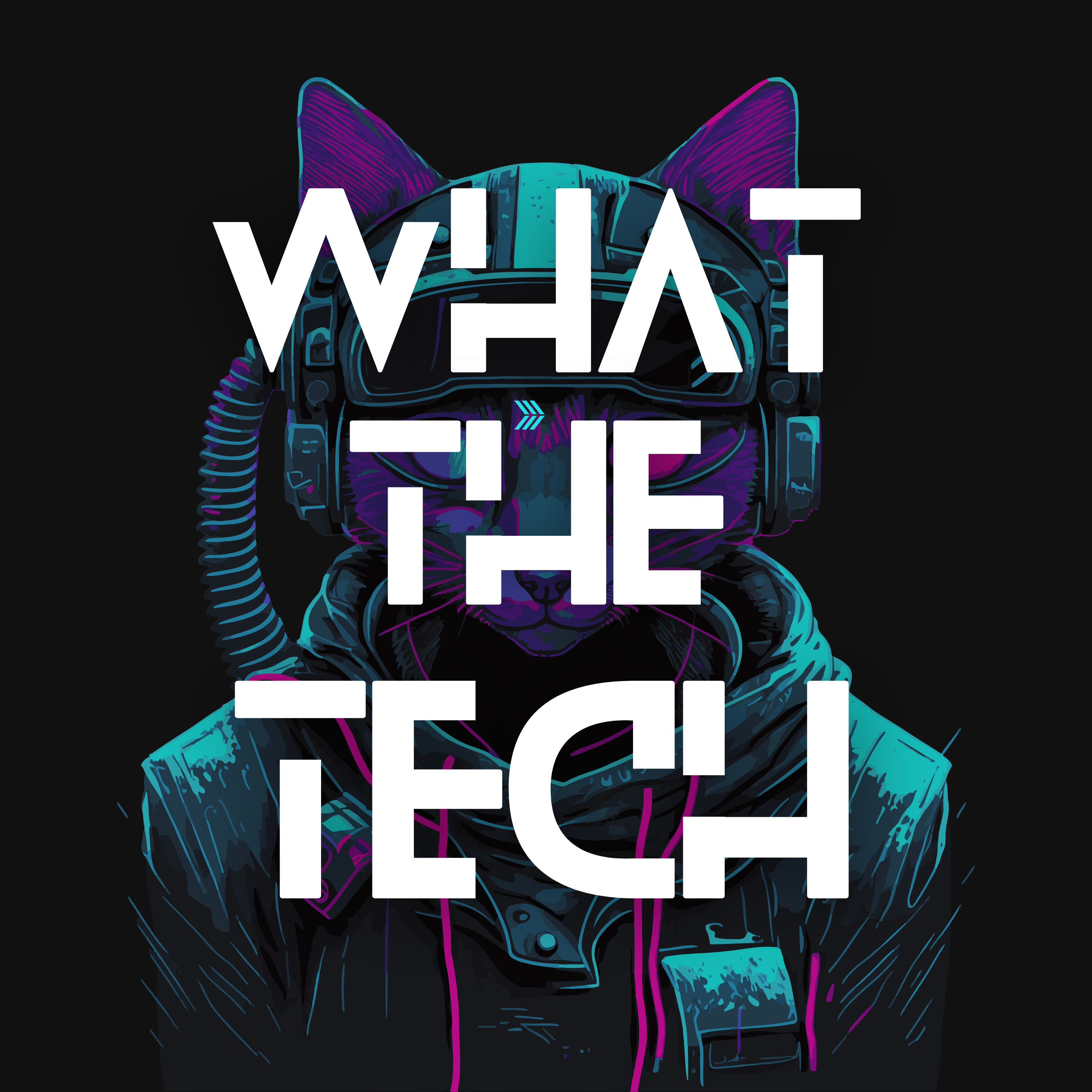
What The Tech
by ©The Turing Lab
This is a podcast for those who get itchy around black boxes. The ones who don’t just want to know what a new tech does, but why it works — or why it sometimes doesn’t. So we get down to first principles: the math, the physics, the algorithms, to see at the most fundamental level, how stuff works.
-
7
Mathematics of VR and AR
When Apple released the Vision Pro, it wasn't just a new gadget; it marked the official entry into the era of spatial computing. This episode peels back the curtain on the "science of the impossible," exploring how these devices act as translators between messy human biology and rigid silicon logic. We break down the five layers of technology required to build a virtual world—from the "Senses In" army of cameras and LiDAR scanners to the "Life Support" systems that process over one billion pixels per second. We dive deep into the central mathematical challenge of SLAM (Simultaneous Localization and Mapping), revealing how your glasses "know" where you are by constantly blending internal motion data with external visual landmarks to lay 3D "graph paper" over your real-world environment.We also explore the "Illusion Out" stack, comparing the "pancake lenses" that fold light paths to keep headsets thin with the "waveguides" that use microscopic nano-gratings to plumb virtual light directly into your pupils. Finally, we uncover the ultimate computational "cheat" that makes high-resolution VR feasible: foveated rendering. By using infrared cameras to track exactly where your eye is focusing, headsets only render a tiny circle of the screen at full detail, leaving your peripheral vision blurry to save the chip from overheating and the battery from draining. This mathematical triage is the keystone that allows a 23-million-pixel display to function in a wearable device.
-
6
World Models: Race to Develop A New Kind of LLM
There’s a revolution unfolding in modern medicine—one that promises to rewrite the destiny of rare and inherited disorders. While CRISPR "molecular scissors" fix genes by cutting DNA, a parallel world of next-generation gene therapies is emerging: "add-a-gene" strategies. Instead of editing existing code, these therapies use custom-engineered viruses to deliver a functional, working copy of a gene so your cells can finally perform their natural functions. As of 2024, approximately 32 of these therapies have been approved globally, treating everything from inherited blindness to spinal muscular atrophy (SMA).We dive into the mechanics of these "cellular delivery trucks," specifically AAV (adeno-associated virus) and lentiviral vectors. AAVs are ideal for long-term expression in non-dividing cells like those in the liver or retina, powering treatments like Zolgensma for SMA and Luxturna for vision loss. Lentiviruses, conversely, can integrate into the genomes of dividing cells, such as bone marrow stem cells. We also tackle the "one-shot gamble": the immense challenge of billion-dollar price tags and the immune responses that often prevent patients from receiving a second dose. Looking toward 2050, we glimpse a future of routine pediatric screenings and synthetic vectors that could make genetic "additions" as common as antibiotics
-
5
An AI Scientist is on the Horizon
Is a digital Albert Einstein waiting just over the horizon? In this episode, we explore the provocative question: can we build an AI scientist? We follow the journey of Mario Krenn, a physicist who turned to "computational creativity" after human reason failed to design a complex quantum experiment. Discover how his program, Melvin, began dreaming up experimental recipes that no human had considered, proving that AI can be more than just a calculator—it can be a master of association, piecing together the colossal jigsaw puzzle of scientific data to find the "missing pieces" of our understanding.However, the path to a "scientific creativity machine" is paved with profound ethical and philosophical hurdles. We examine the essential "human in the loop" guardrails required to ensure that AI remains a tool for discovery rather than a replacement for human responsibility. From the strict prohibition of listing AI as a study author to the push for radical transparency in methodology, we discuss how our scientific culture must evolve to ensure these systems boost our curiosity rather than diminish it. Join us as we explore the next great team-up in history: the blending of human gut feeling with machine intelligence to spark the next leap in human knowledge.
-
4
When Would AI learn to Smell
Imagine stepping outside after a rainstorm and being greeted by that rich, earthy scent of petrichor. While we have taught AI to recognize faces, transcribe speech, and even differentiate textures, the sense of smell remains almost completely beyond the grasp of machines. In this premiere episode, we explore the "Silent Sense," uncovering why decoding one trillion different olfactory stimuli is a biological puzzle of staggering complexity. We journey from the 400 distinct receptors in the human nose to the high-stakes world of the 2015 DREAM Olfaction Prediction Challenge, where researchers first began using algorithms to predict how molecules actually smell to a human.We dive into the "Principal Odor Map" and the deep learning revolution that allowed neural networks to analyze raw signals from electronic noses. Discover how the COVID-19 pandemic's focus on smell loss accelerated data sharing through projects like Pyrfume, and how 2024 marked a "multimodal leap" by integrating chemical structures with textual descriptions using Transformer architectures—the same tech behind large language models. As we stand at the frontier of digital olfaction, we ask: what happens when machines can finally "smell" disease, spoiled food, or the subtle shift of a rainstorm?
We're indexing this podcast's transcripts for the first time — this can take a minute or two. We'll show results as soon as they're ready.
No matches for "" in this podcast's transcripts.
No topics indexed yet for this podcast.
Loading reviews...
ABOUT THIS SHOW
This is a podcast for those who get itchy around black boxes. The ones who don’t just want to know what a new tech does, but why it works — or why it sometimes doesn’t. So we get down to first principles: the math, the physics, the algorithms, to see at the most fundamental level, how stuff works.
HOSTED BY
©The Turing Lab
CATEGORIES
Loading similar podcasts...
Frequently Asked Questions
How many episodes does What The Tech have?
What The Tech currently has 4 episodes available on PodParley. New episodes are automatically indexed when they're published to the podcast feed.
What is What The Tech about?
This is a podcast for those who get itchy around black boxes. The ones who don’t just want to know what a new tech does, but why it works — or why it sometimes doesn’t. So we get down to first principles: the math, the physics, the algorithms, to see at the most fundamental level, how stuff works.
How often does What The Tech release new episodes?
What The Tech has 4 episodes. Check the episode list to see recent publication dates and frequency.
Where can I listen to What The Tech?
You can listen to What The Tech on PodParley by clicking any episode. We provide an embedded audio player for direct listening, and you can also subscribe via your preferred podcast app using the RSS feed.
Who hosts What The Tech?
What The Tech is created and hosted by ©The Turing Lab.
URL copied to clipboard!