
PODCAST · true crime
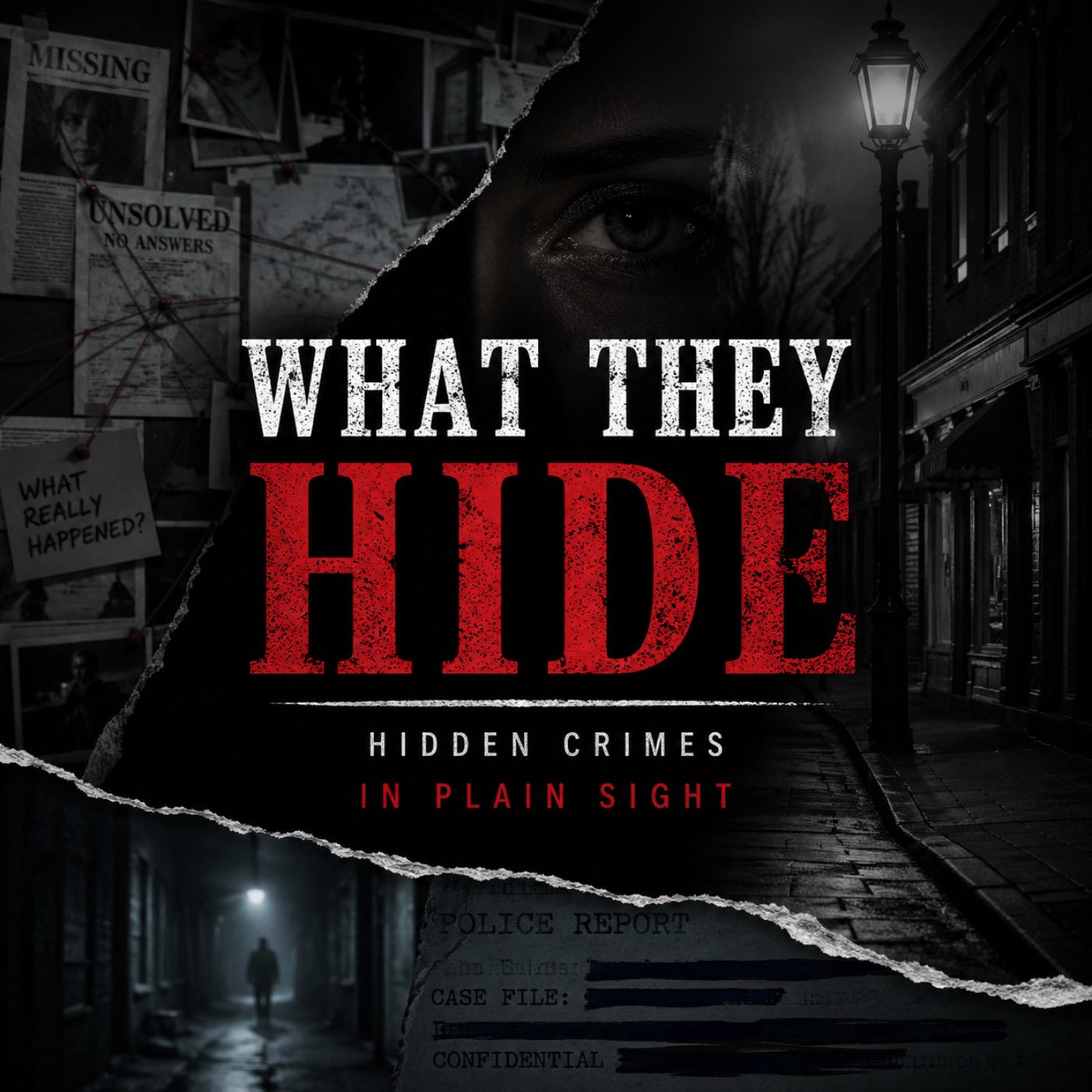
What They Hide: Hidden Crimes in Plain Sight. A True Crime Podcast
by matt wray
What They Hide: Hidden Crimes in Plain Sight is a long-form investigative podcast exploring the crimes that went unnoticed — not because they were invisible, but because they were overlooked.Each episode examines a case where violence, abuse, or exploitation existed openly within families, communities, or institutions, hidden behind familiarity, routine, and disbelief. Through careful storytelling and factual analysis, the series looks beyond the perpetrators to examine the warning signs that were missed, the systems that failed, and the lives that were changed forever.This podcast is not about shock value.It is about understanding how harm survives in ordinary spaces — and what we must learn to prevent it from happening again. Hosted on Acast. See acast.com/privacy for more info
-
22
The Disappearing Cyclist
http://buymeacoffee.com/Whattheyhidepod In September 2017, 63-year-old former Royal Navy officer Tony Parsons set out on a solo charity cycle ride through the Scottish Highlands. A cancer survivor, Tony was riding home from Fort William to Tillicoultry to raise money for charity — a demanding journey across remote roads and open landscape. But somewhere along the A82… he vanished. No witnesses. No crash scene. No bicycle. For nearly four years, his disappearance remained one of Scotland’s most haunting unsolved mysteries. Then, in 2020, a woman named Caroline Muirhead heard a confession that would change everything. What followed uncovered a fatal collision, a concealed burial site hidden near Bridge of Orchy, and a truth that had remained buried for years. In this episode, we examine the disappearance of Tony Parsons, the investigation that stalled, the relationship that reopened the case, and the decisions made after one moment on a dark Highland road. Because sometimes… what happens after an event is what defines it forever. 📚 Sources Police Scotland public statements and court reporting relating to the disappearance and murder investigation Scottish court proceedings and sentencing coverage connected to the Tony Parsons case Reporting from BBC News Reporting from STV News Reporting from Sky News Reporting from The Scotsman Reporting from The Herald Reporting from Daily Record Documentary material relating to the investigation and court proceedings Public interviews and reporting involving Caroline Muirhead Coverage examining the concealment and discovery of Tony Parsons’ remains near Bridge of Orchy Additional research into missing persons investigations, roadside collision concealment cases, and the long-term impact of unresolved disappearances Music by MUBERT [email protected]
-
21
The D.C Sniper Attacks Part 3
The shootings ended in October 2002. But for many, that was only the beginning. In the final part of this series, we move beyond the manhunt and into the aftermath—what happened after the arrests, the trials, and the headlines faded. We examine the execution of John Allen Muhammad, the ongoing imprisonment and legal challenges surrounding Lee Boyd Malvo, and the complex questions around justice, punishment, and responsibility. But more importantly, this episode centres the people most affected. The families. The survivors. And the memory of ten lives lost: James D. Martin, James L. Buchanan Jr., Premkumar A. Walekar, Sarah Ramos, Lori Ann Lewis-Rivera, Kenneth Bridges, Linda Franklin, Dean Harold Meyers, Pascal Charlot, and Conrad R. Johnson. Because while the fear ended… the impact did not. This is the long shadow left behind. Primary & Official Sources Federal Bureau of Investigation case summaries and public records Montgomery County Police Department investigation archives Virginia and Maryland court records relating to John Allen Muhammad and Lee Boyd Malvo U.S. Supreme Court and appellate rulings on juvenile sentencing (relevant to Malvo case). Books Three Weeks in October — Charles A. Moose & Charles Fleming Sniper: Inside the Hunt for the Killers Who Terrorized the Nation Inside the Mind of John Allen Muhammad News Archives The Washington Post CNN BBC News The New York Times Associated Press Additional Research Victim memorial reporting and biographies Public reaction and long-term trauma studies Legal developments in juvenile sentencing law in the United States Death penalty procedures and appellate processes Music by Mubert [email protected] buymeacoffee.com/Whattheyhidepod
-
20
The D.C. Sniper Attacks Part 2
The shootings had terrorised the Washington region for weeks. Then, in the early hours of October 24th, 2002, everything changed. At a roadside rest stop in Maryland, police surrounded a dark Chevrolet Caprice and arrested John Allen Muhammad and Lee Boyd Malvo as they slept inside. But the arrests only answered one question. Who they were. They did not answer why. In Part Two of this three-part series, we examine the dramatic capture that ended the attacks, the backgrounds of Muhammad and Malvo, the relationship between them, how the shootings were carried out, and the legal proceedings that followed. Because once the fear ended… the deeper story began. 📚 SOURCES Primary & Official Sources Federal Bureau of Investigation public case summaries and archived releases relating to the D.C. sniper investigation Montgomery County Police Department historical case material and press briefings Virginia and Maryland court records relating to prosecutions of John Allen Muhammad and Lee Boyd Malvo Public appellate decisions concerning juvenile sentencing issues connected to Malvo Books Three Weeks in October — Charles A. Moose with Charles Fleming Sniper: Inside the Hunt for the Killers Who Terrorized the Nation Inside the Mind of John Allen Muhammad Documentaries & Broadcast References I, Sniper Very Scary People (episodes discussing the case) News Archives The Washington Post archive reporting from 2002–2003 CNN live and archived coverage BBC News archive reporting The New York Times archive coverage Associated Press reports and wire coverage Additional Research Themes Inter-agency coordination during multi-jurisdiction investigations Behavioural analysis and public messaging during active manhunts Juvenile sentencing developments in the United States Victim impact reporting and long-term community trauma Music by MUBERT [email protected] <script type="text/javascript" src="https://cdnjs.buymeacoffee.com/1.0.0/button.prod.min.js" data-name="bmc-button" data-slug="Whattheyhidepod" data-color="#FFDD00" data-emoji="" data-font="Cookie" data-text="Buy me a coffee" data-outline-color="#000000" data-font-color="#000000" data-coffee-color="#ffffff" ></script> Hosted on Acast. See acast.com/privacy for more information.
-
19
The D.C. Sniper Attacks Part 1
D.C. Sniper: Part One — The First Shots In October 2002, a series of seemingly random shootings began across Maryland, Virginia, and the Washington D.C. region. Victims were targeted in ordinary places—parking lots, petrol stations, pavements, and outside shops. The attacks came without warning. A single shot, often from a distance, followed by silence and confusion. With no clear suspect and no obvious motive, fear spread quickly. Daily routines changed. Parents altered school schedules. Drivers crouched beside their cars while filling fuel tanks. Police agencies across multiple jurisdictions launched one of the largest manhunts in recent U.S. history. In Part One of this three-part series, we examine the first shootings, the growing public panic, the early mistakes, the messages sent to investigators, and the moment police finally began to close in. Because somewhere inside the fear… the people responsible were still moving.📚 SOURCES Primary & Official Sources Court records from the trials of John Allen Muhammad and Lee Boyd Malvo Law enforcement press conferences and official case summaries FBI public records and investigative releases relating to the D.C. Sniper attacks Montgomery County Police Department archived case material Books Three Weeks in October — Charles A. Moose & Charles Fleming Inside the Mind of John Allen Muhammad Sniper: Inside the Hunt for the Killers Who Terrorized the Nation Documentaries & Audio References I, Sniper Catching Killers (episodes covering serial investigations) News Archives The Washington Post archive coverage CNN 2002 coverage BBC News archive reports The New York Times archive reporting Associated Press reports Additional Research Public reporting on public safety response during the attacks Historical reporting on school closures, public behaviour changes, and law enforcement coordination Victim biographies and memorial reporting where publicly available Music by MUBERT [email protected] Hosted on Acast. See acast.com/privacy for more information.
-
18
The Moors Murders Part 3
As investigators searched Saddleworth Moor, the full scale of the case began to emerge. What had once been suspicion became certainty as search teams uncovered evidence linking Ian Brady and Myra Hindley to multiple missing children. With each discovery came answers for some families, while others were left to continue waiting. In the final part of this three-part series, we examine the searches of the moor, the recovery of victims, the trial of Brady and Hindley, their lives in prison, later developments in the case, and the lasting impact on those left behind. This is the conclusion of the Moors Murders series. Some questions were answered. Others never would be. 📚 SOURCES Primary Sources & Official Material Trial records from the 1966 proceedings involving acast.com/privacy for more information.
-
17
The Moors Murders Part 2
In October 1965, a single witness stepped forward with an account that would change everything. What began as a report of violence inside a house in Manchester quickly developed into something far more complex. As police responded, arrested Ian Brady and Myra Hindley, and began examining the evidence, the case expanded beyond a single crime. A suitcase left at a railway station. Photographs. Audio recordings. Each discovery raised new questions. And as investigators began to look beyond the immediate events of that night, connections started to form—linking Brady and Hindley to a series of disappearances that had, until then, remained unsolved. In this episode, we examine the police response, the early stages of the investigation, and the moment when separate cases began to converge. Because what was uncovered would lead investigators to a place they had not previously considered. Saddleworth Moor. And it’s there… that the search for answers would begin. 📚 SOURCES (Presented in a clean, professional podcast style) Primary Sources & Court Material Court transcripts and trial records relating to the Moors Murders (1966 trial proceedings) Police reports and witness statements, including testimony from acast.com/privacy for more information.
-
16
The Moors Murders Part 1
Title: The Making of Monsters | The Moors Murders (Part 1) Description: In 1960s Manchester, life moved to a familiar rhythm—factory shifts, quiet streets, and communities built on trust. Nothing about it suggested something darker was taking shape beneath the surface. In this first episode of our three-part series, we explore how two seemingly ordinary people—acast.com/privacy for more information.
-
15
The Man Found Locked in a Bag
The Unsolved Death of acast.com/privacy for more information.
-
14
Jimmy Savile part 3
PART 3 — THE RECKONING For decades, the image held. A trusted figure. A familiar voice. A man welcomed into institutions built on care. Then the truth began to surface. In Part 3 of this series, we confront the full scale of the case surrounding acast.com/privacy for more information.
-
13
Jimmy Savile part 2
PART 2 — THE SILENCE For decades, the image never cracked. A familiar face on television. A trusted presence in hospitals. A man welcomed into institutions built on care. But behind that image… A pattern was forming. In Part 2 of this three-part series, we move beyond the rise of acast.com/privacy for more information.
-
12
Jimmy Savile, The making of control
PART 1 — THE MAKING OF CONTROL For decades, he was one of the most recognisable faces in Britain. A television personality. A radio DJ. A charity fundraiser. A man trusted in hospitals, institutions, and homes across the country. But long before the truth came out… The foundations were already in place. In Part 1 of this three-part series, we examine the early life and rise of acast.com/privacy for more information.
-
11
Found Upside Down in a Gym Mat… The Case That Still Doesn’t Make Sense
In January 2013, seventeen-year-old Kendrick Johnson was found dead inside a rolled gym mat at his high school in Valdosta, Georgia. What initially appeared to be a tragic and unusual accident quickly became one of the most debated and controversial cases in recent memory. Authorities concluded that Kendrick’s death was the result of positional asphyxia, an accident that occurred while attempting to retrieve a shoe from inside the mat. But for Kendrick’s family, that explanation never made sense. Over the years, conflicting autopsy results, questions around evidence, and gaps in the timeline have fueled ongoing public debate. Multiple investigations — including reviews by state and federal authorities — have upheld the original conclusion. Yet the case continues to divide opinion. In this episode of What They Hide: Hidden Crimes in Plain Sight, we explore: The final day of Kendrick Johnson The discovery inside the gym The official investigation and forensic findings The family’s fight for answers The conflicting evidence that keeps the case alive today More than a decade later, this remains a case where facts, belief, and uncertainty collide — raising one question that still lingers: What really happened? 📚 SourcesResearch for this episode is based on publicly available records, investigative reporting, and official findings, including: Official Reports & Legal DocumentsGeorgia Bureau of Investigation (GBI) case files and official statements U.S. Department of Justice (DOJ) review and closure reports Lowndes County Sheriff’s Office investigation summaries Official autopsy report (2013) and independent autopsy findings Journalism & ReportingCNN — coverage of the Kendrick Johnson case and investigation updates BBC News — international reporting on the case The New York Times — reporting on controversy and legal developments The Guardian — analysis of the case and public response The Washington Post — coverage of investigations and DOJ involvement Additional Coverage & Case AnalysisValdosta Daily Times — local reporting and timeline details ABC News / NBC News — investigative summaries and interviews Publicly available interviews with the Johnson family and legal representatives Important NoteThis case remains the subject of ongoing public debate. While official investigations have concluded Kendrick Johnson’s death was accidental, alternative interpretations and concerns raised by the family and others are also discussed in this episode. The aim of this episode is to present the case clearly, respectfully, and without speculation presented as fact. Music by Mubert [email protected] Hosted on Acast. See acast.com/privacy for more information.
-
10
Ivan Milat Part 2
In the early 1990s, a stretch of forest south of Sydney became the centre of one of Australia’s most disturbing murder investigations. Belanglo State Forest had long been a quiet expanse of bushland along the highways used by backpackers travelling between Sydney and Melbourne. But when police began uncovering human remains hidden beneath the trees, a terrifying pattern emerged. Young travellers from across the world had disappeared along the same roads. Many had been hitchhiking. Many had last been seen accepting rides from strangers. And somewhere along those highways, a killer had been waiting. In this two-part episode of What They Hide: Hidden Crimes in Plain Sight, we take a deep investigative look at the crimes of Ivan Milat, the man who would become known as Australia’s “Backpacker Murderer.” This series explores: The discovery of multiple victims inside Belanglo State Forest The stories of the seven young travellers whose journeys ended there How investigators slowly uncovered a pattern linking the disappearances The surviving witness who helped identify the killer The investigation that led police to Ivan Milat The 1996 trial that revealed the full horror of the crimes More than three decades later, the Belanglo murders remain one of the most infamous serial killer cases in Australian history — a chilling reminder of how easily violence can remain hidden along the most ordinary roads. SourcesResearch for this episode drew from court records, investigative journalism, and historical reporting including: BooksMark Whittaker & Les Kennedy — Sins of the Brother: The Definitive Story of Ivan Milat and the Backpacker Murders Clive Small & Tom Gilling — Milat: Inside Australia’s Biggest Manhunt Gordon Burn — Happy Like Murderers (context on serial crime investigation culture) Court and Legal RecordsR v Ivan Milat (1996) — Supreme Court of New South Wales trial records Official sentencing remarks and court summaries relating to Milat’s convictions Journalism & ReportingBBC News archival reporting on the Belanglo murders The Guardian coverage of the investigation and trial The Sydney Morning Herald reporting on the Belanglo search and police operation The Australian investigative reporting on the Milat case Police and Investigation ReportingHistorical summaries of the New South Wales Police Task Force investigation Contemporary reporting on the Belanglo State Forest search operations Music by Mubert [email protected] what they hide pod on all socials Hosted on Acast. See acast.com/privacy for more information.
-
9
Ivan Milat Part 1
In the early 1990s, a stretch of forest south of Sydney became the centre of one of Australia’s most disturbing murder investigations. Belanglo State Forest had long been a quiet expanse of bushland along the highways used by backpackers travelling between Sydney and Melbourne. But when police began uncovering human remains hidden beneath the trees, a terrifying pattern emerged. Young travellers from across the world had disappeared along the same roads. Many had been hitchhiking. Many had last been seen accepting rides from strangers. And somewhere along those highways, a killer had been waiting. In this two-part episode of What They Hide: Hidden Crimes in Plain Sight, we take a deep investigative look at the crimes of Ivan Milat, the man who would become known as Australia’s “Backpacker Murderer.” This series explores: The discovery of multiple victims inside Belanglo State Forest The stories of the seven young travellers whose journeys ended there How investigators slowly uncovered a pattern linking the disappearances The surviving witness who helped identify the killer The investigation that led police to Ivan Milat The 1996 trial that revealed the full horror of the crimes More than three decades later, the Belanglo murders remain one of the most infamous serial killer cases in Australian history — a chilling reminder of how easily violence can remain hidden along the most ordinary roads. SourcesResearch for this episode drew from court records, investigative journalism, and historical reporting including: BooksMark Whittaker & Les Kennedy — Sins of the Brother: The Definitive Story of Ivan Milat and the Backpacker Murders Clive Small & Tom Gilling — Milat: Inside Australia’s Biggest Manhunt Gordon Burn — Happy Like Murderers (context on serial crime investigation culture) Court and Legal RecordsR v Ivan Milat (1996) — Supreme Court of New South Wales trial records Official sentencing remarks and court summaries relating to Milat’s convictions Journalism & ReportingBBC News archival reporting on the Belanglo murders The Guardian coverage of the investigation and trial The Sydney Morning Herald reporting on the Belanglo search and police operation The Australian investigative reporting on the Milat case Police and Investigation ReportingHistorical summaries of the New South Wales Police Task Force investigation Contemporary reporting on the Belanglo State Forest search operations Music by: MUBERT [email protected] @whattheyhidepod on all the socials Hosted on Acast. See acast.com/privacy for more information.
-
8
Levi Bellfield
In the early 2000s, a series of brutal attacks on young women began unfolding across the quiet suburbs of West London. At first, the crimes appeared unconnected. A young woman walking home after a night out. Another crossing a quiet green late in the evening. A student struck by a car in what initially appeared to be a hit-and-run. Each attack shocked the local community, but detectives struggled to find a clear pattern. But slowly, investigators began to realise something far more disturbing. A man had been driving the streets of West London at night, watching bus stops, following women walking alone, and striking without warning. His name was Levi Bellfield. In this episode of What They Hide: Hidden Crimes in Plain Sight, we take a deep investigative dive into the crimes of the man who became known as the Bus Stop Killer. This episode explores: The murder of Marsha McDonnell in Hampton in 2003 The murder of Amélie Delagrange on Twickenham Green in 2004 The attempted murder of Kate Sheedy, whose survival helped investigators begin closing in on the attacker The disappearance and murder of 13-year-old Milly Dowler, a case that shocked the entire country How police finally identified and arrested Levi Bellfield The trials that led to multiple whole life sentences And the unsettling reality that Bellfield had been living an ordinary life while stalking the streets of London for victims More than two decades later, the case remains one of the most disturbing examples of a violent predator operating hidden in plain sight. SourcesThis episode was researched using court records, investigative journalism, and historical reporting from the following sources: BooksChristopher Berry-Dee — Levi Bellfield: The Bus Stop Killer David Wilson & Elizabeth Yardley — Serial Killers: Hunting Britain's Most Evil Murderers Court and Legal RecordsR v Levi Bellfield (2008) – Old Bailey trial records R v Levi Bellfield (2011) – Milly Dowler murder trial Journalism & Archival ReportingBBC News Archive coverage of the Bellfield investigations and trials The Guardian reporting on the Bellfield murders and court proceedings The Independent coverage of the Milly Dowler case and Bellfield convictions The Telegraph investigative reporting on the West London attacks Police and Official ReportingMetropolitan Police investigation summaries relating to the Bellfield murders Historical reporting on the Operation Ruby investigation Hosted on Acast. See acast.com/privacy for more information.
-
7
Update: Ian Huntley dies after prison attack
Hosted on Acast. See acast.com/privacy for more information.
-
6
Ian Huntley
On August 4th, 2002, ten-year-old best friends Holly Wells and Jessica Chapman left home in the Cambridgeshire town of Soham to buy sweets. They were wearing matching Manchester United shirts with “Beckham 7” on the back. They never returned. What followed was one of the largest missing-person investigations in modern British history. As volunteers searched fields and waterways and the nation watched the girls’ photograph circulate across the world, a man from within the community stepped forward to help. He gave interviews. He spoke calmly to reporters. He described the last time he had seen the girls. That man was Ian Huntley, the caretaker at the local secondary school. Within weeks, investigators would uncover a devastating truth: the man standing in front of cameras appealing for information was the same man responsible for the girls’ deaths. In this episode of What They Hide: Hidden Crimes in Plain Sight, we take a deep investigative look at: The disappearance of Holly Wells and Jessica Chapman Ian Huntley’s chilling media appearances during the search The investigation that slowly closed in on him The courtroom trial that exposed the truth The role of Maxine Carr and the false alibi that delayed justice The systemic failures revealed by the Bichard Inquiry We also examine how this case reshaped safeguarding laws in the United Kingdom and forced the country to confront how warning signs can be missed when information isn’t shared. Because sometimes the most disturbing crimes are not hidden in darkness. They unfold in plain sight. Listener discretion advised. SourcesThis episode was researched using publicly available records, court reporting, and investigative journalism from the following sources: Official Reports The Bichard Inquiry Report (2004) – UK Government investigation into police intelligence failures related to the Soham murders UK Home Office documentation on safeguarding reforms and information sharing Court and Legal Reporting Coverage from the Old Bailey trial of Ian Huntley (2003) Sentencing statements and official court records Books Soham: The Real Story — by David James Smith The Soham Murders — investigative reporting compiled from court proceedings and police sources Journalism & Media Archives BBC News archive reporting on the Soham murders and the trial The Guardian investigative coverage of the case and the Bichard Inquiry The Independent reporting on the investigation and legal proceedings The Telegraph coverage of the trial and aftermath Documentaries and Broadcast Reporting BBC documentary coverage of the Soham murders Channel 4 investigative reporting on the Bichard Inquiry and policing reforms Music By MUBERT [email protected] Hosted on Acast. See acast.com/privacy for more information.
-
5
Josef Fritzl
For 24 years, beneath an ordinary house in the quiet Austrian town of Amstetten, a hidden world existed. Josef Fritzl was a husband. A father. A landlord. A man who waved to neighbors and maintained his garden. And beneath his home, he imprisoned his daughter Elisabeth in a concealed basement, where she endured decades of captivity and gave birth to seven children. In this extended deep-dive episode of What They Hide: Hidden Crimes in Plain Sight, we examine the psychological architecture of control, the dual life Fritzl maintained above and below ground, the systemic failures that allowed the abuse to remain undiscovered for nearly a quarter of a century, and the devastating reality of recovery after rescue. This episode centers survival — not spectacle. It explores how concealment thrives in routine, how control can exist behind polite facades, and how unimaginable crimes can persist within ordinary communities. Because sometimes what’s hidden isn’t buried in darkness. It’s built beneath normal life. Listener discretion strongly advised. This episode is based on publicly available court records, investigative reporting, and documented psychological analysis of long-term captivity cases. Primary sources include: Austrian court reporting from the 2009 trial in St. Pölten BBC News investigative coverage (2008–2009) The Guardian reporting on the case and trial proceedings The New York Times international reporting on the discovery and aftermath Der Standard (Austrian national reporting) Court psychiatric evaluation summaries reported in Austrian and international press Official sentencing details from Austrian judicial authorities Academic literature on prolonged captivity trauma and psychological survival mechanisms All efforts were made to present verified information while centering the dignity and privacy of the surviving victims. music by MUBERT [email protected] Hosted on Acast. See acast.com/privacy for more information.
-
4
Lucy Letby
In 2023, neonatal nurse Lucy Letby was convicted of murdering seven babies and attempting to murder others at the Countess of Chester Hospital. She received a whole-life sentence — one of the most severe punishments available under UK law. The verdict appeared definitive. But outside the courtroom, debate has continued. In this extended deep-dive episode of What They Hide: Hidden Crimes in Plain Sight, we examine the case in full: the neonatal ward, the unexpected collapses, the prosecution’s medical evidence, the insulin findings, the handwritten notes, the rota patterns — and the jury’s decision. We then step into the growing discussion among statisticians, medical commentators, and legal observers who have questioned aspects of the statistical reasoning, clinical interpretation, and systemic context of the case. This episode does not claim to overturn a conviction. Lucy Letby’s convictions stand in law. Instead, we ask a harder question: How certain is certainty? When medicine, statistics, and criminal law collide — what does justice require? Listener discretion advised. This episode discusses infant death and medical trauma.This episode is based on publicly available court reporting, official documentation, and post-trial analysis. Key sources include: Court & Official DocumentsReporting from Manchester Crown Court (2022–2023) Sentencing remarks delivered by Mr Justice Goss (August 2023) Court of Appeal judgment dismissing Letby’s first appeal (2024) Royal College of Paediatrics and Child Health Review of the Countess of Chester neonatal unit (2017) Major UK ReportingBBC News (extensive trial coverage) The Guardian (court reporting and legal analysis) The Times (trial reporting and investigative coverage) The Telegraph (trial reporting and commentary) Sky News (trial summaries and sentencing coverage) The Independent (trial coverage and analysis) Statistical & Medical CommentaryPublic commentary and analysis by Prof. Richard Gill (statistician) Academic and medical discussions published in professional forums and interviews post-verdict Commentary from healthcare governance analysts examining systemic hospital factors Contextual BackgroundNHS neonatal care standards documentation Articles on statistical clustering and the “Texas Sharpshooter Fallacy” Legal commentary on circumstantial evidence and whole-life orders in UK law Music by MUBERT email: [email protected] Hosted on Acast. See acast.com/privacy for more information.
-
3
Peter Moore
In the autumn of 1995, North Wales became the hunting ground of a man no one suspected. Peter Moore was a cinema manager. A local businessman. A familiar face dressed almost always in black. Between September and December, four men — Henry Roberts, Edward Carthy, Keith Randles, and Anthony Davies — were murdered in isolated locations across Anglesey and Denbighshire. In this episode of What They Hide: Hidden Crimes in Plain Sight, we take a deep, fact-based dive into the investigation that led to Moore’s arrest, his Christmas Eve confession, the dramatic courtroom battle where he blamed a mysterious figure known only as “Jason,” and the whole-life sentence that followed. We also explore the haunting legal legacy of his case — and the disturbing truth at its core: Sometimes the most dangerous predators don’t hide in the shadows. They stand in plain sight. Listener discretion advised. This episode contains discussion of murder and violent crime. Sources Consulted Include: Court reporting from Mold Crown Court (1996) Contemporary reporting from The Independent Legal coverage of whole-life order appeals and European Court of Human Rights rulings Archival reporting from North Wales news outlets music by MUBERT [email protected] Hosted on Acast. See acast.com/privacy for more information.
-
2
White House Farm
In August 1985, five members of the same family were found shot dead inside a farmhouse in rural Essex. At first, investigators believed the deaths were the result of a murder-suicide carried out by Sheila Caffell. Within weeks, the investigation changed direction, and her adopted brother, Jeremy Bamber, was charged and later convicted of all five murders. In this episode of What They Hide: Hidden Crimes in Plain Sight, we examine the White House Farm murders through a careful, fact-based retelling of events. We explore the early investigation, the evidence presented at trial, the competing narratives put before the jury, and the appeals and reviews that have kept the case in public debate for decades. This is not a story about speculation. It is a reminder that behind every contested case are lives that were lost, families permanently changed, and questions that continue to echo long after a verdict is reached. We remember: Nevill Bamber June Bamber Sheila Caffell Nicholas Caffell Daniel Caffell Research & SourcesResearch for this episode was compiled using publicly available records and reporting, including: Court of Appeal Judgment (R v Bamber, 2002) Criminal Cases Review Commission case materials and summaries Contemporary reporting from BBC News, The Guardian, and The Independent Historical investigative timelines published by major UK news organisations Publicly documented trial and sentencing records All information has been presented with care and respect for the victims and their families. music by MUBERT Hosted on Acast. See acast.com/privacy for more information.
-
1
Steve Wright
In this episode of What They Hide: Hidden Crimes in Plain Sight, we examine the murders committed by Steve Wright, known in the media as the Suffolk Strangler. In December 2006, Wright murdered 5 women and left lasting harm across Ipswich and beyond. Wright later admitted to killing previously in 1999. This episode tells the story through a victim-first lens, focusing on the lives of Gemma Adams, Tania Nicol, Annette Nicholls, Paula Clennell, Anneli Alderton, and Victoria Hall, whose murder remained unsolved for more than two decades before Wright’s recent guilty plea. Rather than sensationalising the crimes, this episode explores how vulnerability, misogyny, and systemic blind spots allowed violence to hide in plain sight. It examines the investigation, forensic breakthroughs, courtroom outcomes, and the long-term impact on families, survivors, and communities — alongside the reminder that justice, even when delayed, still matters. This is not a story about notoriety. It is a story about lives that deserved protection, dignity, and remembrance. Research for this episode was compiled using: UK court records, sentencing remarks, and recent Old Bailey proceedings Crown Prosecution Service statements and press releases Suffolk Constabulary investigative reporting Forensic psychology expert commentary presented in court Reputable journalism from BBC News, The Guardian, The Independent, and regional press All information is drawn from publicly available, verified sources and presented with care and respect for victims, their families, and those affected by these crimes. Music by MUBERT contact us: [email protected] @whattheyhidepod on x and Bluesky Hosted on Acast. See acast.com/privacy for more information.
-
0
Joanne Dennehy
In this episode of What They Hide: Hidden Crimes in Plain Sight, we examine the crimes of Joanne Dennehy — a woman who murdered three men, attempted to kill two others, and walked freely among the public while police searched for someone else entirely. Through a victim-centered lens, this episode traces Joanne’s escalation from calculated trust-based killings to random attacks, her arrest, interrogation, and eventual whole-life sentence. More importantly, we honor the lives of John Chapman, Kevin Lee, and Luke Walmsley, as well as the surviving victims and their families, whose stories are too often overshadowed by the perpetrator. This is not a story about notoriety — it’s a reminder of how violence can hide in plain sight, and why paying attention matters. Research for this episode was compiled using: UK court records and sentencing remarks Police statements and investigative reporting Forensic psychology analyses and expert commentary Reputable news coverage including BBC News, The Guardian, and The Independent Survivor and family statements as reported in court proceedings and interviews All information was gathered from publicly available sources and presented with respect for victims and their families. Music by MUBERT Hosted on Acast. See acast.com/privacy for more information.
-
-1
Fred and Rose West
In this episode of What They Hide: Hidden Crimes in Plain Sight, we examine the crimes of Fred and Rose West — not as isolated acts of evil, but as a long pattern of violence enabled by silence, institutional failure, and lives overlooked. This episode traces Fred and Rose West’s early lives, the gradual construction of control inside 25 Cromwell Street, and the disappearances of women and children whose vulnerability made them easy to ignore. We explore how abuse escalated unnoticed, how warning signs were missed, and how ordinary systems failed to connect what was happening in plain sight. The episode concludes with the aftermath of the investigation, Fred West’s suicide and its impact on denied closure, Rose West’s continued imprisonment, and the lasting lessons this case leaves behind — about belief, accountability, and the cost of not paying attention. This episode was researched using court records, trial transcripts, and official police investigations, alongside established journalism and long-form reporting from BBC News, The Guardian, and The Independent. Key secondary sources include books by Carol Ann Lee, Howard Sounes, and Geoffrey Wansell, as well as documentary material and expert analysis broadcast by BBC Panorama, Channel 4, and ITV. Music created by MUBERT Hosted on Acast. See acast.com/privacy for more information.
We're indexing this podcast's transcripts for the first time — this can take a minute or two. We'll show results as soon as they're ready.
No matches for "" in this podcast's transcripts.
No topics indexed yet for this podcast.
Loading reviews...
ABOUT THIS SHOW
What They Hide: Hidden Crimes in Plain Sight is a long-form investigative podcast exploring the crimes that went unnoticed — not because they were invisible, but because they were overlooked.Each episode examines a case where violence, abuse, or exploitation existed openly within families, communities, or institutions, hidden behind familiarity, routine, and disbelief. Through careful storytelling and factual analysis, the series looks beyond the perpetrators to examine the warning signs that were missed, the systems that failed, and the lives that were changed forever.This podcast is not about shock value.It is about understanding how harm survives in ordinary spaces — and what we must learn to prevent it from happening again. Hosted on Acast. See acast.com/privacy for more info
HOSTED BY
matt wray
CATEGORIES
Loading similar podcasts...
Frequently Asked Questions
How many episodes does What They Hide: Hidden Crimes in Plain Sight. A True Crime Podcast have?
What They Hide: Hidden Crimes in Plain Sight. A True Crime Podcast currently has 24 episodes available on PodParley. New episodes are automatically indexed when they're published to the podcast feed.
What is What They Hide: Hidden Crimes in Plain Sight. A True Crime Podcast about?
What They Hide: Hidden Crimes in Plain Sight is a long-form investigative podcast exploring the crimes that went unnoticed — not because they were invisible, but because they were overlooked.Each episode examines a case where violence, abuse, or exploitation existed openly within families,...
How often does What They Hide: Hidden Crimes in Plain Sight. A True Crime Podcast release new episodes?
What They Hide: Hidden Crimes in Plain Sight. A True Crime Podcast has 24 episodes. Check the episode list to see recent publication dates and frequency.
Where can I listen to What They Hide: Hidden Crimes in Plain Sight. A True Crime Podcast?
You can listen to What They Hide: Hidden Crimes in Plain Sight. A True Crime Podcast on PodParley by clicking any episode. We provide an embedded audio player for direct listening, and you can also subscribe via your preferred podcast app using the RSS feed.
Who hosts What They Hide: Hidden Crimes in Plain Sight. A True Crime Podcast?
What They Hide: Hidden Crimes in Plain Sight. A True Crime Podcast is created and hosted by matt wray.
URL copied to clipboard!