
PODCAST · arts
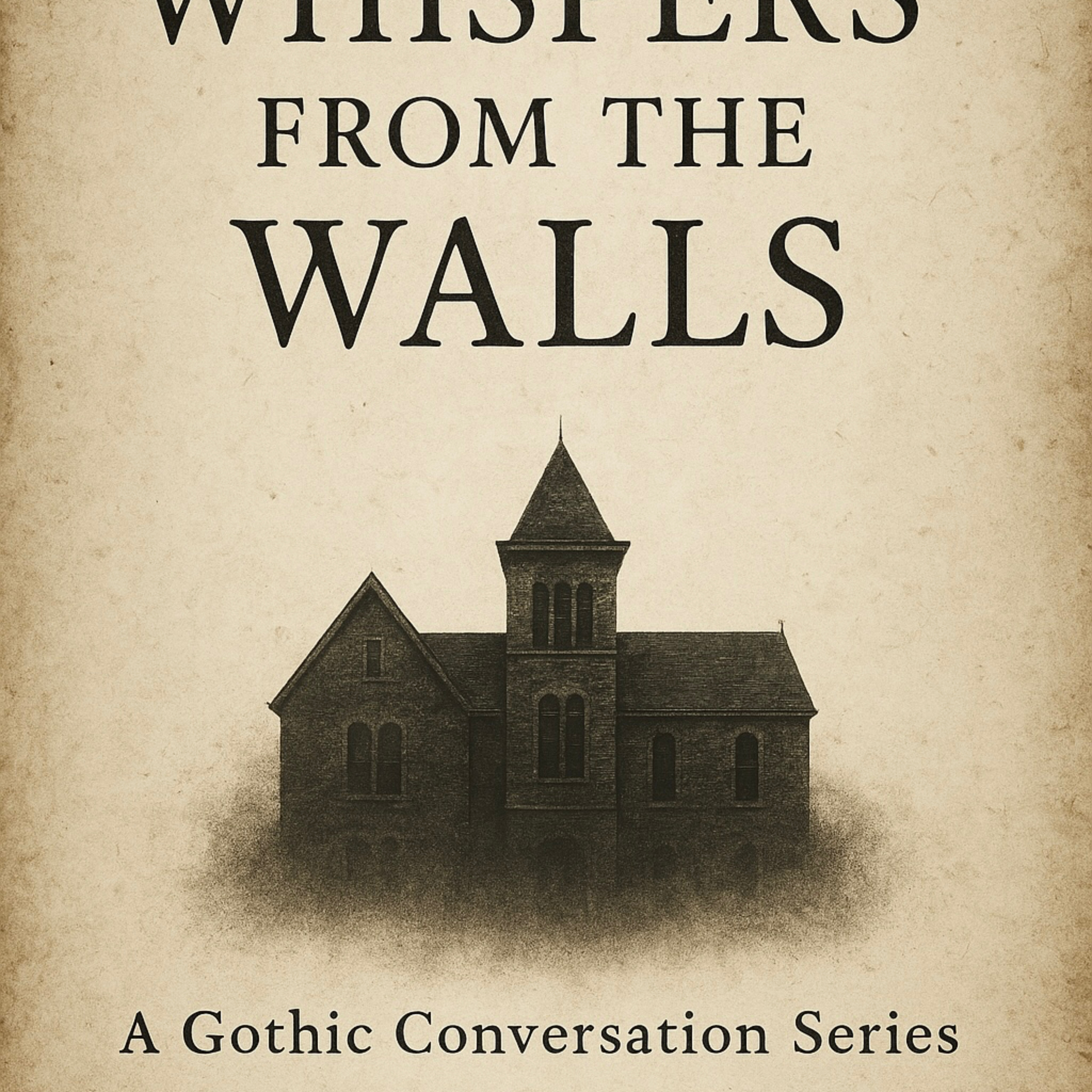
Whispers from the Walls
by Raine Studios
A gothic conversation series inspired by the Whispers in the Walls trilogy. Each episode explores the themes, shadows, and silences surrounding Lillian Davenport and Greer Asylum — without spoilers. From power and trauma to memory and legacy, we dig into the echoes behind the books and the truth the walls refuse to forget. Start the journey with The Quieting.https://mybook.to/WhispersintheWalls
-
24
The Child Who Had to Be an Animal
In 1874, a ten-year-old girl was rescued from horrific abuse in New York City—not under child protection laws, but under animal cruelty laws.Because children had no legal rights.This episode tells the true story of Mary Ellen Wilson, a child whose suffering forced America to confront an unthinkable truth: horses and dogs were protected by law, but children were not.Behind closed doors during the Gilded Age, Mary Ellen was beaten, starved, isolated, and treated as property. When a missionary named Etta Angell Wheeler tried to help her, she discovered there were no laws, no agencies, and no systems designed to protect abused children.So she did something radical.She asked the American Society for the Prevention of Cruelty to Animals for help.What followed was a landmark court case, the birth of the world’s first child protection organization, and the beginning of modern child welfare as we know it.This is not just a story about one child.It’s the story of how visibility became protection—and how recent, fragile, and necessary those protections still are.Because child protection is not ancient.It’s barely 150 years old.And it started with one child brave enough to speak, and one woman unwilling to look away.
-
23
Whispers at Christmas
There are Christmas stories you read by the fire…and then there are the ones whispered through cold hallways, drifting like dust from a place that remembers more than it reveals.Welcome to Christmas in Ward C — a standalone Whispering Walls special that pulls you into the forgotten children’s wing of Greer Asylum. This episode isn’t cheerful. It isn’t festive. It isn’t even particularly jolly. It’s the kind of Christmas tale you tell with the lights low, the wind tapping at the window, and the uneasy feeling that someone else might be listening too.For decades, Ward C was sealed—its doors locked, its records shredded, and its remaining belongings shoved into storage like the building wanted to forget it ever existed. But fragments still surfaced: a nurse’s photograph tucked behind a medicine cabinet… a doll stitched with mismatched thread… a patient ledger missing half its pages… a rocking horse with burn marks down one side. And every December, staff claimed the same thing: the faint sound of children singing, even though the ward had been empty for years.In this special, the Whispering Walls hosts take you through the unarchived Christmas tragedies of Ward C:• the nurse who decorated a tree with medical gowns• the children who vanished during the winter blackout• the doll that kept appearing in new places, even when the room was sealed• the photograph of a ghostly figure watching through the frost• and the final Christmas Eve before the ward was shut down for goodYou’ll hear the artifacts. The testimonies. The things that remained behind when everyone else was gone. You’ll hear the moments no one recorded but everyone felt. We trace the history of the children’s wing, the failures of early psychiatric care, and the shadows that still cling to the edges of the asylum’s past.This is not a reenactment.It’s not fiction.It’s the chilling mixture of history, rumor, and the impossible — the intersection where the Greer Asylum always lived.The hosts bring their signature balance of grounded thoughtfulness, dry humor, and steady presence as they guide you through the eerie beauty of a Christmas that refused to be forgotten. Expect haunting moments, unnerving details, and the quiet kind of grief that lingers long after the tree lights fade.If you’ve ever wondered what becomes of the memories a building tries to bury… or what Christmas looks like in a place that never knew warmth… this is the story you’ve been waiting for.Turn the lights down.Pour something warm.And step with us into Ward C — where the walls remember, the dolls wait, and the snow drifts through a window that should have stayed shut forever.
-
22
The Woman Who Crossed an Ocean and Raised Rock’s Loudest Sons: The Story of Margaret Young
Hey Rock fans! Welcome back to Whispers from the Walls.You know, we’ve been mixing things up a little lately… and tonight, we’re stepping into the story of the woman who quietly built one of the biggest rock families of all time.Most people know AC/DC.They know Angus — the wild schoolboy in the shorts.They know Malcolm — the rhythmic backbone of hard rock.But almost nobody knows the woman who raised them.Her name was Margaret Young, and she lived a life as bold and determined as the music her sons would someday unleash on the world.Margaret was born in Glasgow in 1914, raised in a working-class neighborhood where survival depended on grit. She married William Young, had eight children, and faced the harsh reality of post-war Scotland: fading jobs, rising poverty, and no real path forward for a big family.Then she heard about the Ten Pound Poms — a government program offering British families the chance to immigrate to Australia for just £10. It was advertised like paradise, but for most, it meant starting over with nothing but hope and determination.Margaret didn’t hesitate.She packed up her children — including young Malcolm and Angus — and boarded a ship across the world in 1963. The trip was long, crowded, and uncomfortable, but she never wavered. She believed a better life was waiting on the other side.When the Young family landed in Sydney, they had almost nothing. Margaret took whatever work she could find: cleaning houses, laundry, odd jobs that paid just enough to feed eight kids. The home was noisy, cramped, and chaotic — but it was filled with love, stubbornness, and music.And Margaret encouraged every second of it.Her older son George found early success with The Easy beats, proving to his younger brothers that music could be a real path. Soon Malcolm and Angus were practicing day and night, hammering out riffs in the tiny family home while Margaret kept everyone fed and in line.And yes — she’s the one who bought Angus that now-iconic schoolboy uniform. She patched it, washed it, and made sure he had it for every early gig long before it became rock legend.Margaret didn’t tell her boys to “be realistic.”She didn’t complain about the noise.She didn’t try to shrink their dreams to fit their circumstances.She believed in them — fiercely, quietly, and without hesitation.As AC/DC exploded into one of the loudest and most electrifying forces in rock history, Margaret remained their anchor. She was tough when they struggled, proud when they succeeded, and steady when fame threatened to shake the ground beneath them.Behind the guitar solos, the amps, the chaos, and the global success… stood a mother who crossed an ocean to give her children a chance.Tonight, we shine a light on Margaret Young —the immigrant mother with the iron will,the woman who survived poverty and upheaval,and the quiet force who raised two of the greatest rock musicians of all time.Without her, there would be no AC/DC.No thunder.No legacy.No band that shook the world.This is her story.
-
21
Eugenia Van Halen: The Mother Who Raised a Guitar Revolution
Before Eddie Van Halen became a guitar god… before Alex Van Halen became the thunder behind some of the greatest rock anthems ever recorded… before the stadiums, the solos, the tapping, the chaos, and the birth of a new sound — there was a quiet woman playing piano in a tiny Pasadena living room.Her name was Eugenia Van Halen, and without her, rock history would be missing one of its brightest flames.Most fans know the brothers — Eddie and Alex.But very few know the woman who shaped them long before anyone handed them a stage.Eugenia was born in the Dutch East Indies — what we now call Indonesia — into a world split by culture, colonization, and rising conflict. She grew up mixed-race, caught between Dutch heritage and Indonesian identity, in a time when the world drew harsh lines about who belonged and who didn’t. But she carried something that transcended every border and every barrier:Music.She was a classically trained pianist with sharp discipline and an instinctive emotional intelligence — gifts she would pass directly to her sons.When the Second World War erupted and Japanese forces occupied Indonesia, Eugenia lived through fear, hunger, and political upheaval that could have erased her completely. But she survived — and when the war ended, the danger didn’t. The political environment shifted again, and Eugenia and her Dutch husband, Jan, made the life-altering decision to flee for safety.With two young boys in tow, they boarded a ship to America in nineteen fifty-three, arriving with only fifty dollars to their name.They settled in Pasadena, California — a place that was supposed to represent hope, but instead greeted Eugenia with racial discrimination, poverty, and the brutal reality of starting over in a country that didn’t make room for families like hers. While Jan took whatever small music gigs he could find, Eugenia cleaned houses, stretched pennies, and held the family together with sheer resilience.But despite everything working against her, she clung to the one thing she knew would save her children: music education.She somehow found the money for a piano, sat her sons on the bench, and taught them classical technique long before Eddie ever plugged a guitar into an amp. She gave them structure. She gave them discipline. She gave them permission to explore the parts of themselves the world ignored.Alex fell in love with rhythm.Eddie fell in love with emotion.And Eugenia — patient, watchful, wise — saw the spark long before anyone else. She didn’t push them toward “practical” futures. She didn’t silence their noise. She didn’t try to correct their dreams into something smaller. She let them chase sound.And when Eddie abandoned the piano for guitar — when he started reinventing the instrument with techniques nobody had ever attempted — Eugenia cheered him on. She recognized genius long before the world did.As the band Van Halen grew from backyard parties to club nights to absolute rock dominance, Eugenia stayed out of the spotlight. She didn’t brag. She didn’t demand attention. She simply watched her sons rise, rooted in the knowledge that their talent had grown from a childhood steeped in discipline, survival, and music.Eddie’s sensitivity, his precision, his melodic intelligence — all of it reflects the woman who showed him music first.This episode honors the mother behind the revolution:the war survivor,the immigrant,the housekeeper,the pianist,the woman who turned scarcity into symphoniesand fear into fire.Because before the amps and the solos and the screaming crowds…there was a mother teaching two little boys how to find their voice.Her name was Eugenia Van Halen —and her legacy echoes through every note Eddie ever played.
-
20
The Nurses Who Vanished
Welcome back to The Whispering Walls Podcast, where the past doesn’t stay quiet and the stories tucked into the margins finally get a voice.Tonight’s episode takes us into one of the most unsettling patterns buried in asylum history — a pattern the institutions never explained, the families never understood, and the archives barely acknowledged.There’s a phrase that shows up again and again when you start digging into old administrative logs, payroll ledgers, and inspection notes from mid-century hospitals:“The patients weren’t the only ones who disappeared.”Between 1935 and 1958, state hospitals across North America experienced rapid expansions. New wings were added to crumbling stone structures, basements were dug out beneath already overloaded floors, and long, dim corridors seemed to multiply overnight. But while the buildings grew, something else began to shrink:The paperwork. The staff lists. The people.Nurses who appeared year after year in payroll ledgers suddenly vanished without a resignation, transfer, obituary, or record of dismissal. Entire teams were wiped clean from the books as if they had never existed. Administrators blamed “clerical errors.” Inspectors shrugged at missing signatures. Families were told their daughters had “relocated for training.”But inside those walls, the whispers painted a much darker picture.Women spoke quietly about brutal night shifts in isolation wards, exhaustion that hollowed them out, and supervisors who demanded silence over safety. They talked about wings that were abruptly closed for “repairs” — then reopened months later with completely new staff and no explanation for the disappearance of the old one. Records were altered. Files went missing. Names faded from the logbooks as swiftly as they appeared.Today, these missing nurses survive only in scraps: a set of initials sewn into the corner of an old laundry sack, a smudged note on a treatment card, a blurred face in a group photograph with a scratch drawn across it. And the question that lingers is the same one that echoed through those dark hallways decades ago:What happened after lights-out?Who walked those corridors when everyone else slept?And who stayed behind long after their names were erased?Because not every ghost in an asylum is a patient.Some are the ones who tried to help — and vanished into the silence that followed.If you’re drawn to the stories that institutions tried to bury, the ones that slipped between the cracks on purpose, and the truths whispered only in forgotten rooms, stay with us.Thank you for listening to The Whispering Walls Podcast.Follow, share, and spread the word — the walls are never done talking.
-
19
The Power of a Girl Who Learned to Be Silent
In this episode, we step into the quiet with Lillian Davenport — the girl who was taught that silence was survival… and who later discovered it was also her greatest power.We talk about the way silence can shape a person:how a child learns to disappear to stay safe,how a teenager learns to listen to what others miss,and how a woman learns that quiet doesn’t mean weak — it means watchful, intuitive, dangerous.We explore Lillian’s world inside Saint Vincent’s:the hush before the screams,the secrets the walls refuse to let die,the way her silence unsettled those who tried to control her.And we unravel why characters like Lillian resonate so deeply — because many of us grew up in homes where silence was the price of peace, where our feelings were too loud, or where being unseen felt safer than being known.But in Lillian’s story, silence becomes something else entirely:a weapon,a shield,a language written between breaths,a power no one expected her to have.If you’ve ever felt like you had to quiet your voice to survive — and later wondered what strength was hiding in that quiet — this episode will feel like a mirror held gently in the dark.
-
18
The Ghosts We Invite In
Some hauntings don’t come from abandoned buildings or creaking floorboards — they come from the people and memories we quietly let live inside us. In this episode, we’re stepping into the darker corners: the ghosts we invite in, the ones we keep company with, even when we know better.We talk about the lingering figures who take up residence in our minds —the ones whose words still echo in the silence,the ones who shaped our fears,the ones we swear we’re done with… yet somehow still feel in the walls.We explore the gothic side of memory:why certain people become spectres,why unresolved endings trail behind us like cold air,and why the heart holds onto shadows long after the light returns.You’ll hear about emotional hauntings that feel almost supernatural —the chill of an old betrayal,the familiar footsteps of a past love you can sense but not see,the way trauma can follow you like a whisper down a hallway.And then we talk about the truth behind every ghost story:Hauntings only fade when we face them.Silent rooms only quiet when we stop running.And sometimes, the most terrifying thing isn’t the ghost…it’s what it’s trying to show us.If you’ve ever felt watched by a memory, tugged by something you can’t name, or caught between the past and the present like a door that won’t shut — this episode is your lantern through the dark.
-
17
The Mother Who Survived the Holocaust… and Raised a Legend
Some stories don’t come roaring into history — they slip in quietly, wrapped in strength that refuses to brag about itself. This episode is one of those.Today, we’re diving into the extraordinary life of Flora Klein, the Holocaust survivor whose name most people don’t know… yet whose legacy shaped one of the biggest rock icons in history.Before there was KISS — before the makeup, the fire-breathing, the platform boots, the noise, the spectacle, the millions of records sold — there was a young Hungarian Jewish woman trying to stay alive in a world designed to erase her.Flora Klein was born in nineteen twenty-five in Hungary. She had a childhood, a family, a future — until nineteen forty-four, when the Nazis shattered everything. She and her entire family were taken to concentration camps. Only Flora and one brother survived. Everyone else — parents, siblings, her whole family tree — gone.She walked out of liberation with nothing but memories she’d never speak of again.But here’s the miracle:instead of lying down and letting the darkness have her, Flora rebuilt.She left Europe, found hope again, and in nineteen forty-nine gave birth to her son, Chaim Witz — the boy the world would later call Gene Simmons.When Gene was nine, Flora packed up what little they had and moved them to New York City. No English. No husband. No money. No safety net. Just a survivor and her child starting over from absolute scratch.She didn’t complain. She didn’t crumble. She stitched garments in Queens until her fingers ached, took every job she could find, and raised her son in a tiny apartment where survival meant grit, not comfort.And she did it all with a silence that wasn’t avoidance — it was protection.She didn’t tell Gene about the camps.She didn’t tell him what she saw.She didn’t hand him the trauma that nearly destroyed her.But her silence taught him everything.Gene watched her work.He watched her endure.He watched her refuse to be broken by a world that tried to wipe her out.He learned that survival isn’t passive — it’s a decision you make again and again.A posture.A promise.A refusal to go quietly.He once said, “Everything I am is because of my mother.”And when you look at the man he became — bold, loud, relentless, larger-than-life — you see Flora’s strength written all over him.This episode isn’t really about rock and roll.It’s about the woman behind the man.The survivor behind the spectacle.The mother who outlived genocide, poverty, brutality, and silence… and still managed to raise a child who would carve his name into music history.Flora passed away in twenty eighteen at ninety-three years old — a woman who survived Auschwitz, built a life from ashes, and lived long enough to watch her son enter the Rock and Roll Hall of Fame.Her name isn’t on the plaque.But her legacy is in every note, every show, every refusal to quit, every ounce of Gene’s audacity.This is her story.Her victory.Her quiet, unbreakable defiance.And today, we’re giving her the spotlight she never asked for — but absolutely deserves.
-
16
The Shadows and the Evergreen: Winter’s Oldest Ghosts
Welcome back to Whispers from the Walls, where forgotten histories lean close, the candlelight flickers a little too knowingly, and winter folklore steps out of the dark with snow still clinging to its boots. Tonight’s special episode digs deeper than tinsel and red-suited cheer. We’re heading back to the oldest winter traditions — long before Christmas was softened and sweetened — to meet the two ancient spirits who shaped December as we know it: Krampus and the Green Santa.For centuries, the coldest months of the year were not merry. They were survival. In the Alpine villages of Austria, Germany, and Switzerland, winter meant dwindling food, prowling wolves, and darkness that swallowed entire afternoons. Out of that fear rose Krampus, the horned winter demon who walked the night of December fifth. With goat legs, curling horns, rattling chains, and a bundle of birch rods, Krampus served as the shadowed counterpart to St. Nicholas. While the saint rewarded good children on December sixth, Krampus handled the little troublemakers — a terrifying reminder that winter wasn’t a season to test your luck.But Krampus is older than Christianity. His roots twist back into pagan rites, solstice rituals, and ancient beliefs about cleansing the old year. The birch rods symbolized purification, the chains represented control over dark spirits, and the midwinter chaos of Krampusnacht helped people face their fears before the longest night of the year.Yet no winter story stands alone. Where darkness wanders, light follows. And behind Krampus waits the forgotten figure who once ruled December: the Green Santa — also known as Father Christmas, the Green Man, or the Spirit of Yule. Draped in deep evergreen robes, crowned with holly and ivy, he represented life that persisted beneath the snow. Before Santa wore red, he wore green — the color of rebirth. He brought feasting, warmth, and the promise that winter would pass. He wasn’t judging lists or climbing chimneys. He was the gentler half of winter folklore, guiding people through the cold with stories, celebration, and evergreen reassurance.Over centuries, these traditions merged. St. Nicholas brought generosity. The Green Man brought renewal. Pagan Yule brought firelight and evergreens. Krampus brought the shadow. Together they formed a winter myth cycle — darkness, reflection, and rebirth. A cycle modern Christmas quietly inherited, even if the darker half was swept aside.Tonight’s episode weaves these legends into one long journey through winter’s oldest beliefs. We explore the origins of Krampus, the rise of Krampusnacht parades, the transformation of Father Christmas, the solstice rituals that shaped them both, and the way these traditions blended into the version of Christmas the world recognizes today. We also uncover why the old stories are rising again — why people crave meaning, myth, and the raw honesty of ancient winter folklore.Settle in with something warm. The shadows are long, the evergreens are whispering, and winter’s oldest ghosts have stories to tell.If you enjoy tonight’s deep dive, make sure to follow the show, share this episode with someone who loves dark folklore as much as you do, and leave a review so more listeners can find their way into these winter halls with us.Welcome to The Shadows and the Evergreen. Winter remembers.
-
15
The People Who Haunt Us
Some people leave your life… but never really leave you. They linger in the corners of your memory, in the habits you can’t shake, in the reactions you don’t recognize. In this episode, we’re talking about the humans who become hauntings — the ones who shaped you, shook you, or shattered something in you… and somehow still take up space.We dig into the different kinds of hauntings:the parent whose voice still echoes in your decisions,the ex who branded your nervous system,the friend who betrayed you so quietly you didn’t hear the crack until years later,the family member you keep trying to please, even though pleasing them never worked.We talk about why certain people imprint on us so deeply — the trauma bonds, the unfinished endings, the roles we never got to outgrow. And we unravel how these ghosts don’t stay in the past; they follow us into our relationships, our boundaries, our self-worth, and the stories we tell ourselves.But this isn’t just about who hurt you.It’s also about who formed you — the ones who loved you imperfectly, the ones you still grieve, the ones whose absence echoes louder than their presence ever did.And then we go where the healing lives:How to recognize when a memory is running your life.How to break free from someone’s shadow.How to honor what shaped you without letting it define you.How to finally let a ghost rest — even if they’re still alive.If you’ve ever felt haunted by someone’s words, their silence, or the version of you they created… this episode is a lantern in the dark.
-
14
When You Outgrow the People You Love
There’s a quiet heartbreak that comes with realizing you’ve outgrown someone — not because you stopped caring, but because you started healing. In this episode, we sit with the uncomfortable truth that growth doesn’t always fit neatly with the relationships we once depended on.We talk about the friendships that fade when you stop playing small…the family who doesn’t understand the version of you that finally has boundaries…the partners who loved your silence but don’t know what to do with your voice.I dig into why outgrowing people feels like betrayal even when it isn’t, how guilt tricks you into staying in places that no longer nourish you, and the way trauma bonds can make unhealthy connections feel like home.And then we explore the other side of it:the beauty of making space for relationships that meet you where you are now,the relief of not needing to shrink to be tolerated,and the quiet confidence that comes from choosing people who choose your growth, not just your history.Outgrowing someone doesn’t make you cold or selfish — it means you’re evolving. And sometimes the bravest act of love is letting a chapter end without burning the whole book down.If you’ve felt this shift — that strange mixture of grief, freedom, and relief — this episode will feel like someone finally put words to it.
-
13
The Mothers Behind the Eagles: The Women Who Raised the Music
Before the harmonies, before the tours, before the California myth-making and the arena-shaking music, there were five boys growing up under five very different roofs — and five mothers who shaped them long before the world ever knew their names. In this special Whispers from the Walls deep dive, we turn our attention to the women behind Don Henley, Glenn Frey, Joe Walsh, Randy Meisner, and Timothy B. Schmit. Women who didn’t know they were raising the future voices of a generation… but whose influence would ripple through some of the most iconic songs in American history.This episode explores how Hughlene Henley’s quiet Texas strength shaped Don’s reflective, steady soul — the one that gave The Eagles their emotional backbone. We look at Nellie Frey, the tough, practical Detroit mother who believed in Glenn before anyone else did, giving him the confidence that later electrified stages around the world. We step into the turbulent childhood of Joe Walsh, where Barbara Walsh’s love was one of the few stable forces in a life full of chaos, and how that complexity fed the humor, vulnerability, and pain in his music.We travel to Nebraska, where Emilie Meisner offered gentleness in a hard landscape, giving Randy the emotional sensitivity that made his voice soar with heartbreaking purity. And we honor Betty Schmit, who raised Timothy with humility, kindness, and a grounded steadiness that carried him through the band’s later years with grace and quiet brilliance.These women never stood in the spotlight. They weren’t backstage, weren’t interviewed, never held a microphone. But their influence is woven into every harmony line, every lyric steeped with longing, every melody that captures both the ache and beauty of American life.This isn’t a story about fame — it’s a story about roots. About the invisible work of motherhood. About values, wounds, strength, and sacrifice. About the early lessons that shape a child long before success ever enters the room. These mothers lived ordinary lives, yet their sons went on to create something extraordinary.When The Eagles sang together, their voices blended into one unmistakable sound. But if you listen closely — really closely — you can hear the faint echo of five mothers humming behind them. Their tenderness, their discipline, their fears, their encouragement, their resilience… all etched into the voices that defined a generation.In this episode, we return to where the music truly began: with the women who didn’t just raise sons — they quietly raised legends.
-
12
Ayla — Light, Leaves & Legacy A Birthday Story You Didn’t Know You Needed
Some episodes arrive loud.Some arrive uninvited.And then… there are the quiet ones — the ones that slip in like morning light through curtains, asking for nothing, but somehow changing the room completely.This is one of those.In this special tribute episode of Whispers from the Walls, we step away from the darker corridors and walk into something softer… warmer… luminous. Because November twenty-eighth marks the birthday of someone extraordinary — Ayla, a woman whose name carries more history, poetry, and quiet power than she’s ever taken credit for.This episode begins with the meaning of her name — “moon halo,” “circle of light,” “the glow that appears when something bright moves through darkness.” It’s a meaning that threads across Turkish, Hebrew, and Celtic roots, connecting generations of women who navigated the world not by force, but by presence. And if ever there were a person who embodies that light-in-the-dark quality, it’s Ayla.We explore the stories tied to the name — ancient folk tales, moonlit myths, symbolic traditions — and then trace how those meanings have quietly taken shape in Ayla’s own life. The way she creates art. The way she observes before she speaks. The way she designs, imagines, builds, and transforms with an intuition that doesn’t need noise to make an impact.This episode dives into her creative world: costume design, character creation, makeup artistry, prop-building — the work that demands imagination, patience, detail, and a mind that sees things most people walk right past. We reflect on her calm strength, her loyalty, her reflective nature, and that rare talent for saying something profound exactly when it needs to be said. Ayla doesn’t push her way to the front. She doesn’t perform. She doesn’t scramble for spotlight. And yet she stands out — effortlessly — because who she is speaks louder than anything she could ever try to be.There’s also a thread woven throughout this episode about mother-daughter legacy. What it means to watch your child become someone extraordinary in a way only they could. What it feels like to witness them evolve, grow, stretch, and step into the identity that was always waiting inside them. The quiet ache of time passing. The pride that catches in your throat. The realization that the little girl with paint-stained fingers has become a woman with an entire artistic universe inside her.We talk about the lineage of thoughtful daughters — the ones history often overlooked, but who shaped families, stories, and traditions by simply being deeply themselves. Ayla belongs to them. She is them. And this episode honors that inheritance.This tribute is not just about a birthday.It’s about legacy.It’s about the meaning etched in a name.It’s about a woman entering another year of her life with creativity in her hands, kindness in her bones, and light — unmistakable light — surrounding her.Whether you know Ayla personally or you’re meeting her through this story, you’ll feel it: the quiet strength, the magic-without-trying, the softness that somehow holds up entire worlds.So settle in.Lean back.Let this gentle, luminous episode wash over you.Welcome to “Ayla — Light, Leaves & Legacy.”A birthday story.A love letter.A reminder that some lives don’t shout —they glow.
-
11
The Fear of Being Truly Seen
There’s a special kind of terror that comes with letting someone see the real you — the unfiltered, unedited, “please-don’t-run-when-I-say-this” version. In this episode, we’re diving into that fear: why it exists, where it comes from, and why even the strongest people get shaky when someone gets too close.We talk about the masks we learn to wear — the good girl, the caretaker, the quiet one, the funny one, the strong one who “doesn’t need anything.” We unpack how those roles protected us once… and how they can become a cage later.You’ll hear about the childhood wounds that taught you to hide, the relationships that made you feel “too much,” and the coping mechanisms that kept you safe but now keep you small. And then we take it deeper — into the body’s instinct to armor up, the nervous system’s panic at vulnerability, and the quiet ache of wanting connection while fearing it at the same time.But here’s the truth no one tells you:Being seen is scary because it matters.Being known is risky because it’s real.And letting someone in is one of the bravest things you’ll ever do.If you’ve ever felt like people only love the version of you that’s curated, calm, or convenient… this episode is a soft landing place.
-
10
Why We Break Our Own Hearts
Ever notice how we sometimes become the architect of our own heartbreak? Not on purpose — never on purpose — but through the tiny choices, old patterns, and quiet fears that sneak in and take the wheel. In this episode, we unpack the uncomfortable truth: sometimes the person wounding us… is us.I’m talking about self-sabotage disguised as “staying safe.”About shrinking because someone once told you your voice was too loud.About dating people who feel familiar, not healthy.About numbing instead of naming what hurts.We’ll wander into the roots of these patterns — how trauma trains us to brace for impact, how the nervous system wires itself for survival instead of joy, and why it’s so hard to accept good things without waiting for the other shoe to drop.But we’re not stopping there.We’re also going to talk about how to interrupt the spiral.How to break the old agreements you made with pain.How to show up for the version of you that’s tired of reliving the same story.Because healing isn’t perfection — it’s honesty. And sometimes the bravest thing you can do is admit the ways you’ve been hurting yourself… and choose differently.If you’ve ever thought, “Why do I keep doing this?” — this episode is your sign you’re not broken. You’re human. And you’re learning.📚 Want to explore the world behind these conversations?Start the trilogy here:WhispersintheWalls
-
9
The Woman They Tried to Silence: Charlotte Perkins Gilman and the Horror That Exposed a Medical Nightmare
They called her hysterical.They told her the cure was obedience, silence, stillness.They insisted that the darkness swallowing her was proof she was weak, unstable, unfit for the very life she was living.And when she tried to explain that the treatment was killing her, they dismissed her with a wave of the hand—because in 1887, a woman’s suffering was simply an inconvenience to be managed, not a truth to be believed.This episode uncovers the brutal, breathtaking story of Charlotte Perkins Gilman, the writer who transformed her own medical imprisonment into one of the most terrifying—and important—stories in American literature.Charlotte was drowning after the birth of her child—what we now recognize as severe postpartum depression. But the medical establishment had a different name for it: nervous prostration. A diagnosis designed to place the blame on women themselves. And the recommended solution? Dr. S. Weir Mitchell’s infamous rest cure: no books, no writing, no visitors, no creative thought. Just months of forced inactivity and silence until the patient was “restored” into submission.The treatment nearly destroyed her.The more she rested, the worse she became.The cure was a cage, and the cage was driving her insane.So she did the unthinkable: she walked away—from the doctor, from the “cure,” from the marriage that trapped her. And she picked up the one thing she’d been forbidden: a pen.In 1892, she wrote “The Yellow Wallpaper,” a short story that detonated like a bomb in the polite rooms of American medicine. Through the eyes of a woman locked in a room under the guise of “care,” Charlotte revealed exactly how medical misogyny operated—how it isolated, silenced, controlled, and broke women under the guise of treatment.The story was horrifying because it was true.The creeping woman trapped behind the wallpaper wasn’t madness.She was metaphor.She was testimony.She was every woman forced into domestic prison and called ungrateful for wanting out.Doctors were furious.Libraries banned it.Critics called Charlotte dangerous.They were supposed to be outraged—because she had exposed a system built on dismissing women’s suffering while claiming to save them.But she didn’t stop.In 1898, she published “Women and Economics,” a groundbreaking argument that women’s oppression stemmed from their economic dependence on men. She insisted that domesticity wasn’t natural—it was enforced. That women deserved financial autonomy. That unpaid labor in the home was real work. These ideas were ridiculed then… and accepted as truth now.She founded her own magazine, The Forerunner, writing nearly every word for seven years.She wrote “Herland,” imagining a world where women built society without men’s violence or domination.She toured the world lecturing on equality long before feminism had a name.And through it all, the same people who’d dismissed her as hysterical continued to miss the point: Charlotte wasn’t fragile or unstable. She was furious, clear-eyed, brilliant—decades ahead of the society trying to contain her.Even at the end of her life, she made her own choices. Diagnosed with terminal breast cancer in nineteen thirty-five, she wrote: “I have preferred chloroform to cancer.” Her final act of autonomy in a world that spent her entire life trying to claim ownership over her body.Today, Charlotte Perkins Gilman’s legacy is everywhere:in women’s right to workto control their own moneyto be believed about their own painto reject treatments that silence instead of healto break out of cages built by expectation and tradition.“The Yellow Wallpaper,” once considered too disturbing for polite society, is now a cornerstone of American literature—a warning and a mirror.Because the woman in the wallpaper is still with us.Still clawing.Still whispering.Still showing us the bars we were taught not to see.And Charlotte?She’s the one who handed us the tools to tear them down.
-
8
Agatha Christie’s Midlife Plot Twist: Love, Ruins & the Orient Express
In this episode of The Hot Flash Files: After Dark, we’re dusting off the polished, proper, murder-mystery version of Agatha Christie and revealing the real woman underneath — the one who got her heart shattered at thirty-eight and then did something so bold, so outrageous for her time, it still feels rebellious today.1928.Agatha Christie’s marriage collapses.Her husband leaves her for another woman.England whispers, judges, and watches to see if she will disappear quietly the way “proper” women were expected to.But instead of shrinking, Agatha does what every midlife woman secretly fantasizes about:she packs a suitcase, buys a ticket for the Orient Express, and leaves the entire country behind.No chaperone.No husband.No protection.Just a broken heart, a train ticket, and a stubborn refusal to let her own story end in humiliation.Her journey winds through Istanbul’s bazaars, the blazing deserts of the Middle East, and finally to the ancient archaeological site of Ur in Iraq — one of the oldest cities in human history. She went seeking peace… but life had a plot twist waiting.By 1930, Agatha returns to Iraq — and meets Max Mallowan, a gifted archaeologist fourteen years younger. What begins as gentle friendship and shared curiosity slowly blooms into something unexpected: respect, admiration, quiet laughter in the desert heat… and eventually, love.In September 1930, they marry.She is forty.He is twenty-six.A scandal? Absolutely.Did she care? Not for a second.Together they built a life of dusty campsites, tea on verandas, long days excavating ancient worlds, and evenings where she wrote the novels that would make her immortal. Their marriage lasted forty-five years, until her death in nineteen seventy-six. He remained devoted to her until the end.And the Middle Eastern years?They became the beating heart of her greatest works:Murder on the Orient ExpressMurder in MesopotamiaThey Came to BaghdadShe didn’t imagine those worlds — she walked them.This episode uncovers the real message behind Agatha Christie’s midlife reinvention:✨ Heartbreak doesn’t have to define you✨ Divorce isn’t the end — it can be the beginning✨ Forty is not “too old” for adventure, love, or reinvention✨ Age gaps don’t determine the quality of a relationship✨ Travel can heal what staying home cannot✨ And the best chapters often come after the worst onesAgatha didn’t crumble after betrayal.She boarded a train, crossed deserts, rewrote her life, and became the bestselling novelist of all time.She turned heartbreak into Murder on the Orient Express.And that… is the rest of the story.
-
7
Two Men, One Mission: Protect the Women...A Knight’s Code in a Modern World
“Welcome to the Whispers from the Walls, everyone… it’s just us two tonight.”That’s how this episode begins — John and Bob sitting at the table, abandoned by the women of the cast, looking like two men left unsupervised for exactly six minutes too long. Bob mutters, “You say that like it’s a bad thing,” and John laughs the way a man does when he knows he’s only half joking.And then they dive in.This episode is about something primal, something ancient, something modern culture keeps trying (and failing) to scrub out of men:the instinct to protect women.John opens with the truth:There is zero chance anyone’s lineage — his, yours, ours — would’ve survived without generations of men stepping between danger and the women and children in their tribe. That wasn’t philosophy. That wasn’t politics. That was natural law. Any clan that didn’t protect its women… disappeared. It’s evolutionary math with teeth.But today? Somewhere between “don’t be too much” and “be a nice guy,” a lot of men were conditioned right out of their own masculine instinct. They learned to tone it down, shrink it back, soften themselves so no one accused them of trying to be alpha, domineering, or “too protective.”John confesses he did it too — back when he was trying to be liked more than he was trying to stand firm. He didn’t step in. He didn’t hold ground. He didn’t act like a protector because he thought it would be seen as outdated or offensive.And what happened?The same thing that happens to countless men today:distance, disrespect, disconnection… and relationships falling apart because primal needs were unmet on both sides.Bob jumps in with the other half of the conversation — the modern disaster-zone version. Men who now refuse to step up emotionally, physically, spiritually, or psychologically because they’re terrified it’ll be misinterpreted. Men who think “she doesn’t need protecting” means she doesn’t want to feel safe, cherished, or prioritized.But here’s where John and Bob flip the script:Women don’t need protecting because they’re weak.Women deserve protecting because they are valuable.They birthed the entire human race.They raised generations.They ran the internal circuits of every village, tribe, and family system.They built culture.They keep the emotional infrastructure from collapsing.To not cherish that?To not stand guard over that?To not SHOW UP for that?John calls it “civilizational insanity.”And here’s the twist that makes this episode hit home:Women are beginning to say it out loud again.They want presence, not pressure.They want strength, not domination.They want partnership, not passivity.They want the kind of masculine energy that doesn’t bark orders — it simply stands between them and whatever tries to harm them.The guys talk about real stories, real couples, real modern dynamics where women soften, thrive, and come alive the moment they feel protected, supported, and emotionally held. They talk symbiosis — how masculinity and femininity don’t compete but complete. And they don’t shy away from the fact that cultural messaging has sabotaged that for decades.This episode?It’s raw.It’s honest.It’s a little controversial.And it’s exactly the conversation today’s world keeps trying to censor — the natural, instinctive dance between protector and protected. Between strength and softness. Between devotion and receiving.And yes… they ask the audience straight-up:“What say you?”Welcome to an episode that cuts through the noise, pushes back on modern confusion, and brings the oldest truth in the world back to the surface:Men are wired to protect.Women are worth protecting.And the world works better when we stop pretending otherwise.
-
6
When the Past Won’t Stay Quiet
Some memories whisper, some scream, and some sit in the corner like a shadow you pretend not to see. This episode digs into the weight of the past — the parts we thought we’d buried, the chapters we swore we were done reading, and the ghosts that still know our names.I’m talking about those moments that hit you out of nowhere:the smell that takes you back,the voice that cracks something open,the old fear that shows up right when you think you’re finally fine.We’ll explore why the body remembers long after the mind disconnects, why certain childhood wounds follow us into adulthood, and how our nervous system reacts when old stories start rattling their chains again.And then… we’ll talk about the good part — the reclaiming.What it looks like to stop running, to stand your ground, and to gently rebuild the places you once abandoned inside yourself. Healing isn’t linear, and it definitely isn’t quiet. But it is possible, and it’s a hell of a lot less lonely when someone says, “Yeah, me too.”If you’ve ever felt blindsided by your own history, or wondered why the past shows up at the worst moments, settle in. This one goes deep.📚 Want to dive deeper into the world behind these conversations?Start the Whispers in the Walls trilogy here:WhispersintheWalls
-
5
The Boy Beneath the Waves: Eddie Vedder and His Mother, Karen
Before he became the voice of Pearl Jam, before the world heard that storm-heavy baritone on “Alive” and “Black,” Eddie Vedder was just Edward Louis Severson the Third — a quiet, sensitive boy trying to understand a home full of shifting truths. In this deeply introspective episode of Whispers from the Walls, we step away from the stage lights and into the early rooms where Eddie’s story actually began: with his mother, Karen Vedder.This isn’t a simple rock biography. It’s the story of a mother navigating hardship, secrets, and the burden of keeping a family afloat, and a son who felt every crack in the foundation. Eddie’s childhood was shaped by emotional distance, by devoted but exhausted parenting, and by the kind of silence that stays with a person long into adulthood. Karen worked relentlessly — one of those women whose sacrifices never make headlines, but who build the entire structure of a child’s world. She kept stability stitched together even when life pulled hard at the seams.And then came the revelation that reshaped Eddie’s entire identity: discovering as a young teenager that the man he believed to be his father… wasn’t. That kind of truth doesn’t just rattle a kid — it haunts them. It becomes the grain in their voice, the ache beneath their lyrics, the quiet bruise that never fully fades. You can hear that moment in so much of his music: in the yearning, in the searching, in the wounded wisdom that made millions feel understood.We explore how Karen’s love — imperfect, complicated, real — wove itself into Eddie’s emotional landscape. Her choices, her resilience, her silence, and eventually her truth shaped the man who would become one of the most iconic singers of his generation. This is the story of the storms Eddie inherited, the ones he tried to outrun, and the ones he finally learned to translate into sound.From early San Diego nights to the rise of grunge, from family fractures to artistic awakening, we trace the emotional currents beneath Eddie Vedder’s life — and the mother who stood at the shoreline. This episode looks at the boy beneath the waves, the woman who raised him, and the music that formed when pain and love finally met.If you’ve ever felt the weight in Eddie’s voice and wondered where it came from… this is where his story truly begins. A mother. A secret. A storm. And the quiet resilience that echoes long after the final chord fades.
-
4
Teeth Falling Out Dream: What It Really Means
A few nights ago, I had a dream that rattled me all the way down to the bone. In the dream, every single one of my teeth fell out. Not cracked, not chipped — they dropped loose into my hands, soft and impossible, like pieces of me were crumbling while I stood there helpless. I woke up with that strange, heavy sense that something wasn’t right. You know that feeling… the one that sits behind your ribs like a bruise you can’t find.Most people hear about teeth-falling-out dreams and jump straight to superstition. They say it means you’re about to die, or someone close to you is. They whisper it like it’s folklore, like dreams are coded prophecies instead of the mind’s emergency spillway. But none of that is true. Teeth dreams don’t signal death. They signal fear. They show up when your life is holding more weight than your conscious mind can process. They’re symbols of power, stability, control — and when they fall out, it’s because something inside you feels like it’s slipping away.And then, the next morning, my phone buzzed. A message from my brother. The kind of message that knocks the wind out of you before you’re even finished reading. He told me our dad had been in excruciating pain. They had taken him in. The doctors gave him medication strong enough to stop most people in their tracks, and it still barely touched his suffering. He said the pain will likely stay, that this is the part of his life where comfort becomes a prayer instead of a guarantee. He said our mom is doing her best, but she’s exhausted, scared, and heartbreakingly defeated. He asked if I could pray for peace, for relief, for anything soft to settle over our family right now.I sat there holding my phone, rereading his words, and suddenly that dream — that awful, vivid dream of losing every tooth — made perfect sense. Not as a warning of death… but as the mind’s way of revealing the truth I was already carrying. The helplessness. The anticipatory grief. The ache of knowing someone you love is suffering and that there is absolutely nothing you can do to stop it.Teeth represent strength. The ability to bite, to protect, to speak clearly. Losing them in a dream is losing the illusion of control. It’s the subconscious saying, “This is too big for you. This hurts. This scares you. And you’re bracing yourself for a loss you can’t prevent.”In this bonus episode of Whispers from the Walls, I’m not talking about omens or death folklore. I’m talking about what dreams actually reveal — the fear beneath the surface, the grief waiting behind the door, the way the mind speaks in symbols when regular language isn’t enough. This episode is about what it feels like to process pain before it’s spoken aloud. It’s about watching a parent decline, about the complicated layers of family history, about the strange and devastating experience of grieving someone who is still alive.If you’ve ever had a dream that shook you awake, if you’ve ever carried fear quietly in your chest, if you’ve ever felt powerless watching someone you love suffer… this one is for you. Dreams don’t predict what’s coming. They expose what hurts. And sometimes, they show us the places inside ourselves that are breaking long before we admit it.This is an episode about fear, sorrow, helplessness, and the deeper truth behind those unsettling dreams we all try to interpret. It’s vulnerable. It’s real. And it’s the kind of story that lingers long after the audio stops.
-
3
Haunted Inheritance: The Stories We Carry
In this episode, we wander into the shadows we inherit — the family patterns, unspoken rules, and quiet grief that shape who we become long before we ever understand the weight. I talk about why certain memories cling like ghosts, how trauma repeats itself in echoes, and what it actually looks like to break a cycle instead of just surviving one.If you’ve ever felt like you were carrying a story that didn’t start with you but somehow ends with you… pull up a chair. This one’s for you.📚 Want to dive deeper into the world behind these conversations?Start the Whispers in the Walls trilogy here:WhispersintheWalls
-
2
The Davenport Silence
Silence can be comforting… or it can be a warning.In the Davenport household, it’s a rule. A way of keeping the peace, maintaining appearances, and smoothing over anything that might feel too real or too loud.In this episode, we explore what that kind of silence does to a girl like Lillian Davenport. How she learns early on that speaking up comes with a cost, and how a family can create wounds without ever raising their voice.Lillian grows up in a polished, proper home where emotions are inconvenient and expectations are tight. Every quiet dinner, every clipped glance, every moment where she’s asked to “behave” teaches her how small she’s expected to be.And here’s the thing — those lessons follow her.They shape her.They walk with her right through the doors of Greer Asylum.This is a spoiler-free look at the emotional landscape behind her journey, and why the silence she carries isn’t weakness… it’s survival.🎧 Whispers from the Walls is a gothic conversation series inspired by the Whispers in the Walls trilogy: The Quieting, The Hollow Door, and The Ledger’s Claim.📚 Begin the trilogy with The Quieting.
-
1
Who Decides What’s Madness?
In the world of Greer Asylum, madness isn’t a condition — it’s a label. A convenient word used to silence, dismiss, and control. In this first episode, we explore how institutions decide who gets believed, who gets ignored, and who becomes the problem the moment their voice grows uncomfortable.This spoiler-free discussion sets the tone for the entire trilogy and introduces one of its central themes: the power of narrative, and the dangerous consequences of letting someone else define your truth.🎧 Whispers from the Walls is a gothic conversation series inspired by the Whispers in the Walls trilogy: The Quieting, The Hollow Door, and The Ledger’s Claim.📚 Start the trilogy with The Quieting.
We're indexing this podcast's transcripts for the first time — this can take a minute or two. We'll show results as soon as they're ready.
No matches for "" in this podcast's transcripts.
No topics indexed yet for this podcast.
Loading reviews...
ABOUT THIS SHOW
A gothic conversation series inspired by the Whispers in the Walls trilogy. Each episode explores the themes, shadows, and silences surrounding Lillian Davenport and Greer Asylum — without spoilers. From power and trauma to memory and legacy, we dig into the echoes behind the books and the truth the walls refuse to forget. Start the journey with The Quieting.https://mybook.to/WhispersintheWalls
HOSTED BY
Raine Studios
Loading similar podcasts...
Frequently Asked Questions
How many episodes does Whispers from the Walls have?
Whispers from the Walls currently has 24 episodes available on PodParley. New episodes are automatically indexed when they're published to the podcast feed.
What is Whispers from the Walls about?
A gothic conversation series inspired by the Whispers in the Walls trilogy. Each episode explores the themes, shadows, and silences surrounding Lillian Davenport and Greer Asylum — without spoilers. From power and trauma to memory and legacy, we dig into the echoes behind the books and the truth...
How often does Whispers from the Walls release new episodes?
Whispers from the Walls has 24 episodes. Check the episode list to see recent publication dates and frequency.
Where can I listen to Whispers from the Walls?
You can listen to Whispers from the Walls on PodParley by clicking any episode. We provide an embedded audio player for direct listening, and you can also subscribe via your preferred podcast app using the RSS feed.
Who hosts Whispers from the Walls?
Whispers from the Walls is created and hosted by Raine Studios.
URL copied to clipboard!