
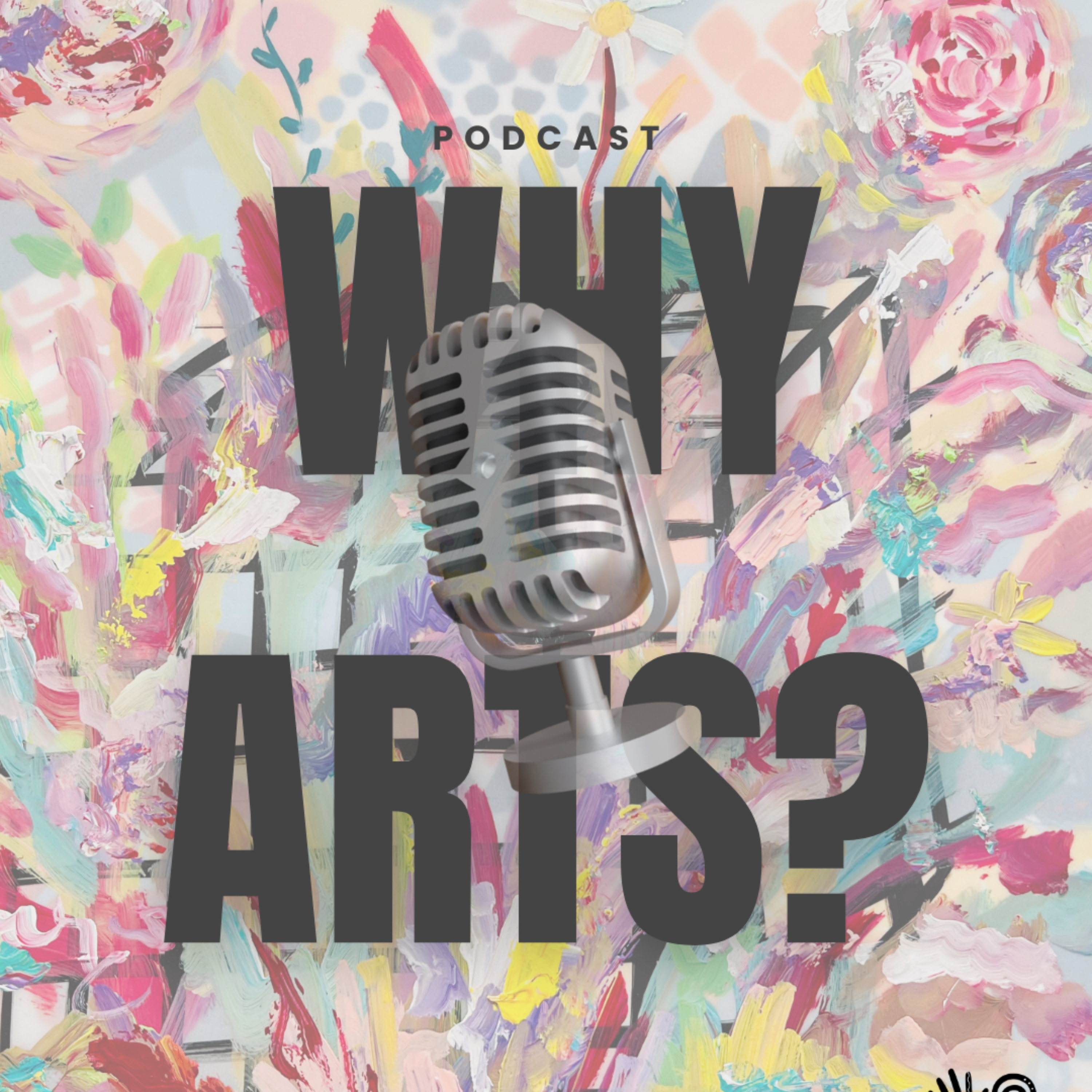
PODCAST · education
Why Arts?
by Nanvi Jhala at Emergent Inquiry Studio
Why Arts? is a video podcast series created by Nanvi Jhala—educator and designer, and a recent graduate of the Harvard Graduate School of Education. Drawing from her experience in Reggio-inspired schools, public education systems, and democratic learning spaces, Nanvi explores how the arts shape the way we learn, relate, and imagine. Through conversations with educators, artists, and thinkers, the series looks at arts beyond it's final products to the processes of creating, questioning, and making that nurture meaningful learning.
-
19
Episode 17 of Why Arts? — Materials, Waste, and Listening with Eloisa Di Rocco
In this episode, I’m in conversation with Eloisa - Remida project coordinator, Atelierista and Researcher in Reggio Childhood Studies. She has been working with the Reggio Children Foundation since 2012. In 2025, she completed her PhD in Reggio Childhood Studies.We talk about materials and our relationship with them—how materials are not just things we use, but something we listen to, respond to, and think with. We explore what it means to work with discarded materials, how waste can become a site of learning, and how the Pedagogy of Listening shapes the way we see children, materials, and the environment.Listen on YouTube and Spotify — Why Arts? by Emergent Inquiry Studio📲 Follow along on Instagram: https://www.instagram.com/whyarts_wnanvi?igsh=aHRkYWhuMHB2MWVz&utm_source=qr
-
18
Episode 16 of Why Arts? — Arts, Photography, and Early Childhood with Ron Grady
In this episode, I’m in conversation with Ron Grady—an early childhood educator, researcher, and storyteller whose work centers the voices and lived experiences of young children. Currently a PhD researcher at the Harvard Graduate School of Education and Project Zero doctoral fellow, Ron explores preschoolers’ peer cultures through art, photography, play, and conversation.Drawing from his experience in Reggio-inspired and nature-based classrooms in New Orleans—and his work as the author of Honoring the Moment in Young Children’s Lives and children’s books like What Does Brown Mean to You?—Ron shares what it truly means to listen to children and co-create learning with them.We talk about how relationships with art and photography can become powerful ways of seeing and understanding children’s thinking in early childhood. Ron shares what it means to truly honor a child’s voice—not as a concept, but as a daily practice shaped through listening, documentation, and reflection. We explore how authentic inquiry emerges when educators slow down, pay attention to children’s lived experiences, and co-create learning alongside them. Listen in for a thoughtful, grounded conversation on seeing children—and learning—differently.Explore more of Ron’s work: childology.co🎧 Listen on YouTube and Spotify — Why Arts? by Emergent Inquiry Studio📲 Follow along on Instagram: https://www.instagram.com/whyarts_wnanvi?igsh=aHRkYWhuMHB2MWVz&utm_source=qr
-
17
Episode 15 of Why Arts? — Creative-ish Thinking and Making a Mark with Peter H. Reynolds
In this episode, I’m joined by Peter H. Reynolds—an award-winning author and illustrator known for beloved books like The Dot, Ish, and The Word Collector. Through his work, Peter has inspired millions of children and educators to see themselves as creators. He is also the co-founder of FableVision and The Reynolds Center for Teaching, Learning & Creativity, where he continues to champion creativity and learning.Together, we explore what it means to create bravely—taking that first step, making a mark, and trusting the process. We talk about why this mindset is essential for lifelong learning, how mistakes are not failures but invitations for growth, and what it looks like to teach for inquiry rather than simply follow instructions.This conversation is a reminder that creativity isn’t about perfection, it’s about beginning, exploring, and allowing ourselves (and our students) the freedom to be ishful.🎧 Listen on YouTube and Spotify — Why Arts? by Emergent Inquiry Studio📲 Follow along on Instagram: https://www.instagram.com/whyarts_wnanvi?igsh=aHRkYWhuMHB2MWVz&utm_source=qr#WhyArts #ishthinking #Thedot #creativitymatters
-
16
Episode 14 of Why Arts? — Dance as Liberation, Culture, and Healing with Jean and Meghan
In Episode 14 of Why Arts?, I’m in conversation with Jean Appolon and Meghan McGrath, who are reimagining what dance can be as a space for expression, identity, and community.Jean Appolon, Co-founder and Artistic Director of Jean Appolon Expressions, is a choreographer and master teacher whose work bridges Haitian folkloric traditions and contemporary dance. Meghan McGrath, Executive Director, has led the organization’s growth, deepening its impact through arts education, cultural exchange, and community-centered work.Together, they are creating spaces where dance becomes more than movement—it becomes a language of healing, resistance, and belonging.We talk about blending Haitian folklore with modern styles, building inclusive and welcoming environments, and how dance can support both individual expression and collective liberation.🎧 Listen on YouTube and Spotify — Why Arts? by Emergent Inquiry Studio📲 Follow along on Instagram: https://www.instagram.com/whyarts_wnanvi?igsh=aHRkYWhuMHB2MWVz&utm_source=qr#WhyArts #DanceAsHealing #CulturalMovement #ArtsEducation #JeanAppolonExpressions
-
15
Episode 13 of Why Arts? – Building Participatory Environments Through Art with Coco Allred
In this conversation, I’m in conversation with Coco Allred, a visual artist and educator whose work explores the intersections of public space, aesthetics, and experimental pedagogy. From sculpture and printmaking to participatory environments, Coco creates experiences that invite people to engage, question, and learn with one another—activating space as a site for collective learning and resistance. She is a current master's student in the Art, Culture, and Technology program at MIT.Coco shares how her journey—from early creative explorations to her current work at MIT—has shaped her belief that art is not just a product, but a process of discovery, interaction, and connection. Her work centers on participation, where art becomes a way to bring people together, bridge generations, and open up meaningful dialogue.In this episode, we also explore how, for children, art becomes a natural extension of play—a space to narrate experiences, express emotions, and grow through iteration. And importantly, how art can also feel challenging. That frustration, that tension, is often where the deepest learning begins.This conversation invites us to think about:✨ How can art activate spaces for collective learning?✨ What does it mean to create with others, not just for others?✨ How can art foster connection across generations?🎧 Listen to the full episode on YouTube and Spotify.📲 Follow along on Instagram: https://www.instagram.com/whyarts_wnanvi?igsh=aHRkYWhuMHB2MWVz&utm_source=qr
-
14
Episode 12 of Why Arts? – Process-Based Arts and Loose Parts with Stacy Davidson Minicucci
In this episode, I’m in conversation with Stacy Davidson Minicucci, M.Ed., an Arts Educator at Nurtury Early Education whose work is rooted in early childhood, expressive arts, and mental health. Over more than two decades, Stacy has created art experiences that support young children’s emotional development, resilience, and self-expression.Stacy reflects on what it means to create a “yes” environment in the arts — one where children are trusted, materials are offered with openness, and the process matters more than the final product. We talk about flexibility, loose parts, and how art spaces can become places of emotional expression, relationship-building, and belonging.This conversation is a powerful reminder that the arts are not just about making — they are about connection, identity, and possibility.📲 Follow along on Instagram: https://www.instagram.com/whyarts_wnanvi?igsh=aHRkYWhuMHB2MWVz&utm_source=qr
-
13
Episode 11 of Why Arts? – Art, Learning, and Democracy with Steve Seidel
In Episode 11 of Why Arts?, I’m in conversation with Steve Seidel — educator, researcher, and the Bauman & Bryant Chair in Arts in Education, Emeritus at the Harvard Graduate School of Education. Many of us know Steve for his long-standing contributions to the field of arts education and his work with Project Zero. But in this conversation, he takes us on a more personal journey — reflecting on his own schooling, his years as a theater teacher and actor, and the path that eventually led him into education and research.Before becoming a researcher, Steve spent nearly two decades teaching high-school theater and language arts and working as a professional actor and stage director. Over more than 35 years at Project Zero, his work has explored arts learning, reflective practice, and the close study of student work. He also led the influential research project that resulted in The Qualities of Quality, examining what excellence in arts learning and teaching really looks like.In our conversation, we talk about the role of the arts in shaping how we learn and teach, and how artistic practice can help build more thoughtful and democratic classrooms.One idea Steve shared that stayed with me:Imagine walking through a forest—every discipline is there together. But over time education has separated knowledge into isolated subjects. In reality, like a forest, everything exists in relationship. Those of us who care about integration are trying to bring learning back to that interconnected whole.🎧 Listen to the full episode on YouTube and Spotify.📲 Follow along on Instagram: https://www.instagram.com/whyarts_wnanvi?igsh=aHRkYWhuMHB2MWVz&utm_source=qr
-
12
Episode 10 of Why Arts? – Museum Education & Object based learning with Sarah Lieberman
In Episode 10 of Why Arts?, I’m in conversation with Sarah Lieberman — museum educator, thoughtful listener, and someone who deeply believes that art belongs to everyone.As a child, Sarah made outfits for her dolls out of napkins and scraps — experimenting, imagining, redesigning. That early instinct to transform everyday materials into something meaningful never really left her.Today, Sarah is the Assistant Educator for School and Teacher Programs at the RISD Museum, where she designs object-based learning experiences for K–12 students in Providence. Before this, she was a Cunningham Fellow at the Harvard Art Museums, teaching interdisciplinary university courses, mentoring graduate students, and building family and teen programs.In our conversation, we talk about:• What object-based learning really looks like in practice• How museums can become spaces of dialogue rather than quiet compliance• Why there isn’t one “right” interpretation of an artwork• How confidence grows when students realize their voice mattersMuseums should feel welcoming. Families should feel invited. Students should feel trusted.🎧 Listen on YouTube and Spotify — Why Arts? by Emergent Inquiry Studio📲 Follow along on Instagram: https://www.instagram.com/whyarts_wnanvi?igsh=aHRkYWhuMHB2MWVz&utm_source=qr#WhyArts #MuseumEducation #RISDMuseum #ArtForAll #ObjectBasedLearning #CreativeLearning
-
11
Episode 9 of Why Arts? – Community Building with Creativity with Exa Kutler
In this episode, Exa Kutler shares their journey exploring creativity, community, and hands-on learning.Exa’s work often involves designing simple structures for people to think, make, and learn together — whether through drawing, conversation, or shared experience. They are interested in how creativity functions as a practical tool for connection, reflection, and collective understanding. Exa loves facilitating, graphic notetaking, designing workshops, and making art. From leading community workshops with Creative Mornings and creating spaces where curiosity, imagination, and mistakes are embraced, Exa reflects on their experience in T550, which gave them a language for their thinking and allowed them to explore ideas they already felt.They recall:"I just love playing. My happiest place is facilitating experiences and creating a journey for participants. With Karen, we had weekly topics and theorists, and we’d blend them with hands-on activities. One week was about fear and mistakes — I found a bucket of ‘mistake’ keys in a key store, and we made them into meaningful things. That’s my favorite part — pulling from everything around you and turning it into an activity."Exa also shares their approach to experimentation and community-building:"Not being afraid to break the norm, or to try something that might not work. You just never know. We’d make placemats about the zone of proximal development, bookmarks — all kinds of experiments. That’s how I approach creativity and community — seeing what might work, without promising anything."Through these experiences, Exa demonstrates that creativity isn’t just a skill — it’s essential for learning, connecting, and understanding the world.🎧 Listen on YouTube and Spotify — Why Arts? by Emergent Inquiry Studio📲 Follow along on Instagram: https://www.instagram.com/whyarts_wnanvi?igsh=aHRkYWhuMHB2MWVz&utm_source=qr#WhyArtsPodcast #CreativityMatters #ArtInEducation #HumanConnection #LearningThroughArts #CommunityBuilding
-
10
Episode 8 of Why Arts? - Arts Leadership with Rosario Ubiera-Minaya
In this episode with Rosario Ubiera-Minaya — Executive Director of Raw Art Works, cultural strategist, and antiracist advocate — we explore how arts can become a force for healing, leadership, and systemic change.We talk about how creativity can become a tool for healing, leadership, and social change through the work and journey of Rosario Ubiera-Minaya, and how her leadership at Raw Art Works shows that art is not an extra but essential infrastructure for young people’s growth and wellbeing. We explore how arts spaces nurture identity, belonging, and confidence. 🎧 Listen on YouTube and Spotify - Why Arts? by Emergent Inquiry Studio📲 Follow along on Instagram: https://www.instagram.com/whyarts_wnanvi?igsh=aHRkYWhuMHB2MWVz&utm_source=qr
-
9
Episode 7 of Why Arts? - Dance education with Jessica Baynes
In this episode, I’m joined by Jessica Baynes, a dance educator, choreographer, and performer whose work spans classrooms, stages, and communities. A TEDx speaker and Harvard Graduate School of Education alum, Jessica brings over a decade of teaching experience with learners of all ages—from toddlers to older adults—and a deep belief in the transformative power of movement.We talk about how dance education nurtures connection, empathy, and self-expression. From her work teaching adaptive ballet through Healing in Motion Dance to her experiences at Ballet West and Trinity Laban Conservatoire of Music & Dance, Jessica reflects on how movement can help us access parts of ourselves, build communities, and imagine new possibilities.This conversation explores the joy, vulnerability, and curiosity at the heart of dance, and how the arts support learners in growing not just as artists, but as humans.🎧 Listen on YouTube and Spotify - Why Arts? by Emergent Inquiry Studio📲 Follow along on Instagram: https://www.instagram.com/whyarts_wnanvi?igsh=aHRkYWhuMHB2MWVz&utm_source=qr
-
8
Episode 6 of Why Arts? - Arts Leadership and community building with Rasheen Jamison-Richardson
In this episode, I’m joined by Rasheen Jamison-Richardson, founder of Legacy School of Performing Arts Training Institute, Inc. and alum of Harvard Graduate School of Education, to explore what it really means to build through adversity.We talk about how arts access builds confidence, identity, and even life-saving awareness in young people. Rasheen shares how integrating the arts strengthens math, literacy, and character development—and why removing arts programs destabilizes entire communities.This episode is about resilience, redemption, and why the arts are essential—not extra.🎧 Listen on YouTube and Spotify - Why Arts? by Emergent Inquiry Studio📲 Follow along on Instagram: https://www.instagram.com/whyarts_wnanvi?igsh=aHRkYWhuMHB2MWVz&utm_source=qr
-
7
Episode 5 of Why Arts? - Theatre Education with Rick Westerkamp
In this episode, I’m joined by Rick Westerkamp, an educator and theater artist I had the joy of graduating alongside at Harvard Graduate School of Education. I was constantly inspired by Rick’s care, clarity, and deep commitment to arts-centered learning—so this conversation feels especially meaningful.Rick brings experience from classrooms, leadership roles, and professional stages. From his work as a drama teacher and dean, to his time at HGSE and the American Repertory Theatre, Rick reflects on how theater education nurtures empathy, collaboration, and resilience, and why joy and connection are essential for learning.We talk about creating brave spaces where students can take creative risks, embrace mistakes, and show up as their full selves—and how the arts help young people grow not just academically, but as thoughtful, compassionate humans.🎧 Why Arts?Find Emergent Inquiry Studio on YouTube and Spotify.📲 Follow along on Instagram: https://www.instagram.com/whyarts_wnanvi?igsh=aHRkYWhuMHB2MWVz&utm_source=qr
-
6
Episode 4: Why Arts? - Museum Education with Nicola Wallis
In episode 4 of Why Arts?, I’m joined by Nicola Wallis, who spent 19 years as a Practitioner Research Associate in Early Childhood and Collections at the Fitzwilliam Museum in Cambridge and has recently transitioned into her new role as Early Years Program Manager at the National Portrait Gallery, London.With a background in primary and nursery education, Nicola specialises in understanding how museums and art galleries can support babies, young children, and the adults who care for them. Her work focuses on creating meaningful, inclusive arts experiences—particularly for families facing barriers to participation—and on the role of cultural institutions in advancing access, inclusion, and social justice.We talk about museums as informal learning spaces that foster inclusion, dialogue, and community, particularly for families who face barriers to accessing arts and cultural institutions. Nicola reflects on research-informed models for working with families, emphasizing learning with children rather than for them, and how museums can act as civic spaces that support care, belonging, and multiple perspectives.🎧 Why Arts? Find Emergent Inquiry Studio on YouTube and Spotify.📲 Follow along on Instagram: https://www.instagram.com/whyarts_wnanvi?igsh=aHRkYWhuMHB2MWVz&utm_source=qr#WhyArtsPodcast #EarlyChildhood #MuseumLearning #ArtAndImagination #FamilyEngagement #InclusiveEducation #CulturalLearning #SocialJusticeThroughArts
-
5
Episode 3: Why Arts? - STEAM and the Power of Tinkering with Ryan Jenkins
In the third episode of Why Arts?, I’m joined by Ryan Jenkins—co-founder of Wonderful Idea Co. and a longtime educator, tinkerer, and designer working at the intersection of art, science, and making.Ryan’s work grows out of years spent at places like the Exploratorium and Tinkering 0School in San Francisco, where curiosity, experimentation, and hands-on learning are at the center. He has designed and prototyped projects for Maker Faires, science museums, schools, and libraries around the world, creating playful entry points into STEAM learning for learners of all ages.In this conversation, we talk about Ryan’s own journey—from feeling intimidated by science to finding joy and confidence through making—and how art can open up new ways into science and technology. We explore tinkering as a way of thinking, why hands-on learning matters, and how setting thoughtful constraints can actually deepen creativity and innovation.Why Arts? is a podcast that looks at the arts not as a separate subject, but as a way of thinking—one that helps people explore ideas, take risks, and make meaning across disciplines.Image credits: Emil Steixner, Sebastian Funk and Oak School🎧 Listen on YouTube and Spotify📲 Follow along on Instagram: https://www.instagram.com/whyarts_wnanvi?igsh=aHRkYWhuMHB2MWVz&utm_source=qr
-
4
Episode 2: Why Arts? - Arts as a way to build democratic learning spaces
In the second episode of Why Arts?, I’m joined by Linda Nathan—educator, author, artist, and Lecturer at the Harvard Graduate School of Education. Linda’s work centers on designing democratic schools, organizational change, and learning environments that place equity, creativity, and relationships at the core. She brings decades of experience founding and leading schools within the Boston Public Schools, including the Tobin Bilingual Middle School for the Arts, Fenway High School, and Boston Arts Academy.In this conversation, we talk about what it really means to build arts-centered and democratic learning spaces, how leadership and school design shape culture, and why creativity and the arts are essential to meaningful, just education. Why Arts? is a podcast that explores why the arts matter—not just as products, but as processes that shape learning, community, and imagination.🎧 Listen on YouTube and Spotify 📲 Follow along on Instagram: https://www.instagram.com/whyarts_wnanvi?igsh=aHRkYWhuMHB2MWVz&utm_source=qr
-
3
Episode 1: Why Arts? — Arts as Relationship, Play, and Learning with Lisa Goddard
In the first episode of Why Arts?, I’m joined by Lisa Goddard, a PhD Fellow in Reggio Childhood Studies at the University of Modena and Reggio Emilia / Fondazione Reggio Children.Lisa’s work explores children’s play and pedagogical approaches that support deeper relationships between humans and more-than-human worlds. She brings experience as a preschool teacher, pedagogista, curriculum developer, and educational consultant across Italy and the U.S.In this conversation, we explore what arts integration really looks like in Reggio-inspired learning, how art-making supports relationships and inquiry, and how children learn when we pay close attention to play, materials, and environment.Why Arts? is a podcast series that explores why the arts matter—not just as products, but as processes that shape learning, community, and imagination.Listen to the podcast on Youtube and Spotify. 📲 Follow along on Instagram: https://www.instagram.com/whyarts_wnanvi?igsh=aHRkYWhuMHB2MWVz&utm_source=qr
-
2
Episode 0: Why Arts Podcast hosted by Nanvi Jhala
A child who rarely spoke found their voice through clay.That moment didn’t show up in test scores—but it changed everything.Why Arts? grew from moments like these. Not just visual arts—and not just art as a subject—but the arts as process, inquiry, relationship, and meaning-making.This podcast explores the arts not as an “extra,” but as a way of thinking, relating, and learning—across classrooms, studios, and community spaces.Hosted by Nanvi Jhala, educator, artist and designer (Harvard Graduate School of Education ’25). Why Arts? features conversations with educators, artists, dancers, theatre-makers, designers, and leaders who use artistic processes to explore ideas, teach across disciplines, and create belonging.If you care about process over product, listening over rushing, and learning that honors the whole human—this is for you.📲 Follow along on Instagram: https://www.instagram.com/whyarts_wnanvi?igsh=aHRkYWhuMHB2MWVz&utm_source=qr
We're indexing this podcast's transcripts for the first time — this can take a minute or two. We'll show results as soon as they're ready.
No matches for "" in this podcast's transcripts.
No topics indexed yet for this podcast.
Loading reviews...
ABOUT THIS SHOW
Why Arts? is a video podcast series created by Nanvi Jhala—educator and designer, and a recent graduate of the Harvard Graduate School of Education. Drawing from her experience in Reggio-inspired schools, public education systems, and democratic learning spaces, Nanvi explores how the arts shape the way we learn, relate, and imagine. Through conversations with educators, artists, and thinkers, the series looks at arts beyond it's final products to the processes of creating, questioning, and making that nurture meaningful learning.
HOSTED BY
Nanvi Jhala at Emergent Inquiry Studio
CATEGORIES
Loading similar podcasts...
URL copied to clipboard!