
PODCAST · society
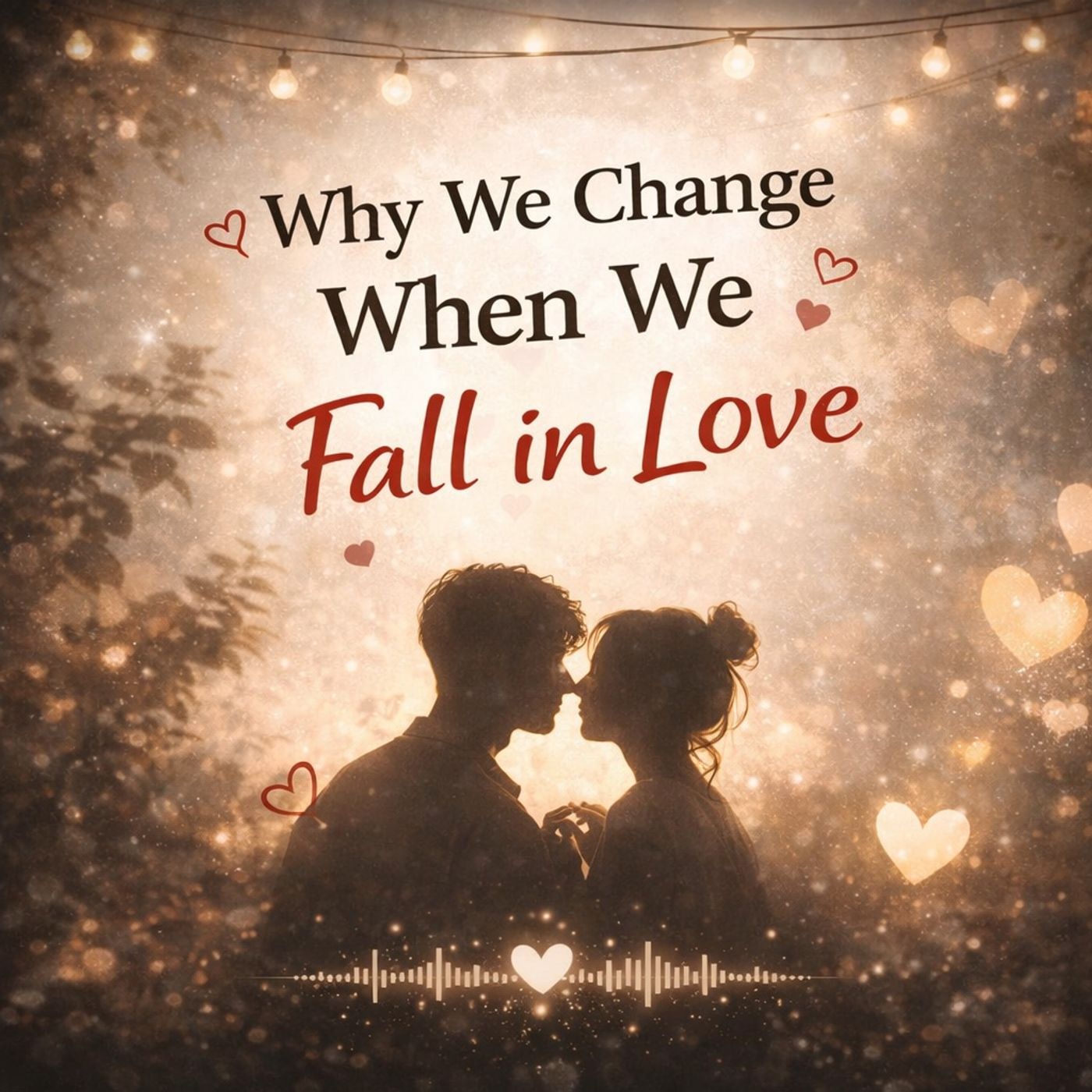
Why We Change When We Fall in Love
by Canar Rahsia
Why We Change When We Fall in Love explores the psychology, biology, and emotional complexity of romantic love. From attraction and attachment to overthinking, obsession, fear, and heartbreak, this podcast dives into the many ways love can reshape how we think, feel, and behave. Honest, reflective, and deeply human, it is a space for anyone who has ever loved, longed, or lost.
-
16
Why Merging Identities Ruins the Romance
In this episode, we explore why romance can suffer when two people begin to lose their separate identities in love. We look at how over-merging, emotional dependence, and the loss of personal boundaries can turn closeness into pressure, and why healthy love needs connection without self-erasure.This episode includes AI-generated content.
-
15
How to Love Someone with Attachment Wounds
In this episode, we explore what it means to love someone who carries attachment wounds. We look at how fear, withdrawal, hypervigilance, and emotional inconsistency can shape the way wounded people give and receive love, and what it takes to offer care without abandoning yourself in the process.This episode includes AI-generated content.
-
14
Why Healthy Love Triggers Survival Mode
In this episode, we explore why healthy love can trigger survival mode instead of comfort. We look at how attachment wounds, nervous system conditioning, hypervigilance, and old emotional patterns can make genuine care feel unfamiliar, overwhelming, or hard to trust. Sometimes the love we need most is the love that feels hardest to receive.This episode includes AI-generated content.
-
13
Rewiring Your Survival Brain for Love
In this episode, we explore how old survival patterns shape the way we love, fear, and protect ourselves in relationships. We look at how the brain and nervous system can be rewired through emotional safety, secure connection, and repeated healing experiences, so love no longer feels like something we have to survive.This episode includes AI-generated content.
-
12
Why your nervous system sabotages love
In this episode, we explore why the nervous system can sabotage love, especially when a relationship feels safe, stable, and emotionally real. We look at how attachment wounds, fear of safety, emotional conditioning, and survival responses can make healthy love feel threatening, unfamiliar, or hard to trust.This episode includes AI-generated content.
-
11
Why Healthy Love Feels Boring
In this episode, we explore why healthy love can sometimes feel boring, unfamiliar, or emotionally flat. We look at how attachment wounds, nervous system conditioning, and a history of emotional chaos can make stability feel less exciting than unpredictability, even when it is safer and more genuine.This episode includes AI-generated content.
-
10
Why Your Brain Craves Familiar Pain
In this episode, we explore why the brain is often drawn to familiar pain in love. We look at how attachment wounds, emotional memory, unmet needs, and survival patterns can make unhealthy relationships feel strangely comforting, even when they hurt us. Sometimes what keeps pulling us back is not love, but familiarity.This episode includes AI-generated content.
-
9
Why Your Brain Picks the Wrong Partners
In this episode, we explore why the brain can be drawn to the wrong partners again and again. We look at how attachment wounds, emotional familiarity, unmet needs, and reward-based patterns can make unhealthy relationships feel strangely compelling, even when they lead to pain.This episode includes AI-generated content.
-
8
When Anxiety Feels Like Love
In this episode, we explore why anxiety can feel like chemistry in love. We look at how insecurity, attachment wounds, uncertainty, and emotional intensity can make a relationship feel exciting, magnetic, and deeply meaningful, even when it is driven more by fear than by genuine emotional safety.This episode includes AI-generated content.
-
7
Why Your Brain Treats Intimacy as Danger
In this episode, we explore why intimacy can feel dangerous to the brain, especially for people with avoidant attachment patterns. We look at how emotional closeness can trigger fear, withdrawal, and self-protection, and why some people pull away not because they do not care, but because vulnerability feels unsafe to their nervous system.This episode includes AI-generated content.
-
6
Why We Mistake Chaos for Chemistry
In this episode, we explore why emotional chaos can feel like chemistry in love. We look at how inconsistency, anxiety, and intense highs and lows can create the illusion of deep connection, even when a relationship is unhealthy. From attachment patterns to emotional dependence, this episode uncovers why what feels powerful is not always what is safe.This episode includes AI-generated content.
-
5
Why Losing Love Feels Like Withdrawal
In this episode, we explore why love can feel addictive and why losing someone we love can feel like withdrawal. We look at how the brain’s reward system, emotional bonding, and attachment make romantic love feel powerful, urgent, and deeply painful when it is threatened or lost.This episode includes AI-generated content.
-
4
Why We Get Attached So Easily
In this episode, we explore why people can become emotionally attached so quickly in romantic relationships. We look at how bonding forms in the brain, how attachment styles shape emotional connection, and why uncertainty can make love feel even more intense. From chemistry to emotional dependence, this episode uncovers why letting someone in can happen faster than we expect.This episode includes AI-generated content.
-
3
Why Uncertainty Turns Love into Panic
In this episode, we explore how uncertainty in love can trigger fear, overthinking, and emotional panic. When feelings are unclear, replies are delayed, or intentions feel uncertain, love can quickly turn into anxiety. We talk about limerence, attachment, and the psychological patterns that make uncertainty feel so overwhelming in romantic relationships.This episode includes AI-generated content.
-
2
The Three Biological Stages of Love
In this episode, we explore the three biological stages of love: lust, attraction, and attachment. We look at how these stages shape the way people think, feel, and behave in romantic relationships. From intense desire to deep emotional bonding, this episode uncovers the science behind how love begins, grows, and stays.This episode includes AI-generated content.
-
1
What Love Does to the Brain
Love can change the way we think, feel, and behave in ways we do not always understand. In this first episode, we explore how love can take over the mind, influence emotions, and make people act differently when they fall in love. From emotional shifts to unexpected habits, this episode dives into the beautiful and confusing side of love.This episode includes AI-generated content.
No matches for "" in this podcast's transcripts.
No topics indexed yet for this podcast.
Loading reviews...
ABOUT THIS SHOW
Why We Change When We Fall in Love explores the psychology, biology, and emotional complexity of romantic love. From attraction and attachment to overthinking, obsession, fear, and heartbreak, this podcast dives into the many ways love can reshape how we think, feel, and behave. Honest, reflective, and deeply human, it is a space for anyone who has ever loved, longed, or lost.
HOSTED BY
Canar Rahsia
Loading similar podcasts...
URL copied to clipboard!