
PODCAST · science
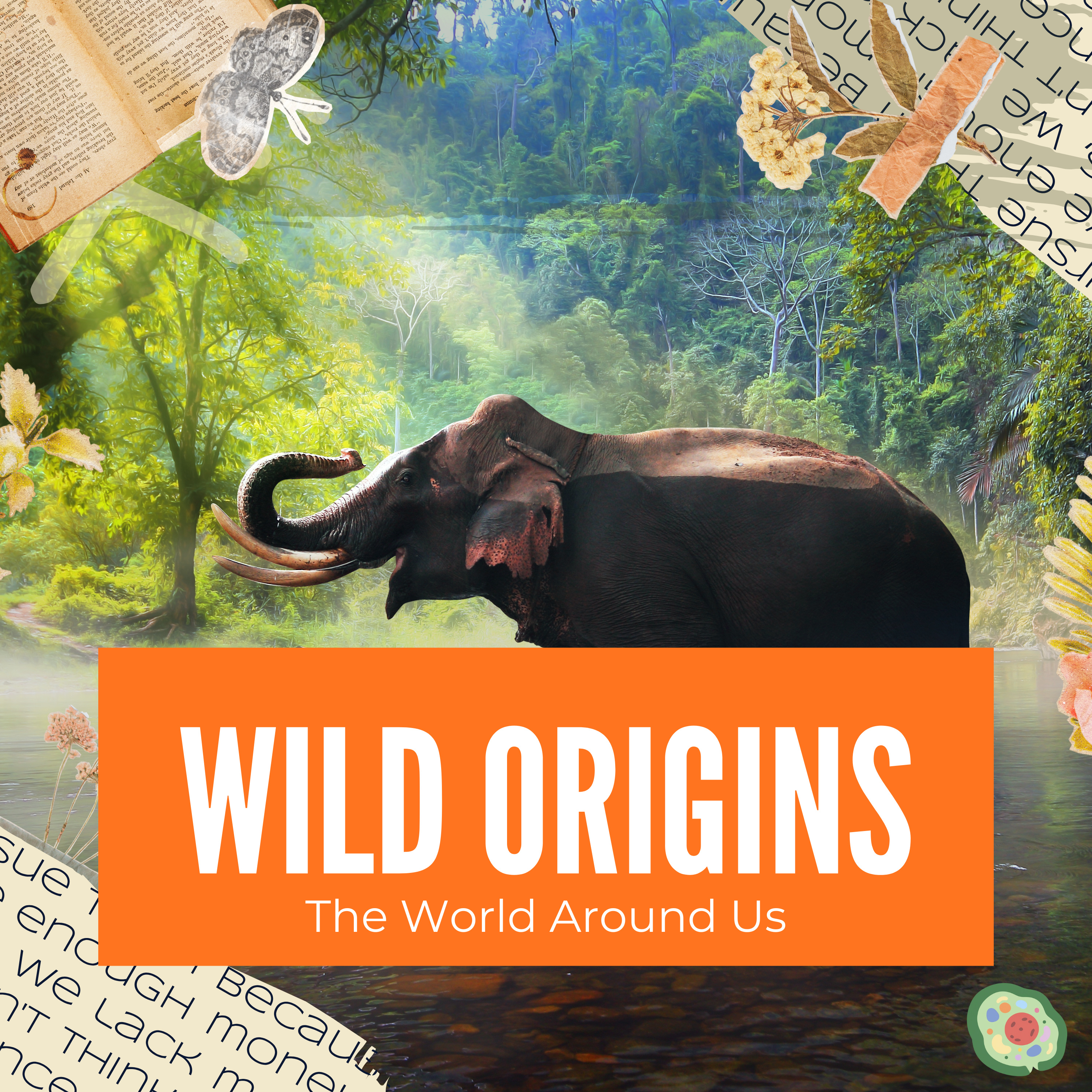
Wild Origins
by The Turing App
Welcome to Wild Origins - a podcast about how life got weird, and how that weirdness made the world we live in.Each episode follows a discovery in nature. We’ll trace the dawn of humankind, the rise and fall of dinosaurs, the secret lives of birds, and the strange rules that shape plants and animals today. We’ll visit ship graveyards, ancient caves, and ecosystems under pressure, meeting creatures that shouldn’t exist but do.
-
10
The Secret Lives of Birds - Part 1
The term "bird brain" entered the English lexicon in the 1920s as an insult, reflecting a long-held assumption that avian intellect was limited to simple, programmed instinct. This view was personified by the dodo, whose lack of fear toward sailors and subsequent extinction became a parable for stupidity and biological failure. However, modern discoveries are dismantling this perception, revealing that avian minds are startlingly sophisticated and mirror the mental capacities of our closest primate relatives. For example, New Caledonian crows are master toolmakers that meticulously fashion hooked twigs and serrated leaves to extract beetle larvae, a behavior that requires forethought, planning, and a mental template of the finished tool.To measure this intelligence, biologist Louis Lefebvre developed the "Avian IQ Index," which uses the frequency of behavioral innovations—such as Japanese crows using cars to crack walnuts—as a proxy for cognitive flexibility. His research found a strong positive correlation between a species' innovation score and the relative size of its forebrain, with corvids and parrots consistently ranking at the top. While avian brains lack the layered neocortex found in mammals, they possess a region called the nidopallium caudolaterale that functions analogously to the primate prefrontal cortex. This area supports working memory and even analogical reasoning, proving that nature has forged complex cognition through entirely different evolutionary paths.
-
9
How Did Animals Start Making Sounds?
For billions of years, Earth’s soundtrack consisted only of elemental forces like wind, rain, and crashing waves. The transition to our modern chorus is a story written in the fossil record, where scientists use preserved sound-producing and sound-detecting structures to breathe life into vanished worlds. While life first appeared 3.7 billion years ago, the silence was only broken during the Cambrian period (541–485 million years ago) by the incidental noises of skittering arthropods and crushing shells.Vertebrate vocalization likely has a single common origin dating back 407 million years. While the roars of predatory dinosaurs in films are often inaccurate, research suggests they may have used closed-mouth vocalizations—similar to modern birds—producing terrifying, bass-baritone war trumpets. Some species, like the Parasaurolophus, utilized massive hollow crests as resonating chambers for deep, honking calls. Conversely, long-necked sauropods were likely nearly voiceless because their extreme neck length caused a neuroanatomical delay in neural signals that made rapid muscle control impossible.
-
8
When Did Nature Develop Colors
The natural world is a vibrant tapestry of communication, but for over a century, biologists have wrestled with a "chicken-and-egg" conundrum: did brilliant colors first appear as evolutionary billboards, or did eyes capable of reading those billboards evolve first?While we often perceive color through the lenses of art or beauty, in nature, it is a high-stakes evolutionary gamble; a crimson berry that seduces a seed-dispersing bird also flags down every hungry herbivore in the canopy. This fundamental communication has been unfolding for hundreds of millions of years, yet the order of its development has only recently been clarified by modern science.Recent research has flipped the intuitive script on its head. A 2025 study by Zachary Emberts and John Wiens, analyzing 500 million years of fossil and genetic data, concluded that basic color vision appeared at least 100 million years before most colorful signals. True color vision—defined as having at least three independent photoreceptor channels—arose in early arthropods and stem vertebrates roughly 450 million years ago. Early animals likely developed this capability to navigate complex underwater environments and improve hunting efficiency long before nature began painting vivid hues onto skins, petals, and shells.
-
7
Meet LUCA: Ancestor to Every Living Entity
The search for our earliest origins leads to LUCA, the Last Universal Common Ancestor—the point in history where all modern life, from oak trees to bacteria, converges into a single family line. While long dismissed as a primitive microbe, recent genetic analyses, including a 2024 study by evolutionary biologist Edmund Moody, suggest LUCA was surprisingly sophisticated, possessing a genome of roughly 2,600 genes. This robust ancestor already wielded a fundamental DNA-to-protein system and even a CRISPR-like immune apparatus to defend against ancient viruses, implying that life raced toward complexity much faster than previously assumed.LUCA likely thrived as an acetogen, fueling itself on a diet of hydrogen (H₂) and carbon dioxide (CO₂). Using the efficient Wood–Ljungdahl metabolic pathway, it harnessed raw geochemistry from volcanic vents or the Earth's crust to build cellular components. This level of early biochemical mastery suggests that life is highly adaptable, raising the possibility that similar microbes could flourish in the hydrothermal vents of icy moons like Europa or Enceladus. Whether LUCA preferred scalding temperatures or milder waters remains a subject of intense scientific debate, but its resilient genetic legacy remains inscribed in every living cell on Earth today.
-
6
Dawn of Mankind - The End of Wandering
For millions of years, human survival was dictated by movement as small bands of hunter-gatherers followed herds and seasonal cycles. Around 12,000 years ago, at the end of the last Ice Age, this nomadic existence faced a monumental shift in the Fertile Crescent. The Natufians began harvesting and storing wild cereals like barley and wheat, transitioning from chasing food to making it come to them. This "Great Experiment" was a slow, painful evolution involving the selection of the most nourishing grains, effectively shaping plant evolution and birthing domesticated crops.This partnership with nature extended to animals, with goats and sheep becoming the first essential partners for milk, wool, and meat roughly 10,000 years ago. As farming anchored people to the land, the first permanent villages like Jericho and Çatalhöyük emerged, leading to the first signs of property ownership and labor specialization. Surplus food allowed some individuals to become toolmakers or traders, creating the first trade routes and economic concepts. Ultimately, these settled communities required organized leadership and record-keeping, leading to the rise of governance, spiritual centers like Göbekli Tepe, and the birth of structured writing systems like Sumerian cuneiform.
-
5
Dawn of Mankind -The First Words
The transition from primal instinct to complex civilization was fueled by a linguistic revolution that lifted humanity above the realm of beasts. Unlike our primate relatives, humans evolved unique anatomical traits, such as a precision-capable tongue and a specifically positioned larynx, which granted us the invaluable ability to shape sound into meaning. Once speech took hold, it transformed language into a powerful tool for thought and collective memory. While spoken words allowed for immediate coordination in hunting and tool-making, symbols like 75,000-year-old shell beads and intricate cave paintings allowed ideas to transcend time. These enduring images acted as a form of proto-writing, enabling our ancestors to craft collaborative myths and spiritual beliefs that fostered cooperation beyond immediate family bonds. By imbuing the world with symbolic meaning, humanity established the foundations of culture and organized society
-
4
Dawn of Mankind - The First Tools
For millions of years, human ancestors lived as prey, huddled in caves and defenseless against the world's giants. This trajectory shifted through three monumental leaps: the mastery of tools and fire, the birth of symbols and language, and the adoption of agriculture. These breakthroughs transformed humanity from simple mammals into the architects of civilization, allowing us to manipulate nature, share complex ideas, and eventually break free from the endless chase for food.The first great breakthrough was the systematic refinement of tools, beginning nearly 2.6 million years ago with Homo habilis and the Oldowan industry. While other species use rudimentary tools, humans alone evolved a technological continuum, using deliberate thought to shape external objects like symmetrical hand axes. This ingenuity was further ignited by the mastery of fire, which moved from a feared force of nature to a cultivated instrument of survival roughly a million years ago. Fire did more than provide warmth; it altered human biology by allowing for cooked food—fueling brain growth—and created the first true social gathering places where rituals, traditions, and the first sparks of language began to form.
-
3
Can AI Help Us Understand Animals
What if animals have been speaking all along... and we just weren’t listening the right way?For centuries, we’ve watched, recorded, and guessed. We’ve long dreamed of understanding what animals are saying. But the breakthrough never came.Until now.
We're indexing this podcast's transcripts for the first time — this can take a minute or two. We'll show results as soon as they're ready.
No matches for "" in this podcast's transcripts.
No topics indexed yet for this podcast.
Loading reviews...
ABOUT THIS SHOW
Welcome to Wild Origins - a podcast about how life got weird, and how that weirdness made the world we live in.Each episode follows a discovery in nature. We’ll trace the dawn of humankind, the rise and fall of dinosaurs, the secret lives of birds, and the strange rules that shape plants and animals today. We’ll visit ship graveyards, ancient caves, and ecosystems under pressure, meeting creatures that shouldn’t exist but do.
HOSTED BY
The Turing App
Loading similar podcasts...
Frequently Asked Questions
How many episodes does Wild Origins have?
Wild Origins currently has 8 episodes available on PodParley. New episodes are automatically indexed when they're published to the podcast feed.
What is Wild Origins about?
Welcome to Wild Origins - a podcast about how life got weird, and how that weirdness made the world we live in.Each episode follows a discovery in nature. We’ll trace the dawn of humankind, the rise and fall of dinosaurs, the secret lives of birds, and the strange rules that shape plants and...
How often does Wild Origins release new episodes?
Wild Origins has 8 episodes. Check the episode list to see recent publication dates and frequency.
Where can I listen to Wild Origins?
You can listen to Wild Origins on PodParley by clicking any episode. We provide an embedded audio player for direct listening, and you can also subscribe via your preferred podcast app using the RSS feed.
Who hosts Wild Origins?
Wild Origins is created and hosted by The Turing App.
URL copied to clipboard!