
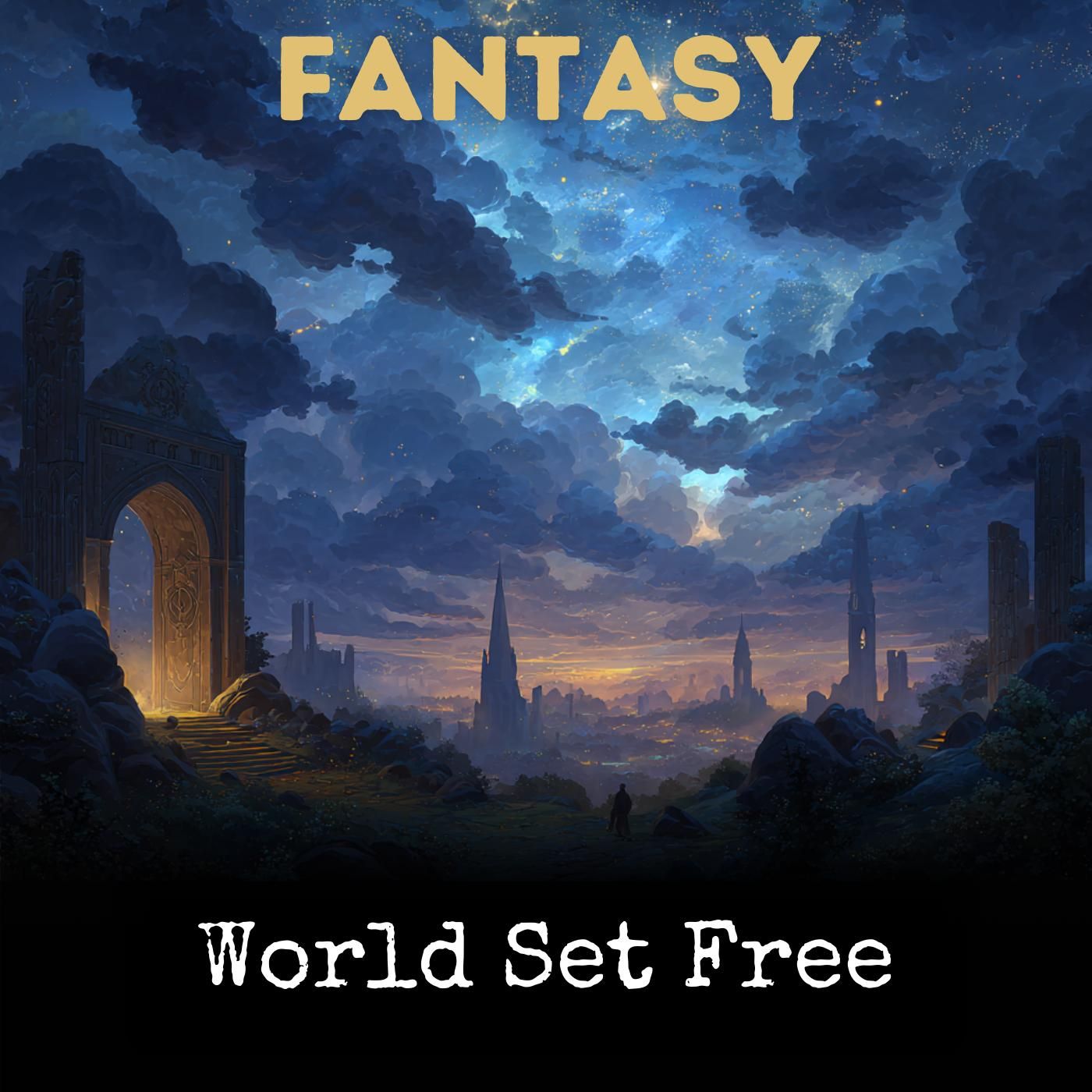
PODCAST · fiction
World Set Free
by H. G. Wells
In H.G. Wells thought-provoking novel The World Set Free, originally published in 1914, the concept of radioactive decay takes center stage. Wells daringly imagines a world where the decay process could be accelerated, prompting scientists to delve into the theories of nuclear chain reactions. This groundbreaking work not only serves as a catalyst for scientific inquiry but also provides a platform for Wells to explore profound questions about humanitys survival. (Summary by Bill Boerst)
-
11
011 - Ch Fifth Sec 5-10
In H.G. Wells thought-provoking novel The World Set Free, originally published in 1914, the concept of radioactive decay takes center stage. Wells daringly imagines a world where the decay process could be accelerated, prompting scientists to delve into the theories of nuclear chain reactions. This groundbreaking work not only serves as a catalyst for scientific inquiry but also provides a platform for Wells to explore profound questions about humanitys survival. (Summary by Bill Boerst)
-
10
010 - Ch Fourth Sec 12 Ch Fifth Sec 1-4
In H.G. Wells thought-provoking novel The World Set Free, originally published in 1914, the concept of radioactive decay takes center stage. Wells daringly imagines a world where the decay process could be accelerated, prompting scientists to delve into the theories of nuclear chain reactions. This groundbreaking work not only serves as a catalyst for scientific inquiry but also provides a platform for Wells to explore profound questions about humanitys survival. (Summary by Bill Boerst)
-
9
009 - Ch Fourth Sec 7-11
In H.G. Wells thought-provoking novel The World Set Free, originally published in 1914, the concept of radioactive decay takes center stage. Wells daringly imagines a world where the decay process could be accelerated, prompting scientists to delve into the theories of nuclear chain reactions. This groundbreaking work not only serves as a catalyst for scientific inquiry but also provides a platform for Wells to explore profound questions about humanitys survival. (Summary by Bill Boerst)
-
8
008 - Ch Third Sec 8 Ch Fourth Sec 1-6
In H.G. Wells thought-provoking novel The World Set Free, originally published in 1914, the concept of radioactive decay takes center stage. Wells daringly imagines a world where the decay process could be accelerated, prompting scientists to delve into the theories of nuclear chain reactions. This groundbreaking work not only serves as a catalyst for scientific inquiry but also provides a platform for Wells to explore profound questions about humanitys survival. (Summary by Bill Boerst)
-
7
007 - Ch Third Sec 3-7
In H.G. Wells thought-provoking novel The World Set Free, originally published in 1914, the concept of radioactive decay takes center stage. Wells daringly imagines a world where the decay process could be accelerated, prompting scientists to delve into the theories of nuclear chain reactions. This groundbreaking work not only serves as a catalyst for scientific inquiry but also provides a platform for Wells to explore profound questions about humanitys survival. (Summary by Bill Boerst)
-
6
006 - Ch Second Sec 9 10 Ch Third Sec 1 2
In H.G. Wells thought-provoking novel The World Set Free, originally published in 1914, the concept of radioactive decay takes center stage. Wells daringly imagines a world where the decay process could be accelerated, prompting scientists to delve into the theories of nuclear chain reactions. This groundbreaking work not only serves as a catalyst for scientific inquiry but also provides a platform for Wells to explore profound questions about humanitys survival. (Summary by Bill Boerst)
-
5
005 - Ch Second Sec 4-8
In H.G. Wells thought-provoking novel The World Set Free, originally published in 1914, the concept of radioactive decay takes center stage. Wells daringly imagines a world where the decay process could be accelerated, prompting scientists to delve into the theories of nuclear chain reactions. This groundbreaking work not only serves as a catalyst for scientific inquiry but also provides a platform for Wells to explore profound questions about humanitys survival. (Summary by Bill Boerst)
-
4
004 - Ch Second Sec 1-3
In H.G. Wells thought-provoking novel The World Set Free, originally published in 1914, the concept of radioactive decay takes center stage. Wells daringly imagines a world where the decay process could be accelerated, prompting scientists to delve into the theories of nuclear chain reactions. This groundbreaking work not only serves as a catalyst for scientific inquiry but also provides a platform for Wells to explore profound questions about humanitys survival. (Summary by Bill Boerst)
-
3
003 - Ch First Sec 4-8
In H.G. Wells thought-provoking novel The World Set Free, originally published in 1914, the concept of radioactive decay takes center stage. Wells daringly imagines a world where the decay process could be accelerated, prompting scientists to delve into the theories of nuclear chain reactions. This groundbreaking work not only serves as a catalyst for scientific inquiry but also provides a platform for Wells to explore profound questions about humanitys survival. (Summary by Bill Boerst)
-
2
002 - Prelude Sec 7 8 Ch First Sec 1-3
In H.G. Wells thought-provoking novel The World Set Free, originally published in 1914, the concept of radioactive decay takes center stage. Wells daringly imagines a world where the decay process could be accelerated, prompting scientists to delve into the theories of nuclear chain reactions. This groundbreaking work not only serves as a catalyst for scientific inquiry but also provides a platform for Wells to explore profound questions about humanitys survival. (Summary by Bill Boerst)
-
1
001 - Preface Prelude Sec 1-6
In H.G. Wells thought-provoking novel The World Set Free, originally published in 1914, the concept of radioactive decay takes center stage. Wells daringly imagines a world where the decay process could be accelerated, prompting scientists to delve into the theories of nuclear chain reactions. This groundbreaking work not only serves as a catalyst for scientific inquiry but also provides a platform for Wells to explore profound questions about humanitys survival. (Summary by Bill Boerst)
We're indexing this podcast's transcripts for the first time — this can take a minute or two. We'll show results as soon as they're ready.
No matches for "" in this podcast's transcripts.
No topics indexed yet for this podcast.
Loading reviews...
ABOUT THIS SHOW
In H.G. Wells thought-provoking novel The World Set Free, originally published in 1914, the concept of radioactive decay takes center stage. Wells daringly imagines a world where the decay process could be accelerated, prompting scientists to delve into the theories of nuclear chain reactions. This groundbreaking work not only serves as a catalyst for scientific inquiry but also provides a platform for Wells to explore profound questions about humanitys survival. (Summary by Bill Boerst)
HOSTED BY
H. G. Wells
Loading similar podcasts...
URL copied to clipboard!