
PODCAST · history
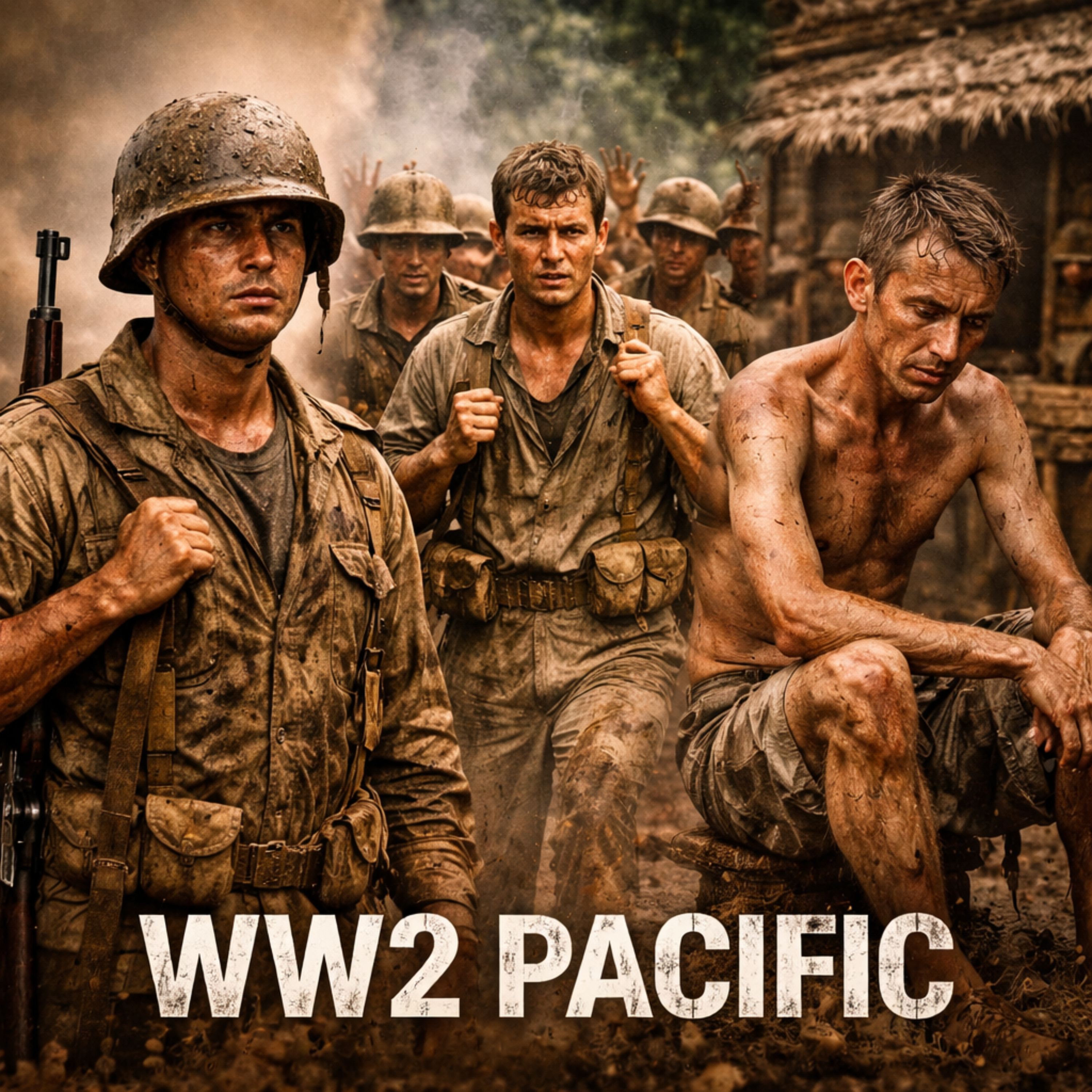
World War II in the Pacific - the Human Condition
by elizabeth c
If you love history as much as I do, and want to avoid the history lectures, then join us for a conversation about the human condition. This podcast focuses on the POWs in the Pacific. The battles that lead up to their internment and the battles leading to their liberation. I will also include some amazing stories from Europe that focus on the how did they survive that situation. So join us as I tell you the stories of our fathers, grandfathers and maybe even our great-grandfathers.
-
5
The Hidden Secret at Ouistreham WW2
The hidden secret at Ouistreham during WW2 explained
-
4
US Paid Japan during WW2 - Unbelievable true story
During WW2 the US paid Japan along with other Allied countries to take care of their POWs
-
3
What would you do? | WW2 POW Survival
WW2 POW survival in the Pacific meant enduring conditions that pushed the human body to its limits.Men were already weakened by disease—malaria, dysentery, beriberi, dengue fever—spreading rapidly through overcrowded camps. With little or no medicine available, even minor illness could become life-threatening. Their bodies were breaking down under a starvation diet of roughly 700 calories a day, built almost entirely on rice. Vegetables were rare, meat almost nonexistent—perhaps a piece no larger than a thumbnail every few weeks, if that.Malnutrition set in quickly. Legs swelled from beriberi. Strength faded. Men struggled to stand, let alone work. And still, the demands never stopped.Beatings from guards could come without warning or reason. A perceived delay, a misunderstanding, even simple exhaustion could bring punishment. There was no margin for error, and no relief.In these conditions, survival was not just about endurance—it was about decisions. Every choice carried weight. Every action could affect not just one man, but many.This is one of those moments.Part of The Pacific War – The Human Condition series.
-
2
Japan's Deadliest Transport Ships - The Hell Ships Enoura Mara & Brazil Maru
WW2, for many prisoners in the Pacific, survival didn’t end on land.They were packed into unmarked transport ships—later called hell ships—where conditions quickly turned deadly. No markings. No protection. No way out.On board vessels like the Enoura Maru and Brazil Maru, men endured suffocating heat, starvation, disease, and the constant uncertainty of what came next. When attacks came, they came without warning—and without distinction.What followed was not just suffering, but a test of endurance few could have imagined.This is the story of what happened when survival was pushed beyond its limits.Part of The Pacific War – The Human Condition series.
-
1
Guam - WW2 arrives to a handful of defenders - doomed from the start
World War II didn’t begin for Guam with a battle plan—it arrived without warning.On the morning of December 8th, 1941, the island heard the news of Pearl Harbor. Within hours, aircraft were already in the sky. Roads were strafed. Villages were hit. Civilians ran for cover as the reality of war closed in.There were only a few hundred defenders on Guam—Marines, sailors, and members of the local Chamorro guard. They were outnumbered, outgunned, and facing an invasion that could not be stopped.But for those on the island, this wasn’t just the beginning of a battle.It was the beginning of something far more uncertain—capture, survival, and the long shadow of occupation that followed.This is one of the first moments in the Pacific where the line between soldier and survivor began to blur.
We're indexing this podcast's transcripts for the first time — this can take a minute or two. We'll show results as soon as they're ready.
No matches for "" in this podcast's transcripts.
No topics indexed yet for this podcast.
Loading reviews...
ABOUT THIS SHOW
If you love history as much as I do, and want to avoid the history lectures, then join us for a conversation about the human condition. This podcast focuses on the POWs in the Pacific. The battles that lead up to their internment and the battles leading to their liberation. I will also include some amazing stories from Europe that focus on the how did they survive that situation. So join us as I tell you the stories of our fathers, grandfathers and maybe even our great-grandfathers.
HOSTED BY
elizabeth c
CATEGORIES
Loading similar podcasts...
Frequently Asked Questions
How many episodes does World War II in the Pacific - the Human Condition have?
World War II in the Pacific - the Human Condition currently has 5 episodes available on PodParley. New episodes are automatically indexed when they're published to the podcast feed.
What is World War II in the Pacific - the Human Condition about?
If you love history as much as I do, and want to avoid the history lectures, then join us for a conversation about the human condition. This podcast focuses on the POWs in the Pacific. The battles that lead up to their internment and the battles leading to their liberation. I will also include some...
How often does World War II in the Pacific - the Human Condition release new episodes?
World War II in the Pacific - the Human Condition has 5 episodes. Check the episode list to see recent publication dates and frequency.
Where can I listen to World War II in the Pacific - the Human Condition?
You can listen to World War II in the Pacific - the Human Condition on PodParley by clicking any episode. We provide an embedded audio player for direct listening, and you can also subscribe via your preferred podcast app using the RSS feed.
Who hosts World War II in the Pacific - the Human Condition?
World War II in the Pacific - the Human Condition is created and hosted by elizabeth c.
URL copied to clipboard!