
PODCAST · society
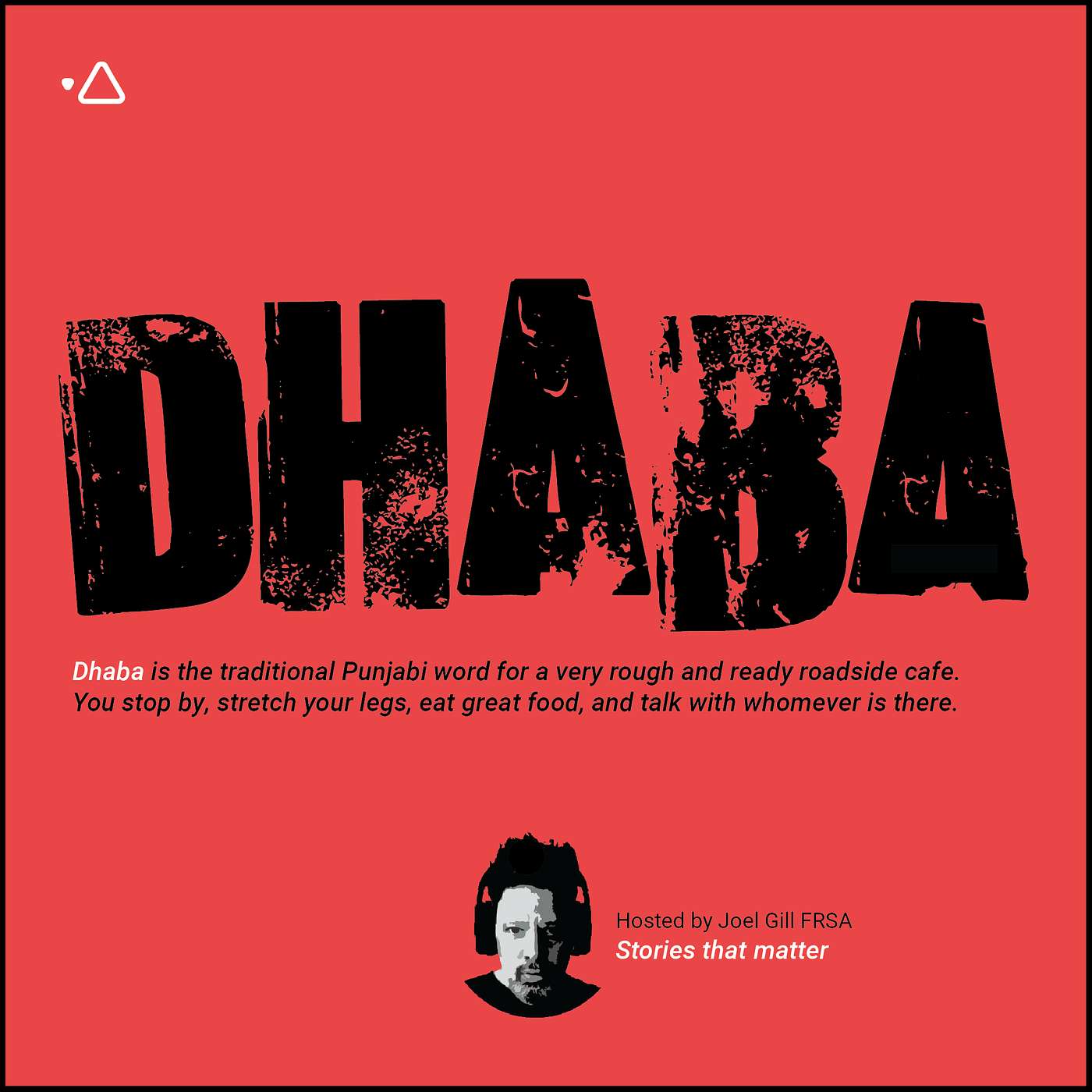
DHABA
by experience artisan
Inspired by the punjabi roadside resting place, DHABA is a podcast that invites pause, perspective, and peppered wisdom. Each episode brings together cooks, caretakers, bridge-builders and makers whose craft speaks louder than credentials. DHABA is a resting place for restless minds, where experience is the spice and conversation the fuel.
-
15
Vito Turitto Reading The Pulse Of Prices
Send us Fan MailMost people glance at a price and move on. Vito Turito looks at that same number and sees a heartbeat: volatility, risk, and the hidden story of how markets actually feel. From our shared days around energy benchmarks to his work as a quant strategist and published researcher, Vito breaks down why the “vibration” around price often matters more than the price level itself.We get practical about what it takes to turn modern market data into decisions you can stand behind. There’s no shortage of information in crude oil, diesel, LNG, freight rates and derivatives, but there is a shortage of interpretation. We talk about statistics, econometrics, options implied volatility and why volatility is both threat and opportunity for commodity trading, hedging strategies and real-world risk management.We also tackle AI in finance head-on: what machine learning is great at, what large language models cannot do without training, and why paywalls and intellectual property make a fully open “all-knowing” model unlikely. Vito shares a more realistic future: internal analytics, private agents, and humans staying responsible for the “why” when things go wrong.If energy and shipping markets feel more chaotic than ever, this is a clear guide to thinking about uncertainty with sharper tools and stronger discipline. Subscribe, share this with a colleague who lives with price risk, and leave a review with your biggest question about volatility.Support the showDHABA Brewed slowly. served warmly. crafted with care
-
14
Shriya Lohia - India’s Teen Formula 4 Trailblazer
Send us Fan MailA 17-year-old racing driver from India looks you in the eye and says her goal is Formula One and suddenly your idea of what “normal” looks like changes. I’m incredibly proud to be joined by Shriya Lohia, a female Formula 4 driver who started racing at nine after a family road trip detour into a go-karting track and never looked back. She’s already made history in Indian F4, and she talks with refreshing honesty about what it takes to keep progressing when the sport is expensive, the pathway is uncertain, and the stereotypes still hang around.We get into the real craft of racing, not just the headlines. Shriya explains why driver-engineer communication is a competitive weapon, how small set-up changes matter in a spec series like Formula 4, and why her dad’s best advice is to “go annoy the engineer”. Off track, she shares the routines that keep her steady on race weekends: music that flips her mindset from pressure to focus, plus meditation and journalling to clear mental clutter before she straps in.Then we zoom out to the bigger question: what would it take for motorsport in India to truly scale and for Formula One to return? We talk fan culture, sponsorship, investment, the Buddh International Circuit dream, and why backing Indian drivers can be the catalyst for an entire ecosystem. If you care about Formula 1, Formula 4, women in motorsport, or the future of Indian sport, this one will stick with you. Subscribe, share this with a friend who loves racing, and leave a review with your take: what’s the single biggest thing India needs to unlock its motorsport potential?Support the showDHABA Brewed slowly. served warmly. crafted with care
-
13
Martin Dowson Transformation Design Leader - Designing Trust
Send us Fan MailYou can feel it when a system is built to extract rather than to serve. The language sounds caring, the journeys feel cold, and every “customer first” promise collapses the moment incentives kick in. That tension drives our conversation with Martin Dowson, an interim design leader and adviser who’s spent decades helping executives change how their organisations make decisions, not just how their products look. We move from boardroom strategy to street-level research: what happens when a bank takes its purpose seriously and asks ordinary people what “prosperity” actually means. Martin explains how human-centred design, service design, systems thinking, and ethnography can reveal the real barriers that stop organisations delivering good outcomes. We also dig into why financial health connects directly to mental health and physical health, and how treating every person in arrears as the same “process” quietly creates harm. The conversation doesn’t dodge the hard bits. We revisit the PPI era as a cautionary tale about box-ticking compliance, then connect it to today’s AI governance debate and the risk of a new scandal built on “we didn’t know” while the warning signs were visible. Along the way we explore principles-based regulation, outcome-based regulation, consumer duty, and why “visibility is accountability” is more than a slogan. If you care about design leadership, customer centred transformation, trust in banking, and building ethical technology with real governance, this one will give you language, stories, and practical ways to think. Subscribe, share with a colleague who owns decisions, and leave us a review with your biggest takeaway.Support the showDHABA Brewed slowly. served warmly. crafted with care
-
12
Maya Sellon Accessibility & Inclusive design specialist Design for everyone
Send us Fan MailWhat if accessibility wasn’t a hurdle at the finish line but the spark that makes products shine for everyone? We sit down with accessibility specialist Maya Selin to unpack how inclusive design moves from checklists to genuine human impact—and why that shift boosts creativity, market reach, and team morale.Maya traces her path from early web days and brand governance to a people-first practice rooted in standards like WCAG and ISO, yet animated by real user insight. She explains how audits rise with new regulations such as the European Accessibility Act, but enforcement alone can’t replace empathy. The breakthrough comes when teams see that options beat perfection: strong structure, semantic HTML, clear labels and contrast form the base, then flexible controls, captions, and keyboard flows open doors for more users and more contexts.We explore AI’s double edge. Tools like Be My Eyes with GPT can expand independence by describing scenes and guiding tasks, yet models also inherit bias, over-weight dominant languages, and sometimes hallucinate. Maya makes the case for resilient, multi-modal experiences that serve screen readers, magnifiers, voice, text, and keyboard alike—because accessibility that helps assistive tech also improves AI parsing and overall usability. Along the way, we talk culture change: moving accessibility from an afterthought to a shared habit across discovery, design, and engineering, with real users involved early and often.If you build digital products, lead teams, or care about customer experience, you’ll find practical ways to embed inclusion from day one and avoid costly rework later. Come for the standards, stay for the joy: accessible products are not just compliant—they’re clearer, faster, and more humane. Enjoy the conversation, then subscribe, share with a teammate, and leave a review telling us one change you’ll ship this week to include more users.Support the showDHABA Brewed slowly. served warmly. crafted with care
-
11
Dr. Gyles Morrison MBBS MSc Clinical UX Strategist From Ward To Wireframes
Send us Fan MailWe welcome Dr Giles Morrison, a former NHS doctor turned clinical UX strategist, to unpack why healthcare needs a distinct approach to design and how better products can make care safer, kinder and fairer. We explore burnout, equity, AI’s limits and the craft of behaviour change that sticks.• Coining clinical UX as a distinct discipline focused on clinicians and patients• Why generalist UX transfers but requires deep healthcare learning• Frontline medicine pressures, burnout and human factors• Push and pull from practice to design and strategy• The role of HCI training, mentorship and shared language• Health inequality, policy and the moral duty of inclusive design• AI strengths in synthesis and risks of bias and overconfidence• Cultural nuance, informed consent and the danger of half‑knowledge• Behaviour change beyond notifications, designing humane nudges• Joy, self‑care and sustaining impact beyond the ward• Where to find Giles and how to connectFind me on LinkedIn: search for Dr Giles Morrison. You know it’s me because there’s a stethoscope emoji at the start of my name. I’m happy to offer my support and help with you on your journey in this career. Whether you’re new to UX as a clinician trying to get into digital health, please do reach out.Support the showDHABA Brewed slowly. served warmly. crafted with care
-
10
Jose Coronado and Martin Dowson FRSA - Design’s Pendulum: Staying Relevant In Turbulent Times
Send us Fan MailWhat if design could move at the speed of AI without losing its soul? We sit down with two veteran leaders, Martin and Jose, to explore how teams can stay relevant when the pendulum swings from hype to hard results. From early usability labs to enterprise-scale delivery, they unpack how human-centred practice earns trust when it aligns with strategy, operations, and measurable business outcomes.The conversation hits the big levers. We dig into AI fluency as a new material of production and how Agentic workflows turn a design brief into a working, branded prototype in an hour—connected to code and ready for stakeholder review. That speed matters if it creates space to think ahead, so we draw a sharp line between continuous improvement and bigger bets that demand deeper qualification. Ethics isn’t a slide at the end; it’s part of the operating model. We talk outcomes-based regulation in Europe, human responsibility for agents, and why “move fast” must come with transparent decisions, harm awareness, and consequence management.We also get practical about enablement. Jose breaks down design ops as a context-driven function: securing compliant tools, fixing onboarding and engagement, standing up QBRs that show impact, and making portfolio health visible. Martin challenges leaders to spread core design skills beyond the team—journey thinking, customer exposure, and light research—so capability survives market cycles. Together they argue for blending product and design ops around discovery and delivery, and for investing in apprenticeships and entry-level growth so the next generation builds judgment, not just outputs.If you’re a design, product, or engineering leader navigating AI, regulation, and quarterly pressure, this conversation offers a clear path: experiment with new materials, protect human values, and use the time saved by automation to design the future, not just ship the next ticket. Enjoy the episode, then subscribe, share with a peer, and drop us a note with your biggest leadership challenge—we’ll tackle it next.Support the showDHABA Brewed slowly. served warmly. crafted with care
-
9
Adam Jennings Helping Creative Leaders Thrive - From Stunts To Stories
Send us Fan MailWhat if the most valuable creative tool you own isn’t a camera, a canvas, or a deck, but your ability to tune into the right beat at the right moment? Adam Jennings joins us to map a life spent chasing story—across theatre catwalks, design studios, and coaching rooms—and to share how empathy and self-belief can turn messy, human work into steady leadership.We dig into his theatre origins at the Oxford Playhouse, where he learned the whole stack: marketing calls that go nowhere, programming complexity, and the heat of a follow spot trained on Cinderella’s slipper. That precision, he says, is not about perfectionism; it’s about serving emotion with care. From there, Adam unpacks the habits that keep creatives resilient: tiny resets that stop spirals, a quiet practice of telling yourself “I love you,” and the humility to accept praise without deflection. His philosophy is simple and demanding—help people grow, then step back so they can keep going.We also push into artificial intelligence with clear eyes. Adam insists on the full phrase—artificial intelligence—because words shape thinking. He argues much of what dazzles us is imitation, not mind, and warns about agents emailing agents while hallucinations compound. Yet he holds a hopeful line: if we offload drudgery, humans can focus on climate, equity, and care. That future needs leaders who create space for slower conversations, kinder cultures, and better bets.Adam’s new seven-part video series, Signals, tackles the shifts already here—AI, budgets, hiring—and turns them into practical conversation starters. His globally charting podcast, Awaiting Approval, dives into the human side of creative leadership with voices from Apple, Paramount, Microsoft, Visa, and more. If you’re navigating creative teams, change, or your own confidence, you’ll leave with insight you can use tomorrow: make people bigger than their problems, and let love—not fear—set the tempo.If this resonated, follow the show, share it with a friend, and leave a review. Your support helps more curious listeners find conversations that move the work forward.Support the showDHABA Brewed slowly. served warmly. crafted with care
-
8
Steve D Sailopal Co-Founder Curry Smugglers- Snacks, Story, And Swag
Send us Fan MailA lost snack pack finds its way to the mic and opens a bigger story: how a Punjabi family turned street memories into a modern brand that won Fortnum & Mason and claimed a Piccadilly window. We sit down with Steve from Curry Smugglers to unpack why a can of Bombay Mix can do what a plain bag never could—stand tall on shelves, spark nostalgia, and carry culture with pride.We trace the journey from Delhi airport heat to train vendors at Chandigarh, from aunties pressing chakli to a Spotify playlist on the can. Steve connects the dots between music scenes that “weren’t ready yet,” his early house bhangra on John Peel, and the grind that later helped pioneer the UK’s alcohol‑free beer wave. That same graft shows up in snacks: 36,000 cans filled on a manual line, buyers who love that cans don’t topple, and the clean, recyclable logic of aluminium over plastic. Retail strategy meets design swagger, and the shelf becomes a stage where Desi heritage is the headliner.The conversation turns to care and community. The designer who inspired the brand’s look passed away in 2012, and that loss deepens the mission: normalising mental health talk in communities taught to shrug pain off, and exploring gentle, Ayurveda‑inspired products that sit naturally beside everyday snacking. We swap stories of growing up in East London in the 80s, finding belonging, and why London’s multicultural energy still sets the table for food, music and identity to thrive.If you love brand building, CPG, South Asian culture, or the craft of turning memory into a product that moves, this one hits home. Press play, share it with a friend who needs the inspiration, and if it resonates, subscribe and leave a review so more people can find these stories.Support the showDHABA Brewed slowly. served warmly. crafted with care
-
7
Doyin Olorunfemi, PhD - From Computer Engineering To Empowering Women: A Journey Of Purpose
Send us Fan MailWhat if your life’s through-line is a flowchart—clear steps, smart loops, and a decision diamond that always points back to people? Meet Dr Do, an academic and entrepreneur who turned a “lame” degree in computer engineering into a powerful discipline for building community, scaling women-led enterprise, and teaching with clarity. Her story moves from a redundancy letter to leading a thousand-strong network, from sold-out conferences to a fully funded PhD, and it all rests on a simple philosophy: live well, live full, live out.We dig into her early ventures that created access, not just income, and the moment she chose to set her own terms at work and in life. You’ll hear how MAPHA—her framework for motivating, preparing, and elevating women—grew from kitchen-table strategy to global stages, and why acronyms like CROP (Create, Rank, Optimise, Plan) help complex ideas travel and stick. The heartbeat of the conversation is her triad: Live Well (cultivate joy and reward), Live Full (align to purpose and values), Live Out (extend knowledge and opportunity). It’s practical, generous, and deeply human.We also tackle AI with nuance. She uses it daily to synthesise and clarify, yet warns against outsourcing your core competence. We explore how to bookend AI with human thinking—start with your own ideas, refine with tools, finish with your judgment—so you protect cognition and keep your edge. As an academic champion for employability, she bridges research, industry, and classroom, embedding entrepreneurial learning and elevating Global South perspectives so innovation reflects more than one story.If you’re craving a map for meaningful progress—one that blends process with purpose, and ambition with compassion—this conversation will give you frameworks you can use today. Subscribe, share with a friend who needs a lift, and leave a review with the one idea you’ll live out this week.Support the showDHABA Brewed slowly. served warmly. crafted with care
-
6
Joe Natoli Design consultant. Coach. Speaker. Author. Risk, Rules and getting Real
Send us Fan MailStart with the work, not the theatre. That’s the heartbeat of this candid, fast-moving conversation with a veteran designer who cut his teeth in a brutal design school, built a career in enterprise UX, and still believes tiny details move mountains. We dig into the early lessons that never faded—defend every decision, design for the person on the receiving end—and how that rigor translates to the unsexy, high-stakes world of internal products.The story widens to what really breaks products: fear, politics, and the absence of leadership that has bled and still cares. We talk about rules you must know before you break, the power of vulnerability, and the habit of asking braver questions. AI gets a pragmatic treatment—less prophecy, more practice. Use it to unstick thinking, prototype options, and remove admin drag; keep judgement and ethics human. Along the way, we tackle regulation lag, the myth of the seat at the table, and why you should lead as a value category of one.If you’ve ever felt trapped in process theatre or siloed roadmaps, this one gives you a way out. We share concrete moves: put every department in the room on day one, co-create with engineers and database architects, speak to margins and risk instead of methods, and ship decisions that make financial and human sense. Tools matter less than the choices you make with them. Careers accelerate when you translate outcomes, not when you list software. Come for the hot takes; stay for an honest blueprint to earn trust, dissolve silos, and deliver work that actually changes things.Enjoyed this conversation? Follow, share with a teammate who needs it, and leave a quick review to help others find the show. Your feedback shapes what we explore next.Support the showDHABA Brewed slowly. served warmly. crafted with care
-
5
Hardy Sidhu Founder & CEO. From Survival To Design Leadership.
Send us Fan MailStart with the stereotype: tidy CV, tidy promotions, tidy portfolio. Now scrap it. Hardy’s journey begins in a young offenders’ institution with no GCSEs and no map, then arcs through late-night self-teaching, messy first sites, a bold UX leap, and leadership roles that reframed “product” from deliverables to durable partnerships. What looks like luck is actually iteration—learning fast, moving on, and keeping the energy high.We talk about the moment titles and big pay in the US stopped feeling like progress, and why that emptiness became a compass. Hardy built Format 3 on a simple promise: great people, great work, great time. The result isn’t a slogan; it’s client feedback about unmatched energy and a culture that protects humanity while shipping at pace. Recognition came—national awards and industry lists—but the deeper win is impact that outlives the founder: in-house incubators, support for visionary ideas, and plans for a design school in Punjab to raise the craft where tech has already surged.Heritage threads through everything. Oneness isn’t a poster—it’s how work and life meet. We get honest about South Asian visibility in tech and design, what the Black creative community models so well, and why organisation matters as much as talent. Off the mic, Hardy leans into seva, mentorship, and family, teaching Punjabi to his child and unlearning the gaps school left behind. The takeaway is clear: visibility is accountability, and community lifts when we show up with our full selves.On AI, we cut through the noise. Tools amplify; they don’t give you a reason to exist. Expect a dot-com-style correction as hype burns off and shallow startups fade. What endures are teams that weave empathy, strategy, and craft into products people love. Design is not dead—it’s the differentiator when everyone has the same tech. Younger makers have unprecedented tools; the bar is still purpose, delight, and credibility.If you’re searching for purpose, we offer a reset: stop sprinting toward a finish line. Be fully yourself and let purpose arise from the work, the people beside you, and the culture you choose to build. Subscribe, share with a friend who needs the nudge, and leave a review with the moment that shifted your thinking.Support the showDHABA Brewed slowly. served warmly. crafted with care
-
4
Chef Patron Peter Joseph - From Chennai To Sloan Square
Send us Fan MailA great restaurant starts with a story—and Chef Peter Joseph has a remarkable one. From a bustling family kitchen in Tamil Nadu to leading a Michelin-star brigade at Tamarind, Peter learned to turn memory into method, discipline into delight, and tradition into something bright and modern at Kahani near Sloane Square.We talk through the real craft of contemporary Indian cooking: how to balance spice for European palates without losing soul, why à la minute matters for freshness, and what it takes to keep a busy London service running like clockwork. Peter opens up about the inspirations that shape his menu, including a “black chicken” technique discovered in a tiny café and reimagined with edible charcoal for a smoky, playful edge. He also shares the thinking behind a menu that spans India north to south—Malabar prawns kissed by the tandoor, seafood in silky coconut milk, and plates designed for sharing because the best meals are conversations.Beyond the dining room, Kahani now powers weddings, hotel partnerships, and fast-service pop-ups at Lord’s Cricket Ground, all while preserving the standards that built its loyal following. Peter offers an unfiltered view of hospitality in 2025—shrinking margins, fewer tourists, rising duties—and why he calls it “another COVID without the virus.” His answer is leadership and consistency: mentoring young chefs, staying on the pass five days a week, and planning future growth where the concept can shine, from the Middle East to thoughtfully chosen suburbs.Come for the flavour, stay for the story, and leave with a deeper respect for the people who make great restaurants feel effortless. If you enjoy the conversation, follow the show, share it with a friend who loves Indian cuisine, and leave a quick review to help others discover it.Support the showDHABA Brewed slowly. served warmly. crafted with care
-
3
Jag Sihra- Skies. Silks, and Storytelling
Send us Fan MailJag Sihra shares her creative journey from childhood artist to founder of Studio Jag Sihra, exploring how her passion for colour theory and textile design evolved through education at prestigious art schools and corporate design roles before launching her own studio.• Discovering a love for art at age 10 and recognizing how it brought contentment and focus• Developing colour theory skills at St. Martin's, which became the foundation of her distinctive style• Balancing corporate design work at British Airways and Virgin Atlantic while maintaining artistic vision• Making the brave decision to decline a "dream job" offer to prioritize family and pursue independent creative work• Creating the "Loft" social space design for Virgin Atlantic's A350 aircraft• Designing art eggs for the Elephant Family charity, including a special collaboration with schoolchildren affected by Grenfell• Establishing Studio Jag Siara with a focus on bespoke luxury gifts that celebrate brand heritage• Viewing AI as a tool rather than a threat, believing human artisanship will always be valued for its soul and connection• Launching a new collaboration with an Indian social enterprise to support artisan families while creating sustainable productsSupport the showDHABA Brewed slowly. served warmly. crafted with care
-
2
Robert Powell "Grand Poohbah of UX"
Send us Fan MailWhat happens when a 40-year design veteran takes you behind the curtain of corporate design culture? Robert Powell, the self-styled "Grand Poobah of UX" and former design analytics leader at Shell, delivers a masterclass in authentic design leadership that cuts through the noise of typical design discussions.Powell's journey from creating early gaming software on 16-bit computers to building theatrical props for Doctor Who represents the multidisciplinary foundation that makes exceptional designers. But it's his candid assessment of corporate design culture that proves most valuable. After joining Shell as a "secret shopper" to evaluate their design practices, Powell helped build what he describes as a dream environment – not a department but a genuine community where designers were empowered to push back, teach, and deliver meaningful work.The dismantling of this successful design culture by accountants provides a sobering lesson about organizational priorities. Yet Powell remains optimistic about what good design looks like and how it can be rebuilt. His perspective on artificial intelligence is similarly nuanced – seeing enormous potential when AI removes mental heavy lifting for designers, but warning against using it "not as a tool, but as a replacement to human beings to maintain the status quo." As he aptly notes, "If your definition of success is doing exactly the same, just cheaper, that translates to failing cheaper."Perhaps most valuably, Powell challenges the industry's obsession with tools and sector experience over fundamental design thinking abilities. "Design is not aesthetics," he asserts. "Design is the process that delivers a solution." This principle applies whether designing for Mandalorians, Victorian lamps, or digital experiences – understanding the user's needs transcends specific tools or sectors.Ready to rethink your approach to design leadership? Listen now to gain insights from someone who's survived and thrived through four decades of design evolution.Support the showDHABA Brewed slowly. served warmly. crafted with care
-
1
Debbie Levitt “The Mary Poppins of CX and UX"
Send us Fan MailDesign expert Debbie Levitt shares her perspective on how UX and CX professionals are being systematically disempowered despite their critical role in creating successful products and services. She explores how the "fail fast" culture and AI hype are undermining accountability and quality in design.• Debbie has 30 years of experience in CX, UX, product, and business strategy• The return-to-office movement is harming remote workers and creating inefficient work environments• AI development lacks proper governance and respect for intellectual property rights• Companies claim to be customer-centric while rarely engaging with actual users• The democratization of design has led to acceptance of mediocre work as the standard• Organizations need to involve researchers and service designers from the beginning of projects• The "fail fast, fail often" mentality has become an excuse for poor quality work• Senior design voices are being ignored even as companies face increasingly complex challenges• AI is unlikely to create a renaissance for UX unless organizations fundamentally change their approach to design• Companies should establish clear quality standards and accountability measuresIf you enjoyed this conversation, check out Debbie's books including "Customers Know You Suck" and "Life After Tech" – find them wherever books are sold.Support the showDHABA Brewed slowly. served warmly. crafted with care
-
0
Baljit Singh Rihal - Global Head of Sports | Founder Asian Football Awards | FIFA Football Agent | Indian Football Market Specialist
Send us Fan MailBaljit Rihal shares his journey from corporate life at British Airways to becoming a pioneering Sikh football agent and advocate for South Asian representation in football. His story highlights how refusing to accept limitations and embracing one's identity can lead to transformative change in spaces where representation has traditionally been lacking.• Meeting at British Airways and launching the Asian Football Awards as a catalyst for entering football• Becoming a licensed football agent after being told it would be too difficult (with only a 14% pass rate)• Running football agency as a side hustle before making the leap to full-time in 2020• Challenging stereotypes about South Asians in football that have limited opportunities• Discussing the significant underrepresentation of South Asians in professional football despite making up 9% of UK population• Celebrating breakthrough moments like Sarit Binning captaining England's Under-16s and Sarpreet Singh playing for New Zealand at the World Cup• Advocating for policy changes to allow Overseas Citizens of India to represent the Indian national team• Emphasizing the importance of self-belief and creating your own opportunities rather than waiting for permissionFind Baljit Rihal on Instagram and LinkedIn @BaljitRihal to follow his ongoing advocacy work and the upcoming Asian Football Awards in 2026.Support the showDHABA Brewed slowly. served warmly. crafted with care
-
-1
Thomas Wilson - Experience Strategy Director
Send us Fan MailDhaba's first episode is graced by the Austin based Thomas Wilson. An incredibly experienced human who sits with Joel Gill FRSA - creator of Dhaba - a quiet space within Experience Artisan. SummaryIn this conversation, Thomas Wilson shares his extensive journey in design, discussing his early experiences, career shifts, and the evolution of design tools. He emphasizes the importance of adaptability, lifelong learning, and the impact of social media on society. The discussion also touches on the role of influencers in the design space and the necessity for designers to create value and find their niche. Wilson advocates for self-awareness and personal growth as essential components for success in the design industry.TakeawaysThomas Wilson's journey in design began at a young age.Adversity can lead to significant career shifts and growth.The evolution of design tools has changed the landscape of UX.AI is set to revolutionize the design industry.Social media has a profound impact on societal behavior.Influencers often lack genuine expertise in their fields.Design plays a crucial role in business success.Lifelong learning is essential for career longevity.Finding your niche can lead to greater job satisfaction.Self-awareness and personal growth are key to success.Chapters00:00 Introduction to Thomas Wilson00:05 New Chapter02:57 Early Career and Design Journey06:32 Adversity and Career Evolution10:38 The Importance of Perspective in Design14:55 Tools of the Trade: Figma and Beyond21:09 The Future of AI and Design25:37 Regulatory Challenges in Innovation30:34 The Impact of Social Media on Youth36:01 The Rise of Influencers and Their Impact41:03 The Role of Design in Business46:20 The Importance of Understanding Human Behavior50:54 The Need for Lifelong Learning56:51 The Cult of Design and Its Evolution01:01:18 Creating Value in Design01:06:23 Self-Inventory and Personal Growth01:11:19 Closing Thoughts and AdviceKeywordsdesign, UX, AI, social media, influencers, lifelong learning, career development, personal growth, design tools, business strategySupport the showDHABA Brewed slowly. served warmly. crafted with care
We're indexing this podcast's transcripts for the first time — this can take a minute or two. We'll show results as soon as they're ready.
No matches for "" in this podcast's transcripts.
No topics indexed yet for this podcast.
Loading reviews...
ABOUT THIS SHOW
Inspired by the punjabi roadside resting place, DHABA is a podcast that invites pause, perspective, and peppered wisdom. Each episode brings together cooks, caretakers, bridge-builders and makers whose craft speaks louder than credentials. DHABA is a resting place for restless minds, where experience is the spice and conversation the fuel.
HOSTED BY
experience artisan
Loading similar podcasts...
URL copied to clipboard!