
PODCAST · news
Digital Bytes by Team Blockchain Radio; Powered By Cyber.FM
by James Tylee / Jonny Fry
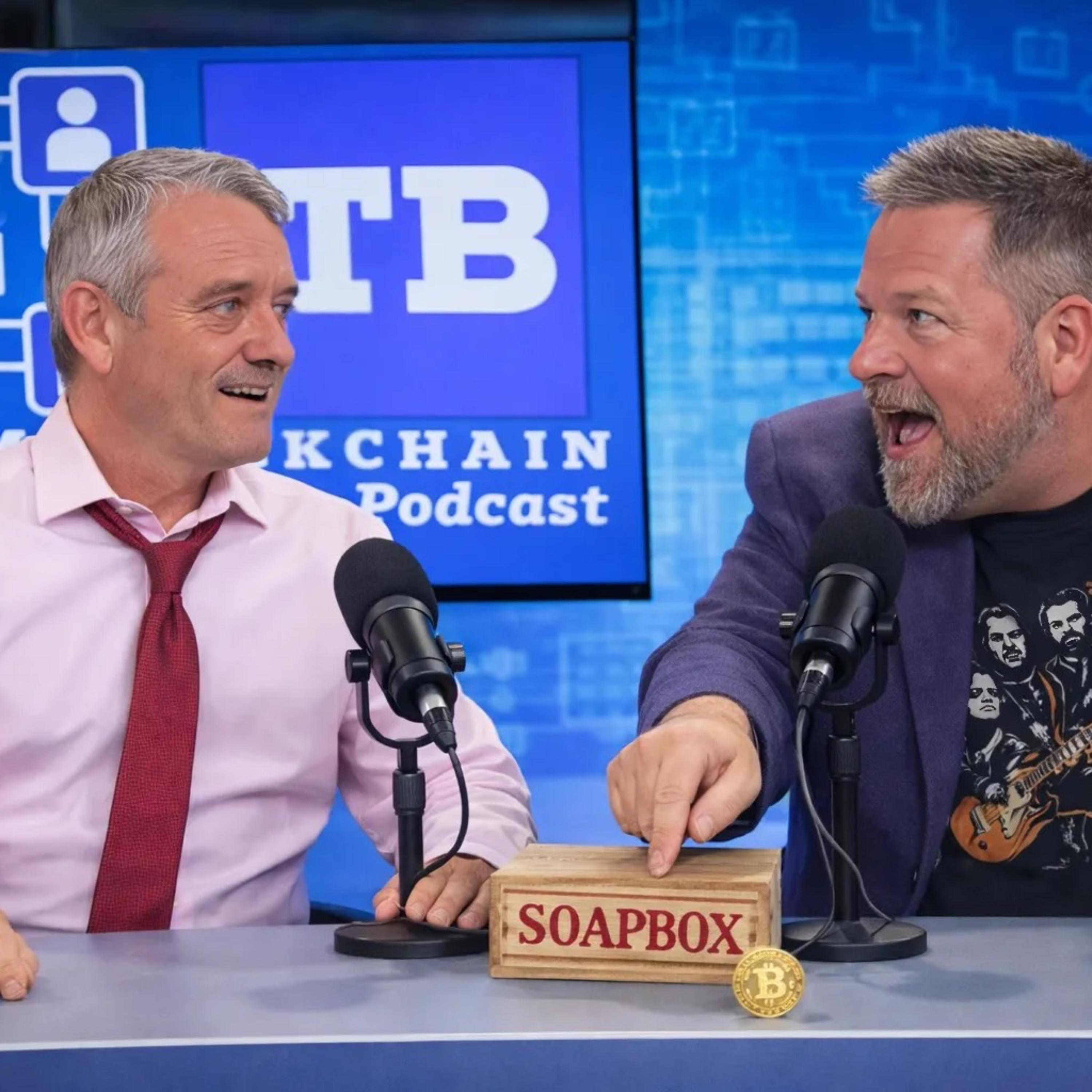
Each week on the Digital Bytes Show, James Tylee, founder Cyber.FM in the USA, talks to Jonny Fry from TeamBlockchain reviewing the latest Digital Bytes. They explore how, where and why Blockchain technology and/or Digital Assets are being used in various industries and jurisdictions globally. Cyber.FM Radio, a product of Distributed Ledger Performance Rights Organization (DLPRO LLC), was established in 2008 and has 4.6 million listeners across 140 countries.
-
305
April 29th: Why Lawyers Must Rethink Digital Asset Escrow w/ David Parsons at London Digital Escrow
Imagine completing a sterling-to-dollar transfer in seconds for just two basis points. That kind of speed and efficiency is now possible, and it is forcing lawyers and financial professionals to completely rethink how escrow works in the modern economy.David Parsons from London Digital Escrow makes a compelling case that traditional bank-based escrow converts real assets into IOUs, creating counterparty risk that simply does not exist with direct digital asset transfers. By surrendering ownership to intermediaries like Coinbase or Kraken, parties unknowingly change the entire legal and risk profile of their transaction. This risk is real, and it fundamentally alters the nature of the deal.Surprisingly, lawyers are not becoming less relevant here. When tokenized assets like property enter the picture, attorneys must legally assume responsibility for transfers on behalf of the state, a role that has no equivalent in traditional fiat transactions.What happens to legal professionals who fail to understand digital asset escrow as agentic AI increasingly manages transactions directly?With 1.4 billion unbanked people globally (particularly in Commonwealth and developing nations) driving demand for digital payments, the opportunity is enormous. Lawyers who adapt will thrive. Those who do not may find themselves left behind.Listen to this episode to understand why this shift cannot wait.
-
304
April 22nd: The End of Client Accounts: How Tokenisation and AI Are Forcing a New Legal Infrastructure w/ John Bertram, Director at On Demand Payment Technologies
Rarely does a single conversation connect 1980s Citigroup trading floors to the future of programmable money so compellingly. John Bertrand, director at On Demand Payment Technologies, joins hosts James Tylee and Jonny Fry to trace how decades of financial infrastructure work have led us to this precise inflection point in banking history.John's ten years at Citigroup in New York shaped his understanding of how legacy systems resist change even when they are clearly inefficient and clearly holding everyone back. He points to UK government payment delays averaging 58 days as a striking example of how broken the status quo remains.Could programmable digital money finally solve what outdated systems like SWIFT's correspondent networks have failed to fix for generations? The conversation covers everything from the Bank of England's digital sandbox experiments with repos to HSBC's tokenized gold project in Hong Kong, painting a picture of transformation that is already underway.Fortunately, the hosts ground these big ideas in practical reality. (John's FX Match system, which helped inspire SWIFT, shows he has been here before.) The key insight is that scalability is already proven through trillions in monthly blockchain transactions. The real work now involves legal frameworks and regulatory change.Tune in for a genuinely illuminating conversation about where money is heading next.
-
303
April 15th: Agentic AI Is making Zillow, Rightmove and Zoopla Obsolete: The Collapse of Software as a Service (SaaS) Property Aggregators w/ James Tylee
Imagine bypassing Zillow entirely and letting your personal AI agent find, compare, and handle the paperwork on your next home. That future is closer than most people realize, and it's the core of this fascinating conversation between Jonny Fry of Team Blockchain and James Tylee, founder of Cyber.fm.James brings a remarkable background to this discussion. After building high-frequency trading platforms on Wall Street and surviving the 2008 financial collapse, he watched colleagues lose everything and musicians he knew get financially devastated. That experience pushed him to launch Cyber FM radio, which now reaches **5 million listeners across 170 countries**.Could property giants like Zillow, Rightmove, and Booking.com actually face the same fate as Netscape? James and Jonny argue yes, and the numbers support their concern. LLM revenues are projected to surge from $4.5 billion in 2023 to over $82 billion by 2033, fundamentally changing how consumers find information. (A Dublin entrepreneur already demonstrated this principle by building a database comparing Guinness prices, forcing pub owners to compete more fairly.)Because when AI can summarize neighborhoods, handle tax grievances, and negotiate directly, traditional aggregators lose their entire reason to exist. Small businesses employing 60% of G7 workers can actually gain from this shift, improving profitability by roughly 13%.Tune in to hear the full conversation and understand how to position yourself before the disruption arrives.
-
302
April 8th: Wall Street Goes On-Chain: Nasdaq’s Tokenization Pivot May Force a New Kind of Transparency w/ Jason Meyers Creator of Pacioli.ai
Nasdaq’s move to enable tokenised equity trading within DTCC infrastructure signals that blockchain settlement is shifting from crypto experiment to core capital-market plumbing. If the world’s deepest and most liquid market adopts programmable securities and near-continuous trading, global exchanges, regulators and asset managers may face competitive pressure to modernise faster, or risk liquidity migration toward jurisdictions willing to embrace tokenised market structure.
-
301
April 1st: The Bank of England’s Stablecoin Regime is Already Dead: UK Companies are Settling £ Trillions Without Sterling, So Has the Bank Just Regulated a Ghost? Ft: Erich Schoeckel of 2Tokens
English law has never required sterling/legal tender to settle obligations. Precursor to the Bank of England, the 1694 National Land Bank failed, but its idea of using assets as payment lives on through freedom of contract. Corporates are able to legally settle £trillions in tokenised property, stablecoins or RWAs, therefore bypassing the BOE’s 40/60 regime, holding limits and unremunerated deposits entirely.Click here to read the article
-
300
March 25th: Stablecoins and the Banking System: What Happens to Bank Deposits? With: Lamine Brahimi, Co-Founder, Taurus
As stablecoins move into regulated mainstream finance, they are shifting from crypto gateways to always-available digital cash for payments, settlement and treasury use. This raises a critical question: how much transactional liquidity could migrate away from bank deposits - traditionally the cheapest funding source for lending? Drawing on Taurus research and global regulatory developments, this article examines potential deposit pressures, balance-sheet implications and the strategic choices banks face as digital money becomes more mobile, competitive and embedded in financial infrastructure.Click here to read the article
-
299
March 17th: Designing Digital Money for a Fragmented World with Christopher Woolard, Chair, EY Global Regulatory Network
Digital money is increasingly shaped by national policy and regulatory design. Whilst authorities are converging on some core principles, they are diverging in how those principles are applied - with implications for organisations seeking to scale across borders. This article explores how regulatory divergence changes the way digital money needs to be designed, and what firms should do in response.Click here to read the full article
-
298
March 10th: Programmable Money in Practice w/ Markus Bergvinson,
Tokenised money has moved from a niche crypto application to a central consideration for institutional finance and public policy. Across stablecoins, tokenised deposits, CBDCs and money market funds, differing design choices shape risk, usability and regulatory treatment. The evolving landscape reveals strong momentum in cross-border payments and settlement, alongside unresolved challenges around interoperability, governance and cross-border supervision that will determine how tokenised money integrates into the global financial system.Click here to read the full article
-
297
March 3rd: AI Agents and the Future of Real Estate Acquisition in London with Charlotte Hill, Partner, Penningtons Manches Cooper LLP
AI agents and the future of real estate acquisition in London - London’s property market remains one of the world’s most valuable, but it is still too often slow, opaque and labour intensive. Transactions can take months, depend on fragmented data and require a choreography of intermediaries whose incentives are not always aligned. Artificial intelligence, paired with maturing digital conveyancing rails, can improve, not only how property is marketed but how it is searched, priced, negotiated, executed and registered. Crucially, English law already accommodates significant elements of digital execution and agent enabled processes, provided that human sign off and regulated professionals remain in the loop at defined points. The result is a realistic near-term hybrid: AI as tireless executor; lawyers as arbiters of judgement; and settlement that is faster, cheaper and more auditable, raising important legal, ethical and social questions about ownership and agency.Click here to download the full article
-
296
March 11th: Soapbox! Not Your Keys, Not Your.... Asset?
When James Tylee and Johnny Fry dig into digital wallets and crypto custody, they land on something pretty interesting: that old crypto mantra "not your keys, not your crypto" is fading fast. More people are trusting big custodial companies with their assets instead of managing their own wallets, which kind of looks like we're just rebuilding traditional banking all over again. The hosts point out how banks use fractional reserve lending to multiply your deposits multiple times over, turning your tangible assets into IOUs—basically, you become a creditor, not an owner. (This isn't exactly what crypto was supposed to solve?) Starting with a comparison to recent bank failures, they emphasize that real security comes from understanding *who actually controls your money*. The discussion touches on stablecoins backed by assets, programmable money through smart contracts, and how AI will eventually handle our financial decisions. But here's the catch: moving crypto into traditional institutions like BlackRock recreates the same centralized control people tried to escape. **True asset ownership requires personal control of private keys**, they argue, whether we're talking about digital currencies or tokenized real estate.So is blockchain really decentralizing finance, or are we just swapping one dependency for another?Tune in to hear their full take on what genuine financial control actually means in the digital age.
-
295
Copy Trading: Why Is the Market Growing So Fast? - with James Tylee
Copy trading lets you mirror professional traders automatically, select who to follow, adjust allocation, and stop anytime, while retaining full control and responsibility for your account. No one else accesses your funds. It democratizes elite strategies via AI and enables 24/7 trading allowing profits in rising and falling markets. As traditional funds grapple with high costs, tokenization and AI agents are shifting the future toward low-fee, always-on, intelligent investing.If a friend or colleague would like to have their own weekly edition of Digital Bytes, please use this link to subscribe.Or visit TeamBlockchain
-
294
Jan 28th: Why Wall Street’s Latest tokenization Rush Will Fail Without Market Readiness with Mike Foy, CFO, Amina Bank
Wall Street’s new tokenization wave will stall without market readiness. A Swiss tokenized gold product failed because gold buyers rejected digital wrappers and crypto investors ignored gold. Infrastructure can fix custody and settlement, but adoption requires aligning blockchain’s 24/7 markets with legacy business hours, weekend pricing distortions, liquidity gaps, and always‑on compliance. Tokenization’s real value is in illiquid assets like private equity and real estate, where evolving regulation and infrastructure can finally support scale.Click here for the full article
-
293
Jan 7th: When Game Worlds Think For Themselves: How AI Agents and Web3 Are Rewriting Play, Work and Value ft: Dr Jane Thomason Leader in AI, Web3, Gaming & Digital Transformation
Online gaming is mutating from entertainment into a self-organising digital economy. AI agents now design worlds, manage resources and shape narratives in real time, while Web3 anchors ownership, governance and value on chain. The impact is profound: games become laboratories for autonomous markets, digital labour and creator economies. For players, this blurs play and work; for platforms, it turns gaming into infrastructure for future digital societies.If a friend or colleague would like to have their own weekly edition of Digital Bytes, please use this link to subscribe.For the full article click here
-
292
Jan 21st Why Lawyers Will Be Human Oracles for AI Agents w: David Parsons, TPX Property Exchanges
In 2026, the proliferation of autonomous AI agents marks a paradigm shift from “reactive” tools to “proactive” systems. Whilst AI excels at mechanics and volume, it falters in moral ambiguity and real-world certification. Lawyers serve as “human oracles” - indispensable interpreters who provide the authoritative “human stamp” on digital triggers, ethical dilemmas and subjective context. By bridging rigid logic with nuanced judgment, they secure the profession’s relevance as essential guides in an AI-driven simulation.For the full article click here
-
291
Jan 14th: Programmable Privacy: Balancing Confidentiality and Transparency in Tokenised Finance with Alex Bausch of 2Tokens
Programmable privacy reshapes financial infrastructure by enabling institution-grade confidentiality on public or shared ledgers. Banks, asset managers and market venues can prove compliance (AML, KYC, solvency, reporting) without exposing trading strategies, customer data or collateral positions; this could accelerate tokenised markets, unlock institutional adoption and reduce operational risk. At the same time, regulators gain cryptographically guaranteed audit access, creating a new paradigm for privacy: neither secrecy nor transparency but verifiable, controllable disclosure embedded directly into financial instruments.To read the full article click here
-
290
Dec 24th: The Paradox of Digital Property: Why Legal Recognition Doesn't Guarantee Liquidity with Jonathan Bloom, Author of BLINDSPOTS
When a seasoned lawyer loses his own business despite two decades of advising on major international transactions, something profound shifts. This episode features a former Legal Partner turned Entrepreneur who discovered that sophisticated founders face predictable blind spots—patterns that destroy innovative ventures regardless of legal counsel.The conversation begins with his book "Blind Spots" but quickly moves into fascinating territory: the paradox of digital property recognition. While the UK's Genius Act now legally classifies tokens as property, this creates as many problems as it solves. (Property brings obligations like seizure, yet lacks the financing mechanisms traditional assets enjoy.) Banks won't lend against digital collateral without consistent valuation standards and insurance products—the infrastructure simply doesn't exist yet.Drawing from 25 years of advisory experience, the guest outlines five structural vulnerabilities that compound dangerously during market crises: vision without protection, wrong metrics, crisis unpreparedness, partner evolution, and cash flow pressure. His forthcoming book launching February 11th offers practical frameworks like graduated trust and the 30% dependency threshold—tools to protect before problems emerge.How can founders innovate boldly while remaining protected from institutional forces beyond their control?Ready to discover the blind spots threatening your venture? This conversation combines hard-won wisdom with immediately applicable frameworks that could save your business.
-
289
Dec 17th: 330 Years of Tokenised Property as Legal Tender: From 1696's National Land Bank Gamble to Bockchain's Revolution ft: David Parsons, TPX Property Exchanges
In 1696, England attempted the world’s first tokenised property system, turning land into state-mandated legal-tender bills to rescue a collapsing monetary system. The National Land Bank failed, but its blueprint echoes today’s blockchain revolution. As the UK pushes toward a projected $4trillion tokenised real-estate market, the same questions return: can fractionalised property create liquidity without eroding trust? Three centuries on and the lesson endures - tokenisation transforms value, but sovereignty and confidence decide its fate.To read the full article click here00:00:00 - 330 Years of Tokenized Property History00:01:49 - Private Banks and Political Currency Control00:02:50 - War Debt Drives Monetary Innovation00:04:03 - England's First Legal Paper Money System00:05:54 - Newton's Mint Reforms and Historical Currency Parallels00:07:49 - Colonial Tokenized Property Money History00:09:12 - Asset-Based Money and Property Rights00:10:49 - Counterfeiting Charges and Informant Deals00:12:16 - Counterfeiting, Digital Money, and Shadow Economy00:14:32 - Australia's Counterfeiting Criminal History
-
288
Dec 10th: Driving Public Blockchain Integration in Banking with Lewis McLellan, Digital Monetary Institute Editor, OMFIF
Public blockchains are moving from experimental rails to components of regulated financial infrastructure, but adoption remains constrained by legacy policy frameworks. Institutional tokenisation is gaining traction (Franklin Templeton, Apollo and others now issue blockchain-native funds) as forecasts suggest up to $5tn of tokenised assets by 2030. Yet regulatory models still draw rigid lines between “public” and “permissioned” networks, a taxonomy increasingly irrelevant as hybrid architectures emerge. The next phase demands interoperability standards, legal settlement finality and risk-based regulation, not architecture-based restrictions.
-
287
Dec 3rd: Why Automation, and Not Liquidity, Will Decide Tokenisation’s Future with Philipp Pieper, co-founder of Swarm Markets
Tokenisation has long been judged through the DeFi lens of total value locked (TVL) but for real-world assets, equities, gold, treasuries (already supported by deep liquidity) TVL is a false signal. The real innovation is automation: the ability for on-chain smart contracts to execute real-world trades, route them through regulated brokers, confirm custody and mint legally enforceable tokens in seconds. These emerging hybrid models shift tokenisation from synthetic representations to programmable, compliant ownership. As AI agents begin autonomously managing portfolios, the winners will not be those with the idlest capital, but those with the most seamless interoperability between TradFi systems and 24/7 digital markets.To read the full article click here
-
286
Nov 26th: Insured Reality: How Blockchain and Insurance Will Redefine Property Ownership with Reid A. Winthrop, Managing Partner, Winthrop Law Group, PC
Reid Winthrop returns to explain how insurance isn't just a safety net—it's the key to unlocking blockchain's real estate revolution. Did you know that insurance has been foundational to modern finance since 1710, when Sun Fire Office property owners displayed plaques to receive fire brigade protection? (That's over 300 years of financial infrastructure we're talking about.)Here's the fascinating part: insurance historically enabled mass homeownership by protecting individuals from catastrophic property loss, and now it's positioned to do the same thing for tokenized real estate. Reid breaks down parametric policies—automated insurance contracts executed on blockchain using smart contracts—ranging from simple token recording to sophisticated implementations like satellite monitoring. In one example, a Red Cross volcano insurance program automatically triggers payouts based on wind direction affecting crop damage.The conversation touches on California's current crisis where over ten percent of homeowners lack insurance following devastating fires. Unlike REITs, which offer only limited entitlements, tokenized properties provide actual property rights enforceable by law, allowing homeowners to fractionalize their property and unlock value without taking on debt.Ready to understand how insurance will make blockchain real estate accessible to everyone? Tune in now.00:00:00 - Blockchain and Insurance Redefine Property Ownership00:01:50 - How Insurance Enabled Mass Homeownership00:04:52 - Early Fire Insurance and Lender Requirements00:06:20 - California Insurance Crisis and Blockchain Solutions00:08:04 - Parametric Policies and Smart Contract Insurance00:10:53 - Parametric Insurance Automation and Asset Protection00:13:32 - Insurance as the Key to Property Tokenization00:15:55 - Tokenizing Property Deeds and Mortgages00:17:45 - Tokenizing Property Without Mortgages00:19:40 - Tokenizing Home Equity and Property Rights00:20:54 - Insurance Enabling Tokenized Asset Adoption
-
285
Nov 19th: Crypto Recovery in the UK: Policing and Private Recovery Mandates with Matt Green, Director at Law Firm and Richard Daws, Founder and CEO at insurer, Redefind
Crypto recovery in the UK sits at a crossroads: increasingly sophisticated crime on one side, and rapidly evolving legal and policing capabilities on the other. Recovery-room scams remain rampant with fraudsters posing as experts to re-victimise those already defrauded, whilst social-engineering attacks and even violent “wrench attacks” continue to rise. Law enforcement, overstretched and bound by mandates focused on catching criminals rather than chasing funds, often leaves victims frustrated. Still, progress is real: courts now treat crypto as property, freezing orders are more common and specialist investigators and lawyers are improving success rates. With growing coordination between police, courts and credible private experts, effective recovery is slowly becoming achievable.Click here to read the full article
-
284
Nov 12th: Tokenisation at the Crossroads: Reshaping Capital Markets Amid Regulation and Innovation
What if you could slice up your house like a pizza and sell pieces of it? That's essentially what tokenization is doing to financial markets right now.James Tylee breaks down how blockchain is transforming everything from stocks and bonds to real estate and gold. The numbers are staggering: tokenized funds could slash operating costs by 23%, potentially saving the asset management industry $135 billion annually according to Callistone research. (That's real money we're talking about here.) Larry Fink's insights reveal how this technology enables lightning-fast settlements and automated smart contracts that boost money velocity across the economy.Here's where it gets interesting for everyday people. Through fractionalization, tokenization democratizes access to assets that were previously locked away from regular investors. The technology is already working—Franklin Templeton is successfully tokenizing real-world assets, and companies like Visa use it extensively.However, the UK market faces a significant challenge. With 61% of respondents pointing to regulatory uncertainty as the main obstacle, it's clear that regulatory uncertainty is holding back broader adoption. The speakers advocate for smart public-private partnerships to establish clear compliance frameworks rather than relying on government intervention alone.Beyond traditional assets, tokenization could let homeowners sell carbon credits from their solar panels directly on peer-to-peer networks. Why should only Tesla pocket billions from carbon credits?00:00:00 - Tokenization Reshaping Capital Markets00:01:30 - Visa's Tokenization and Blockchain's Future00:03:10 - Cashflow Velocity and Tokenization Impact00:05:08 - Tokenizing Assets Beyond Funds00:06:30 - Regulatory Clarity Holding Back UK Tokenization00:08:15 - Government Regulation vs Private Sector Innovation00:11:01 - Selling Carbon Credits on Peer-to-Peer Basis00:13:48 - Tokenization Empowers Individuals Through Real World Assets00:15:00 - Blockchain Technology Across Industries Weekly
-
283
Nov 5th: Lost Keys, Lost Fortunes: The Inheritance Crisis of Digital Assets featuring Reid A. Winthrop, Managing Partner, Winthrop Law Group, PC
Here's something that should keep you up at night: what happens to your cryptocurrency and digital assets when you die? Reid Winthrop, managing partner at Winthrop Law Group, and David Parsons joined hosts James Tylee and Jonny Fry to tackle this increasingly urgent problem. As property, cryptocurrencies, and personal accounts move onto blockchain, the century-old systems that banks traditionally managed—insurance, escrow, and title transfers—need complete reimagining. Reid explains how insurance products must evolve to protect against lost private keys and custody failures. (Traditional custodians like BNY Mellon can't help with decentralized wallets.) Without proper planning through attorneys or services like London Digital Escrow, your digital assets can vanish permanently, leaving your family struggling to cover funeral expenses during the four to six months probate takes in the UK.00:00:00 - Digital Asset Inheritance Crisis00:00:56 - Introduction to Digital Assets and Challenges00:02:37 - Tokenization of Real World Assets and Digital Titles00:04:04 - Insurance for Digital Assets and Blockchain00:06:25 - Asset Protection and Wallet Security for Tokenized Property00:08:16 - Protecting Digital Assets for Your Heirs00:09:46 - Digital Escrow Services for Crypto Transactions00:11:52 - Legal Documentation and Transaction Enforcement00:13:24 - Securing Crypto Access for Family Protection00:14:17 - Tokenized Real Estate Platform Security Components00:17:22 - Lawyers and Legal Workflows in Crypto00:19:16 - Planning Digital Assets to Avoid ProbateThe challenge is stark: will inheritance law and technology evolve quickly enough to preserve it?Click here to read the full article
-
282
Oct 29th: Tackling the £58 Billion Corporate Actions Problem w/ Jeffrey Mushens, Head of Proposition at TURN
Each year, global finance spends £58 billion on corporate actions processing, with costs rising 10% annually and automation below 40%. Reliance on manual validation, fragmented systems and inconsistent data flows results in widespread inefficiency, high risk and unnecessary expense. Recent industry initiatives using blockchain and AI, similar to the Chainlink-led collaboration involving Swift, DTCC and S&P Global, demonstrate that a unified platform with verified, standardised data can dramatically reduce costs, operational risks and errors. The future lies in real-time, automated and cryptographically attested corporate actions across both traditional and tokenised asset markets.Click here to read the full article
-
281
Oct 21st: Bridging the Digital Continuity Gap: Why Blockchain Belongs at the Core of Business Resilience w/ Emily Landis Walker, CEO Landis & Co
Digital disruption is the new business threat. Old continuity plans focused historically on fires, floods or server outages but, today, centralised failure can mean billion-dollar crypto collapses, regulatory shockwaves or code bugs that freeze assets overnight. Decentralised blockchains flip the script: redundancy and transparency take out single points of failure, making continuity a design feature, not an afterthought. G7 mega-banks launching a new stablecoin signals this shift in action, therefore, to stay resilient, leaders must blend legacy standards with real-time drills, digital asset training and empowerment to communicate in crisis.Click here for the full article
-
280
Dollarization Benefits for London Property
If US dollar stablecoins such as USDT or USDC take over London’s £5-50 million prime property market, the Bank of England could lose control over one of its richest asset classes. Foreign buyers could move capital instantly, bypassing sterling, whilst estate agents’ market in US dollars and settle via smart contracts in hours potentially on a peer-to-peer basis so removing escrow settlement risk. The upside? Hyper-liquid, globally accessible London real estate. The downside? Quietly handing monetary sovereignty of Mayfair and Belgravia to dollar-backed code.Click here for the full article
-
279
Oct 8th, 2025: Are We to See Dollarization of the UK? The Bank of England's Struggle with the USD Stablecoin Revolution w/ James Tylee
Could Britain accidentally become financially American? The Bank of England governor's shocking endorsement of stablecoins in the Financial Times has sparked a fascinating debate about the UK's potential "dollarization."James Tylee, a Wall Street veteran with 20 years of algorithmic trading experience, joins Johnny Fry to explore how USD-backed stablecoins might extend American financial dominance to British shores. With the $250 billion stablecoin market overwhelmingly dollar-denominated, while euro and yen versions languish, the implications are staggering.The hosts reveal how major banks like Barclays and Goldman Sachs are planning G7 stablecoins that could unlock $500 trillion in US assets globally. Meanwhile, Britain—once the crypto regulation leader—has watched America surge ahead, forcing UK regulators to reconsider their approach.Perhaps most surprising: while only 5% of Britons own stocks, 12% hold cryptocurrency, meaning young traders now understand dollars better than pounds. Despite London handling 38% of global forex trading, the conversation raises critical questions about monetary sovereignty in the digital age.From regulatory nightmares around tracking digital assets to the complexities of cross-border monetary policy, this episode unpacks the unintended consequences of embracing American-dominated stablecoins.Listen now to discover how Britain might be sleepwalking into financial Americanization.Full article here
-
278
Sep 24th: From E-commerce to D-commerce: Why the Future of Trade is Decentralised with Helen Disney, Founder of Unblocked
AI agents could be handling $1.7 trillion worth of your shopping decisions by 2030 – and Helen Disney, founder of Unblocked, explains exactly how this transformation will unfold.In this fascinating return to Digital Bytes, Disney breaks down the evolution from traditional e-commerce to "d-commerce" – decentralized commerce powered by blockchain technology and cryptocurrency. She envisions a future where AI agents automatically execute purchases based on your preferences, using smart contracts and digital money to eliminate intermediaries and reduce costs.Disney explores how programmable money through stablecoins and cryptocurrencies offers unprecedented transparency and frictionless global payments. She discusses the shift from centralized platforms with data monopolies to decentralized systems that give users true ownership of their digital assets and rewards.The conversation covers practical applications already emerging: freelancers accessing worldwide markets with instant cross-border payments, fractional ownership of real-world assets like property and artwork, and tradeable reward tokens that work across multiple platforms rather than being locked into single ecosystems.While acknowledging adoption challenges, Disney argues that decentralization offers choice rather than replacement – particularly benefiting micro-entrepreneurs in developing countries who can now access stable digital currencies and yield-bearing opportunities.Listen to discover how d-commerce could revolutionize your shopping experience and create new economic opportunities worldwide.Decentralised commerce (d-commerce) offers benefits such as reduced fees, enhanced transparency and direct peer-to-peer transactions powered by blockchain and AI. It democratises trade by enabling shared ownership and real-time supply chain traceability. However, risks include regulatory uncertainty, complex user experiences, cybersecurity threats and challenges in replacing centralised logistics and dispute resolution systems. These hurdles must be overcome to unlock d-commerce’s potential as a fairer, more resilient alternative to centralised e-commerce platforms.Full article here
-
277
July 23rd: USD Stablecoins Not Legal Tender - Yet? w/ Kelly Kennedy, Editor-in-Chief, UC Law Science and Technology Journal ft. David Parsons, London Digital Escrow
Stablecoins are increasingly flowing through global payment rails. But here is the catch: in the US, they are still not legal tender - only US coins and Federal Reserve notes qualify. The IRS even classifies stablecoins as property, meaning every payment could trigger capital gains tax. But winds are shifting. The proposed Stablecoin Transparency and Accountability for a Better Ledger Economy (STABLE) Act of 2025 could make USD stablecoins legal tender. The ECB’s digital euro already envisions legal tender status for CBDCs, therefore, if Washington recognises stablecoins, how long before other jurisdictions follow either by adopting USD stablecoins or fast-tracking their own programmable digital alternatives?Full Article Here
-
276
Sept 3rd: Crypto’s Sanctions Crossroads: Why Compliance Is Now Geopolitics w/ Rachel McGee and Khrystyna Khanas - Associates at Astraea
OFSI’s July 2025 Cryptoassets Threat Assessment warns UK crypto firms that sanctions risk has shifted from fringe to frontline. The agency maintains suspected breach reporting is inconsistent and has been likely under-reported since 2022, with most issues arising inadvertently via delayed attribution, indirect exposure to designated persons (DPs) and weak due diligence. Three dominant jurisdictions pose threats: Russia, North Korea and Iran. OFSI urges a risk-based program using continuous blockchain analytics to track newly spawned addresses post-designation, heightened scrutiny of privacy coins, chain-hopping and non-KYC services and prompt reporting of suspected sanctions evasion.Full Article Here
-
275
The Case for a US Strategic Crypto Reserve: A Necessary Evolution featuring James Tylee
The US can no longer ignore crypto’s role in global finance with institutional adoption surging and Trump’s proposal for a US Strategic Crypto Reserve is a bold but divisive move. Supporters see it as a hedge against inflation and a way to solidify America’s dominance in digital assets but critics warn of political flip-flopping, regulatory chaos and conflicts of interest. So, will the US lead the next financial evolution, or will it fumble the opportunity whilst other nations move ahead? The question is no longer if but how the US should act.Full Article Here
-
274
Sept 10th / 17th: How Dark Pools Could Reshape Digital Markets with/ James Tylee
Dark pools, long used in traditional finance, are entering crypto whereby bringing stability but challenging decentralisation. By shielding trades from public view, they reduce slippage and protect against predatory strategies such as front-running. For institutions and whales, they unlock liquidity without destabilising markets. Yet this privacy clashes with blockchain’s ethos of transparency and raises regulatory concerns. But whilst dark pools could mature crypto markets, they risk reintroducing opacity and centralisation. Their impact will be pivotal: less a silver bullet than a sign of digital finance’s uneasy evolution.Dark pools promise liquidity and stability, but their entry into crypto clashes with blockchain’s ethos of transparency. Opaque and centralised by design, they risk reviving structures crypto aimed to replace. Anonymity protects investors from slippage and predatory trading but also enables illicit finance, inviting regulatory scrutiny. Technically, secrecy on public blockchains demands hybrid models that compromise decentralisation for speed, sparking criticism from purists. Yet atomic settlement and AI-driven hyper-trading reveal their transformative potential. Dark pools underscore crypto’s central tension: balancing transparency, efficiency, security and oversight, whilst for retail investors, dollar-cost averaging remains the most pragmatic shield against volatility.
-
273
AUG 26, 2025: Unlikely Heroes: The SEC's Journey to the Top w/ Jason Meyers, Creator of Pacioli.ai
Since Trump’s January 2025 return, the SEC has pivoted from cracking down on crypto to championing it scrapping lawsuits, launching a pro-innovation Crypto Task Force - fast-tracking rules for tokenisation, DeFi, stablecoins and crypto ETFs. Chair, Paul Atkins’ “Project Crypto” aims to make the US the world’s blockchain leader with clear, simple regulations.
-
272
July 30th: Central Bank Reserve Managers Reject Digital Assets w/ John Orchard, Chairman of OMFIF’s Digital Monetary Institute
According to OMFIF’s Global Public Investor 2025 report, central banks remain wary of digital assets, with 93% holding no crypto and no plans to change. Whilst family offices and sovereign funds debate gold versus Bitcoin as alternatives to the dollar, central bankers cite legal, technical and liquidity risks. Meanwhile, the US races ahead with the GENIUS Act and talk of a strategic Bitcoin reserve, leaving Europe and others to decide whether to join the digital finance shift or risk falling behind. The question now is whether digital innovation will reshape global finance under private control or be subsumed into the existing regulated system.Key highlights:The impact of the Genius Act in the U.S. on stablecoin integrationWhy 95% of central banks remain hesitant about digital assetsThe efficiency advantage of stablecoins for large-scale transactionsChallenges facing Bitcoin as a digital gold alternativeHow stablecoins could maintain the dollar's global reserve statusThe discussion explores the delicate balance between innovation and regulation in the digital currency space, while examining the potential for reduced transaction costs and improved cross-border payments for SMEs.Ready to understand how digital currencies are reshaping our financial future? Tune in to this enlightening episode of the Digital Byte Show with Johnny Fry and John Orchard.Full Article Here
-
271
July 16th 2025: Money is a Technology Coupled w/ a Community - w/ Professor Michael Mainelli, Chair of Z/Yen & President of London Chamber of Commerce & Industry - late Lord Mayor of London 2023-2024
Money is a technology coupled with a community - central bank digital currencies (CBDCs) offer the potential of programmable, state-backed money promising efficient taxation, digital public infrastructure and financial inclusion, However, what about the risks, including overreach, surveillance and systemic fragility? Governments need to exercise caution in replacing traditional fiat infrastructure with digital rails because CBDCs may reshape power dynamics, financial intermediation - even the definition of money itself. Potentially CBDCs’ most significant impact may emerge, not from retail use but from wholesale cross-border applications where CBDCs could truly redefine global finance.Full Article Here
-
270
July 2nd 2025: How Can The Interoperability Between AI and Blockchain Technology Support a New Era of Industrial and Digital (R)evolution w/ Antonio Lanotte
Discover how the powerful combination of AI and blockchain is reshaping industries through groundbreaking innovations in smart manufacturing and decentralized identity systems. Antonio Lanotte, a distinguished Chartered Tax Advisor and International Tax Consultant, shares his expertise on this technological convergence that's transforming the digital economy.Smart manufacturing leveraging AI for predictive analytics and real-time monitoringIntegration of blockchain technology for enhanced transparency and securityIntroduction to Decentralized Autonomous Organizations (DAOs)DiEM: A revolutionary decentralized identity management solutionThe role of AI in automating decision-making processesImpact on sustainability and green energy transitionsThe episode delves into critical challenges facing these technologies, including scalability issues and emerging threats, while emphasizing the importance of international collaboration between academia, government, and industry stakeholders.Ready to explore the future of digital transformation? Tune in to this enlightening episode of the Digital Bytes Show with Jonny Fry and discover how AI and blockchain are shaping tomorrow's industrial landscape.Key Highlights:00:00:00 - Interoperability of AI and Blockchain00:00:59 - Intersection of AI and Blockchain Technology00:03:17 - AI and Blockchain: Driving Industry Innovation00:06:27 - AI and Blockchain in Energy Efficiency00:09:10 - AI and Blockchain in Global Collaboration00:12:20 - Decentralized Autonomous Organizations in Industry00:15:55 - Regulatory Challenges of DAOs00:17:37 - AI and Blockchain in Industry 4.000:20:19 - Contacting Antonio on LinkedInFull Article Here
-
269
June 25th The ‘Big Bang’ of US stablecoins with David Parsons
The ‘Big Bang’ of US stablecoins - the rise of US dollar-backed stablecoins is quietly reshaping global finance. Offering instant, borderless and bank-less transactions, stablecoins such as USDC and USDT are increasingly replacing local currencies in unstable economies - and even challenging central bank authority in developed ones. As they become embedded in global trade, remittances and digital wallets, stablecoins threaten to erode monetary sovereignty, diminish fiscal control and render national currencies less relevant. This ‘Big Bang’ in finance marks the beginning of a new monetary era one where programmable US$, not central banks, govern how value moves.Full Article Here
-
268
June 18th: How Stablecoins Are Revolutionising Property Investment with Barry James, Global Ambassador of Moneybrain and Lee Birkett, Founder of Moneybrain
Discover how the ultra-wealthy are shifting away from traditional currencies to embrace stablecoins for luxury real estate transactions! In this eye-opening episode of Digital Bytes, hosts Jonny Fry, Lee Birkett, and Barry James explore the groundbreaking intersection of digital currencies and property investment. Lee Birkett shares fascinating insights from his journey in financial services, introducing BIPs and Moneybrain - a revolutionary platform transforming global digital exchanges. The discussion highlights a remarkable case study in Jersey, where fractional ownership of high-value properties is becoming a reality through blockchain technology. Key highlights:- Evolution from traditional banking to innovative digital solutions- How stablecoins are democratizing access to luxury real estate- Moneybrain's role in simplifying investment processes- Tokenized debt enabling access to £30 million development projects- Quick bank account setups and secure global transactions Ready to understand how digital currencies are reshaping the future of property investment? Don't miss this transformative episode that could change your perspective on real estate investment forever. Listen now to stay ahead of the curve in the evolving world of decentralized finance!00:00:00 - Revolutionizing Property Investment with Stablecoins00:02:31 - Introduction to Moneybrain00:04:30 - Understanding Stablecoins and Digital Money00:06:33 - Fractional Property Ownership Explained00:09:19 - Investing in Luxury Real Estate00:12:00 - Impact of Dollarization on Economies00:13:41 - Tokenizing Debt for Retail Investors00:16:16 - Revolutionizing Banking and Property Investment00:19:06 - Yield Options for Digital PoundsNewsletter:How stablecoins are revolutionising property investment - stablecoins and blockchain tokenisation are transforming real estate by enabling faster, programmable and potentially global property transactions. With $379 trillion in real estate value, 75% is in the form of residential as opposed to commercial property andstablecoins offer a faster, cheaper alternative to traditional, slow-moving systems such the UK Land Registry. Meanwhile, the Channel Island of Jersey is piloting tokenised debt, enabling fractional ownership and instant settlement. But whilst the model promises greater access and efficiency, it raises unresolved legal, regulatory and ethical questions around ownership rights, platform risk and housing inequality. The future of real estate may be digital, but it must be built on more than simply code.Full Article Here
-
267
June 11th: Central Banks, Get Ready – Or Not – for the US Stablecoin Boom w/ John Orchard, Chairman of the Digital Monetary Institute & Lewis McLellan, Editor at DMI both for OMFIF
Dive into a fascinating exploration of how stablecoins and CBDCs are reshaping our financial future, featuring expert insights from the Digital Monetary Institute's John Orchard and Lewis McLellan. The discussion reveals how Donald Trump's executive order could potentially trigger a stablecoin boom in the U.S., while the pending Genius Act aims to regulate this emerging sector. Key highlights:- The shift from retail to wholesale applications of CBDCs- Banks' preparations to issue their own stablecoins- Circle's strategic acquisition of HashNote- Impact of stablecoins on the U.S. dollar's global role- Challenges of creating liquid markets and ensuring interoperability- Cross-border payment complexities and regulatory frameworks The conversation underscores how traditional banks are adapting to digital transformation while grappling with regulatory challenges and competition from innovative financial products like tokenized money market funds. Ready to understand how digital currencies could transform your financial future? Listen to this essential episode:00:00:00 - Exploring the U.S. Stable Coin Boom00:02:55 - Central Banks and Stablecoins Discussion00:06:59 - Stablecoin Regulation and Banking Competition00:10:46 - Emerging Trends in Stablecoins and Tokenization00:13:45 - Impact of Stablecoins on Dollar Sovereignty00:15:59 - Impact of Dollarization on Local Economies00:19:37 - Trump and the Bitcoin Conference00:21:50 - Digital Currency Adoption in Small Towns00:24:42 - Challenges of Digital Currency Interoperability00:28:08 - Future of Stablecoins and Central Banks
-
266
The Future of Money: Are We Buying Convenience With Our Freedom? w/ Dr Jamil El-Imad Special Situations Advisor, Astraea Group Honorary Senior Research Fellow, - Imperial College
As digital currencies and AI systems increasingly shape our daily lives, are we unknowingly trading privacy for convenience - and control for comfort? Could programmable money become a tool for mass surveillance, nudging behaviour and conditioning spending? And, as central banks and tech firms quietly lay the foundation for a fully transparent financial system, who safeguards the citizen? If algorithms engineer our happiness and filter our choices, is it still truly ours - or just a curated illusion? At the edge of this digital pivot, the question is not merely where money is headed, but whether we can preserve the unpredictable, messy and deeply human aspects of life within it.Full Article Here
-
265
Why Do We Need Digital Money? with Charles McManus, Co-Founder and Board Director, ClearBank, and Unicorn Council Co-Chair
The shift to digital money goes beyond mobile payments. It is about transforming outdated, intermediary-heavy financial systems into seamless, programmable and transparent networks. Digital money such as CBDCs, stablecoins and tokenised deposits offer 24/7 access, lower costs and greater financial inclusion. Innovators, institutions and regulators are driving adoption, but challenges such as regulation, interoperability and public trust remain. The future of money is inevitable (digital, efficient and democratised), whereby reshaping global finance for the modern age.Full Article Here
-
264
The Future of Energy Is Local, Smart, and Shared with Alex Bausch of 2Tokens
Discover how the future of energy trading could be as simple as selling excess solar power to your neighbors! In this fascinating episode, Alex Bausch from Two Tokens unveils groundbreaking initiatives in energy tokenization that are reshaping how we think about power distribution. Learn how Two Tokens is collaborating with IBM and major banks to democratize solar panel ownership, making green energy accessible even to apartment dwellers. Alex explains their innovative approach to tokenizing solar panel ownership and creating peer-to-peer energy markets, potentially revolutionizing how we share and trade energy resources. The episode also tackles an urgent environmental challenge: the recycling of a billion solar panels. Through partnerships with Green Energy for All, Two Tokens is transforming this potential waste into valuable assets for sun-rich countries, demonstrating how tokenization can create sustainable solutions while building local economies. Ready to understand how blockchain technology could help solve the global energy crisis? Tune in to hear about the future of decentralized energy systems and discover how you might soon be part of this energy revolution. *Visit powerofthemany.org and twotokens.org to learn more about these groundbreaking initiatives.* 00:00:00 - Future of Energy Discussion00:01:25 - Understanding Tokenization and Its Applications00:04:42 - Tokenizing Energy and Solar Panels00:07:29 - Tokenizing Solar Energy Production00:11:04 - Recycling Old Solar Panels00:13:07 - Reusing Solar Panels in Sunbelt Countries00:14:24 - Democratizing Renewable Energy Sharing00:15:58 - Energy Sharing and Tokenization Explained00:17:59 - Tokenizing Energy for Decentralized Communities00:21:50 - Empowering Local Energy Production
-
263
Corporate Actions: A Critical Need for Standardization for Asset Managers with Gary Bond, CEO of TURN
Discover how a million-euro data management problem in asset management is being transformed through innovation and collaboration. In this compelling episode, Gary Bond, CEO of TISA, draws from his 35-year experience in financial services to unpack the evolution of asset management and the critical need for standardization. Gary reveals how TISA's groundbreaking central data utility project is addressing industry-wide challenges, from costly data management to complex corporate actions. He shares insights on the strategic pivot from a not-for-profit to a for-profit model, demonstrating how this shift helped secure crucial industry participation. Key highlights:- The impact of Mifid 2 legislation on transparency- How blockchain technology is reshaping asset management- Solutions for streamlining corporate actions communication- The journey toward standardized data frameworks- Collaborative efforts with major firms like S&P Global and Fidelity Join us for this eye-opening discussion about the future of financial services and learn how industry-wide collaboration is paving the way for more efficient, standardized operations. Listen now to understand how these changes could impact your role in the financial sector. 00:00:00 - Introduction to Gary Bond and His Experience00:01:41 - TISA's Role in Financial Regulation00:03:48 - Building Relationships for Industry Standards00:06:48 - Challenges in Cloud Adoption Journey00:09:15 - Challenges in Data Management for Asset Managers00:11:42 - Challenges in Corporate Actions Workshop00:14:26 - Understanding Corporate Actions in Finance00:16:10 - Challenges with Corporate Action PDFs00:16:56 - Standardizing Data in Asset Management00:21:13 - Challenges in Corporate ActionsCorporate actions such as mergers, dividends and stock splits remain one of the most error-prone and inefficient areas in financial services due to fragmented data and inconsistent processes across stakeholders. Despite their regulatory importance, the industry lacks a unified standard, leading to delays, mistakes and increased risk. Blockchain technology can offer a solution that enhances transparency, reduces costs and improves compliance. By combining collaboration with secure, decentralised infrastructure, standardisation promises to transform corporate actions from a legacy pain point into a streamlined, automated pillar of financial operations.Full Article Here
-
262
The Future of iGaming with Paul Taylor & Heath Samples of Wager-Link
Dive into a groundbreaking conversation about how blockchain and AI are reshaping the future of betting. Former clean tech entrepreneur Paul Taylor shares his journey of creating Wagerlink, a revolutionary decentralized wagering network that turns users into bookmakers. The episode explores the shift from traditional betting houses to peer-to-peer platforms, offering a fresh perspective on how community-driven gambling could create safer, more enjoyable experiences. Industry veteran Heath Sam, with 29 years of experience, provides valuable insights on the resistance to change within traditional gambling practices. The discussion highlights how emerging technologies are transforming betting into a social activity, comparable to a digital pub experience, while addressing crucial topics like gambling addiction and responsible gaming through community-based approaches. The conversation takes an innovative turn with the introduction of a Telegram-based wagering technology governed by a DAO, showcasing the potential for community-driven solutions in the betting industry. Ready to explore the future of betting? Listen to this episode for an eye-opening discussion on how technology is reshaping the gambling landscape. • The shift from traditional gambling to social wagering is driven by a cultural preference for peer-to-peer interactions, transforming the betting landscape. • Blockchain and AI technologies are poised to revolutionize the gambling industry by enabling decentralized betting platforms, allowing users to act as their own bookmakers. • Community-driven approaches to betting can counteract gambling addiction by fostering a more enjoyable and interactive environment, contrasting sharply with the isolating nature of traditional gambling practices.Peer-to-peer iGaming is redefining the gambling industry by eliminating the house and placing control in the hands of players. Powered by blockchain technology and smart contracts, we are seeing greater transparency and decentralised and social betting experiences. This shift not only challenges traditional sportsbooks but also fosters community-driven wagering with greater fairness, accountability and user empowerment. As regulations evolve and adoption grows, P2P crypto betting is poised to become the new standard, where trust is built into the system - and the house no longer wins by default.Full Article Here
-
261
Can AI Finally Kill Bitcoin? The Collision of Two Digital Titans. Ft: Oliver King-Smith
Dive into a fascinating conversation with Oliver King-Smith as he shares his transition from Silicon Valley to founding smartR AI in Scotland. In this compelling episode, Oliver contrasts the practical impact of AI with cryptocurrency's speculative nature, highlighting groundbreaking applications like AlphaFold in medical research. The discussion explores how AI's evolution might reshape digital currencies, with particular attention to Gresham's Law and the potential impact of enhanced transaction tracking. Oliver offers unique insights into regional approaches to AI adoption, from the Middle East's enthusiastic embrace to Europe's regulatory focus. Key highlights:- The transformative potential of AI versus cryptocurrency- Regional differences in AI adoption and regulation- Practical advice for SMEs integrating AI- The importance of owning and controlling AI systems- Real-world success stories in AI implementation Ready to understand how AI is reshaping our digital future? Listen to this episode for an insider's perspective on the technology that's transforming business as we know it.00:00:00 - AI's Impact on Bitcoin00:01:52 - Bitcoin's Purpose and Societal Impact00:05:16 - Tracking Ransomware and Cryptocurrency Risks00:09:18 - AI's Impact on Business Transformation00:11:12 - Leveraging AI for Small Businesses00:13:43 - Importance of AI Adoption for SMEs00:16:07 - AI's Impact on Bitcoin00:17:10 - Challenges of AI in Corporate America00:18:48 - Why Choose Us for AI Solutions00:20:34 - Future of Cryptocurrency Insights
-
260
Crypto Hedge Funds: A Difficult Path To Riches Ft: Paul Ridley, CEO, Old Street Digital
Cryptohedge funds promise high volatility, deep liquidity and strong risk-adjusted returns, yet most struggle to scale. With 80% managing under $50M in assets under management, limited fees make profitability challenging, especially after operational costs. Institutional investors hesitate due to a lack of in-house blockchain expertise, fund size constraints and weak risk management infrastructure. Whilst the market offers inefficiencies ripe for skilled traders, true institutional adoption requires consolidation, better investor education and operational maturity. The billion-dollar opportunity exists, but only for those who can bridge the gap between crypto’s potential and institutional demands.Full Article HereDive into a fascinating conversation with Paul Ridley, CEO of Old Street Digital, as he unveils the challenges and opportunities at the intersection of traditional finance and cryptocurrency. Discover why institutional investors hesitate to enter the crypto space and how the knowledge gap remains a significant barrier to widespread adoption. Key highlights:- The struggle of small crypto funds operating below $50M- How blockchain technology is reshaping investment landscapes- The critical role of education in building investor confidence- Real-time data innovations enhancing market transparency- Strategies for fund managers to improve communication and marketing Paul shares valuable insights on bridging the gap between sophisticated investment strategies and effective investor communication, drawing from his journey from traditional fund management to blockchain innovation. Old Street Digital's approach to providing operational support and capital demonstrates a practical solution to help promising managers scale in this evolving market. Ready to understand the future of institutional crypto investment? Listen to this episode for an insider's perspective on navigating the challenges and opportunities in this dynamic space. 00:00:00 - Background on Old Street Digital00:02:27 - Challenges for Crypto Investors and Managers00:05:46 - Challenges for New Fund Managers00:07:10 - Bitcoin's Dominance in Crypto Market00:09:58 - Challenges in Crypto Fund Management00:12:15 - Supporting Crypto Fund Managers' Growth00:15:16 - Challenges for Small Fund Managers00:17:49 - Exploring Investment Opportunities
-
259
The Evolution Of Digital Money: From Cryptocurrency To Global Currency. Tony Mclaughlin Founder of Ubyx.xyz
Discover how stablecoins could revolutionize the $2.5 trillion payment market in this fascinating conversation between Johnny Fry and Tony McLaughlin. Drawing from his extensive banking experience, Tony shares insights on why stablecoins might become the next mainstream payment method, potentially growing to a remarkable $5 trillion market. The episode explores:- Why stablecoins need to be classified as cash equivalents- The comparison between stablecoin distribution and traditional banking systems- How hosted wallets could facilitate stablecoin integration- The potential for multiple issuers, from banks to corporations- Parallels with historical payment methods like traveler's checks A key takeaway is the vision of a diverse ecosystem where various stablecoin issuers coexist, creating a mutualized acceptance network that benefits both the U.S. economy and international relations. Ready to understand how stablecoins could reshape the future of global payments? Tune in to this thought-provoking episode of Digital Bytes for an expert perspective on the evolution of digital money. 00:00:00 - The Future of Digital Money00:01:18 - Impact of Stablecoins on Corporate Treasury00:05:16 - Challenges of Stablecoin Adoption00:08:00 - Future of Stablecoins and Interoperability00:10:26 - Understanding Stablecoin Market Dynamics00:13:00 - Distribution Models in Payment Systems00:15:31 - Future of Stablecoins and Market Dynamics00:17:57 - Benefits of a Pluralistic Stablecoin Market00:20:37 - Traveler's Checks and Stablecoins00:22:43 - Future of Stablecoins and Trust00:26:22 - Types of Issuers for Stablecoins00:28:26 - Programmable Payments and Supply Chains
-
258
Programmable Reasoning To Usher In Programmable Payments? Featuring Dan Feaheny
Agentic AI and large language models are converging with programmable payments to revolutionise finance whereby enabling intelligent wallets that automate decisions and real-time transactions. As legacy systems lag, countries such as the UK have a chance to lead by building secure, AI-powered financial infrastructure.Discover how the blend of AI and APIs could revolutionize financial systems, as Dan Feaheny shares groundbreaking insights into programmable reasoning and real-time data in the fintech world. Using π as a metaphor for the continuous evolution of financial technology, Dan explains how agentic AI could transform payment processes and cash flow management. The episode tackles crucial challenges facing traditional banks like Standard Chartered and HSBC, particularly their struggle to support small businesses effectively. Learn why the current SWIFT system is becoming obsolete and how a real-time identity wallet could streamline international transactions. Key highlights:- The role of programmable reasoning in finance- How agentic AI could automate payment workflows- The critical need for digital identity in financial systems- Potential solutions for cross-border payment inefficiencies- Impact of AI on workforce evolution and economic growth Don't miss this fascinating exploration of how emerging technologies could reshape the future of finance and potentially save trillions in cross-border transactions. Listen now to understand the transformative power of AI in the financial sector. 00:00:00 - Introduction to Programmable Payments00:01:08 - Moving to Dublin and Fintech Insights00:02:25 - Banking and Technology Inflection Point00:03:44 - Challenges in Cash Flow Management00:05:06 - Impact of Agentic AI on Payments00:07:20 - Challenges in Supply Chains and Trade Finance00:09:22 - Challenges in Digital Payment Systems00:12:20 - CBDCs vs Stablecoins: The Future of Value00:14:04 - Agentic AI and Cost Effectiveness00:15:36 - Job Creation and AI Controversies00:16:24 - Impact of AI on Job Market
-
257
Stablecoins: Why All The Fuss Around The “Killer App” Of Tokenization? - Team Blockchain by Digital Bytes with Jonny Fry featuring Breige Tinnelly, Archax
Dive into a fascinating discussion with Breige Tinnelly from Archax, the UK's first FCA-regulated digital asset broker, exchange, and custodian. Discover how they're revolutionizing financial markets by creating the world's first global digital central securities depository. ## Key Highlights:- Archax's groundbreaking role in bridging traditional finance and crypto- Development of a digital market infrastructure for asset issuance and settlement- Global expansion initiatives including recent moves in Spain and US- Challenges in digitizing securities and enabling digital payments- Progress in tokenized treasuries and digital assets as collateral The conversation explores how regulated custodians are enabling multi-asset, multi-chain capabilities, while highlighting the evolving regulatory landscape for stablecoins and digital assets. Learn about the UK's potential digital gilt issuance and its implications for financial innovation. 🎧 Ready to understand the future of digital finance? Listen to this episode for an insider's perspective on how traditional finance is being transformed through blockchain technology.Chapters:00:00:00 - Stablecoins and the Future of R-Tracks00:00:42 - Bridging Traditional and Digital Finance00:03:35 - The Importance of a Digital Central Securities Depository00:05:45 - Tokenization Ahead of Digital Payments00:08:15 - The Evolving Landscape of Digital Payments00:10:17 - Regulatory Uncertainty Hinders UK Digital Currency Adoption00:12:56 - Exploring Digital Finance Infrastructure in the UK00:14:42 - Tokenized Money Market Funds: A New Frontier00:17:38 - Adoption of Treasury and Digital Gilt in the UKStablecoins are emerging as a bridge between traditional finance and decentralised finance (with a market cap exceeding $220 billion) and are expected to double in 2025. They are increasingly used for payments, remittances and liquidity management, but regulatory uncertainty remains a key hurdle. As major financial institutions adopt tokenised assets, the battle between stablecoins, CBDCs and deposit tokens will shape the future of digital money. So, will stablecoins become a dominant force in global finance, or will central banks and regulators rein them in?Full Article Here
-
256
Recent Developments in Chinese Law and the Merits of Hong Kong for Virtual Asset Businesses - Team Blockchain w/ Jonny Fry & Angela Wong, Senior Consultant of QReg Advisory
Dive into a fascinating exploration of China's shifting cryptocurrency landscape as former Hong Kong Securities and Futures Commission experts Angela Wong and Clara Chu share insider perspectives. The episode reveals how China's stance on crypto has evolved from a complete ban in 2021 to a more nuanced approach, with recent court commentary suggesting recognition of digital assets as property.A key insight emerges: Hong Kong may serve as China's experimental "sandbox" for cryptocurrency innovation, potentially pioneering the digitization of real assets before expansion into mainland China. The discussion highlights Hong Kong's ambitious journey toward becoming Asia's regulated crypto hub, with comprehensive frameworks being developed for exchanges, fund managers, and advisors.The conversation also explores the intriguing contrast between China's restrictive cryptocurrency policies and its enthusiastic embrace of blockchain technology, exemplified by successful platforms like Alipay and WeChat. This dichotomy offers valuable lessons for both Eastern and Western approaches to digital finance.🎧 Tune in to understand how these regulatory shifts could reshape the future of digital assets in Asia and beyond!CHAPTERS:00:00:00 - Insights from Hong Kong's Crypto Regulatory Pioneers00:01:55 - Navigating Regulatory Landscapes for Fintech and Crypto Businesses00:03:45 - China's Shifting Stance on Cryptocurrency Regulation00:07:12 - Hong Kong as Asia's Crypto Hub00:10:00 - Tokenization of Financial Instruments in Hong Kong00:13:11 - Blockchain Adoption in China: Opportunities and Perspectives00:15:08 - Navigating Nationalization and Trade ChallengesFull Article Here
No matches for "" in this podcast's transcripts.
No topics indexed yet for this podcast.
Loading reviews...
ABOUT THIS SHOW
Each week on the Digital Bytes Show, James Tylee, founder Cyber.FM in the USA, talks to Jonny Fry from TeamBlockchain reviewing the latest Digital Bytes. They explore how, where and why Blockchain technology and/or Digital Assets are being used in various industries and jurisdictions globally. Cyber.FM Radio, a product of Distributed Ledger Performance Rights Organization (DLPRO LLC), was established in 2008 and has 4.6 million listeners across 140 countries.
HOSTED BY
James Tylee / Jonny Fry
CATEGORIES
Loading similar podcasts...
URL copied to clipboard!