
PODCAST · health
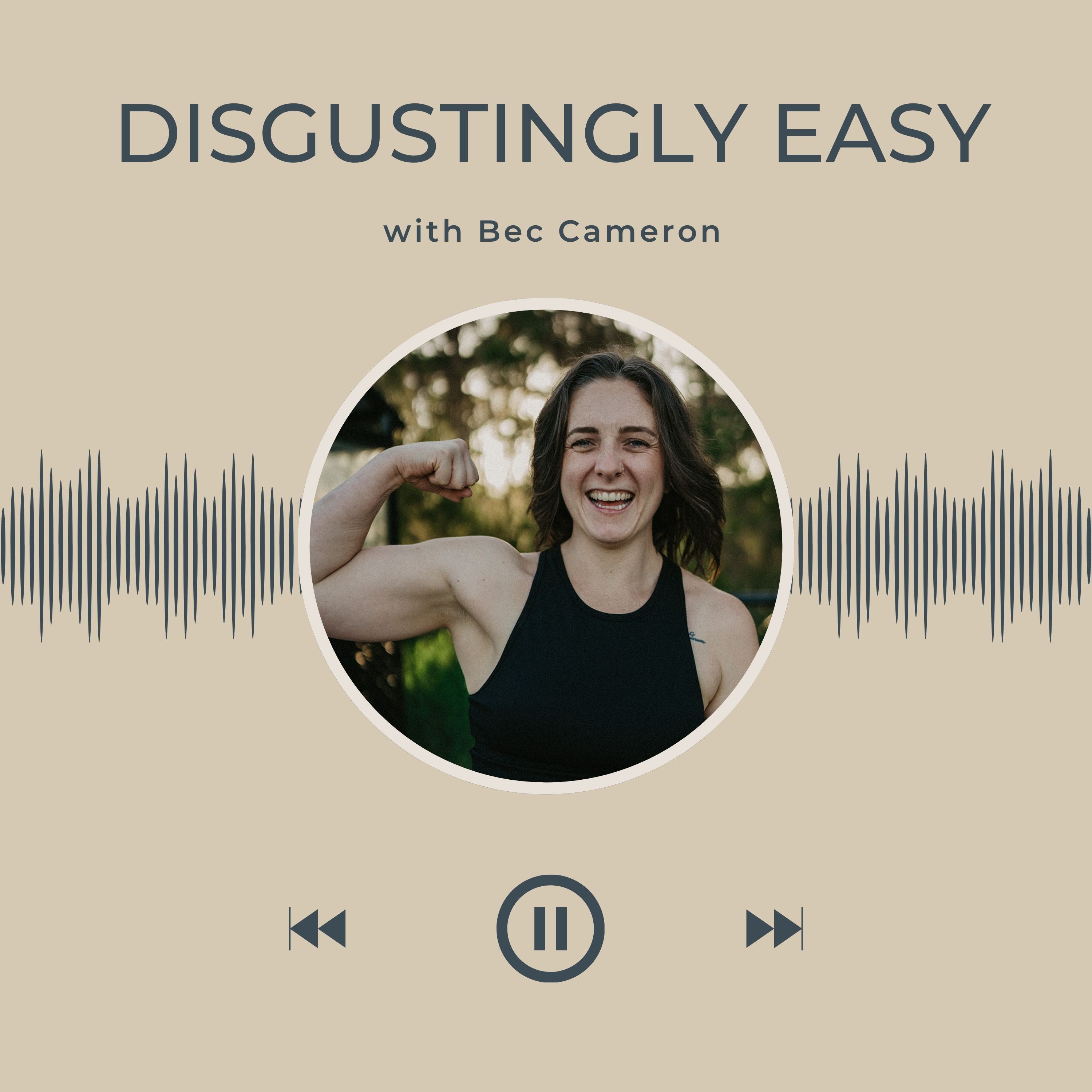
Disgustingly Easy - The Podcast for The Long Game
by Bec Cameron
Disgustingly Easy - The Long Game PodcastThis isn’t another motivational pep-talk.It’s a rebellion against burnout, diet culture, and the lie that your worth is tied to how hard you push.The Disgustingly Easy Podcast is where feminist strength coaching, neurodivergent mindset work, and evidence-based training collide — without the fluff. Hosted by Bec Cameron, founder of The Long Game Coaching, every episode is designed to make your results, your mindset, and your confidence disgustingly easy to sustain.Get access to:✨ Private coaching episodes and unfiltered Q&As🧠 Deep-dive conversations on training, nutrition, identity & growth💬 Raw guest interviews with women rewriting the rules🧘♀️ Tools to help you build strength, discipline, and self-trust — without shame or hustleBecause becoming strong, confident, and grounded doesn’t have to feel c
-
35
Unf*cking Wellness & Rewriting Narratives Around Health - Interview with Miriam Latif
SummaryJoin Bec Cameron in a compelling conversation with Miriam Latif, herbalist and founder of The Root Network, as they explore the complexities of wellness, the influence of capitalism, and the importance of community and nuance in health practices.Keywordswellness, herbalism, capitalism, community health, wellness industry critique, neurodivergence, body image, longevity, social media impact, collective careTopicsThe influence of capitalism on wellness practicesThe importance of community and collective healthNuance and complexity in health and wellness narrativesChapters00:00 Introduction and Excitement for the Podcast00:00 The Root Network: A Community for Herbalists00:25 Miriam's Background and Perspective on Wellness06:15 The Role of Herbalism in Modern Health11:31 Understanding the Impulses Behind Wellness Trends17:04 The Complexity of Wellness in a Simplified World22:35 Key Tenets of a Balanced Approach to Wellness26:36 Balancing Inner and Outer Wellness29:08 Deconstructing Internalized Shame32:08 Cultural Narratives and Body Image34:43 Longevity and Aging Perspectives38:17 Circular vs. Linear Cosmologies41:47 The Power of Choice in Wellness44:52 Embracing Complexity in Wellness50:31 Joy and Pleasure as Medicine58:18 The Importance of Relational Wellness resources
-
34
From All-or-Nothing to All-in: Interview with TLG Community Coordinator Ruby Cullimore
SummaryIn this episode, Bec Cameron welcomes Ruby Cullimore (TLG's very own Community Coordinator) to explore how shifting perspectives on health, body image, and self-trust can transform women’s lives. They discuss the importance of patience, mindset, community, and realistic goals for lasting change.Key TopicsRuby’s journey from restrictive eating to nourishing self-loveThe impact of mindset and self-trust on pregnancy and postpartum healthBuilding supportive communities that honor individual seasons of lifeThe misconception of fast results in fitness and healthPractical strategies for easing into sustainable habitsThe role of body function over aesthetic idealsHow women’s relationships with food, exercise, and their bodies evolveThe significance of patience and repatterning cultural narratives around perfection and speedThe transformative power of a mindset focused on longevity and self-respectChapters00:00 - Introduction01:18 - Ruby’s evolving relationship with her body and health03:16 - The community as a safe space for women’s growth04:00 - How the Long Game fosters support without advice overload05:21 - The upcoming retreat: community in action06:00 - Simplifying health: doing less to achieve more07:31 - The importance of reducing pressure and expectations09:12 - The foundation of sustainable change over quick fixes10:09 - Onboarding insights: What sets Long Game apart11:46 - Building knowledge and confidence with the onboarding process14:18 - Expectations vs reality: what true sustainable health looks like16:41 - The wisdom of doing everything at 60% capacity17:53 - Flexibility in engagement: workouts, mindset, and community19:00 - Navigating pregnancy confidently with a mindset shift20:49 - Trusting your body and embracing seasons in life22:49 - Moving away from shame and towards self-love25:12 - Women's perceptions of weight and celebration of strength27:15 - Achievements beyond aesthetics: strength and capability28:39 - Raising strong children through daily example32:41 - Reframing food: from restriction to nourishment34:49 - Addressing disordered eating and the power of tracking38:36 - The freedom of eating enough and the myth of deprivation41:18 - The long-term journey and realistic expectations43:54 - Challenging diet culture and the myth of fast results45:51 - Strategies to address emotional eating and shame49:28 - Practical tips for intuitive eating and macros55:13 - The importance of consistent nourishment over restriction57:09 - Evolving body image and embracing change61:15 - The beauty of giving yourself time and patience64:02 - Cultivating self-trust and avoiding social media pitfalls66:42 - Ruby’s experience with conception and pregnancy70:51 - The significance of seasons and self-compassion in health journeys73:33 - How Long Game nurtures skills for lifelong health76:44 - The deep interconnectedness of mindset, body, and life77:18 - Celebrating community and shared growth78:02 - The behind-the-scenes dedication of Bec Cameron81:32 - Moving from yo-yo dieting to empowerment82:26 - Ruby’s journey from self-hatred to self-respect
-
33
Hot Take: If It Only Works Short Term, It’s Not a Strategy - It’s a Liability
SummaryDiscover why quick fixes in health and wellness often lead to burnout and frustration, and learn how to build sustainable, long-term strategies that withstand life's inevitable chaos.Key TopicsThe difference between short-term fixes and sustainable strategiesWhy quick fixes create false urgency and temporary motivationHow fragile systems undermine long-term successThe importance of building infrastructure and capacityHow to design plans that work during life's worst weeksThe pitfalls of "all-in" effort and burnout cyclesStrategies for creating adaptable and resilient health routinesThe role of consistency, not intensity, in lasting changeA reframed approach: building systems for the long gameTimestamps:00:00 - The problem with short-term health fixes 00:32 - Why quick fixes feel good and their limitations 01:01 - The danger of relying on motivation and ideal conditions 01:29 - Adrenaline versus stability in quick fixes 01:58 - How system collapse undermines self-trust 02:26 - Reinforcing negative narratives through burnout02:52 - What a real, durable strategy looks like 03:22 - Designing plans that withstand stress and chaos 03:48 - The importance of building repeatable systems 04:19 - Encouragement to shift focus from intensity to infrastructure 04:30 - Invitation to connect for tailored strategies
-
32
From Chasing Aesthetics to Empowered Performance - Interview with Dr Caity Hanover
SummaryIn this insightful conversation, Dr. Katie Hanover discusses her unique approach to osteopathy, strength training, and women's health. She challenges industry assumptions, emphasizes community-based care, and explores the cultural influences on women's bodies and health choices.Find out more about Dr Caity and the Melbourne West Barbell Club in the links below:Dr Caity - InstagramMelbourne West Barbell Club Keywordsosteopathy, women's health, strength training, pain management, community care, cultural body norms, postpartum recovery, health industry critiqueTopicsDr. Katie Hanover's approach to osteopathy and strength trainingThe importance of education and empowerment in women's healthCultural influences on women's perceptions of their bodiesThe limitations of traditional manual therapy and the rise of movement-based careCommunity-centered, anti-patriarchal approaches to health and fitnessChapters00:00 Introduction to Strength and Identity01:48 Empowerment Through Education and Strength Training08:33 The Journey into Osteopathy and Fitness13:16 Navigating Pain and Recovery Postpartum18:51 Community-Based Care and Empowerment22:53 The Impact of Societal Expectations on Women's Health26:36 Performance vs. Aesthetic Goals in Fitness32:21 The Weight of Expectations34:07 Breaking the Silence: Women in Strength Training35:59 The Value of Female Coaches37:53 Authenticity in Business and Coaching40:31 Cultural Pressures on Women's Bodies43:58 The Dangers of Thinness and Health46:26 Strength Training vs. Pilates: Understanding the Difference49:17 Taking the First Steps into Strength Training52:59 Navigating the Conversation Around Weight Loss Medications
-
31
Hot Take: Household Money Is Not "His" Money
SummaryBec Cameron discusses the gendered dynamics of household labor, financial independence, and the importance of valuing women's unpaid work. She emphasizes that household money is a shared resource and advocates for women to prioritize their health, financial security, and self-worth.Keywordsgender equality, household labor, financial independence, women's health, empowerment, unpaid work, cultural messaging, self-care, economic disempowermentTopicsThe gendered division of unpaid domestic workHousehold money as a shared resource and equityCultural and political influences on women's economic dependenceThe importance of self-care and physical health for womenChallenging traditional gender roles and narrativesChapters00:00 The Unseen Labor of Caregiving04:43 The Importance of Self-Investment
-
30
If This Doesn't Change Your Life - Nothing Will
SummaryDiscover how asking better questions can dramatically improve your mindset, decision-making, and personal growth. Bec Cameron shares her layered approach to transforming self-talk through neuro-linguistic programming, psychology, and cultural analysis.Keywordsself-improvement, mindset, neuro-linguistic programming, psychology, empowering questions, identity, personal growth, mental health, self-talk, Bec CameronTopicsThe impact of language on identityHow to ask empowering questionsThe role of neuro-linguistic programming in mindsetCultural and systemic influences on behaviorChapters00:00 Transformative Questions for Better Outcomes08:16 The Power of Language in Shaping Identity resources
-
29
Hot Take: Grounding Into Your Success (A Guided Visualisation)
SummaryBec Cameron guides listeners through a short hypnotic experience to help embody success and shift perspective on progress. This episode emphasizes grounding, recognizing achievements, and cultivating a success mindset.If you loved this - don't forget to share it to your instagram stories and tag @beccameroncoach_au Keywordshypnosis, success mindset, mindfulness, personal growth, NLP, visualization, self-improvementTopicsHypnotic visualization for successGrounding and mindfulness techniquesReframing perceived setbacks as progress takeawaysSuccess is already within you, waiting to be acknowledged.Your thoughts and attention shape your experience and body.Every experience, including mistakes, leads to your current success.Visualization can deepen your belief in your progress.Success is a state of mind, not just a destination.Chapters00:00 Introduction to the episode and its purpose00:52 The importance of grounding in success01:54 Guided visualization: heavy encyclopedia and floating balloon03:20 Noticing physical responses to visualization04:27 Deepening into relaxation and in-between states05:26 Reframing perceived setbacks as part of the journey06:58 Visualizing success as a radiant, expanding light08:20 Embedding success into the unconscious mind08:59 Returning to full awareness and carrying the mindset forward
-
28
You Don't Need More Discipline
SummaryThis episode explores how executive functioning impacts women's ability to maintain fitness routines, emphasizing the importance of stabilizing the nervous system and reducing decision fatigue. Bec Cameron shares practical strategies to support neurodivergent women in building sustainable habits without relying on discipline or motivation.Jump over to @beccameroncoach_au and DM "CAPACITY" to get more information about the Capacity Reset Room - starting 16 March.Keywordsexecutive functioning, neurodivergent women, fitness habits, decision fatigue, self-regulation, capacity building, mental load, habit formation, neuroplasticity, self-careTopicsExecutive functioning and its role in habit formationThe impact of decision fatigue on women’s health routinesStrategies to support neurodivergent women in fitnessThe importance of self-regulation and nervous system stability TakeawaysSupporting executive function is key to sustainable habits.Reducing decision load can make workouts feel easier.Stabilizing the nervous system improves effort and consistency.Pre-deciding and front-loading choices reduces mental clutter.Chapters00:00 Introduction: The Long Game of Self-Care00:27 The Common Struggle: Missed Workouts and Guilt00:57 Why Discipline Isn’t the Solution01:18 Understanding Executive Function in Women01:43 The Real Issue: Executive Function Over Behavior02:38 Decision Fatigue and Brain Tiredness03:37 Executive Function vs Motivation04:21 Neurodivergence and Executive Variability05:05 Stabilizing the Nervous System for Easier Initiation05:51 Practical Strategies: Regulation and Sleep06:44 Pre-Decision Making and Front-Loading07:28 The Power of Reduced Decision Load07:59 Building Consistency Through Supportive Systems09:05 Introducing the Capacity Reset Room10:18 Join the Supportive Community for Capacity Building
-
27
Hot Take: Why Less Is More for Sustainable Success
SummaryBec Cameron discusses the importance of realistic planning for women, emphasizing capacity over discipline, and how to create sustainable routines that fit into real life, especially for neurodivergent women and busy moms.Keywordscapacity, planning, women, self-trust, sustainability, mental health, routines, neurodivergent, long-term results TopicsCapacity mismatch in womenThe importance of buffer time in planningLow capacity plans vs high capacity fantasiesAdjusting expectations based on current life seasonBuilding self-trust through consistent, manageable actions takeawaysA well-executed low capacity plan accelerates life changes more than high capacity fantasies.Planning for 60% of your perceived capacity yields better long-term results.Buffer time for transitions is crucial for realistic planning.Self-trust is built through keeping promises, not heroic efforts.Adjust your expectations and plans according to your current life season.Chapters00:00 Introduction to Capacity Mismatch02:50 Planning for Real Life vs. Ideal Life05:33 Building Self-Trust Through Realistic Goals
-
26
The 'No Fail Focus Formula': How Women Can Expand Their Fitness Capacity Without Burnout
SummaryBec Cameron discusses how traditional fitness approaches often drain women’s capacity and introduces a sustainable, habit-based framework to expand capacity without burnout. She emphasizes the importance of understanding systemic conditioning, building habits, confidence, and strength in sequence, and offers a new capacity reset room for women feeling overwhelmed.Come across to @beccameroncoach_au and DM me "RESET"Keywordsfitness, capacity, habit formation, systemic conditioning, sustainable health, women’s health, neurodivergence, long-term fitness, mental health, self-trustTopicsSystemic conditioning in fitnessHabit-led change vs. hype-driven programsThe three-phase focus formula: habit, confidence, strengthThe impact of dopamine spikes and systemic stressBuilding capacity through rhythm and nervous system regulationChapters00:00 Introduction: The Long Game and Systemic Conditioning00:52 The Purpose of This Training: Recalibration, Not Pep Talk01:33 Women’s Common Barriers to Re-engaging with Fitness01:52 The Myth of Capacity and Traditional Fitness Approaches02:50 Outdated Fitness Culture and Its Impact on Women05:02 The Dopamine Spike and Hype-Driven Programs07:05 The Cycle of Dopamine and Cortisol in Traditional Programs08:29 Patriarchy, Cultural Conditioning, and Fitness Messaging10:38 Understanding Your Motivation and Capacity12:01 The Disservice of Urgency and Quick Fixes13:14 The Sequential Focus Formula: Habit, Confidence, Strength16:18 The Habit Phase: Building Stability and Consistency18:35 The Confidence Phase: Skill, Application, and Mastery20:42 The Strength Phase: Performance, Results, and Sustainability22:47 The Pitfalls of Chasing Urgency and Results Too Fast24:35 Expanding Capacity Through Systematic Building26:06 The Power of Stability and Building Self-Trust27:23 Introducing the Capacity Reset Room: Slow, Sustainable Recalibration28:53 How to Join the Capacity Reset Room and Recalibrateresources
-
25
How To Collapse Time Between Where You Are & Where You Want To Be
Keywordsdecision-making, perfectionism, self-trust, personal growth, women empowerment, overcoming fear, acknowledging success, action steps, coaching, mindsetSummaryThis is a sharp, actionable training on collapsing the gap between where you are and where you want to be by strengthening decisiveness, reducing hesitation, and building real self-trust.TakeawaysDeciding faster can collapse the time between intention and action.Perfectionism often stems from internalized misogyny and can hinder decision-making.Failure is simply data, not a reflection of self-worth.Indecision creates open loops that drain mental energy.Acknowledging wins is crucial for building self-trust.Movement and observation are key to understanding outcomes.Celebrating achievements helps integrate success into identity.The fear of failure often prevents bold decision-making.Real growth happens in motion, not in planning.Taking action, even imperfectly, leads to learning and growth.Chapters00:00 Introduction to Decisiveness02:27 The In-Between Space: Hesitation and Clarity05:12 The Illusion of Perfect Planning08:25 Understanding Failure and Perfectionism11:07 Celebrating Wins and Integrating Success13:40 Taking Action: The Next Step18:04 Conclusion and Call to Action
-
24
Highly Functioning, Deeply Struggling: How I Learned I Was Autistic (Part 2)
KeywordsAutism, diagnosis, late-diagnosed, burnout, sexual assault, disability, dissociation, gaslighting, interoception, anxiety, eurodivergent nervous systems, skill regression, identity loss, motherhood, neuro-affirming care, misogynyMasking and unmasking, relationships, communicationThe Long Game coachingTrigger WarningThis episode contains non-graphic discussion of sexual assault, depression, medical distress, mental health crisis, and burnout.Please take care while listening. Pause, skip sections, or come back another time if needed.SummaryIn Part 2 of this two-part series, Bec continues her story from the point of leaving child protection and moves through adulthood — trauma, survival, diagnosis, and rebuilding life with language.This episode explores what happens after coping stops working, and what it looks like to begin again with a different nervous system map.Bec reflects on:Leaving child protection after severe burnoutWorkplace sexual assault and the heightened vulnerability of disabled womenDissociation as survival, not avoidancePeriods of recovery through disruption, solitude, and embodimentWhy lockdown unexpectedly supported her nervous systemMotherhood as the final removal of maskingThe TikTok moment that cracked everything openAutism assessment, medical dismissal, and heart palpitationsInteroception and why neurodivergent bodies are often misunderstoodSkill regression, fear, and identity collapse after diagnosisReframing intelligence, capacity, and worthWhy diagnosis didn’t change who she was — but changed how she could advocateHow all of this led to the creation of The Long GameThis episode is not diagnostic advice.It’s a story about learning to live inside your body rather than constantly managing it — and about building a life that works with your nervous system instead of against it.If Part 1 was about surviving without language, Part 2 is about what becomes possible once language finally arrives.If you want to continue the conversation, bring it across to instagram @beccameroncoach_au or comment below.
-
23
Highly Functioning, Deeply Struggling: How I Learned I Was Autistic (Part 1)
Key WordsAutism in women, Late-diagnosed autism, Neurodivergence, Masking, Highly Sensitive Person (HSP), Autistic burnout, Internalised meltdowns, Social justice sensitivity, Eating disorders, Food restriction, Orthorexia, Validation and achievement, Academic pressure, University burnout,, Mental health stigma, Depression, Nervous system regulation, Female autism presentation, Disability and invisibilitySummaryIn Part 1 of this two-part episode, Bec shares the early chapters of her late-diagnosed autism story, from childhood, school, and adolescence through to university and the slow, invisible onset of burnout.This episode explores what it means to grow up as an autistic girl without language, diagnosis, or support, learning early on that academic achievement, compliance, and “being good” could substitute for connection and safety.Key ThemesHow achievement and validation became coping strategiesThe experience of masking before knowing what masking wasFood sensitivities, eating restriction, and the overlap between control, praise, and worthA strong social justice compass and how global injustice overwhelmed an already overloaded nervous systemDepression, internalised meltdowns, and self-harm as attempts at regulationWhy things stabilised when structure matched her nervous system — and fell apart when it didn’tHow university removed the last scaffolds that had been holding everything togetherPart 1 ends at the point where systems, structure, and self-compensation finally begin to fail — setting the stage for.Part 2, where adulthood, work, trauma, motherhood, diagnosis, and rebuilding are explored.This episode is not diagnostic advice.It is one person’s story — shared in the hope that it offers language, recognition, and a little more compassion for your past.Come across to @beccameroncoach_au if you want to chat or simply leave a comment below.
-
22
Guest Episode: A Physical Practice As The Creative Container with Amie McNee
Keywordslife changes, self-compassion, physical fitness, creativity, success, community, mothering yourself, personal growth, overcoming fear, goal setting, vulnerability, excellence, social media, neurodivergence, creative process, personal growth, resilience.SummaryIn this engaging conversation, Bec Cameron and Amie explore the complexities of navigating life changes, the importance of self-compassion, and the interconnectedness of physical fitness and creativity. They discuss the significance of building a supportive community, the power of mothering oneself, and redefining success through kindness. The dialogue emphasizes the process over the outcome, encouraging listeners to embrace their journeys and overcome fears of the unknown. Ultimately, they advocate for a disgustingly easy approach to achieving goals, highlighting that anyone can achieve their dreams with the right mindset. In this conversation, Amie and Bec explore the themes of vulnerability, authenticity, and the impact of social media on self-perception. They discuss the importance of embracing the messy process of growth, especially in the context of neurodivergence. The conversation delves into personal experiences of facing dark moments and the significance of trusting oneself through the journey. They emphasize the value of process over outcome, encouraging listeners to find joy in the journey rather than just the destination.Find Amie:InstagramSubstackWebTakeawaysLife changes bring new responsibilities and challenges.Self-compassion is crucial for personal growth and success.Physical fitness and creative practices are interconnected.Building a supportive community enhances personal and professional growth.Mothering yourself can lead to greater self-acceptance and success.Redefining success involves kindness and compassion towards oneself.Focusing on the process rather than the outcome leads to sustainable success.Physical fitness contributes to creative energy and productivity.Facing dark nights of the soul is part of the journey.It's okay if achieving your goals takes time; the process is valuable.Allowing yourself to be seen trying is generous.Chapters00:00 Navigating Life Changes and Challenges02:55 The Importance of Self-Compassion05:50 The Intersection of Creativity and Physical Health08:20 Building a Supportive Community11:27 The Journey of Self-Discovery and Growth24:05 Breaking Barriers: The Power of Physical Practice26:36 Overcoming Fear: Women and the Gym28:02 The Process Over the Goal: Embracing the Journey29:30 The Disgustingly Easy Process: Building Confidence31:41 Redefining Success: Embracing Simplicity33:51 The Fear of Trying: Cultural Narratives36:18 The Generosity of Trying: Embracing Vulnerability39:10 Navigating Social Media: Authenticity vs. Performance41:58 The Flattening of Culture: Individuality in Creativity43:57 Embracing Neurodivergence: The Gift of Interest-Driven Work46:49 Building Trust Through Facing Challenges49:30 Navigating Dark Nights of the Soul52:15 The Relentless Pursuit of Dreams54:51 The Importance of Creative Space59:21 Finding Clarity in Intentions01:04:25 The Power of Mothering Ourselves
-
21
Hot Take: Stop Abandoning Yourself on The Altar of the "Good Mother"
Keywordsself-care, motherhood, emotional health, personal growth, coaching, boundaries, validation, burnout, mental health, parentingSummaryIn this episode, Bec Cameron discusses the importance of self-care, particularly for mothers who often prioritize the needs of others over their own. She emphasizes that abandoning oneself can lead to negative consequences not only for the individual but also for their family. Through personal anecdotes and coaching insights, she encourages listeners to recognize their worth and the necessity of self-care as a means to model healthy behaviors for future generations.TakeawaysWhen you abandon yourself, you abandon everyone.Burnout is not noble, self-bannerman is not generosity.You are modeling what love looks like.This isn't about doing more and it's not about perfection.The real work is learning to take care of yourself, not instead of your family, but for them.You don't need to fix anything today.I was an over-involved, overstimulated mom.TLG is not prescriptive; it’s about education and integration.You just need to stop abandoning yourself.Chapters00:00 Introduction to Self-Care and Abandonment00:31 The Impact of Abandoning Yourself02:58 Modeling Behavior for Future Generations05:09 The Real Work of Self-Care05:54 Personal Experience and Coaching Philosophy
-
20
Why “Just Eat Intuitively” Isn’t Working for So Many Women (and what to do instead)
Keywordsintuitive eating, food tracking, calorie counting, nutrition, body image, fat loss, mental health, neurodivergence, diet culture, self-worth SummaryIn this episode of the Disgustingly Easy Podcast, host Bec Cameron dives deep into the complexities of food tracking, intuitive eating, and the societal pressures surrounding nutrition. She begins by acknowledging the ideal of eating when hungry and stopping when full, but quickly points out that many people struggle with this concept due to external influences and personal histories. Bec shares her own journey with food tracking, revealing how it has evolved from a destructive practice to a useful tool in her life, especially postpartum. She emphasizes that tracking calories and macros can be beneficial when approached thoughtfully, and it should not be seen as a moral failing or a sign of weakness. Bec further explores the impact of capitalism on our food choices, highlighting how marketing manipulates our perceptions of health and nutrition. She discusses the challenges faced by neurodivergent individuals in recognizing hunger cues and the societal conditioning that often leads to disconnection from our bodies. Throughout the episode, Bec advocates for a balanced approach to food tracking, suggesting that it can serve as a bridge to understanding our bodies better, rather than a strict rule to follow. She introduces her upcoming initiative, the Deficit Diaries, aimed at providing a transparent look into her own fat loss journey while maintaining a compassionate and evidence-based perspective on nutrition. JOIN DEFICIT DIARIES CHANNEL HERETakeawaysTracking can be a helpful tool when used thoughtfully.Our food environment is designed to manipulate behavior.Disconnection from our bodies is often a result of societal conditioning.Tracking isn't the goal; understanding your body is.Fat loss can be approached without self-hatred or moral failure. Chapters00:00 Introduction to Intuitive Eating and Tracking05:20 Neurodivergence and Hunger Cues12:29 Conclusion and Invitation to Join the Journey
-
19
Hot Take: Perfectionism Isn’t Discipline. It’s Internalised Misogyny.
Keywordsperfectionism, internalized misogyny, women empowerment, neurodivergent, feminism, self-acceptance, growth, liberation, patriarchy, societal expectations SummaryIn this episode, Bec Cameron discusses the detrimental effects of perfectionism, particularly among women and marginalized communities. She explores how internalized misogyny manifests as a fear of imperfection, leading to self-policing and paralysis. Cameron emphasizes the need for grace, growth, and the acceptance of imperfection as a pathway to empowerment and liberation. She encourages listeners to embrace their learning processes and reject the societal pressures that demand perfection. TakeawaysPerfectionism is not discipline; it's internalized misogyny.Women are conditioned to self-monitor and fear imperfection.Perfectionism keeps women silent and small.Mistakes are not neutral for women; they carry weight.Internalized misogyny manifests as impossible standards.Grace allows for growth and learning in public.Liberation requires embracing messiness and imperfection.Perfectionism kills creativity and solidarity.We must stop demanding perfection from ourselves and others.Movements thrive on the acceptance of imperfection. Chapters00:00 The Burden of Perfectionism06:57 Breaking Free from Internalized Misogyny
-
18
Guest Episode: Medical Misogyny, Misdiagnosis & Surviving the Wellness Era with Bella Johnson
Content WarningThis episode includes discussion of medical trauma, misdiagnosis, eating disorders, cancer, mental health, sexual assault, abortion, and suicidal ideation.Some content may be distressing, particularly for listeners with lived experience of healthcare neglect or trauma. Please take care while listening.If you need support, crisis and mental health resources are listed below:Lifeline: 13 11 14Beyond Blue: 1300 22 4636Suicide Call Back Service: 1300 659 467 If you’re elsewhere, please seek local crisis resources in your country. SummaryThis episode asks us to sit with the uncomfortable reality of medical misogyny and the harm it causes women every day. Bec is joined by Bella Johnston for a raw conversation about misdiagnosis, medical dismissal, and what happens when women, especially neurodivergent women, are labelled “difficult” instead of believed. Bella shares her experience of being misdiagnosed with an eating disorder at 15 while a serious tumour and cancer went undetected for years, and the long-term trauma that followed.Together, they unpack the link between patriarchy, diet culture, wellness misinformation, and survival, as well as the cost of keeping up appearances while falling apart behind the scenes.This is a confronting, honest conversation about power, trust, and why people don’t fall through the cracks, systems create them. Find Bella over on instagram @spicyjohnson TakeawaysMedical misogyny and gendered misdiagnosisHow eating disorder labels are used to dismiss physical illnessNeurodivergence, “difficult women,” and being psychologised instead of investigatedCancer misdiagnosis and long-term medical traumaThe wellness-to-disinformation pipelineThe Belle Gibson effect and performative “health”Why “being good” keeps women sickReality TV, visibility, and identity fractureAbortion, bodily autonomy, and stigmaRage, grief, and not performing gratitude after traumaPlatform responsibility, politics, and refusing to be palatable
-
17
Hot Take: Eat More - Lose Weight
Keywordsbinge eating, weight loss, nutrition, restriction, metabolism, fat loss, deficit diaries, Long Game Coaching, Bec Cameron, eating habits, survivalSummaryIn this episode of Disgustingly Easy, Bec Cameron challenges common misconceptions about binge eating and weight loss. She emphasizes that long-term restriction often leads to binge eating, not due to a lack of willpower, but because of inconsistent eating and imbalanced nutrition. Bec shares her approach of reevaluating nutrition to solve binge eating issues, highlighting the importance of proper nourishment for physiological and nervous system survival. She introduces her "Deficit Diaries," a six-week educational series demonstrating a balanced approach to running a deficit without crash dieting.Join the Deficit Diaries Telegram Channel - HereTakeawaysYou can eat more and lose weight.Long-term restriction leads to binge eating.Binge eating is not a lack of willpower.Proper nutrition can solve binge eating issues.Under-eating triggers survival mechanisms.Metabolic rate adapts to perceived scarcity.Fat loss is not a punishment.Balanced nutrition prevents binge eating.Deficit Diaries offers real-time learning.Your body is designed for survival.
-
16
Guest Episode: Unlearning The Good Girl Conditioning with Madeline McKenzie
Keywordsgood girl conditioning, trauma therapy, emotional regulation, hypervigilance, societal expectations, patriarchy, motherhood, anger management, technology impact, mental health, empowerment, emotional release, neurodivergence, good girl conditioning, self-advocacy, boundaries, self-care, personal growth, relationships, women empowermentSummaryIn this conversation, Madeline, a trauma therapist, discusses the concept of 'good girl conditioning' and its impact on women, particularly neurodivergent women. The discussion delves into personal stories, societal expectations, and the challenges of navigating relationships while feeling overwhelmed. Madeline emphasizes the importance of emotional regulation, the role of technology in mental health, and practical steps to reconnect with one's emotions and body. The conversation highlights the need for women to unlearn harmful conditioning and embrace their true selves. In this conversation, Bec Cameron and Madeline explore the themes of empowerment, emotional release, and the complexities of neurodivergence. They discuss the importance of allowing emotions to flow, the challenges of masking in neurodivergent individuals, and the impact of good girl conditioning on women's lives. The dialogue emphasizes the need for self-advocacy, setting boundaries, and teaching the next generation about personal needs and consent. They conclude with practical steps for listeners to begin their journey towards self-discovery and healing.TakeawaysMadeline describes herself as a trauma therapist for grown-up good girls.The conversation explores unlearning the good girl conditioning, especially for neurodivergent women.Women often feel overwhelmed and burnt out due to relational issues.Good girl conditioning is rooted in childhood experiences and family dynamics.The patriarchy enforces conditional love and societal expectations on women.Simple practices can help reconnect with emotions and reduce overwhelm. A medicine ball is a weighted ball used for exercise.Empowering women through physical expression can lead to emotional release.Emotions should be allowed to flow and not suppressed.Masking can lead to physical symptoms and emotional distress.Self-advocacy is crucial in relationships and personal growth.Good girl conditioning often manifests as fear of conflict and self-sacrifice.Resentment can serve as a mirror for personal needs.Healing can be a gradual process, not always dramatic.Taking small steps towards change can lead to significant personal growth.Chapters00:00 Introduction and Context Setting02:52 Understanding Good Girl Conditioning05:56 The Role of Relationships in Good Girl Syndrome08:38 Personal Stories and Origin of Conditioning11:33 The Impact of Societal Expectations14:43 The Rift Between Inner and Outer Worlds17:35 Hypervigilance and Its Consequences20:29 Fear of Rejection and Belonging23:18 The Patriarchy and Conditional Love26:25 Women’s Rage and Societal Expectations28:01 Navigating Anger in Motherhood32:04 Breaking the Cycle of Dissociation35:36 The Impact of Technology on Mental Health38:43 Understanding Stress Responses41:12 Discharging Emotional Energy44:41 The Power of Permission48:07 Unmasking Neurodivergence54:22 Understanding Good Girl Conditioning57:38 Navigating Inconvenience and Self-Care01:00:26 Resentment as a Mirror01:04:33 Reframing Compliance in Parenting01:07:31 Teaching Bodily Autonomy to the Next Generation01:13:19 Taking the First Steps Towards Change
-
15
The Map Is Not The Territory (So Stop Being So Fkn Realistic)
SummaryBec Cameron discusses goal setting through the lens of NLP and the 'disgustingly easy' method, encouraging listeners to think beyond realistic expectations and consider audacious goals. She emphasizes the concept that 'the map is not the territory,' explaining how our perceptions filter reality and limit potential. Bec guides listeners through a visualization exercise to reframe their mindset and expand their capacity for achieving seemingly impossible goals.Keywordgoal setting, NLP, audacious goals, perception, reality, mindset, visualization, potential, capacity, personal growthTakeawaysGoal setting should be audacious, not limited by past experiences.Our perception of reality is filtered and not the full picture.The 'map is not the territory' concept helps reframe potential.Visualization can expand our capacity to achieve goals.Familiarity and safety often limit our aspirations.Dr. Joe Dispenza's work on brain programming is influential.Commitment to one goal for a year can transform identity.Change feels uncomfortable before it feels aligned.The 'disgustingly easy' method simplifies achieving goals.Community support is crucial for realizing potential.Chapters00:00:00 Introduction to Goal Setting00:00:00 The Map Is Not The Territory00:00:00 Visualization Exercise00:00:00 Commitment and Community
-
14
Hot Take: You’re Not Avoiding Failure - You’re Choosing It.
Keywordsfear of failure, perfectionism, self-trust, mindset coaching, personal growth for women, nervous system and control, neurodivergent mindset, trauma-informed coaching, confidence and consistency, avoiding failure, identity-based change, The Long Game CoachingSummaryIn this short hot-take episode, Bec explores a pattern she sees again and again: women who say they’re “scared to fail,” while quietly opting out, pulling back, or never fully trying.Not because they’re lazy.Not because they lack capacity.But because not trying feels safer than being seen trying.In this episode, she explores:• why half-effort is often a form of self-protection• how avoiding commitment doesn’t prevent failure, it simply guarantees regret• the difference between failure as feedback and failure as identity• why control, not fear, is usually what’s driving the behaviour• and how choosing to try properly changes everythingThis episode is for anyone who knows they’re capable of more, but keeps stopping just short of fully going for it.
-
13
Guest Episode - Learning to Trust Your Body After Cancer with Charlotte Squires
Keywordsself-compassion, women's health, doula work, personal growth, strength training, vulnerability, community support, body image, emotional health, motherhood TakeawaysCharlotte emphasizes the importance of self-compassion and kindness towards one's body.The experience of cancer reshaped Charlotte's relationship with her body and health.Navigating relationships often involves understanding one's self-worth and boundaries.Social work provided Charlotte with insights into personal development and emotional well-being.Fear of change can hold individuals back from pursuing their goals and desires.Community support is crucial during challenging times, especially in motherhood.Strength training can empower women physically and emotionally.Breaking intergenerational patterns is essential for healthier relationships.Vulnerability is a strength that fosters deeper connections with others.Honesty with oneself is the first step towards personal growth. SummaryIn this conversation, Bec Cameron and Charlotte explore the profound themes of self-compassion, vulnerability, and personal growth. Charlotte shares her journey through cancer, motherhood, and her work as a doula, emphasizing the importance of trusting one's body and the power of community support. They discuss the intersection of physical and emotional health, the impact of strength training, and the necessity of breaking intergenerational patterns. The conversation highlights the significance of honesty and self-reflection in personal development, encouraging listeners to embrace uncertainty and prioritize their well-being. Chapters00:00 Introduction to the Conversation02:46 Charlotte's Journey with Cancer and Healing05:33 The Evolution of Self-Compassion08:25 Navigating Life After Diagnosis11:37 The Impact of Personal Development on Health14:31 Facing Health Scares and Uncertainty17:34 Celebrating Milestones and Life's Challenges20:26 The Role of Community and Holding Space23:25 The Importance of Vulnerability in Relationships26:28 Finding Strength in Shared Experiences29:25 Reflections on Life Choices and Changes32:19 The Challenge of Hyper-Independence35:18 Practicing Vulnerability and Building Trust40:27 Building Trust and Vulnerability41:25 Microdosing Vulnerability and Consent42:48 Compassionate Communication in Relationships44:55 Sisterhood Wounds and Healing51:00 The Role of Support in Birth Experiences56:04 Strength Training and Capacity Growth01:00:13 Self-Care and Community Support01:06:59 Overcoming Fear and Embracing Change01:10:37 Honesty as a Path to Growth
-
12
Why You THINK You Want to Be Thin
Keywordsthinness, body image, health, wellness, feminism, diet culture, empowerment, strength, self-respect, societal norms SummaryIn this episode, Bec Cameron discusses the cultural obsession with thinness and its implications on women's health and self-worth. She emphasizes the importance of redefining strength and wellness beyond societal beauty standards, advocating for a shift in focus from aesthetics to functionality and empowerment. The conversation explores the historical roots of fatphobia and the political dimensions of rejecting diet culture, encouraging women to embrace their bodies and take up space. Takeaways2026 is the year of Warrior energy, focusing on empowerment.Thinness is often prioritized over actual health metrics.Cultural pressures influence women's perceptions of their bodies.The pursuit of thinness can lead to negative health outcomes.Historical context shows how beauty standards have evolved.Rejecting diet culture is a form of political resistance.Women are conditioned to equate thinness with worth.Health should be defined by strength and functionality, not size.The desire for thinness is often rooted in societal expectations.Empowerment comes from embracing one's body and capabilities. Chapters00:00 Setting the Tone for 202606:59 Cultural Influences on Body Image14:09 Historical Roots of Fatphobia
-
11
Guest Episode - Burning Out From Being Who You Thought You Should Be with Tiffany Ye
Keywordstransformation, grief, identity, burnout, personal development, entrepreneurship, content creation, self-discovery, mental health, life changesSummaryIn this conversation, Bec Cameron and Tiffany discuss Tiffany's transformative journey from being a corporate lawyer to a content creator. They explore themes of grief, identity, burnout, and the importance of personal development. Tiffany shares her experiences of navigating the challenges of losing her mother while pursuing her legal career, the impact of burnout, and the steps she took to reclaim her life and creativity. The discussion emphasizes the significance of taking small, manageable steps towards change and the power of investing in oneself.TakeawaysTiffany's journey illustrates the impact of grief on identity.Burnout can lead to significant life changes.Investing in personal development is crucial for growth.Recognizing the signs of burnout is essential.Finding joy in creative expression can aid recovery.Taking small steps can lead to significant transformations.Self-awareness is key in entrepreneurship.Integration of personal development learnings is important.Setting new standards for oneself can redefine life.Life is too short to not pursue what you love.Chapters00:00 Introduction to Transformation02:03 Tiffany's Journey: From Lawyer to Content Creator04:27 The Impact of Grief on Identity06:37 Navigating Life During a Family Crisis09:29 The Pressure of Balancing Work and Grief10:57 Avoiding Discomfort: Coping Mechanisms13:42 The Aftermath of Loss and Starting a Career16:44 Burnout in the Legal Profession21:22 Recognizing the Signs of Burnout24:24 The Decision to Leave Law Behind30:10 Transitioning to a New Life31:33 Rebuilding Identity After Quitting Law33:52 Navigating Identity Beyond Law39:13 Healing and Self-Discovery43:38 Embracing Personal Development51:50 Investing in Yourself01:00:54 Standards of the New Self01:02:52 Taking the First Step Towards Change
-
10
Hot Take: You're Not Overwhelmed - Your Screen-time Sucks
Keywordsoverwhelm, screen time, mental health, creativity, problem solving, phone use, mindfulness, personal power, habits, self-careSummaryIn this episode, Bec discusses the misconception of feeling overwhelmed, attributing it instead to excessive screen time and lack of mental rest. She shares her personal experience with the 20 hours for 20 talk challenge, emphasizing the importance of creating space for creativity and problem-solving. Bec introduces new rules for phone use to foster a healthier relationship with technology and encourages listeners to reflect on their habits to reclaim their mental well-being.TakeawaysYou are not overwhelmed, your screen time is too high.Resting your body is not the same as resting your mind.Constant phone use prevents mental breaks and stress cycle completion.Creating space for boredom is essential for creativity.Changing phone habits can lead to significant life improvements.The phone should be a tool, not a coping mechanism.Mindfulness in phone use can enhance personal power.Feeling overwhelmed may stem from fragmented attention.We need to allow ourselves time to breathe and think.Chapters00:00 Overcoming the Overwhelm: A New Perspective02:41 The Impact of Screen Time on Mental Health05:35 Creating Space for Creativity and Problem Solving
-
9
One Thing For One Year - Building TLG in 2025 (Business Edit.)
Keywordsbusiness growth, personal development, women empowerment, entrepreneurship, mental health, fitness journey, community building, mentorship, long game, resilienceSummaryIn this episode, Bec Cameron reflects on her transformative year of growth, focusing on her journey as a business owner and the lessons learned along the way. She shares her experiences of launching the Long Game program, navigating personal challenges, and building a supportive community. Throughout the conversation, Bec emphasizes the importance of consistency, mentorship, and the power of focusing on one thing to achieve success. She encourages listeners to embrace their unique journeys and highlights that personal struggles do not disqualify them from achieving their goals.Takeaways2025 was the year that I chose one thing.I realized I needed to start with the slow, steady, sustainable.Consistency is when you keep going despite the mistakes, not when you stop making them.Your trauma doesn't disqualify you from success.Everything in fitness, in business, in life changes when you realize the slow road is the shortcut.Building a community is essential for personal and professional growth.Investing in mentorship can lead to significant breakthroughs.Navigating personal challenges is part of the entrepreneurial journey.Focusing on one thing allows for deeper refinement and delivery.Success is not just about financial gain, but about personal fulfillment and growth.Chapters00:00 Reflecting on a Year of Growth02:30 The Journey to Finding Purpose08:07 Launching the Long Game Program11:52 Overcoming Personal Challenges17:58 Building Community and Confidence23:38 Lessons in Consistency and Focus29:42 Investing in Growth and Change35:26 Looking Ahead to 2026
-
8
Hot Take: How To Not Binge Your F*kn Face Off This Xmas
KeywordsChristmas, binge eating, emotional resilience, mindful eating, holiday stress, self-regulation, social pressures, diet culture, nutrition, mental health SummaryIn this episode, Bec Cameron shares practical strategies to avoid binge eating during the holiday season. She emphasizes the importance of regulating one's nervous system, fueling the body properly, practicing mindful eating, and navigating social pressures. The episode concludes with an invitation to join a supportive community for ongoing discussions about emotional resilience and diet culture. This is a great episode to listen to the morning of Christmas - if you're worried about heading into a family lunch or a big food situation. You've got this. TakeawaysBinge eating is often linked to emotional states, not just food.Regulating your nervous system can prevent chaotic eating.Proper nutrition before events is crucial to avoid cravings.Mindful eating practices can help break automatic behaviors.Social pressures can lead to overeating; choose intentionally.Saying 'okay' can help you disengage from negative conversations.Building a plate based on desire rather than obligation is key.Emotional resilience is essential during the holiday season.Support from a community can aid in navigating challenges.Staying connected to oneself is vital for mental health. Chapters00:00 Introduction to the Holiday Challenge00:51 Regulating Your Nervous System02:17 Fueling Your Body Before Events03:45 Mindful Eating Practices04:41 Navigating Social Pressures06:03 Conclusion and Support for the Journey
-
7
5 Things You Need To Do To Stay the Course This Christmas
Keywordsidentity, transformation, self-honoring, motivation, non-negotiables, personal growth, self-leadership, Christmas, choices, empowerment SummaryIn this conversation, Bec Cameron emphasizes the importance of identity in achieving lasting change, particularly during challenging times like Christmas. She argues that relying on motivation, guilt, or fear is ineffective; instead, one must focus on who they are becoming. By honoring oneself, keeping promises, and setting non-negotiables, individuals can lead themselves towards transformation and make empowering choices without self-punishment. TakeawaysYou cannot rely on motivation, guilt, or fear.Focus on your identity and who you are becoming.Honoring yourself is crucial for transformation.Keeping promises to yourself fosters self-trust.Setting non-negotiables helps maintain commitment.Self-leadership is essential, especially in tough conditions.Choices should be made without self-punishment.Transformation occurs through self-honoring decisions.Embrace your identity to navigate challenges effectively.Empowerment comes from understanding and embracing your identity.
-
6
Guest Episode - Motherhood, ADHD & Sober Curiosity with Lauren Jadehall
Keywordssober curious, motherhood, ADHD, sobriety, emotional triggers, community support, alcohol, self-discovery, trauma, self-trust TakeawaysIf you think you're sober curious, you probably are.Creating a supportive community is essential for mothers questioning their relationship with alcohol.Sobriety is not about absolutes; it's about exploration and curiosity.ADHD can significantly impact one's relationship with alcohol.Emotional triggers play a crucial role in drinking habits.It's important to redefine what wellness and connection look like for you.Self-trust is key in making intentional decisions about alcohol consumption.The journey to sobriety can be layered and complex.Finding balance in social settings is a challenge for many sober curious individuals.Trauma can heavily influence one's relationship with alcohol. SummaryIn this conversation, Lauren Jade and Bec Cameron explore the concept of being sober curious, particularly in the context of motherhood and ADHD. They discuss the emotional triggers that often lead to drinking, the importance of creating a supportive community, and the journey of self-discovery that comes with questioning one's relationship with alcohol. The conversation highlights the complexities of sobriety, the impact of trauma, and the necessity of self-trust in making intentional choices about alcohol consumption.Contact [email protected] on instagram. Chapters00:00 Introduction to Sober Curiosity and Motherhood02:11 The Journey to Sobriety: Personal Reflections04:47 Understanding ADHD and Its Impact on Alcohol Consumption07:11 The Role of Environment in Personal Change09:34 Navigating Social Expectations and Alcohol Culture11:38 Self-Discovery and Building Self-Trust13:49 The Importance of Community and Support16:17 Practical Takeaways for Sober Curious Moms21:00 Challenging Alcohol Norms in Australia23:21 Understanding Triggers and Environmental Influences26:24 Emotional Connections to Alcohol and Motherhood31:01 Navigating Sobriety as a New Mother34:59 The Impact of Trauma on Alcohol Consumption38:12 Finding Balance: Sober Curious Journey39:43 Exploring Sober Curiosity42:03 Creating Supportive Spaces for Women44:41 Taking Action Towards Sobriety46:29 Redefining Wellness and Connection
-
5
We Don't Stop in Busy Seasons; We Become Unstoppable
Keywordsmindset, health, fitness, all-or-nothing, self-improvement, training, wellness, mental health, exercise, lifestyleSummaryIn this conversation, Bec Cameron discusses the detrimental effects of an all-or-nothing mindset in health and fitness. She reflects on her own experiences of overtraining and the mental traps that come with perfectionism, emphasizing the need for a more balanced approach to wellness.TakeawaysThe all-or-nothing mindset can lead to exhaustion.Many people feel like failures if they miss a workout.Perfectionism in fitness can be detrimental to mental health.It's important to recognize the systems we've been taught.A balanced approach to health is more sustainable.Overtraining can lead to burnout and frustration.Self-compassion is key in fitness journeys.Fitness should not feel like a second full-time job.Recognizing your limits is essential for long-term success.Changing your mindset can transform your fitness experience.TitlesBreaking Free from Perfectionism in FitnessThe Dangers of an All-or-Nothing Mindset
-
4
Guest Episode - Becoming a Batch Queen with Lucia Mazzella
Keywordsdiet culture, wellbeing, nourishment, strength, self-care, energy, hormones, joy, body positivitySummaryIn this conversation, Bec Cameron emphasizes the importance of prioritizing wellbeing over restrictive diet culture. She advocates for a nourishing approach to food that focuses on long-term health, energy, and joy rather than short-term restrictions. The discussion encourages listeners to embrace their bodies, build strength, and fill their lives with what sustains them, promoting a positive relationship with food and self-care.TakeawaysIf that didn't make you just want to throw all concepts of diet culture out the window and start actually feeding yourself like you matter, then I don't know what will.Prioritize your wellbeing and how that doesn't mean restriction.We're not talking about punishment. We're not talking about perfection.It just means playing the long game with your energy, with your hormones and your joy.In the long game, we don't eat less. We eat well.We don't chase toned. We chase strong.We sure as hell don't shrink ourselves to fit into this world.We build ourselves up to get the strength to take up space.Take this as your sign to fill up your plates, fill up your freezer, fill up your life with what actually sustains you.That's the long game and we can make it disgustingly easy.
-
3
Finding Balance: Discipline vs. Self-Compassion
Keywordsdiscipline, self-compassion, emotional health, social media, accountability, mental health, personal growth, lifestyle changes, long game, self-careSummaryIn this episode of The Long Game, Bec Cameron discusses the balance between discipline and self-compassion, sharing personal experiences and insights on how to navigate emotional states while pursuing goals. She emphasizes the importance of making conscious decisions that align with long-term aspirations, rather than succumbing to immediate gratifications that may lead to regret. The conversation also touches on the impact of social media on mental health and the necessity of taking responsibility for one's actions and choices in order to foster personal growth and well-being.TakeawaysCheck-ins are pivotal for connection and accountability.Discipline should be approached with compassion.Focus on how to make things work rather than why they won't.Emotional states can influence decision-making.Social media can create unnecessary noise and stress.Rest can be part of the journey towards goals.Self-inquiry is essential for personal growth.Take responsibility for your actions and choices.Align your lifestyle with your goals.Every goal is achievable with the right mindset.Chapters00:00 Introduction to the Long Game and Check-Ins02:53 Discipline vs. Letting Ourselves Off the Hook05:57 Navigating Emotional States and Mental Health08:57 The Role of Social Media and Self-Compassion11:51 Reframing Discipline and Accountability14:38 Creating Sustainable Habits and Lifestyle Changes20:37 Conclusion and Call to Action
-
2
Guest Episode - Strong & Hot with Jess Tirpkos
Keywordsstrength, empowerment, women, fitness, body image, nutrition, self-care, postpartum, community, mental healthTakeawaysStrength and empowerment are about taking up space.The journey to self-confidence often involves overcoming past struggles.Disordered eating can be a significant barrier to self-acceptance.Building a supportive community is crucial for personal growth.Neutralizing numbers like weight and measurements can help reduce anxiety.Aesthetic goals should not overshadow sustainable habits.Maintenance is essential before entering a fat loss phase.Postpartum body image issues are common and need to be addressed with compassion.Social media can distort perceptions of body image and success.Glorifying short-term results can be harmful and misleading.SummaryIn this engaging conversation, Bec Cameron and Jess Turpkos explore the themes of strength, empowerment, and the journey to self-acceptance. They discuss the importance of building a supportive community, overcoming disordered eating, and the need to neutralize numbers in fitness. The conversation also touches on the realities of postpartum body image, the impact of social media, and the dangers of glorifying short-term results. Ultimately, they emphasize the significance of nourishment, compassion, and sustainable habits in achieving long-term success.TitlesEmpowering Women Through Strength TrainingThe Journey to Self-Confidence and AcceptanceSound bites"Strength and empowerment are about taking up space.""Neutralizing numbers can help reduce anxiety.""Glorifying short-term results can be harmful."Chapters00:00 Introduction to Strength and Empowerment02:37 The Journey to Self-Confidence05:47 Overcoming Disordered Eating08:32 Building a Supportive Community11:38 The Importance of Neutralizing Numbers14:27 Aesthetic Goals vs. Sustainable Habits17:17 The Role of Maintenance in Fitness20:21 Navigating Fat Loss Phases23:03 Postpartum Realities and Body Image25:58 The Impact of Social Media on Body Image28:59 Glorifying Short-Term Results31:34 The Importance of Nourishment34:28 Finding Balance and Compassion37:15 Rewiring Your Relationship with Food40:15 Daily Non-Negotiables for Success43:05 The Long Game Philosophy45:58 Final Thoughts and Mantras
No matches for "" in this podcast's transcripts.
No topics indexed yet for this podcast.
Loading reviews...
ABOUT THIS SHOW
Disgustingly Easy - The Long Game PodcastThis isn’t another motivational pep-talk.It’s a rebellion against burnout, diet culture, and the lie that your worth is tied to how hard you push.The Disgustingly Easy Podcast is where feminist strength coaching, neurodivergent mindset work, and evidence-based training collide — without the fluff. Hosted by Bec Cameron, founder of The Long Game Coaching, every episode is designed to make your results, your mindset, and your confidence disgustingly easy to sustain.Get access to:✨ Private coaching episodes and unfiltered Q&As🧠 Deep-dive conversations on training, nutrition, identity & growth💬 Raw guest interviews with women rewriting the rules🧘♀️ Tools to help you build strength, discipline, and self-trust — without shame or hustleBecause becoming strong, confident, and grounded doesn’t have to feel c
HOSTED BY
Bec Cameron
Loading similar podcasts...
URL copied to clipboard!