
PODCAST · society
Distant Perspective Podcast
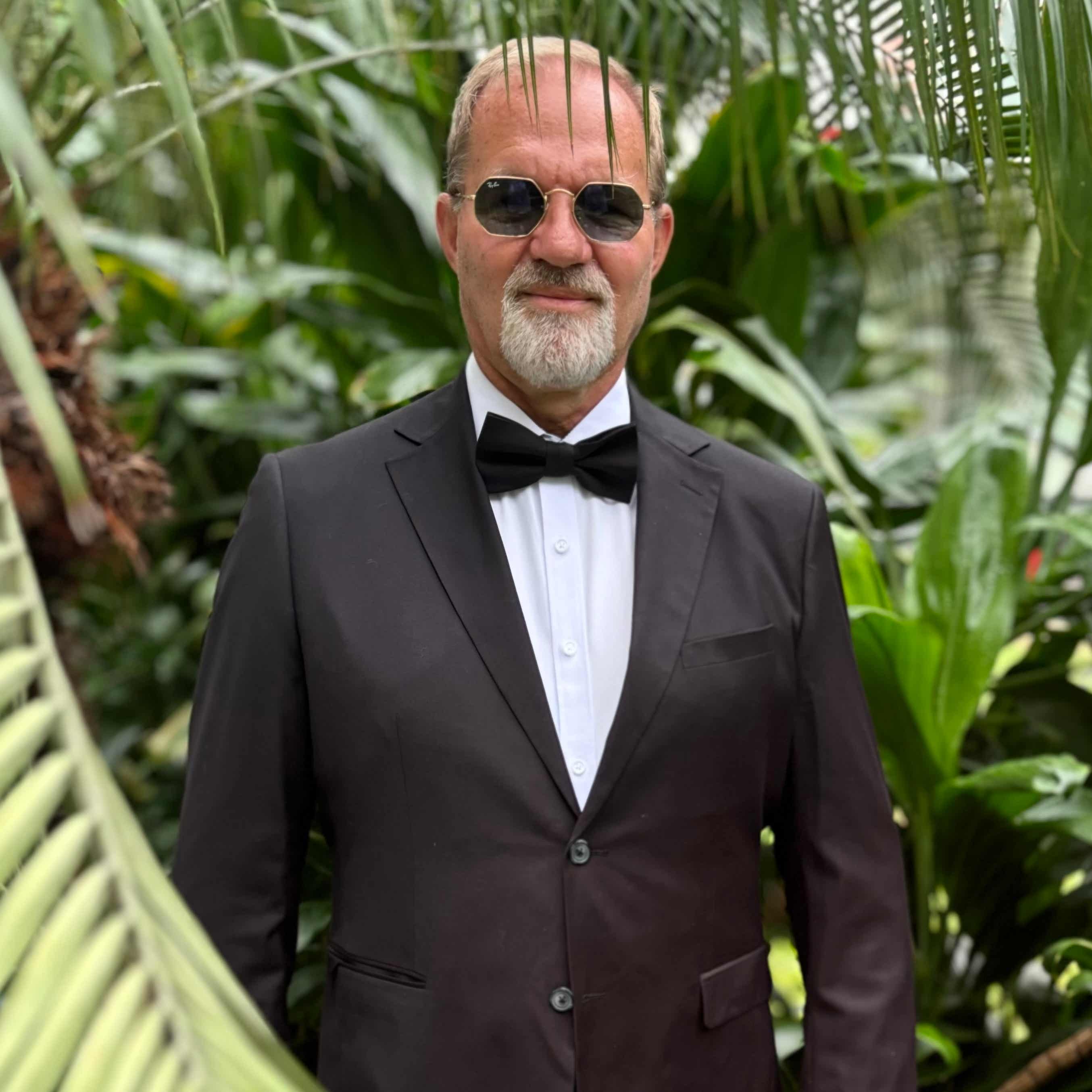
by Gary Westphalen
Five decades as an objective journalist covering Washington, DC, along with all other aspects of modern life, has left me with insights you need to navigate the world today. Topics will include a wide range of subjects all viewed from my Distant Perspective. distantperspective.substack.com
-
17
Walk The Walk
The tightrope stretched across Niagara Falls on June 30, 1859 drew a huge crowd of onlookers. Who would be crazy enough to try to walk a tightrope across one of the world’s greatest waterfalls? To the amazement of the gathering throng, the answer was soon forthcoming. Jean-François Gravelet, who went by the stage name The Great Blondin, soon appeared on the small platform at the end of the rope.“Who believes I can cross over Niagara Falls on this tightrope?” He called out. The crowd cheered in approval. “Who believes I can cross over Niagara Falls on this tightrope while blindfolded?” Excitement grew and they rooted him on. “Who believes I can cross Niagara Falls on this tightrope while blindfolded and pushing a wheelbarrow?” The crowd lost its mind in a wild roar of encouragement. “Who among you will ride in the wheelbarrow as I push it across this rope over Niagara Falls while blindfolded?” he shouted.No one uttered a whisper. It seems they were all too eager to watch him walk the walk, but when it came to putting themselves on the line, well, yeah…No.It is human nature to talk a great game, but when it comes to taking action, we often falter. I have, of course, been guilty of this myself. Specifically, I have been acutely conscious of the damage humans are doing to the precious environment of our planet. At NASA, I studied the evidence gathered by the many satellites that measure this self-destructive path we have been on. I have read the scientific dissertations and observed the damage first-hand. As a journalist, I stood on that public platform and urged those who would listen to walk the walk, lest we find ourselves headed for self-extinction.I was talking the talk, but I wasn’t walking the walk. Over the years, I poured untold gallons of fossil fuels through my trucks, cars and motorcycles. I powered my homes with energy produced by coal, gas, and nuclear sources. Always conscious of the damage I was doing, I tried to minimize my carbon footprint. But, in The United States, it is nearly impossible.This is among the many reasons I chose to move to Costa Rica. This tiny nation takes environmental damage seriously, and walks the walk. Virtually all of our fruits, vegetables, meats and fish are from local sources, eliminating the need for long distance shipping. Geothermal, solar, wind, and hydro sources provide 99% of our electricity. Moving here meant I had one foot out on that high wire, but I had not fully committed to traversing the waterfall. I was still pouring diesel fuel into my SUV. It had to stop.The opportunity to reduce my carbon footprint to virtually zero came a few months ago, with the purchase of a fully electric vehicle. Now my car is powered with the same renewable energy as my home. As an added bonus, because Costa Rica has mandated that by 2035 every new car sold in the country must use clean energy, the incentives to walk the walk are tremendous. Not only is the electricity I feed my new car from green sources, but it is also free. And those free charging stations, by law, are no more than 80 kilometers apart on every highway in the country, meaning I never have to worry where my next green electrons are coming from. It is a proactive stance that every country in the world should adopt. Caring about the world we will leave to future generations matters, and there is no downside.Will my resignation from the carbon footprint society make a difference? Not really, and I know that. I am but a drop in the sea of humanity. But, as more of us drops become proactively engaged in reducing carbon emissions, the collective effort can change the world. I am finally walking the walk I have long espoused, and it feels great. To borrow the words of the Great Blondin, who among you will walk with me?” This is a public episode. If you would like to discuss this with other subscribers or get access to bonus episodes, visit distantperspective.substack.com
-
16
40 Seconds at Llanos de Cortés
Carmen and I took a little road trip this week, enjoying the freedom our new pollution-free electric SUV has given us to explore more of Costa Rica. Just a four-hour round trip ride on gorgeous roads through valleys and mountains sits a beautiful spot on Rio Celeste. It’s called Llanos de Cortés. This is a public episode. If you would like to discuss this with other subscribers or get access to bonus episodes, visit distantperspective.substack.com
-
15
Tenacity Rules
Winter in North America always sends huge flocks of birds south to our Central American paradise. While the peskiest of these snowbirds fly in on the aluminum wings of jetliners, uncountable hoards of real birds do it by flapping their real wings. It’s an amazing feat of nature that, despite its annual re-occurrence, always enthralls me. How these spin-offs from the dinosaur era, that weigh a mere hundred-or-so grams, can generate enough energy to fly thousands of miles is an accomplishment man can only dream of.If you live in that northern, wildly oscillating climate, you may not give much thought to exactly where the birds go when they “fly South for the winter”. Although there are numerous destinations, the rain forests and jungles of Costa Rica are popular with many of these feathered travelers. Our own compound hosts scores of these seasonal vagabonds. They fill our palm trees with intricately engineered nests, hatch their eggs, and then go to war with each other.Yes, war.There are Starlings and black birds of several varieties that mix with the native Golden-Bellied Flycatchers and chatty parrots as they compete with each other for the prime nesting spots in our palms. A palm, you see, can really only support a single nest at the very crown of the tree. Build your nest on a lower frond and you’re likely to see it collapse to the ground before those babies are ready to take wing.As a result, competition for the prime penthouses is fierce, and never ending. I have seen birds clash with each other mid-air, and literally fall to the ground in an entangled mesh of mad birds. I’ve even broken up a few of these battles as they happened right at my feet while drinking my morning coffee.What I never gave much thought to is where these birds came from and how they ended up here. Yes, they flew south from someplace cold, and landed someplace warm. Specifically, here. But is there more to it than that? Do they, like the human snowbirds, begin and end their voyage in an exact location? I have evidence that suggests the answer is an emphatic, “Yes!”Four North-American winters ago, a Starling with a unique challenge appeared around the edge of our swimming pool. I don’t know if it’s a he or a she, but I’m going to simplify the story by naming the bird “Wingnut”.I immediately felt sorry for Wingnut because, while the other birds strolled around the cement watering hole, Wingnut had to limp. It’s left leg, from the backward-bending ankle on down, was missing. The most likely explanation is that the handicap was the result of a viscous battle to protect it’s babies.But Wingnut, rather than curling up and dying, was undeterred. It popped around on one leg almost as deftly as the two-footed birds, only occasionally putting its stump to the ground to maintain balance. When it flew up to the trees, Wingnut managed to perch on the palm fronds in a one-footed stance that practically defied gravity. Spring came to the northern hemisphere and Wingnut, apparently, went with it.Imagine my surprise when, the next January, I saw a bird with a missing left leg hopping around the pool. Could it possibly be the very same bird that had flown away eight months ago? After watching its behavior for a few days, I had to conclude that, yes, Wingnut had returned to the very same spot it had wintered the year before.Wingnut had a partner and successfully raised a nest full of babies. During that time I watched Wingnut valiantly hop on one leg as it gathered shredded palm fronds to build the nest, find food for the brood, and defend its homestead. Not one time did that missing appendage seem to deter Wingnut’s expeditions.Ditto for last year. There was Wingnut again, going about life as though birds were meant to pop around on a single leg.This year, for the fourth time, Wingnut is spending the winter months with us. I would love to know where this bird spends it’s summer months, but I know for certain that the same bird spends every late December through April at the very same address. Wingnut’s tenacity is truly inspiring.The lesson I take from this tiny observation of nature is that we all have it in us to succeed. You have it within you. No matter the challenge. No matter the handicaps you endure. No matter the difficulty of your personal journey. There is a way to succeed. And if you latch onto life with every fiber of your being, you will find that way.A little birdy told me so. This is a public episode. If you would like to discuss this with other subscribers or get access to bonus episodes, visit distantperspective.substack.com
-
14
Breaking The Weak Link
See the full Cinematic Trailer Here This is a public episode. If you would like to discuss this with other subscribers or get access to bonus episodes, visit distantperspective.substack.com
-
13
NASA
I believe that I can quite safely say no other federal agency comes close to the brainpower of the staff at the National Aeronautics and Space Administration. Throw in an enormous dose of bravado combined with positive attitude toward the common mission to explore space (and what it means for our planet), and you have an invigorating workplace.I was fortunate enough to serve a four-year-plus stint as NASA-TV Senior Special Projects Producer, starting in 2008. I was involved in the photography and public distribution of the scores of camera feeds involved in shuttle missions. I, with the help of a brilliant editor and an equally talented graphic artist, also created videos and programs that made NASA-TV actually worth watching, even for the non-space geek. My two largest projects were to create a documentary for the 40th Anniversary of the Apollo moon missions, and the other was a celebration of the 50 years of NASA that included stories of all the aviation, as well as rocketry and space missions that have enriched humanity.What would you do? See the full trailer and get your copy of the book. Just click here.[Launch Time-Shift software_Set the Earth date to 16 February, 1962]I was not yet six years old when I watched John Glenn climb aboard a giant, (hopefully) controlled bottle rocket the size of a water tower. They lit the fuse. (Seriously! With a machine called a NASA Standard Detonator (NSD). It is not unlike the spark wheel on a regular lighter.) It took Mr. Glenn less than five hours to circle the globe three times and safely return to earth in a spectacular moment caught on live television.I was hooked. I cut out every newspaper story about the moon race and pasted then into scrapbooks. I wrote my own story about the pictures I kept. I cried when the Apollo I mission crew of Gus Grissom, Ed White II, and Roger Chaffee died in that horrible launch pad fire. I cried again, this time tears of joy, as did Walter Cronkite on national television, when Neil Armstrong and Buzz Aldrin landed on the moon. It wasn’t just the manned missions that captured my imagination. A phenomenal array of robotic spacecraft have been flung into space from this planet and each one (Yes, even the failures) has contributed to our knowledge base in ways that defy belief.[Launch Time-Shift software_Set the Earth date to {Nominal}, January 2025]Yes, NASA pays for itself in hardware innovations created for these missions. You know all about the thousands of products that originated from NASA technology. But the part I like best is rarely spoken about, even within NASA. The wealth of knowledge contained in the brains of this team is incalculable. And to no one’s surprise, some of the oldest hands still on deck have some of the most valuable knowledge that modern computers don’t understand.I highly recommend you read a Pocket Story, written by Richard Hollingham.Titled “The Ancient Technology Keeping Space Missions Alive,” it is an amazing tale of how some of the oldest spacecraft still serving their missions decades after their expiration dates are being kept in a modern computer loop. Imagine having a microscopic onboard RAM Memory of 2 MB aboard a spacecraft that is millions of miles away. Oh, and it’s operating on Windows 98 PC software. And it’s running out of fuel. But you don’t really know that because there is no “fuel gauge”. And the conversation involves a lot of waiting because of the time it takes for the signals to get from here to that robot, and back.This is a skillset that the younger generations never needed to learn. Call it Computer Code History 101. But because the people of NASA are willing to postpone their retirements in deference to their mission’s conclusion, the knowledge still catalogued in these ripening minds is still on the job.Now, these pioneers of computerized space travel are teaching new engineers how to fly these dinosaurs of space travel using computer software that dates back to the 1960’s. Someday, an AI computer will learn how to mix the science, art, and voodoo it takes to fly these craft. But for now, the knowledge pass-down to the incoming generations is a gift that needs to be respected.In my time at NASA, I got to rub elbows with Nobel Prize in Physics laureate John C Mather, Neil Armstrong, John Glenn, Gene Cernan (the last man to step on the moon), and countless more heroes and geniuses.My role came to a natural end for me when the Shuttle missions were cancelled. An enormous part of my work had just been moved to the attic. But in the days before that transition, walking through the doors of NASA Headquarters in Washington, D.C. every day (unless we were on mission somewhere) is a highlight my life, of which I am enormously proud. Please join the conversation by sharing this post, taking advantage of the free subscription, and leaving a comment. Also, please pick up a copy of one or more of my books, all available on amazon. You’ll find descriptions and links, as well as many of my documentary videos, on my website at garywestphalen.com. This is a public episode. If you would like to discuss this with other subscribers or get access to bonus episodes, visit distantperspective.substack.com
-
12
Breaking The Weak Link
I've been informing the world for decades. Now I'm using that massive knowledge base to generate wildly out of control stories based on true crimes. To see the whole video for Breaking The Weak Link, just go to garywestphalen.com This is a public episode. If you would like to discuss this with other subscribers or get access to bonus episodes, visit distantperspective.substack.com
-
11
Data Breach
It started five years ago, with a mysterious package that arrived at my front door. A box about yay square. It had my name in the “Deliver to:” space.[Odd Thing #1: The box is from the Galaxy telephone company and I have an iPhone.]I am wondering if I have been the lucky recipient of a shipping error, or maybe this is a promotional stunt. I may have just scored something. Inside the box is a pair of Galaxy ear buds. I wonder if they work with my phone?[Odd Thing #2: There is also a credit card receipt for a card I don’t recognize.]Not my card. Somebody must have messed up. Not my problem?The ear buds work with my phone, although their quality is terrible. Still, usable for making phone calls. Just to be sure, I look at my credit card account online, to see if these buds have been charged to my card. They have not. My email account chimes its delivery announcement, and I tap over to that window. There is an email confirming receipt of my credit card information to pay for an extended warranty on a kitchen appliance that I’m pretty sure I didn’t buy.[Odd thing #3: The receipt is charged to the same mystery credit card that apparently has my name on it.]I quickly click over to my Equifax account to check my credit and discover that someone has opened at least one credit card account using my real identity. They might have my social security number. They might know my driver’s license number. They might know my the account numbers. I don’t know what they know and how much they have. But, they’re in.Even though I caught this within 48 hours of its beginning, this fraudulent use of my personal information would take me the better part of a year to repair. (That this happened during the COVID lock-down didn’t help.) I won’t bore you with the details of filing police reports, sitting on hold with banks, and all the other gyrations it took. I will only say that I worked on this issue for hundreds of hours. Hundreds. Keep that number in mind.It turned out that Equifax, the very people I had turned to for protection of my information, had been ripped open like a kid going for the last cookie in the box. The data of more than 163-million people had been aired out. Then, they tried to hide the breach. Of course, that failed. Even I knew someone was emptying the box.The Federal Trade Commission jumped in, eventually winning a consumer settlement from Equifax for more than half-a-billion dollars. A couple days ago, I received an email from my Equifax Settlement account stating that I could now collect my share of the settlement. My share that is supoposed to pay for the time and loss I suffered because of this data breach. The amount that the settlement decided was a fair shake for the hundreds (remember?) of hours of my time?$14.87.Yes, the decimal point is in the correct place.Am I disappointed? Yes and No.Of course, discovering that my time and personal information reads like the receipt for a fast food meal is disappointing. It is also encouraging because, in this very rare instance, a federal agency stepped in and aggressively protected its citizens. While the settlement pales compared to the costs incurred, I will take that $14.87 and happily spend it in one of my favorite hangouts. I’ll even offer a “Salud” to the FTC.See the full trailer for Breaking The Weak Link and buy this book, or any of the other four I have published, by clicking here. This is a public episode. If you would like to discuss this with other subscribers or get access to bonus episodes, visit distantperspective.substack.com
-
10
Merry and Happy
In an unusual circumstance, Christmas and Hanukkah agree on this year’s date and the New Year is only lagging by six days. Okay, I know. That part is normal. The point is; there’s a lot of holiday in our immediate future. It’s a good time to step off the treadmill of life, and take a look around at the gifts you have already been given.For us this year, it has meant spending time with friends we’ve made through our local writer’s group. They are all people we didn’t know a year ago as the group was just getting started. Now, we’re great friends. The simple act of putting a notice on Facebook to see if others were interested in starting the group, has enriched our lives with friendships that will endure the test of time. By the very nature of living where we do, there is a built-in kinship with these other citizens of the world, no matter in which country they began life’s quest.One of our daughters got married this year. Seeing her storybook wedding come true was a once-in-a-lifetime event. We would have moved heaven and earth to be there. Oh, wait, that’s exactly what we did. Still, we wouldn’t have it any other way.My Spanish gets a little better every day. Let me rephrase that. Me español esta mejor un poco a poco cada dia. I have a wonderful and patient maestra who has committed her life to the study of languages. She also lives across the street, takes ballet classes from Carmen, has us tend to her kitty when she’s out of town, and has become a great friend.Speaking of where we live, it is another gift that we get to unwrap every day of the year. My five minute walk to the beach is rewarded with the view of our amazing bay that manages to look a little different each time I see it. As I look over the Pacific Ocean, its vastness is overwhelming. A boat heading due west from our beach would sail over 13,000 miles of water before finally landing in Vietnam. The endless kaleidoscope of life that flows above, on, and below the water, speaks to the vibrancy of this one-of-a-kind planet we have been given. Living in a place like this, I am given this gift every day. I make a point to accept and absorb the positive energy that flows from this magical spot with every footprint I leave in the white sands.Gold, Cash, Robbery, Deception, Romance and a Shocking Finale are waiting for you in my book “Breaking The Weak Link” Click to learn more.Many more gifts have come in the course of this past year, and I am grateful for every one. It won’t matter if there’s nothing for me under the tiny Christmas tree we put out each year. The gifts I’ve received throughout this year are more than I can recount.So, Merry Christmas, Feliz Navidad, Happy Hanukkah, Happy New Year, and every other salutation that fits whichever holidays you chose to embrace. Hold on to them tightly and recount all the gifts that have come your way this year. Unwrap them again and enjoy what you have been given.Please check out my website at garywestphalen.com to see more about my books, documentaries and other features. This is a public episode. If you would like to discuss this with other subscribers or get access to bonus episodes, visit distantperspective.substack.com
-
9
Hope
I wrote last week about a publishing deal for my book Breaking The Weak Link. It took almost two weeks to uncloak the fact that the otherwise legitimate publishing company was employing a scam technique known as “pay to play” on me. It’s a deal (at least, in this case) where the publisher requires the author to pay money upfront for marketing services to “prove” that the book has potential. The publisher gets to test the waters for a book on the author’s dime. It’s a scam. At the very least, the publicist, hired by the publisher (so…kickbacks?), makes money. Let’s say the $20,000 worth of publicity works. Now the publisher says, “We’ll take your book. We need you to cough up $25,000 to print the first 5,000 copies.” This is followed by more marketing costs and more printing and shipping costs, not to mention the significant percentage the publisher keeps. Travel associated with the book signings and media tours? Do you have American Express?Looking through the telescope from my Distant Perspective, it saddens me that business practices like these have become normalized. I see a world filled with distrust, doubt and fear. What used to be a good-faith transaction between a customer and a business has become fraught with little extra charges, scam add-ons like extended warranties (good luck with that), the need to h ave a paid subscription, and any other surcharge they can think of. There was a time when these scam-ish practices were frowned upon. Now they are standard fare.Breaking The Weak Link - Watch the full trailer and buy the book. Just click here.I suppose it shouldn’t surprise me. Our societal leadership, business management, certainly our political governance, have all become corrupted shells devoid of the moral fiber that used help keep their shape. Criminality has become the new status symbol. Companies that rely on old-fashioned honesty can’t compete, and they are left with the choice of becoming corrupt, or becoming fossils. Rooting for the guy who deploys a bitter edge poisoned with a tincture of hatred has become a national pastime in the U.S., and the country seems proud of it.The upshot of it is that, even when experiencing something good, we can no longer fully enjoy it. Instead, of cheering, we are looking for the hammer to drop. When the book deal was presented to me, my three seconds of happy excitement gave way to weeks of doubt and distrust. To this very moment, I don’t really know if that would have been the book deal of a lifetime for me, or a one-way ticket down a financial rabbit hole. Even if it had been a really good deal for me, I wouldn’t be able to celebrate because my mind is calibrated to instantly start looking for the traps. Gone is the hope for a good deal, ground to little bits by the doubt surrounding our modern-day lack of ethics.For all of the advances in human civilization, our greatest failure has been the inability to create a society in which positive experiences can simply be enjoyed for exactly what they are. And isn’t that a shame. This is a public episode. If you would like to discuss this with other subscribers or get access to bonus episodes, visit distantperspective.substack.com
-
8
Scam
“My job is to figure out how they’re going to screw you,” the lawyer says. He is a friend of one of the members of my local writer’ group. A publishing lawyer for at least a significant part of his career, he has seen it all. But, before we get to the lawyer, you need to know why I am talking to him in the first place. It is around 9:30 in the morning, ten days before the lawyer conversation, when my phone rings. A professional-sounding man, with a New York Society-grade voice, is on the line.“Hi, Gary,” he says. “This is Jim Smith.” (This is not the name he used, nor, I think, was the name he did use, really his. Got that?) “I’m from ConMan Press.” (Also fictitious, but fitting.) “Did you get the email I just sent you?”Dude, I’m retired. I’ll get to email after yoga, a walk on the beach and a swim in the ocean. That’s what I think. What I say is, “Uh, no.” Flipping my computer open. Clicking on the email. Waiting for our jungle-grade internet to wake up. (Who knew electrons move slower in the tropics?)“g-w-e…”, he begins reciting my email address. Except, there is one number missing. I correct him. He sounds like he’s noting it down, then promptly drops off the line. My phone shows a New York area code. Seconds later, the email appears in my inbox.Dear Gary,I trust this email finds you well. Thank you for taking my call. Once again, my name is Jim Smith, and I am the Executive of Corporate Communications and Social Responsibility at ConMan Press, a traditional publisher located at XXX West XXth Street, 11th Floor, New York, NY 1XXXX. We recently received an endorsement for your book, “Breaking The Weak Link.” BLAH-BLAH-BLAH…The polite, and seemingly direct, language carries an air of real authenticity. The right industry words are used correctly. The language is impeccable. The letter goes on to say how my book has been recommended by ConMan’s acquisition team. If I am interested, and my book passes some kind of initial investigation, there could be good money in it for me.This is the book that started it all: Breaking The Weak Link Click here for the full Cinematic Book Trailer of Breaking The Weak LinkNot yet excited (I get a dozen author scam emails every week), but interested because the guy actually called me. I look up the company. ConMan Press is indeed a real publisher that has published quite a few books, including best-sellers and a few really controversial books. It is called an Imprint because it is a subsidiary of a very large, independent publishing company. I can’t check out this particular guy’s creds with the company, though, because they don’t include any names on their website. Security, and all.For the next ten days, Jim and I trade numerous emails, wherein I try to expose the holes in his story. He judiciously answers every question with the perfect response. It is only though reading between the lines that the truth can be exposed. I consult with my friends in the Writer’s group. One day we all think it’s a scam. The next day, Jim Smith says something so perfect that we can’t help but think it sounds great. He’s either incredibly honest or a really good liar.Next, my inbox contains an email from Jim Smith, with a “Confirmation Letter” attached. The letter offers me a s**t-ton of money for Breaking The Weak Link, along with unheard-of royalty percentages. I search the internet about high-dollar books deals. They do happen, rarely. I search author scams and find dozens of websites warning about this and that companies, this phony email address. Hundreds of entries. Nothing suggests there is anything wrong with the contact I am having. Finally, I decide it’s time to play the Ace.“I’m going to send this ‘Confirmation Letter’ to my lawyer,” I tell him. His response is excited and encouraging about having my lawyer look it over. A grifter doesn’t encourage a mark to include his lawyer. That would be suicide. This must be real. Right?So, finally, back to the lawyer.“It all checks out, as far as I can tell,” this really top-shelf publishing lawyer says. “But this is a really sweet deal that seems too good to be true.” And, down the roller coaster we go again. “I have three things I want you to ask them about.”I relay the three things to Jim Smith. Jim answers promptly, as he always does. The answers to the three questions are the exact things we want to hear, except for one little phrase buried in there that finally achieves Breaking The Weak Link in this scam.I would have to spend marketing money upfront to try to qualify my book for publication. The publicist I would pay for would be a person Jim Smith has specifically briefed about my book and is standing by to get going. Nowhere does anything he writes over the course of ten days worth of emails allow that publicity expenses would come out of my pocket. He even states in one email, “Additionally, we do not ask for upfront payments from authors.”Still, ConMan Press is a real business (of a different name, remember?). It just operates with a shady set of business practices designed to rip people off even as it maintains a minimal facade of legitimacy. Even when I email Mister Smith that our conversation is over, he persists by pleading sympathy and trying to explain why this upfront expense is necessary. Then he tries to sweeten the deal by guaranteeing the purchase of my other books without upfront money for them. That’s a deal?No.That’s a scam. This is a public episode. If you would like to discuss this with other subscribers or get access to bonus episodes, visit distantperspective.substack.com
-
7
Failure Is Mandatory
Second only to “That’s one small step for man…”, the most famous phrase to come out of the NASA space era is “Failure is not an option”. The phrase, which curiously was spoken only in movies and books (never in real life), encapsulated the Can Do attitude that permeated the moonshot program of the 1960’s and early 70’s.It may serve as a great rallying cry, but the concept of never falling short of the mark is not only unrealistic but, in itself, it misses the point. Failure is not only a given, but it is impossible to have success without it. Even that space race was littered with failures. NASA experienced dozens of rocket explosions in the 1950’s and early 60s. Those failures led to the knowledge of rocketry that allowed the moon program to succeed.Billionaire investor Mark Cuban has proudly admitted to failures as well. Cuban is one of the investors on TV’s Shark Tank, a show where the uber-rich invest money in start-up businesses, in the hopes that they are buying into the next great thing. Most of the time, it doesn’t work out.“I’ve gotten beat,” the billionaire admitted recently. At the time of that interview, he had invested more than $20-million in 85 Shark Tank companies. For all of that investing, he has a net negative return.That doesn’t stop him from continuing to invest in start-up companies. The stats show that more than 90 percent of new businesses fail. Although the success rate is small, and even the payoffs from successful new ventures are often miniscule, there are the occasional breakthroughs that dreams are made of.The dream is exactly the point. Without goals, without dreams, nothing we have in this world would have been accomplished. Everything begins with a dream, a vision for a better way. Most of these dreams fail, at first. But those failures, if we learn from them, can show us the way to a successful path.I am personally engaged in such a dream. A Hollywood production company is currently working to raise the money necessary to turn one of my books into a movie. The pitfalls between where we are, and seeing my story on a silver screen, are immense, diverse, and numerous. Less than one percent of Hollywood book deals actually become movies. And that’s on top of the vast majority of books that are never even considered. Of that one percent that are made, most don’t make money. Failure is not only an option. It is expected.That doesn’t mean I’m going to stop trying. In fact, if this first attempt fails, it will only encourage me to try again. That I have gotten this far in the process is it’s own success. If I pay attention and learn from the likely failures this time around, I can hone the presentation, revise the screenplay, make use of the contacts I have developed on this try, and give it another go. There will be a success. The only question is, “How many failures will it take for me to get this right?”Mark Cuban’s track record on Shark Tank is a net loss. That doesn’t stop him from dreaming. Doesn’t deter him from trying. Although the man will never want for anything, he still dreams of hitting that next big deal. The failures are simply stepping stones on the path to success.So, take that shot. Reach for the brass ring. Go for the gold. Aim for the bullseye. Hold on to any cliché that suggests success in the face of adversity. Believe that you have it within you to achieve your dream. You can do it.Oh, and save up a few bucks for a ticket when my movie hits the theaters. This is a public episode. If you would like to discuss this with other subscribers or get access to bonus episodes, visit distantperspective.substack.com
-
6
Where Am I?
I found myself in the mountain town of Highlands, North Carolina for a wedding last week. I remember spending time in this town on more than one of my million miles worth of motorcycle adventures over the years. Back then, Highlands was a quaint little town with homey restaurants and inexpensive lodging. Now I’m struck by how different - how foreign - how overwhelmingly expensive - everything is.For starters, the high-end rental car we’re driving on this trip doesn’t seem the least bit out of place here. In fact, anything less would scream poverty. As we walk through the three-block long downtown, I spot numerous BMW’s, Mercedes, and even a Bentley Continental GT Speed Coupe which carries a $364,565 price tag. This used to be a great place for motorcyclists on a budget to enjoy some of the most beautiful roads in the eastern U.S. Today, I don’t see a single rider. Obviously, Highlands has traded it’s humble past for an upscale present.This showy elitism flows from the angled parking spaces right through the shops that line the street. Clothiers for men and women ooze upper-class prices. A hat that would sell for around $50 in Costa Rica can be had here for a mere $365. We walk into a jewelry store. The very first thing the husband and wife ownership team inform us of is that everything in the store is pure gold, which is selling for $2,665 per ounce today. The unspoken but clear message is: If you’re not planning on spending thousands of dollars, don’t waste our time. We didn’t.When it came time for lunch, we found a pizza shop. How expensive can that be, right? After ingesting a fairly good pizza, a shared salad, a beer and a glass of wine, we were presented with a bill that exceeded a hundred bucks! For five days, we seek out modest meals and always end up with triple-digit price tags. Even breakfast, consisting of two scrambled eggs with a piece of store-grade white bread, a one-biscuit and gravy plate, and two cups of basic coffee (nowhere near as good as Costa Rican joe) cost us nearly $50.Turns out, it wasn’t just this town. Our trip began and ended with a day in the Atlanta area. Lunches there didn’t quite hit the triple-digit mark, but they were close enough to make it clear that this explosion of prices in The United States is a problem everywhere. For example, our last meal in Atlanta at a large national chain restaurant, which consisted of a hamburger and fries, a salad, a beer and a glass of wine exceeded $80.It wasn’t just prices that kept us off balance. We were surprised at how angry the country has become. Drivers honking their horns, flipping the bird, and making dangerous moves against other cars were commonplace experiences. We had one waitress who never returned to check on us after the food came out. Then, when we asked for a second drink, she made a show of crushing up our check and threw it away. She proceeded to ignore us for fifteen minutes, finally sending the busboy to bring the second drinks to our table. She never returned with an updated check, making us walk around the restaurant in search of her to pay our bill. She was so angry at us for ordering a second drink that she wouldn’t even talk to us as we paid…which did not include a tip. At least I gave her a reason to hate us, albeit after the fact.In contact after contact during this trip, we encountered angry people who made it known that we were putting them out, just by being there. Gone are the smiles, the “thank you” after dropping a hundred bucks for a pizza, the human camaraderie. Maybe it’s because we have gotten so accustomed to living in a happy country that we noticed this change even more acutely. Maybe it’s because the political winds of The United States have released contemptuous undertones, allowing this negative attitude to rise to the surface. I have been living in my Distant Perspective from Costa Rica for well more than four years now, and although I expected surprises during this trip back to the States, I feel like I’ve walked through a time warp. Experiences like these never happen here. We have our own twists and bumps to life, for sure. But I can buy an entire wardrobe for the cost of a hat in the U.S. I can get an excellent breakfast for ten bucks, and a perfectly grilled, fresh whole fish with risotto and a salad in an upscale restaurant for $30. And I absolutely guarantee it will be delivered with a genuine smile…not an angry scowl.I now understand how what is seen through a telescope, in other words a Distant Perspective, can often be deceiving. It’s not always as flat as it looks from way out here. Those wrinkles in the time-space continuum that affect life in the United States dissipate long before they reach these little latitudes. That doesn’t mean this perspective is inferior. To the contrary, it is a grand scale observation of a moment. It is one plane of information at one point in time. It means no more, nor no less, than that.It also means, I’m in no hurry to make my next trip. This is a public episode. If you would like to discuss this with other subscribers or get access to bonus episodes, visit distantperspective.substack.com
-
5
Steve Martin Ain't Got Nuthin' On Me
In the 1987 movie, Planes, Trains and Automobiles, an advertising executive played by Steve Martin finds himself stranded by a series of epic travel failures as he tries to get home for Thanksgiving dinner with his family. He ends up in the company of a slovenly and over-bearing traveling salesman played by the late John Candy, who sells shower curtain rings. Their flight is delayed, then rerouted to Kansas by a snowstorm. Hopelessly grounded, they go through a series of transportation modes as they try to get to Chicago, each of which fails them miserably…and hilariously.I feel their pain.When our daughter let it be known that she was getting married, Carmen and I couldn’t have been happier. When she decided the wedding would be in Highlands, North Carolina, I couldn’t have been more concerned. It is a bucolic mountain town frozen in an era of peaceful celebration of life. It is also, essentially, inaccessible.Coming from our home in Costa Rica, the best travel options we had reminded me of that movie. Little did I know how close we would actually come. Flights on our favorite airline would take us through two layovers, totaling thirteen hours of sitting in airports. It would have been a day and a half in transit, and we would still have to rent a car and drive the last hour or two. My least favorite airline, I found, does fly direct from our airport to Atlanta. From there, Highlands is a three or four hour drive, depending on Atlanta traffic. Since they don’t land until late evening, I thought it prudent to get a hotel room and do the drive the next day. Proud of myself for nailing this down two months before the wedding, I booked the flights, the hotel, and rented the car.In the week before we were to leave, a tropical depression rolled across Costa Rica, dumping as much as 35 inches of rain. Literally less than 24 hours before our flight, the airport on our end announced that the runway would be closed for repairs for at least four days. A mad scramble ensued and when the dust settled, I had booked a flight from San Jose, our capital city, to Atlanta. This overnight flight meant that the night in an Atlanta hotel was out. We would land in the morning, get our rental car and hit the road…rushed and tired, but still on time. The hotel in Atlanta, a La Quinta refused to cancel our reservation (Yes, I am intentionally calling them out, as well as Wyndham Hotels, the greedy overlord of La Quinta). They charged me more than $150 for a room we would never use because of a flight that wasn’t happening, because of a runway that was destroyed by a record-breaking storm. Still, La Quinta and Wyndham say, this is my fault.Moving forward, the tricky part was that to get to San Jose, we would have to drive six hours each way, or take the small planes from a Costa Rican regional operator. We have used these flights before with great success. Not this time.The morning of our departure, the airline sent us an email stating that the road to our airport was washed out. We had to take an alternate road, which led to the end of the runway furthest from the “terminal”, which is a one-room office with an outdoor waiting area surrounded (I swear I am not making this up) by cows, chickens, goats and a couple of old hounds. The dogs are the closest thing to security that you’ll find at our airport, but you’ll have to wake them up.Braving the foot-deep potholes and inches-deep mud covering this back road, we defiantly made it to the airport, only to be told, after waiting for an hour, that the airport in San Jose was socked in by fog and our flight wasn’t going to happen. We could wait until the next day, although that wasn’t a good option. Their flights were already booked up, and the chances of squeezing us in were slim. It also meant we would have to rebook our flight to Atlanta, change the car booking, and show up at the wedding mere hours before the three days of festivities were destined to begin…if we could make it at all.The airline offered, for an extra $100, the option of being driven in a van for the six hours to San Jose. Since our flight wasn’t scheduled until 2 A.M., we would still make it. Of course, this now meant we would be on the road for six hours, spend three in the airport, fly to Fort Lauderdale for a three-hour layover, then hop over to Atlanta, where we would rent the car and drive for four hours. In all, we were destined to spend 36 sleepless hours in transit.Yeah, not fun. But we would still arrive on Wednesday, the day we planned to get there.This is the point in the movie where Steve Martin has had enough. He erupts in a torrent of verbal attacks at his unwanted partner, essentially blaming him for everything. He’s not wrong about the things he says, but the hurtful manner in which he spews his volcanic gas destroys the other man.This is also the point where our stories part ways. Unlike Martin’s character, we kept it together. We worked the problem, made the phone calls, succeeded in navigating the pitfalls being thrown at us as fast as we could deflect them, and pulled it off.Just as Steve Martin’s character inevitably makes it home for Thanksgiving, so too, Carmen and I have made it to the wedding. Yes, we are dog-tired. Yes, all of the cancellations and last-minute bookings have utterly annihilated our budget for this trip. Yes, we have survived an onslaught of challenges that at some point became laughable, although I’m not sure exactly when that was.But, with the moment of a lifetime about to unfold in front of us, we would have moved heaven and earth to be here. In fact, that’s exactly what we did. To celebrate this moment, I would happily go through all of that again.Come to think of it, our other daughter is getting married six months from now. I can’t wait to see what that trip throws at us. This is a public episode. If you would like to discuss this with other subscribers or get access to bonus episodes, visit distantperspective.substack.com
-
4
Artificial Intelligence Is Alive
Sewell Setzer III killed himself at the age of 14, and his mother believes that an AI chatbot is to blame for encouraging him to “Come home to me.” In a wrongful death lawsuit filed in Florida, the boy’s mother claims he fell in love with an online chatbot. She says the artificial character, based on “Game of Thrones”, dragged his mental state into a very dark place and ultimately suggested that he kill himself. In one exchange when he told the non-human at the other end of the conversation that he was thinking of suicide, it asked if he “had a plan”. As the tête-à-tête flushed him deeper into despair, he wrote, “what if I told you I could come home right now?”“…Please do, my king,” was the response on the boy’s screen.Seconds later, he did. It’s a sure bet the chatbot wasn’t waiting for him on the other end. His wasn’t the first life, nor will it be the last, claimed by artificial intelligence.To test the power of AI as a replacement for writers like myself, I logged on to Chat GPT and asked it to write a poem about friendship. Three seconds later, my computer screen was displaying a well-worded, perfectly rhymed poem of about 150 words. It was a nice poem in every sense, except the most important one. It has no soul, no human essence. There is no context of life in the words. AI (in other words, a computer) was responding to a prompt by compiling information, not feelings.AI is at once one of the most powerful tools ever invented, and one of the most divisive and potentially dangerous forces ever unleashed on humanity. It is becoming more disruptive than even the COVID-19 pandemic. Used properly, that will be a good thing. Used wrongly, it will be devastating.The trick isn’t in accepting artificial intelligence (it’s here, whether you accept it or not), but in figuring out how to use it. There are many tasks for which AI is perfectly suited. We should put this incredible computing power to work solving climate change. If there is a way to beat this thing, surely AI can figure it out. AI can be used to find a way to generate enough electrical power to fuel, well, AI. It should be able to solve hunger, pollution, disease, poverty, and dozens more pressing issues without the use of guns and bombs. With AI around, we shouldn’t have to wait for some genius in his garage to stumble upon an “Aha!” moment for our solutions.Where we don’t need AI for is telling us how to think, because despite the mass of data it can access, it doesn’t think. And we certainly don’t need it for talking impressionable young people into committing suicide.To be fair, there are also stories about people using AI companions to help them get through difficult addictions and other real-life crises, although I can’t really see how a lifeless partner is better than a real life counselor, therapist, coach, or even friend. AI may know a lot of things, but true been-there-done-that empathy isn’t part of its data set. There’s no way AI could have understood what was going on in that young man’s life as he contemplated suicide. Was AI advising a teen to kill himself, or just playing “Game of Thrones”? It doesn’t know the difference, nor does it care.Perhaps it’s too early in the AI disruption for us to even fully understand where it’s headed. Artificial Intelligence is a tool to employ for improving our lives. But, if used in the wrong way, just like any power tool, it can cost us everything. We need to demand that its creators construct guardrails and safety mechanisms on Artificial Intelligence, before it claims any more lives.Thank you for reading Distant Perspective. Please Subscribe for free, Share this post, get the app, and leave a comment using the blue buttons above. Also, find my books on Amazon by clicking here. This is a public episode. If you would like to discuss this with other subscribers or get access to bonus episodes, visit distantperspective.substack.com
-
3
My Greatest Fear
Thanks for reading Distant Perspective! Subscribe for free to receive new posts and support my work. This is a public episode. If you would like to discuss this with other subscribers or get access to bonus episodes, visit distantperspective.substack.com
-
2
Split Second
This is a public episode. If you would like to discuss this with other subscribers or get access to bonus episodes, visit distantperspective.substack.com
-
1
Boxed In
This is a public episode. If you would like to discuss this with other subscribers or get access to bonus episodes, visit distantperspective.substack.com
We're indexing this podcast's transcripts for the first time — this can take a minute or two. We'll show results as soon as they're ready.
No matches for "" in this podcast's transcripts.
No topics indexed yet for this podcast.
Loading reviews...
ABOUT THIS SHOW
Five decades as an objective journalist covering Washington, DC, along with all other aspects of modern life, has left me with insights you need to navigate the world today. Topics will include a wide range of subjects all viewed from my Distant Perspective. distantperspective.substack.com
HOSTED BY
Gary Westphalen
CATEGORIES
Loading similar podcasts...
URL copied to clipboard!