
PODCAST · arts
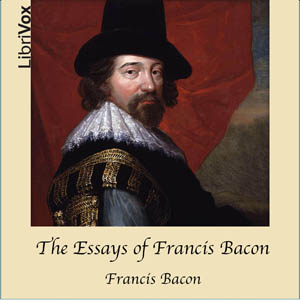
Essays of Francis Bacon, The by Sir Francis Bacon (1561 - 1626)
by LibriVox
Voltaire was an atheist. Diderot was Enlightened. But trite titles seldom encompass completely the beliefs of any individual. And this one fact is certainly true when dealing with Sir Francis Bacon.The youngest son of Sir Nicholas Bacon, Francis was born in Strand, London, on Jan. 22, 1561. He went to Trinity College at Cambridge. He was elected to Parliament; he was Queen’s Counsel; he even became Attorney General before finally gaining the position of Lord Chancellor.But as do the careers of so many politicians, in 1621 his political career ended in disgrace.And yet, for all of this, both Diderot and Voltaire considered him “the father of modern science.” Others consider him only the father of the “scientific method.” (That process of collecting and organizing data.) Bacon’s “The Essays,” to which we now turn our attention, are–if they are nothing else–a delightful collection in decided disarray. That is, they seem to take no true progression. But an essay is not meant to be a treati
-
14
-
13
-
12
-
11
-
10
-
9
-
8
-
7
-
6
-
5
-
4
-
3
-
2
-
1
No matches for "" in this podcast's transcripts.
No topics indexed yet for this podcast.
Loading reviews...
ABOUT THIS SHOW
Voltaire was an atheist. Diderot was Enlightened. But trite titles seldom encompass completely the beliefs of any individual. And this one fact is certainly true when dealing with Sir Francis Bacon.The youngest son of Sir Nicholas Bacon, Francis was born in Strand, London, on Jan. 22, 1561. He went to Trinity College at Cambridge. He was elected to Parliament; he was Queen’s Counsel; he even became Attorney General before finally gaining the position of Lord Chancellor.But as do the careers of so many politicians, in 1621 his political career ended in disgrace.And yet, for all of this, both Diderot and Voltaire considered him “the father of modern science.” Others consider him only the father of the “scientific method.” (That process of collecting and organizing data.) Bacon’s “The Essays,” to which we now turn our attention, are–if they are nothing else–a delightful collection in decided disarray. That is, they seem to take no true progression. But an essay is not meant to be a treati
HOSTED BY
LibriVox
CATEGORIES
Loading similar podcasts...
URL copied to clipboard!