
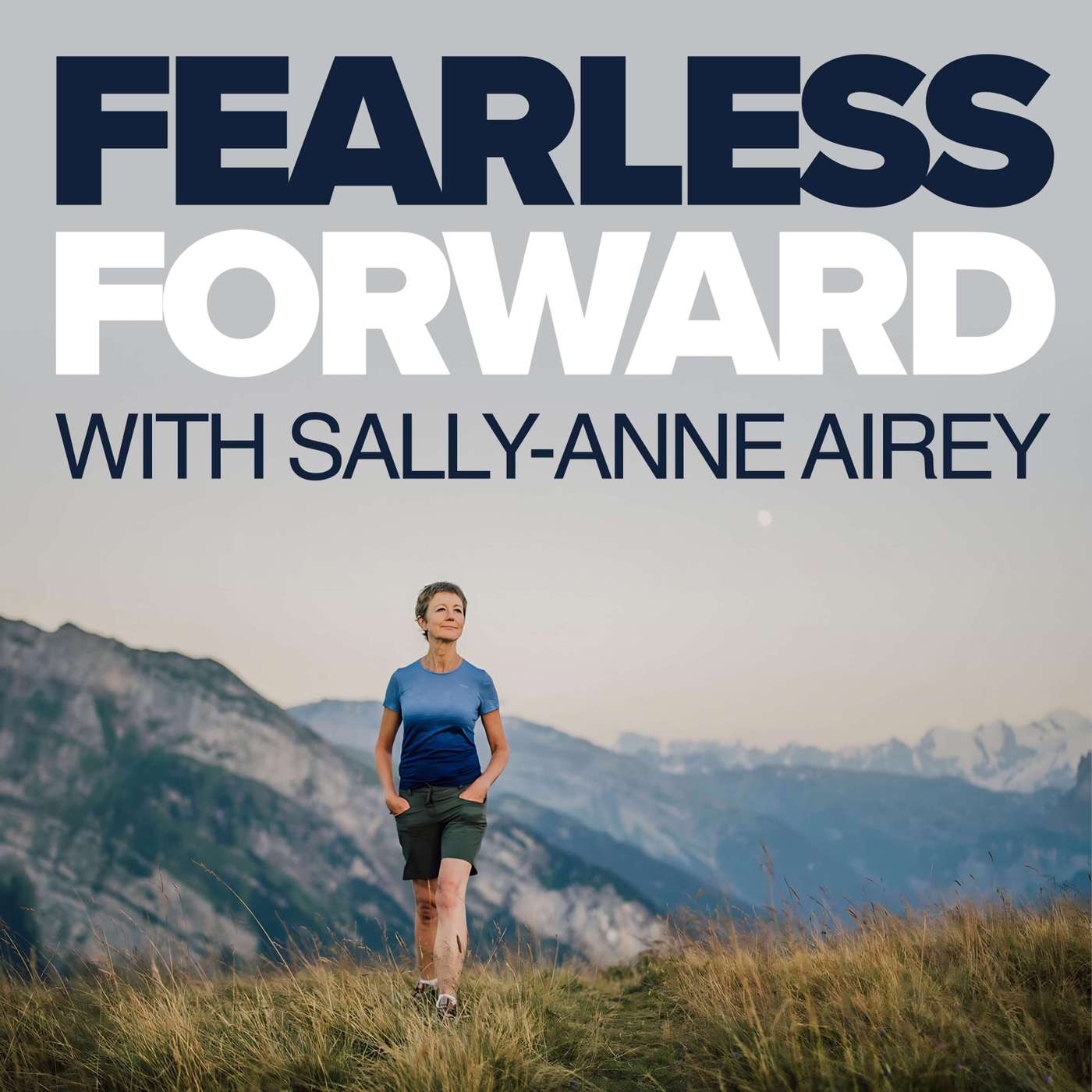
PODCAST · business
Fearless Forward
by Sally-Anne Airey
At some point in our lives we all get scared – of making the wrong decision, of not being a good parent, or that everyone will figure out we’re just making it up as we go.I’ve spent years helping leaders work through fear, stress, and uncertainty. Now I’m making a podcast about how they face their fears and come out stronger.It’s for founders, leaders, and business owners who feel like they’re constantly fighting uphill and not finding the balance they need to be effective at work and present at home.
-
34
How Does Gut Health Influence Your Brain and Fear Response?
You are what you absorb, not just what you eat.In other words, however well you eat, if your gut isn’t functioning well your brain and body won’t get the nutrients they need.Nutritional therapist Sarah Bayliss’s expertise is rooted in personal experience. After years in a high-stress marketing job, she suffered from sleep issues, hormonal imbalances, and gut problems that eventually led her to burnout. Her recovery began with small, consistent changes that led to a profound personal transformation.In this information-rich conversation, we hear that the gut-brain axis - formed of the vagus nerve, the gut microbiome, and the immune and hormonal pathways - is the bidirectional communication network linking our digestive system and our brain. The gut-brain axis supports brain function, mood, and stress management.Sarah also explains how our gut health, nutrition, circadian rhythms, blood sugar stability, and recovery, have a powerful impact on our mental resilience. For example, when we eat foods that cause a blood sugar spike and subsequent crash, our body seeks rebalance by activating the stress response. In a state of physiological stress, the brain function shifts away from the pre-frontal cortex (our thinking brain) and into survival mode - which inhibits our capacity to face our fears clearly and calmly.If you’ve ever felt “off” and couldn’t put your finger on why, or if you’re looking for practical ways to feel more grounded and less reactive, this episode gives you some powerful answers.This episode will help you:Understand how blood sugar dysregulation activates your stress response multiple times daily, leaving you less equipped to think clearly and handle challenges.Recognise the bidirectional relationship between gut health and brain function, including how inflammation and "leaky gut" can compromise your mental clarity and emotional regulation.Learn practical strategies for building physiological resilience through circadian rhythm alignment, strategic meal timing, and micro-recovery practices that support clearer thinking under pressure.Highlights[00:02:17] You Are What You Absorb[00:03:08] The Role of Gut Bacteria[00:04:19] Leaky Gut, Leaky Brain [00:06:41] Nutrition and Lifestyle's Impact on Gut Health [00:08:26] Where to Start When Feeling Unwell [00:10:27] A Holistic Approach: Nutrition and Lifestyle [00:13:13] Recognising Your Body's Signals [00:15:32] Resilience and Facing Fear [00:18:05] The Physiological Link Between Nutrition and Fear[00:23:10] How Gut Health Feeds Clarity[00:24:41] Aging, Hormones, and Resilience [00:27:21] The Optimal Way to Start Your Day [00:33:21] Sarah's Personal Journey[00:36:17] Overcoming Fear Through Passion [00:39:42] What "Fearless Forward" Means [00:41:47] The Power of Slowing DownResourcesSarah Bayliss NutritionConnect with Sarah on LinkedInConnect with Sarah on InstagramConnect with Sally-Anne on LinkedIn
-
33
Balancing Risk and Reward: Navigating the Perils of High-Altitude Mountaineering
In this episode, we journey with Joss Thompson - a mechanical engineer, seasoned mountaineer, and expert snowboarder - through his expedition to climb Denali, North America’s highest peak.This is more than a tale of adventure; it’s a masterclass in preparation, resilience, and the nuanced art of pushing human limits.Joss shares his early mistakes with acclimatisation, his preparation alongside friend Todd Ainsworth, and the logistics of the unguided climb. He recounts standout moments, such as participating in a dramatic high-altitude rescue of two stricken climbers, observing a fatal avalanche, reaching the summit in -50°C conditions, and snowboarding part of the descent.Whether you’re an aspiring mountaineer, an outdoor enthusiast, or someone seeking inspiration for tackling your own “summits,” Joss Thompson’s story is full of wise advice and actionable tips.This episode will help you:How someone assesses risk and makes critical decisions under pressure when facing unfamiliar or dangerous situations.Learn the importance of checking in with teammates during challenging moments, as people process difficulty differently.Joss's story about when confidence becomes overconfidence and how small misjudgments can have serious consequences.Highlights[00:02:00] The Spark of Fascination[00:02:50] Early Altitude Mistakes[00:04:28] Exploring Personal Limits[00:05:10] The Denali Decision and The Seven Summits[00:08:00] Knowing When You're Ready[00:08:55] Arrival in Alaska[00:12:20] The First Push to Camp One[00:15:44] High-Altitude Survival Basics[00:18:50] Life on the Glacier[00:20:34] Navigating a Whiteout[00:28:26] The Engineer's Mindset[00:32:27] Expedition Highlights[00:35:53] The Fear of Failure[00:40:21] Reaching the Summit[00:44:09] The View from the Top[00:45:30] The Snowboard Descent Begins[00:50:25] A Dangerous Traverse and a Lesson Learned[00:57:37] A Dramatic Helicopter Rescue[01:09:38] Constant Risk Assessment[01:11:46] Witnessing a Tragedy[01:18:29] Lessons from the MountainsResourcesConnect with Joss via InstagramConnect with Sally-Anne via LinkedIn
-
32
From War to Art: Navigating Life Between Two Worlds
Nothing is in insurmountable, if you’re open to finding a way through.One way through is to find refuge in what you love. Love helps you stay grounded in the present, and keeps hope alive.It can also give you the strength to navigate even the most traumatic circumstances, as it did for Liia Dmytrenko, one of the millions of victims of Russia’s invasion of Ukraine and of the ensuing war, now in its 5th year. At just 19 years of age, she has already lived through more fear, uncertainty, and upheaval than many of us experience in a lifetime.“When my life turned upside down”, she says, “I quickly realised what mattered most was not what I owned but the people I loved.”Soon after Kyiv came under attack, Liia and her family escaped to western Ukraine. Three months later, she and her mother made their way to the UK. And with barely any English, Liia joined a top school in her GCSE year. Her mother returned to Kyiv to support the war effort.Liia’s move to the UK deprived her of her voice. Lacking the vocabulary to express what she was really feeling, she found a path to self-expression through art: sketching scenes of Kyiv from memory. During her short visits home she captured her observations of the war in Kyiv through a series of photographs that became the subject of a school exhibition inviting people to imagine their reactions to actually being there. This work was also featured in an ITV documentary.Today, Liia’s in the second year of a graphic design course at Oxford Brookes University. She’s learning to live a “double life”: lectures, parties, and relative safety in Oxford; danger, fear, and drones exploding outside her window in Kyiv. Her creativity has become both a lifeline and a vehicle in which to process the trauma of war and displacement, and find stability and meaning in it all.She cannot escape the fear. Instead, she chooses to believe in the future.This episode will help you:Understand how to find stability and meaning when everything you've built suddenly disappears.Discover how creativity can become a lifeline for processing trauma and reconnecting with yourself.Learn to hold conflicting realities simultaneously without letting fear paralyse your forward momentum.Highlights[00:00:00] Introduction[00:02:14] The Day War Began[00:03:58] Leaving Everything Behind[00:07:53] Escaping Kyiv[00:10:00] A New Path Beyond Ballet[00:14:12] A Mother's Blessing[00:21:49] Arriving in the UK[00:30:17] Finding a Voice Through Art[00:35:21] Living a Double Life[00:42:16] Fearless Forward[00:43:03] Closing ReflectionsResourcesConnect with Liia via LinkedInConnect with Liia via InstagramConnect with Sally-Anne via LinkedIn
-
31
What the phrase “courage of your conviction” really means
True leadership requires the moral courage to act on your principles, even when it costs you everything you've worked for. The fear of making decisions that might harm others is far more significant than any physical danger we might face ourselves.Oliver Lee is a former Royal Marines officer whose extraordinary career took him from Cambridge to the frontlines of Iraq and Afghanistan. Decorated three times for his service and the youngest full colonel in the Royal Marines since World War II, Oliver led through some of the most challenging circumstances imaginable.In 2013, he made the difficult choice to resign on a matter of moral principle, walking away from a glittering military career. Having lost his youngest brother in 2003, Oliver has since become a powerful advocate for mental health and suicide awareness. Now leading organisations through complex change as a CEO and performance consultant, he brings hard-won insights about courage, responsibility, and what it truly means to lead when everything is at stake.This episode will help youUnderstand how to lead through extreme adversity by reconciling your own mortality and focusing on the wellbeing of those you're responsible forRecognise when moral courage demands you stand up against institutional failure, even when it costs you everything you've worked forLearn to channel fear as a motivator rather than letting it paralyse you, especially when facing decisions that affect othersHighlights[00:09:38] Oliver's biggest fear in command[00:12:40] Being prepared to die[00:16:25] Telic 1[00:20:51] A moment of profound personal loss[00:30:31] Challenges off the battlefield[00:34:30] Leaving the Royal Marines[00:46:58] Oliver's biggest fear right now[00:49:25] What Fearless Forward means to Oliver[00:51:24] Takeaways from Sally-AnneResourcesConnect with Oliver via LinkedInLunan Performance – Oliver’s coaching practiceConnect with Sally-Anne via LinkedIn
-
30
How are we teaching young people to handle fear?
We need to share the messy, emotional reality of our own experiences with young people, not just the polished outcomes. When we sanitise our stories and skip over the struggle, uncertainty and fear we felt whilst figuring things out, we leave young people feeling isolated in their own difficulties and rob them of the most valuable lesson: that not having it all worked out is completely normal and part of the process.Alexis Redding is faculty co-chair of Higher Education at the Harvard Graduate School of Education, where she researches, teaches, and advises on student development, mental health, and the transition from college to work.Before her academic career, she worked as a college counsellor for 10 years, and her research focuses on making the American college experience more supportive for students navigating the challenges of young adulthood.This episode will help youUnderstand why sharing the messy, emotional parts of your own journey matters more than offering tidy success stories when supporting young people through uncertaintyRecognise the difference between caring deeply and over-managing, particularly when fear drives you to track, fix, or solve problems that young people need to navigate themselvesLearn specific ways to ask questions that open possibilities rather than prescribe answers, helping others develop self-authorship instead of seeking external validationHighlights[00:07:04] Resisting the urge to remove all struggle from young people's lives[00:10:52] How Alexis manages relationships[00:12:40] Self-authorship[00:17:06] ?We study what we're trying to make sense of[00:23:25] Allowing young people to make their own mistakes[00:26:58] Shifting away from majors and singular career paths[00:30:07] The development effects of parental tech[00:34:45] How parents can manage their fears[00:39:47] How Alexis manages her resources[00:41:31] Alexis' fears in her work[00:42:39] Taking the TEDx stage[00:47:33] What Fearless Forward means to Alexis[00:48:05] Takeaways from Sally-AnneResourcesConnect with Alexis via LinkedInConnect with Sally-Anne via LinkedInWhy We Keep Telling Young Pdults the Wrong Stories – Alexis’ TEDx talkThe End of Adolescence, by Alexis Redding and Nancy HillMental Health in College, by Alexis Redding
-
29
Making friends with fear
Fear doesn't have to be eliminated or conquered. Instead, we can befriend it, stay curious about its messages, and move forward with purpose alongside it, rather than waiting for it to disappear before taking action.Liz Hall is a journalist, coach, mindfulness teacher, and editor of Coaching at Work magazine for the past 20 years. She is a recognised thought leader in psychological safety, race equity in coaching, and the climate emergency, and has pioneered the integration of mindfulness into coaching practice. She initiated Climate Coaching Action Day in 2020 and established the Round Table for Race Equity and Coaching, bringing together professional bodies to advance equity in the field.This episode will help youUnderstand how connecting with your deeper purpose can help you move forward alongside fear rather than waiting for it to disappear.Discover practical ways to befriend your inner critic and develop self-compassion as a renewable resource rather than a depleting one.Learn specific mindfulness practices you can use to stay present and grounded when navigating difficult conversations or systemic change.ResourcesConnect with Liz via LinkedInConnect with Sally-Anne via LinkedInHighlights[00:05:06] Finding purpose[00:09:42] The future of coaching[00:12:37] Compassion in coaching[00:22:59] Leading a conscious life[00:28:21] Relational mindfulness[00:34:41] Befriending fear[00:39:41] What Fearless Forward means to Liz[00:40:12] Takeaways from Sally-Anne
-
28
Leading with heart
Embracing our wholeness – including our fears, grief, and uncertainty – while staying connected to what brings us alive can lead us to unexpected renewal and purpose, even in the darkest moments.Bruce Cryer is a multifaceted professional with a career spanning creativity, science, leadership, and wellness. He’s the former CEO of HeartMath, a research-based organisation focused on stress management and heart-brain coherence, where he led for 11 years and taught courses on wellbeing and leadership at Stanford University.Before his work with HeartMath, Bruce trained at the Oberlin Conservatory of Music and had a professional performing career in New York. After facing serious health challenges in 2009, he returned to his creative roots in singing, dancing, and photography.This episode will help youUnderstand how heart coherence – a scientifically validated state of physiological alignment – can reduce stress, improve decision-making, and create more resilient leadership in high-pressure environmentsLearn practical approaches for navigating major life transitions and health crises by staying connected to what truly matters, rather than being paralysed by fear or uncertaintyDiscover how integrating creative expression and emotional authenticity into professional life can unlock new possibilities and prevent burnout, even after decades in demanding rolesResourcesConnect with Bruce via LinkedInConnect with Sally-Anne via LinkedInHighlights[00:10:20] Physiological coherence[00:16:45] Bringing data to personal development[00:19:06] "Will I ever dance again?"[00:29:28] A voice that needs to be heard[00:36:16] "Just love the people"[00:42:58] A new direction[00:46:01] What Fearless Forward means to Bruce[00:48:50] Takeaways from Sally-Anne
-
27
The reward of listening to your fear
The behaviours and strategies that bring us success may not be the same ones that lead to fulfilment. Pausing to listen to our fears, rather than constantly outrunning them through action, can reveal what truly matters and guide us towards more meaningful leadership and life choices.Peter Whealy is a learning and development professional with nearly 30 years of experience working in various learning consultancies. He joined one of the big four consultancies in 2014, where his work took him from London to San Francisco, and finally to Geneva, supporting clients with learning strategy, workforce transformation projects, and leadership development.He has recently published a book which offers a framework for leaders and organisations to navigate AI adoption while maintaining a people-first approach. His work focuses on ensuring AI is used to amplify human talent rather than simply as an efficiency and cost-cutting tool.This episode will help youUnderstand how pausing to listen to fear can lead to greater clarity and fulfilment in leadershipLearn why centring human connection and purpose creates better long-term business outcomesDiscover a practical framework for evolving your leadership identity from providing answers to asking better questionsHighlights[00:07:28] From lying in a hospital bed to running a tiathlon[00:10:55] A moment of pause in the mountains[00:15:30] "Lead with AI, stay human"[00:18:40] Strengthen, Partner, Amplify, Reshape[00:23:09] What humans need to create change[00:27:39] Navigating difficult choices posed by the emergence of AI[00:33:40] The biggest challenges faced by leaders today[00:38:24] What Fearless Forward means to Peter[00:40:12] Takeaways from Sally-AnneResourcesConnect with Peter via LinkedInLead with AI. Stay Human – Peter’s bookConnect with Sally-Anne via LinkedIn
-
26
Trusting in the mountains
Slowing down and trusting your intuition can help you navigate life's challenges with greater clarity. When we step away from our screens and reconnect with nature, we gain perspective, access our deeper wisdom, and find the courage to pursue meaningful work despite fear.Jack Hubbard is a creative entrepreneur and co-founder of three successful businesses: PropellerNet, CoverageBook, and Answer the Public. His current focus is Dream Valley House, a community clubhouse in one of the oldest villages in the French Alps, designed as a mountain basecamp for founders, entrepreneurs, and creatives.After moving to the mountains with his family, Jack experienced what he calls a "midlife retirement" due to Lyme disease, which led him to step back, slow down, and focus on family and health. Now recovered, he's working to create a space where work and life can fuel each other, and where people can gather to think, make, and move in nature.This episode will help youLearn how slowing down and practicing patience can lead to clearer vision and better decision-making in long-term projectsDiscover how nature and mountain environments can foster creativity, meaningful connections, and access to deeper intuitionUnderstand how to use technology as a liberating tool rather than allowing it to consume more of your time and energyHighlights[00:06:55] What is Dream Valley?[00:13:31] Navigating moments of frustration[00:16:28] Taking time and slowing down[00:21:38] Jack's medical setback[00:27:33] Time to find purpose[00:30:24] Jack's vision for Dream Valley[00:33:29] Trust in the mountains[00:37:08] The human algorithm[00:42:13] What Fearless Forward means to Jack[00:44:21] Takeaways from Sally-AnneResourcesConnect with Jack via LinkedInConnect with Sally-Anne via LinkedInBucketlist Business Planning – Jack’s Summercamp talk
-
25
How to be your own source of support in troubling times
In times of overwhelming challenge and uncertainty, the ability to silence the noise, listen deeply, and connect with something larger than ourselves – whether through faith, values, or inner wisdom – is what carries us through and reveals the path forward, transforming our struggles into purpose and our pain into the power to help others.Ronel Hentschel’s work has been deeply influenced by her personal experience as the mother of a son diagnosed with Type 1 diabetes as a toddler. This shaped her career path towards supporting other families facing similar challenges, and led her to found Washing Parent, a digital publishing platform serving families in the Washington DC area with resources for education, support, and activities.Ronel’s unshakeable faith has guided her through multiple personal challenges, and it creates for her a deep sense of trust that things will be OK, and the storm will settle.This conversation will help youQuieten the noise during crises so you can hear the guidance that's already thereTransform personal pain into purpose by channelling your hard-won knowledge and experience into meaningful support for othersCreate inner peace during turbulence by stepping back, abiding in what matters most to you, and trusting that clarity will emerge when you stop forcing solutionsHighlights[00:08:52] Silence the storm[00:12:32] The healing power of helping[00:17:40] Living a faith-based life[00:20:16] The conspiracy of improbabilities[00:22:16] How Ronnel sees God[00:29:36] When doors close, there is a reason[00:32:25] What it takes to trust unconditionally[00:38:07] Do you choose to be a victim or a warrior?[00:41:03] Forgiveness[00:45:48] What Fearless Forward means for RonelResourcesConnect with Ronel via LinkedInConnect with Sally-Anne via LinkedInThe Seven Spiritual Laws Of Success, by Deepak Chopra
-
24
Saying “yes, and” to fear
Humans are wired to fear uncertainty and the unknown, and we often avoid potential opportunities because they seem too risky or uncomfortable. We cling to familiar patterns even when they no longer serve us, worried about what might happen if we let go.This week’s guest, Stephen Burt, suggests embracing uncertainty as a path to growth and creativity. By saying "yes, and" to our fears – acknowledging them while still moving forward – we can discover possibilities we might otherwise miss. This approach transforms fear from an obstacle into a doorway to new experiences.Living in constant resistance to uncertainty constrains our potential and prevents us from using all that we have. We risk looking back with regret at opportunities not taken and parts of ourselves left unexplored.So instead of automatically saying "no", you might try saying "yes, and what might be possible here?"This conversation will help youLearn how embracing uncertainty can transform fear into a catalyst for growth and creativity instead of an obstacleDiscover practical techniques for saying "yes, and" to your fears while still moving forwards towards new possibilitiesExplore how improvisational thinking can help you respond authentically without self-censorship in both professional and personal situationsHighlights[00:11:22] How to listen[00:16:32] Self-leadership through curiosity[00:20:20] When to hold on, and when to let go[00:24:40] Being as much as you can[00:29:33] Discovering[00:38:20] When fear meets improv[00:46:27] What Fearless Forwarwd means to Stephen[00:48:17] Takeaways from Sally-AnneResourcesConnect with Stephen via LinkedInConnect with Sally-Anne via LinkedIn
-
23
Leadership at ground level, not from the top floor
Rigid hierarchies can stifle innovation and create environments where employees wait for permission rather than taking initiative. In these cultures, people are afraid to contribute ideas, fearing rejection or overstepping boundaries.Kate Davies demonstrates how transformative leadership comes through relationships, not titles. By breaking down hierarchical barriers and creating genuine connections with her team, she enables people at all levels to contribute meaningful solutions. This means building trust through authentic relationships, being present where the actual work happens, normalising experimentation, and celebrating both successes and instructive failures.This conversation will help youBreak down hierarchical barriers by building relationships across organisational levelsCreate an environment where innovation thrives by enabling team members to experiment with ideas without seeking permission firstInvest time in frontline work alongside your team to build authentic relationships, gain valuable insights, and demonstrate that everyone's contribution mattersHihglights[00:04:29] Staying one step ahead[00:06:22] Why being "purely professional" isn't the answer[00:09:24] Empowerment vs enablement[00:12:12] "Don't come to me for permission"[00:17:02] What it means to muck in[00:21:15] What if this doesn't work?[00:23:00] The case for imposter syndrome[00:28:03] The future of the ONS[00:35:29] What's front-of-mind in Kate's leadership[00:36:32] What Fearless Forward means to Kate[00:40:13] Takeaways from Sally-AnneResourcesConnect with Kate via LinkedInConnect with Sally-Anne via LinkedIn
-
22
Leading from trust
In today's corporate world, fear-driven leadership has created environments where bullying and vaguely psychopathic behaviours are normalised. Leaders often believe success requires ruthlessness, breeding cultures where employees feel unsafe to be themselves.John Blakey offers a transformative alternative: trust-based leadership. His approach demonstrates that leaders who prioritise trustworthiness can deliver outstanding results without resorting to intimidation. By balancing results with responsibility and adopting a triple bottom line approach of profit, people, and planet, leaders can become a genuine force for good.Organisations led through fear create self-fulfilling prophecies of decline. When we collectively "feed the bad wolf", we perpetuate cycles of distrust, stifle innovation, and crush employee morale. This leads to the concerning statistic that only 17% of UK adults believe the next generation will have better lives than theirs.This conversation will help youDiscover how trust-based leadership can yield exceptional results without resorting to fear or intimidation in corporate environmentsLearn practical strategies for "feeding the good wolf" through compassion, cultivating hope, and showing courage in your authentic selfUnderstand how to overcome the fear of your own power and light, which may be more limiting than the fear of inadequacyHighlights[00:07:33] The "psychopathic" world of corporate life[00:09:47] "But what about Donald Trump?"[00:14:28] The wolf that wins is the wolf you feed[00:16:34] Force for Good[00:20:00] Pace, then lead[00:21:48] Compassion, empathy, and sympathy[00:23:52] When you fear your light more than your darkness[00:30:42] John's latest calling to lead[00:36:19] What Fearless Forward means to John[00:36:59] Takeaways from Sally-AnneResourcesConnect with john via LinkedInConnect with Sally-Anne via LinkedIn
-
21
The leader turning a fashion retailer into a beacon of sustainability
The fashion industry is facing a critical environmental crisis with fast fashion and disposable clothing contributing significantly to global waste.The continued production and disposal of fashion items at current rates will accelerate climate change, deplete natural resources, and harm communities in manufacturing regions. Livelihoods will be threatened as resources become scarcer, affecting the 650,000+ people supported through Primark's supply chain alone.Lynne Walker is leading a transformation of Primark’s business model through its Primark Cares initiative, to make sustainable fashion accessible to everyone.This conversation will help youDiscover how a traditional retailer transforms its business model to balance profit with environmental responsibilityLearn practical strategies for driving large-scale organisational change in the face of skepticismUnderstand how personal resilience, authentic leadership, and collaborative approaches can help tackle seemingly insurmountable environmental challenges in any industryHighlights[00:07:38] Why is sustainability a big and bold task for the fashion industry?[00:14:48] The biggest challenges Lynne has faced[00:18:52] Leading from your personal values[00:21:58] Putting those values into practice[00:28:15] Taking it all less personally[00:34:06] Conflicts and challenges[00:42:33] Are you in your comfort zone or the next circle?[00:44:39] What Fearless Forward means to Lynne[00:46:14] Takeaways from Sally-AnneResourcesConnect with Lynne via LinkedInConnect with Sally-Anne via LinkedIn
-
20
The world doesn’t need you to be quiet and small
Women are often socialised to believe that confidence will make them unlikeable or threatening. Lauren Currie OBE, founder of Upfront, shares her experience of receiving messages from childhood that "the world prefers me when I am quiet and small". This pressure leads many women to hide their accomplishments and dim their light.But confidence is not something we're born with, but something we can learn and cultivate. Lauren has built an organisation that has upskilled over 11,000 women globally in confidence, leadership, and speaking up in situations where they might otherwise have stayed silent.Women who continue to hide their talents miss opportunities to fulfil their potential and impact the world. This perpetuates systems that depend on women remaining "silent and unquestioning". Meanwhile, younger generations continue inheriting these limiting beliefs about what it means to be a woman.This conversation will help youLearn how to build authentic confidence by making your curiosity "one millimetre bigger than the fear"Discover how to recognise and challenge internalised misogyny that makes us see other confident women as threats rather than inspirationsUnderstand how to align your actions with your values and set boundaries that protect your energy to prevent isolationHighlights[00:05:40] What success means for Lauren[00:08:28] 27 fears[00:10:53] "The world isn't kind to confident women"[00:16:35] How to show up if your presence triggers others[00:20:45] The scarcety narrative of the patriarchy[00:27:25] Lauren's biggest fear[00:30:58] A story of love and potential[00:33:18] What is Lauren's end goal?[00:36:25] What Fearless Forward means to Lauren[00:37:08] Takeaways from Sally-AnneResourcesConnect with Lauren via LinkedInUpfrontConnect with Sally-Anne via LinkedIn
-
19
Ultra-endurance trail running – what it takes to go the distance
By challenging herself to run 330km across mountain terrain – facing extreme physical discomfort, sleep deprivation, and mental exhaustion – Linda Hubbard discovered that pushing boundaries leads to profound personal growth and unexpected calm.To break free from comfort zone paralysis, we must first identify what truly matters to us beyond our immediate comfort, then build a support system of people who believe in our vision.Staying too comfortable for too long means sacrificing our potential and missing the deep satisfaction that comes from conquering difficult challenges. Our leadership abilities stagnate, and we model complacency rather than courage for those around us.But as Linda discovered, our fears become manageable when shared with others.This episode will help youDiscover how pushing your boundaries leads to unexpected mental clarity,Learn practical strategies for managing pain and fatigueUnderstand how to balance personal goals with family responsibilitiesHighlights[00:15:44] The first night of the race[00:20:17] What Linda was not prepared for[00:25:06] Linda's next challenge[00:30:04] The incredible power of the mind[00:34:09] What is Linda afraid of?[00:39:00] What Fearless Forward mans to Linda[00:41:08] Takeaways from Sally-AnneResourcesConnect with Linda via LinkedInConnect with Sally-Anne via LinkedIn
-
18
What if business truly served people, not profit?
Many organisations struggle to build structures that balance leadership and equality. Traditional hierarchies often lead to inefficiency, lack of clarity, and a stifling of innovation. Employees can feel disconnected or undervalued, and companies can lose sight of their mission in pursuit of profits.Mark Vletter’s approach offers a different way forwards. By embracing self-management and holacracy, organisations can create a culture where decisions are made collectively, accountability is clear, and everyone has a voice. Steward ownership ensures the company’s mission is safeguarded for the long-term, free from the pressures of maximizing shareholder profit.This conversation will help youCreate clarity on accountability without traditional hierarchiesHire people who are strong where you're weak and who can constructively disagree with youTransition to steward ownership, where a company's mission is safeguarded beyond individual interestsHighlights[00:07:11] Mark is given an ultimatum[00:09:48] Mark's first hire[00:14:01] Transitioning to holacracy[00:18:23] On the desire for constant improvement[00:21:35] Moving Voys to a steward ownership model[00:26:12] Does everyone want to be a leader?[00:27:28] Communicating vertically vs listening with curiosity[00:32:40] Fear is a bad advisor[00:37:01] Your organisation is part of a bigger ecosystem[00:41:09] What Fearless Forward means for Mark[00:42:23] Takeaways from Sally-AnneResourcesConnect with Mark via LinkedInHolacracy: dive into the world of self-management – from the Voys blogConnect with Sally-Anne via LinkedIn
-
17
How to rescue a relationship from the brink of breakdown
Navigating life’s biggest changes takes resilience and adaptability, especially when multiple challenges occur simultaneously.Even highly capable individuals can struggle when faced with unexpected events, from starting a business and having a child in a foreign country to dealing with illness and death.Jon and Lori Smith’s experience highlights the importance of acknowledging the cognitive stress that builds up in periods of upheaval, rather than maintaining a "happy-go-lucky" mindset that everything will simply work out.This episode will help youExplore how to rebuild a relationship after significant personal and professional challengesUnderstand the importance of pausing and prioritising self-care in times of overwhelming stressLearn how curiosity and open communication can transform conflict into connectionHighlights[00:06:01] Startups, moves, new lives, and uncertainties[00:14:29] When things began to fall apart[00:19:45] Jon and Lori meet Sally-Anne[00:23:05] Things take a turn for the worse[00:29:34] Help arrives, with a difficult choice[00:34:28] Finding space to renew and repair[00:40:36] Looking over the parapet[00:48:06] The fears Jon & Lori faced[00:51:03] What Fearless Forward means for Jon and Lori[00:55:52] Takeaways from Sally-AnneResourcesConnect with Jon via LinkedInConnect with Lori Alexa-Smith on LinkedInConnect with Sally-Anne via LinkedIn
-
16
Moving through fear instead of simply moving on
Facing our fears means understanding how they shape our actions, while creating space for self-awareness, connection, and growth in both personal and professional contexts.Carlos Saba is the co-founder of the Happy Startup School, an alternative business school and learning platform that focuses on helping entrepreneurs and professionals align their work with their values and passions.With a PhD in atomic physics, Carlos transitioned from a career in science and digital advertising to co-founding a digital studio and eventually dedicating himself to creating programs, events, and courses that foster connection, learning, and personal growth.This episode will help youUnderstand how to embrace and work through fear rather than suppressing it, allowing for personal and professional growthExplore the importance of aligning your work with your values and creating meaningful connections with othersDiscover how self-awareness and emotional openness can enhance creativity, resilience, and authenticityHighlights[00:07:28] Identifying core needs[00:11:56] Purpose with a big P or a small P[00:16:43] How Carlos is meeting his needs[00:21:17] How do we create resilience?[00:28:14] Carlos' relationship with shame[00:33:07] Meeting "Kung Fu Carlos"[00:38:05] What Fearless Forward means to Carlos[00:42:37] Takeaways from Sally-AnneResourcesConnect with Carlos via LinkedInThe Happy Startup SchoolConnect with Sally-Anne via LinkedIn
-
15
How to make space for fear without letting it take hold
As change makers, we an become overwhelmed and anxious about our place in the world, the impact we have, and the resources we have to create it. These feelings often stem from deeper fears, like that of losing what we cherish or even the fear of dying. This can leave us feeling stuck, disconnected, and unable to act.For therapist Agnes Otzelberger, facing these fears head-on helped her feel more alive and capable. She believes we can find strength by connecting with others, embracing creativity, and building a better relationship with ourselves and the natural world.When we ignore our fears, they can paralyse us. We can feel numb or powerless, unable to make decisions or take meaningful action. This disconnection from ourselves and others only deepens the sense of hopelessness.This conversation will help youExplore how fear can be acknowledged and integrated for personal growth and resilienceUnderstand practical ways to reconnect with nature, creativity, and community to navigate overwhelming emotionsAddress feelings of scarcity, stress, and paralysis in the face of global challengesHighlights[00:02:16] A breathless tightening[00:08:26] How we respond to hopelessness[00:14:42] The need for community[00:22:13] Survival mode[00:28:16] Managing yourself to care for others[00:33:21] Agnes' deepest fears[00:41:31] What Fearless Forward means to Agnes[00:43:32] Takeaways from Sally-AnneResourcesConnect with Agnes via LinkedInWork directly with AgnesConnect with Sally-Anne via LinkedInWaking the Tiger: Healing the Trauma: The Innate Capacity to Overcome Overwhelming Experiences, by Peter Levine30 Lies about Money: liberating your life, liberating your money, by Peter KoenigActive Hope: How to Face the Mess We’re in without Going Crazy, by Joanna Macy & Chris JohnstoneThe Wild Edge of Sorrow: Rituals of Renewal and the Sacred work of Grief, by Francis WellerBig Magic: How to Live a Creative Life, and Let Go of Your Fear, by Elizabeth Gilbert
-
14
Leading quietly in a noisy world
Many of us struggle with finding peace and quiet in our fast-paced, noisy lives. This lack of space to reflect and connect with ourselves can leave us feeling overwhelmed, disconnected, and stuck in patterns that don’t serve us.The solution is to embrace quietness, slow down, and create intentional space for reflection and connection. Pete Mosley’s approach shows us how we can live more in tune with our nature by making deliberate choices about how we spend our time and where we focus our energy.Without time to pause, we risk becoming trapped in a cycle of stress and disconnection. Our thoughts can overwhelm us, and we might lose sight of what’s truly important, leaving us feeling unfulfilled despite all our efforts.This conversation will help youExplore how embracing quietness can lead to personal and professional growthUnderstand the importance of creating workplace cultures where both quiet and loud individuals can thriveLearn practical techniques for managing thoughts and reducing mental clutter through cognitive diffusion and mindfulness practicesHighlights[00:01:53] Peak experience[00:04:56] A move to Cyprus[00:12:08] Choosing independence[00:14:51] Contemplating the time we have remaining[00:17:20] Pete's journey to quietness[00:20:51] Finding clarity in community[00:23:55] Making slow transitions[00:26:54] You are not your thoughts[00:31:59] Learning to give up control[00:36:18] On "pushing through"[00:39:06] Pete's quiet trilogy[00:43:33] Moving past introversion vs extroversion[00:44:30] What Fearless Forward means to Pete[00:45:47] Takeaways from Sally-AnneResourcesConnect with Pete via LinkedInPete’s booksConnect with Sally-Anne via LinkedIn
-
13
In personal tragedy finding purpose
Losing a loved one unexpectedly is a devastating experience. It can be even harder when the circumstances involve negligence and injustice. Many of us might feel overwhelmed by the enormity of seeking accountability, or unsure of how to move forwards while grappling with grief.Nigel Burt, father of Olivia who was killed in a preventable accident while queuing at a night club, shows us a way through this. He focused on breaking the overwhelming challenge into smaller, manageable steps. He sought expert legal help, relied on his professional skills to problem-solve, and leaned on his network for support. By focusing on what could be done each day, he avoided being paralysed by the bigger picture.This honest and emotional discussion will help youDiscover how focusing on actionable challenges can help navigate overwhelming grief and adversityUnderstand the transformative power of channeling loss into meaningful changeLearn how perseverance and leadership skills can overcome systemic obstacles in pursuing justice and accountability
-
12
Move slow and fix things – Human sustainability for the planet
Many people working in sustainability feel disillusioned and burned out. The problem is that businesses often prioritise profit over real, impactful change. Sustainability is seen as secondary, and those driving it are left feeling unsupported and powerless. This lack of meaningful action leaves even the most dedicated individuals questioning their efforts.Kathryn Sheridan suggests slowing down, reconnecting with our values, and acting from a place of stability. By making small, steady changes, we can avoid burnout and create lasting impact. It's about finding balance, caring for ourselves, and learning to pace our efforts for the long haul.If we continue at breakneck speed, we risk losing the energy and clarity we need to make real progress. Burnout can leave us unable to act, and the noise of the world can overwhelm us. Without intentional change, we might stay stuck in cycles of stress and frustration, unable to move forward.This episode will help youUnderstand how to approach sustainability with credibility, integrity, and a focus on human wellbeingDiscover the importance of slowing down and acting from a place of stability for meaningful and lasting changeLearn how to navigate the challenges of balancing personal purpose and professional responsibilities in leadershipHighlights[00:08:17] The slow and steady road to, and through, burnout[00:11:21] Kathryn's reflections on her consultancy[00:12:50] Learning to slow down[00:14:16] The challenges of the founder-led business[00:17:20] Falling out-of-love with ustainability[00:23:20] Time to ccut the noise[00:27:25] The role of fear[00:30:23] Change is made through small steps[00:32:38] Caring for others' fears[00:35:51] People Planet Place[00:36:34] What Fearless Forward means to Sally-Anne[00:37:19] Takeaways from Sally-AnneResourcesConnect with Kathryn via LinkedInPeople Planet PlaceConnect with Sally-Anne via LinkedIn
-
11
Let's talk about loss...
How we process and respond to traumatic experiences matters more than the experiences themselves. Openly discussing loss, maintaining connections to loved ones who have passed, and allowing ourselves to feel and express grief fully can lead to far better outcomes.Sanderson Jones is a former standup comedian and the co-founder of Sunday Assembly, a worldwide movement of non-religious congregations that celebrate life. Following the sudden and untimely death of his wife and the mother of his children, Sanderson rediscovered a new purpose, and has become a funeral celebrant and “funeral designer”.Highlights[00:02:24] The prognosis[00:07:13] The final day[00:09:16] What "Til death do us part" really means[00:11:44] Modelling grief for your children[00:21:05] Sanderson's new direction[00:23:50] Taj Mahal[00:27:40] Building a community in someone's name[00:30:06] Becoming a funeral designer[00:41:08] How to know when you're OK[00:44:29] What Fearless Forward means to Sanderson[00:47:14] Takeaways from Sally-AnneResourcesSanderson’s websiteTaj Mahal – A Love Poem in MarbleFear Less: How to Win at Life Without Losing Yourself, by Pippa GrangeConnect with Sally-Anne via LinkedIn
-
10
There’s nothing scarier than your own past
Our upbringing, and the patterns and behaviours we carry, shape how we show up in our relationships and work. These patterns often stem from past trauma or difficult family dynamics we don’t fully recognise. Left unaddressed, they can lead to harmful behaviours, strained relationships, and limitations on our personal and professional growth.Christina Kisley understands deeply how our past affects us and how vital committing to personal growth can be. This means being willing to dig into our own experiences, even if it feels uncomfortable or scary. Facing ourselves is one of the hardest things we can do, but it’s also the most rewarding.This conversation will help youLearn practical approaches to healing past trauma and addressing its impact on relationships and leadershipUnderstand the importance of cultivating healthy relationships in personal and professional settings for long-term growthDiscover strategies for navigating fear and embracing personal responsibility as a leader and parentHighlights[00:03:47] The Drama Driangle[00:08:20] Leadership through a family lens[00:12:43] The unexpected gifts of motherhood[00:15:56] What it means to say "yes" to being a leader[00:19:30] Christina's biggest fears[00:22:37] How do you learn?[00:23:54] You can't think your way through[00:27:01] Relationship University[00:31:38] What Fearless Forward means for Christina[00:32:25] Takeaways from Sally-AnneResourcesKarpman drama triangleConnect with Christina via LinkedInConnect with Sally-Anne via LinkedIn
-
9
How John Peters emerged from brutal captivity as a strong, empathetic leader
Fear can take over our emotions, cloud our judgment, and leave us feeling powerless. It’s easy to feel trapped when we’re unsure how to move forwards.John Peters dealt with extraordinary fear during his captivity. But he focused on controlling his mind and his responses, even when everything else was beyond his control. He refused to let fear define him and made a promise to himself that he would not let fear take away his power or identity.In this conversation with Sally-Anne, John shares a number of details from his time in captivity you may find upsetting. However, this episode will help youMaintain resilience and self-control in the face of extreme adversityNavigate fear and uncertainty in high-pressure situationsLearn how personal growth can emerge from traumatic experiencesHighlights[00:01:50] Meeting John[00:06:30] John's mantra[00:10:35] Post-traumatic growth[00:13:57] Managing fear and other emotions[00:19:45] Stronger as a collective[00:21:08] A new normal[00:23:06] What is confidence?[00:29:59] Coping with intense public attention[00:36:18] "A litany of failures"[00:42:52] Acceptance[00:46:44] Beyond the walls[00:48:56] Calm, committed[00:53:38] What Fearless Forward means for John[01:00:03] Takeaways from Sally-AnneResourcesConnect with John via LinkedInConnect with Sally-Anne via LinkedIn
-
8
Rebuilding retail against the odds
Emma Draper faced a huge challenge when her life suddenly changed. Her marriage ended, she became a single parent to three boys, and her business was struggling. On top of that, the pressures of keeping her home and supporting her family felt overwhelming. She also battled long Covid, which left her physically drained for years.Emma found a way forward by taking control of her situation. She refused to stay stuck in fear and started making changes. She restructured her business, reconnected with her team, and focused on her health. She looked at every area of her life and worked to improve it step by step.Emma had worked for years without a clear sense of her “why”. Being so occupied with work and life without that clear purpose can lead to burnout and a loss of confidence. We risk feeling stuck, overwhelmed, and disconnected from the people who rely on us. Without action, these pressures can snowball.This episode will help youReflect on personal fears and use them as motivation to take actionable steps toward changeDevelop a strategy for balancing personal and professional responsibilities while maintaining self-careCreate a detailed plan with incremental steps to achieve significant long-term improvements at home and in your workHighlights[00:05:59] A late-night epiphany[00:11:53] The hard work begins[00:13:02] A mission of change[00:15:27] Using Velvet as a force for good[00:21:55] What's next for Velvet[00:25:43] The key to a successful life[00:28:15] And then Long COVID hit[00:35:16] Incremental steps[00:37:19] What Fearless Forward means to Emma[00:38:37] Takeaways from Sally-AnneResourcesConnect with Emma via LinkedInVelvetConnect with Sally-Anne via LinkedIn
-
7
What cancer can teach us about kindness
It's all to easy to get caught up in work, achievement, or the daily grind. If we’re not careful, we can lose sight of ourselves and the love we have to give and receive. The way forward is to focus on kindness. This means being kind to others and, just as importantly, to ourselves.Matt Dean’s experience – his continuing battle with cancer, his brush with death, and his moment of spiritual awakening – shows that love and kindness are at the heart of everything good. Even in the face of fear and hardship, kindness can guide us to live more fully and meaningfully.Without kindness, life can feel empty, even when we’re busy. We can end up working hard but missing out on what truly fulfils us. Struggles can feel heavier, and fear can take over when we lack a foundation of love and goodness.Take a moment right now to pause and reflect. Think about one simple act of kindness you can do today, whether for someone else or for yourself. Then, go and do it. These small steps can change everything.Reasons to listenExplore how living with cancer shaped Matt's perspective on love, kindness, and leadership.Understand the transformative power of facing mortality and embracing vulnerability in personal and professional life.For ways to cultivate kindness and compassion in everyday interactions, including with yourself.Highlights[00:07:00] Being a positive cancer role model[00:14:51] Facing your mortality[00:17:40] Finding the love[00:22:04] Matt's spiritual experience[00:25:13] Your humanity is all that matters[00:26:50] Becoming the Beardy Guru[00:30:24] Why Matt's not ready to retire[00:35:33] What Fearless Forward means to Matt[00:37:01] Takeaways from Sally-AnneResourcesConnect with Matt via LinkedInThe Soft Stuff: Reclaiming Kindness for the World of Work – Matt’s bookByrne-DeanConnect with Sally-Anne via LinkedIn
-
6
Leaping from success and security into the magical unknown
Responsibility can be hard to let go of when we’re used to being the one everyone relies on. This burden often leaves no room for joy, creativity, or the things that truly fulfil us. We get stuck in patterns of doing what we think we should do, rather than what we deeply want to do.The way forward is to create space for ourselves. This means stepping back from some of the things that weigh us down, even if they’ve brought us success. It’s about choosing to pursue what lights us up and leaning into the magic of life. By doing this, we can rediscover joy and find new ways to contribute meaningfully.In this conversation, successful consultant turned author Tierah Lothbrok explores how we can recognise the responsibilities that are truly ours and let go of the rest, so we don’t risk losing touch with ourselves.Reasons to listenLearn practical strategies for letting go of excessive responsibility while maintaining success and finding more joy in lifeDiscover how to recognise and break free from patterns of success addiction that may be blocking personal growth and fulfilmentExplore ways to bring everyday magic and creativity back into your life while maintaining professional achievementsHighlights[00:05:45] Knowing it's going to be OK[00:10:51] Navigating self-doubt[00:15:15] Time to rediscover joy[00:17:37] Going into the unknown[00:18:52] Addiction to success[00:25:29] Accelerating through difficult moments... but not rushing[00:27:58] That Tierah has learned about herself[00:29:41] How to bring magic into every day[00:35:49] Decide[00:38:23] What Fearless Forward means to Tierah[00:38:43] Takeaways from Sally-AnneResourcesConnect with Tierah via LinkedInConnect with Sally-Anne via LinkedIn
-
5
Never give up – there is always a way through
Sometimes as leaders we face situations that feel overwhelming, whether it’s uncertainty, financial struggles, or the fear of letting others down. These challenges can take a toll on our mental and physical health, and even our confidence in moving forward.But we can overcome these tough moments by staying focused, being resourceful, and never giving up.In this episode, Caffe Nero founder Pablo Ettinger shares how he managed to navigate both personal risks and business challenges by maintaining a clear vision, leaning on the right people, and preparing with a plan B.Letting fear or stress control us leads to poor decisions, burnout, or to us giving up on something that could have succeeded with just a little more effort or support. But there are small, deliberate actions we can take to move forward, and hopefully, someone close you can turn to for guidance.Reasons to listenDiscover practical strategies for handling high-stakes business situations while maintaining composure and making thoughtful decisions rather than reactive choices.Learn how successful entrepreneurs navigate uncertainty and financial challenges by leveraging support networks and maintaining a clear vision.Understand the importance of balancing personal wellbeing with business responsibilities when facing stressful leadership situations.Highlights[00:02:02] Meeting Pablo[00:04:23] When things are out of your control[00:08:35] Never give up[00:10:00] To the edge of fear[00:12:53] There's always a way[00:16:46] Working with others[00:17:38] Taking the leap[00:27:30] Bringing music to Caffe Nero[00:30:40] Talent Banq[00:33:32] Bringing musicians to the mountain[00:37:08] What Fearless Forward means to Pablo[00:38:15] Takeaways from Sally-AnneResourcesConnect with Pablo via LinkedInTalentbanqConnect with Sally-Anne via LinkedIn
-
4
The courage to look for the love
When Osian was born after only 23 weeks, he had to fight through countless medical complications. For his mother, Georgina, it was an exhausting time filled with uncertainty, pushing her to her limits as a parent and caregiver.Despite this, Georgina focused on creating a life filled with love, joy, and connection for Osian. She embraced her role with determination, learning complex medical care and ensuring her son felt loved and supported every single day.Sadly, Osian’s short life ended in March 2023, but Georgina has kept his memory alive through Osian’s Fishes, a fundraising scheme to help hospitals acquire more cot soothers for babies spending weeks or months in hospital.Reasons to listenLearn how to transform adversity into meaningful action by hearing how Georgina channeled personal tragedy into multiple projects that help others.Discover how to maintain strength and purpose while facing extreme uncertainty and emotional challenges.Understand how focusing on love and connection, even in the most difficult circumstances, can provide clarity and direction when navigating life's toughest moments.ResourcesOsian’s Fishes fundraiserOsian’s Fishes Facebook pageConnect with Georgina via LinkedIn
-
3
How to avoid an avalanche
Failing to prepare and adapt can lead to dangerous situations, like getting lost in treacherous conditions. These outcomes can be life-threatening and make it difficult for us to reach safety.Arno de Jong faced that when taking his friend on a winter hike in the Alps. They encountered more snow than Arno had expected, which posed a risk of avalanches and made navigation difficult.In his conversation with Sally-Anne, Arno recounts his adventure, how he dealt with the fear and led his friend to safety, and what his encounter can teach others.Reasons to listenHear an inspiring story of partnership, decision-making, and overcoming fear in high-stakes situations.Discover how to effectively assess and adapt to unpredictable conditions in challenging environments.Learn about the importance of having contingency plans and being ready to adapt to changing circumstances.Highlights[00:01:21] A simple winter hike[00:05:03] Breaking in to escape the cold[00:14:48] A steep and icy climb[00:25:35] Arno's risk assessment grid[00:29:11] Post-adventure analysis[00:33:00] What Arno learned[00:37:43] Mountains speak, wise men listen[00:40:35] What "fearless forward" means for Arno[00:44:24] What we’ve learnedResourcesConnect with Arno via LinkedInAlpAdventuresConnect with Sally-Anne via LinkedIn
-
2
Introducing Fearless Forward
At some point in our lives, we all get scared. Scared of making the wrong decision of not being a good parent or that everyone will figure out. We're just making it up as we go. I'm Sally-Anne Airey and I've spent years helping leaders like you work through stress, fear, and uncertainty. As the Navy's first serving mother and award-winning author, I'm now bringing my ideas on courageous, compassionate leadership to my new podcast.Fearless Forward. It's for founders, leaders and business owners who feel like they're constantly fighting uphill and not finding the balance they need to be effective at work and present at home. In every episode, I'll share strategies drawn from real life stories to help you lead with courage and vulnerability. You'll learn how to embrace your humanity, transform your fear into lasting purpose. And lead your team through the tough times while still making space for your family. This isn't another talk show where insight is buried in an hour of friendly chatter. Each episode will equip you with clear ideas and techniques you can apply immediately in your own life. You'll hear from leaders you haven't heard from before. Founders, thinkers and change makers who've faced their own tough transitions and come out stronger. People who've rebuilt careers after burnout or found new paths when the old ones crumbled. If you are ready to find balance and lead with courage and compassion, follow the [email protected].
No matches for "" in this podcast's transcripts.
No topics indexed yet for this podcast.
Loading reviews...
ABOUT THIS SHOW
At some point in our lives we all get scared – of making the wrong decision, of not being a good parent, or that everyone will figure out we’re just making it up as we go.I’ve spent years helping leaders work through fear, stress, and uncertainty. Now I’m making a podcast about how they face their fears and come out stronger.It’s for founders, leaders, and business owners who feel like they’re constantly fighting uphill and not finding the balance they need to be effective at work and present at home.
HOSTED BY
Sally-Anne Airey
CATEGORIES
Loading similar podcasts...
URL copied to clipboard!