
PODCAST · news
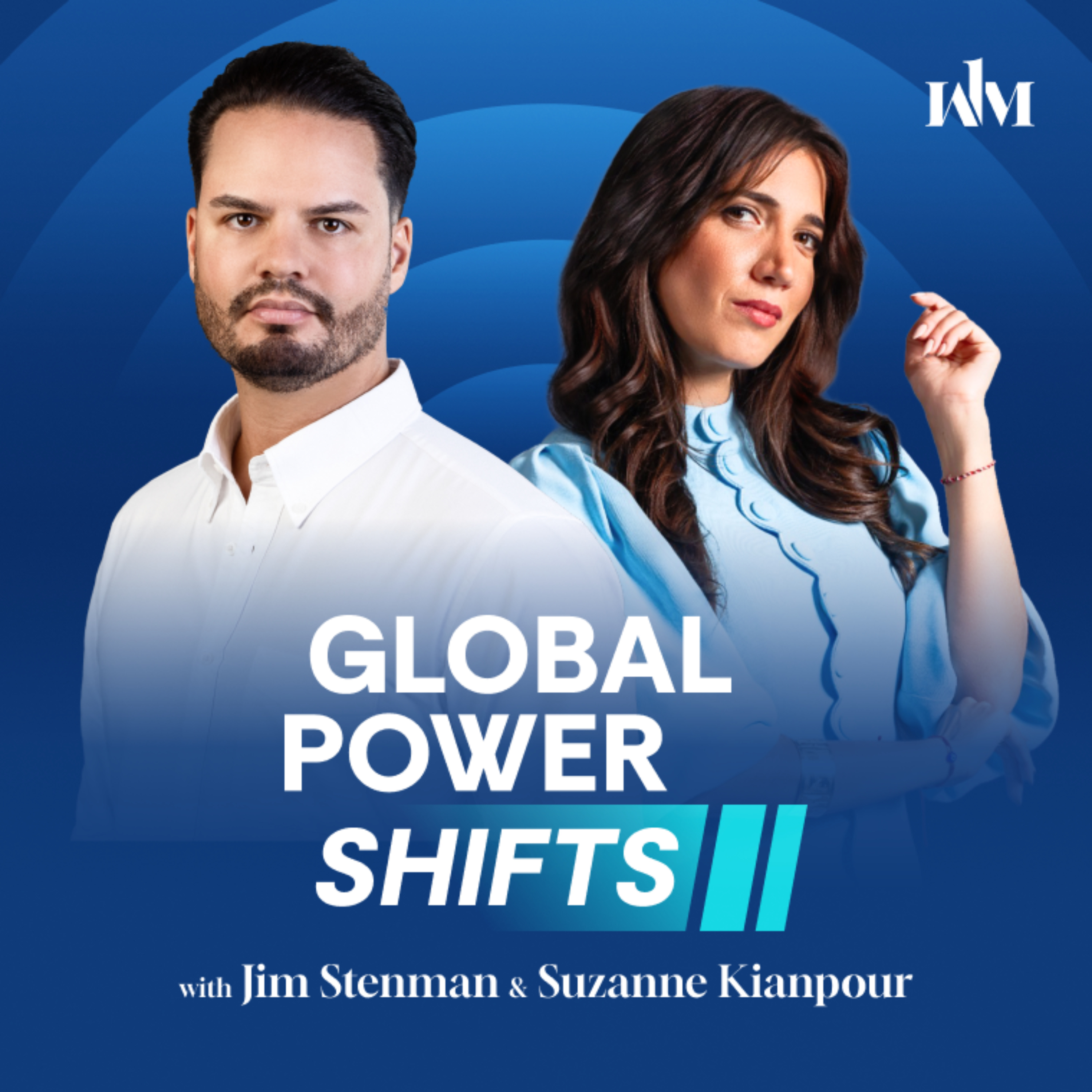
Global Power Shifts
by World1Media
Global Power Shifts is about the new multipolar world — and the rise of the rest. Journalists Jim Stenman and Suzanne Kianpour (CNN, BBC, NBC, Fox News, Reuters) speak with the people who set policy, not just comment on it. Previous guests include sitting and former ministers, ambassadors, and security chiefs offering unvarnished views on energy, sanctions, tech sovereignty, maritime chokepoints, information ops, and statecraft. It’s decoding a changing world — how power is moving beyond a single center, and what that means for governments, markets, and daily life.
-
24
Inside the UAE's OPEC Exit | Tareq Alotaiba on the Gulf After Iran
The UAE just left OPEC. Weeks of Iranian missiles and drones, around 2,800 strikes absorbed by the Emirates, and a quiet realisation in Abu Dhabi that the old playbook is finished.Tareq Alotaiba, a former UAE government official now at Harvard's Belfer Center and AGSIW in Washington, joins Jim Stenman and Suzanne Kianpour on Global Power Shifts to break down what the OPEC exit really means, why the Emirates feels let down by parts of the Arab world, and how the war has changed the country's posture toward Iran, Israel, and Washington.In this episode:→ Why the UAE leaving OPEC was inevitable, war or no war→ Anwar Gargash's verdict: appeasement of Iran has failed→ The disappointment in Arab neighbours, and the ones who showed up→ Why Tareq believes the IRGC, not Iran, is the real enemy→ The Strait of Hormuz, Fujairah, and what comes next for trade→ Israel, the Abraham Accords, and the UAE's balancing act through the Gaza war→ The Muslim Brotherhood, Qatari funding, and Emirati students in Europe→ Why the UAE will rebuild ties with Iran but never trust it againTareq's recent piece for AGSIW predicted the OPEC announcement four days before it broke. This conversation is the wider story behind it.🎙 Global Power Shifts is hosted by Jim Stenman and Suzanne Kianpour.Follow on YouTube, Spotify, and Apple Podcasts.
-
23
Israel Won the War, But Is It Losing the West?
Israel says it has weakened Hamas, pushed back Hezbollah, and left the Iranian regime more exposed than at any point in 47 years. So why does it feel like the country is losing ground everywhere else?Jonathan Conricus, the former IDF International Spokesperson and now Senior Fellow at the Foundation for Defense of Democracies in Washington, joins Suzanne Kianpour and Jim Stenman on Global Power Shifts.He makes the Israeli case directly. Iran's ring of fire is no longer what it was. Hezbollah is on the back foot. Hamas is degraded but still standing. The regime in Tehran is the weakest it has been in decades. None of the enemies, in his view, have been finished off.Suzanne and Jim push on what the case leaves out. Has Israel won the military rounds while losing a generation across the West? What does the Gulf actually think now that Iranian missiles, Houthi drones, and shipping disruption have become a regional cost rather than an Israeli one? Why are young Jews in London and New York genuinely afraid for their physical safety? And how does any of this end with Iran, where Suzanne's own family is on the receiving end of a regime under more pressure than at any point since 1979?Conricus also concedes something many Israeli officials will not say in public: reckless rhetoric from parts of the Israeli political class is making the country's job abroad much harder.The conversation moves across Gaza, Lebanon, the Gulf, Europe, the United States, and the future of the Iranian regime. Serious, sometimes uncomfortable, and aimed at an audience that wants more than headlines.
-
22
Life After Orbán: Hungary's Reset and the Road Ahead, with Ambassador Tibor Nagy
Sixteen years of Viktor Orbán ended at the ballot box. Ambassador Tibor Nagy, a Hungarian-born former US Assistant Secretary of State for African Affairs and acting Under Secretary of State for Management, returns to Global Power Shifts to explain how it happened and what comes next.Jim Stenman and Nagy work through the real story behind Péter Magyar's win: the stench of cronyism that voters could no longer stomach, a leaked Orbán–Putin phone call that landed badly in a country with Russia in its DNA, and a two-track Hungary where regime friends got world-class healthcare while ordinary citizens waited in line.They also cover what Magyar's two-thirds majority means in practice, why Brussels is likely to move fast on 22 billion euros in frozen funds, how the Kremlin loses its most reliable voice inside the EU, what happens to China's battery plants and imported Asian workforce, and why JD Vance showing up to campaign for Orbán may have hurt more than it helped.The conversation closes on the Horn of Africa: the Trump administration's reported exploration of lifting Eritrea sanctions, the strategic case for deepening ties with Somaliland, and the risks of an Ethiopian election held without Tigray at the table.A clear-eyed look at how long authoritarian runs actually end, and what the signal from Budapest means for capitals from Washington to Addis Ababa.Follow Global Power Shifts on YouTube, Spotify, and Apple Podcasts.
-
21
Chagos, Iran, and the Indian Ocean Power Game
Mauritius tends to get filed under "luxury travel destination." That framing misses almost everything that matters about it right now.The Indian Ocean is becoming one of the most contested strategic spaces on the planet. Chinese naval assets, French military presence, the US base at Diego Garcia, Indian positioning, and the fallout from the Iran war are all converging in waters that run through some of the world's most critical trade corridors. Mauritius sits in the middle of it.Ameenah Gurib-Fakim was Mauritius's first female president, a scientist and academic who came to power without going through traditional party politics. She joined Jim Stenman and Suzanne Kianpour on April 1 to talk about what Mauritius actually represents at this moment: a small state with serious strategic weight, caught between great powers and trying to use that position deliberately.The conversation covers the long-running dispute over the Chagos Islands and Diego Garcia, including the ICJ ruling, the unresolved deal with Britain, and what it means that Iran attempted to strike the base with two ballistic missiles on 20 March, in an unsuccessful attack confirmed by the UK's Ministry of Defence. Since that interview, the United States, Israel, and Iran have agreed to a two-week ceasefire, effective early Wednesday, April 8, making this conversation a sharp record of where things stood at the edge of that shift. It gets into Africa's debt burden, the $1.3 trillion that keeps the continent borrowing at 15% while the West borrows at 2%, and why that matters more than most Africa coverage admits. Gurib-Fakim is direct about what the African Continental Free Trade Agreement could unlock, where the real development pockets are, and why Africa still does not have a media voice that speaks from its own vantage point.She also pushes back on the information disorder problem in a way that goes beyond the usual hand-wringing: who controls the algorithm, whose agenda it serves, and what it would actually take to build something credible enough to compete.A sharper conversation about the Indian Ocean, African agency, and the real stakes of a world in which data, minerals, and maritime access are becoming the currencies of power.
-
20
"Iran Is Winning This War" — Iraq Vet Turned US Congressman on Iran's Global Cost
Seth Moulton led a platoon into Baghdad, fought in Najaf, and commanded Marines trained to recover downed pilots. He now sits on the House Armed Services Committee. When two American jets went down over Iran, he said what most in Washington wouldn't: Iran is winning this war.In a conversation with Suzanne Kianpour and Jim Stenman, Moulton makes the case that tactical success in the air is concealing a strategic collapse on the ground, that Trump's Truth Social posts are doing real damage to Gulf alliances, and that tearing up the nuclear deal set in motion everything that has happened since. He also explains why the biggest beneficiary of this conflict may not be Iran at all -- it may be Xi Jinping.
-
19
Inside Iran’s Security State: Escape, Detention and the IRGC
When Rouzy Vafaie tried to cross the border into Armenia during the war with the United States, he was looking for a way out. Instead, he was intercepted by the IRGC. In this episode of Global Power Shifts, Suzanne Kianpour speaks with Rouzy about the reality of his detention, the beatings, the threats, and the unexpected reason he was finally let go. It turns out his release came with a price. He was expected to carry out a “service to the motherland” by spying for the regime while living abroad.This is a first-hand account of the physical reality of escaping Iran and the psychological pressure that follows a person long after they have crossed the border.
-
18
Iran, American Power, and the End of the Middle East Order
What happens when the guardrails of Middle East diplomacy finally snap?In this episode, we are joined by Jon Finer, former U.S. Deputy National Security Advisor and host of the Vox Media podcast The Long Game. Finer joins Global Power Shifts to break down the collapse of the Iran nuclear deal and the regional chaos that followed.Having sat at the table during the original JCPOA negotiations, Finer offers a candid look at the fallout of the Trump-era withdrawal and the hard lessons learned since.We dig into the "fantasy" of clean regime change, the danger of entering conflicts without a clear exit, and why military escalation rarely goes to plan.From the stability of the Gulf to the volatile energy markets and the shifting balance of power from the Levant to the Horn of Africa, Finer explains why the old rules of engagement no longer apply.
-
17
How Putin Exploits Global Chaos: Bill Browder on Russia, Iran, and Ukraine
Sir Bill Browder joins Global Power Shifts to discuss what his experience inside the Kremlin teaches us about the current state of global instability. Once the largest foreign portfolio investor in Russia, Browder has undergone a profound transformation. Following the death of his lawyer, Sergei Magnitsky, in a Moscow prison, he abandoned his career in finance to become a leading human rights activist and a persistent critic of Vladimir Putin.A central part of this episode focuses on the Magnitsky Act. This landmark legislation, which Browder pioneered, fundamentally changed international diplomacy by allowing governments to freeze the assets and ban the visas of specific individuals responsible for corruption or human rights abuses. Rather than sanctioning entire nations, this "follow the money" approach targets the personal wealth of autocrats and their enablers.The conversation explores how Putin consolidated power through chaos, why Russia benefits from the current war in Iran, and what Ukraine’s drone expertise means for the future of the Gulf. Browder also shares his perspective on Donald Trump’s posture toward Russia, the breaking point of international law, and the precarious balance between global business and human rights.Topics include: Putin’s Russia, Sergei Magnitsky, the Magnitsky Act, human rights activism, Ukraine, Iran, the Gulf, sanctions, corruption, Trump, NATO, and global power shifts.
-
16
Politics of Asylum: Iranian Women Footballers Defect
In this emergency episode of Global Power Shifts, Jim Stenman and Suzanne Kianpour speak with award-winning journalist Tracey Holmes about the extraordinary story of Iran’s women’s football team at the Women’s Asian Cup. After refusing to sing the national anthem, several players were granted asylum in Australia, while others chose to return home amid fears for their families.We discuss how the situation unfolded, the intense pressure from Iranian officials, why Donald Trump inserted himself into the story, and what this moment reveals about the collision of sport, state power, and human rights.
-
15
America Strikes Iran: When Your Two Countries Go to War
In a special edition of Global Power Shifts, Jim Stenman and Suzanne Kianpour unpack the fast-moving crisis around Iran, one week after the latest U.S. and Israeli strikes. Suzanne, an Iranian-American journalist who has covered Iran for most of her career, reflects on the deeply personal reality of watching her two countries move closer to open conflict. Together, they examine the fallout across the Gulf, the confusion around Trump’s endgame, the future of the Iranian regime, and why Iran cannot be understood through easy comparisons with other countries in the Middle East.
-
14
Africa’s Moment of Truth: Opportunity vs. Reality in a Multipolar World
From refugee camps to the highest levels of U.S. diplomacy, Ambassador Tibor Nagy has spent decades at the center of America’s engagement with Africa.In this episode of Global Power Shifts, Jim Stenman and Suzanne Kianpour sit down with the former U.S. Assistant Secretary of State for African Affairs to examine Africa’s role in a world where the rules-based international order no longer operates as it once did — and where power, leverage, and credibility increasingly matter more than language or ideals.The conversation spans the Horn of Africa’s growing volatility, China’s expanding footprint, potential disruption in the Red Sea, and the intensifying competition for critical minerals. Nagy also offers a blunt assessment of why terms like “genocide” have lost much of their power in international politics, even as violence and instability persist.🎧 Subscribe to Global Power Shifts on YouTube, Spotify, and Apple Podcasts for more conversations on power, geopolitics, and the forces reshaping the world.
-
13
Inside Somaliland: Israel’s Recognition and the Red Sea Chessboard
In our first episode of 2026, Jim Stenman speaks with Dr. Mohamed Hagi, Somaliland’s Presidential Advisor on Foreign Affairs and International Cooperation, days after Israel became the first country to formally recognize Somaliland. Hagi argues recognition changes the operating reality of diplomacy, from trade and finance to security cooperation. We discuss what Somaliland says it wants from Israel, what Israel may gain in return, and how this recognition reverberates across the Red Sea corridor, from Yemen to the Horn of Africa. The conversation also covers Berbera port and the UAE’s footprint there, Ethiopia’s long-running push for sea access, and why Hagi says U.S. recognition remains the holy grail, including the roles of Donald Trump, Senator Ted Cruz, and Congresswoman Ilhan Omar.In this episode:What recognition unlocks in practiceIsrael–Somaliland: interests on both sidesRed Sea security and regional backlashEthiopia, Berbera, and sea-access politicsThe Washington angle and diaspora politics
-
12
Progressive Reckoning: Restoring the American Dream
Authoritarian politics is rising, not just in the U.S., but across the West. In this episode, Jim Stenman and Suzanne Kianpour sit down with Saikat Chakrabarti, a Silicon Valley tech millionaire turned progressive strategist who is now running to replace Nancy Pelosi in San Francisco.He is the son of an Indian immigrant who grew up in poverty, and he argues that the American Dream has been breaking for decades. His core claim is blunt: when democracy stops delivering a better life, voters start looking elsewhere, and that is where strongman politics thrives. He also makes the case that progressive politics is failing because it has not matched today’s affordability crisis with a big enough economic agenda.We talk about what it would take to rebuild trust in democracy, how to regulate Big Tech and put AI to work for the public, and how to pair social justice with an economic program that can actually win. We also ask whether Zohran Mamdani’s win in New York signals a new opening for progressives, and what that could mean for the future of the Democratic Party.Follow Global Power Shifts and subscribe on YouTube, Spotify, or Apple Podcasts.
-
11
Inside ‘Africa’s North Korea’: Human Rights, Dictatorship, and Eritrea’s Future
Eritrea is often described as “Africa’s North Korea” – a closed dictatorship where indefinite conscription, disappearances and repression push people to flee, feeding one of the world’s most desperate migration routes.In this episode of Global Power Shifts, Jim Stenman and Suzanne Kianpour sit down with Vanessa Tsehaye, a Swedish Eritrean human rights activist, founder of One Day Seyoum, 2025 Magnitsky Award winner, and former Amnesty International campaigner and Al Jazeera journalist. Vanessa’s uncle, a photojournalist, has been imprisoned in Eritrea for more than two decades, and that personal story runs through her work. She explains the country’s human rights crisis, how it connects to migrant journeys across the Sahara and Mediterranean, and how Eritreans are still fighting for accountability – and quietly preparing for life after Isaias Afwerki.
-
10
Boomtown to ‘Narco State’: Exiled Politician’s Road Back for Venezuela
Exiled Venezuelan politician Armando Armas joins Suzanne Kianpour and Jim Stenman to talk about life after a brutal attack that nearly killed him — raids, arrests, and a family split across borders. He traces Venezuela’s slide from oil boom to repression, the networks propping up Maduro, and the personal cost of opposition. Armas still backs peaceful resistance, and he spells out what meaningful outside support should look like now.
-
9
Reda on the Horn: Tigray, Peace and Red Sea Access
Getachew Reda, Tigray’s former president and Ethiopia’s Minister of East African Affairs, joins host Jim Stenman (formerly CNN and Reuters). They discuss Tigray’s fragile peace after Pretoria, tensions inside the TPLF, Eritrea’s role, the push for Red Sea access, and the GERD’s regional impact. A grounded look at what comes next for Ethiopia and the Horn of Africa.
-
8
Living on Russia’s Doorstep: Ukraine’s Domino Effect in the Baltics
In this special episode of Global Power Shifts, Jim Stenman and co-host Suzanne Kianpour sit down with Lithuania’s former Foreign Minister, Gabrielius Landsbergis, to explore how a small nation on NATO’s eastern flank is navigating an uncertain era.Born under Soviet occupation and shaped by his family’s role in Lithuania’s fight for independence, Landsbergis guides us through:• The echo of Kremlin tanks rolling through Vilnius — and the enduring lessons of that history• Russia’s war in Ukraine as a true wake-up call, and how the Baltics are shoring up resilience• The future of NATO under Trump 2.0 — can Article 5 still deter aggression?• Europe’s Western-centric blind spots, the EU’s eastern dimension, and whether Brussels can adapt before it’s too lateTune in to discover why the Baltics matter for us all — and what’s at stake if NATO fails to uphold the post-Cold War security order. If you enjoy the episode, please leave us a review on Spotify or Apple Podcasts — it makes a world of difference.
-
7
The South Caucasus: Caught or Chosen in the New World Order?
🎙 This week on Global Power Shifts, we turn our focus to one of the world’s most overlooked yet strategically vital regions: the South Caucasus.Our guest is Emil Avdaliani — Georgian analyst, university professor, Oxford graduate, and contributor to the Carnegie Endowment and TRENDS Research. He specializes in Eurasian connectivity and the evolving role of Georgia, Armenia, and Azerbaijan in a shifting global order.From Georgia’s EU aspirations to the tensions between Armenia and Azerbaijan, Emil argues that this narrow corridor between Europe and Asia is no longer just a post-Soviet borderland — it’s becoming a case study in 21st-century multipolarity.We explore:Why the post-Soviet label no longer fitsHow Russia’s regional influence is being testedThe role of China, Turkey, and the West in shaping the CaucasusWhat Georgia’s future tells us about global power realignmentIf you want to understand how big power politics are playing out in smaller, critical places — this episode is for you.Hosted by Jim Stenman and recorded on May 17, 2025, in Tbilisi, Georgia.🎧 Subscribe for more conversations decoding the new world order.
-
6
Decoding the Kremlin: Putin, Power, and the Battle for Global Influence
What does Vladimir Putin really want — for Russia, for himself, and for the post-Soviet world?In this episode of Global Power Shifts, Jim Stenman and co-host Suzanne Kianpour sit down with Christopher Steele, the former head of MI6’s Russia desk and the man behind the now-infamous Steele Dossier, to decode the Russian president’s strategy — from Ukraine to Eurasia to the global stage.Steele, a career intelligence officer turned geopolitical consultant, brings decades of insight into the Kremlin’s inner workings. With war still raging in Ukraine and tensions rising across former Soviet republics, his perspective on Russia’s evolving role in the 21st century is more relevant than ever.We explore:Putin’s long game in Ukraine and beyondWhat motivates Russia’s foreign policyHow the West misunderstands MoscowThe risks ahead — and the signs we’re missingWhether you follow geopolitics, international relations, or global security, this is a deep dive into how power is shifting — and why understanding Russia is key to understanding the world today.
-
5
What the West Gets Wrong About BRICS
BRICS is often misunderstood — especially in Western capitals.In this episode, Gustavo de Carvalho joins Global Power Shifts to unpack what the BRICS grouping is really about. We trace its evolution from an economic acronym to a political force, explore tensions between member states (think India vs. China, Egypt vs. Ethiopia), and ask whether expansion strengthens or stretches the bloc.We also look at the role of the New Development Bank, how Trump-era tariffs renewed BRICS' relevance, and what the group’s future says about the shifting balance of global power.
-
4
Between Two Worlds: A Homecoming in Trump’s America
In Episode 4 of Global Power Shifts, host Jim Stenman is joined by Suzanne Kianpour — foreign policy reporter, former BBC correspondent, and founder of Helmet to Heels, a platform that blends fashion and global affairs.After years reporting from the Middle East — from covering ISIS to witnessing the fallout of October 7th — Suzanne returns to Washington, D.C., just as Trump begins his second term. What she finds is a country that feels at once familiar and deeply changed.In this episode, we unpack the growing gap between America’s self-perception and its place in the world, explore how China is gaining ground in the Gulf through public diplomacy, and reflect on how war looks in the age of social media. It’s a wide-ranging, personal conversation about power, perception, and the realities of coming home.Follow Suzanne on social media:https://www.instagram.com/kianpourworld/https://www.linkedin.com/in/suzannekianpour/
-
3
Reclaiming the Mic: A Survival Guide for Legacy Media in the Age of Distraction
Is traditional media dying, or is it simply undergoing a much-needed transformation?This week, we explore the rise of content creators and the decline of trust in legacy platforms, as Donald Trump continues to attack the mainstream media and Elon Musk stirs fear on X. With affordable tech putting news in everyone’s hands, the lines between fact and fiction are blurring in an attention-driven economy, where misinformation is rampant. So, how do we navigate this new reality, and does truth even matter anymore?Our guest, Jamie Angus, former BBC and Al Arabiya news executive, shares his insights on this shifting landscape. One thing is certain: the media genie isn’t going back in the bottle.Join us as we discuss the future of journalism, the influence of social media moguls, and the battle for your attention.
-
2
Why Europe Can't Afford to Fall Behind in the AI Race
This week, tech journalist Samuel Burke joins us to explore the innovation gap that’s holding Europe back in the AI race—while America and China seem to be thriving—and what it means for the future. In his latest article forFortune, the three-time Emmy Award-winning journalist, who spent years as a tech correspondent at CNN, examines how the EU and U.K.’s complex regulatory landscape is slowing AI adoption in Europe, while other regions race ahead. While Europe’s leadership in consumer protection, such as the GDPR’s global data privacy standards, is well recognized, some regulations come at a steep cost. These hurdles are delaying the latest AI technologies, with real-world consequences as the Fourth Industrial Revolution accelerates, risking Europe’s position in the global AI race.
-
1
Trump's World: How America's Disruptor-in-Chief Will Reshape the Globe
In this episode, we welcome Charles Myers, Chairman and Founder of Signum Global Advisors, to discuss the potential implications of Donald Trump’s return as U.S. president and how it could reshape America’s foreign relations. With over 25 years of political and electoral experience, Myers brings unparalleled expertise to this critical conversation.Key topics include:Trump 2.0 foreign policy: How would a second Trump presidency differ from his first term, and what would it mean for global diplomacy?Biden’s legacy: Analyzing Biden’s foreign policy achievements, from the Israel-Gaza ceasefire to his handling of international alliances.Ukraine and NATO: Can the war in Ukraine be resolved, and what are the implications for NATO and European defense?China and Taiwan: Exploring Beijing’s economic struggles, looming tariffs, and Taiwan’s central role in global geopolitics.Geopolitical rhetoric: Trump’s controversial statements about Canada, Greenland, and the Panama Canal — are they bold strategies or political bluster?Iran’s changing role: How recent events have weakened Iran’s proxy networks and reshaped its regional influence.Domestic oligarchy: Biden’s critiques of big tech and influential billionaires like Elon Musk as he nears the end of his term.Join us for an insightful discussion on the future of American foreign policy and its ripple effects on global stability. Don’t miss this episode filled with expert analysis and thought-provoking perspectives.
No matches for "" in this podcast's transcripts.
No topics indexed yet for this podcast.
Loading reviews...
ABOUT THIS SHOW
Global Power Shifts is about the new multipolar world — and the rise of the rest. Journalists Jim Stenman and Suzanne Kianpour (CNN, BBC, NBC, Fox News, Reuters) speak with the people who set policy, not just comment on it. Previous guests include sitting and former ministers, ambassadors, and security chiefs offering unvarnished views on energy, sanctions, tech sovereignty, maritime chokepoints, information ops, and statecraft. It’s decoding a changing world — how power is moving beyond a single center, and what that means for governments, markets, and daily life.
HOSTED BY
World1Media
CATEGORIES
Loading similar podcasts...
URL copied to clipboard!