
PODCAST · news
Good Will Hunters
by Good Will Hunters
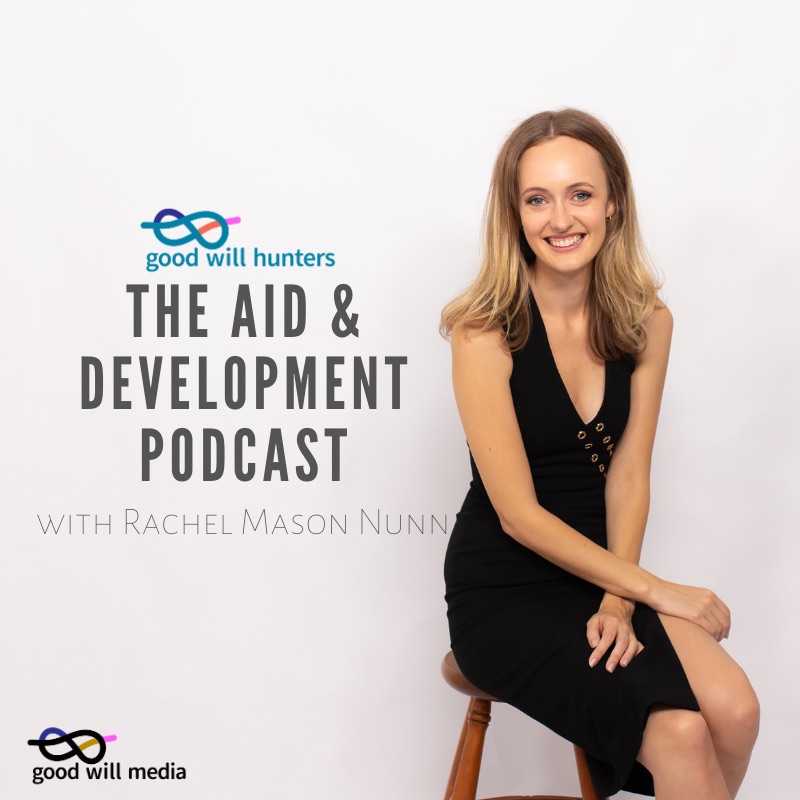
Join us as Rachel Mason Nunn explores the nuanced world of international development by talking to experts and game-changers whose voices and work are critical to radically transforming the sector and our communities for the better. Listen in and be prepared to hear from incredible people who push us to rethink international development, and how we can create meaningful and long-lasting change.
-
185
Success in the For-Purpose Sector with Kevin L Brown
Success in the For-Purpose Sector with Kevin L Brown by Good Will Hunters
-
184
Success in the For-Purpose Sector with David Spriggs
Welcome to this series of Good Will Hunters, co-hosted by Paul Ronalds, CEO of Save the Children Global Ventures, and me — Rachel Nunn, Founder of Good Will Hunters and Evoluta. You’ll hear Paul and I introduce ourselves properly in just a moment. Before we begin, I’d like to acknowledge the Traditional Custodians of the land on which I record these episodes — the Gadigal people of the Eora Nation — and pay my respects to Elders past, present and emerging. In this fifth episode of the series, we look at technology and its uses in the for-purpose sector. And who better to talk to than David Spriggs, CEO of InfoXChange, an organisation focused on technology for social justice. Keen listeners will recall David has been on the show before. In this episode, we delve into the challenges and opportunities facing the for-purpose sector, across AI, data, and cybersecurity and we talk about the importance of investing in digital transformation. Enjoy the episode.
-
183
Success in the For-Purpose Sector with John McLeod and Melissa Smith
Welcome to this series of Good Will Hunters, co-hosted by Paul Ronalds, CEO of Save the Children Global Ventures, and me — Rachel Nunn, Founder of Good Will Hunters and Evoluta. You’ll hear Paul and I introduce ourselves properly in just a moment. Before we begin, I’d like to acknowledge the Traditional Custodians of the land on which I record these episodes — the Gadigal people of the Eora Nation — and pay my respects to Elders past, present and emerging. In this fourth episode of the series, we look at philanthropy. We have two industry leaders — John McLeod, co-founder of the JB Were Philanthropic Services team and one of Australia’s foremost experts on trends in giving, and Melissa Smith, founder of She Gives, a philanthropic platform redefining how women engage with giving. First up you’ll hear John, and then you’ll hear Melissa. We’ve also added a few links to the show notes so you can learn more about the work of both guests. https://www.jbwere.com.au/campaigns/jbwere-nab-charitable-giving-index- https://shegives.com.au/story/melissa-smith-on-the-power-of-stories-and-simple-acts/
-
182
Success in the For-Purpose Sector — With Grant McCabe
Welcome to this series of Good Will Hunters, co-hosted by Paul Ronalds, CEO of Save the Children Global Ventures, and me — Rachel Nunn, Founder of Good Will Hunters and Evoluta. You’ll hear Paul and I introduce ourselves properly in just a moment. I’d like to acknowledge the Traditional Custodians of the land on which I record these episodes — the Gadigal people of the Eora Nation — and pay my respects to Elders past, present and emerging. In this third episode of the series, we’re joined by Grant McCabe, Managing Partner for Boston Consulting Group iN Australia and New Zealand, and President of the Geelong Cats Football Club. Paul, Grant and I talk about people - how to build and inspire great teams and what principles underpin effective leadership in the for-purpose sector Jim Collins Leadership Theory: https://www.ft.com/content/fe2649df-fa54-4fe6-a925-f9e3a2559e27
-
181
Success in the For-Purpose Sector — With Liv Whitty
Welcome to this new series of Good Will Hunters, co-hosted by Paul Ronalds, CEO of Save the Children Global Ventures, and me — Rachel Nunn, Founder of Good Will Hunters and Evoluta. Before we begin, I’d like to acknowledge the Traditional Custodians of the land on which I record these episodes — the Gadigal people of the Eora Nation — and pay my respects to Elders past, present and emerging. In this second episode of the series, we’re joined by the excellent Liv Whitty, CEO of Oho — a compliance automation and safeguarding platform designed for the care sector. Oho scans employee credentials continuously, helping organisations stay on top of Working With Children Checks, Police Checks, and other compliance measures — and closing the information and system gaps that bad actors can exploit. But this is a conversation about business models in the for-purpose space. Oho ultimately chose a for-profit structure — but they could just as easily have gone down the not-for-profit route. In this episode, we unpack how that decision was made, and how you can approach the same question in your own work: What structure best supports your mission? For Oho, the decision came down to the nature of the mission — preventing abuse by enabling mass adoption of a safeguarding tool. To reach the scale required, the team needed access to capital and fast product uptake, and a for-profit structure felt like the right path.
-
180
Success in the For-Purpose Sector — With Andrew Leigh MP
Welcome to this new series of Good Will Hunters, hosted by Paul Ronalds, CEO of Save the Children Global Ventures, and myself — Rachel Nunn, Founder of Good Will Hunters and Founder of Evoluta. You’ll hear Paul and I introduce ourselves again shortly, and share a bit about why we’ve chosen to do this short series on the for-purpose sector. Before we get into the episode, I’d like to acknowledge the Traditional Custodians of the land on which I record these episodes — the Gadigal people of the Eora Nation — and pay my respects to Elders past, present and emerging. In this first episode of the series, we’re joined by Dr Andrew Leigh, Assistant Minister for Productivity, Competition, Charities and Treasury. Productivity is front and centre for this government — from boosting skills to mainstreaming artificial intelligence in the way we work. But what does a more productive charity sector look like? In this episode, we talk about the government’s role in supporting and sustaining the sector — and they’re a pretty important player, not least because 50% of the charity sector’s income comes from government. We dive into the role of AI in boosting productivity, the government’s plan to double philanthropy by 2030, and why the voice of the charity sector is more important than ever. I’d personally like to see a dedicated productivity agenda for the charitable sector — something I’m sure many of you might join me in pushing for. Let’s get into it — and as always, I’d love to hear your thoughts.
-
179
Bonus Episode - Lady Roslyn Morauta
Surprise! I’m back with a bonus episode of Good Will Hunters! I’m thrilled to feature Lady Roslyn Morauta in this special wrap-up episode. Lady Roslyn and I spoke yesterday, on December 18, covering some of the major themes from this series: health financing, the health workforce (including community health workers), the work of The Global Fund, Australia’s role in global health, and more. Most importantly, I asked her the big question: What should we do over the next five years? With little hope of achieving the SDG3 targets if we continue with business as usual, her insights are more critical than ever. Lady Roslyn needs no introduction, but for context, she is the Chair of the Board of the Global Fund to Fight AIDS, Tuberculosis and Malaria, a role she assumed in May 2023. She brings deep and multifaceted experience with the Global Fund, having served as Vice-Chair of the Board for four years, represented the Western Pacific Region constituency as Alternate Board Member, and chaired Papua New Guinea’s Country Coordinating Mechanism. She has been a steadfast advocate for health, HIV programs, and gender equity, with a strong understanding of the Global Fund’s strategies, processes, and grant implementation at the country level. Lady Roslyn has lived and worked in Papua New Guinea since 1982 and served as the country’s First Lady from 1999 to 2002, during her husband Sir Mekere Morauta’s term as Prime Minister. In addition to her advocacy work, she has an impressive professional background, having worked in publishing in England, taught Politics at the University of Ghana, the Australian National University, and Queensland University, and held research roles with the Defence Department in Canberra and the Australian Social Welfare Commission. Enjoy this special bonus episode, and I wish you all a very happy and safe festive season!
-
178
SDG3.9 - Reducing Deaths and Illnesses from Hazardous Air, with Dr Bronwyn King AO, Distinguished Professor Lidia Morawska and Anna-Maria Arabia
Welcome to Episode 8 of Good Will Hunters in our series on SDG3 – Good Health and Wellbeing. I am your host, Rachel Nunn. This episode is the final in our series and focuses on SDG3.9 – Substantially reducing the number of deaths and illnesses caused by hazardous chemicals, air, water, and soil pollution and contamination. Poor air quality remains a significant health challenge, especially in low- and middle-income countries, where pollution disproportionately impacts vulnerable populations. Today, I’m joined by three exceptional guests: Professor Lidia Morawska, a leading expert on air quality and its health impacts; Dr. Bronwyn King, a globally recognized radiation oncologist and tobacco-free investment advocate; and Anna-Maria Arabia, Chief Executive of the Australian Academy of Science: Dr. Bronwyn King AO – Dr. King is a radiation oncologist and the founder and CEO of Tobacco Free Portfolios, recognized for her work in tobacco control and finance reform. She is also an Officer of the Order of Australia (AO) for her service to community health. Distinguished Professor Lidia Morawska – Professor Morawska is internationally recognized for her work on air quality and its health impacts. She holds a distinguished professorship, which reflects her contributions to science and public health policy. Anna-Maria Arabia – Anna-Maria is the Chief Executive of the Australian Academy of Science, known for her leadership in advocating for science and research in Australia and globally. Together, we’ll explore the intersection of air quality, public health, and policy, discussing both the challenges and the innovations that can help us achieve cleaner air and healthier lives. Indoor air quality gained significant attention during Covid-19, highlighting a critical gap in Australia’s health policies: we have no mandated standards for indoor air quality. Australians spend 90% of our time indoors, yet there are no regulations governing the quality of the air we breathe. Other countries are doing better in this regard, but many are also doing much worse. As we close this series, I want to thank you for joining me on this exploration of SDG3. Australia's role as a major health donor to the region is crucial, and we need a cohesive plan to measure and report on our contributions to these targets. Strengthening health systems will require sustained investment in the health workforce, culturally sensitive care, road safety, and leveraging our incredible domestic R&D capabilities. And above all, we can’t manage what we don’t measure – tracking our progress is essential if we are to make real strides toward achieving good health and wellbeing for all. It’s been a privilege to host this series, and I hope it’s inspired you to think about the work that lies ahead and how we can collectively drive progress. Thank you for listening, and I hope you enjoy today’s episode.
-
177
SDG3.8 - Universal Health Coverage, with Dr Lucas de Toca PSM, Australian Ambassador for Global Health
Today’s episode is on SDG3.8 - Achieve Universal Health Coverage. Universal Health Coverage means ensuring everyone, everywhere, has access to quality essential health care services, medicines and vaccines. It also means ensuring that health expenditure isn’t a large proportion of total household expenditure. Universal Health Coverage encompasses all of the other targets under SDG3. It’s essential - and it’s also a bit of a utopia, if you look at the current state of many health systems around the world. Today’s guest is Australia’s Ambassador for Global Health, Dr Lucas De Toca PSM. Dr de Toca is a medical doctor, adjunct professor in medicine, and public health expert with extensive experience in pandemic response, First Nations health and rural health service delivery. He leads the Global Health Division and the Indo-Pacific Centre for Health Security at the Department of Foreign Affairs and Trade, managing Australia’s relationship with multilateral health organisations and our international development assistance in health. Today we look at Universal Health Coverage and why it’s so hard to attain. We speak about how stretched the health workforce is in the Indo-Pacific region, and why Australia has shifted to a greater investment in primary health care since Covid-19. We speak about why financing health is so difficult for so many countries, and how Australia can leverage our immense domestic health expertise to better support the region. And - Lucas tells us why he thinks he has the best job in the world. Since recording this episode, Lucas has made a number of exciting announcements, including Australia’s new Pacific Climate and Health Resilience Package announced during Cop29, and our new partnership with the World Mosquito Program to support the control of mosquito borne disease in Timor-Leste, Kiribati and Indonesia. Additionally, and very excitingly, Lucas announced $56.8m is going to achieving universal sexual and reproductive health and rights in the Indo-Pacific, to improve access to sexual and replicative health services in Southeast Asia.
-
176
SDG3.7 - Eliminating Cervical Cancer in the Indo-Pacific Region, with the EPICC Program
Welcome to Episode 6 of Good Will Hunters, in our new series on SDG3 - Good Health and Wellbeing. Today’s episode looks at SDG 3.7 - By 2030, ensure universal access to sexual and reproductive health-care services, including for family planning, information and education, and the integration of reproductive health into national strategies and programmes. Specifically, we’ll be focusing on a new program which I am incredibly excited about - it is the Elimination Partnership in the Indo-Pacific for Cervical Cancer, or EPICC. https://www.sydney.edu.au/news-opinion/news/2023/11/22/australia-takes-epicc-step-to-cervical-cancer-elimination.html EPICC is a regional health initiative designed to support countries across the Indo-Pacific region accelerate their journey towards the elimination of cervical cancer, and progress towards achieving the WHO 90/70/90 cervical cancer elimination strategy targets: https://www.who.int/initiatives/cervical-cancer-elimination-initiative
-
175
SSG3.6 - Reducing Deaths and Injuries from Road Traffic Accidents with Rob McInerney
Welcome to Episode 5 of Good Will Hunters, in our new series on SDG 3 - Good Health and Wellbeing. Now firstly - I have to apologise. I promised you an episode on each of the SD3 targets, however we are skipping SDG3.5 on substance abuse. We just couldn’t find a great guest for the episode and the show must go on. However, I am very open to doing the episode at a later date, so if you work in substance abuse internationally, particularly in the Pacific, and would like to chat, get in touch. With that, today we move onto SDG3.6 - which it may surprise you to learn, relates to road accidents. I am speaking to Rob McInerney. Rob is Chief Executive Officer for the International Road Assessment Programme (iRAP), a registered charity with the vision for a world free of high-risk roads. With RAP projects and programmes now active in over 100 countries worldwide, Rob works closely with key development bank, political and technical leaders from each country to build local capacity and deliver large scale and long-term road safety benefits through the provision of safer road infrastructure. Of all our episodes this series, this one surprised me the most. I’ll leave you to find out why. Enjoy!
-
174
SDG3.4 - Reducing the Burden of NCDs with Dr Rosemary Wyber
Welcome to Episode 4 of Good Will Hunters, in our new series on SDG 3 - Good Health and Wellbeing. So far in the series, we’ve looked at maternal and child health and infectious diseases. The response to the series has been enormous - last week I appeared on Radio New Zealand talking about the unacceptably high rates of child mortality in Kiribati. This series was designed to raise attention to the fact that we are not on track to meeting SDG3, and we must take urgent action. Today I am talking to Dr Rosemary Wyber about SDG 3.4, which relates to non-communicable diseases. Non-comunicable diseases, also known as chronic diseases, are not passed from person to person. This includes heart diseases, stroke, cancer, diabetes, and chronic lung disease. For those that follow me on LinkedIn, you would know I have spent a part of this year working in Timor-Leste on strengthening the local cardiology workforce, in response too extremely high rates of rheumatic heart disease. Hence, I wanted to focus today’s episode on heart disease, and who better to speak to than Dr Rosemary Wyber. Rosemary is a General Practitioner, and also holds a Masters of Public Health from the Harvard School of Public Health general practice training in Aboriginal Community Controlled Clinics in the Northern Territory of Australia. Dr Wyber’s doctoral research focused on rheumatic heart disease in Australia and internationally. She was the lead author of the RHD Endgame Strategy to eliminate RHD in Australia. Her postdoctoral research continues to address RHD and broader heart health for Aboriginal and Torres Strait Islander people. In this episode, we talk about what rheumatic heart disease is, how it is managed, and how health systems can better address it.
-
173
SDG3.3 - Ending epidemics of infectious diseases, with Prof. Brendan Crabb AC
Welcome to Episode 3 of Good Will Hunters, in our new series on SDG 3 - Good Health and Wellbeing. In our previous episode, we looked at infant and child mortality in Kiribati. The wonderful folks at the Devpolicy Blog published an article on the episode if you’d like to check it out. If you’ve listened to our first two episodes, you’ve probably seen a theme beginning to emerge. We are, in no way, shape or form, on track to achieving SDG3. We are falling behind on all targets, and many of our neighbours in the Indo-Pacific region are feeling it most. We should be concerned. But we should also be encouraged by the immense capability that exists, both in Australia and amongst our neighbours, to solve many of the public health challenges we face. Today’s guest is a great example of someone with extraordinary vision and capability. In this episode, I speak to Professor Brendan Crabb, Director and CEO of the Burnet Institute, about SDG3.3, on ending epidemics of infectious diseases. In this episode we talk about malaria, tuberculosis, HIV, neglected tropical diseases AND covid-19. We also talk about Australia’s support for the region and leveraging our immense resources in health research and development. As well as being Director and CEO of Burnet, Brendan is President of both the Australian Global Health Alliance and the Pacific Friends of Global Health, bodies that advocate for better health equity.
-
172
SDG3.2 - Reducing Newborn and Child Mortality, with Hon. Dr Tinte Itinteang and Sr. Christine Otai
Welcome to Episode 2 of our SDG3 series. In this series, we’ll be going through each of the targets of SDG3. In our previous episode, we looked at maternal mortality, and specifically some exciting work happening right here in Australia to developed inhaled oxytocin, to help prevent postpartum hemorraghe, which is one of the leading causes of maternal death. We also heard about the importance of connectivity and support networks for nurses and health workers in remote areas, dealing with often complex pregnancies and births. Today we move onto SDG3.2, which is ‘by 2030, end preventable deaths of newborns and children under 5 years of age, with all countries aiming to reduce neonatal mortality to at least as low as 12 per 1,000 live births and under-5 mortality to at least as low as 25 per 1,000 live births'. Today’s episode is very special - you’ll be hearing from the Kiribati’s Honourable Minister for Health and Medical Services, Dr Tinte Itinteang, along with members of his team and partners. Kiribati has one of the highest rates of Under 5 Mortality in the Pacific, second to Papua New Guinea. Despite decades of programs and partnerships, the dial has not shifted enough. The Honourable Minister and his team are embarking upon a new program - it is the Child Community Nursing Outreach Program or CCNOP. It’s a first of its kind program in Kiribati - and that’s all I’m going to tell you. You’ll have to listen to hear more. You’ll hear lots of different people speaking in this interview, I have listed all of their names in the show notes. This interview left me both saddened by the unacceptably high rates of child and infant mortality in Kiribati, but also extremely buoyed by the skill, passion and vision of the team who I had the honour of speaking to. The first voice you’ll hear is that of the Honourable Minister - I hope you enjoy. Following the Honourable Minister, you will hear from Sister Christine Otai. Christine is Adara’s Senior Newborn Advisor, based in Uganda. She contributes to the improvement of newborn health in Uganda through training, mentoring and coaching. Christine worked at Kiwoko Hospital for 28 years. For nine of these years, she worked as In-Charge of the Kiwoko Hospital maternity ward. For 18 years she worked as In-Charge of the Kiwoko neonatal intensive care unit (NICU). In 2010, Christine was honoured with the International Neonatal Award for Excellence. In 2021, she received a Lifetime Achievement Award from the Heroes in Health Awards. She has also been recognised as a newborn health champion by the Ugandan Ministry of Health.
-
171
SDG3.1 - Reducing Maternal Mortality, with Prof. Michelle McIntosh and Cherolyn Polomon
SDG3.1 - Reducing Maternal Mortality, with Prof. Michelle McIntosh and Cherolyn Polomon by Good Will Hunters
-
170
Episode 10 A Little Less Conversation, with David Higgins
This 10th and final episode of A little Less Conversation is one that is both reflective and future facing. If you’re looking to know more about the outcomes achieved at COP28, the architecture of the loss and damage fund and Australia’s climate finance ambitions and commitments more generally, you’ve come to the right place. Jess Mackenzie chats with David Higgins, the branch head of international net zero pathways, within the Department of Climate Change, Energy, the Environment and Water (DCCEEW). Department of Climate Change, Energy, the Environment and Water - Home - DCCEEW Department of Foreign Affairs - Homepage | Australian Government Department of Foreign Affairs and Trade (dfat.gov.au) Transitional Committee, UNFCCC - Transitional Committee | UNFCCC World bank - World Bank Group - International Development, Poverty, & Sustainability COP28 - COP28 UAE - United Nations Climate Change Conference UNFCCC - UNFCCC The Pacific Resilience Facility - PRF-Brochure.pdf (forumsec.org) International Monetary Fund - International Monetary Fund - IMF AOSIS: Alliance of Small island States - AOSIS – Alliance of Small Island States South Pacific Regional Environment Program (SPREP) - Home | Pacific Environment (sprep.org) Green Climate Fund (GCF) - Homepage | Green Climate Fund International Development Association (IDA) - International Development Association - World Bank The Pacific island Forum (PIF) - The Pacific Islands Forum – Pacific Islands Forum (forumsec.org)
-
169
Episode 09 A Little Less Conversation, with Carolyn Kitione
Climate change is impacting society in a myriad of ways, yet some groups are experiencing these impacts disproportionately. In this episode we take a deep dive into gender, youth and elders in the Pacific; How are they experiencing climate change? What are their priorities? and What does effective climate leadership look like? In this episode, we are joined by Carolyn Kitione, a youth leader and learning coordinator with Shifting the Power Coalition. Shifting the Power Coalition - Shifting the Power Coalition - ActionAid Australia Transcend Oceania - Transcend Oceania – There is no other way to peace Justpeace is the way Action Aid Vanuatu - ActionAid Vanuatu - ActionAid Australia Australia Pacific Climate Partnership - Pacific regional – climate change and resilience | Australian Government Department of Foreign Affairs and Trade (dfat.gov.au) Pacific Conference of Churches - Home - Pacific Conference of Churches
-
168
Episode 08 A Little Less Conversation, with Senator David Pocock
In a short time in the federal Parliament, Senator David Pocock has made a name for himself as someone willing to speak out on the big issues on behalf of the people most affected. These include taking on the Government over fossil fuels, climate change and other issues including cost of living. In this episode of A Little Less Conversation, Rachel and Dermot chat to Senator Pocock about his advocacy on climate change and his profound commitment to the Pacific, how his experiences through professional sport helped shape his worldview, and his own NGO, Rangelands Regeneration. https://www.davidpocock.com.au/ Rangelands Regeneration https://rangelandsregeneration.org/ Young people Duty of Care bill https://adutyofcare.davidpocock.com.au/ Australia Institute speech https://australiainstitute.org.au/post/australia-must-lead-the-world-on-climate-integrity-senator-david-pocock/ Port vila call https://fossilfueltreaty.org/port-vila-call
-
167
Episode 07 A Little Less Conversation, with Howard Bamsey
Climate change could be a political football, easily booted from agency to agency, if there was no true will to progress the agenda. It is true that climate falls under the remit of a number of government agencies – but thankfully, there is the will to ensure it is divided up carefully and with thought. Howard Bamsey, who has spent much of his career as a diplomat and in climate change, joins the podcast to tell Rachel and Dermot all about the architecture of climate governance.
-
166
Episode 06 A Little Less Conversation, with Sala George Carter and Lisa Viliamu Jameson
Adaptation and mitigation are two terms commonly used in connection with how to approach responses to climate change: do we spend our energies trying to address the root causes of climate change, or do we work on strategies to help us adapt? In this episode, Sala George Carter of the Australian National University and climate change activist Lisa Viliamu Jameson join us to discuss the twin approaches. Torres Strait Islands Our Islands Our Home campaign: https://ourislandsourhome.com.au Secretariat of the Pacific Regional Environmental Program https://www.sprep.org CROP program - Council of Regional Organisations of the Pacific https://www.forumsec.org/council-of-regional-organisations-of-the-pacific Port Vila Declaration on human rights, good governance and sustainable development: https://hrsd.spc.int/node/821
-
165
Episode 05 A Little Less Conversation, with Nat Burke and Flora Vano
Have you heard about sea grapes? They're a form of edible seaweed found in parts of the Pacific. They're nutritious, particularly for maternal health, and delicious. And they fetch a great price at market. They're sometimes even known as the next superfood. What makes sea grapes particularly interesting to us is the sustainability element: growing them depends on the sustainable development of nearby mangroves. And this is where Nature Based Solutions comes in. Nature based solutions present an effective way to handle the impact of climate change, such as planting mangroves or regenerating coral reefs. In particular, it is something beneficial to women in affected communities. For episode 5 of A Little Less Conversation, we speak with ActionAid Vanuatu Country Manager Flora Vano, and WWF Australia's Head of Social Development, Nat Burke. A Little Less Conversation is a podcast series brought to you by @WWF Australia, @Australian Council For International Development and @Goodwill Hunters. It is hosted by @Rachel Mason Nunn, @Dermot O'Gorman and @Jessica Mackenzie. Climate Resilient By Nature https://www.climateresilientbynature.com/ More about sea grapes: https://www.abc.net.au/pacific/programs/pacificmornings/pacific-sea-grapes/11881944
-
164
Episode 04 A Little Less Conversation, with Henry Gonzalez
Australia made headlines earlier in 2023 with the announcement it was rejoining the Green Climate Fund, reviving interest in the fund. It is the world's largest climate fund, and aims to give a boost to transformative climate action in the form of grants to affected nations. It has attracted its fair share of criticism, particularly over lengthy delays in actually getting money to where it is needed. In this episode, the GCF's deputy executive director Henry Gonzalez details how the fund functions and what its priority areas are, from replenishment cycles to program readiness grants. https://www.greenclimate.fund/
-
163
Episode 03 A Little Less Conversation, with Dr Melanie Pill and Julie-Anne Richards
Loss and damage has quickly emerged as a key theme of COP28, with the news ahead of the summit that rich countries would set up a loss and damage fund, as promised last year. So what is loss and damage, and how has it become the latest frontier in the fight against climate change? Two loss and damage experts join us on this episode to explain more: Julie-Ann Richards, who is the strategy lead for the Loss and Damage Coalition; and Dr Melanie Pill, with the Lowy Insitute. https://www.lowyinstitute.org/the-interpreter/contributors/articles/melanie-pill (links). Loss and Damage Transitional Committee - https://unfccc.int/process-and-meetings/bodies/constituted-bodies/transitional-committee Green Climate Fund: https://www.greenclimate.fund/ Pacific Resilience Facility: https://www.forumsec.org/prf/ EU Solidarity Fund: https://www.europarl.europa.eu/factsheets/en/sheet/97/the-solidarity-fund#:~:text=The%20Solidarity%20Fund%20is%20the%20main%20EU%20instrument,a%20flood%2C%20forest%20fire%2C%20earthquake%2C%20storm%20or%20drought. Tuvalu Australia agreement: https://www.theguardian.com/australia-news/2023/nov/10/tuvalu-residency-and-security-treaty-what-is-it-and-why-is-australia-doing-it
-
162
Episode 02 A Little Less Conversation, with Kristen Tilley
Australia’s Climate Ambassador Kristen Tilley has been in the job for just over a year, and in that time has worked to drive Australia’s climate ambitions, whether in decarbonising or ambitions to become a renewable energy superpower. She speaks with Jessica Mackenzie and Dermot O’Gorman about harnessing foreign policy, trade and development policies to drive climate outcomes interntionally. Ambassador Kristen Tilley: https://twitter.com/AusAmbClimate?ref_src=twsrc%5Egoogle%7Ctwcamp%5Eserp%7Ctwgr%5Eauthor New international development policy: https://www.dfat.gov.au/development/new-international-development-policy#:~:text=New%20International%20Development%20Policy%201%20Themes%20Among%20its,...%204%20Public%20submissions%20...%205%20Consultations%20 Port Vila Call for a Just Transition to a Fosool Fuel Free Pacific: https://fossilfueltreaty.org/port-vila-call UNFCCC National Adaptation Plan: https://unfccc.int/files/adaptation/application/pdf/nap_booklet.pdf#:~:text=Adapting%20to%20climate%20change%20is%20becoming%20a%20routine,developed%20countries%20%28LDCs%29%20and%20other%20developing%20coun-%20tries. Bootless Bay mangrove regeneration: https://www.nature.org/en-us/magazine/magazine-articles/papua-new-guinea-mangrove-forests-economic-opportunity/ PIF Leaders Forum 2023 Communique and outcomes: https://www.forumsec.org/2023/11/09/reports-piflm52-communique-of-the-52nd-pacific-islands-leaders-forum-2023/
-
161
Episode 01 A Little Less Conversation
A Little Less Conversation is a podcast series bringing together ACFID, Good Will Hunters and WWF Australia to discuss how to drive action on climate change through an international development and policy lens. In this episode, we discuss what’s coming up in the series: who we’ll be talking with, what we’ll be talking about, and why we’ve chosen this topic at this time. We’re releasing this in the lead up to COP28 https://www.cop28.com, and just after the most recent PIF leaders meeting https://piflm52.com. Our last series with WWF Australia was in 2021, and you can listen here: https://goodwillhunterspodcast.com.au/episodes/promo-launching-our-spring-series-with-wwf-australia/ And our last series with ACFID was earlier in 2023; listen here: https://goodwillhunterspodcast.com.au/episodes/episode-1-the-youth-bulge-with-thenu-herath-ceo-oaktree/
-
160
A Little Less Conversation, A Little More Climate Action
Good Will Hunters, ACFID and WWF Australia present 'A Little Less Conversation, A Little More Climate Action". We'll be bringing you a series of conversations on the focus on climate in Australia's international development program. Make sure you subscribe, episodes drop soon!
-
159
CID '23 Civic Space Panel
CID '23 Civic Space Panel by Good Will Hunters
-
158
CID '23 Emeline Siale, on Civic Space
CID '23 Emeline Siale, on Civic Space by Good Will Hunters
-
157
It's Here - The New Policy Has Landed!
It's here! Join Jess and Rachel as they sit down to discuss the New International Development Policy. Sources referenced in the show are linked below: DevPolicy Blog: https://www.foreignminister.gov.au/minister/penny-wong/media-release/australias-new-international-development-policy-and-development-finance-review?_gl=1*bws6sv*_ga*NzY1NDkwOTI2LjE2ODc5MjI0NjI.*_ga_8Z18QMQG8V*MTY5MTQzOTI3NS43LjEuMTY5MTQzOTI4Mi41My4wLjA. ACFID response:https://acfid.asn.au/new-development-policy-reframes-program/ ACFID op ed in The Interpreter responding to the policy: https://www.lowyinstitute.org/the-interpreter/international-development-putting-heart-back-australian-foreign-policy Dr Cam Hill history of aid launches https://devpolicy.org/a-short-history-of-australian-aid-policy-launches-20230728/ The promise of blended finance by Brigid O'Farrell and Purdie Bowden https://devpolicy.org/the-promise-of-blended-finance-as-australia-steps-up-on-climate-20230807/
-
156
Episode 8: Humans of Humanitarian with Natasha Chabbra
Australia has a proud history of supporting people affected by crises. It has been a champion for the rights of women and girls, led the charge on disability inclusion, and been a steadfast supporter of disaster affected countries around the world. But as the global humanitarian landscape shifts, Australia must realign its strategy to ensure it continues to reach the people in greatest need. Humanitarian crises are today driven overwhelmingly by conflict and violence, and the persistent gap between needs and funding demands all governments increase their support to better respond to the most pressing global challenges. Right now, the situation on the ground in the humanitarian space is not positive. There are more displaced people than ever, the toll of conflict and violence on civilians is high, and the globe is facing the greatest food crisis in modern history. Needs have escalated dramatically, around 70 per cent over the past three or four years. ACFID's Humanitarian Advisor Natasha Chabbra joins Jess to give a picture of how targeted humanitarian action helps those most in need.
-
155
Episode 7: On Southeast Asia, with Sandra Hamid
Australia is recognising the importance and relevance of Southeast Asia, with a DFAT Office of Southeast Asia and a standalone Southeast Asia Economic Strategy in the works. ODA reflects this region as a priority, with an additional $470m announced in the October 2022 budget for it. But beyond dollars, there are some very real and practical ways of engaging with Southeast Asia. Sandra Hamid, who is based in Jakarta, served as the Indonesian country representative to The Asia Foundation. She says that engaging with and promoting civil society is absolutely key. She also points out that Australia can, and should, harness the skills and knowledge of locally-employed staff in its embassies and high commissions in Asia. Sandra speaks with Rachel in the penultimate episode of Reimagining Development about why Australia has a pivotal role to play in harnessing civil society, particularly in Indonesia.
-
154
Episode 6: How to Spend It, Private Sector Style, with Kristy Graham, ASFI
The private sector is increasingly becoming a player in the development space. Whether through the provision of grants or becoming directly involved in the provision of essential services or investments in sustainability, the private sector has an increasing interest in stepping into a space that has been traditionally occupied by NGOs. How can for-profits and not-for-profits meet in the middle? Is it always just about the greater good? And how can private or blended finance help us to meet the Sustainable Development Goals? The Australian Sustainable Finance Insitute (ASFI) was set up to help better align finance with development needs and goals. The institute is headed by Kristy Graham, who spent many years at DFAT, and before that AusAID, working primarily in development finance and climate finance. In this episode of 'Reimagining Development', Kristy joins Jess and Rachel to discuss how private finance can be leveraged and delivered to meet development goals. www.asfi.org.au *ASFI was established in 2021. In the podcast, you'll note that we say 'last year'. That's because this was recorded at the tail end of 2022, so isn't quite correct.
-
153
Episode 5: Looking Across The Ditch with John Capper
In so many ways, New Zealand is nimble, creative and progressive. For that reason, looking across the ditch for ideas and inspiration is of great benefit to Australia - in this case, in how to redesign a development program that is fit for purpose. New Zealand underwent a development program review, and its International Cooperation for Effective Sustainable Development policy came into effect in late 2019, which reaffirmed its primary focus as the Pacific. How did they get there? One person who was intimately involved in the formulation of the policy was John Capper. Formerly of MFAT - New Zealand's office of foreign affairs and trade - John now works in the private sector, at Martin Jenkins. In the latest episode of 'Reimagining Development', John tells Rachel and Jess about the restructure and new policy directions, how Maori culture is informing foreign policy and why, when it comes to creating positive workplace culture, it's all about "the vibe".
-
152
Episode 4: Partnering in the Pacific with Maho Laveil
Papua New Guinea is one of Australia's closest neighbours, and receives one of the largest shares of our development assistance. It is a country that many Australians have had connections with over the decades - but it still feels far away in the experiences of most of us. It's a shame as PNG is a fascinating history, full of incredibly kind, hospitable and deeply resilient people. As a country it has more than its fair share of problems, including issues around governance, COVID, education and literacy, violence against women and corruption. Maholopa Laveil is an economist and a lecturer in economics at the University of Papua New Guinea, currently in Australia holding the FDC Fellowship at the Lowy Institute. This episode, Maho joins Rachel and Jess to discuss why he's hopful for the future, how PNG and Australia can most effectively collaborate - and why PNG needs a properly conducted census, for once and for all.
-
151
Episode 3: More than a Voice with Joe Morrison
2023 holds enormous potential when it comes to Indigenous relations in Australia. With a referendum looming, there are great hopes that the role and status of Indigenous people and knowledge will be elevated significantly. Most of the discussion is focusing on how this will happen domestically, but there are moves afoot to incorporate Indigenous culture into the foreign sphere also. Foreign Minister Penny Wong has asserted taht she wants Australia to move towards a First Nations-led foreign policy, and work towards enacting that is underway. Joe Morrison, CEO of the Indigenous Land and Sea Corporation, has a long background in working in indigenous affairs, and has written extensively on foreign policy. He joins Jess and Rachel to discuss how traditional and cultural perspectives and practices can be used elsewhere, how they can interact with the commercial sector, and just what opportunities exist to boost our indigenous interconnectivity can cross borders and seas. https://www.ilsc.gov.au https://www.firesticks.org.au
-
150
Episode 2: The DNA of Development with Minister Pat Conroy
New government, new policy directions. Since gaining office, the Albanese Government has signalled that it’s intent on drawing a line and starting afresh. This includes the development space, with not one, but two reviews of policy currently underway, for development and development finance. The Minister for International Development and the Pacific, Minister Pat Conroy, spoke to Rachel and Jess for the second episode of Reimagining Development. In it, he spells out his vision for how the intenational development program can and should evolve: everything from putting people at the heart of development, to how to work with Pacific partners. He also drops hints about how he would like to see DFAT better integrate development practice – and it’s a big one! Tune in for a scintillating listen – one that is in equal parts inspiring and illuminating about our new International Development Minister’s vision for his portfolio.
-
149
Episode 1: The Youth Bulge with Thenu Herath CEO, Oaktree
'Reimagining Development: Conversations on the new development policy' is a joint initiative between Good Will Hunters and the Australian Council for International Development (ACFID), Australia's peak body for the international aid and development sector. It is hosted by Rachel Mason Nunn, founder of GWH, and Jessica Mackenzie, Chief Policy Officer at ACFID. In the first episode of our latest series of Good Will Hunters, the CEO of youth-focused NGO Oaktree, Thenu Herath, tells Jess and Rachel about why young people are special - and need to have special provisions in policy to reflect this. She also tells us about the benefits that young people bring to the table and how Oaktree is working to harness this. "We need to work with the demographic dividend that we have, and with the youth bulge [in the Asia Pacific region],” said Thenu. Is that happening? What needs to change to make it happen? Thenu answers these questions and more. Thenu Herath is the CEO of Oaktree, a non-profit that supports young people champion sustainable development in the Indo-Pacific. Alongside her role at Oaktree, Thenu is also a Global Shaper at the World Economic Forum and was named a YAIA Young Woman to Watch in International Affairs in 2022. She has a degree in politics and international studies and is currently completing her Juris Doctor at the University of Melbourne. https://www.oaktree.org
-
148
Water for Development @ Ozwater 2022 - Part 3
Welcome to the third episode in our three part-series recorded at Ozwater 2022, hosted by Michael Wilson and Rosie Wheen on the ground at the conference, and myself, Rachel Mason Nunn. These interviews were recorded on Turrbal and Jagera Country. I join with Michael and Rosie in acknowledging the traditional custodians of the land that we record these episodes on. We pay our respects to Turrbal and Jagera elders past, present and emerging. In this interview you’ll hear from Roch Cheroux, Managing Director of Sydney Water, discussing the SDGs and overcoming our contemporary water challenges; and Brooke O’Donnell, Team Leader, Aboriginal Heritage and Native Title in the Water Corporation, Western Australia, on her introduction to the water sector. This brings us to the end of our Ozwater journey. We’d love to hear your insights, now. Please let us know your thoughts via social media. Enjoy the episode, Rachel LINKS: Roch’s Bio: https://www.careers.sydneywater.com.au/t/roch-cheroux Water Corporation, WA: https://www.watercorporation.com.au AWP: https://waterpartnership.org.au WaterAid Australia: https://www.wateraid.org/au/
-
147
Water for Development @Ozwater 2022 - Part 2
Welcome to the second in our three part-series recorded at Ozwater 2022, hosted by Michael Wilson and Rosie Wheen on the ground at the conference, and myself, Rachel Mason Nunn. These interviews were recorded on Turrbal and Jagera Country. I join with Michael and Rosie in acknowledging the traditional custodians of the land that we record these episodes on. We pay our respects to Turrbal and Jagera elders past, present and emerging. In this interview you’ll hear from Beata Sochacka, PhD researcher at the University of Queensland, discussing the importance of urban water management for liveability; Dr Bek Christensen, Program Director, The Peter Cullen Water and Environment Trust, discussing the work of the Trust and the next generation of water leaders; and Kate Maddy, Engagement Lead at Melbourne Metropolitan Urban Water and System Strategy and Lisa Hocking, Policy and Program Manager at Gunaikurnai Land and Waters Aboriginal Corporation, on their partnership and work with communities on water management. We’ll be back tomorrow with the third instalment in our three part series. Enjoy the episode, Rachel LINKS: Beata Sochacka recent papers: https://acweb.uq.edu.au/profile/231/beata-sochacka The Peter Cullen Trust team: https://www.petercullentrust.org.au/our-people/ Melbourne Water System Strategy: https://www.melbournewater.com.au/about/strategies-and-reports/melbourne-water-system-strategy
-
146
Water for Development @ Ozwater 2022 - Part 1
Welcome to the first in our three part-series recorded at Ozwater 2022, hosted by Michael Wilson and Rosie Wheen on the ground at the conference, and myself, Rachel Mason Nunn. Michael is Group CEO at eWater and Rosie is CEO of WaterAid Australia. These interviews were recorded on Turrbal and Jagera Country. I join with Michael and Rosie in acknowledging the traditional custodians of the land that we record these episodes on. We pay our respects to Turrbal and Jagera elders past, present and emerging. In this interview you’ll hear from Dr. Wade Hadwen, Lecturer in Griffith University’s School of Environment and Science, reminding us of the need for an interdisciplinary response to the water crisis. Then you’ll hear from Corrine Cheeseman, CEO of the Australian Water Association, on the strength of the Australian water sector. Lastly you’ll hear from Katrina Donaghy, CEO of Civic Ledger, on water and blockchain. We’ll be back tomorrow with the second instalment in our three part series. Enjoy the episode, Rachel LINKS: Dr Wade Hadwen Bio: https://experts.griffith.edu.au/9756-wade-hadwen Corrine Cheeseman announced as AWA CEO: https://www.awa.asn.au/resources/latest-news/business/workplace/awa-announces-corinne-cheeseman-as-new-ceo Australian Water Association: https://www.awa.asn.au Katrina Donaghy Bio: https://civicledger.com/who-we-are/
-
145
Leadership Series 07 - Dr. Peter Chandra
I’d like to begin by acknowledging the traditional custodians of the land that I record these episodes on, the Gadigal people of the Eora nations. I pay my respects to their elders past, present and emerging and I extend that respect to Aboriginal and Torres Strait Islander people listening today. Welcome to the seventh episode in our leadership series of Good Will Hunters. I have to admit, this series was a bit of a risk. It’s the first series we’ve done without a series partner in two years. I went back to basics and did it all myself - none of the usual help with sourcing guests or designing social media posts or marking up transcripts - it was all me, at home, making it happen and of course working with our brilliant sound editor Bruce Heald from Noise International. The series was self-funded, because leadership is an issue I personally care so much about and when I came up with the idea for this series, there was no going back. I was completely determined to have conversations on purpose-driven leadership with some outstanding guests. And the risk has paid off - the response to this series has been huge, but it’s also been very personal. I’ve never had so many listeners get in touch to share their own challenges in regards to having a purpose-driven, values-aligned career at the heart of social change and community development. I know that we’re onto something special here, and I have some big plans for what comes next. But for now, we’ll air the final episode in our first leadership series today, and then we’ll be airing a very special three-part series recorded at the OzWater conference in mid-May. You would remember our water series last year, with our two outstanding hosts Michael Wilson and Rosie Wheen - well, after much demand, they’re back with a three-part series continuing the conversation on Water for Development. Stay tuned for that in the coming fortnight. Now today’s guest is Peter Chandra. Peter is an experienced Executive Leader and Board Director. I met Peter last year when I undertook my Foundations of Directorship course with the Australian Institute of Company Directors. It was a significant milestone for me personally, because it was the first big investment I’d made in the next stage of my leadership journey. It was daunting, as the average age in the room was probably double my age, and I felt a bit out of place in the boardroom. But Peter was a supportive and insightful facilitator, and we have stayed in touch since. In this episode, Peter reflects on his leadership journey, and the lessons he’s learnt as a board director, and also as an executive in the development and not for profit sectors. Peter shares his philosophy on aid and empowerment, which aligns closely with my own. I hope you enjoy the episode, with Peter Chandra.
-
144
Leadership Series 06 - Terence Jeyaretnam
I’d like to begin by acknowledging the traditional custodians of the land that I record these episodes on, the Gadigal people of the Eora nations. I pay my respects to their elders past, present and emerging and I extend that respect to Aboriginal and Torres Strait Islander people listening today. Welcome to the sixth episode in our leadership series of Good Will Hunters. I’m Rachel Mason Nunn, and I am the Founder and Host of Good Will Hunters. Today on the show, I speak to Terence Jeyaretnam. Terence is an environmental engineer and Partner at EY in the Climate Change and Sustainability practice, based in Melbourne. He is EY’s national leader for indigenous reconciliation, as well as the D&I leader for EY’s Melbourne office. He has been an integral part of EY’s cultural diversity efforts over the past two years. Terence is a passionate social justice leader, working with NGOs from Sri Lanka, his place of birth, and also social enterprises in Australia. This is a candid conversation on contemporary leadership. Enjoy the episode, The GWH Team
-
143
Leadership Series 05 - Peter Varghese AO
Welcome to the fifth episode in our leadership series of Good Will Hunters. Today’s guest is Peter Varghese AO. Peter would be familiar to many of us who have been working in development and foreign affairs for the better part of the last decade, or longer. Peter has had an extensive career in the public service spanning 38 years. From 2012-2013 he was the Secretary of the Department of Foreign Affairs and Trade (or DFAT), during the period where AusAID was integrated into DFAT. He was also the High Commissioner to India from 2009 to 2012 and authored the India Economic Strategy to 2035, commissioned by the Australian Prime Minister. I have included Peter’s full bio in the show notes. I actually first met Peter a few years ago in Melbourne during the Australia-India Youth Dialogue where he have a talk alongside the now Australian High Commissioner to India, Barry O’Farrell. In this episode, we discuss what it was like to lead DFAT during the AusAID Integration, including Peter’s thoughts on why the decision remains controversial. We discuss Australia’s development leadership, including our development policy. And we also look at public sector versus private sector leadership styles during periods of change or crisis. Peter is always insightful and a privilege to learn from. I hope you enjoy the episode. Full bio: Peter Varghese began as Chancellor of The University of Queensland on 11 July 2016. Prior to this appointment, Mr Varghese’s extensive career in public service and diplomacy spanned 38 years and included senior positions in foreign affairs, trade policy and intelligence. Most recently, he served as Secretary of the Department of Foreign Affairs and Trade (2012-2016). Previous senior appointments included High Commissioner to India (2009-2012), High Commissioner to Malaysia (2000-2002), Director-General of the Office of National Assessments (2004-2009), and Senior Advisor (International) to the Prime Minister of Australia (2003-2004). Mr Varghese was the author of a comprehensive India Economic Strategy to 2035 commissioned by the Australian Prime Minister and submitted in July 2018. Mr Varghese was educated at The University of Queensland, graduating with a Bachelor of Arts with Honours and a University Medal in history in 1978. He was appointed an Officer in the Order of Australia (AO) in 2010 and received an Honorary Doctorate of Letters from The University of Queensland in 2013. Mr Varghese sits on the boards of CARE Australia and North Queensland Airports and chairs Asialink’s advisory council and the Department of Foreign Affairs and Trade Editorial Advisory Board. He is also on the international governing board of the Rajaratnum School of International Studies in Singapore. He was awarded the Sir Edward “Weary” Dunlop Asialink Medal in 2019 in recognition of outstanding contributions to improving Australia-Asia relations.
-
142
Leadership Series 04 - Melanie Tran
Welcome to the fourth episode in our leadership series of Good Will Hunters. I’m Rachel Mason Nunn, and I am the Founder and Host of Good Will Hunters. I hope you enjoyed last week’s episode with Giles Gunesekera Once again, the response from all of you was overwhelming, in a great way. I’ve had a lot of listeners get in touch to say this series is really resonating with them. It’s clear many of us find ourselves navigating values-based leadership whilst working in a purpose-driven role. Today’s guest is the fabulous Melanie Tran. Melanie is a designer, innovator and social entrepreneur. Her work as a User Experience Designer and social entrepreneur has been recognised internationally including being named the winner of the Laureate International Universities Global Here for Good Award 2018. Melanie’s lived experience, developed skills and knowledge allow for her work to span the disability, health and technology sectors. If that’s not impressive enough, Melanie was named in the Top 100 Women of Influence list in 2019 by the Australian Financial Review. In this episode, Mel and I discuss Mel’s formative experiences as both a woman with a disability and a woman in tech, and how these contributed to her unique capabilities as a leader. We discuss the need for leaders to integrate theory with practice and we discuss how leaders should be constantly questioning why things are the way they are. I hope you enjoy the episode. Join me next week for the next instalment in our leadership series.
-
141
Leadership Series 03 - Giles Gunesekera
Welcome to the third episode in our leadership series of Good Will Hunters. I’m Rachel Mason Nunn, and I am the Founder and Host of Good Will Hunters. Your response to our first two episodes has been huge. This topic is clearly resonating with you, and it’s so special to receive messages and emails from many of you about your own experience on your leadership journey. In particular I’ve received messages about the need to invest more in leadership development for young women, particularly young women of colour, and the need for more horizontal networking for aspiring leaders in the development sector. Some thoughts to ponder as you listen to today’s episode. Today I ‘m speaking to Giles Gunesekera. Like our previous guest, Jacqui De Lacy, Giles has also been on Good Will Hunters before, several years ago now. Giles is the Founder and CEO of the Global Impact Initiative and he has over 25 years of experience building teams and businesses which solve global challenges. In this episode, Giles and I discuss the impact of being a first generation migrant in Australia on Gile’s leadership style, encompassing resilience, tenacity and persistence. We talk about diversity and how the aspiration for greater diversity amongst boards isn’t yet translating into the board landscape we see today. And we talk about why your leadership pipeline is as important as your leadership team. This episode contains some really specific skills that we as leaders can look to develop. Like all of the episodes in this series, I hope this is a useful, practical discussion of what it takes to be a remarkable leader in a purpose-driven organisation. Gile's organisation, the Global Impact Initiative - https://www.globalimpactinitiative.com.au Enjoy the episode, The GWH Team
-
140
Leadership Series 02 - Jacqui De Lacy
Welcome to the second episode in our leadership series of Good Will Hunters. I’m Rachel Mason Nunn, and I have the great joy of stewarding has through these conversations on leadership. Your response to our first episode was nothing short of incredible. Thank you for listening with such a genuine willingness to reflect on your own leadership, and grow as a leader. Today I speak to Jacqui De Lacey. Many of you would know Jacqui as the Managing Director of Abt Associates Australia. In this role, Jacqui is on the Boards of Abt Associates Australia and the UK, as well as being on the Board of UNICEF Australia. This is Jacqui’s second appearance on Good Will Hunters. The response to Jacqui’s first episode was huge, and for a long while it was our most downloaded episode ever. Today, we speak about Jacqui’s experience growing in PNG and how it shaped a love for working in international development. Jacqui’s shares the importance of adaptive leadership and mentoring, and we talked about the human-skills required of authentic leaders, like vulnerability, humility and emotional intelligence. We also discuss diversity and how efforts to promote diversity must be bold and deliberate. I hope this episode supports your leadership journey. Since announcing this series, a few of you have reached out to me to share your own work in the sphere of leadership, which I’m very grateful for. I had a great conversation recently, offline, with Susan Pizzati who is doing her PhD on Navigating Complexity and Paradox: Leading Strategic Structural Innovation in the Not for Profit Sector. The research aims to provide valuable insights into the way not for profit leaders are tackling current and emerging challenges, with a focus on the approach to strategic, structural innovation. It was so fascinating to speak with Susan about her research. More about Susan here: Susan Pizzati spent over a decade working in a range of senior management, executive and board roles in the not-for-profit sector in Australia, before establishing her own consultancy and leadership coaching practice in 2020. She is a certified Workplace and Leadership Coach, as well as holding bachelor’s degrees in Business and Communication; a master degree in Social Investment and Philanthropy; and is currently a PhD candidate at the Centre for Social Impact researching organisational change, complexity and implications for leadership in not-for-profit organisations. And here are some relevant links: Centre for Social Impact's Governance for Social Impact Course - https://www.csi.edu.au/education/programs/UNSW/exec-ed/ Institute of Community Directors - https://communitydirectors.com.au/ A great paper on nonprofit boards - https://hbswk.hbs.edu/item/nonprofit-boards-it-is-time-to-lift-your-gaze-and-see-the-system
-
139
Leadership Series 01 - Srilatha Batliwala
I’d like to acknowledge the the traditional custodians of the land on which I create Good Will Hunters, the Gadigal people of the Eora nation. I honour their leadership, stewardship and custodianships, and I pay my respects to their elders, past present and emerging. I’m really excited to be sharing new episodes with you, after a long break for Good Will Hunters. After four years of podcasting and over 140 episodes, I thought it was time to take stock. When I started GWH it was the first podcast airly weekly content dedicated to international development in Australia. And since then, many other incredible podcasts have come online, exploring all facets of the development sector. I’ve linked to some of y favourites in the show notes. When I considered what’s missing, though, I think it’s deep conversations on what leadership and governance means for international development, right now. As I continue in my own executive journey, I’m increasingly asking myself what does it mean for me to be a leader? In this series I’ll be asking a range of leaders the same question - what does their leadership mean. What formative experiences shaped their leadership style. And what advice do they have for you and I. Today’s guest is the formidable Srilatha Batliwala. Srilatha is a feminist activist, researcher and scholar. For a fun fact, we studied at the same college in India, the Tata Institute of Social Sciences. Srilatha has spent the past 45 years working on grassroots movement building in India. She has vast board and leadership experience which you’ll hear about during our conversation. Srilatha and I talk about how she became a vocal advocate for feminist leadership principles, and she shares her very special and personal leadership mantra. We discuss personal transformation and spiritual shifts, and how by looking inward, we become better leaders. And we discuss decolonisation and how international organisations can turn the mirror on themselves and view themselves as sites of change. With our further ado, here is Srilatha Batliwala.
-
138
The Readout Democracy Series Part Five: A US Perspective
The Readout Democracy Series Part Five: A US Perspective by Good Will Hunters
-
137
The Readout Democracy Series Part Four: A Practitioner Perspective
Hi GWH listeners. We want to introduce you to a new show. It's called The Readout, and it's produced by the Development Intelligence Lab. We've never done this before, but we're simulcasting this six-part series of the Readout right here, where you get GWH. And we're doing this because we think you, our listener, will really love it. Enjoy! – GWH Team. - Welcome to Part Four of our Democracy Series, with Dr Nicola Nixon and Peter Yates (The Asia Foundation). What exactly does ‘democracy promotion’ mean in real terms? How do practitioners approach the work? And critically – what’s the challenge with adopting a US-style approach to the issue? Series host Bridi Rice shares her conversations with Nicola and Peter, where she gets stuck into the gnarly issue of being loud about democracy in the region. Want to learn more? Find our essay publication, including an essay from Nicola and Peter, here. To learn more about The Readout and the work of the Development Intelligence Lab, head over to devintelligencelab.com and find us on Twitter and LinkedIn. Happy listening. - The Lab.
-
136
The Readout Democracy Series Part Three: A Security Perspective
Hi GWH listeners. We want to introduce you to a new show. It's called The Readout, and it's produced by the Development Intelligence Lab. We've never done this before, but we're simulcasting this six-part series of the Readout right here, where you get GWH. And we're doing this because we think you, our listener, will really love it. Enjoy! – GWH Team. - Welcome to Part Three of our Democracy Series, with Professor John Blaxland (Australian National University). So we’ve heard why governance support is critical for prosperity in the region. But just how seriously should Australia take this? According to one of Australia’s top security experts – very. Series host Bridi Rice shares her conversations with John, where she learns that governance challenges in the region is one of the top threats to our national security. Want to learn more? Find our essay publication, including an essay from John, here. To learn more about The Readout and the work of the Development Intelligence Lab, head over to devintelligencelab.com and find us on Twitter and LinkedIn. Happy listening. - The Lab.
No matches for "" in this podcast's transcripts.
No topics indexed yet for this podcast.
Loading reviews...
ABOUT THIS SHOW
Join us as Rachel Mason Nunn explores the nuanced world of international development by talking to experts and game-changers whose voices and work are critical to radically transforming the sector and our communities for the better. Listen in and be prepared to hear from incredible people who push us to rethink international development, and how we can create meaningful and long-lasting change.
HOSTED BY
Good Will Hunters
CATEGORIES
Loading similar podcasts...
URL copied to clipboard!