
PODCAST · business
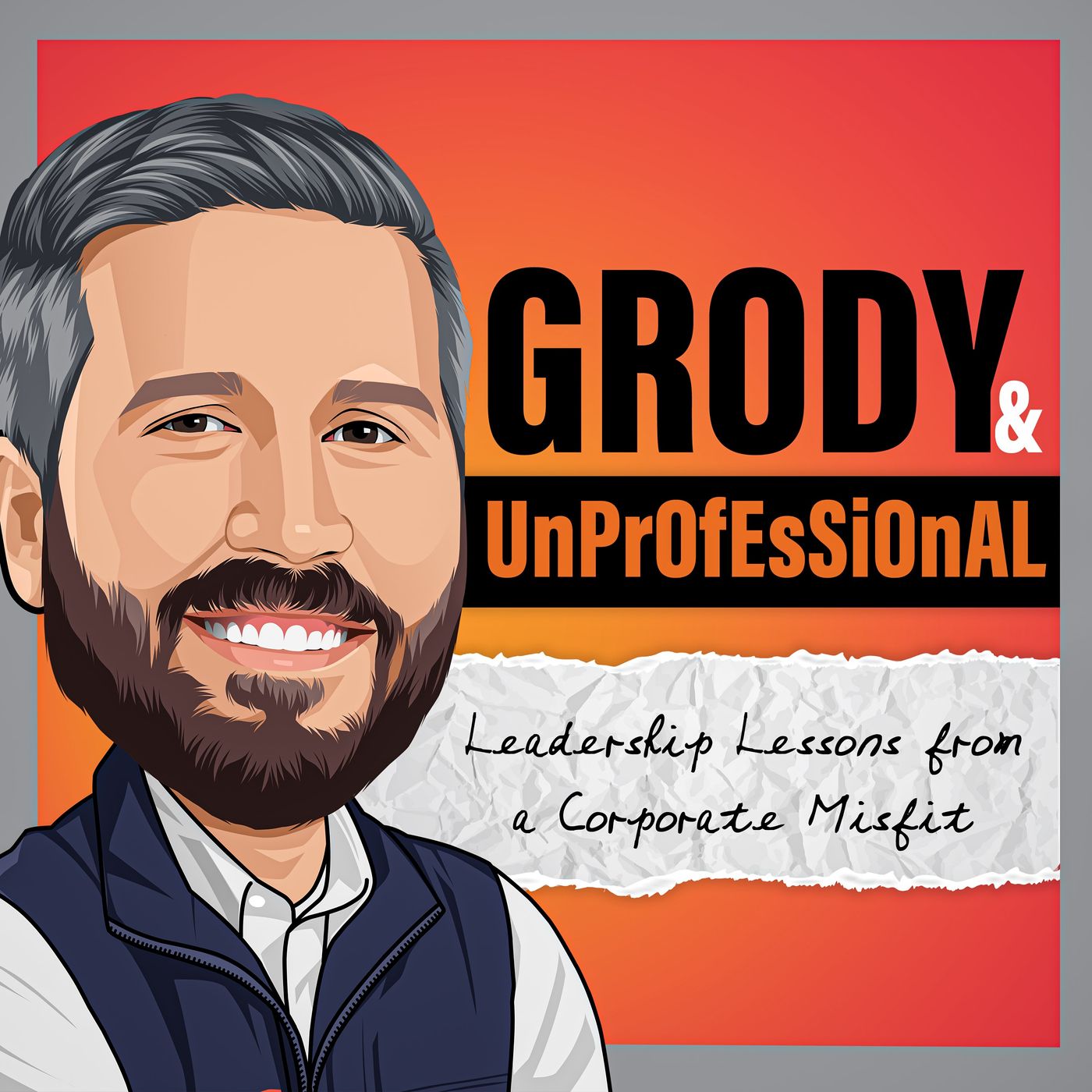
Grody & UnPrOfEsSiOnAL
by Justin McMenamy
Hello and welcome to Grody & UnPrOfEsSiOnAL, my name is Justin McMenamy, and my mission is to share both profitable and painful leadership lessons I have acquired over a twenty-year career as a misfit in corporate America. Like everyone, I have worked with and for hundreds of leaders across my career. While some leaders are great, and many are good, the vast majority find themselves tossed into leadership and left to figure it out on their own. Grody & Unprofessional seeks to share leadership stories harvested from my own experiences and from the experiences of others through approachable and candid conversations with the aim of educating and shaping your leadership journey. Grody & Unprofessional episodes will toggle between focused monologue on specific lessons or mindsets I have acquired from my experiences and conversations with other leaders seeking to understand their convictions and strategies for inspiring, motivating, and maybe sometim
-
48
Don't Burn the Boats w. Jim Weber
Host Justin McMenamy and Jim Weber continue their conversation on fostering a culture of innovation including methods of preventing it from being killed by pessimism and process. This episode covers innovation’s overlap with creativity and art, and how nearly every company markets themselves as innovative, sometimes despite objective evidence to the contrary. Justin introduces the “Trellis and Vine” analogy: provide enough structure to support creativity without choking it; warning that well intended leaders can smother innovation through noble pursuits of synergy, globalization, metrics culture, governance, and project rationalization. They emphasize a willingness to self-disruption, R&D to customer proximity, market competitors managed as “worthy rivals”, project pipeline prioritization, and competitive prototyping as key ingredients to a company hoping to curate a culture of innovation.
-
47
Serial Entreprenourship w. Danny Kirk
Host Justin McMenamy interviews entrepreneur and marketer Danny Kirk. The conversation spans topics like defining failure and success, the place for pessimism in business, and leadership lessons drawn from the great philosopher Shaquille O’Neal. Kirk shares his unconventional background, raised by academics and musicians, a high-achieving classical trumpet player who dropped out of high school, and his entry into entrepreneurship through a scholarship and a startup weekend that led to his first company. Over the last 15 years, Danny has started 5 revenue-generating businesses, pursues 100–200 ideas annually quickly invalidating most of them, and discusses his latest business in GEO (generative engine optimization) for AI. Kirk recounts being forced out of a gym business, selling a SaaS venture for scraps due to technical debt and infighting, discusses quit-vs-grit, and the needed priority which should be placed on unit economics within any startup. He explains his marketing approach for small businesses, focus where the “tribe” is, avoid vanity metrics, prioritize revenue, and build trust by disqualifying prospects. The conversation also covers Kirk’s recent battle with anxiety following a login prompt attack on his business along with the need for routine to keep him grounded. Justin reflects on experiences navigating stressful times of life, redefining security and success, and protecting health and relationships as life complexity grows.
-
46
A Race to the (Liquid) Death w. Andy Pearson
Host Justin McMenamy interviews Andy Pearson, creative director at Liquid Death. Through the conversation, Pearson recounts stories, from early in his career, of buying taxidermy squirrels and navigating eBay’s ban on selling human body parts. Andy then contrasts the philosophies of various ad agencies and stresses the importance of a shared creative vision and engaged leadership, ideally with “a bone to pick.” Pearson describes Liquid Death’s ethos as making entertainment not marketing, critiquing ads as unwanted interruptions, and questioning industry assumptions both in product and marketing. He then describes Liquid Death as a high ownership, iterative, fast-paced culture that starts with the question “what is the dumbest thing we could do?”. Finally, Andy shares how his passion for ultra running began amid grueling agency hours and tells of a Strava user who challenged him to a “race to the Death”.
-
45
Tapping Organizational Creativity w. Jim Weber
Host Justin McMenamy and guest Jim Weber continue their multi-episode discussion around the many ingredients which comprise a successful culture of innovation. On the topic of brainstorming both Justin and Jim agree that scheduled brainstorming sessions with idea voting and ranking are mostly unproductive. Jim argues effective brainstorming consists of informal, rapid idea vetting with colleagues who try to break ideas and improve them over time. He then emphasizes the need to ask everyone, from executives to technicians, “what would you do?” to learn technical and organizational constraints, even at the risk of embarrassment. Justin highlights the need to reduce hierarchy, otherwise creativity is often outsourced to an “innovation manager,” as well as the need to separate idea collection events from idea selection so contributors stay encouraged while a smaller group prioritizes. They discuss creativity as an underused organizational asset, and debate when simulation-first approaches are essential versus an “Edisonian” fast iteration methodology enabled by low-cost prototyping.
-
44
Hungry, Humble & Smart: A Culture Without Silos w. Kristen Patty
Host Justin McMenamy welcomes Kristen Patty to discuss leadership and HR lessons from their time at Precision Planting during a decade of growth from under 100 employees to over 500, including global expansion across more than 15 countries and the acquisition by AGCO.Kristen shares why she left a large multinational retailer early in her career for a startup, emphasizing self-discovery, taking the next right step, and seeking actionable feedback. They cover her transition from Sales Operations to head of HR and her focus on mission-driven recruiting. They discuss balancing HR process with situational care, how policy application affects company-wide trust, and practical ways to protect culture while scaling. The episode ends with Kristen’s advice for leaders entering new roles, stressing humility, clarity of expectations, honesty about gaps, and building relationships through one-on-one conversations.
-
43
Building Empathy w. Erin Thorp
In this episode host Justin McMenamy welcomes fellow leadership podcaster Erin Thorpe. Across the conversation each discusses formative early-career experiences and how they shaped their mid-career focus on leadership. Both reflect on how not fitting within organizational norms can bleed into lowered self-worth, and they discuss a framework of being “refined” versus “consumed” by adversity, emphasizing that not every bad day warrants resignation and that staying in discomfort can build tenacity. They explore differences between technical and people skills, contrasting engineering’s black-and-white mindset versus the negotiated nature of relationships. Erin describes her path into podcasting: authoring a book in 2016 and later starting the “Tactical Empathy" podcast. Erin explains tactical empathy as a practical leadership tool that balances understanding self and others while maintaining high standards and execution, countering the idea that empathy is a mask for weakness or lowered expectations. She offers ways to build empathy as a muscle: frequent self-check-ins, acknowledging feelings, validating others without necessarily agreeing, and resisting the urge to immediately fix problems.
-
42
Innovation: Easier Said than Done w. Jim Weber
In the first episode of the mini-series entitled “Innovation: Is It More Than a Feeling?” host Justin McMenamy and Jim Weber explore the concept of innovation. The episode delves into defining the necessary components of innovation, contrasting it with being merely clever or even foolish. Jim shares his career experiences as an innovator within a Dow 30 organization and discusses his personal take on innovation, including the idea that there are various levels of innovation. The discussion also touches on the reality that innovation can be seen beyond technology and product development. Justin provides examples from the tech industry, and offers insights from his experience at Precision Planting, particularly on the company's innovative distribution model. The conversation concludes with reflections on how innovation is perceived and executed in different contexts, including manufacturing, marketing, and sales.
-
41
Why Teams Rebel & Talent Resigns w. Caleb Schleder
This episode features host Justin McMenamy and guest Caleb Schleder discussing the Situational Leadership model. They delve into the four leadership styles (L1 through L4) and their applications based on employee competence and confidence. The conversation emphasizes the importance of recognizing and adapting to these styles to enhance team performance.They also explore challenges like managing 'comfortable L1s,' handling team dynamics with varying competence levels, and maintaining effective leadership during organizational changes. The episode concludes with a unique twist, examining how Situational Leadership principles can apply to parenting, ultimately comcluding that the aim of both the leader and the parent is to foster autonomy and strong relationships which foster personal growth and maturation.
-
40
Situational Leadership w. Caleb Schleder
In this episode, host Justin McMenemy is joined by Caleb Schleder to discuss the framework of Situational Leadership. They delve into the importance of tailoring leadership styles to specific situations and the pitfalls of a one-size-fits-all approach. Justin emphasizes the significance of avoiding the 'because I said so' attitude and introduces Situational Leadership as his go-to advice for new leaders. Caleb shares personal experiences with different leadership styles and highlights the value of empowering employees while avoiding micromanagement.The discussion covers various leadership stages, from Directing (S1) to Delegating (S4), explaining the importance of adjusting strategies based on an employee’s competence and confidence. They also touch on the challenges faced by leaders of leaders and the necessity of maintaining good relationships with employees through these transitions.The episode concludes with preparation for a follow-up episode to continue the discussion, in which Justin and Caleb will spend time discussing edge cases and real-world examples of utilizing the Situational Leadership framework.
-
39
'The Spinach King' w. John Seabrook
In this episode, host Justin McMenamy interviews John Seabrook, an author and journalist, about his recent book 'The Spinach King.' The discussion centers on the dual legacies of John’s grandfather, Charles F. Seabrook, a pioneering yet controversial figure in agriculture. Known for his innovative work in industrializing vegetable farming and his collaboration with Clarence Birdseye, Charles is described as both a visionary and a ruthless leader. The interview delves into the complex family dynamics, including the strained and ultimately destructive relationship between Charles and his sons, particularly John’s father. John shares insights into the personal and professional challenges his family faced, and how writing the book offered him therapeutic closure. The episode also touches on the broader impact of Seabrook Farms on its employees, including Japanese Americans employed after World War II. John reflects on the mixed legacy and the lasting emotional impacts of his family's business saga.
-
38
'The Challenger Sale' w. Bryce Baker
In this episode host Justin McMenamy and guest Bryce Baker discuss the evolution of sales strategies, homing in on the Challenger Sale method. With nearly 15 years of experience in sales at Precision Planting, Bryce shares the transition from Solutions-based selling to the more effective Challenger approach. They outline how this method disrupts traditional practices by emphasizing commercial teaching, tailoring, and taking control of conversations. The discussion includes real-world examples, customer loyalty insights, and the role of cross-departmental integration in effective sales strategies. The episode concludes by highlighting the lasting impact of providing value beyond the product and fostering strong customer experience.
-
37
Balancing Life's Highs and Lows w. Jeff Snowden
In this episode Justin and guest Jeff Snowden discuss a variety of topics ranging from leadership lessons, marketing strategies, and personal struggles, both personal and professional. They delve into Jeff’s background, his career transitions from photography to marketing, and his foundational marketing philosophies. Jeff emphasizes the importance of making differentiated and believable promises to build trust in marketing.They also discuss the inherent challenges of managing corporate roles and maintaining personal integrity and family priorities. Jeff shares his experience of having a nervous breakdown in 2021, discussing the pressures of the pandemic and career turmoil, and offers advice on mental health management. Throughout, Jeff provides earnest insights into maintaining balance, the importance of supportive relationships, and finding fulfillment in both professional and personal life.
-
36
Cooking Up Product Development w. Jason Stoller
In this episode, Justin McMenamy converses with Jason Stoller about their joint experiences at Precision Planting. The discussion focuses on the distinguishing factors between large corporations and smaller startups in terms of product development processes vs. recipes. They delve into the importance of proximity to customers, iterative development, and the freedom to take risks and even fail with the product development environment. By highlighting the benefits of rapid iteration, intrinsic motivation of engineers, and the elimination of bureaucratic handoffs, they underscore the vital role of agility and ownership in successful product development.
-
35
Skunk Works VII: The Bleeping Navy
In this episode, Justin McMenamy concludes his examination of Kelly Johnson's 14 Rules of Management with a focus on Johnson's unwritten 15th rule. He explains the intricacies of creating and maintaining a 'Skunk Works' organization within a larger corporate entity, noting the challenges that come with resource and business model acquisitions. He highlights the importance of aligning with like-minded customers and suppliers and shares anecdotes from his time at Precision Planting, emphasizing an approach that prioritized autonomy and direct customer engagement. Justin's insights reveal the delicate balance required to sustain innovation while navigating corporate bureaucracy.
-
34
Getting Out of the Rut w. Steve Pierz
In this episode, host Justin McMenamy interviews Steve Pierz, a friend and fellow corporate misfit, who shares his unconventional strategies and experiences from a long, innovative career. Steve recounts his daring approach in large meetings, his early passion for mechanical engineering inspired by his creative upbringing, and his impactful yet rebellious career at Caterpillar where he frequently clashed with rigid corporate processes. Both Justin and Steve delve into the importance of mindset in leadership and innovation, emphasizing that success in business relies heavily on the creative, risk-taking individuals. The conversation evolves into mentorship, highlighting how young innovators should seek their ‘tribe’ and persist through setbacks. Steve, now retired, focuses on inspiring, motivating, and supporting the next generation of innovators. The discussion captures lessons learned, insights on navigating corporate America, and advice for future leaders.
-
33
Insurgent Leadership w. Brad Stoller
In this episode of Grody & UnPrOfEsSiOnAL, host Justin McMenamy & Brad Stoller explore the concepts of asymmetric warfare and the infinite games, focusing on how small organizations like Precision Planting can compete against much larger competitors. The conversation delves into the importance of selecting the right leaders with characteristics such as mission-driven mindset, independence of thought, and adaptability. They discuss how speed and agility are crucial for smaller organizations to succeed, contrasting their approach with larger entities that often rely on rigid processes and alignment.They highlight historical examples like Stonewall Jackson and David Sterling to illustrate effective strategies for insurgent organizations. Stoller emphasizes that success is measured not by traditional metrics but by the mission's impact, advocating for a customer-centric approach over merely trying to outdo competitors.
-
32
How the Weak Win Wars w. Brad Stoller
In this episode, host Justin McMenamy and guest Brad Stoller delve into the history and strategic growth of Precision Planting, an innovative agricultural company from Central Illinois. Founded by a resourceful farmer in 1993, the company prioritized improving planting equipment through unique solutions, fostering a loyal customer base and rapid technological advancements. The episode highlights key influences like Simon Sinek's 'Infinite Game' and Malcolm Gladwell's 'David and Goliath' as part of their strategic thinking to combat much larger competitors. The conversation transitions to the importance of a distinct, adaptable strategy and concludes by emphasizing the need for both strategic thinking and tactical execution in maintaining market relevance.
-
31
No Brilliant Jerks w. Caleb Schleder
In this episode, host Justin McMenamy and guest Caleb Schleder share critical insights into team building and leadership, drawing from their extensive corporate experience. They discuss the importance of trust, psychological safety, and culture curation in building effective teams. Strategies for hiring, including prioritizing the right fit over filling positions quickly, and innovative approaches to onboarding and development programs are explored. They also cover the importance of managing team dynamics, including handling underperforming members to maintain a healthy organizational culture. The conversation offers practical advice and personal anecdotes with the aim of helping leaders at all levels improve their team-building efforts.
-
30
The Elon Effect w. Billy Samoa Saleebey
In this episode, host Justin McMenamy interviews Billy Samoa Saleebey, a former Tesla and SolarCity employee, about his experiences working in Elon Musk's companies. The discussion delves into Saleebey's roles in Global Sales and Product Training, and Leadership Development. The episode explores Elon Musk's leadership style, the rigorous work culture at Tesla, and the unique onboarding and interview processes. Saleebey reflects on memorable experiences, such as factory tours and collaborative efforts, and discusses the potential future of Musk's companies post-Elon. The episode also examines the qualities of successful leadership and what aspiring leaders can learn from Musk's approach.
-
29
The Angry Birds of Management w. Jeff Snowden
In this special anniversary episode of 'Grody & UnPrOfEsSiOnAL,' host Justin McMenamy and guest Jeff Snowden discuss various types of leadership styles by humorously comparing them to different birds. They explore the traits and behaviors of each bird type and relate them to characteristics found in management and corporate environments. The episode covers a range of bird analogies—from seagulls and parrots to vultures and crows—highlighting both the positive and detrimental aspects of each leadership style. The conversation delves into how these 'angry birds' can influence organizational culture and the importance of recognizing and managing these traits effectively.
-
28
Skunk Works VI: An Organization Set Apart
In this episode of Grody & UnPrOfEsSiOnAL, Justin McMenemy discusses his experiences and insights on leadership, drawing parallels with Kelly Johnson's 14 Rules of Management from Skunk Works. Emphasizing the importance of organizational structure and environment, McMenemy explains how creating and maintaining distinct cultural and operational ecosystems within a company can enable both innovation and stability.He critiques corporate cultures given over to bureaucracy and lack of trust, and shares strategies for fostering a more agile and trustworthy organization. McMenemy also discusses the practical applications of Johnson's rules in modern corporate settings, particularly focusing on maintaining momentum, managing budget and staffing wisely, and retaining top technical talent without forcing them into management roles.The episode concludes with a promise of a bonus installment to explore Johnson's 15th unwritten rule of management.
-
27
'The Offcenter of Excellence' w. Jim Weber
In this episode of Grody & UnPrOfEsSiOnAL, host Justin McMenamy interviews Jim Weber, an award-winning inventor, mentor and friend. They discuss Weber's extensive career, his passion for mentoring, and his innovative and humorous approaches to leadership. Weber shares stories of inspiring his team through unique team-building exercises, like crafting a Dr. Seuss-style poem and making a team quilt. The conversation also touches on serious leadership topics, such as avoiding becoming a 'bitter old engineer,' the importance of empathy and honesty, and supporting colleagues through difficult times. Weber emphasizes the value of creating a fun and inclusive work environment and concludes with a humorous recount of his memorable retirement email. The episode encapsulates both light-hearted stories and valuable insights into effective leadership.
-
26
Skunk Works V: The Presumption of Ease
In this episode, the fifth installment of the SkunkWorks mini-series which draws from Kelly Johnson's 14 Rules of Management, Justin discusses the importance of clear specifications in product development. He examines the critical 10th rule of management, emphasizing the need for precise scope and proactive communication with clients and among co-workers to avoid scope creep and inefficiencies. Justin then contrasts his experiences working within rigid corporate processes with the adaptable approach taken during his tenure at Precision Planting, illustrating the pitfalls of hierarchical decision-making, the presumption of ease and guilt of others in the organization, and the necessity of flexibility and adaptability in project management. He shares real examples of wasteful efforts due to inflexible specifications and highlights the importance of balancing structure and flexibility for organizational success.
-
25
Balancing Business & Values w. Brad Arnold
In this episode of 'Grody & UnPrOfEsSiOnAL,' host Justin McMenamy and guest Brad Arnold discuss valuable leadership lessons they've learned across their careers. They delve into transitioning from individual contributors to leaders, navigating significant corporate changes, dealing with acquisition uncertainties, and fostering a culture of transparency and empowerment. Brad Arnold shares personal experiences, including his transition from a Dow 30 company to a family business, and the profound impact his daughter Libby has had on his perspective on leadership. The conversation emphasizes the importance of trust, candor, and caring in leadership, as well as the transformative business impact that can be seen through empowered teams.
-
24
Skunk Works IV: Orbiting the Giant Hairball
In this episode of 'Grody & UnPrOfEsSiOnAL', Justin McMenamy continues to explore the practical applications of Kelly Johnson’s 14 Rules of Management in addition to Gordon MacKenzie's book 'Orbiting the Giant Hairball'. The discussion delves into the balance between stability and creativity within corporate structures, contrasting startup autonomy with the rigid norms of established companies. McMenamy recounts his own experience at Precision Planting, emphasizing the importance of maintaining startup culture under larger corporate ownership. The episode also covers insights on continuous improvement, the more-data fallacy, and communications throughout the value chain. By advocating minimal duplication of inspection and encouraging engineers to directly engage with their work's real-world environments, McMenamy underscores the necessity of iterative, collaborative problem-solving within growing organizations.
-
23
'Firm Feedback in a Fragile World' w. Jeff Hancher
In this episode of ‘Grody & UnPrOfEsSiOnAL’, host Justin McMenamy is joined by guest Jeff Hancher. The discussion highlights Jeff's journey from a challenging upbringing in rural Pennsylvania to becoming an executive at Cintas, a publicly traded company, then later an author and speaker on numerous leadership topics.Jeff recounts the impact of his military service in shaping his character and career, emphasizing the significance of continuous improvement, accountability and engaging one’s motivation as pillars to his success. Post-military, Jeff transitioned to Cintas, rising from a route delivery driver to a senior leadership position across his 20+ year career. The conversation centers on the critical role of feedback in leadership, illustrating through personal anecdotes how effective feedback can transform individuals and organizations. Jeff's upcoming book, 'Firm Feedback in a Fragile World,' aims to equip leaders with tools to provide impactful feedback in today’s volatile work environment. The episode underscores the necessity of balancing empathy with accountability to foster professional growth and organizational success.For those interested in ordering Jeff's new book, you can go to firmfeedbackbook.com.
-
22
Skunk Works III: The PowerPoint Class
In this episode of ‘Grody & UnPrOfEsSiOnAL’, host Justin McMenamy continues his survey of Kelly Johnson’s 14 Rules of Management through the lens of his own 20-year career both leading and working within various product organizations. Focusing on Rules #5-7, McMenamy critiques the overuse of metrics and status meetings in large organizations, providing anecdotes from his tenure at Precision Planting and other companies. He underscores the benefits of minimizing bureaucracy and fostering direct, transparent communication, especially in supplier relationships. The episode emphasizes the utility of a minimalist approach to budgeting and reporting for fostering a nimble and creative work environment while ensuring accountability and efficiency.
-
21
'The Cut of His Jib' w. Jeff Snowden
In this episode of ‘Grody & UnPrOfEsSiOnAL’, host Justin McMenamy is joined by Jeff Snowden to discuss leadership lessons drawn from the career of Admiral Hyman Rickover, the father of the nuclear Navy. They explore Rickover's famed career, including his ascent from an immigrant family to a naval officer known for his meticulous work ethic and unorthodox leadership style. The conversation covers Rickover’s commitment to hands-on experience, his selection of highly competent teams, and his ability to lead from the front. Jeff also shares personal anecdotes and professional insights on leadership, comparing nuanced aspects of various leadership styles. The episode further delves into Rickover's intent to maintain peace in the nuclear age, even as he pushed technological boundaries.
-
20
Skunk Works II: The Tyranny of Alignment
In this episode of 'Grody and UnPrOfEsSiOnAL' Justin McMenamy delves into how principles from rocket science can inform organizational architecture, particularly in disruptive startup environments. Using Kelly Johnson's 14 Rules of Management from Lockheed Martin's Skunkworks, McMenemy emphasizes the importance of organizational elasticity, embedded project management, and the value of small teams consisting of highly competent individuals as building blocks for effective teams. He then contrasts this approach with traditional metric-driven corporate methodologies. McMenemy shares personal experiences from his tenure at Precision Planting to illustrate these points, emphasizing the need for trust, cooperation, and a bureaucratic aversion in driving disruptive innovation.
-
19
The Trade w. Lon Stroschein
In this episode of "Grody & UnPrOfEsSiOnAL" Justin McMenamy interviews Lon Stroschein, a former corporate executive who transitioned to writing and coaching after a pivotal season in his life. Lon shares his journey from feeling unfulfilled despite a successful career to finding purpose through helping others. Topics discussed include the emotional struggles of mid-career, the importance of finding one's voice, and balancing professional and personal life. Lon also recounts a poignant story about his daughter Grace, highlighting the need to be present for family amidst career pressures. The conversation emphasizes the value high performing employees place on autonomy and purpose over monetary success and provides insights for both employees and employers on creating fulfilling work environments.
-
18
Skunk Works I: The Black Sheep of the Blue Chip
In this episode of ‘Grody & UnPrOfEsSiOnAL’, Justin McMenamy kicks off a seven-episode mini-series focused on his experiences as a curator of a market disruptive technology division housed within a Fortune 500 company. Each episode in the series is built from the framework of Kelly Johnson’s 14 Rules of Management. This list, authored in 1954, is the cultural charter document for Skunk Works, the Advanced Development Programs division of Lockheed Martin and the designers of products like the SR71 Blackbird, the U2 spy plane, and the F-35 Lightning. In the first episode of the series, McMenamy recounts early career disillusionment with corporate bureaucracy which led him to join Precision Planting, a start-up minded company with an anti-bureaucratic ethos. In light of Precision Planting being acquired by Monsanto in 2012 and later by AGCO in 2017, McMenemy explores the challenges of maintaining a startup culture within a large corporation. Building from Kelly Johnson's 1st rule of management, McMenamy highlights the significance of executive support for organizational autonomy from the broader company. Across the arc of this series, McMenamy focuses on the complexities of sustaining an innovative culture within incumbent companies, along with proven techniques an organization can employ to forestall the logical and rational march into bureaucracy.
-
17
Leading with Authenticity w. Juan Roncoroni
In this episode of Grody & UnPrOfEsSiOnAL, Justin McMenamy discusses leadership lessons with his friend and colleague, Juan Roncoroni. The conversation covers topics like authenticity, transparency, balancing chaos with structure, and the importance of personal relationships in leadership. Roncoroni shares amusing anecdotes, such as accidentally filling a gasoline rental car with diesel while on a business trip and the plights of snoring while sharing a hotel room with co-workers. The conversation also dives into Roncoroni's career transition from a large international corporation to the startup culture of Precision Planting. Additionally, they explore cultural nuances in leadership styles across different regions considering Roncoroni’s recent transition from South America to Europe. Amidst humor, the episode underscores the significance of empathy, flexibility, and genuine personal connections in effective leadership.
-
16
The Employee Opinion Survey
In this episode of 'Grody & UnPrOfEsSiOnAL,' Justin McMenamy critiques the modern employee opinion survey by questioning the effectiveness of employing broadbrush survey results and anonymous free text feedback to gauge employee morale. McMenamy points out that such surveys often fall short of their aim due to participation coercion, the psychology of anonymous comments, and leadership's creativity in results interpretation. He argues for the need for face-to-face feedback and open communication as a replacement for the employee opinion survey. “The Modern Employee Opinion Survey promotes a culture of secrecy and gossip, which is nothing but a hindrance to teamwork, candor, and rapid movement towards a goal. I have always believed that information flows fastest along relationship lines. The modern employee opinion survey largely acts as a relationship blocker between leaders and their organizations.”
-
15
Autonomy, Accountability & Agri-Marketing w. Bryce Baker
In this episode of 'Grody & UnPrOfEsSiOnAL,' Justin McMenamy discusses leadership lessons with Bryce Baker, focusing on distinguishing principle from preference and integrating insights from different domains into your leadership approach. Bryce shares his journey from field sales representative to marketing manager at Precision Planting, emphasizing the importance of sales and marketing synergy along with the pros and cons of tailored marketing. The conversation also delves into the balance between autonomy and centralized control in decision-making, using an NFL quarterback analogy to illustrate the concept of 'loosely coupled' organizations. Additionally, they explore the significance of intelligent failure in fostering a culture that encourages innovation and learning. The conversation wraps up with reflections on the transition from leading individual contributors to leading leaders, highlighting the importance of humility, communication, and continuous learning.
-
14
A Bitter Brew
Justin McMenamy, host of Grody & UnPrOfEsSiOnAL, shares his experience as a design engineer in a highly regulated and complacent company within the diesel engine industry. He discusses the aristocratic leadership style that stifled creativity, fostered fear, and led to a toxic workplace environment. Through personal stories and reflections, he details how this environment fostered bitterness among employees and led to significant mental strain, even hospitalizations. McMenamy offers insights on recognizing toxic corporate cultures, the importance of mentorship, and steps he took towards overcoming bitterness, emphasizing the need for proactive self-care and strategic career decisions.
-
13
Coconuts, Peaches & the Packers w. Benoît Blateyron
In this episode of 'Grody and UnPrOfEsSiOnAL,' host Justin McMenamy is joined by longtime friend and colleague Benoit Blateyron. Across the conversation, they discuss international business expansion, adapting strategies to different cultures, the significance of cultural understanding in team dynamics, and experiences working with diverse teams in Europe. The conversation delves into personal anecdotes, such as the impact of cultural practices like 'fika' and 'sauna' in Swedish work culture. The episode culminates in discussions on resilience and human-centric leadership amid challenges like the Russia-Ukraine conflict. The dialogue is peppered with humor and personal stories, making complex leadership and cultural concepts relatable and engaging.
-
12
Sabbatical
Justin McMenamy, the host of Grody & UnPrOfEsSiOnAL, shares his journey of stepping down from a VP role at Precision Planting, part of a Fortune 500 company. He details his decision to take a season of unpaid leave in search of personal balance, and re-prioritization. McMenamy explains his career path from engineering to leadership, the evolving demands on leaders within growing businesses, and the challenges of balancing organizational growth with personal well-being. He uses the analogy of Generals Eisenhower and Patton to illustrate the need for different leadership styles at different organizational stages. Ultimately, his decision to step down was in search of prioritizing his health, family, and passions in this season.
-
11
High-Energy Humility w. Matt Morgan
In this episode of 'Grody & UnPrOfEsSiOnAL' Justin McMenamy interviews Matt Morgan about leadership experiences accumulated across his wide ranging career. They discuss Matt's journey from joining Precision Planting, including a mishap with a security gate, to his hands-on leadership style likened to a submarine captain. Matt emphasizes the importance of leading from within the challenge and being present with the team, even in difficult environments. They also explore Matt's transition to a new industry and his approach to gaining credibility in a new organization. Additionally, Matt shares insights from his time leading in Argentina, including experiencing the importance of balancing action with relationship-building. The conversation also touches on Matt's pastoral leadership experience and the distinct challenges of leading in nonprofit contexts, highlighting the need for humility and adaptability across different environments.
-
10
Leadership Lemonade Lessons II
In this episode of 'Grody & UnPrOfEsSiOnAL,' Justin McMenamy continues developing the concept of 'Leadership Lemonade Lessons', first discussed in Episode 4. Lemonade Lessons involve wringing past leadership blunders in search of constructive lessons. Justin recounts several professional one-on-one experiences, including a frustrating interaction with an engineering manager, survival under the tyranny of the 'desk audit' police, and a tactless comment from a manager during a personal crisis which led directly to the naming of this podcast. These stories highlight the significant impact of leadership behaviors on employees and emphasize the need for empathy and humility in leadership. By reflecting on these experiences, Justin seeks to improve his own leadership skills and inspire others to do the same.
-
9
Embracing the Awkward w. Brad Stoller
In this episode of 'Grody and UnPrOfEsSiOnAL,' Justin McMenamy and Brad Stoller share leadership lessons drawn from their collective experiences in the automotive and agtech industries, particularly at Precision Planting. The discussion spans several key areas including building robust supplier relationships, effective negotiation strategies, and organizational growth. They stress the importance of selecting scalable and trustworthy suppliers, fostering mutual trust, and emphasizing responsiveness. The dialogue also delves into practical strategies for negotiating with suppliers and maintaining quality and efficiency within an organization. Personal anecdotes and real-life examples underscore the necessity of open communication and a collaborative culture, especially during organizational crises like the recent chip shortage. The episode wraps up with insights from influential books that have shaped their approach to leadership and negotiation.
-
8
Kayaks & Coffins
In this episode of ‘Grody & UnPrOfEsSiOnAL', Justin McMenamy sarcastically questions the reliability of early career aptitude tests in determining one's future career choices. Through personal anecdotes, he illustrates how career paths and goals can change over time, often leading to dissatisfaction when clinging to outdated aspirations. McMenamy emphasizes the importance of focusing on who you want to become, rather than specific job titles or positions. He encourages investing in meaningful relationships and personal growth beyond professional roles, noting the transient nature of the corporate value system can lead to destination evaporation. The episode challenges listeners to consider their legacy and personal development as key life goals.
-
7
Plum Tree Leadership w. Justin Kauffman
In this episode of Grody & UnPrOfEsSiOnAL, host Justin McMenamy interviews longtime friend Justin Kauffman. Kauffman shares his career background and passion for early-stage business building. Both Justins reflect on leadership principles, including the effectiveness of strengths-based personal development and the contrast between pyramid and plum tree organizational structures. Additionally, they explore the value of organizational trust, transparency in hiring, and the necessity of clear communication and situational leadership within evolving organizations. The episode underscores the ongoing learning process and the challenge of fostering innovation within traditional corporate frameworks.
-
6
Leadership Lemonade Lessons I
In this episode of “Grody & Unprofessional”, Justin McMenamy explores leadership lessons from his 20-year corporate career. Through personal stories, including experiences with a high school baseball coach and within a bureaucratic engineering team, McMenamy highlights the importance of intrinsic motivation and adaptive leadership styles. He contrasts directive leadership, which often garners minimal effort from employees, with inspirational leadership which often leads to greater team effort and motivation to pursue excellence. Justin emphasizes that analyzing past leadership failures is crucial for growth. The episode urges leaders to inspire and trust their teams, tailoring motivational techniques to individual team members.
-
5
Building Trust and Inspiring Success w. Caleb Schleder
In this episode of "Grody & UnPrOfEsSiOnAL", Justin McMenamy and guest Caleb Schleder discuss leadership lessons from their careers. They cover the importance of mentorship, the joy of seeing others succeed, and building trust within a team. Schleder shares his journey from focusing on personal achievements to fostering a collaborative environment influenced by mentors that poured into him. The conversation highlights effective leadership tactics, including active listening, timely coaching, and the strategic placement of team members. Personal anecdotes emphasize the value of learning from both positive and negative experiences to become a better leader.
-
4
The Feedback Fallacy
In this episode of 'Grody & Unprofessional,' Justin McMenamy explores the challenges leaders face in receiving honest, candid feedback from their teams, subordinates, peers, and departing employees due to conflicts of interest and modified behavior while observed by peers. McMenamy discusses the value of honing leadership skills before becoming an official leader. He suggests that aspiring leaders are in a unique position to develop their skills by leveraging their lack of authority to receive genuine feedback. Additionally, he recommends current leaders seek feedback outside their work environments, such as in volunteer roles, to improve their leadership abilities. Ultimately, trust, humility, and a long-term commitment to openness can help leaders receive the candid feedback necessary for growth.
-
3
Orbital Influence
In the first episode of 'Grody & Unprofessional', host Justin McMenamy emphasizes the critical need for leaders to actively study and practice leadership as a skill, rather than relying on superficial engagement. He argues that many leaders spend more time on trivial pursuits like fantasy football than on understanding effective leadership strategies. McMenemy introduces the concept of assessing leadership effectiveness through external feedback, using the analogy of a solar system where different groups of people hold varying degrees of opinion about a leader based on relational distance. He shares personal anecdotes about his own leadership style and the importance of collecting honest feedback from team members to improve. The episode highlights the necessity of humility, transparency, and continuous learning to become a better leader.
-
2
G&U Intro & Teaser
In Grody & Unprofessional, Justin McMenamy seeks to share both profitable and painful leadership lessons I have acquired over a twenty-year career as a misfit in corporate America. G&U seeks to share leadership stories harvested from both Justin's and others experiences through approachable and candid conversations with the aim of educating and shaping your leadership journey. Demand for talented leaders outstrips supply by at least tenfold, G&U is an attempt to improve supply. I hope you will join as we seek to uncover people, product, and organizational leadership lessons through the musings of a corporate misfit and his friends.
No matches for "" in this podcast's transcripts.
No topics indexed yet for this podcast.
Loading reviews...
ABOUT THIS SHOW
Hello and welcome to Grody & UnPrOfEsSiOnAL, my name is Justin McMenamy, and my mission is to share both profitable and painful leadership lessons I have acquired over a twenty-year career as a misfit in corporate America. Like everyone, I have worked with and for hundreds of leaders across my career. While some leaders are great, and many are good, the vast majority find themselves tossed into leadership and left to figure it out on their own. Grody & Unprofessional seeks to share leadership stories harvested from my own experiences and from the experiences of others through approachable and candid conversations with the aim of educating and shaping your leadership journey. Grody & Unprofessional episodes will toggle between focused monologue on specific lessons or mindsets I have acquired from my experiences and conversations with other leaders seeking to understand their convictions and strategies for inspiring, motivating, and maybe sometim
HOSTED BY
Justin McMenamy
CATEGORIES
Loading similar podcasts...
URL copied to clipboard!