
PODCAST · business
Herding Squirrels
by Created and Hosted by Brandon Wetzstein
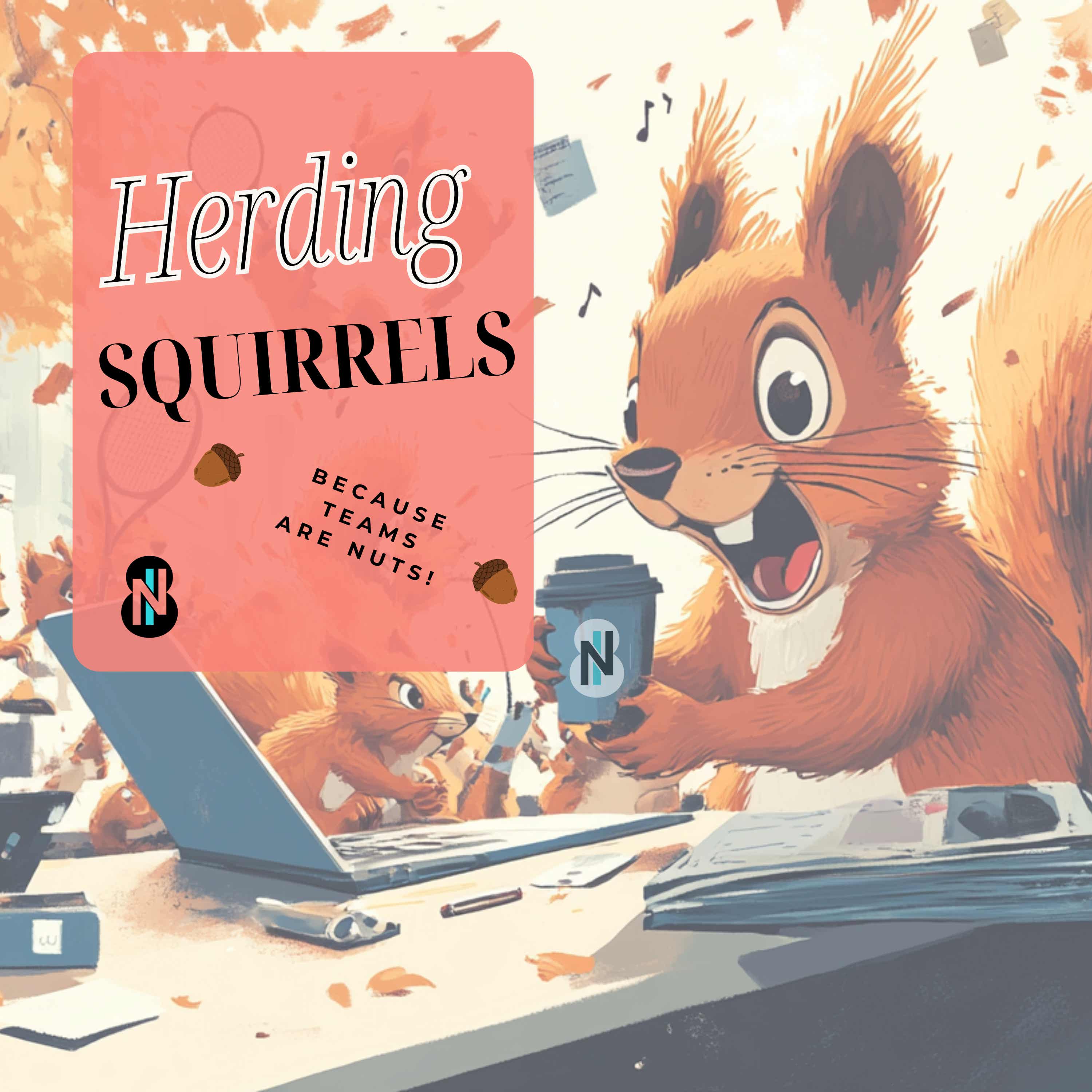
Ever tried to get a group of squirrels to move in the same direction? Welcome to modern teamwork! Herding Squirrels is a podcast that explores the chaotic, wonderful, and sometimes maddening world of teams in our hyperconnected age. From Slack notifications pinging like acorns falling from a tree to the constant scatter of competing priorities, we dive into what makes teams tick. herdingsquirrels.substack.com
-
23
Herding Squirrels Ep 23 w Stephen Szypulski
Post BodyStephen Szypulski leads post-acquisition integration at Fitch Learning, part of Fitch Group and Hearst Corporation, where the business serves more than 100,000 learners across over 100 countries. In this episode of Herding Squirrels, he walks through why so many M&A deals lose value after close, what actually breaks first when an integration plan meets reality, and why the work of integration is fundamentally about shepherding velocity without pushing the organization into shock. If you are leading change, integrating teams after an acquisition, or running an AI rollout that is starting to look like a merger, this conversation will give you a clearer way to think about people, culture, and the parts of the deal that never show up in the model.Guest BioStephen Szypulski is Head of Integration and Strategic Operations for Fitch Learning, part of Fitch Group and the Hearst Corporation. He leads post-acquisition integration for a global business serving more than 100,000 learners across 100+ countries, using integration as a driver of business transformation and long-term value creation. Before Fitch, Stephen held senior leadership roles at Bank of New York and Goldman Sachs, working on acquisitions including GreenSky and United Capital (RIA). He serves as an operating partner to management teams, integrating organizations, aligning commercial priorities, enabling technology, and building operating models that scale.Find Stephen online: LinkedInEpisode Highlights[00:00:50] How a politics major ended up running M&A integration at Goldman Sachs and why integrations are the impetus for transformation[00:02:18] What leaders get wrong in the first 72 hours after a deal closes[00:04:23] Why human capital challenges and commercial distraction surface immediately post-close and never appear in the deal model[00:05:52] The art of velocity, or how fast you can integrate without pushing the organization into shock[00:06:18] What you can actually learn about culture from behind the diligence wall before a deal closes[00:13:32] Why culture cannot be created overnight and how phased integration earns it instead[00:21:57] Why roughly 70% of M&A activity misses its targets and what that says about how integration as a discipline has evolved[00:23:47] What AI does to the integration playbook and why humans become orchestrators of systems, not executors of stepsKey Insights* Integration is structure, not a checklist. The most useful reframe in the conversation. Integration is bringing structure to chaos. It is guardrails, decision frameworks, and the work of shepherding velocity. The fifty boxes you can tick are scaffolding, not the job. (00:11:59)* The deal model never accounts for commercial distraction. Customer-facing teams slow down after close. Not because they want to. Because roles shift, products change, and people genuinely do not know who they report to or what to sell. Plan for the slowdown instead of pretending it will not happen. (00:05:27)* Culture is hard to measure from behind the diligence wall. You can read history, financials, attrition, and how an organization has handled past change. What you cannot see until after close is how a team really escalates, collaborates, and absorbs shock. Bake that uncertainty into your timeline. (00:06:18)* Velocity is the real lever. The job is to move fast enough to realize the value of the deal without pushing the organization into a state of shock that becomes disorder. Most timelines are too clean and too aggressive at the same time. (00:05:52)* Get clear about what you do not know. It is okay to enter the integration with unknowns. Build allowance into the timeline to do real diligence after close, ask good questions, and avoid making decisions that cannot be unwound. (00:17:04)* Retention is part contract and part signal. There are the structured tools, retention bonuses, role continuity, and contractual incentives. There are also the softer signals. Are you showing the people you acquired that you actually value them and the knowledge they carry. Both matter and one without the other tends to leak value. (00:18:50)* Integration work is relationship work. It touches every function and every geography, but at its core it is about how you build trust across cultures, translate between the C-suite and the frontline, and align teams around a common goal. The technical understanding matters. The relationship work is what makes it land. (00:20:41)* AI is the next integration. Bringing AI into an organization is integration work too. Systems, data, workflows, governance, and decision-making all have to come together. Going forward, the role of the integration leader becomes designing and governing those systems rather than executing each step manually, function by function. (00:24:42)Key Quotes“Integration is really about bringing structure to chaos. It is creating guardrails. It is creating decision frameworks. It is shepherding the velocity of the organization.” — Stephen“How do you move fast enough to realize the deal without pushing the organization into too much shock that it becomes disorder?” — Stephen“You have a good idea going into the deal as a part of the diligence phase. But you never really know what you get until you get to the other side.” — Stephen“It is okay to have integration unknowns that get figured out along the way.” — StephenResources Mentioned* BCG research on M&A failure rates (~70% of deals fall short of stated targets)* The integration-as-private-equity-operating-partner model* Stephen on LinkedIn — linkedin.com/in/stephenszypulskiAbout Herding SquirrelsHerding Squirrels is a podcast about modern teams and change, where we uncover the nuts and bolts of what makes teams actually work. New episodes drop every two weeks. Subscribe wherever you listen, and leave a review if this conversation was useful. This is a public episode. If you would like to discuss this with other subscribers or get access to bonus episodes, visit herdingsquirrels.substack.com
No matches for "" in this podcast's transcripts.
No topics indexed yet for this podcast.
Loading reviews...
ABOUT THIS SHOW
Ever tried to get a group of squirrels to move in the same direction? Welcome to modern teamwork! Herding Squirrels is a podcast that explores the chaotic, wonderful, and sometimes maddening world of teams in our hyperconnected age. From Slack notifications pinging like acorns falling from a tree to the constant scatter of competing priorities, we dive into what makes teams tick. herdingsquirrels.substack.com
HOSTED BY
Created and Hosted by Brandon Wetzstein
CATEGORIES
Loading similar podcasts...
URL copied to clipboard!