
PODCAST · education
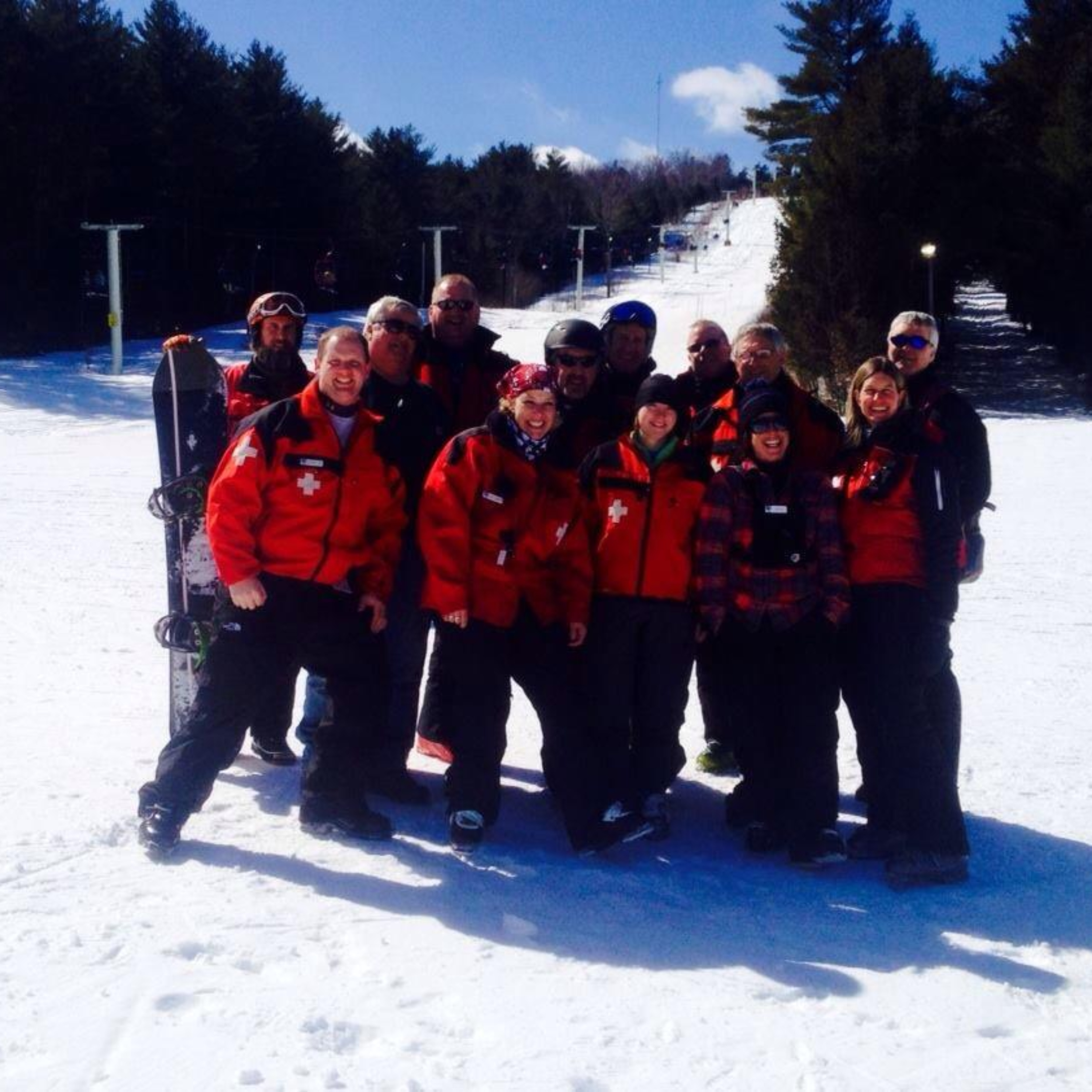
Hermon Mountain Ski Patrol
by jrobert.bakker
A wide-ranging podcast featuring leadership talks, CPR and first aid tips, Council of Elders Dispatches, and topics of interest to the HMSP community.
-
30
Lower Extremity injuries
Hermon Mountain
-
29
Brain Injury Treatment
Hermon Mountain
-
28
Brain Injury Regognition
Hermon Mountain
-
27
Verbal Judo for Ski Patrollers
How to gain voluntary compliance from your patrons.
-
26
Why You Should Talk About Suicicde
This episode is dedicated to a fellow ski patroller we lost to suicide. If the insights shared here help even one person find hope, then his passing may serve to save another life.
-
25
Developing a Lift Evacuation Plan
Things to consider when developing a Lift Evacuation Plan (LEP)
-
24
You Too Can Save a Life
What you need to make a difference.This podcast is dedicated to my fellow patroller, Ryan Mick. The story of what you need to make a difference in those first minutes.https://drive.google.com/file/d/1YcvLpQOm-hiR_iJjHMf7fN7hqYePXNBi/view?usp=drive_linkWhat you need for equipment to be able to take action.https://drive.google.com/file/d/1pwc8VdgcqdHjzno8toYxxnotAXepj8wx/view?usp=drive_linkShort bites about this sory.https://drive.google.com/file/d/1n4VQjXucYvr6tOcTwGU105g8502XWiOI/view?usp=drive_link
-
23
Leadership Development
This document outlines the Sustainable Leadership framework at Hermon Mountain Ski Patrol (HMSP), emphasizing that effective leadership stems from intention rather than just tradition. The framework provides a structured approach for defining, supporting, and growing leadership roles, building upon the success of the Hill Captain position as a model. It aims to provide clarity, mentorship, consistency, and pathways for growth within the patrol. Key elements of the structure for each leadership role include outlining purpose, responsibilities, qualifications, competency, and development pathways, ensuring that leaders are supported and developed effectively. The document emphasizes that leadership is about responsibility, mentorship, and trust, not simply titles.
-
22
Patient Assessment
This document outlines the essential procedures and skills for outdoor emergency patient care, specifically adhering to the National Ski Patrol's Critical Performance Indicators and the OEC 6th Edition guidelines. It details a structured approach to patient assessment, encompassing scene evaluation, primary and secondary assessments, history taking, vital sign monitoring, treatment, transport preparation, and reassessment. The text emphasizes the importance of meticulous execution of each step, particularly the CPIs, for successful patient management. Furthermore, it provides specific instructions on how to assess vital signs, such as pulse, respiration, pupils, blood pressure, capillary refill, and oxygen saturation. The inclusion of radio report protocols and practical considerations for ski patrol operations enhances the real-world applicability of these skills. Ultimately, this material serves as a guide for practitioners to develop proficiency in providing thorough patient care in outdoor emergencies.
-
21
Concussion Assessment and Management
This document offers ski patrollers and mountain staff evidence-based guidance for identifying and managing suspected concussions in a snow sports environment. It details risk factors and red flag symptoms, alongside on-slope evaluation methods using tools like the Maddocks Questions and CRT5. The guide stresses immediate removal from activity and medical referral for symptomatic individuals, and it presents a graduated return-to-ski protocol, including specific considerations for youth and adaptive skiers, all to support safe decision-making.
-
20
AirFlare Supporting Patrols and Protecting Families
AirFlare is presented as a novel safety technology transforming smartphones into multi-layered rescue tools for outdoor enthusiasts and SAR professionals. It utilizes GPS, beacon technology, and peer-to-peer capabilities for efficient rescues, even without cellular coverage. Privacy is a key focus, granting users control over data sharing. The technology includes specialized hardware, like deployable beacons, and offers affordable subscription plans, including options for families. The document outlines AirFlare's features, benefits for various users, privacy considerations, offline functionality, hardware components, P2P capabilities, and pricing. Finally, it directs readers to further resources like videos and a white paper for more information.
-
19
Recognizing and Responding to a Stroke
This guide informs ski patrollers about the critical need for rapid recognition and response to strokes in their line of work. It details how a stroke interrupts brain blood flow, leading to the "BE FAST" symptoms for identification: balance loss, vision issues, facial drooping, arm weakness, speech difficulties, and the urgency of time. The text explains the neurological basis of these signs and emphasizes the short treatment window, highlighting the patroller's crucial role in immediate assessment, basic care (including blood sugar checks and cautious oxygen administration), and swift, well-documented evacuation for timely hospital intervention involving CT scans and specialized treatments. Understanding stroke mimics is also important for patrollers to provide comprehensive information to emergency medical services.
-
18
Hypothermia-Lesson 3: Cold Weather Injuries
This guide for ski patrollers outlines various cold weather injuries they may encounter, emphasizing early detection and appropriate initial response. It differentiates between frostnip, a superficial and reversible condition, and frostbite, a more serious freezing of tissues requiring careful management and potential hospitalization. The text details the appearance, symptoms, and immediate care for each, cautioning against improper rewarming of frostbite in uncontrolled settings without patient understanding of potential pain. Additionally, it covers chilblains, a reaction to damp cold, and Raynaud's syndrome, a circulatory issue exacerbated by cold that can mimic other injuries. Ultimately, the guide stresses proactive buddy checks, keeping warm and dry, and prioritizing patient safety through cautious assessment and transport when necessary.
-
17
Hermon Mountain MCI Response
This document outlines Hermon Mountain Ski Patrol's protocol for responding to Mass Casualty Incidents (MCIs), which are defined as events overwhelming available resources. The protocol is structured around four core pillars: recognition, triage using the START system, incident command transfer to Hermon Fire Department, and establishing a Unified Command liaison. It details operational roles for patrollers as medical responders and transport teams and uses the 2010 Sugarloaf chairlift derailment as a case study to illustrate these principles in action. The guide emphasizes rapid assessment, prioritization, communication, and collaboration to ensure effective management of MCI events.
-
16
Narcan: A Guide to Opioid Overdose Treatment
This guide offers crucial information for first responders on identifying opioid overdoses and administering Narcan (naloxone). It explains that Narcan is a safe and legal medication that reverses opioid effects by blocking brain receptors, emphasizing its ease of use, particularly the intranasal spray. The text details the signs of an overdose, step-by-step instructions for Narcan administration including repeat doses, and the importance of calling emergency services. It also covers legal protections and documentation, underscoring that carrying and using Narcan can be a life-saving intervention in various settings.
-
15
NSP Senior Program – Overview
The NSP Senior Program is a national education and evaluation track designed for patrollers who want to advance their skills, take on leadership roles, and operate confidently in challenging environments. The program is open to alpine, nordic, and auxiliary patrollers, with discipline-specific requirements.Enhance proficiency in skiing/snowboarding and toboggan handlingImprove emergency care decision-making and scene managementPrepare patrollers for leadership within the NSP
-
14
Hypothermia-Lesson 2: What Cold Water Boot Camp Can Teach Us.
National Water Safety Congress's "Cold Water Boot Camp USA" YouTube video transcript documents an experiment where eight experienced volunteers were immersed in 45-degree water to understand cold water survival. Experts like Dr. Gordon Giesbrecht explained the dangers of cold water immersion, highlighting the cold shock response, cold incapacitation, and hypothermia. The boot campers experienced these effects firsthand during controlled swims, even with prior safety knowledge. Key takeaways emphasized the critical importance of controlling breathing in the initial minute and the life-saving benefit of wearing a life jacket to extend survival time. The program aimed to debunk common misconceptions and educate viewers on the physiological responses to cold water. Future segments promised to push the volunteers further into incapacitation and hypothermia to demonstrate these dangers more explicitly.
-
13
Hypothermia-Lesson 1: Who is Dr. Gordon Giesbrecht?
The provided texts focus on Dr. Gordon Giesbrecht, a Canadian physiologist known as "Professor Popsicle," and his extensive research on the human body's response to extreme cold. The excerpts from Amazon.com detail his book on cold injuries, including prevention, survival, and treatment, highlighting its comprehensive nature and relevance for outdoor enthusiasts and professionals. The YouTube transcript features his retirement interview, discussing his significant research on hypothermia and vehicle submersion, including self-experimentation and real-world impact, alongside his famous nickname's origin. Finally, the pasted text summarizes Dr. Giesbrecht's career at the University of Manitoba, his key contributions like the "1-10-1 Principle," his public education efforts, and his retirement, also noting the relevance of his work for ski patroller training.
-
12
A Guide to Lower Leg Injury Treatment
This guide provides ski patrollers with a foundational understanding of on-site lower leg injury management. It outlines crucial skills, emphasizing scene safety, stabilization, and frequent checks of circulation, motor function, and sensation (CMS). Specific techniques for applying various splints, including quick, airplane, and rigid splints, are described with critical performance indicators highlighted. The text also covers boot removal procedures for aid room settings and considerations for shock management and transport. Ultimately, this resource prioritizes proper assessment and stabilization to prevent further harm during initial treatment.
-
11
ICS 100-Lesson 5: An Introduction to the Incident Command System
This compilation of materials comprises a student manual for the IS-0100.c course, providing an introduction to the Incident Command System (ICS). Released in March 2025, the manual outlines the fundamentals of ICS, its organizational structure, and its role within the broader National Incident Management System (NIMS). Lessons cover the NIMS management characteristics, the functional areas and roles within ICS (including Command and General Staff), and how ICS principles apply to various personnel involved in incident management. The document aims to familiarize individuals with ICS for effective incident response across different types and sizes of events.
-
10
ICS 100-Lesson 4: An Introduction to the Incident Command System
This collection of materials serves as a student manual for IS-0100.c: An Introduction to the Incident Command System (ICS), ICS 100, released in March 2025. The manual outlines a five-lesson course designed to familiarize students with the Incident Command System, a nationwide standard for managing incidents of any size or type. The lessons cover topics including a course overview, NIMS management characteristics, ICS functional areas and roles for both Command and General Staff, and guidance on how ICS applies to various personnel and situations. The manual incorporates learning objectives, visual aids, activities, and review questions to facilitate understanding of ICS principles and its role within the National Incident Management System (NIMS).
-
9
ICS 100-Lesson 3: An Introduction to the Incident Command System
This compilation of materials comprises a student manual for the IS-0100.c course, providing an introduction to the Incident Command System (ICS). Released in March 2025, the manual outlines the fundamentals of ICS, its organizational structure, and its role within the broader National Incident Management System (NIMS). Lessons cover the NIMS management characteristics, the functional areas and roles within ICS (including Command and General Staff), and how ICS principles apply to various personnel involved in incident management. The document aims to familiarize individuals with ICS for effective incident response across different types and sizes of events.
-
8
ICS 100-Lesson 2: An Introduction to the Incident Command System
This compilation of materials comprises a student manual for the IS-0100.c course, providing an introduction to the Incident Command System (ICS). Released in March 2025, the manual outlines the fundamentals of ICS, its organizational structure, and its role within the broader National Incident Management System (NIMS). Lessons cover the NIMS management characteristics, the functional areas and roles within ICS (including Command and General Staff), and how ICS principles apply to various personnel involved in incident management. The document aims to familiarize individuals with ICS for effective incident response across different types and sizes of events.
-
7
ICS 100-Lesson 1: An Introduction to the Incident Command System
The provided document is a student manual for the IS-0100.c: An Introduction to the Incident Command System, ICS 100 course, released in March 2025. This manual outlines five lessons covering the fundamentals of ICS, including its overview, NIMS management characteristics, functional areas, command and general staff roles, and application. The course aims to familiarize students with ICS principles for effective incident response and coordination across various governmental and private sector entities, ultimately promoting safer and more efficient incident management.
-
6
History of the National Ski Patrol
"Ski Sentinels" from Vermont Public provides a comprehensive overview of the National Ski Patrol's history and evolution. The video transcript traces the organization's origins in the 1930s, inspired by European ski safety practices and driven by the vision of Minnie Dole. It highlights the early challenges of providing mountain safety, the crucial role of volunteers, and the development of essential rescue techniques and equipment. The narrative further explores the Ski Patrol's significant contributions during World War II, particularly in the formation of the 10th Mountain Division. Post-war, the organization continued to shape the burgeoning ski industry, focusing on safety education, avalanche control, and the development of standardized emergency care. The transcript emphasizes the dedication, camaraderie, and enduring mission of the National Ski Patrol as a vital volunteer force in mountain safety.
-
5
Stop the Bleed
Stop the Bleed is an initiative born after the Sandy Hook tragedy, aiming to empower civilians with battlefield-proven techniques to control life-threatening bleeding before professional help arrives. The program highlights that bleeding is the leading preventable cause of death after injury and emphasizes immediate action in real-world scenarios like shootings and accidents. Key skills taught include applying direct pressure, wound packing, and using tourniquets, stressing scene safety and calling emergency services. Real stories, such as the Pittsburgh Synagogue attack and the Boston Marathon bombing, illustrate how bystander intervention with Stop the Bleed knowledge saved lives. The initiative underscores that anyone can make a difference by learning these simple techniques and having the courage to act.
-
4
Patient Assessment: How to Do it Right, Every Time
This document details a systematic approach for patient assessment and care in outdoor emergencies, specifically for ski patrollers and first responders. It outlines a prioritized, step-by-step process based on the Outdoor Emergency Care (OEC) manual. The described method emphasizes scene safety, rapid identification of life-threatening conditions, thorough evaluation, appropriate treatment, and safe transport. Key components include initial scene assessment, primary and secondary patient evaluations, gathering patient history and vital signs, and continuous reassessment. Following this structured protocol aims to optimize patient outcomes and enhance responder safety by preventing overlooked critical injuries. The process serves as a gold standard for consistent and effective emergency medical care in challenging outdoor environments.
-
3
Lower Leg Injuries
In this episode we will review how patrollers treat lower leg injuries, as well as how they do boot removals (better than most providers in an Emergency Department).
-
2
Obtaining Patient Vitals
A review of what and how patrollers need to collect for patient vital signs
-
1
Welcome to the HMSP
A discussion around becoming a member of the Hermon Mountain Ski Patrol
We're indexing this podcast's transcripts for the first time — this can take a minute or two. We'll show results as soon as they're ready.
No matches for "" in this podcast's transcripts.
No topics indexed yet for this podcast.
Loading reviews...
ABOUT THIS SHOW
A wide-ranging podcast featuring leadership talks, CPR and first aid tips, Council of Elders Dispatches, and topics of interest to the HMSP community.
HOSTED BY
jrobert.bakker
CATEGORIES
Loading similar podcasts...
URL copied to clipboard!