
PODCAST · society
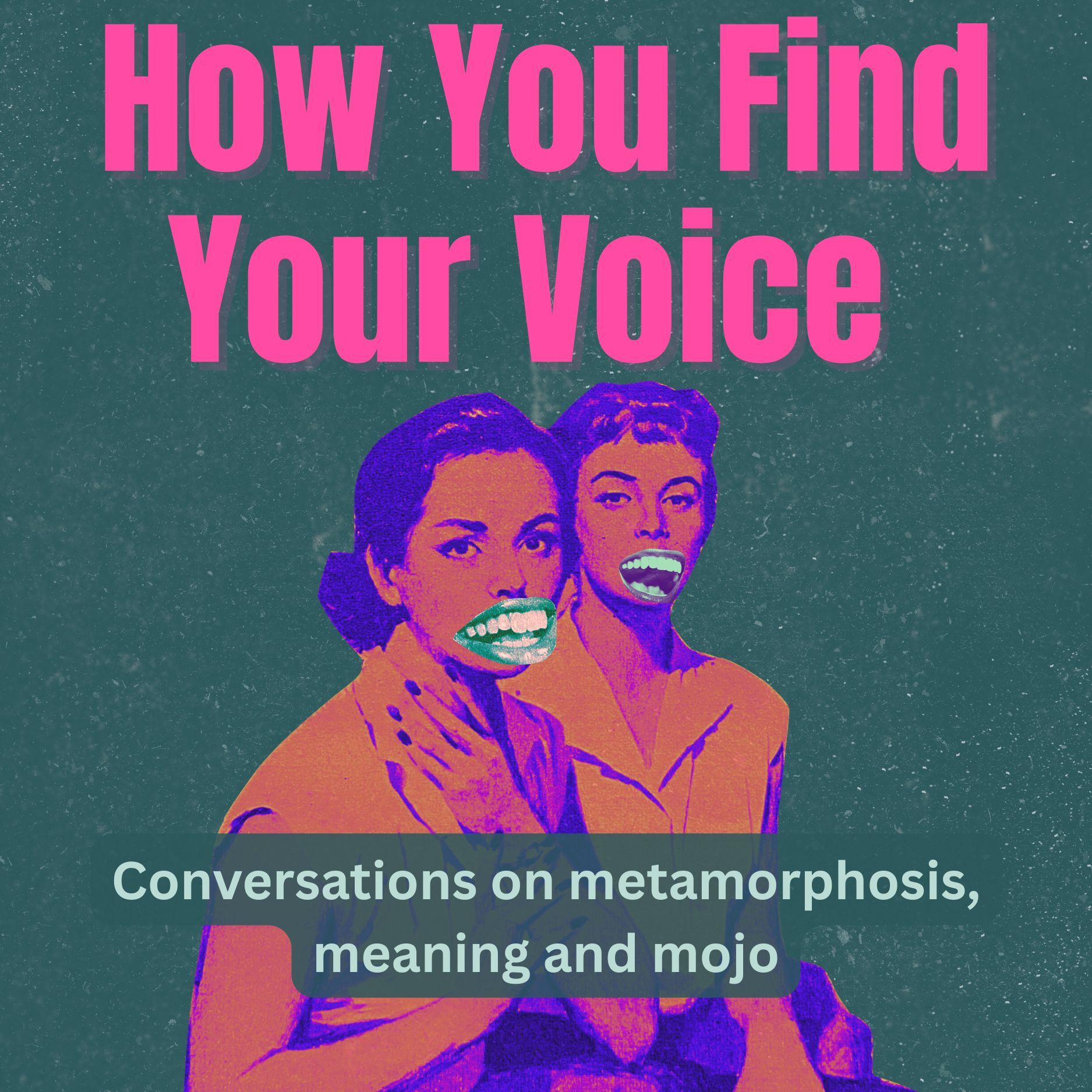
How You Find Your Voice
by howyoufindyourvoice
How You Find Your Voice is the podcast that asks brilliant guests (mostly women) how they found or reclaimed their voices, on every level. Through intimate conversations with writers, activists, artists, thinkers and entrepreneurs, we explore the work they've made, the lives they've lived and the inner transformations that made it all possible. We talk about turning points and resistance, doubt and silence, creative risk and process, as well as the messy business of becoming. How You Find Your Voice asks what it means to find your voice personally, creatively and collectively. What does it take to speak up, claim space and share your story, and if you've lost your voice, how do you begin to get it back?Join us for this voyage into voice and maybe, just maybe, we'll find ours along the way.
-
11
Alice Vincent on motherhood, listening, and the undocumented parts of women's lives
Welcome to Season 2 of the How You Find Your Voice podcast. Expect more conversations on creativity, identity and voice, on and off the page. Summary What happens when you lose your connection to music, to sound, and to yourself? And how do you learn to listen again? In this episode of How You Find Your Voice, host Jessie Huth speaks with writer and journalist Alice Vincent about her most recent book, Hark: How Women Listen. After more than a decade as a music journalist, Alice found herself burnt out and unable to listen to music at all. What began as an attempt to reconnect with music became something much deeper; a search for meaning, identity, and a new way of listening to the world and to herself. Together, they explore how motherhood, trauma and major life transitions can fundamentally change the way we hear and process the world. Alice reflects on her experience of PTSD following her son’s illness, and how sound became both a trigger and a lifeline during that time. The conversation also looks at the idea of listening as a gendered experience, namely, how women are often taught to be good listeners, while their own voices and experiences are overlooked. They discuss the difference between patriarchal and more intuitive ways of listening, and the overlooked soundscapes of women’s lives, from baby groups to hospital wards. They also talk about matrescence, liminal states, and the cyclical nature of women’s lives, from adolescence to motherhood to menopause and how these shifts shape identity, perception and voice. This is a conversation about sound, silence, motherhood, trauma, and the process of learning to listen to yourself again. Topics Covered Losing connection to music and identity Burnout and stepping away from the music industry Listening as a practice and a way of understanding the self Motherhood and matrescence The sensory and emotional impact of becoming a parent Trauma, PTSD and auditory triggers The role of sound in processing difficult experiences Writing as a way of making sense of trauma The pressure to “move on” after difficult experiences Liminal states and identity shifts Adolescence, motherhood and other transitional phases Misophonia and heightened sensitivity to sound Patriarchal listening vs intuitive or embodied listening Why women are taught to be good listeners The invisible soundscapes of women’s lives Community, connection and shared listening experiences Silence, quiet and the search for stillness Nature, environment and listening beyond the human Cyclical identity and women’s changing inner worlds Finding your voice through listening About Alice Vincent Alice Vincent Alice Vincent is a writer, broadcaster and multi-platform storyteller fascinated by the often-overlooked parts of life. Her books include the bestselling Why Women Grow: Stories of Soil, Sisterhood and Survival, which was shortlisted in the 2023 Books Are My Bag Readers Awards and Rootbound, Rewilding a Life. Both were longlisted for the Wainwright Prize. You can learn more about her latest book, Hark: How Women Listen here. A career journalist, she was a writer and editor on the arts desk of The Telegraph before joining Penguin as an editor. Now a columnist for The Guardian and Gardens Illustrated, Alice has offered readers her fresh approach to nature, gardening and life in the city as a columnist for The Telegraph and The New Statesman. She writes for titles including Vogue, The Financial Times, The Sunday Times and The Observer. Beyond the page, Alice is the host of the Why Women Grow podcast – which topped the British podcast charts during its first week and unearths stories of the land with inspiring women – and In Haste, a fresh new books podcast and platform dedicated to exploring how books really get written. Her weekly newsletter Savour offers thousands of readers a moment to pause and appreciate the delicious things in life. About the Podcast How You Find Your Voice is the podcast that asks brilliant guests, mostly women, how they found or reclaimed their voices. Through conversations with writers, artists, thinkers and entrepreneurs, we explore the work they have made, the lives they have lived and the inner transformations that made it possible. We talk about turning points and resistance, silence and expression, creative risk and process, and the often messy journey of becoming. Listen and Follow If you enjoyed this conversation, please follow the podcast for future episodes. If you’d like to stay connected to these conversations and hear about upcoming events, salons and gatherings, you can join the How You Find Your Voice mailing list here. You can also follow along on Substack for longer reflections, or on Instagram for clips and updates. Keywords Alice Vincent interview, Hark How Women Listen, listening and identity, motherhood and matrescence, PTSD and trauma, sound and perception, women and listening, music journalism burnout, finding your voice podcast, writing and identity, female experience and voice, liminal states and transformation, misophonia and sound sensitivity, patriarchal listening, motherhood and creativity, writing through trauma, literary podcast, women writers, identity and change
-
10
Susanna Crossman: Utopia, Untoldness and Finding the Words
Episode Summary What does it mean to grow up inside a utopian experiment, and how do you find your voice afterwards? In this episode of How You Find Your Voice, host Jessie Huth speaks with writer, essayist and clinical arts therapist Susanna Crossman about her memoir Home Is Where We Start and her novel, The Orange Notebooks. Susanna grew up in a politically radical community in the late 1970s that set out to reinvent family, gender roles and society itself. In this conversation, she reflects on the reality of that upbringing, the gap between utopian ideals and lived experience, and how long it took to find the language for what it really was. Together, they explore masking, people pleasing and the idea of the “false self”, and why growing up in a collective environment can make it difficult to know who you are. They also discuss silence, untold stories, and the power of language in expressing what often feels unspeakable. The conversation also turns to The Orange Notebooks, a deeply moving novel about maternal grief, and the challenge of writing about the loss of a child, one of the most taboo and difficult subjects to give voice to. This is a conversation about identity, grief, language, and the long, complex process of finding your voice. Topics Covered Growing up in a utopian community Communes, cults and collective living The impact of alternative childhoods on identity The gap between ideology and lived experience Family dynamics and the dismantling of the nuclear family Masking, people pleasing and the false self Learning a script and unlearning it Silence, secrecy and untold stories Writing memoir as a way of understanding the past Finding your voice after a silenced childhood The role of language and etymology in expression Grief, motherhood and The Orange Notebooks Writing about the loss of a child Clinical arts therapy and working with patients Helping others find their voice About Susanna Crossman Susanna Crossman is an award-winning Anglo-French fiction and non-fiction writer, published internationally in print and online. She’s author of the the acclaimed memoir Home is Where we Start, (Fig Tree/Penguin, 2024), about her childhood in a utopian commune, a Guardian 2024 “Book to Look Out For!” Her new novel, The Orange Notebooks was published by Bluemoose Books (UK) and Assembly Press (NA) in 2025. She has recent work in The Guardian, Aeon, Vogue, Paris Review, Electric Literature & elsewhere. A published novelist in France, she was a 2022 Hawthornden Fellow, and resident at Hosking Houses Trust in 2025. Winner of the 2019 LoveReading Short Story Award, she was nominated for Best of The Net Non-Fiction and is a member of the Dangerous Women project. Susanna grew up in an international commune. Alongside her writing, she works as clinical arts-therapist on three continents, teaches and mentors writers. About the Podcast How You Find Your Voice is the podcast that asks brilliant guests, mostly women, how they found or reclaimed their voices. Through conversations with writers, artists, thinkers and entrepreneurs, we explore the work they have made, the lives they have lived and the inner transformations that made it possible. We talk about turning points and resistance, silence and expression, creative risk and process, and the often messy journey of becoming. Listen and Follow If you enjoyed this conversation, please follow the podcast for future episodes. If you would like to stay connected to these conversations and hear about upcoming events, salons and gatherings, you can join the How You Find Your Voice mailing list here. You can also follow How You Find Your Voice on Substack for longer reflections on voice, creativity and the ideas behind the podcast, or on Instagram for updates. Keywords finding your voice podcast, Susanna Crossman interview, Home Is Where We Start memoir, The Orange Notebooks novel, growing up in a commune, utopian community childhood, cult vs community, masking and people pleasing, false self psychology, silence and voice, grief and motherhood, writing trauma and memory, literary podcast, women writers, clinical arts therapy, identity and belonging, language and expression, untold stories
-
9
Under Water: Tara Menon on Writing Friendship and Grief
Episode Summary What happens when you lose a friend who felt like a soulmate? In this episode of How You Find Your Voice, Jessie Huth speaks with novelist and Harvard professor, Tara Menon, about her brilliant debut novel, Under Water. It's a moving and beautifully written book exploring the themes of friendship, loss and the natural world. Set between two approaching storms, the 2004 tsunami in Thailand and Hurricane Sandy in New York, the novel explores the aftermath of losing a friend, and the ways memory, grief and trauma shape how we move through the world. Tara reflects on the absence of language around friendship grief, the influence of literary traditions from Tennyson to the flâneur novel, and the challenge of writing fiction after a career spent analysing it. Together they explore ecological loss, the emotional resonance of the sea, and what it means to let go of control in the creative process. This is a conversation about grief, memory, observation and the long process of finding your voice. Topics Covered Grief and the loss of a close friend The absence of language around friendship grief Dual timelines and writing towards catastrophe The 2004 tsunami and Hurricane Sandy Memory, trauma and how they shape perception The natural world, coral reefs and ecological grief Writing the sea and underwater environments Manta rays and animal behaviour Greek mythology and literary references Male entitlement and the experience of women in cities Tourism, colonialism and exploitation Moving from literary criticism to fiction writing Letting go of control in the creative process Finding your voice as a writer About Tara Menon Tara Menon is an Assistant Professor in the Department of English at Harvard University. Her writing has appeared in the New York Times Book Review, Nation, Paris Review and Public Books, where she co-edits the Literary Fiction section. Tara was born in India, grew up in Singapore, spent a decade in New York, and currently lives in Cambridge, Massachusetts. You can read more about Tara Menon and Under Water here. About the Podcast How You Find Your Voice is the podcast that asks brilliant guests, mostly women, how they found or reclaimed their voices. Through conversations with writers, activists, artists, thinkers and entrepreneurs, we explore the work they have made, the lives they have lived and the inner transformations that made it possible. We talk about turning points and resistance, doubt and silence, creative risk and process, as well as the messy business of becoming. Listen and Follow If you enjoyed this conversation, please follow the podcast for future episodes. If you would like to stay connected to these conversations and hear about upcoming events, salons and gatherings, you can join the How You Find Your Voice mailing list here. You can also follow How You Find Your Voice on Substack for longer reflections on voice, creativity and the ideas behind the podcast, or on Instagram for updates. Keywords finding your voice podcast, Tara Menon, Underwater novel, friendship grief, ecological grief, literary fiction podcast, women and grief, writing trauma and memory, coral reefs and climate change, female friendship novels, Harvard English professor, novelist, creative writing process, literary influences Tennyson, flaneur, voice and identity, how you find your voice podcast
-
8
Sarvat Hasin on Strange Girls, Female Friendship and Creative Ambition
Episode Summary What happens to a love story that has nowhere to go? And who has the right to tell it? In this episode of How You Find Your Voice, host Jessie Huth speaks with novelist Sarvat Hasin about her novel Strange Girls, a story about female friendship, creative ambition and the complicated emotions that can exist between admiration and rivalry. The book follows two young women who meet at university and become deeply entwined in one another’s lives. Their friendship is creative, admiring and competitive all at once. It is the kind of relationship that can leave a permanent imprint. Jessie and Sarvat talk about the emotional complexity of intense friendships, the strange grief of friendship breakups and the ways our lives gradually move in different directions as we grow older. They also discuss creative ambition, the realities of becoming a writer and the ethical questions that arise when fiction draws on shared experiences. Who owns a story when two people have lived it together? This is a conversation about creativity, longing, rivalry and the things that are often left unsaid between friends. Topics Covered • Intense female friendships and formative relationships • The emotional complexity of friendships formed in youth • Creative admiration and rivalry between friends • The strange grief of friendship breakups • The ethics of fictionalising shared experiences • Who owns a story when two people have lived it together • Creative ambition and the realities of becoming a writer • The role of circumstance, time and opportunity in creative life • Writing towards questions you do not yet know the answer to • Sarvat’s approach to writing by “chasing the feeling” of a moment About Sarvat Hasin Sarvat Hasin is a novelist and dramaturg from Pakistan. She has an MA in Creative Writing from the University of Oxford. Her first novel, This Wide Night, was published by Penguin India and longlisted for the DSC Prize for South Asian Literature. Her second book You Can't Go Home Again was published in 2018 and featured in Vogue India's and The Hindu's best of the year lists. Her third novel, The Giant Dark (Dialogue Books, Hachette UK) won the Mo Siewcharran Prize was shortlisted for the RSL Encore Award. She lives in London. You can read more about Sarvat Hasin and Strange Girls here. About the Podcast How You Find Your Voice is the podcast that asks brilliant guests, mostly women, how they found or reclaimed their voices. Through conversations with writers, activists, artists, thinkers and entrepreneurs, we explore the work they have made, the lives they have lived and the inner transformations that made it possible. We talk about turning points and resistance, doubt and silence, creative risk and process, as well as the messy business of becoming. Listen and Follow If you enjoyed this conversation, please follow the podcast for future episodes. If you would like to stay connected to these conversations and hear about upcoming events, salons and gatherings, you can join the How You Find Your Voice mailing list here. You can also follow How You Find Your Voice on Substack for longer reflections on voice, creativity and the ideas behind the podcast, or on Instagram for updates. Key Words Sarvat Hasin, Strange Girls novel, female friendship in literature, creative rivalry between friends, women writers podcast, writing fiction process, ethics of storytelling, creative ambition, literary podcast, finding your voice podcast
-
7
Ngaio Anyia on Voice, Joy and Creative Power
Episode Summary What happens when you lose your voice, not just creatively but literally? In this episode of How You Find Your Voice, host Jessie Huth speaks with singer, songwriter, DJ and producer Ngaio Anyia about the journey of losing and reclaiming voice over time. Ngaio shares how childhood bullying once led her to stop speaking altogether, and how years later a physical vocal crisis forced her into silence again. Both moments became turning points that reshaped her relationship with music, identity and creative power. Together they explore women in music production, creative confidence, rave culture, as well as the work of growing into your voice and finding your joy. This is a conversation about creative identity, rest, resilience and what it really means to find your voice in different seasons of life. Topics Covered Losing your voice both literally and metaphorically Childhood bullying and early silence Music as ritual, connection and community Women in music production and representation Creative control and stepping into production Voice texture and how it changes over time Rave culture and safer dancefloors Building Booty Bass in Bristol Creative burnout and recovery Why rest matters for creative longevity About Ngaio Anyia Ngaio Anyia is a multi-hyphenate creative: a singer, songwriter, DJ, producer, community creator and inclusion and diversity consultant. Ngaio is a versatile artist, known for her bass-heavy DJ sets, as well as her powerhouse vocal range. Her music oozes with intricate jazz harmonies, African percussion and truth-laden spoken word. Ngaio confronts the politics of black bodies, whilst poetically unravelling her mixed-race identity. You can read more about Ngaio and her work here. About the Podcast How You Find Your Voice is the podcast that asks brilliant guests (mostly women) how they found or reclaimed their voices, on every level. Through intimate conversations with writers, activists, artists, thinkers and entrepreneurs, we explore the work they've made, the lives they've lived and the inner transformations that made it all possible. We talk about turning points and resistance, doubt and silence, creative risk and process, as well as the messy business of becoming. Listen and follow How You Find Your Voice If you enjoyed this conversation, please follow the podcast for future episodes. You can also follow How You Find Your Voice on Substack for longer reflections on voice, creativity and the ideas behind the podcast. Or simply follow on Instagram for the latest updates. Keywords finding your voice podcast, Ngaio Anyia, women in music production, female creativity podcast, creative confidence, voice and identity, Booty Bass Bristol, women reclaiming their voice, creative process podcast, women in electronic music
-
6
Nikita Gill on Hekate, Female Rage and the Politics of Power
A conversation about myth, survivors, voice and power under patriarchy. In this episode of How You Find Your Voice, host Jessie Huth is joined by poet and author Nikita Gill to discuss her latest book Hekate, a mythic coming-of-age story rooted in exile, survival and the politics of power. They explore Hekate as the goddess of liminal spaces and the vulnerable, why Gill chose to tell a story from the “losing” side of war, and what happens to women and children when history is written by victors. The conversation also touches on female rage, the fear it provokes, and why stories are never neutral. Ranging across Greek myth, modern politics, displacement, trauma and freedom, the episode examines the deep relationship between language, justice and voice. Topics covered What drew Nikita to Hekate, goddess of crossroads, keys, liminal spaces and magic. How Hekate begins with exile and displacement after the Titanomachy, echoing the realities of refugees and conflict in the modern world. How family history shaped Nikita’s politics and interest in displacement. What happens to women and children on the losing side of war, and why history often erases it. Why Nikita spoke to modern worshippers of Hekate and what she learned. Hekate as a goddess of survivors, including survivors of sexual assault and abuse. How patriarchy attempts to neutralise rage and why female anger is politicised. Mothers, the absence of a village, and why maternal voices are ignored. How stories and language shape politics, and how populists use narrative. What it means to find your voice when the world wants you to shrink. Quotes to Listen For “There is no point making yourself so small, that you live half a life, to appease a beast that hates you anyway.” “Poets are the emotional historians of humankind.” “If you want to find where fascism starts, it starts in language.” About Nikita Gill Nikita Gill is an Irish-Indian poet who has the attention of 840,000 Instagram followers worldwide for her work. Her work offers a shift of perspective which centres women in both Greek and Hindu myth as well as folklore. She has given a TEDx Talk, spoken at every major literary festival in the UK and been shortlisted for the Goodreads Choice Award in poetry three times, the Childrens Poetry Award two times and longlisted for the Jhalak Prize. Gill has written seven poetry collections. Links For more on Nikita Gill's book, Hekate see here. Follow Nikita on Instagram here. About the Podcast How You Find Your Voice is the podcast that asks brilliant guests (mostly women) how they found or reclaimed their voices, on every level. Through intimate conversations with writers, activists, artists, thinkers and entrepreneurs, we explore the work they've made, the lives they've lived and the inner transformations that made it all possible. We talk about turning points and resistance, doubt and silence, creative risk and process, as well as the messy business of becoming. Listen and follow How You Find Your Voice If you enjoyed this conversation, please follow the podcast for future episodes. You can also follow How You Find Your Voice on Substack for longer reflections on voice, creativity and the ideas behind the podcast. Keywords: Nikita Gill, Hekate, feminist mythology, female rage, survivors, women’s voices, patriarchy, power, myth and politics, exile and refugees, displacement, storytelling and justice
-
5
Sally Magnusson on Myth, Memory and Imagination
In this episode of How You Find Your Voice, host Jessie Huth is joined by best-selling novelist, journalist and broadcaster Sally Magnusson MBE, to talk about myth, memory, and the creative courage it takes to begin again. Sally’s latest novel, The Shapeshifter’s Daughter, reimagines the Norse mythological figure of Hel, ruler of the underworld, a character long caricatured as monstrous and rarely allowed a voice of her own. Together, Jessie and Sally explore why the Norse goddesses deserve their time in the limelight, how feminist retellings can reclaim silenced figures, and what myth can teach us about death, ageing, and becoming. They also talk about memory as both a personal and cultural force, Sally’s move into fiction later in life, and the imaginative leap required to trust your own voice, especially after decades spent telling other people’s stories. Topics covered Why Sally was drawn to the Norse figure of Hel Feminist myth retellings and reclaiming silenced voices Norse mythology vs Greek mythology Memory, storytelling and cultural inheritance Writing fiction later in life and why creativity has no expiry date The courage to leap into imagination and inhabit characters fully Holding light and darkness together in art and life. Keywords How You Find Your Voice, Sally Magnusson, Norse mythology, Hel, feminist retellings, myth and memory, creativity in midlife, women’s voices, storytelling, fiction writing, imagination About the guest Sally Magnusson MBE is a novelist, journalist and broadcaster. She is the author of several acclaimed novels including The Seal Woman’s Gift, Music in the Dark, and The Shapeshifter’s Daughter, as well as the memoir, Where Memories Go, written after caring for her mother through dementia. Her work frequently explores myth, memory, identity and the stories that shape us. You can read more about Sally Magnusson and her work here.
-
4
What This Podcast Is About
A longer introduction to the ideas behind How You Find Your Voice and what led me to make it.
-
3
Season 1 Trailer
Introducing the How You Find Your Voice podcast and what to expect in the first episodes.
-
2
Sonia Purnell on Writing Women Back into History
Who was Pamela Churchill Harriman? Only the biggest political player you've never heard of. In this episode of How You Find Your Voice, I'm joined by bestselling biographer and journalist, Sonia Purnell to explore the remarkable life of Pamela Churchill Harriman. Branded the greatest courtesan of the twentieth century and dismissed for decades as a socialite or footnote, Pamela Churchill Harriman was in fact hugely influential behind the scenes. As Sonia's book Kingmaker reveals, she played a fundamental role in shaping twentieth-century politics, diplomacy and power. And she's finally getting her due. Topics covered The extraordinary life of Pamela Churchill Harriman Why so many influential women have been written out of history The cost of being in the room when power belongs to men How biography can restore voice, authority and complexity Sonia's painstaking process as biographer What women like Pamela Churchill Harriman still have to teach us today The uneasy echoes of the period leading up to the Second World War and our present moment. This is a conversation about power, silenced voices, the truths history chose not to tell and why it's essential we hear them now. Keywords Women in history, Sonia Purnell, Pamela Churchill Harriman, Kingmaker, women and power, female biography About Sonia Purnell Sonia Purnell is an award-winning biographer and Fellow of the Royal Historical Society, known for shining a light on extraordinary women history tried to forget. Her books include A Woman of No Importance, the New York Times bestseller about WWII spy Virginia Hall, and First Lady, a ground-breaking biography of Clementine Churchill. Kingmaker has been named one of the Best Books of the Year by The Telegraph, Financial Times, The Guardian, and many more. Sonia Purnall has been called “one of the most accomplished biographers of our time” (Liza Mundy) and brings journalistic rigour, vivid storytelling, and feminist insight to all her work.
-
1
Lily Dunn on the Radical Craft of Memoir
Writer Lily Dunn joins host Jessie Huth for a wide-ranging conversation about writing memoir, finding a voice, and what it takes to tell the truth on the page. Drawing on her latest book Into Being Lily reflects on the power and transformative potential of memoir, the role of editing in shaping a voice, and why memoir is rarely about revelation alone. She speaks candidly about writing her critically acclaimed memoir, Sins of My Father: A Daughter, a Cult, a Wild Unraveling, the emotional and ethical complexity of writing about family, and what happens when private stories enter the public world. Together they explore authenticity, memory, and the vulnerability of publication, as well as the ways in which writing can be empowering and sustaining. This is a thoughtful, honest conversation about creativity, self-inquiry, and finding your voice as narrator. Topics covered Into Being and the long process of developing a writing voice Sins of My Father and the complexities of writing about family The role of editors in shaping memoir Psychoanalysis, reflection, and self-inquiry in writing Authenticity, vulnerability, and being read Writing as an empowering and healing practice Keywords voice, women’s voices, writing, creativity, memoir, personal narrative, family, truth-telling, Lily Dunn, Sins of My Father, Into Being About Lily Dunn Dr Lily Dunn is a writer of both fiction and non-fiction, an editor and a lecturer at Bath Spa University. Her memoir, Sins of my Father: A Daughter, a Cult, a Wild Unravelling won The Guardian Nonfiction Book of the Year in 2022. Her latest book, Into Being: the radical craft of memoir and its power to transform is an essential guide to writing memoir as a radical and empowering practice. Lily co-founded the London Lit Lab at Birkbeck University in London, where she teaches creative writing. Her specialisms include memoirs, personal essays and narrative nonfiction. Books mentioned Into Being by Lily Dunn Sins of My Father by Lily Dunn Read more here About the guest Lily Dunn on Substack Listen and follow How You Find Your Voice If you enjoyed this conversation, you can follow the podcast for future episodes.
No matches for "" in this podcast's transcripts.
No topics indexed yet for this podcast.
Loading reviews...
ABOUT THIS SHOW
How You Find Your Voice is the podcast that asks brilliant guests (mostly women) how they found or reclaimed their voices, on every level. Through intimate conversations with writers, activists, artists, thinkers and entrepreneurs, we explore the work they've made, the lives they've lived and the inner transformations that made it all possible. We talk about turning points and resistance, doubt and silence, creative risk and process, as well as the messy business of becoming. How You Find Your Voice asks what it means to find your voice personally, creatively and collectively. What does it take to speak up, claim space and share your story, and if you've lost your voice, how do you begin to get it back?Join us for this voyage into voice and maybe, just maybe, we'll find ours along the way.
HOSTED BY
howyoufindyourvoice
Loading similar podcasts...
URL copied to clipboard!