
PODCAST · education
#HURIPECTalks
by HURIPEC
#HURIPECTalks is a podcast hosted by HURIPEC. It explores various issues shaping Uganda today and offers a platform where academics at the School of Law and beyond can share their research and reflections on a multitude of topics. The main objective of the podcast is to broaden avenues for dialogue, knowledge production and exchange with a view towards solving some of the most pertinent challenges facing Uganda, Africa, and the world. The podcast is anchored in analyses on human rights, sustainable development, conflict resolution, gender equality, constitutional law, social justice, among others,
-
9
Conclusion: Final remarks by Dr. Sylvie Namwase
As this conversation has shown, clean cooking is not just a technological transition, but a policy, equity, and governance challenge. Uganda’s journey toward clean cooking requires deliberate coordination across government, communities, and the private sector to ensure that solutions are accessible, affordable, and responsive to people’s lived realities. An enabling framework must move beyond commitments on paper to implementation that prioritizes public health, environmental sustainability, and gender justice. Only then can clean cooking truly transform lives and contribute to inclusive national development.
-
8
Uganda and Clean Cooking Technology: Assessing The Enabling Framework
In Episode 7 of HURIPECTalks, Mr. Emmanuel Kaweesi hosts Ms. Sarah Babirye from the Uganda National Alliance on Clean Cooking for an in-depth discussion on Uganda and Clean Cooking Technology: Assessing the Enabling Framework. The episode examines the legal, policy, and institutional environment shaping clean cooking adoption in Uganda.The conversation explores how regulatory frameworks, partnerships, and advocacy efforts influence access to clean cooking technologies, while addressing challenges around affordability, coordination, and implementation. Listeners gain critical insights into how policy decisions impact public health, environmental protection, and energy justice, and what is needed to strengthen Uganda’s clean cooking ecosystem.
-
7
Policy Perspectives from the Clean Cooking Unit in Uganda's Ministry of Energy
In this episode, Dr. Sylvie Namwase and Ms. Justine Akumu host a policy-centered conversation on clean cooking in Uganda, drawing insights from the Clean Cooking Unit within the Ministry of Energy. The discussion explores Uganda’s national clean cooking agenda, policy priorities, and the government’s approach to expanding access to affordable, safe, and sustainable cooking solutions.The episode unpacks the role of public institutions in addressing energy poverty, reducing reliance on traditional biomass, and aligning clean cooking interventions with climate commitments, public health goals, and gender equity. Listeners gain a clearer understanding of how policy frameworks translate into practice, the challenges of implementation, and the opportunities for collaboration between government, private sector actors, and communities.
-
6
Rurality, Youth and Charcoal Livelihoods in Uganda
In this episode, Mr. Geoffrey Obbo hosts Mary Ejang for an insightful conversation on rurality, youth, and charcoal livelihoods in Uganda. The discussion explores how charcoal production and trade continue to shape economic survival for young people in rural communities where employment opportunities are limited and access to resources remains unequal.The episode examines the realities young people face as they navigate environmental risk, informality, and social expectations, while relying on charcoal as a livelihood. Through lived experiences and community perspectives, the conversation highlights the urgent need for youth-centered, sustainable livelihood pathways that balance economic survival with environmental protection and long-term rural development.
-
5
Migration, Conflict and Charcoal in Tanzania
In this episode, Mr. Ngogo Ibra hosts Dr. Mathew Bukhi Mabele for a critical discussion on the intersections of migration, conflict, and the charcoal economy in Tanzania. The episode explores how population movement, environmental stress, and charcoal production are deeply linked, shaping livelihoods, land use, and social relations in both host and migrant communities.Drawing on research and field experience, the conversation unpacks how charcoal serves as both a survival resource and a driver of tension when governance gaps, land rights issues, and unequal access to resources persist. The episode highlights the need for conflict-sensitive and sustainable energy approaches that recognize migration realities while promoting environmental protection and social cohesion.
-
4
Green Charcoal Solutions and Gender: Perspectives from Northern Uganda
In this episode, Dr. Zahara hosts Judith Awacorach for a timely conversation on green charcoal solutions and gender in Northern Uganda. Together, they explore how alternative energy innovations are addressing environmental degradation while also transforming the daily lives of women and girls who are most affected by energy poverty, deforestation, and indoor air pollution.The discussion highlights the importance of gender-responsive climate solutions, centering women as key actors in sustainable energy production, entrepreneurship, and community leadership. Drawing from grassroots experiences, the episode underscores how green charcoal is not just an environmental intervention, but a pathway toward economic empowerment, climate justice, and social change in post-conflict communities.
-
3
Charcoal and Livelihoods in Tanzania
In this episode of HURIPEC Talks, host Dr. Emmanuel Lwankomezi is joined by Prof. Opportuna Kweka for an insightful conversation on charcoal and livelihoods in Tanzania. The discussion examines the central role charcoal plays in household energy use and income generation, while revealing its deep connections to environmental sustainability, forest governance, and rural–urban livelihoods.The episode unpacks the social, economic, and policy dimensions of the charcoal value chain, highlighting the tensions between livelihood security and environmental protection. Listeners gain a clearer understanding of how law, policy, and community-centered approaches can support sustainable energy transitions without undermining the livelihoods of those who depend on charcoal production and trade.
-
2
Environmental Law and Policy and Cooking Fuels: Global and National Perspectives
In this first episode of HURIPEC Talks, host Mr. Emmanuel Kaweesi engages Prof. Emmanuel Kasimbazi in a compelling discussion on the links between environmental law, policy, and cooking fuels. The conversation reveals how everyday energy choices are deeply connected to environmental protection, public health, climate change, and human rights at both global and national levels.The episode explores legal and policy responses to the challenges posed by traditional cooking fuels, highlighting their impact on vulnerable communities and the urgent need for cleaner, sustainable alternatives. Listeners gain clear insights into how law and policy can drive a just energy transition and promote environmental and social well-being.
-
1
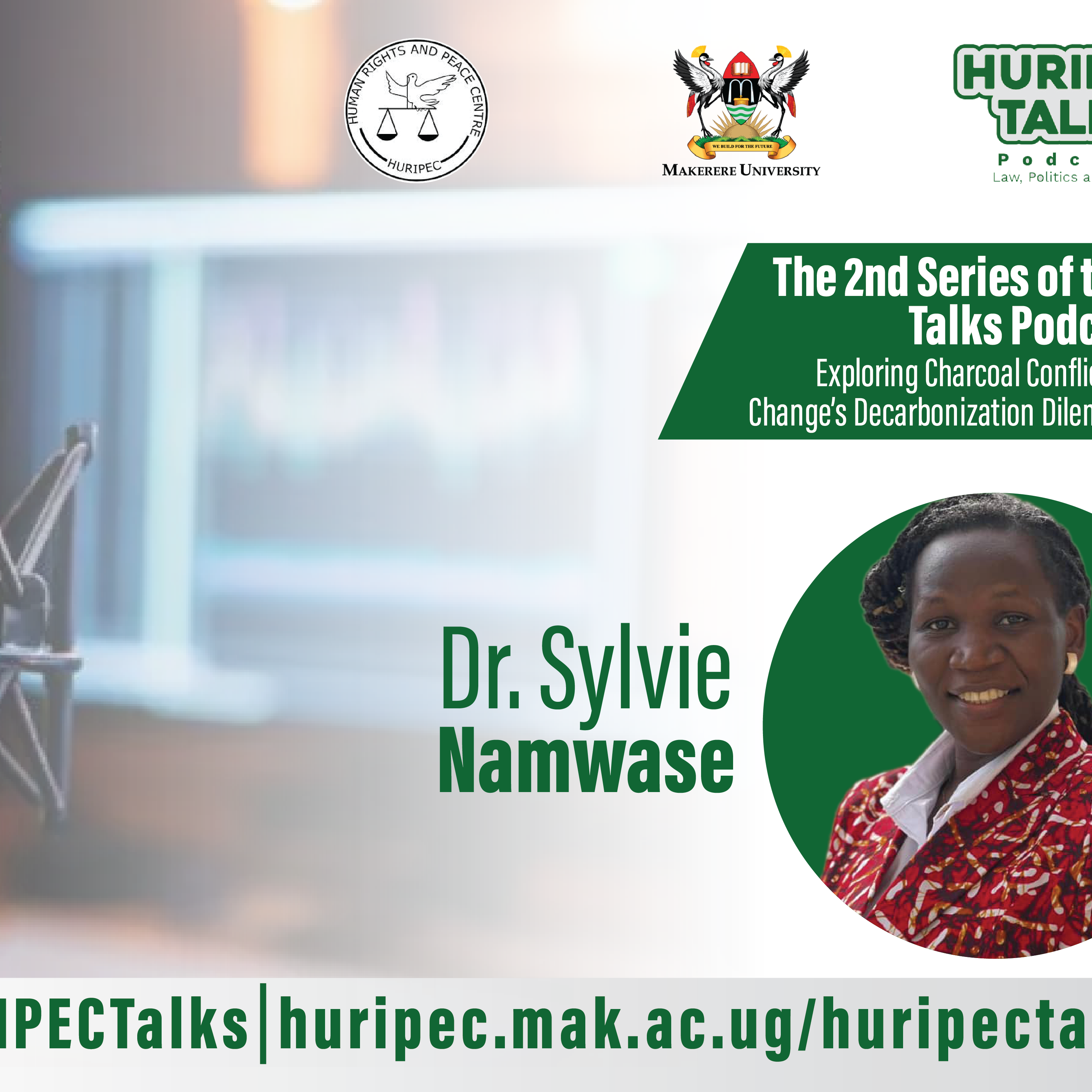
#HURIPECTalks: Introductory Remarks by Dr. Sylvie Namwase
We officially kick off the 2nd Series of the #HURIPECTalks Podcast with opening remarks from Dr. Sylvie Namwase.In this episode, Dr. Namwase sets the stage for an important and timely conversation on charcoal conflict and climate change highlighting the complex decarbonization dilemmas facing East Africa. Her remarks introduce the key themes of the series emphasizing the intersections of law, climate governance, peace, livelihoods , and environmental justice.
We're indexing this podcast's transcripts for the first time — this can take a minute or two. We'll show results as soon as they're ready.
No matches for "" in this podcast's transcripts.
No topics indexed yet for this podcast.
Loading reviews...
ABOUT THIS SHOW
#HURIPECTalks is a podcast hosted by HURIPEC. It explores various issues shaping Uganda today and offers a platform where academics at the School of Law and beyond can share their research and reflections on a multitude of topics. The main objective of the podcast is to broaden avenues for dialogue, knowledge production and exchange with a view towards solving some of the most pertinent challenges facing Uganda, Africa, and the world. The podcast is anchored in analyses on human rights, sustainable development, conflict resolution, gender equality, constitutional law, social justice, among others,
HOSTED BY
HURIPEC
CATEGORIES
Loading similar podcasts...
Frequently Asked Questions
How many episodes does #HURIPECTalks have?
#HURIPECTalks currently has 9 episodes available on PodParley. New episodes are automatically indexed when they're published to the podcast feed.
What is #HURIPECTalks about?
#HURIPECTalks is a podcast hosted by HURIPEC. It explores various issues shaping Uganda today and offers a platform where academics at the School of Law and beyond can share their research and reflections on a multitude of topics. The main objective of the podcast is to broaden avenues for...
How often does #HURIPECTalks release new episodes?
#HURIPECTalks has 9 episodes. Check the episode list to see recent publication dates and frequency.
Where can I listen to #HURIPECTalks?
You can listen to #HURIPECTalks on PodParley by clicking any episode. We provide an embedded audio player for direct listening, and you can also subscribe via your preferred podcast app using the RSS feed.
Who hosts #HURIPECTalks?
#HURIPECTalks is created and hosted by HURIPEC.
URL copied to clipboard!