
PODCAST · music
HYENAZ Soundcloud
by HYENAZ
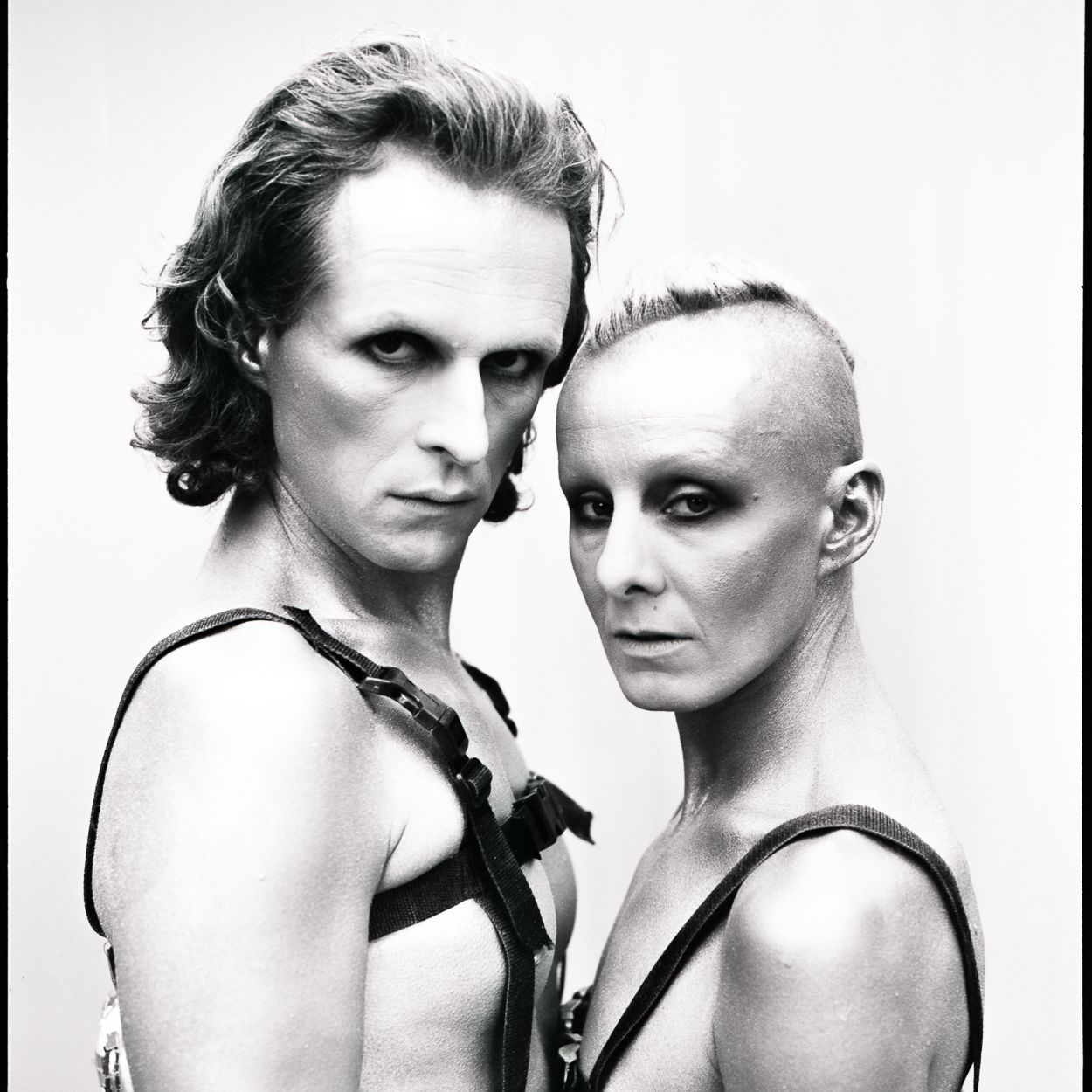
HYENAZ are Berlin-based sound and movement artists Kathryn Fischer aka Mad Kate and Adrienne Teicher. The dance tracks, soundscapes, performative installations and a/v works they produce are based on the sonic shapeshifting of field recordings gathered in the process of site-specific works.Since 2015 HYENAZ have been working on a music, performance and sonic research project they call “Foreign Bodies,” a slow movement journey to explore relationships of “bodies in motion and bodies in resistance”, be they human or of other sentience. Central to this project is the idea that the body is disappearing: from social interactions blasted into the corporate cloud, to machine intelligence tangled in the systems that govern life, to techno-futurists fantasies of an age where analogue flesh has vanished into digital consciousness.Their first release for Foreign Bodies PROXIMITY was an act of listening and learning from non-human animals, frogs in particular, to think about how proximity change
-
6
Art and Extractivism Reading Group Pilot Part 1
ART AND EXTRACTIVISM READING GROUP 9 August 2021 online pilot part 1 READING AND DISCUSSING TOGETHER. This reading group is especially oriented towards reading together rather than reading outside the group. We hope that this close reading strategy can be a small act of resistance against the cultural colonization of Western academia, the hegemony of English, and the codified distinctions between the academic and the “non-academic” or the artist. There is no commitment to join for more than one session. Non academics who want to involve critical theory in their work but normally don’t have access to text based resources or the time to do research are encouraged to take part. We also make space for defining and translating words for non-native speakers who don’t have access to translations into their home language(s). WHAT WE EXPLORE ART AND EXTRACTIVISM investigates how extractive processes (environmental, intellectual, and physical) are replicated within the performing and in particular the sonic arts. The concept of extractivism situates all kinds of “innocent practices” as carrying the potential for exploitation and harm. We use extractivism in order to problematise a number of related phenomena—from the environmental extracation of minerals, gas and water from the ground, we expand to include the extraction of (creative) labour from (precarious) bodies, the recording of sounds, words, ideas and images from sentient beings, as well as the “mining of the exotic” in terms of content branding and other new economies from our very selves. ART AND EXTRACTIVISM explores the following questions: What are the problematics of extraction which appear within (always-already) hierarchical collaborations? How can processes compromised by extractive dynamics resist extraction? How can we name them, rather than erase them? What are the limitations of the extractivist framework? Are there other ways of finding reciprocal relations between artists, subjects, and nature? ART AND EXTRACTIVISM itself should resist extractivist practices by reaching towards collective practice, whereby each member chooses one text (one chapter or short text selection) that they feel could shed light on the topic. We will read the text together, rather than outside of the group, and discuss the text within the meeting time. Since it is assumed that members of the group are not supported financially to spend time researching, or in general supported by arts or academic institutions, the group aims towards generating conversation and thought that can be useful towards our work and not become extractive labour. To that end, ART AND EXTRACTIVISM is also geared towards non-academics who wish to involve critical theory in their work. The idea of the group is to provide a safe space to discuss critical theory outside of established spheres of audibility (i.e., the academic classroom) and to create an environment where those who generally think of themselves as non-academics can interact with critical theory without the pressure of competing or keeping up with others’ knowledges. We will work towards establishing dialogue amongst artists and workers who would like to engage with some of the body of academic work which has been done “about” the worker or the artist, and see how we can relate it to our everyday and real world experiences. In this sense we attempt to resist the extractivist practice that theory engages on the body of the worker or artist.
-
5
Art and Extractivism Reading Group Pilot Part 2
ART AND EXTRACTIVISM READING GROUP 9 August 2021 online Pilot Part 2 READING AND DISCUSSING TOGETHER. This reading group is especially oriented towards reading together rather than reading outside the group. We hope that this close reading strategy can be a small act of resistance against the cultural colonization of Western academia, the hegemony of English, and the codified distinctions between the academic and the “non-academic” or the artist. There is no commitment to join for more than one session. Non academics who want to involve critical theory in their work but normally don’t have access to text based resources or the time to do research are encouraged to take part. We also make space for defining and translating words for non-native speakers who don’t have access to translations into their home language(s). WHAT WE EXPLORE ART AND EXTRACTIVISM investigates how extractive processes (environmental, intellectual, and physical) are replicated within the performing and in particular the sonic arts. The concept of extractivism situates all kinds of “innocent practices” as carrying the potential for exploitation and harm. We use extractivism in order to problematise a number of related phenomena—from the environmental extracation of minerals, gas and water from the ground, we expand to include the extraction of (creative) labour from (precarious) bodies, the recording of sounds, words, ideas and images from sentient beings, as well as the “mining of the exotic” in terms of content branding and other new economies from our very selves. ART AND EXTRACTIVISM explores the following questions: What are the problematics of extraction which appear within (always-already) hierarchical collaborations? How can processes compromised by extractive dynamics resist extraction? How can we name them, rather than erase them? What are the limitations of the extractivist framework? Are there other ways of finding reciprocal relations between artists, subjects, and nature? ART AND EXTRACTIVISM itself should resist extractivist practices by reaching towards collective practice, whereby each member chooses one text (one chapter or short text selection) that they feel could shed light on the topic. We will read the text together, rather than outside of the group, and discuss the text within the meeting time. Since it is assumed that members of the group are not supported financially to spend time researching, or in general supported by arts or academic institutions, the group aims towards generating conversation and thought that can be useful towards our work and not become extractive labour. To that end, ART AND EXTRACTIVISM is also geared towards non-academics who wish to involve critical theory in their work. The idea of the group is to provide a safe space to discuss critical theory outside of established spheres of audibility (i.e., the academic classroom) and to create an environment where those who generally think of themselves as non-academics can interact with critical theory without the pressure of competing or keeping up with others’ knowledges. We will work towards establishing dialogue amongst artists and workers who would like to engage with some of the body of academic work which has been done “about” the worker or the artist, and see how we can relate it to our everyday and real world experiences. In this sense we attempt to resist the extractivist practice that theory engages on the body of the worker or artist.
-
4
Born From Death (Chaos Edit)
Follow HYENAZ on Spotify: https://open.spotify.com/follow/1?uri=spotify:artist:7FvuDYlrZROxL08qKlyKrT&size=detail Born From Death sounds like parallel universes crashing in on each other at a dirty warehouse rave. HYENAZ (Kathryn Fischer and Adrienne Teicher) wrote Born From Death on a psychedelic journey in an old farmhouse owned by a queer collective outside of Berlin. The pair were preparing for a movement performance at Museum of Modern and Contemporary Art in Seoul with the artists Sylbee Kim and Nico Pelzer. “The vocal at its core was actually some off-mic chatter we recorded by accident, and fell in love with.” HYENAZ explain. “We pushed these little grains of sound as hard so we could take a part of this experience with us and carry our altered states beyond into the everyday world, into the lifeworlds of our listeners.” Born From Death appeared on the Critical Magic album that HYENAZ composed as a continuous musical chaos magic ritual lasting an hour. The “Chaos Edit” lifts the track from the broader soundscape and into a space where it can stand by itself, at parties, on dance floors, or at least for the time being, in the imagination.
-
3
HYENAZ - Columns (Original Mix)
The new single Columns by Berlin performance duo HYENAZ. The track, with its shades of industrial techno, is in fact built entirely from vocalizations and organic percussion scavenged deep within a cave outside the pilgrimage town of Częstochowa, Poland. Buy it here: https://obskurmusic.bandcamp.com/album/columns-ep
-
2
Intact Remains of An Ancient Reef
It is in mountains that the deep history of the world reveals itself, and it is in the play of sediments that the consciousness of minerals reveals itself. This consciousness mirrors in some ways the parasympathetic nervous system of human life, with its long neural pathways and preference for homeostasis: we are closer to rocks than we realise. At this time, patterns of migration once again are compelling Europe to face once again the deadly paranoid mechanisms of othering by which it constructs its sense of self. The slow dance of rocks across generations is an encounter of entities that resists being subsumed by the hyperventilation of fear produced by a crisis mindset. The sounds of Clastic emerged from a field recording and electronic production workshop HYENAZ led in the Graie mountains at CLASTIC – European Performing Arts Residency (https://clasticresidency.wordpress.com/), with the participation of: Durassie Kiangangu, Morena De leonardis, I Patom Theatre, Silvia Ribero, Angie Rottensteiner, Kazalište Nezamislivog Iva Korbar, and Elena Brea Sandin. The sonic movements of CLASTIC respond to the deep temporality of this landscape and the singular existence of the individual stones, branches and other objects that make their home there. The EP will be released under a Creative Commons non-commercial licence. Money from sales and streaming of the EP will be donated to the refugee and migrant rights organization SOS Mediterranee https://sosmediterranee.de
-
1
Binaries 두가지들
Berlin electronic avant-gardists HYENAZ have evolved a cult status for their immersive live shows, for which they were dubbed a “performative monster duo” by electro superstar Peaches and one of the “Best Live Acts in Berlin” by Kaltblut magazine. The process of birthing the second HYENAZ album “Critical Magic” has already taken the band from Berlin to Korea, China and Japan, through Europe and back. Its path has been ritualistic and intentional; it has already seen an explosive dialogue between audience and performer around the world. The process began in mid 2014, with a site-specific performance called “Spectral Rite” at the Museum of Modern and Contemporary Art in Seoul, Korea. The goal was to create a magical ritual that would challenge the authoritarian power structures of the museum itself and society at large. HYENAZ traveled to a farmhouse outside of Berlin, joined for part of the process by visual artists Sylbee Kim and Nico Pelzer. There they used “Chaos Magic”, an unorthodox, post-modern magical movement where practitioners construct spells and rituals from the context in which they find themselves. What they found in Chaos Magic mirrored the artistic game approach to creativity that HYENAZ had learned from an encounter with the activist-poet C.A. Conrad on their last USA tour. The pairing of these influenced helped to craft a set of generative techniques for the texts, tones, movements and visuals of the museum performance and the album “Critical Magic”. Two weeks of spells, artistic games, and psychedelic experimentation followed: HYENAZ took walks through the forest recording spontaneous melodies into a Zoom recorder; they holed themselves up in a basement, sampling ancient water boilers and scrap metal to turn into the synth patches and percussion that populate the album; they sat in fields writing lyrics as a collective, each responding to the fixed commands of the task they had divined. Critical Magic builds on the experimental spirit of their first self-titled endeavour, which was released by the LA-based Records Ad Nauseam. More than just a concept album, Critical Magic can be understood as a singular cohesive spell, a flow of incantations leading to a height of gnosis and ending in a reality transformed by the performance of the magical ritual. This journey is represented in part by a fracturing of genre into flow: Synthpop devolves into broken beats, tech-house into horror-wave into bounce into manic laughter. The flows of the album are guided, above all by the needs of the ritualistic practices they immerse themselves in, above all other considerations. To place HYENAZ it is necessary to look beyond music; to understand them as thinkers, dreamers and movers concerned with the multiple, with the alien-self, and above all with possibilities for self and social transformation through artistic practice and the performance of ritual.
We're indexing this podcast's transcripts for the first time — this can take a minute or two. We'll show results as soon as they're ready.
No matches for "" in this podcast's transcripts.
No topics indexed yet for this podcast.
Loading reviews...
ABOUT THIS SHOW
HYENAZ are Berlin-based sound and movement artists Kathryn Fischer aka Mad Kate and Adrienne Teicher. The dance tracks, soundscapes, performative installations and a/v works they produce are based on the sonic shapeshifting of field recordings gathered in the process of site-specific works.Since 2015 HYENAZ have been working on a music, performance and sonic research project they call “Foreign Bodies,” a slow movement journey to explore relationships of “bodies in motion and bodies in resistance”, be they human or of other sentience. Central to this project is the idea that the body is disappearing: from social interactions blasted into the corporate cloud, to machine intelligence tangled in the systems that govern life, to techno-futurists fantasies of an age where analogue flesh has vanished into digital consciousness.Their first release for Foreign Bodies PROXIMITY was an act of listening and learning from non-human animals, frogs in particular, to think about how proximity change
HOSTED BY
HYENAZ
CATEGORIES
Loading similar podcasts...
Frequently Asked Questions
How many episodes does HYENAZ Soundcloud have?
HYENAZ Soundcloud currently has 6 episodes available on PodParley. New episodes are automatically indexed when they're published to the podcast feed.
What is HYENAZ Soundcloud about?
HYENAZ are Berlin-based sound and movement artists Kathryn Fischer aka Mad Kate and Adrienne Teicher. The dance tracks, soundscapes, performative installations and a/v works they produce are based on the sonic shapeshifting of field recordings gathered in the process of site-specific works.Since...
How often does HYENAZ Soundcloud release new episodes?
HYENAZ Soundcloud has 6 episodes. Check the episode list to see recent publication dates and frequency.
Where can I listen to HYENAZ Soundcloud?
You can listen to HYENAZ Soundcloud on PodParley by clicking any episode. We provide an embedded audio player for direct listening, and you can also subscribe via your preferred podcast app using the RSS feed.
Who hosts HYENAZ Soundcloud?
HYENAZ Soundcloud is created and hosted by HYENAZ.
URL copied to clipboard!