
PODCAST · business
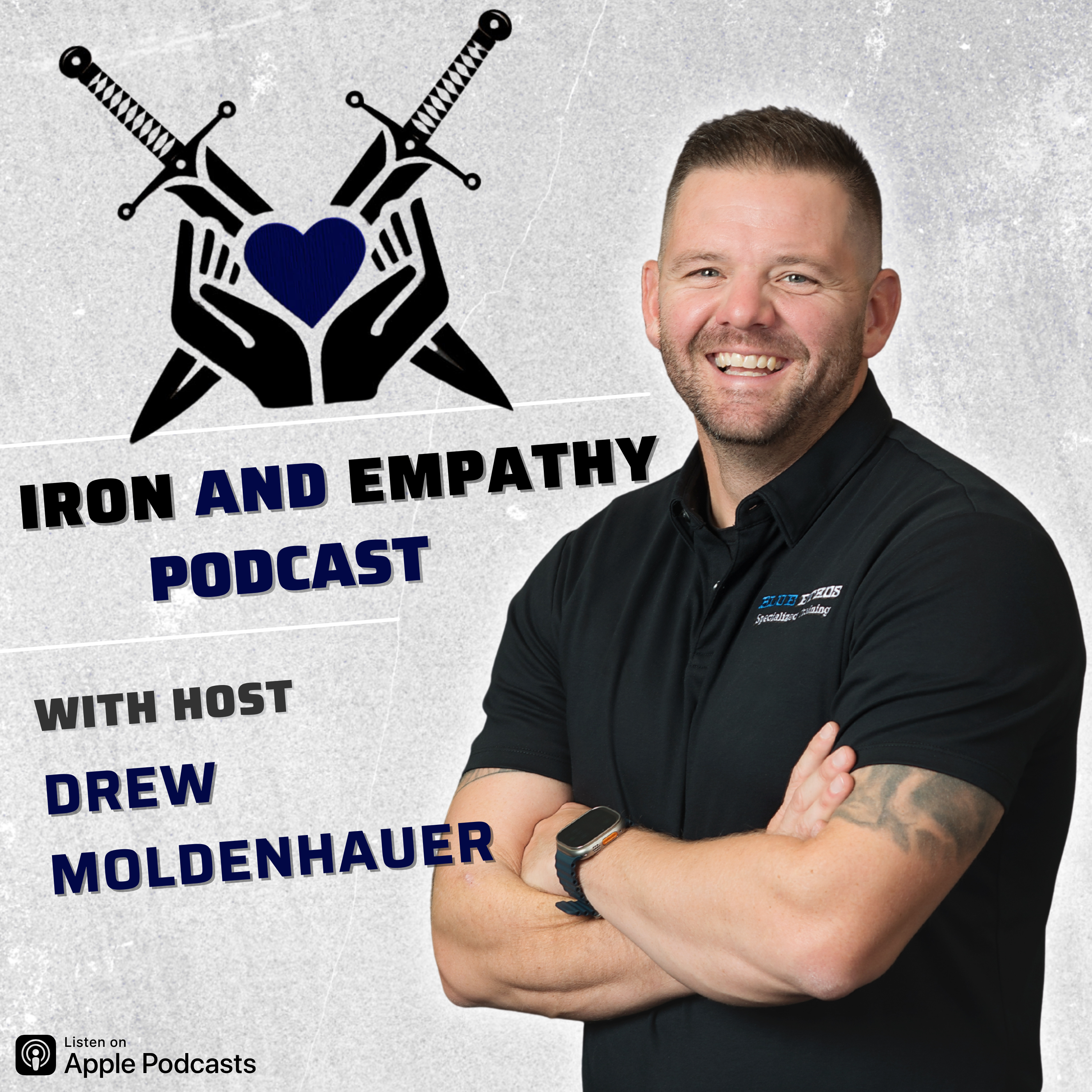
Iron and Empathy
by Drew Moldenhauer
Iron and Empathy is a thought-provoking podcast hosted by educator and leadership strategist Drew Moldenhauer, exploring what it truly takes to build resilient teams, sustain peak performance, and lead with both strength and emotional intelligence in today’s demanding world.Each episode brings together voices from business, education, public safety, creative industries, and culture to unpack the real forces behind high-performing teams—psychological safety, trust, discipline, empathy, and the courage to evolve. From executives and educators to artists, athletes, and performers, Drew sits down with people who have felt pressure firsthand and found ways to grow stronger without losing themselves.
-
13
Burnout Is Not a Badge of Honor: Scott Medlin on having winning mindset
In this episode of Iron and Empathy, host Drew Moldenhauer sits down with Scott Medlin, a Marine Corps veteran, former police officer, and mental performance speaker, to explore burnout, identity, and mental fitness in high-stress careers. Drawing from his own experience in law enforcement, Scott shares how losing his sense of identity and operating in constant “survival mode” led him to rethink performance, ultimately developing the 10-Code Mindset to help others build awareness, resilience, and purpose.He breaks down why the habits we normalize—overworking, poor sleep, negative self-talk—are often the very things holding us back, and how small shifts in mindset can change the trajectory before it’s too late. This episode challenges the idea that grinding harder is the answer—and offers a more sustainable way to perform at your best.Reach out to Drew and sign up for newsletters and podcast updates at Blue-Ethos.comTo learn more about Scott Medlin and his work:🌐 Website: ScottMedlin.com📚 Books: Available on Amazon by searching Scott Medlin authorKey TakeawaysBurnout is not a badge of honor—it’s a warning signOperating in “survival mode” leads to long-term performance declineMindset directly impacts thoughts, actions, and resultsLanguage matters—self-defeating thoughts shape negative outcomesSmall daily improvements (1%) create long-term changeSleep, recovery, and unplugging are critical for performanceIdentity should not be tied solely to a professionWriting down problems and solutions builds clarity and controlHigh performers often burn out quietly before it becomes obviousTrue success includes strong relationships, purpose, and impactKeywordsburnout, mental fitness, resilience, high stress careers, law enforcement mental health, survival mode, mindset training, performance psychology, stress management, emotional resilience, identity and purpose, self-awareness, leadership mindset, first responder wellness, mental health habits, personal development, habit building, cognitive performance, work-life balance, recovery and performance
-
12
What Great Leaders Do Under Pressure | General Mike Oster
In this episode of Iron and Empathy, host Drew Moldenhauer sits down with retired U.S. Army Brigadier General Mike Oster to explore leadership, trust, and decision-making under pressure. Drawing from decades of military leadership, Mike shares lessons on building high-performing teams, empowering others, owning mistakes, and why the strongest leaders prioritize people first while maintaining accountability and mission focus.Throughout the conversation, Mike emphasizes that great leadership starts with trust, attitude, and preparation. From seeing challenges as opportunities to creating teams where excellence becomes the standard, he offers practical insights for leaders in any field on how to build resilient teams, lead with empathy, and develop a culture where people feel valued, supported, and motivated to perform at their best.Reach out to Drew and sign up for newsletters and podcast updates at Blue-Ethos.com To connect with Mike Oster, learn more about his speaking, or find his book It Starts with Attitude visit his Website: MikeOster.comTakeawaysTeams move at the speed of trustGreat leaders own mistakes and build credibility through accountabilityChallenges should be seen as opportunities, not issuesPreparation reduces poor decisions under pressurePeople-first leadership strengthens performance and cohesionExcellence begins with attitude and daily choicesKeywordsLeadership, trust, team building, decision-making under pressure, accountability, people-first leadership, organizational culture, military leadership, crisis leadership, emotional intelligence, communication, resilience, leadership development, attitude, excellence, mission command, team cohesion, ownership, empowerment, strategic leadership, high-performing teams, disciplined initiative, leadership mindset, problem solving, seeing opportunities not issues, public safety leadership, mentorship, workplace culture, servant leadership, performance under pressure, leadership lessons
-
11
Crisis Cops: The Human Side of Crisis Response with HBO Star Ernie Stevens
In this episode of Iron and Empathy, Drew Moldenhauer speaks with Ernie “Ernest” Stevens, a 28-year law enforcement veteran, about how crisis intervention training transformed his approach to policing. A pivotal moment early in his career—hearing a mother describe her son’s mental illness—pushed him to take mental health seriously and ultimately help build a mental health unit within the San Antonio Police Department. His work later gained national recognition, including being featured in the Emmy Award-winning HBO documentary Ernie and Joe: Crisis Cops.Ernie shares why safety must be redefined as the presence of wellbeing, not just the absence of crime, and how skills like empathy, active listening, and de-escalation can improve outcomes for both the community and officers.Reach out to Drew and sign up for newsletters and podcast updates at Blue-Ethos.comKey TakeawaysSafety should be redefined as the presence of wellbeing, not just the absence of crimeCrisis intervention training can fundamentally change how officers respond to mental health callsPersonal transformation is essential—officers must change themselves before they can impact their communitiesActive listening and empathy improve outcomes in both professional and personal interactionsDe-escalation skills can reduce or eliminate the need for force—even in high-risk situationsUnderstanding legal tools (like involuntary holds) is critical for properly helping individuals in crisisMental health challenges exist both in the community and within law enforcement agenciesAsking direct, clear questions (e.g., about suicidal thoughts) is difficult—but necessaryBuilding trust and rapport is key to effective crisis responseStrong partnerships with community resources are essential for long-term successKeywordsmental health in law enforcement, crisis intervention training, de-escalation techniques, police mental health response, officer wellness, empathy in policing, crisis response models, community policing, behavioral health, law enforcement training, public safety leadership, trauma-informed policing, suicide awareness in law enforcement, active listening, police reform strategies
-
10
The Signs We Miss: What Every Adult Needs to Know About Child Abuse
In this episode of Iron and Empathy, host Drew Moldenhauer sits down with Alison Feigh, Director of the Jacob Wetterling Resource Center, to discuss what real prevention looks like when it comes to child abuse and exploitation. Drawing from more than 20 years of experience, Alison challenges common misconceptions—especially the idea that harm comes from strangers—explaining that abuse is most often committed by someone the child knows.The conversation centers on practical ways adults can recognize risk and take action early. Alison outlines key warning signs such as isolation, focusing on behavior over relationship, and trusting gut instincts. She emphasizes the importance of building a strong support network around children, having ongoing conversations about safety, and creating environments where kids feel comfortable speaking up. Throughout the discussion, prevention is framed as something proactive and achievable—built through awareness, communication, and consistent engagement.Stay connected with Drew and sign up for podcast updates at Blue-Ethos. To learn more about Alison Feigh's work, visit zeroabuseproject.org or call 1-800-325-HOPE for advocacy and support.TakeawaysIsolation is a major warning sign—offenders often attempt to separate children from trusted adultsIt’s not about how you know someone, but what they are asking a child to doTeaching kids to recognize and trust their “uh-oh” or gut feeling is criticalBuilding a network of trusted adults helps reduce risk and increases supportOpen, judgment-free communication makes it more likely children will speak upConversations about safety should continue and evolve as children get olderMany online situations go unreported due to fear of consequences or punishmentEarly awareness and intervention can help prevent harm before it escalatesPrevention starts with adults taking action—not just awarenessKeywordschild abuse prevention, warning signs of abuse, child safety, exploitation awareness, grooming behaviors, isolation tactics, online safety for kids, situational awareness, trauma-informed care, protecting children, prevention education, community safety, parental guidance, youth protection, public safety training
-
9
Schmoozing the FAQs: Handling Difficult Workplace Situations
In this episode of Iron and Empathy, host Drew Moldenhauer is joined by Rich Webb to answer listener questions about workplace safety, de-escalation, and communication during difficult situations. Drawing from their law enforcement backgrounds and training experience, they discuss how leaders and frontline employees can respond when concerns arise about weapons in the workplace, how to handle statements of self-harm after a termination, and how to manage highly emotional interactions with upset customers.The conversation highlights practical communication strategies such as self-regulation, active listening, mirroring, and strategic agreement to help defuse tense interactions. They also stress the importance of early intervention during potential crises and the need for clear, plain-language messaging during emergency situations so employees understand exactly what is happening and how to respond.Reach out to Drew Moldenhauer and Rich Webb at Blue-Ethos.TakeawaysAssess workplace safety concerns by considering the totality of the circumstances, including policies, behavior, and potential red flags.Take statements about self-harm seriously and consider early intervention by contacting emergency services if necessary.Use self-regulation and active listening to help de-escalate tense interactions with upset employees or customers.Practical techniques like strategic agreement and mirroring can quickly diffuse emotional situations and build trust.During emergencies, use clear, plain language communication so employees understand both the threat and the actions they should take.Keywordsworkplace safety, de-escalation techniques, crisis communication, workplace violence prevention, employee conflict management, active threat preparedness, emergency response communication, situational awareness, leadership under pressure
-
8
The Signs We Miss: Recognizing Human Trafficking
In this episode, Taylor Wencel, an intelligence specialist for the Missing and Murdered Indigenous Relatives Office in Minnesota, discusses the alarming realities of human trafficking and online exploitation. She emphasizes the importance of awareness, community involvement, and open communication between parents and children to prevent exploitation.Taylor shares her journey into this work, the dynamics of trafficking, and the critical role of law enforcement and community members in addressing these issues. The conversation highlights the need for empathy and action in combating trafficking and supporting vulnerable populations.Reach out to Drew and sign-up for newsletters and podcast updates at Blue-Ethos. If you're interested in reaching out to Taylor Wencel, you can contact her at her at [email protected] TakeawaysHuman trafficking is a complex issue that often goes unnoticed.Online platforms are significant recruitment tools for traffickers.Community awareness and vigilance are crucial in preventing trafficking.Parents should maintain open communication with their children about online safety.Sextortion is a growing concern, particularly among youth.Law enforcement must be trained to recognize signs of trafficking.Community members should report suspicious activities, even if unsure.Indigenous women face disproportionately high rates of violence and trafficking.Building relationships between law enforcement and community organizations is essential.Awareness without action is insufficient; empathy is necessary for real change.Keywordshuman trafficking, online exploitation, indigenous women, community awareness, parental guidance, law enforcement, missing persons, sextortion, exploitation, victim support
-
7
Psychological Safety Beyond the Leader
In this episode of Iron and Empathy, host Drew Moldenhauer speaks with Denise McLennan about the critical concept of psychological safety in the workplace. They explore how psychological safety is not just a leader's responsibility but also an individual endeavor.Denise explains the layers of psychological safety, the importance of safety intelligence, and how individuals can regulate their responses in high-stakes environments. The conversation emphasizes the need for awareness, ownership, and the ability to navigate complex situations to foster a resilient and supportive workplace culture.Reach out to Drew and sign-up for newsletters and podcast updates at Blue-Ethos. If you're interested in reaching out to Denise McClennon, you can contact her at her website: thought-design.com.TakeawaysPsychological safety is essential for open communication.Our brains constantly assess safety in every interaction.Psychological safety exists in three layers: collective, relational, and individual.Regulation of the nervous system is crucial for effective responses.Taking ownership empowers individuals in challenging environments.Small moments of safety can lead to significant cultural shifts.One person's behavior can impact the entire workplace culture.Safety intelligence can be developed and is vital for navigating complexity.Creating agreements within teams enhances psychological safety.Leaders must adapt to the complexities of modern challenges.Keywordspsychological safety, safety intelligence, workplace culture, leadership, emotional regulation, team dynamics, resilience, communication, conflict resolution, organizational behavior
-
6
“I was almost a school shooter” The Aaron Stark Story
In this episode of Iron and Empathy, Aaron Stark shares his harrowing journey from a traumatic childhood filled with violence and neglect to becoming a mental health advocate. He discusses the pivotal moments that led him to the brink of committing a school shooting and how the kindness of a friend ultimately saved his life. Stark emphasizes the importance of empathy, early intervention, and the power of human connection in healing from trauma. He provides insights into coping mechanisms and encourages listeners to be transparent and honest in their interactions with others, especially those who may be struggling. The conversation highlights the profound impact that small acts of kindness can have on individuals in pain.Reach out to Drew and sign-up for newsletters and podcast updates at Blue-Ethos. Aaron Stark can be reached on LinkedIn or Instagram, or via email at [email protected] Stark's first memory is a traumatic one involving his mother.He experienced severe trauma and neglect throughout his childhood.Stark's journey nearly led him to commit a school shooting.The kindness of a friend, Mike, played a crucial role in Stark's healing.Empathy and human connection can save lives.Transparency and honesty are vital in coping with trauma.Small acts of kindness can change someone's life.Stark emphasizes the importance of checking in on others.He encourages sharing personal experiences to foster connection.Healing is a process that takes time and support.Keywordsmental health, trauma, empathy, violence prevention, friendship, healing, coping mechanisms, kindness, personal story, early intervention
-
5
Schmoozing the FAQs: Terminations, Emotions, and Safety
This conversation delves into the complexities of workplace terminations, emphasizing the emotional and security risks involved. Drew Moldenhauer and Rich Webb outline best practices for managing these situations, including the importance of preparation, emotional awareness, and security measures.Key strategies include creating a multi-option response plan, recognizing the signs of potential threats, and ensuring that terminations are conducted in a safe and professional manner.Reach out to Drew and sign-up for newsletters and podcast updates at Blue-Ethos or for training opportunities with Drew and Rich.TakeawaysTerminations are one of the highest risk moments in any workplace.Focus on main entry points and use security measures.Glass doors only buy a few seconds in a threat situation.Practice mental rehearsals for emergency responses.Trust your gut and pay attention to warning signs.Conduct terminations in a neutral, accessible space.Having a second person present is responsible, not overreacting.Keep conversations short to avoid escalation.Plan your exit in advance for safety.Consider virtual terminations to reduce risk.Keywordsworkplace safety, termination procedures, emotional responses, risk management, security measures
-
4
Understanding Violence: A Conversation with Dr. James Densley
In this episode of Iron and Empathy, host Drew Moldenhauer engages with Professor James Densley, a leading expert in criminology and criminal justice, about preventing violence before it occurs.Densley explains that mass shootings are rarely random, often following identifiable pathways shaped by trauma, personal crises, and access to firearms. He emphasizes the importance of recognizing warning signs, encouraging empathetic communication among peers and coworkers, and using interdisciplinary threat assessment teams. The conversation underscores the need for psychological safety in workplaces and schools, calling on organizations to foster supportive environments that can help reduce the risk of violence.Reach out to Drew and sign-up for newsletters and podcast updates at Blue-Ethos. Professor James Densley can be reached theviolenceproject.orgTakeaways"It's about looking out for one another.""These were individuals who perpetrated some of the most heinous crimes imaginable, but they were human beings living normal lives before that point.""The biggest misconception is that these individuals just pop out of nowhere.""All four of those stages are intervention points.""If you see something, say something. But to whom?""You can't just suspend a kid and think that's it, problem solved.""Happy employees are nonviolent ones.""The human factor is key in preventing violence.""We need to give people a reason to live.""Psychological safety isn't soft; it's one of the strongest tools we have to prevent harm."Keywordsviolence prevention, mass shootings, threat assessment, early intervention, psychological safety, criminology, Professor James Densley, workplace culture, empathy, James Densley, Iron and Empathy,
-
3
The Power of Team Resilience
In this episode of Iron and Empathy, host Drew Moldenhauer speaks with Kat Perkins, a talented musician and motivational speaker. They discuss the importance of building resilient teams in high-stakes environments, the journey of pursuing dreams fearlessly, and the significance of psychological safety in performance.Kat shares her experiences from her early days in North Dakota to her time on The Voice, emphasizing the challenges and triumphs in the music industry. The conversation highlights the balance between high standards and empathy, the impact of financial pressures, and the role of effective leadership in fostering a supportive team dynamic.Reach out to Drew and sign-up for newsletters and podcast updates at Blue-Ethos. Kat Perkins can be reached at KatPerkinsMusic.comTakeaways:Building strong teams requires grit, discipline, and empathy.Fearlessness is about moving through discomfort to achieve goals.Psychological safety allows for open communication and risk-taking.High-performing teams thrive on trust and support.Financial pressures can strain creative teams and impact performance.Leadership clarity and role definition enhance team dynamics.Empathy is crucial for maintaining team morale and performance.Being open to change fosters personal and professional growth.Crafting and gardening are effective coping mechanisms for stress.Success is a journey of learning from failures and being open-minded.Keywords:team building, resilience, psychological safety, music industry, performance, leadership, fearlessness, personal growth, Kat Perkins, The Voice
-
2
The Balance of Strength and Compassion
In this inaugural episode of Iron and Empathy, host Drew Moldenhauer introduces the podcast's mission to explore the dynamics of building resilient teams in high-stakes environments. The conversation emphasizes the balance between strength and compassion, highlighting the importance of psychological safety, emotional regulation, and effective communication within teams.Drew shares insights from his extensive background in public safety and education, setting the stage for future discussions with various leaders and professionals on topics such as leadership under pressure and the essence of resilience.Reach out to Drew and sign-up for newsletters and podcast updates at Blue-Ethos.TakeawaysThe podcast focuses on building strong, resilient teams.Psychological safety is crucial for open communication.Leaders must model calm and empathy for their teams.Strong teams balance discipline with compassion.Caring for team members enhances performance.Real-life experiences will be shared in future episodes.The podcast aims to help people perform better under pressure.Open door policies must be backed by genuine engagement.Resilience is a key theme in high-stakes environments.Conversations will be practical and grounded in reality.Keywordspsychological safety, high stakes teamwork, leadership, resilience, communication, empathy, team dynamics, public safety, emotional regulation, accountability
We're indexing this podcast's transcripts for the first time — this can take a minute or two. We'll show results as soon as they're ready.
No matches for "" in this podcast's transcripts.
No topics indexed yet for this podcast.
Loading reviews...
ABOUT THIS SHOW
Iron and Empathy is a thought-provoking podcast hosted by educator and leadership strategist Drew Moldenhauer, exploring what it truly takes to build resilient teams, sustain peak performance, and lead with both strength and emotional intelligence in today’s demanding world.Each episode brings together voices from business, education, public safety, creative industries, and culture to unpack the real forces behind high-performing teams—psychological safety, trust, discipline, empathy, and the courage to evolve. From executives and educators to artists, athletes, and performers, Drew sits down with people who have felt pressure firsthand and found ways to grow stronger without losing themselves.
HOSTED BY
Drew Moldenhauer
Loading similar podcasts...
URL copied to clipboard!