
PODCAST · fiction
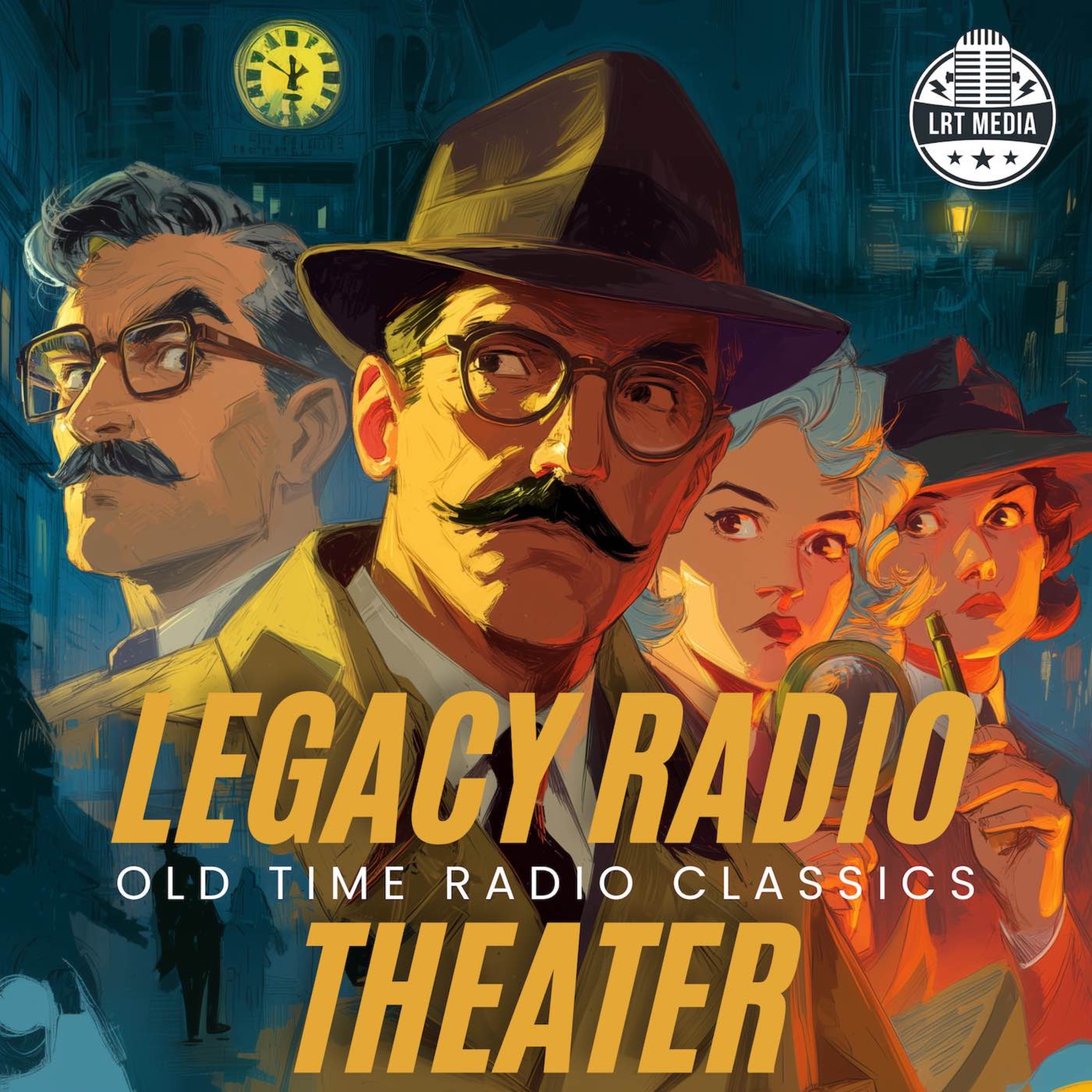
Legacy Radio Theater - Old Time Radio Classics
by Craig Hart
Legacy Radio Theater is your destination for the greatest stories ever broadcast. Relive the golden age of radio with thrilling mysteries, heartwarming dramas, hilarious comedies, and spine-tingling suspense from the 1930s, ’40s, and ‘50s. Each episode is curated from the original broadcasts to bring timeless entertainment to modern ears. Whether you’re a longtime fan or just discovering vintage audio drama, Legacy Radio Theater invites you to sit back, relax, and enjoy the magic of classic radio. Hosted on Acast. See acast.com/privacy for more information.
-
0
Mysterious Traveler - Death Is the Judge - 1947
The Mysterious Traveler (1943–1952) was one of radio’s most chilling and versatile anthology series. Hosted by the eerie, unnamed “Mysterious Traveler,” each episode invited listeners aboard a dark, late-night train bound for strange and unsettling destinations. With stories spanning crime, mystery, science fiction, and the supernatural, the show delivered unexpected twists and spine-tingling suspense.Written by the acclaimed team of Robert Arthur and David Kogan, The Mysterious Traveler became known for its haunting narration, imaginative plots, and shocking finales that kept audiences guessing until the very last minute. Whether it’s a tale of murder, time travel, or eerie coincidences, every journey with The Mysterious Traveler promises intrigue, danger, and the unexpected. Step aboard—if you dare. Hosted on Acast. See acast.com/privacy for more information.
-
-1
Suspense - Murder Goes for a Swim - 1943
Suspense, which aired on CBS Radio from 1942 to 1962, stands as perhaps the greatest achievement in radio drama and the undisputed master of the thriller genre during broadcasting's golden age. Created and produced by William Spier, who insisted on exceptional production values and superior scripts, Suspense earned its reputation as "radio's outstanding theatre of thrills" through meticulous attention to detail and an unwavering commitment to quality that attracted Hollywood's biggest stars to its microphones. The series featured an extraordinary roster of performers including Cary Grant, Orson Welles, Jimmy Stewart, Rita Hayworth, Vincent Price, Peter Lorre, Agnes Moorehead, and countless others who jumped at the chance to appear on the program. Spier's innovative production methods, including keeping actors deliberately under-rehearsed to maintain tension and uncertainty, resulted in performances that crackled with nervous energy and authenticity. The show's signature opening, with its distinctive musical theme and the introduction by "The Man in Black," immediately established an atmosphere of impending doom and psychological unease. Unlike other mystery series that relied on detective work or supernatural elements, Suspense specialized in psychological terror, exploring the dark corners of human nature and the breaking points of ordinary people caught in extraordinary circumstances.The series distinguished itself through its sophisticated storytelling and diverse source material, adapting works by master writers including John Dickson Carr, Cornell Woolrich, Dashiell Hammett, and Edgar Allan Poe, while also featuring original scripts by radio's finest writers. Episodes like "Sorry, Wrong Number" starring Agnes Moorehead became cultural touchstones, demonstrating radio's unique power to create intimate, claustrophobic terror through sound alone. Suspense excelled at stories of paranoia, guilt, and moral ambiguity, often featuring protagonists who were neither entirely innocent nor completely guilty, trapped in situations where their own actions or psychological weaknesses led to their downfall. The show's production team, including composer Bernard Herrmann (who later scored Alfred Hitchcock's films) and sound effects artists who created some of radio's most memorable audio landscapes, elevated each episode into a carefully crafted work of art. With nearly 950 episodes produced over its twenty-year run, Suspense proved remarkably consistent in quality while constantly evolving to reflect changing social concerns and storytelling techniques. The series not only defined the radio thriller genre but also influenced film noir, television mysteries, and modern psychological thrillers, establishing narrative and atmospheric techniques that continue to influence entertainment media today. When Suspense finally ended in September 1962, radio historians marked it as the end of the Golden Age of Radio, recognizing that no subsequent program could match its combination of star power, production excellence, and pure storytelling brilliance that made it the crown jewel of American broadcasting. Hosted on Acast. See acast.com/privacy for more information.
-
-2
Broadway's My Beat - The Dion Hartley Murder Case
Broadway's My Beat stands as one of radio's most atmospherically rich and literarily ambitious police dramas, airing on CBS from February 27, 1949, to August 1, 1954, and establishing itself as a unique entry in the crime genre through its poetic sensibility and vivid evocation of New York City's theater district. The series followed Detective Danny Clover of Manhattan's 16th Precinct as he patrolled "from Times Square to Columbus Circle—the gaudiest, the most violent, the lonesomest mile in the world," a description that became the show's signature and captured its essential character. Originally starring Anthony Ross during its brief New York production period, the series found its definitive voice when production moved to Hollywood in July 1949 under the direction of Elliott Lewis, with Larry Thor taking over the role of Clover and transforming the character into one of radio's most distinctive detective protagonists. Thor's Clover was a world-weary cop whose observations about his beat were delivered in a style that bordered on prose poetry, combining hard-boiled detective traditions with an almost literary sensibility that set the series apart from its contemporaries. The show's writers, Morton Fine and David Friedkin, created a stylized dialogue that captured the ethnic and socioeconomic diversity of Broadway while maintaining a consistent tone that was both gritty and romantically melancholic.The series distinguished itself through its unique narrative structure, with each episode titled after that week's murder victim, and its atmospheric recreation of Manhattan's aural landscape, requiring three sound effects technicians to create the complex urban environment that became as much a character as any of the human players. The supporting cast included Charles Calvert as Sergeant Gino Tartaglia and Jack Kruschen as Sergeant Muggavan, along with a rotating ensemble of West Coast radio veterans who brought the diverse population of Broadway to life. What set Broadway's My Beat apart was its almost obsessive attention to the mood and rhythm of the city, with episodes typically ending in the pre-dawn hours as Clover reflected philosophically about his beat, delivering monologues that combined crime-solving satisfaction with poetic observations about urban life, loneliness, and human nature. The show's musical score by Wilbur Hatch and Alexander Courage, particularly the opening theme based on "I'll Take Manhattan," reinforced the series' romantic vision of New York while the elaborate sound design created an immersive cityscape of car horns, elevated trains, and street noise that made listeners feel they were walking Broadway alongside Detective Clover. Though the series never achieved the widespread recognition of some contemporary police shows, Broadway's My Beat developed a devoted following and influenced later television crime dramas with its emphasis on character psychology and urban atmosphere. The show's combination of police procedural efficiency with literary ambition created a unique hybrid that proved radio's capacity for sophisticated storytelling, demonstrating how genre entertainment could be elevated through careful attention to language, atmosphere, and the poetry inherent in everyday urban experience. Hosted on Acast. See acast.com/privacy for more information.
-
-3
The Adventures of Philip Marlowe - The Persian Slippers - 1948
The Adventures of Philip Marlowe stands as radio's most faithful adaptation of Raymond Chandler's literary hard-boiled detective, airing in two distinct incarnations that captured different aspects of the character's complex persona while establishing the standard for sophisticated detective drama on the airwaves. The series began on NBC on June 17, 1947, under the title "The New Adventures of Philip Marlowe," starring Van Heflin as a summer replacement for The Bob Hope Show, with the debut episode adapting Chandler's classic short story "Red Wind." Though this initial run lasted only thirteen episodes through September 1947, it established the character's presence on radio and demonstrated the challenges of translating Chandler's distinctive literary voice to the audio medium. Van Heflin's portrayal was more serious and harder-edged, striving for fidelity to Chandler's original conception, though the author himself was reportedly unimpressed, describing the adaptation in a letter to Erle Stanley Gardner as "thoroughly flat." This NBC version, sponsored by Pepsodent and featuring only four surviving episodes today, represented an early attempt to bring literary detective fiction to radio but struggled to capture the intricate prose style and psychological depth that made Chandler's written work so compelling.The series found its definitive form when CBS revived it in 1948 as "The Adventures of Philip Marlowe," starring Gerald Mohr in a performance that would become the gold standard for radio interpretations of Chandler's detective. Under the masterful production of Norman Macdonnell, who would later create Gunsmoke, and with scripts by accomplished writers including Gene Levitt, Robert Mitchell, Mel Dinelli, and Kathleen Hite, the CBS version ran for 114 episodes from 1948 to 1950, with an additional summer run in 1951. Mohr's deep, world-weary voice proved perfect for Marlowe's cynical narration, and his delivery had such authority that listeners could forget the scripts weren't written by Chandler himself. The series differed significantly from other detective shows of the era by maintaining a genuinely hard-boiled atmosphere with few quips or comedic relief characters, focusing instead on the psychological complexity of crime and the moral ambiguity of Los Angeles in the post-war era. By 1949, the series had achieved the largest audience in radio, demonstrating that sophisticated detective drama could compete with more formulaic mystery shows. Though Chandler himself remained largely uninvolved with the series beyond collecting royalties, he expressed himself as "moderately pleased" with Mohr's portrayal, recognizing that the actor's distinctive voice brought genuine personality to the role. The series' success helped establish CBS as the premier network for quality crime drama and directly influenced the creation of other sophisticated detective shows, including "Yours Truly, Johnny Dollar," which initially played second fiddle to the popular Marlowe series. With its combination of atmospheric Los Angeles settings, morally complex characters, and Mohr's definitive performance, The Adventures of Philip Marlowe proved that radio could successfully adapt literary detective fiction while creating its own unique artistic achievement. Hosted on Acast. See acast.com/privacy for more information.
-
-4
Our Miss Brooks - The Model Teacher - 1948
Our Miss Brooks is one of radio's most groundbreaking and enduring situation comedies, premiering on CBS on July 19, 1948, and establishing a template for workplace comedy that would influence television sitcoms for decades to come. Starring Eve Arden as Constance "Connie" Brooks, a sardonic English teacher at fictional Madison High School, the series broke new ground by presenting a working woman as its central character—neither a scatterbrained housewife nor a romantic subplot, but a competent, self-sufficient professional who happened to be underpaid and underappreciated in her chosen career. Arden, who had built her film career playing wisecracking supporting characters, found in Miss Brooks the perfect vehicle for her sharp wit and impeccable timing, transforming what could have been a stereotypical spinster schoolmarm into a three-dimensional character who was both genuinely caring toward her students and refreshingly honest about the frustrations of her profession. The series was initially conceived for Shirley Booth, but CBS West Coast programming director Harry Ackerman realized Booth was too focused on the harsh realities of underpaid teaching to find humor in the role, while Lucille Ball was unavailable due to her commitment to "My Favorite Husband." Arden, encouraged by CBS chairman Bill Paley, auditioned with a rewritten script that transformed the character from a school board official's nemesis into the long-suffering employee of an incoming new principal, creating the antagonistic dynamic that would drive much of the series' comedy.The supporting cast created one of radio's most memorable ensemble comedies, with Gale Gordon's blustery, scheming Principal Osgood Conklin serving as the perfect foil to Arden's quick-witted teacher, while Jeff Chandler (later Robert Rockwell) played the obliviously shy biology teacher Philip Boynton, Miss Brooks' unrequited love interest whose romantic cluelessness provided endless comedic possibilities. Richard Crenna, in one of his earliest professional roles, played Walter Denton, the well-meaning but dim student who drove Miss Brooks to school each day, while Jane Morgan portrayed Mrs. Davis, the scatterbrained landlady whose non-sequiturs and misunderstandings added another layer of gentle absurdity to the proceedings. The series was remarkable for its realistic portrayal of teaching as an actual profession rather than a noble calling, with Miss Brooks frequently making jokes about her low salary, difficult working conditions, and the bureaucratic frustrations that real teachers faced daily. This authenticity resonated powerfully with educators across the country, earning Arden thousands of letters from teachers sharing their own experiences, job offers from actual school districts, and honors including membership in the National Education Association and a 1952 award from the Teachers College of Connecticut's Alumni Association "for humanizing the American teacher." The show's success was immediate and sustained, becoming a hit within eight months and earning Arden multiple awards as radio's best comedienne. When the series successfully transitioned to television in 1952 while continuing on radio until 1957, it proved that quality character-driven comedy could thrive in both media simultaneously, paving the way for the workplace sitcoms that would dominate television comedy and establishing Eve Arden as one of broadcasting's most beloved personalities. Hosted on Acast. See acast.com/privacy for more information.
-
-5
Mysterious Traveler - No One on the Line
The Mysterious Traveler (1943–1952) was one of radio’s most chilling and versatile anthology series. Hosted by the eerie, unnamed “Mysterious Traveler,” each episode invited listeners aboard a dark, late-night train bound for strange and unsettling destinations. With stories spanning crime, mystery, science fiction, and the supernatural, the show delivered unexpected twists and spine-tingling suspense.Written by the acclaimed team of Robert Arthur and David Kogan, The Mysterious Traveler became known for its haunting narration, imaginative plots, and shocking finales that kept audiences guessing until the very last minute. Whether it’s a tale of murder, time travel, or eerie coincidences, every journey with The Mysterious Traveler promises intrigue, danger, and the unexpected. Step aboard—if you dare. Hosted on Acast. See acast.com/privacy for more information.
-
-6
Jeff Regan - She's Lovely, She's Engaged, She Eats Soy Beans
Jeff Regan, Investigator, which aired on CBS Radio from 1948 to 1950, represented a crucial evolutionary step in Jack Webb's career between his hard-boiled waterfront detective characters and his legendary creation, Dragnet. Unlike his previous protagonists Pat Novak and Johnny Madero, who were tough guys taking whatever jobs they could get, Jeff Regan was a fully licensed private investigator working for Anthony J. Lyon's International Detective Bureau in Los Angeles. Webb's famous introduction—"I get ten a day and expenses...they call me the Lyon's Eye"—established both the character's modest circumstances and his complex relationship with his penny-pinching, opportunistic boss. This employee-detective dynamic created unique dramatic tension, as Regan often found himself thrust into dangerous situations by Lyon's poor judgment rather than choosing his own cases. The series featured sophisticated writing by mystery veterans like E. Jack Neuman and Jackson Gillis, and showcased Webb's movement toward the more restrained, realistic style that would later define Dragnet, moving away from the over-the-top similes and metaphors of his earlier hard-boiled characters.Webb left the series in December 1948 after CBS refused his request for a modest raise, using the time to develop what would become Dragnet. The show was revived in October 1949 with versatile voice actor Frank Graham taking over the title role and Frank Nelson (from The Jack Benny Program) as the new Lyon, creating a lighter, more comedic dynamic. Paul Dubov also substituted for several episodes during this period. The series came to a tragic end when Graham took his own life in September 1950, with the final episode airing the day after his death. Though confined to CBS's West Coast network and never achieving national distribution, Jeff Regan, Investigator stands as an important bridge between radio's stylized hard-boiled detective traditions and the more realistic police procedurals that would dominate the 1950s. The show's emphasis on the economic realities of detective work and its focus on working-class concerns helped establish the grounded approach to crime drama that would influence the medium for decades, making it a significant stepping stone in the evolution of both Jack Webb's career and radio detective drama as a whole. Hosted on Acast. See acast.com/privacy for more information.
-
-7
Box 13 - Death Is a Doll
Box 13 stands as one of radio's most innovative detective series, presenting a fresh approach to the mystery genre during its syndicated run from 1947 to the early 1950s. Created by film star Alan Ladd's own production company, Mayfair Productions, the series broke new ground by featuring a protagonist who actively sought out adventure rather than having cases thrust upon him by circumstance or profession. Ladd played Dan Holiday, a former newspaper reporter turned mystery novelist who placed a classified advertisement in the Star-Times newspaper reading: "Adventure wanted, will go anywhere, do anything – write Box 13, Star-Times." This premise allowed the series to explore a wide variety of scenarios, from psychological thrillers to criminal conspiracies, as Holiday responded to letters from desperate people, potential criminals, and occasionally the genuinely deranged. The show's supporting cast included Sylvia Picker as Holiday's scatterbrained secretary Suzy, who added comedic relief, and Edmund MacDonald as police Lieutenant Kling, Holiday's foil and reluctant ally. Unlike many detective series of the era that relied on formulaic murder mysteries, Box 13 offered stories that emphasized adventure and character development over corpses and crime scenes, appealing to sponsors who were becoming wary of shows centered around weekly murders.Since beginning his show business career in radio in 1936, when he was doing as many as twenty shows each week at KFWB Los Angeles, Ladd had maintained a presence on radio while building his film career, and Box 13 represented his return to the medium as both star and producer. The series featured scripts primarily written by Russell Hughes, who had previously hired Ladd as a radio actor in 1935 at a $19 weekly salary, sometimes in collaboration with Ladd himself. The production values were exceptional, with Vern Carstensen directing and announcing, Richard Sanville producing, and music by Rudy Schrager. The guest cast included many of radio's finest performers, including Betty Lou Gerson, Frank Lovejoy, Lurene Tuttle, Alan Reed, Luis Van Rooten, John Beal, and Raymond Burr. What set Box 13 apart was not only its unique premise but also its sophisticated writing and Ladd's compelling performance as a character who possessed both journalistic instincts and genuine heroic qualities. The series demonstrated that radio mystery could evolve beyond traditional detective formulas while maintaining the excitement and moral clarity that audiences demanded. Though limited to fifty-two episodes, Box 13 proved influential in showing how star power, quality production, and innovative storytelling could create memorable radio entertainment that stood apart from the increasingly formulaic detective shows of the late 1940s. Hosted on Acast. See acast.com/privacy for more information.
-
-8
Suspense - The Whole Town's Sleeping - 1955
Suspense, which aired on CBS Radio from 1942 to 1962, stands as perhaps the greatest achievement in radio drama and the undisputed master of the thriller genre during broadcasting's golden age. Created and produced by William Spier, who insisted on exceptional production values and superior scripts, Suspense earned its reputation as "radio's outstanding theatre of thrills" through meticulous attention to detail and an unwavering commitment to quality that attracted Hollywood's biggest stars to its microphones. The series featured an extraordinary roster of performers including Cary Grant, Orson Welles, Jimmy Stewart, Rita Hayworth, Vincent Price, Peter Lorre, Agnes Moorehead, and countless others who jumped at the chance to appear on the program. Spier's innovative production methods, including keeping actors deliberately under-rehearsed to maintain tension and uncertainty, resulted in performances that crackled with nervous energy and authenticity. The show's signature opening, with its distinctive musical theme and the introduction by "The Man in Black," immediately established an atmosphere of impending doom and psychological unease. Unlike other mystery series that relied on detective work or supernatural elements, Suspense specialized in psychological terror, exploring the dark corners of human nature and the breaking points of ordinary people caught in extraordinary circumstances.The series distinguished itself through its sophisticated storytelling and diverse source material, adapting works by master writers including John Dickson Carr, Cornell Woolrich, Dashiell Hammett, and Edgar Allan Poe, while also featuring original scripts by radio's finest writers. Episodes like "Sorry, Wrong Number" starring Agnes Moorehead became cultural touchstones, demonstrating radio's unique power to create intimate, claustrophobic terror through sound alone. Suspense excelled at stories of paranoia, guilt, and moral ambiguity, often featuring protagonists who were neither entirely innocent nor completely guilty, trapped in situations where their own actions or psychological weaknesses led to their downfall. The show's production team, including composer Bernard Herrmann (who later scored Alfred Hitchcock's films) and sound effects artists who created some of radio's most memorable audio landscapes, elevated each episode into a carefully crafted work of art. With nearly 950 episodes produced over its twenty-year run, Suspense proved remarkably consistent in quality while constantly evolving to reflect changing social concerns and storytelling techniques. The series not only defined the radio thriller genre but also influenced film noir, television mysteries, and modern psychological thrillers, establishing narrative and atmospheric techniques that continue to influence entertainment media today. When Suspense finally ended in September 1962, radio historians marked it as the end of the Golden Age of Radio, recognizing that no subsequent program could match its combination of star power, production excellence, and pure storytelling brilliance that made it the crown jewel of American broadcasting. Hosted on Acast. See acast.com/privacy for more information.
-
-9
Suspense - The Hitch-Hiker - 1942
Suspense, which aired on CBS Radio from 1942 to 1962, stands as perhaps the greatest achievement in radio drama and the undisputed master of the thriller genre during broadcasting's golden age. Created and produced by William Spier, who insisted on exceptional production values and superior scripts, Suspense earned its reputation as "radio's outstanding theatre of thrills" through meticulous attention to detail and an unwavering commitment to quality that attracted Hollywood's biggest stars to its microphones. The series featured an extraordinary roster of performers including Cary Grant, Orson Welles, Jimmy Stewart, Rita Hayworth, Vincent Price, Peter Lorre, Agnes Moorehead, and countless others who jumped at the chance to appear on the program. Spier's innovative production methods, including keeping actors deliberately under-rehearsed to maintain tension and uncertainty, resulted in performances that crackled with nervous energy and authenticity. The show's signature opening, with its distinctive musical theme and the introduction by "The Man in Black," immediately established an atmosphere of impending doom and psychological unease. Unlike other mystery series that relied on detective work or supernatural elements, Suspense specialized in psychological terror, exploring the dark corners of human nature and the breaking points of ordinary people caught in extraordinary circumstances.The series distinguished itself through its sophisticated storytelling and diverse source material, adapting works by master writers including John Dickson Carr, Cornell Woolrich, Dashiell Hammett, and Edgar Allan Poe, while also featuring original scripts by radio's finest writers. Episodes like "Sorry, Wrong Number" starring Agnes Moorehead became cultural touchstones, demonstrating radio's unique power to create intimate, claustrophobic terror through sound alone. Suspense excelled at stories of paranoia, guilt, and moral ambiguity, often featuring protagonists who were neither entirely innocent nor completely guilty, trapped in situations where their own actions or psychological weaknesses led to their downfall. The show's production team, including composer Bernard Herrmann (who later scored Alfred Hitchcock's films) and sound effects artists who created some of radio's most memorable audio landscapes, elevated each episode into a carefully crafted work of art. With nearly 950 episodes produced over its twenty-year run, Suspense proved remarkably consistent in quality while constantly evolving to reflect changing social concerns and storytelling techniques. The series not only defined the radio thriller genre but also influenced film noir, television mysteries, and modern psychological thrillers, establishing narrative and atmospheric techniques that continue to influence entertainment media today. When Suspense finally ended in September 1962, radio historians marked it as the end of the Golden Age of Radio, recognizing that no subsequent program could match its combination of star power, production excellence, and pure storytelling brilliance that made it the crown jewel of American broadcasting. Hosted on Acast. See acast.com/privacy for more information.
-
-10
Quiet Please - The Thing on the Fourble Board - 1948
Quiet, Please was a pioneering American radio drama series that aired on the Mutual Broadcasting System and ABC from June 8, 1947, to June 25, 1949. Created by writer-director Wyllis Cooper—the same mind behind the earlier suspense anthology Lights Out—the show offered a quieter, more introspective approach to horror and fantasy storytelling.Each episode featured Ernest Chappell as narrator and frequent protagonist, whose calm, conversational tone gave even the strangest stories an eerie sense of intimacy. Rather than relying on loud scares or sensationalism, Quiet, Please explored philosophical, psychological, and supernatural themes, often blurring the line between reality and imagination.Over its 106 episodes, the show delved into haunting tales of time travel, immortality, guilt, and cosmic terror. Its most famous episode, “The Thing on the Fourble Board” (August 9, 1948), remains a standout of radio horror—widely praised for its chilling atmosphere, subtle sound design, and unforgettable final reveal.Though Quiet, Please never achieved the mass popularity of programs like Suspense or The Shadow, it has since earned critical acclaim as one of the most literary and psychologically rich series of the Golden Age of Radio. Modern scholars and audio drama fans often hail it as a precursor to later narrative styles found in The Twilight Zone and Night Gallery. Hosted on Acast. See acast.com/privacy for more information.
-
-11
Suspense - On a Country Road - 1950
Suspense, which aired on CBS Radio from 1942 to 1962, stands as perhaps the greatest achievement in radio drama and the undisputed master of the thriller genre during broadcasting's golden age. Created and produced by William Spier, who insisted on exceptional production values and superior scripts, Suspense earned its reputation as "radio's outstanding theatre of thrills" through meticulous attention to detail and an unwavering commitment to quality that attracted Hollywood's biggest stars to its microphones. The series featured an extraordinary roster of performers including Cary Grant, Orson Welles, Jimmy Stewart, Rita Hayworth, Vincent Price, Peter Lorre, Agnes Moorehead, and countless others who jumped at the chance to appear on the program. Spier's innovative production methods, including keeping actors deliberately under-rehearsed to maintain tension and uncertainty, resulted in performances that crackled with nervous energy and authenticity. The show's signature opening, with its distinctive musical theme and the introduction by "The Man in Black," immediately established an atmosphere of impending doom and psychological unease. Unlike other mystery series that relied on detective work or supernatural elements, Suspense specialized in psychological terror, exploring the dark corners of human nature and the breaking points of ordinary people caught in extraordinary circumstances.The series distinguished itself through its sophisticated storytelling and diverse source material, adapting works by master writers including John Dickson Carr, Cornell Woolrich, Dashiell Hammett, and Edgar Allan Poe, while also featuring original scripts by radio's finest writers. Episodes like "Sorry, Wrong Number" starring Agnes Moorehead became cultural touchstones, demonstrating radio's unique power to create intimate, claustrophobic terror through sound alone. Suspense excelled at stories of paranoia, guilt, and moral ambiguity, often featuring protagonists who were neither entirely innocent nor completely guilty, trapped in situations where their own actions or psychological weaknesses led to their downfall. The show's production team, including composer Bernard Herrmann (who later scored Alfred Hitchcock's films) and sound effects artists who created some of radio's most memorable audio landscapes, elevated each episode into a carefully crafted work of art. With nearly 950 episodes produced over its twenty-year run, Suspense proved remarkably consistent in quality while constantly evolving to reflect changing social concerns and storytelling techniques. The series not only defined the radio thriller genre but also influenced film noir, television mysteries, and modern psychological thrillers, establishing narrative and atmospheric techniques that continue to influence entertainment media today. When Suspense finally ended in September 1962, radio historians marked it as the end of the Golden Age of Radio, recognizing that no subsequent program could match its combination of star power, production excellence, and pure storytelling brilliance that made it the crown jewel of American broadcasting. Hosted on Acast. See acast.com/privacy for more information.
-
-12
Suspense - The House in Cypress Canyon - 1946
Suspense, which aired on CBS Radio from 1942 to 1962, stands as perhaps the greatest achievement in radio drama and the undisputed master of the thriller genre during broadcasting's golden age. Created and produced by William Spier, who insisted on exceptional production values and superior scripts, Suspense earned its reputation as "radio's outstanding theatre of thrills" through meticulous attention to detail and an unwavering commitment to quality that attracted Hollywood's biggest stars to its microphones. The series featured an extraordinary roster of performers including Cary Grant, Orson Welles, Jimmy Stewart, Rita Hayworth, Vincent Price, Peter Lorre, Agnes Moorehead, and countless others who jumped at the chance to appear on the program. Spier's innovative production methods, including keeping actors deliberately under-rehearsed to maintain tension and uncertainty, resulted in performances that crackled with nervous energy and authenticity. The show's signature opening, with its distinctive musical theme and the introduction by "The Man in Black," immediately established an atmosphere of impending doom and psychological unease. Unlike other mystery series that relied on detective work or supernatural elements, Suspense specialized in psychological terror, exploring the dark corners of human nature and the breaking points of ordinary people caught in extraordinary circumstances.The series distinguished itself through its sophisticated storytelling and diverse source material, adapting works by master writers including John Dickson Carr, Cornell Woolrich, Dashiell Hammett, and Edgar Allan Poe, while also featuring original scripts by radio's finest writers. Episodes like "Sorry, Wrong Number" starring Agnes Moorehead became cultural touchstones, demonstrating radio's unique power to create intimate, claustrophobic terror through sound alone. Suspense excelled at stories of paranoia, guilt, and moral ambiguity, often featuring protagonists who were neither entirely innocent nor completely guilty, trapped in situations where their own actions or psychological weaknesses led to their downfall. The show's production team, including composer Bernard Herrmann (who later scored Alfred Hitchcock's films) and sound effects artists who created some of radio's most memorable audio landscapes, elevated each episode into a carefully crafted work of art. With nearly 950 episodes produced over its twenty-year run, Suspense proved remarkably consistent in quality while constantly evolving to reflect changing social concerns and storytelling techniques. The series not only defined the radio thriller genre but also influenced film noir, television mysteries, and modern psychological thrillers, establishing narrative and atmospheric techniques that continue to influence entertainment media today. When Suspense finally ended in September 1962, radio historians marked it as the end of the Golden Age of Radio, recognizing that no subsequent program could match its combination of star power, production excellence, and pure storytelling brilliance that made it the crown jewel of American broadcasting. Hosted on Acast. See acast.com/privacy for more information.
-
-13
Escape - Three Skeleton Key - 1950
Escape stands as radio's premier anthology series of high-adventure drama, airing on CBS from July 7, 1947, to September 25, 1954, and earning recognition as one of the medium's finest achievements in escapist entertainment. The series was conceived as radio's answer to exotic adventure fiction, offering listeners a weekly journey into extraordinary circumstances and life-or-death situations. Each episode began with the iconic introduction, delivered primarily by William Conrad and later Paul Frees: "Tired of the everyday grind? Ever dream of a life of romantic adventure? Want to get away from it all? We offer you... Escape!" This opening, set against Mussorgsky's "Night on Bald Mountain," perfectly captured the show's mission to transport audiences from mundane reality into worlds of danger, mystery, and excitement. Unlike many radio dramas that relied on recurring characters and familiar settings, Escape embraced an anthology format that allowed for maximum creative freedom, featuring stories set in exotic locations from the Amazon jungle to remote Pacific islands, from the African wilderness to the frozen Arctic.The series distinguished itself through its exceptional source material and production values, adapting works by renowned authors including Daphne du Maurier ("The Birds"), Carl Stephenson ("Leiningen Versus the Ants"), Ray Bradbury ("Mars Is Heaven"), Richard Connell ("The Most Dangerous Game"), and George R. Stewart (the program's only two-part episode, "Earth Abides"). These adaptations were enhanced by superior sound effects work that created convincing soundscapes for tropical storms, swarming insects, crashing waves, and other environmental hazards that became characters in their own right. The show featured more science fiction and supernatural elements than its sister program Suspense, often exploring themes of survival against overwhelming odds, man versus nature, and the psychological breaking points of ordinary people thrust into extraordinary circumstances. Music by composers including Wilbur Hatch and Leith Stevens provided atmospheric scoring that enhanced the exotic settings and mounting tension. Despite suffering from frequent schedule changes and lower production budgets due to the lack of a regular sponsor (Richfield Oil briefly sponsored the show in 1950), Escape maintained consistently high quality throughout its seven-year run. The series proved that radio could compete with films and literature in creating vivid, immersive adventures, establishing a template for escapist entertainment that influenced not only other radio programs but also later television adventure series. With over 230 episodes produced, most of which survive today, Escape remains a testament to radio's unique ability to stimulate the imagination and transport listeners to worlds limited only by the boundaries of human creativity. Hosted on Acast. See acast.com/privacy for more information.
-
-14
Box 13 - Damsel in Distress
Box 13 stands as one of radio's most innovative detective series, presenting a fresh approach to the mystery genre during its syndicated run from 1947 to the early 1950s. Created by film star Alan Ladd's own production company, Mayfair Productions, the series broke new ground by featuring a protagonist who actively sought out adventure rather than having cases thrust upon him by circumstance or profession. Ladd played Dan Holiday, a former newspaper reporter turned mystery novelist who placed a classified advertisement in the Star-Times newspaper reading: "Adventure wanted, will go anywhere, do anything – write Box 13, Star-Times." This premise allowed the series to explore a wide variety of scenarios, from psychological thrillers to criminal conspiracies, as Holiday responded to letters from desperate people, potential criminals, and occasionally the genuinely deranged. The show's supporting cast included Sylvia Picker as Holiday's scatterbrained secretary Suzy, who added comedic relief, and Edmund MacDonald as police Lieutenant Kling, Holiday's foil and reluctant ally. Unlike many detective series of the era that relied on formulaic murder mysteries, Box 13 offered stories that emphasized adventure and character development over corpses and crime scenes, appealing to sponsors who were becoming wary of shows centered around weekly murders.Since beginning his show business career in radio in 1936, when he was doing as many as twenty shows each week at KFWB Los Angeles, Ladd had maintained a presence on radio while building his film career, and Box 13 represented his return to the medium as both star and producer. The series featured scripts primarily written by Russell Hughes, who had previously hired Ladd as a radio actor in 1935 at a $19 weekly salary, sometimes in collaboration with Ladd himself. The production values were exceptional, with Vern Carstensen directing and announcing, Richard Sanville producing, and music by Rudy Schrager. The guest cast included many of radio's finest performers, including Betty Lou Gerson, Frank Lovejoy, Lurene Tuttle, Alan Reed, Luis Van Rooten, John Beal, and Raymond Burr. What set Box 13 apart was not only its unique premise but also its sophisticated writing and Ladd's compelling performance as a character who possessed both journalistic instincts and genuine heroic qualities. The series demonstrated that radio mystery could evolve beyond traditional detective formulas while maintaining the excitement and moral clarity that audiences demanded. Though limited to fifty-two episodes, Box 13 proved influential in showing how star power, quality production, and innovative storytelling could create memorable radio entertainment that stood apart from the increasingly formulaic detective shows of the late 1940s. Hosted on Acast. See acast.com/privacy for more information.
-
-15
Jeff Regan - Oil for the Lamps of Burbank
Jeff Regan, Investigator, which aired on CBS Radio from 1948 to 1950, represented a crucial evolutionary step in Jack Webb's career between his hard-boiled waterfront detective characters and his legendary creation, Dragnet. Unlike his previous protagonists Pat Novak and Johnny Madero, who were tough guys taking whatever jobs they could get, Jeff Regan was a fully licensed private investigator working for Anthony J. Lyon's International Detective Bureau in Los Angeles. Webb's famous introduction—"I get ten a day and expenses...they call me the Lyon's Eye"—established both the character's modest circumstances and his complex relationship with his penny-pinching, opportunistic boss. This employee-detective dynamic created unique dramatic tension, as Regan often found himself thrust into dangerous situations by Lyon's poor judgment rather than choosing his own cases. The series featured sophisticated writing by mystery veterans like E. Jack Neuman and Jackson Gillis, and showcased Webb's movement toward the more restrained, realistic style that would later define Dragnet, moving away from the over-the-top similes and metaphors of his earlier hard-boiled characters.Webb left the series in December 1948 after CBS refused his request for a modest raise, using the time to develop what would become Dragnet. The show was revived in October 1949 with versatile voice actor Frank Graham taking over the title role and Frank Nelson (from The Jack Benny Program) as the new Lyon, creating a lighter, more comedic dynamic. Paul Dubov also substituted for several episodes during this period. The series came to a tragic end when Graham took his own life in September 1950, with the final episode airing the day after his death. Though confined to CBS's West Coast network and never achieving national distribution, Jeff Regan, Investigator stands as an important bridge between radio's stylized hard-boiled detective traditions and the more realistic police procedurals that would dominate the 1950s. The show's emphasis on the economic realities of detective work and its focus on working-class concerns helped establish the grounded approach to crime drama that would influence the medium for decades, making it a significant stepping stone in the evolution of both Jack Webb's career and radio detective drama as a whole. Hosted on Acast. See acast.com/privacy for more information.
-
-16
Suspense - The Diary of Sophronia Winters - 1943
Suspense, which aired on CBS Radio from 1942 to 1962, stands as perhaps the greatest achievement in radio drama and the undisputed master of the thriller genre during broadcasting's golden age. Created and produced by William Spier, who insisted on exceptional production values and superior scripts, Suspense earned its reputation as "radio's outstanding theatre of thrills" through meticulous attention to detail and an unwavering commitment to quality that attracted Hollywood's biggest stars to its microphones. The series featured an extraordinary roster of performers including Cary Grant, Orson Welles, Jimmy Stewart, Rita Hayworth, Vincent Price, Peter Lorre, Agnes Moorehead, and countless others who jumped at the chance to appear on the program. Spier's innovative production methods, including keeping actors deliberately under-rehearsed to maintain tension and uncertainty, resulted in performances that crackled with nervous energy and authenticity. The show's signature opening, with its distinctive musical theme and the introduction by "The Man in Black," immediately established an atmosphere of impending doom and psychological unease. Unlike other mystery series that relied on detective work or supernatural elements, Suspense specialized in psychological terror, exploring the dark corners of human nature and the breaking points of ordinary people caught in extraordinary circumstances.The series distinguished itself through its sophisticated storytelling and diverse source material, adapting works by master writers including John Dickson Carr, Cornell Woolrich, Dashiell Hammett, and Edgar Allan Poe, while also featuring original scripts by radio's finest writers. Episodes like "Sorry, Wrong Number" starring Agnes Moorehead became cultural touchstones, demonstrating radio's unique power to create intimate, claustrophobic terror through sound alone. Suspense excelled at stories of paranoia, guilt, and moral ambiguity, often featuring protagonists who were neither entirely innocent nor completely guilty, trapped in situations where their own actions or psychological weaknesses led to their downfall. The show's production team, including composer Bernard Herrmann (who later scored Alfred Hitchcock's films) and sound effects artists who created some of radio's most memorable audio landscapes, elevated each episode into a carefully crafted work of art. With nearly 950 episodes produced over its twenty-year run, Suspense proved remarkably consistent in quality while constantly evolving to reflect changing social concerns and storytelling techniques. The series not only defined the radio thriller genre but also influenced film noir, television mysteries, and modern psychological thrillers, establishing narrative and atmospheric techniques that continue to influence entertainment media today. When Suspense finally ended in September 1962, radio historians marked it as the end of the Golden Age of Radio, recognizing that no subsequent program could match its combination of star power, production excellence, and pure storytelling brilliance that made it the crown jewel of American broadcasting. Hosted on Acast. See acast.com/privacy for more information.
-
-17
Escape - The Fall of the House of Usher - 1947
Escape stands as radio's premier anthology series of high-adventure drama, airing on CBS from July 7, 1947, to September 25, 1954, and earning recognition as one of the medium's finest achievements in escapist entertainment. The series was conceived as radio's answer to exotic adventure fiction, offering listeners a weekly journey into extraordinary circumstances and life-or-death situations. Each episode began with the iconic introduction, delivered primarily by William Conrad and later Paul Frees: "Tired of the everyday grind? Ever dream of a life of romantic adventure? Want to get away from it all? We offer you... Escape!" This opening, set against Mussorgsky's "Night on Bald Mountain," perfectly captured the show's mission to transport audiences from mundane reality into worlds of danger, mystery, and excitement. Unlike many radio dramas that relied on recurring characters and familiar settings, Escape embraced an anthology format that allowed for maximum creative freedom, featuring stories set in exotic locations from the Amazon jungle to remote Pacific islands, from the African wilderness to the frozen Arctic.The series distinguished itself through its exceptional source material and production values, adapting works by renowned authors including Daphne du Maurier ("The Birds"), Carl Stephenson ("Leiningen Versus the Ants"), Ray Bradbury ("Mars Is Heaven"), Richard Connell ("The Most Dangerous Game"), and George R. Stewart (the program's only two-part episode, "Earth Abides"). These adaptations were enhanced by superior sound effects work that created convincing soundscapes for tropical storms, swarming insects, crashing waves, and other environmental hazards that became characters in their own right. The show featured more science fiction and supernatural elements than its sister program Suspense, often exploring themes of survival against overwhelming odds, man versus nature, and the psychological breaking points of ordinary people thrust into extraordinary circumstances. Music by composers including Wilbur Hatch and Leith Stevens provided atmospheric scoring that enhanced the exotic settings and mounting tension. Despite suffering from frequent schedule changes and lower production budgets due to the lack of a regular sponsor (Richfield Oil briefly sponsored the show in 1950), Escape maintained consistently high quality throughout its seven-year run. The series proved that radio could compete with films and literature in creating vivid, immersive adventures, establishing a template for escapist entertainment that influenced not only other radio programs but also later television adventure series. With over 230 episodes produced, most of which survive today, Escape remains a testament to radio's unique ability to stimulate the imagination and transport listeners to worlds limited only by the boundaries of human creativity. Hosted on Acast. See acast.com/privacy for more information.
-
-18
Our Miss Brooks - Taxidermist - 1949
Our Miss Brooks stands as one of radio's most groundbreaking and enduring situation comedies, premiering on CBS on July 19, 1948, and establishing a template for workplace comedy that would influence television sitcoms for decades to come. Starring Eve Arden as Constance "Connie" Brooks, a sardonic English teacher at fictional Madison High School, the series broke new ground by presenting a working woman as its central character—neither a scatterbrained housewife nor a romantic subplot, but a competent, self-sufficient professional who happened to be underpaid and underappreciated in her chosen career. Arden, who had built her film career playing wisecracking supporting characters, found in Miss Brooks the perfect vehicle for her sharp wit and impeccable timing, transforming what could have been a stereotypical spinster schoolmarm into a three-dimensional character who was both genuinely caring toward her students and refreshingly honest about the frustrations of her profession. The series was initially conceived for Shirley Booth, but CBS West Coast programming director Harry Ackerman realized Booth was too focused on the harsh realities of underpaid teaching to find humor in the role, while Lucille Ball was unavailable due to her commitment to "My Favorite Husband." Arden, encouraged by CBS chairman Bill Paley, auditioned with a rewritten script that transformed the character from a school board official's nemesis into the long-suffering employee of an incoming new principal, creating the antagonistic dynamic that would drive much of the series' comedy.The supporting cast created one of radio's most memorable ensemble comedies, with Gale Gordon's blustery, scheming Principal Osgood Conklin serving as the perfect foil to Arden's quick-witted teacher, while Jeff Chandler (later Robert Rockwell) played the obliviously shy biology teacher Philip Boynton, Miss Brooks' unrequited love interest whose romantic cluelessness provided endless comedic possibilities. Richard Crenna, in one of his earliest professional roles, played Walter Denton, the well-meaning but dim student who drove Miss Brooks to school each day, while Jane Morgan portrayed Mrs. Davis, the scatterbrained landlady whose non-sequiturs and misunderstandings added another layer of gentle absurdity to the proceedings. The series was remarkable for its realistic portrayal of teaching as an actual profession rather than a noble calling, with Miss Brooks frequently making jokes about her low salary, difficult working conditions, and the bureaucratic frustrations that real teachers faced daily. This authenticity resonated powerfully with educators across the country, earning Arden thousands of letters from teachers sharing their own experiences, job offers from actual school districts, and honors including membership in the National Education Association and a 1952 award from the Teachers College of Connecticut's Alumni Association "for humanizing the American teacher." The show's success was immediate and sustained, becoming a hit within eight months and earning Arden multiple awards as radio's best comedienne. When the series successfully transitioned to television in 1952 while continuing on radio until 1957, it proved that quality character-driven comedy could thrive in both media simultaneously, paving the way for the workplace sitcoms that would dominate television comedy and establishing Eve Arden as one of broadcasting's most beloved personalities. Hosted on Acast. See acast.com/privacy for more information.
-
-19
Barrie Craig - Murder Island - 1952
Barrie Craig, Confidential Investigator represents a fascinating evolution in radio detective drama, airing on NBC from October 3, 1951, to June 30, 1955, during the waning years of the Golden Age of Radio when the hard-boiled detective genre was beginning to feel formulaic and stale. Starring William Gargan, who brought unique authenticity to the role having actually worked as a private detective before entering show business, the series distinguished itself by presenting a more laid-back, approachable alternative to the tough-guy archetypes that dominated the airwaves. Unlike Sam Spade, Philip Marlowe, or Mike Hammer, Barrie Craig was a confidential investigator who operated from a Madison Avenue office with the motto "your man when you can't go to the cops—confidentiality a specialty," emphasizing discretion and professionalism over violence and wise-cracking cynicism. Gargan's real-world experience as a credit investigator, collection agent, and private detective—working for "$10 a day and expenses" until he was fired for losing track of a diamond salesman he was supposed to protect—lent credibility to his portrayal of a working investigator who solved cases efficiently without the melodramatic flourishes that had become clichéd in the genre. The supporting cast included Ralph Bell as Lieutenant Travis Rogers, Craig's police contact, and Parker Fennelly as Jake, the elevator operator, creating a ensemble that emphasized Craig's integration into the legitimate business and law enforcement communities rather than his alienation from them.The series stands as unique in several respects, being one of the few detective radio series to have separate versions broadcast from both coasts, with NBC producing it in New York from 1951 to 1954 before moving production to Hollywood for its final year. Even the character's name evolved over time, beginning as "Barry Crane" before becoming "Barrie Craig," reflecting the show's ongoing refinement and adaptation. What set the series apart was its conscious departure from the increasingly tired conventions of hard-boiled detective fiction, presenting Craig as someone who generally got along with the police, was in the business because it was his job rather than a calling, and approached cases with professional competence rather than existential angst. This approach proved refreshing during a period when audiences were becoming weary of the violence and cynicism that had defined the detective genre since the end of World War II. Though the series attracted only occasional sponsors and was usually sustained by the network, it maintained consistent quality throughout its four-year run, with Gargan's tongue-in-cheek performances and the show's willingness to occasionally parody the very conventions it had moved away from. Barrie Craig, Confidential Investigator thus serves as both a late flowering of radio detective drama and a commentary on the evolution of the genre, demonstrating that there was still room for innovation and freshness even as radio mystery shows faced increasing competition from television and changing audience tastes. Hosted on Acast. See acast.com/privacy for more information.
-
-20
Broadway's My Beat - The David Blaine Murder Case
Broadway's My Beat stands as one of radio's most atmospherically rich and literarily ambitious police dramas, airing on CBS from February 27, 1949, to August 1, 1954, and establishing itself as a unique entry in the crime genre through its poetic sensibility and vivid evocation of New York City's theater district. The series followed Detective Danny Clover of Manhattan's 16th Precinct as he patrolled "from Times Square to Columbus Circle—the gaudiest, the most violent, the lonesomest mile in the world," a description that became the show's signature and captured its essential character. Originally starring Anthony Ross during its brief New York production period, the series found its definitive voice when production moved to Hollywood in July 1949 under the direction of Elliott Lewis, with Larry Thor taking over the role of Clover and transforming the character into one of radio's most distinctive detective protagonists. Thor's Clover was a world-weary cop whose observations about his beat were delivered in a style that bordered on prose poetry, combining hard-boiled detective traditions with an almost literary sensibility that set the series apart from its contemporaries. The show's writers, Morton Fine and David Friedkin, created a stylized dialogue that captured the ethnic and socioeconomic diversity of Broadway while maintaining a consistent tone that was both gritty and romantically melancholic.The series distinguished itself through its unique narrative structure, with each episode titled after that week's murder victim, and its atmospheric recreation of Manhattan's aural landscape, requiring three sound effects technicians to create the complex urban environment that became as much a character as any of the human players. The supporting cast included Charles Calvert as Sergeant Gino Tartaglia and Jack Kruschen as Sergeant Muggavan, along with a rotating ensemble of West Coast radio veterans who brought the diverse population of Broadway to life. What set Broadway's My Beat apart was its almost obsessive attention to the mood and rhythm of the city, with episodes typically ending in the pre-dawn hours as Clover reflected philosophically about his beat, delivering monologues that combined crime-solving satisfaction with poetic observations about urban life, loneliness, and human nature. The show's musical score by Wilbur Hatch and Alexander Courage, particularly the opening theme based on "I'll Take Manhattan," reinforced the series' romantic vision of New York while the elaborate sound design created an immersive cityscape of car horns, elevated trains, and street noise that made listeners feel they were walking Broadway alongside Detective Clover. Though the series never achieved the widespread recognition of some contemporary police shows, Broadway's My Beat developed a devoted following and influenced later television crime dramas with its emphasis on character psychology and urban atmosphere. The show's combination of police procedural efficiency with literary ambition created a unique hybrid that proved radio's capacity for sophisticated storytelling, demonstrating how genre entertainment could be elevated through careful attention to language, atmosphere, and the poetry inherent in everyday urban experience. Hosted on Acast. See acast.com/privacy for more information.
-
-21
Jeff Regan - No Sad Clowns for Me
Jeff Regan, Investigator, which aired on CBS Radio from 1948 to 1950, represented a crucial evolutionary step in Jack Webb's career between his hard-boiled waterfront detective characters and his legendary creation, Dragnet. Unlike his previous protagonists Pat Novak and Johnny Madero, who were tough guys taking whatever jobs they could get, Jeff Regan was a fully licensed private investigator working for Anthony J. Lyon's International Detective Bureau in Los Angeles. Webb's famous introduction—"I get ten a day and expenses...they call me the Lyon's Eye"—established both the character's modest circumstances and his complex relationship with his penny-pinching, opportunistic boss. This employee-detective dynamic created unique dramatic tension, as Regan often found himself thrust into dangerous situations by Lyon's poor judgment rather than choosing his own cases. The series featured sophisticated writing by mystery veterans like E. Jack Neuman and Jackson Gillis, and showcased Webb's movement toward the more restrained, realistic style that would later define Dragnet, moving away from the over-the-top similes and metaphors of his earlier hard-boiled characters.Webb left the series in December 1948 after CBS refused his request for a modest raise, using the time to develop what would become Dragnet. The show was revived in October 1949 with versatile voice actor Frank Graham taking over the title role and Frank Nelson (from The Jack Benny Program) as the new Lyon, creating a lighter, more comedic dynamic. Paul Dubov also substituted for several episodes during this period. The series came to a tragic end when Graham took his own life in September 1950, with the final episode airing the day after his death. Though confined to CBS's West Coast network and never achieving national distribution, Jeff Regan, Investigator stands as an important bridge between radio's stylized hard-boiled detective traditions and the more realistic police procedurals that would dominate the 1950s. The show's emphasis on the economic realities of detective work and its focus on working-class concerns helped establish the grounded approach to crime drama that would influence the medium for decades, making it a significant stepping stone in the evolution of both Jack Webb's career and radio detective drama as a whole. Hosted on Acast. See acast.com/privacy for more information.
-
-22
Murder at Midnight - Trigger Man
Creeping out of the shadows of the 1940s radio landscape, Murder at Midnight delivered spine-chilling tales of suspense, mystery, and the supernatural. Premiering in 1946, the series aired over Mutual and later in syndication, offering listeners a weekly invitation to “listen to the sounds of darkness.”Each half-hour episode opened with that unforgettable introduction—“Murder… at Midnight!”—followed by a haunting clock chime and eerie organ music that set the tone for what was to come. The show featured standalone stories ranging from psychological thrillers to ghostly horror, with plots often built around murder, guilt, and the macabre consequences of human greed.Produced in New York and directed by Anton M. Leder, Murder at Midnight drew on a rotating roster of talented writers and radio veterans, including Robert Newman and Louis Vittes. While it only ran for about 50 episodes, its vivid sound design, atmospheric storytelling, and over-the-top performances earned it a place among the classic horror anthologies of the Golden Age of Radio—alongside programs like Suspense and Inner Sanctum Mysteries. Hosted on Acast. See acast.com/privacy for more information.
-
-23
Jack Benny - Goodbye 1938 Hello 1939
The Jack Benny Program debuted in 1932 and quickly became one of the most beloved and influential comedy shows of the era. Known for its impeccable timing, recurring gags, and finely tuned character interplay, the show helped define what radio comedy could be.At its heart was Benny himself—the vain, penny-pinching, self-deprecating “fall guy” surrounded by a cast of unforgettable characters: Mary Livingstone with her sharp wit, Don Wilson the jovial announcer, bandleader Phil Harris, wisecracking Eddie “Rochester” Anderson, and the perpetually off-key Dennis Day. Each week, listeners tuned in not just for jokes, but to spend time with familiar voices who felt like old friends.Over its 23-year radio run (1932–1955), The Jack Benny Program evolved from a vaudeville-style variety show into a character-driven sitcom that set the standard for modern situation comedy. Benny’s masterful use of silence, running gags (like his age being “39 forever”), and self-parody influenced generations of comedians—from Johnny Carson to Mel Brooks. Hosted on Acast. See acast.com/privacy for more information.
-
-24
Box 13 - Book of Poems
Box 13 stands as one of radio's most innovative detective series, presenting a fresh approach to the mystery genre during its syndicated run from 1947 to the early 1950s. Created by film star Alan Ladd's own production company, Mayfair Productions, the series broke new ground by featuring a protagonist who actively sought out adventure rather than having cases thrust upon him by circumstance or profession. Ladd played Dan Holiday, a former newspaper reporter turned mystery novelist who placed a classified advertisement in the Star-Times newspaper reading: "Adventure wanted, will go anywhere, do anything – write Box 13, Star-Times." This premise allowed the series to explore a wide variety of scenarios, from psychological thrillers to criminal conspiracies, as Holiday responded to letters from desperate people, potential criminals, and occasionally the genuinely deranged. The show's supporting cast included Sylvia Picker as Holiday's scatterbrained secretary Suzy, who added comedic relief, and Edmund MacDonald as police Lieutenant Kling, Holiday's foil and reluctant ally. Unlike many detective series of the era that relied on formulaic murder mysteries, Box 13 offered stories that emphasized adventure and character development over corpses and crime scenes, appealing to sponsors who were becoming wary of shows centered around weekly murders.Since beginning his show business career in radio in 1936, when he was doing as many as twenty shows each week at KFWB Los Angeles, Ladd had maintained a presence on radio while building his film career, and Box 13 represented his return to the medium as both star and producer. The series featured scripts primarily written by Russell Hughes, who had previously hired Ladd as a radio actor in 1935 at a $19 weekly salary, sometimes in collaboration with Ladd himself. The production values were exceptional, with Vern Carstensen directing and announcing, Richard Sanville producing, and music by Rudy Schrager. The guest cast included many of radio's finest performers, including Betty Lou Gerson, Frank Lovejoy, Lurene Tuttle, Alan Reed, Luis Van Rooten, John Beal, and Raymond Burr. What set Box 13 apart was not only its unique premise but also its sophisticated writing and Ladd's compelling performance as a character who possessed both journalistic instincts and genuine heroic qualities. The series demonstrated that radio mystery could evolve beyond traditional detective formulas while maintaining the excitement and moral clarity that audiences demanded. Though limited to fifty-two episodes, Box 13 proved influential in showing how star power, quality production, and innovative storytelling could create memorable radio entertainment that stood apart from the increasingly formulaic detective shows of the late 1940s. Hosted on Acast. See acast.com/privacy for more information.
-
-25
Escape - Operation Fleur De Lys - 1947
Escape stands as radio's premier anthology series of high-adventure drama, airing on CBS from July 7, 1947, to September 25, 1954, and earning recognition as one of the medium's finest achievements in escapist entertainment. The series was conceived as radio's answer to exotic adventure fiction, offering listeners a weekly journey into extraordinary circumstances and life-or-death situations. Each episode began with the iconic introduction, delivered primarily by William Conrad and later Paul Frees: "Tired of the everyday grind? Ever dream of a life of romantic adventure? Want to get away from it all? We offer you... Escape!" This opening, set against Mussorgsky's "Night on Bald Mountain," perfectly captured the show's mission to transport audiences from mundane reality into worlds of danger, mystery, and excitement. Unlike many radio dramas that relied on recurring characters and familiar settings, Escape embraced an anthology format that allowed for maximum creative freedom, featuring stories set in exotic locations from the Amazon jungle to remote Pacific islands, from the African wilderness to the frozen Arctic.The series distinguished itself through its exceptional source material and production values, adapting works by renowned authors including Daphne du Maurier ("The Birds"), Carl Stephenson ("Leiningen Versus the Ants"), Ray Bradbury ("Mars Is Heaven"), Richard Connell ("The Most Dangerous Game"), and George R. Stewart (the program's only two-part episode, "Earth Abides"). These adaptations were enhanced by superior sound effects work that created convincing soundscapes for tropical storms, swarming insects, crashing waves, and other environmental hazards that became characters in their own right. The show featured more science fiction and supernatural elements than its sister program Suspense, often exploring themes of survival against overwhelming odds, man versus nature, and the psychological breaking points of ordinary people thrust into extraordinary circumstances. Music by composers including Wilbur Hatch and Leith Stevens provided atmospheric scoring that enhanced the exotic settings and mounting tension. Despite suffering from frequent schedule changes and lower production budgets due to the lack of a regular sponsor (Richfield Oil briefly sponsored the show in 1950), Escape maintained consistently high quality throughout its seven-year run. The series proved that radio could compete with films and literature in creating vivid, immersive adventures, establishing a template for escapist entertainment that influenced not only other radio programs but also later television adventure series. With over 230 episodes produced, most of which survive today, Escape remains a testament to radio's unique ability to stimulate the imagination and transport listeners to worlds limited only by the boundaries of human creativity. Hosted on Acast. See acast.com/privacy for more information.
-
-26
Suspense - Fire Burn and Cauldron Bubble
Suspense, which aired on CBS Radio from 1942 to 1962, stands as perhaps the greatest achievement in radio drama and the undisputed master of the thriller genre during broadcasting's golden age. Created and produced by William Spier, who insisted on exceptional production values and superior scripts, Suspense earned its reputation as "radio's outstanding theatre of thrills" through meticulous attention to detail and an unwavering commitment to quality that attracted Hollywood's biggest stars to its microphones. The series featured an extraordinary roster of performers including Cary Grant, Orson Welles, Jimmy Stewart, Rita Hayworth, Vincent Price, Peter Lorre, Agnes Moorehead, and countless others who jumped at the chance to appear on the program. Spier's innovative production methods, including keeping actors deliberately under-rehearsed to maintain tension and uncertainty, resulted in performances that crackled with nervous energy and authenticity. The show's signature opening, with its distinctive musical theme and the introduction by "The Man in Black," immediately established an atmosphere of impending doom and psychological unease. Unlike other mystery series that relied on detective work or supernatural elements, Suspense specialized in psychological terror, exploring the dark corners of human nature and the breaking points of ordinary people caught in extraordinary circumstances.The series distinguished itself through its sophisticated storytelling and diverse source material, adapting works by master writers including John Dickson Carr, Cornell Woolrich, Dashiell Hammett, and Edgar Allan Poe, while also featuring original scripts by radio's finest writers. Episodes like "Sorry, Wrong Number" starring Agnes Moorehead became cultural touchstones, demonstrating radio's unique power to create intimate, claustrophobic terror through sound alone. Suspense excelled at stories of paranoia, guilt, and moral ambiguity, often featuring protagonists who were neither entirely innocent nor completely guilty, trapped in situations where their own actions or psychological weaknesses led to their downfall. The show's production team, including composer Bernard Herrmann (who later scored Alfred Hitchcock's films) and sound effects artists who created some of radio's most memorable audio landscapes, elevated each episode into a carefully crafted work of art. With nearly 950 episodes produced over its twenty-year run, Suspense proved remarkably consistent in quality while constantly evolving to reflect changing social concerns and storytelling techniques. The series not only defined the radio thriller genre but also influenced film noir, television mysteries, and modern psychological thrillers, establishing narrative and atmospheric techniques that continue to influence entertainment media today. When Suspense finally ended in September 1962, radio historians marked it as the end of the Golden Age of Radio, recognizing that no subsequent program could match its combination of star power, production excellence, and pure storytelling brilliance that made it the crown jewel of American broadcasting. Hosted on Acast. See acast.com/privacy for more information.
-
-27
The Adventures of Philip Marlowe - The Hard Way Out - 1948
The Adventures of Philip Marlowe stands as radio's most faithful adaptation of Raymond Chandler's literary hard-boiled detective, airing in two distinct incarnations that captured different aspects of the character's complex persona while establishing the standard for sophisticated detective drama on the airwaves. The series began on NBC on June 17, 1947, under the title "The New Adventures of Philip Marlowe," starring Van Heflin as a summer replacement for The Bob Hope Show, with the debut episode adapting Chandler's classic short story "Red Wind." Though this initial run lasted only thirteen episodes through September 1947, it established the character's presence on radio and demonstrated the challenges of translating Chandler's distinctive literary voice to the audio medium. Van Heflin's portrayal was more serious and harder-edged, striving for fidelity to Chandler's original conception, though the author himself was reportedly unimpressed, describing the adaptation in a letter to Erle Stanley Gardner as "thoroughly flat." This NBC version, sponsored by Pepsodent and featuring only four surviving episodes today, represented an early attempt to bring literary detective fiction to radio but struggled to capture the intricate prose style and psychological depth that made Chandler's written work so compelling.The series found its definitive form when CBS revived it in 1948 as "The Adventures of Philip Marlowe," starring Gerald Mohr in a performance that would become the gold standard for radio interpretations of Chandler's detective. Under the masterful production of Norman Macdonnell, who would later create Gunsmoke, and with scripts by accomplished writers including Gene Levitt, Robert Mitchell, Mel Dinelli, and Kathleen Hite, the CBS version ran for 114 episodes from 1948 to 1950, with an additional summer run in 1951. Mohr's deep, world-weary voice proved perfect for Marlowe's cynical narration, and his delivery had such authority that listeners could forget the scripts weren't written by Chandler himself. The series differed significantly from other detective shows of the era by maintaining a genuinely hard-boiled atmosphere with few quips or comedic relief characters, focusing instead on the psychological complexity of crime and the moral ambiguity of Los Angeles in the post-war era. By 1949, the series had achieved the largest audience in radio, demonstrating that sophisticated detective drama could compete with more formulaic mystery shows. Though Chandler himself remained largely uninvolved with the series beyond collecting royalties, he expressed himself as "moderately pleased" with Mohr's portrayal, recognizing that the actor's distinctive voice brought genuine personality to the role. The series' success helped establish CBS as the premier network for quality crime drama and directly influenced the creation of other sophisticated detective shows, including "Yours Truly, Johnny Dollar," which initially played second fiddle to the popular Marlowe series. With its combination of atmospheric Los Angeles settings, morally complex characters, and Mohr's definitive performance, The Adventures of Philip Marlowe proved that radio could successfully adapt literary detective fiction while creating its own unique artistic achievement. Hosted on Acast. See acast.com/privacy for more information.
-
-28
Barrie Craig - Death of a Private Eye - 1952
Barrie Craig, Confidential Investigator represents a fascinating evolution in radio detective drama, airing on NBC from October 3, 1951, to June 30, 1955, during the waning years of the Golden Age of Radio when the hard-boiled detective genre was beginning to feel formulaic and stale. Starring William Gargan, who brought unique authenticity to the role having actually worked as a private detective before entering show business, the series distinguished itself by presenting a more laid-back, approachable alternative to the tough-guy archetypes that dominated the airwaves. Unlike Sam Spade, Philip Marlowe, or Mike Hammer, Barrie Craig was a confidential investigator who operated from a Madison Avenue office with the motto "your man when you can't go to the cops—confidentiality a specialty," emphasizing discretion and professionalism over violence and wise-cracking cynicism. Gargan's real-world experience as a credit investigator, collection agent, and private detective—working for "$10 a day and expenses" until he was fired for losing track of a diamond salesman he was supposed to protect—lent credibility to his portrayal of a working investigator who solved cases efficiently without the melodramatic flourishes that had become clichéd in the genre. The supporting cast included Ralph Bell as Lieutenant Travis Rogers, Craig's police contact, and Parker Fennelly as Jake, the elevator operator, creating a ensemble that emphasized Craig's integration into the legitimate business and law enforcement communities rather than his alienation from them.The series stands as unique in several respects, being one of the few detective radio series to have separate versions broadcast from both coasts, with NBC producing it in New York from 1951 to 1954 before moving production to Hollywood for its final year. Even the character's name evolved over time, beginning as "Barry Crane" before becoming "Barrie Craig," reflecting the show's ongoing refinement and adaptation. What set the series apart was its conscious departure from the increasingly tired conventions of hard-boiled detective fiction, presenting Craig as someone who generally got along with the police, was in the business because it was his job rather than a calling, and approached cases with professional competence rather than existential angst. This approach proved refreshing during a period when audiences were becoming weary of the violence and cynicism that had defined the detective genre since the end of World War II. Though the series attracted only occasional sponsors and was usually sustained by the network, it maintained consistent quality throughout its four-year run, with Gargan's tongue-in-cheek performances and the show's willingness to occasionally parody the very conventions it had moved away from. Barrie Craig, Confidential Investigator thus serves as both a late flowering of radio detective drama and a commentary on the evolution of the genre, demonstrating that there was still room for innovation and freshness even as radio mystery shows faced increasing competition from television and changing audience tastes. Hosted on Acast. See acast.com/privacy for more information.
-
-29
Jack Benny - Suspense - 1952
The Jack Benny Program, a cornerstone of American radio comedy, aired from May 2, 1932, to June 22, 1958, evolving from vaudeville roots into a cultural phenomenon. Known by various names based on its sponsors—Canada Dry, Chevrolet, General Tire, Jell-O, Grape Nuts, and Lucky Strike—the show blended sharp wit, memorable characters, and music, captivating audiences for over two decades.Jack Benny’s radio debut came during an interview with Ed Sullivan, where he quipped, “This is Jack Benny talking. There will be a slight pause while you say ‘Who cares?’” This charm secured his first contract with Canada Dry. The initial show, The Canada Dry Program (May–October 1932), featured Benny as host, with George Hicks announcing, and music by George Olsen and Ethel Shutta. Benny’s wife, Sadye Marks, played the sarcastic yet warm Mary Livingstone. The program briefly moved to CBS (October 1932–January 1933) with Ted Weems’ orchestra, then returned to NBC under various sponsors.From 1933 to 1942, sponsors like Chevrolet, General Tire, and Jell-O shaped the show’s identity. The Jell-O Program (1934–1942) solidified its format, moving from NBC’s Blue Network to the Red Network in 1936. The core cast included Benny, Mary Livingstone, announcer Don Wilson (added in 1934, often teased for his weight), and bandleader Phil Harris (from 1936), a brash, wisecracking musician who called Benny “Jackson.” Eddie “Rochester” Anderson joined in 1937 as Benny’s valet, bringing sharp humor and commentary on his meager pay. Dennis Day, the perpetually youthful, dim-witted singer, completed the ensemble in 1939.The show’s format matured under The Grape Nuts Program (1942–1944) and The Lucky Strike Program (1944–1948), both on NBC, before moving to CBS from 1949 to 1955. Repeat broadcasts, The Best of Benny, aired from 1956 to 1958. The cast remained largely consistent, though Bob Crosby replaced Phil Harris in 1952, and Larry Stevens briefly subbed for Dennis Day during his military service.Benny’s persona—a vain, penny-pinching, argumentative everyman—was crafted with writer Harry Conn and sustained across decades. The ensemble’s chemistry drove the comedy: Mary’s sarcasm, Rochester’s wit, Phil’s jabs, and Dennis’s naivety. A notable running gag was Benny’s fictional feud with Fred Allen, which peaked with the 1946 “I Can’t Stand Jack Benny Because” contest, boosting ratings with its clever publicity.The program’s humor, rooted in character-driven sketches and minimal music by the late 1930s, resonated widely. Benny’s violin-playing gags, his “age 39” shtick, and the iconic Maxwell car sound effects became cultural touchstones. Produced in Hollywood from 1935, the show’s wholesome, family-friendly comedy made it a national treasure. Its influence extended to television, where Benny’s format thrived until 1965, cementing his legacy as a comedy pioneer. Hosted on Acast. See acast.com/privacy for more information.
-
-30
Escape - Snake Doctor - 1948
Escape stands as radio's premier anthology series of high-adventure drama, airing on CBS from July 7, 1947, to September 25, 1954, and earning recognition as one of the medium's finest achievements in escapist entertainment. The series was conceived as radio's answer to exotic adventure fiction, offering listeners a weekly journey into extraordinary circumstances and life-or-death situations. Each episode began with the iconic introduction, delivered primarily by William Conrad and later Paul Frees: "Tired of the everyday grind? Ever dream of a life of romantic adventure? Want to get away from it all? We offer you... Escape!" This opening, set against Mussorgsky's "Night on Bald Mountain," perfectly captured the show's mission to transport audiences from mundane reality into worlds of danger, mystery, and excitement. Unlike many radio dramas that relied on recurring characters and familiar settings, Escape embraced an anthology format that allowed for maximum creative freedom, featuring stories set in exotic locations from the Amazon jungle to remote Pacific islands, from the African wilderness to the frozen Arctic.The series distinguished itself through its exceptional source material and production values, adapting works by renowned authors including Daphne du Maurier ("The Birds"), Carl Stephenson ("Leiningen Versus the Ants"), Ray Bradbury ("Mars Is Heaven"), Richard Connell ("The Most Dangerous Game"), and George R. Stewart (the program's only two-part episode, "Earth Abides"). These adaptations were enhanced by superior sound effects work that created convincing soundscapes for tropical storms, swarming insects, crashing waves, and other environmental hazards that became characters in their own right. The show featured more science fiction and supernatural elements than its sister program Suspense, often exploring themes of survival against overwhelming odds, man versus nature, and the psychological breaking points of ordinary people thrust into extraordinary circumstances. Music by composers including Wilbur Hatch and Leith Stevens provided atmospheric scoring that enhanced the exotic settings and mounting tension. Despite suffering from frequent schedule changes and lower production budgets due to the lack of a regular sponsor (Richfield Oil briefly sponsored the show in 1950), Escape maintained consistently high quality throughout its seven-year run. The series proved that radio could compete with films and literature in creating vivid, immersive adventures, establishing a template for escapist entertainment that influenced not only other radio programs but also later television adventure series. With over 230 episodes produced, most of which survive today, Escape remains a testament to radio's unique ability to stimulate the imagination and transport listeners to worlds limited only by the boundaries of human creativity. Hosted on Acast. See acast.com/privacy for more information.
-
-31
Phil Harris-Alice Faye - First Show for Rexall - 1948
Premiering in 1946, The Phil Harris–Alice Faye Show quickly became one of radio’s most popular comedy programs, blending sharp wit, lively music, and the real-life charm of its stars. Phil Harris, already well known as Jack Benny’s wisecracking bandleader, and Alice Faye, a Hollywood leading lady and singer, turned their off-microphone marriage into one of radio’s best-loved partnerships.Originally sponsored by Fitch Shampoo and later Rexall Drugs, the series ran until 1954 and carved out its own identity with a unique mix of domestic comedy, Hollywood satire, and swing-inspired musical numbers. Fans delighted in Phil’s blustery but lovable personality, Alice’s warmth and quick comebacks, and a memorable supporting cast that included Elliott Lewis as Frankie Remley and Walter Tetley as the wisecracking grocery boy Julius.Though sometimes overshadowed by giants like The Jack Benny Program or Fibber McGee and Molly, the Harris–Faye show endures as a prime example of postwar radio comedy, capturing both the glamour of Hollywood and the humor of everyday family life. Today, it offers a nostalgic window into the golden age of American entertainment. Hosted on Acast. See acast.com/privacy for more information.
-
-32
Suspense - The Dead Sleep Lightly
Suspense, which aired on CBS Radio from 1942 to 1962, stands as perhaps the greatest achievement in radio drama and the undisputed master of the thriller genre during broadcasting's golden age. Created and produced by William Spier, who insisted on exceptional production values and superior scripts, Suspense earned its reputation as "radio's outstanding theatre of thrills" through meticulous attention to detail and an unwavering commitment to quality that attracted Hollywood's biggest stars to its microphones. The series featured an extraordinary roster of performers including Cary Grant, Orson Welles, Jimmy Stewart, Rita Hayworth, Vincent Price, Peter Lorre, Agnes Moorehead, and countless others who jumped at the chance to appear on the program. Spier's innovative production methods, including keeping actors deliberately under-rehearsed to maintain tension and uncertainty, resulted in performances that crackled with nervous energy and authenticity. The show's signature opening, with its distinctive musical theme and the introduction by "The Man in Black," immediately established an atmosphere of impending doom and psychological unease. Unlike other mystery series that relied on detective work or supernatural elements, Suspense specialized in psychological terror, exploring the dark corners of human nature and the breaking points of ordinary people caught in extraordinary circumstances.The series distinguished itself through its sophisticated storytelling and diverse source material, adapting works by master writers including John Dickson Carr, Cornell Woolrich, Dashiell Hammett, and Edgar Allan Poe, while also featuring original scripts by radio's finest writers. Episodes like "Sorry, Wrong Number" starring Agnes Moorehead became cultural touchstones, demonstrating radio's unique power to create intimate, claustrophobic terror through sound alone. Suspense excelled at stories of paranoia, guilt, and moral ambiguity, often featuring protagonists who were neither entirely innocent nor completely guilty, trapped in situations where their own actions or psychological weaknesses led to their downfall. The show's production team, including composer Bernard Herrmann (who later scored Alfred Hitchcock's films) and sound effects artists who created some of radio's most memorable audio landscapes, elevated each episode into a carefully crafted work of art. With nearly 950 episodes produced over its twenty-year run, Suspense proved remarkably consistent in quality while constantly evolving to reflect changing social concerns and storytelling techniques. The series not only defined the radio thriller genre but also influenced film noir, television mysteries, and modern psychological thrillers, establishing narrative and atmospheric techniques that continue to influence entertainment media today. When Suspense finally ended in September 1962, radio historians marked it as the end of the Golden Age of Radio, recognizing that no subsequent program could match its combination of star power, production excellence, and pure storytelling brilliance that made it the crown jewel of American broadcasting. Hosted on Acast. See acast.com/privacy for more information.
-
-33
Barrie Craig - Death and the Purple Cow - 1951
Barrie Craig, Confidential Investigator represents a fascinating evolution in radio detective drama, airing on NBC from October 3, 1951, to June 30, 1955, during the waning years of the Golden Age of Radio when the hard-boiled detective genre was beginning to feel formulaic and stale. Starring William Gargan, who brought unique authenticity to the role having actually worked as a private detective before entering show business, the series distinguished itself by presenting a more laid-back, approachable alternative to the tough-guy archetypes that dominated the airwaves. Unlike Sam Spade, Philip Marlowe, or Mike Hammer, Barrie Craig was a confidential investigator who operated from a Madison Avenue office with the motto "your man when you can't go to the cops—confidentiality a specialty," emphasizing discretion and professionalism over violence and wise-cracking cynicism. Gargan's real-world experience as a credit investigator, collection agent, and private detective—working for "$10 a day and expenses" until he was fired for losing track of a diamond salesman he was supposed to protect—lent credibility to his portrayal of a working investigator who solved cases efficiently without the melodramatic flourishes that had become clichéd in the genre. The supporting cast included Ralph Bell as Lieutenant Travis Rogers, Craig's police contact, and Parker Fennelly as Jake, the elevator operator, creating a ensemble that emphasized Craig's integration into the legitimate business and law enforcement communities rather than his alienation from them.The series stands as unique in several respects, being one of the few detective radio series to have separate versions broadcast from both coasts, with NBC producing it in New York from 1951 to 1954 before moving production to Hollywood for its final year. Even the character's name evolved over time, beginning as "Barry Crane" before becoming "Barrie Craig," reflecting the show's ongoing refinement and adaptation. What set the series apart was its conscious departure from the increasingly tired conventions of hard-boiled detective fiction, presenting Craig as someone who generally got along with the police, was in the business because it was his job rather than a calling, and approached cases with professional competence rather than existential angst. This approach proved refreshing during a period when audiences were becoming weary of the violence and cynicism that had defined the detective genre since the end of World War II. Though the series attracted only occasional sponsors and was usually sustained by the network, it maintained consistent quality throughout its four-year run, with Gargan's tongue-in-cheek performances and the show's willingness to occasionally parody the very conventions it had moved away from. Barrie Craig, Confidential Investigator thus serves as both a late flowering of radio detective drama and a commentary on the evolution of the genre, demonstrating that there was still room for innovation and freshness even as radio mystery shows faced increasing competition from television and changing audience tastes. Hosted on Acast. See acast.com/privacy for more information.
-
-34
Escape - The Fourth Man - 1947
Escape stands as radio's premier anthology series of high-adventure drama, airing on CBS from July 7, 1947, to September 25, 1954, and earning recognition as one of the medium's finest achievements in escapist entertainment. The series was conceived as radio's answer to exotic adventure fiction, offering listeners a weekly journey into extraordinary circumstances and life-or-death situations. Each episode began with the iconic introduction, delivered primarily by William Conrad and later Paul Frees: "Tired of the everyday grind? Ever dream of a life of romantic adventure? Want to get away from it all? We offer you... Escape!" This opening, set against Mussorgsky's "Night on Bald Mountain," perfectly captured the show's mission to transport audiences from mundane reality into worlds of danger, mystery, and excitement. Unlike many radio dramas that relied on recurring characters and familiar settings, Escape embraced an anthology format that allowed for maximum creative freedom, featuring stories set in exotic locations from the Amazon jungle to remote Pacific islands, from the African wilderness to the frozen Arctic.The series distinguished itself through its exceptional source material and production values, adapting works by renowned authors including Daphne du Maurier ("The Birds"), Carl Stephenson ("Leiningen Versus the Ants"), Ray Bradbury ("Mars Is Heaven"), Richard Connell ("The Most Dangerous Game"), and George R. Stewart (the program's only two-part episode, "Earth Abides"). These adaptations were enhanced by superior sound effects work that created convincing soundscapes for tropical storms, swarming insects, crashing waves, and other environmental hazards that became characters in their own right. The show featured more science fiction and supernatural elements than its sister program Suspense, often exploring themes of survival against overwhelming odds, man versus nature, and the psychological breaking points of ordinary people thrust into extraordinary circumstances. Music by composers including Wilbur Hatch and Leith Stevens provided atmospheric scoring that enhanced the exotic settings and mounting tension. Despite suffering from frequent schedule changes and lower production budgets due to the lack of a regular sponsor (Richfield Oil briefly sponsored the show in 1950), Escape maintained consistently high quality throughout its seven-year run. The series proved that radio could compete with films and literature in creating vivid, immersive adventures, establishing a template for escapist entertainment that influenced not only other radio programs but also later television adventure series. With over 230 episodes produced, most of which survive today, Escape remains a testament to radio's unique ability to stimulate the imagination and transport listeners to worlds limited only by the boundaries of human creativity. Hosted on Acast. See acast.com/privacy for more information.
-
-35
The Adventures of Philip Marlowe - The Black Halo - 1949
The Adventures of Philip Marlowe stands as radio's most faithful adaptation of Raymond Chandler's literary hard-boiled detective, airing in two distinct incarnations that captured different aspects of the character's complex persona while establishing the standard for sophisticated detective drama on the airwaves. The series began on NBC on June 17, 1947, under the title "The New Adventures of Philip Marlowe," starring Van Heflin as a summer replacement for The Bob Hope Show, with the debut episode adapting Chandler's classic short story "Red Wind." Though this initial run lasted only thirteen episodes through September 1947, it established the character's presence on radio and demonstrated the challenges of translating Chandler's distinctive literary voice to the audio medium. Van Heflin's portrayal was more serious and harder-edged, striving for fidelity to Chandler's original conception, though the author himself was reportedly unimpressed, describing the adaptation in a letter to Erle Stanley Gardner as "thoroughly flat." This NBC version, sponsored by Pepsodent and featuring only four surviving episodes today, represented an early attempt to bring literary detective fiction to radio but struggled to capture the intricate prose style and psychological depth that made Chandler's written work so compelling.The series found its definitive form when CBS revived it in 1948 as "The Adventures of Philip Marlowe," starring Gerald Mohr in a performance that would become the gold standard for radio interpretations of Chandler's detective. Under the masterful production of Norman Macdonnell, who would later create Gunsmoke, and with scripts by accomplished writers including Gene Levitt, Robert Mitchell, Mel Dinelli, and Kathleen Hite, the CBS version ran for 114 episodes from 1948 to 1950, with an additional summer run in 1951. Mohr's deep, world-weary voice proved perfect for Marlowe's cynical narration, and his delivery had such authority that listeners could forget the scripts weren't written by Chandler himself. The series differed significantly from other detective shows of the era by maintaining a genuinely hard-boiled atmosphere with few quips or comedic relief characters, focusing instead on the psychological complexity of crime and the moral ambiguity of Los Angeles in the post-war era. By 1949, the series had achieved the largest audience in radio, demonstrating that sophisticated detective drama could compete with more formulaic mystery shows. Though Chandler himself remained largely uninvolved with the series beyond collecting royalties, he expressed himself as "moderately pleased" with Mohr's portrayal, recognizing that the actor's distinctive voice brought genuine personality to the role. The series' success helped establish CBS as the premier network for quality crime drama and directly influenced the creation of other sophisticated detective shows, including "Yours Truly, Johnny Dollar," which initially played second fiddle to the popular Marlowe series. With its combination of atmospheric Los Angeles settings, morally complex characters, and Mohr's definitive performance, The Adventures of Philip Marlowe proved that radio could successfully adapt literary detective fiction while creating its own unique artistic achievement. Hosted on Acast. See acast.com/privacy for more information.
-
-36
Our Miss Brooks - Weighing Machine - 1948
Our Miss Brooks stands as one of radio's most groundbreaking and enduring situation comedies, premiering on CBS on July 19, 1948, and establishing a template for workplace comedy that would influence television sitcoms for decades to come. Starring Eve Arden as Constance "Connie" Brooks, a sardonic English teacher at fictional Madison High School, the series broke new ground by presenting a working woman as its central character—neither a scatterbrained housewife nor a romantic subplot, but a competent, self-sufficient professional who happened to be underpaid and underappreciated in her chosen career. Arden, who had built her film career playing wisecracking supporting characters, found in Miss Brooks the perfect vehicle for her sharp wit and impeccable timing, transforming what could have been a stereotypical spinster schoolmarm into a three-dimensional character who was both genuinely caring toward her students and refreshingly honest about the frustrations of her profession. The series was initially conceived for Shirley Booth, but CBS West Coast programming director Harry Ackerman realized Booth was too focused on the harsh realities of underpaid teaching to find humor in the role, while Lucille Ball was unavailable due to her commitment to "My Favorite Husband." Arden, encouraged by CBS chairman Bill Paley, auditioned with a rewritten script that transformed the character from a school board official's nemesis into the long-suffering employee of an incoming new principal, creating the antagonistic dynamic that would drive much of the series' comedy.The supporting cast created one of radio's most memorable ensemble comedies, with Gale Gordon's blustery, scheming Principal Osgood Conklin serving as the perfect foil to Arden's quick-witted teacher, while Jeff Chandler (later Robert Rockwell) played the obliviously shy biology teacher Philip Boynton, Miss Brooks' unrequited love interest whose romantic cluelessness provided endless comedic possibilities. Richard Crenna, in one of his earliest professional roles, played Walter Denton, the well-meaning but dim student who drove Miss Brooks to school each day, while Jane Morgan portrayed Mrs. Davis, the scatterbrained landlady whose non-sequiturs and misunderstandings added another layer of gentle absurdity to the proceedings. The series was remarkable for its realistic portrayal of teaching as an actual profession rather than a noble calling, with Miss Brooks frequently making jokes about her low salary, difficult working conditions, and the bureaucratic frustrations that real teachers faced daily. This authenticity resonated powerfully with educators across the country, earning Arden thousands of letters from teachers sharing their own experiences, job offers from actual school districts, and honors including membership in the National Education Association and a 1952 award from the Teachers College of Connecticut's Alumni Association "for humanizing the American teacher." The show's success was immediate and sustained, becoming a hit within eight months and earning Arden multiple awards as radio's best comedienne. When the series successfully transitioned to television in 1952 while continuing on radio until 1957, it proved that quality character-driven comedy could thrive in both media simultaneously, paving the way for the workplace sitcoms that would dominate television comedy and establishing Eve Arden as one of broadcasting's most beloved personalities. Hosted on Acast. See acast.com/privacy for more information.
-
-37
Suspense - The Customers Like Murder
Suspense, which aired on CBS Radio from 1942 to 1962, stands as perhaps the greatest achievement in radio drama and the undisputed master of the thriller genre during broadcasting's golden age. Created and produced by William Spier, who insisted on exceptional production values and superior scripts, Suspense earned its reputation as "radio's outstanding theatre of thrills" through meticulous attention to detail and an unwavering commitment to quality that attracted Hollywood's biggest stars to its microphones. The series featured an extraordinary roster of performers including Cary Grant, Orson Welles, Jimmy Stewart, Rita Hayworth, Vincent Price, Peter Lorre, Agnes Moorehead, and countless others who jumped at the chance to appear on the program. Spier's innovative production methods, including keeping actors deliberately under-rehearsed to maintain tension and uncertainty, resulted in performances that crackled with nervous energy and authenticity. The show's signature opening, with its distinctive musical theme and the introduction by "The Man in Black," immediately established an atmosphere of impending doom and psychological unease. Unlike other mystery series that relied on detective work or supernatural elements, Suspense specialized in psychological terror, exploring the dark corners of human nature and the breaking points of ordinary people caught in extraordinary circumstances.The series distinguished itself through its sophisticated storytelling and diverse source material, adapting works by master writers including John Dickson Carr, Cornell Woolrich, Dashiell Hammett, and Edgar Allan Poe, while also featuring original scripts by radio's finest writers. Episodes like "Sorry, Wrong Number" starring Agnes Moorehead became cultural touchstones, demonstrating radio's unique power to create intimate, claustrophobic terror through sound alone. Suspense excelled at stories of paranoia, guilt, and moral ambiguity, often featuring protagonists who were neither entirely innocent nor completely guilty, trapped in situations where their own actions or psychological weaknesses led to their downfall. The show's production team, including composer Bernard Herrmann (who later scored Alfred Hitchcock's films) and sound effects artists who created some of radio's most memorable audio landscapes, elevated each episode into a carefully crafted work of art. With nearly 950 episodes produced over its twenty-year run, Suspense proved remarkably consistent in quality while constantly evolving to reflect changing social concerns and storytelling techniques. The series not only defined the radio thriller genre but also influenced film noir, television mysteries, and modern psychological thrillers, establishing narrative and atmospheric techniques that continue to influence entertainment media today. When Suspense finally ended in September 1962, radio historians marked it as the end of the Golden Age of Radio, recognizing that no subsequent program could match its combination of star power, production excellence, and pure storytelling brilliance that made it the crown jewel of American broadcasting. Hosted on Acast. See acast.com/privacy for more information.
-
-38
Broadway's My Beat - The Cora Lee Murder Case
Broadway's My Beat stands as one of radio's most atmospherically rich and literarily ambitious police dramas, airing on CBS from February 27, 1949, to August 1, 1954, and establishing itself as a unique entry in the crime genre through its poetic sensibility and vivid evocation of New York City's theater district. The series followed Detective Danny Clover of Manhattan's 16th Precinct as he patrolled "from Times Square to Columbus Circle—the gaudiest, the most violent, the lonesomest mile in the world," a description that became the show's signature and captured its essential character. Originally starring Anthony Ross during its brief New York production period, the series found its definitive voice when production moved to Hollywood in July 1949 under the direction of Elliott Lewis, with Larry Thor taking over the role of Clover and transforming the character into one of radio's most distinctive detective protagonists. Thor's Clover was a world-weary cop whose observations about his beat were delivered in a style that bordered on prose poetry, combining hard-boiled detective traditions with an almost literary sensibility that set the series apart from its contemporaries. The show's writers, Morton Fine and David Friedkin, created a stylized dialogue that captured the ethnic and socioeconomic diversity of Broadway while maintaining a consistent tone that was both gritty and romantically melancholic.The series distinguished itself through its unique narrative structure, with each episode titled after that week's murder victim, and its atmospheric recreation of Manhattan's aural landscape, requiring three sound effects technicians to create the complex urban environment that became as much a character as any of the human players. The supporting cast included Charles Calvert as Sergeant Gino Tartaglia and Jack Kruschen as Sergeant Muggavan, along with a rotating ensemble of West Coast radio veterans who brought the diverse population of Broadway to life. What set Broadway's My Beat apart was its almost obsessive attention to the mood and rhythm of the city, with episodes typically ending in the pre-dawn hours as Clover reflected philosophically about his beat, delivering monologues that combined crime-solving satisfaction with poetic observations about urban life, loneliness, and human nature. The show's musical score by Wilbur Hatch and Alexander Courage, particularly the opening theme based on "I'll Take Manhattan," reinforced the series' romantic vision of New York while the elaborate sound design created an immersive cityscape of car horns, elevated trains, and street noise that made listeners feel they were walking Broadway alongside Detective Clover. Though the series never achieved the widespread recognition of some contemporary police shows, Broadway's My Beat developed a devoted following and influenced later television crime dramas with its emphasis on character psychology and urban atmosphere. The show's combination of police procedural efficiency with literary ambition created a unique hybrid that proved radio's capacity for sophisticated storytelling, demonstrating how genre entertainment could be elevated through careful attention to language, atmosphere, and the poetry inherent in everyday urban experience. Hosted on Acast. See acast.com/privacy for more information.
-
-39
The Whistler - The Man Who Waited
The Whistler stands as one of American radio's most distinctive and enduring mystery series, running for thirteen years from May 16, 1942, to September 22, 1955, on CBS Radio. Unlike other detective shows of the era that featured recurring protagonists, The Whistler was an anthology series that presented self-contained stories of crime, guilt, and inevitable retribution. The show's most memorable element was its omniscient narrator, known simply as "The Whistler," who opened each episode with the haunting sound of footsteps and his signature whistling theme, composed by Wilbur Hatch and performed by Dorothy Roberts. The Whistler's distinctive voice—provided primarily by Bill Forman, with others including Gale Gordon, Joseph Kearns, and Marvin Miller taking turns—delivered the famous introduction: "I am the Whistler, and I know many things, for I walk by night. I know many strange tales, many secrets hidden in the hearts of men and women who have stepped into the shadows." This atmospheric opening immediately established the show's noir sensibility and supernatural undertones, positioning the narrator as an all-seeing, morally neutral observer of human folly and criminal behavior.The series was distinguished by its sophisticated storytelling structure and its consistent focus on ironic justice. Most episodes followed a formula where criminals' plans were undone not by detective work or police investigation, but by overlooked details, their own psychological weaknesses, or cruel twists of fate. The Whistler himself served as a Greek chorus, commenting on the action with sardonic wit and moral authority, often taunting criminals from his omniscient perspective. The show's writers crafted stories that were both suspenseful and morally instructive, demonstrating that crime inevitably carried the seeds of its own punishment. This approach reflected the post-war American audience's desire for moral certainty in an uncertain world, while the anthology format allowed for greater creative freedom than series with recurring characters. The Whistler became so popular that it spawned a successful film series and influenced countless other anthology programs, establishing a template for atmospheric crime drama that emphasized psychological tension over action. With its combination of supernatural elements, film noir aesthetics, and morally satisfying conclusions, The Whistler created a unique niche in radio drama that has rarely been equaled, making it one of the medium's most memorable and influential contributions to the mystery genre. Hosted on Acast. See acast.com/privacy for more information.
-
-40
Barrie Craig - Ghost of a Chance - 1951
Barrie Craig, Confidential Investigator represents a fascinating evolution in radio detective drama, airing on NBC from October 3, 1951, to June 30, 1955, during the waning years of the Golden Age of Radio when the hard-boiled detective genre was beginning to feel formulaic and stale. Starring William Gargan, who brought unique authenticity to the role having actually worked as a private detective before entering show business, the series distinguished itself by presenting a more laid-back, approachable alternative to the tough-guy archetypes that dominated the airwaves. Unlike Sam Spade, Philip Marlowe, or Mike Hammer, Barrie Craig was a confidential investigator who operated from a Madison Avenue office with the motto "your man when you can't go to the cops—confidentiality a specialty," emphasizing discretion and professionalism over violence and wise-cracking cynicism. Gargan's real-world experience as a credit investigator, collection agent, and private detective—working for "$10 a day and expenses" until he was fired for losing track of a diamond salesman he was supposed to protect—lent credibility to his portrayal of a working investigator who solved cases efficiently without the melodramatic flourishes that had become clichéd in the genre. The supporting cast included Ralph Bell as Lieutenant Travis Rogers, Craig's police contact, and Parker Fennelly as Jake, the elevator operator, creating a ensemble that emphasized Craig's integration into the legitimate business and law enforcement communities rather than his alienation from them.The series stands as unique in several respects, being one of the few detective radio series to have separate versions broadcast from both coasts, with NBC producing it in New York from 1951 to 1954 before moving production to Hollywood for its final year. Even the character's name evolved over time, beginning as "Barry Crane" before becoming "Barrie Craig," reflecting the show's ongoing refinement and adaptation. What set the series apart was its conscious departure from the increasingly tired conventions of hard-boiled detective fiction, presenting Craig as someone who generally got along with the police, was in the business because it was his job rather than a calling, and approached cases with professional competence rather than existential angst. This approach proved refreshing during a period when audiences were becoming weary of the violence and cynicism that had defined the detective genre since the end of World War II. Though the series attracted only occasional sponsors and was usually sustained by the network, it maintained consistent quality throughout its four-year run, with Gargan's tongue-in-cheek performances and the show's willingness to occasionally parody the very conventions it had moved away from. Barrie Craig, Confidential Investigator thus serves as both a late flowering of radio detective drama and a commentary on the evolution of the genre, demonstrating that there was still room for innovation and freshness even as radio mystery shows faced increasing competition from television and changing audience tastes. Hosted on Acast. See acast.com/privacy for more information.
-
-41
Jeff Regan - It All Comes Back to Me Now
Jeff Regan, Investigator, which aired on CBS Radio from 1948 to 1950, represented a crucial evolutionary step in Jack Webb's career between his hard-boiled waterfront detective characters and his legendary creation, Dragnet. Unlike his previous protagonists Pat Novak and Johnny Madero, who were tough guys taking whatever jobs they could get, Jeff Regan was a fully licensed private investigator working for Anthony J. Lyon's International Detective Bureau in Los Angeles. Webb's famous introduction—"I get ten a day and expenses...they call me the Lyon's Eye"—established both the character's modest circumstances and his complex relationship with his penny-pinching, opportunistic boss. This employee-detective dynamic created unique dramatic tension, as Regan often found himself thrust into dangerous situations by Lyon's poor judgment rather than choosing his own cases. The series featured sophisticated writing by mystery veterans like E. Jack Neuman and Jackson Gillis, and showcased Webb's movement toward the more restrained, realistic style that would later define Dragnet, moving away from the over-the-top similes and metaphors of his earlier hard-boiled characters.Webb left the series in December 1948 after CBS refused his request for a modest raise, using the time to develop what would become Dragnet. The show was revived in October 1949 with versatile voice actor Frank Graham taking over the title role and Frank Nelson (from The Jack Benny Program) as the new Lyon, creating a lighter, more comedic dynamic. Paul Dubov also substituted for several episodes during this period. The series came to a tragic end when Graham took his own life in September 1950, with the final episode airing the day after his death. Though confined to CBS's West Coast network and never achieving national distribution, Jeff Regan, Investigator stands as an important bridge between radio's stylized hard-boiled detective traditions and the more realistic police procedurals that would dominate the 1950s. The show's emphasis on the economic realities of detective work and its focus on working-class concerns helped establish the grounded approach to crime drama that would influence the medium for decades, making it a significant stepping stone in the evolution of both Jack Webb's career and radio detective drama as a whole. Hosted on Acast. See acast.com/privacy for more information.
-
-42
Gunsmoke - Home Surgery - 1952
Gunsmoke stands as perhaps the greatest achievement in radio Western drama and one of the finest examples of mature storytelling in broadcasting history, running on CBS Radio from April 26, 1952, to June 18, 1961, before transitioning to an equally successful television run. Created by producer Norman MacDonnell and writer John Meston as a response to CBS chairman William S. Paley's request for a "Philip Marlowe of the Old West," the series revolutionized the Western genre by abandoning the sanitized heroics of earlier shows in favor of realistic, morally complex stories set in Dodge City, Kansas, during the 1870s. William Conrad's portrayal of U.S. Marshal Matt Dillon established a new archetype for the Western lawman—tough but compassionate, principled but pragmatic, capable of violence but preferring reason when possible. Unlike the singing cowboys and noble Rangers of other Western series, Dillon was a flawed, fully human character who made mistakes, showed vulnerability, and sometimes allowed emotions to override his professional judgment. The supporting cast created an ensemble that became radio's most believable Western community: Parley Baer as Chester Proudfoot (later changed to Chester Goode on television), Dillon's loyal but sometimes bumbling deputy; Georgia Ellis as Kitty Russell, the saloon owner whose complex relationship with Matt provided emotional depth; and Howard McNear as Doc Adams, the town physician whose character evolved from a somewhat mercenary figure to a warm, compassionate healer.The series distinguished itself through John Meston's sophisticated writing, which tackled adult themes including alcoholism, racism, domestic violence, and moral ambiguity with unprecedented honesty for the Western genre. Episodes like "Never Pester Chester" showcased the deep bonds between characters, while stories such as "Drop Dead" demonstrated the series' ability to combine character development with compelling mystery plots. MacDonnell's production created an authentic sonic landscape of the frontier, with Rex Koury's musical scoring, elaborate sound effects, and careful attention to period detail that made Dodge City feel real and lived-in. The show's opening narration—describing the era "when the West was young and the land was new"—set the tone for stories that explored the collision between civilization and wilderness, law and chaos, individual desires and community needs. Gunsmoke's influence extended far beyond radio, establishing narrative and character templates that influenced Western fiction, films, and television for decades. The radio series' combination of mature storytelling, complex characterizations, and authentic atmosphere created a Western that appealed to adult audiences seeking sophisticated entertainment, proving that the genre could be both popular and artistically ambitious. With its emphasis on character over action and moral complexity over simple heroics, Gunsmoke set the standard for quality Western drama and remains a testament to radio's unique ability to create rich, immersive worlds through sound, performance, and imagination. Hosted on Acast. See acast.com/privacy for more information.
-
-43
Suspense - The Devil's Saint
Suspense, which aired on CBS Radio from 1942 to 1962, stands as perhaps the greatest achievement in radio drama and the undisputed master of the thriller genre during broadcasting's golden age. Created and produced by William Spier, who insisted on exceptional production values and superior scripts, Suspense earned its reputation as "radio's outstanding theatre of thrills" through meticulous attention to detail and an unwavering commitment to quality that attracted Hollywood's biggest stars to its microphones. The series featured an extraordinary roster of performers including Cary Grant, Orson Welles, Jimmy Stewart, Rita Hayworth, Vincent Price, Peter Lorre, Agnes Moorehead, and countless others who jumped at the chance to appear on the program. Spier's innovative production methods, including keeping actors deliberately under-rehearsed to maintain tension and uncertainty, resulted in performances that crackled with nervous energy and authenticity. The show's signature opening, with its distinctive musical theme and the introduction by "The Man in Black," immediately established an atmosphere of impending doom and psychological unease. Unlike other mystery series that relied on detective work or supernatural elements, Suspense specialized in psychological terror, exploring the dark corners of human nature and the breaking points of ordinary people caught in extraordinary circumstances.The series distinguished itself through its sophisticated storytelling and diverse source material, adapting works by master writers including John Dickson Carr, Cornell Woolrich, Dashiell Hammett, and Edgar Allan Poe, while also featuring original scripts by radio's finest writers. Episodes like "Sorry, Wrong Number" starring Agnes Moorehead became cultural touchstones, demonstrating radio's unique power to create intimate, claustrophobic terror through sound alone. Suspense excelled at stories of paranoia, guilt, and moral ambiguity, often featuring protagonists who were neither entirely innocent nor completely guilty, trapped in situations where their own actions or psychological weaknesses led to their downfall. The show's production team, including composer Bernard Herrmann (who later scored Alfred Hitchcock's films) and sound effects artists who created some of radio's most memorable audio landscapes, elevated each episode into a carefully crafted work of art. With nearly 950 episodes produced over its twenty-year run, Suspense proved remarkably consistent in quality while constantly evolving to reflect changing social concerns and storytelling techniques. The series not only defined the radio thriller genre but also influenced film noir, television mysteries, and modern psychological thrillers, establishing narrative and atmospheric techniques that continue to influence entertainment media today. When Suspense finally ended in September 1962, radio historians marked it as the end of the Golden Age of Radio, recognizing that no subsequent program could match its combination of star power, production excellence, and pure storytelling brilliance that made it the crown jewel of American broadcasting. Hosted on Acast. See acast.com/privacy for more information.
-
-44
Mysterious Traveler - The Man the Insects Hated
The Mysterious Traveler (1943–1952) was one of radio’s most chilling and versatile anthology series. Hosted by the eerie, unnamed “Mysterious Traveler,” each episode invited listeners aboard a dark, late-night train bound for strange and unsettling destinations. With stories spanning crime, mystery, science fiction, and the supernatural, the show delivered unexpected twists and spine-tingling suspense.Written by the acclaimed team of Robert Arthur and David Kogan, The Mysterious Traveler became known for its haunting narration, imaginative plots, and shocking finales that kept audiences guessing until the very last minute. Whether it’s a tale of murder, time travel, or eerie coincidences, every journey with The Mysterious Traveler promises intrigue, danger, and the unexpected. Step aboard—if you dare. Hosted on Acast. See acast.com/privacy for more information.
-
-45
Escape - Wild Oranges - 1947
Escape stands as radio's premier anthology series of high-adventure drama, airing on CBS from July 7, 1947, to September 25, 1954, and earning recognition as one of the medium's finest achievements in escapist entertainment. The series was conceived as radio's answer to exotic adventure fiction, offering listeners a weekly journey into extraordinary circumstances and life-or-death situations. Each episode began with the iconic introduction, delivered primarily by William Conrad and later Paul Frees: "Tired of the everyday grind? Ever dream of a life of romantic adventure? Want to get away from it all? We offer you... Escape!" This opening, set against Mussorgsky's "Night on Bald Mountain," perfectly captured the show's mission to transport audiences from mundane reality into worlds of danger, mystery, and excitement. Unlike many radio dramas that relied on recurring characters and familiar settings, Escape embraced an anthology format that allowed for maximum creative freedom, featuring stories set in exotic locations from the Amazon jungle to remote Pacific islands, from the African wilderness to the frozen Arctic.The series distinguished itself through its exceptional source material and production values, adapting works by renowned authors including Daphne du Maurier ("The Birds"), Carl Stephenson ("Leiningen Versus the Ants"), Ray Bradbury ("Mars Is Heaven"), Richard Connell ("The Most Dangerous Game"), and George R. Stewart (the program's only two-part episode, "Earth Abides"). These adaptations were enhanced by superior sound effects work that created convincing soundscapes for tropical storms, swarming insects, crashing waves, and other environmental hazards that became characters in their own right. The show featured more science fiction and supernatural elements than its sister program Suspense, often exploring themes of survival against overwhelming odds, man versus nature, and the psychological breaking points of ordinary people thrust into extraordinary circumstances. Music by composers including Wilbur Hatch and Leith Stevens provided atmospheric scoring that enhanced the exotic settings and mounting tension. Despite suffering from frequent schedule changes and lower production budgets due to the lack of a regular sponsor (Richfield Oil briefly sponsored the show in 1950), Escape maintained consistently high quality throughout its seven-year run. The series proved that radio could compete with films and literature in creating vivid, immersive adventures, establishing a template for escapist entertainment that influenced not only other radio programs but also later television adventure series. With over 230 episodes produced, most of which survive today, Escape remains a testament to radio's unique ability to stimulate the imagination and transport listeners to worlds limited only by the boundaries of human creativity. Hosted on Acast. See acast.com/privacy for more information.
-
-46
The Adventures of Philip Marlowe - Robin and the Hood - 1947
The Adventures of Philip Marlowe stands as radio's most faithful adaptation of Raymond Chandler's literary hard-boiled detective, airing in two distinct incarnations that captured different aspects of the character's complex persona while establishing the standard for sophisticated detective drama on the airwaves. The series began on NBC on June 17, 1947, under the title "The New Adventures of Philip Marlowe," starring Van Heflin as a summer replacement for The Bob Hope Show, with the debut episode adapting Chandler's classic short story "Red Wind." Though this initial run lasted only thirteen episodes through September 1947, it established the character's presence on radio and demonstrated the challenges of translating Chandler's distinctive literary voice to the audio medium. Van Heflin's portrayal was more serious and harder-edged, striving for fidelity to Chandler's original conception, though the author himself was reportedly unimpressed, describing the adaptation in a letter to Erle Stanley Gardner as "thoroughly flat." This NBC version, sponsored by Pepsodent and featuring only four surviving episodes today, represented an early attempt to bring literary detective fiction to radio but struggled to capture the intricate prose style and psychological depth that made Chandler's written work so compelling.The series found its definitive form when CBS revived it in 1948 as "The Adventures of Philip Marlowe," starring Gerald Mohr in a performance that would become the gold standard for radio interpretations of Chandler's detective. Under the masterful production of Norman Macdonnell, who would later create Gunsmoke, and with scripts by accomplished writers including Gene Levitt, Robert Mitchell, Mel Dinelli, and Kathleen Hite, the CBS version ran for 114 episodes from 1948 to 1950, with an additional summer run in 1951. Mohr's deep, world-weary voice proved perfect for Marlowe's cynical narration, and his delivery had such authority that listeners could forget the scripts weren't written by Chandler himself. The series differed significantly from other detective shows of the era by maintaining a genuinely hard-boiled atmosphere with few quips or comedic relief characters, focusing instead on the psychological complexity of crime and the moral ambiguity of Los Angeles in the post-war era. By 1949, the series had achieved the largest audience in radio, demonstrating that sophisticated detective drama could compete with more formulaic mystery shows. Though Chandler himself remained largely uninvolved with the series beyond collecting royalties, he expressed himself as "moderately pleased" with Mohr's portrayal, recognizing that the actor's distinctive voice brought genuine personality to the role. The series' success helped establish CBS as the premier network for quality crime drama and directly influenced the creation of other sophisticated detective shows, including "Yours Truly, Johnny Dollar," which initially played second fiddle to the popular Marlowe series. With its combination of atmospheric Los Angeles settings, morally complex characters, and Mohr's definitive performance, The Adventures of Philip Marlowe proved that radio could successfully adapt literary detective fiction while creating its own unique artistic achievement. Hosted on Acast. See acast.com/privacy for more information.
-
-47
Barrie Craig - The Paper Bullets - 1951
Barrie Craig, Confidential Investigator represents a fascinating evolution in radio detective drama, airing on NBC from October 3, 1951, to June 30, 1955, during the waning years of the Golden Age of Radio when the hard-boiled detective genre was beginning to feel formulaic and stale. Starring William Gargan, who brought unique authenticity to the role having actually worked as a private detective before entering show business, the series distinguished itself by presenting a more laid-back, approachable alternative to the tough-guy archetypes that dominated the airwaves. Unlike Sam Spade, Philip Marlowe, or Mike Hammer, Barrie Craig was a confidential investigator who operated from a Madison Avenue office with the motto "your man when you can't go to the cops—confidentiality a specialty," emphasizing discretion and professionalism over violence and wise-cracking cynicism. Gargan's real-world experience as a credit investigator, collection agent, and private detective—working for "$10 a day and expenses" until he was fired for losing track of a diamond salesman he was supposed to protect—lent credibility to his portrayal of a working investigator who solved cases efficiently without the melodramatic flourishes that had become clichéd in the genre. The supporting cast included Ralph Bell as Lieutenant Travis Rogers, Craig's police contact, and Parker Fennelly as Jake, the elevator operator, creating a ensemble that emphasized Craig's integration into the legitimate business and law enforcement communities rather than his alienation from them.The series stands as unique in several respects, being one of the few detective radio series to have separate versions broadcast from both coasts, with NBC producing it in New York from 1951 to 1954 before moving production to Hollywood for its final year. Even the character's name evolved over time, beginning as "Barry Crane" before becoming "Barrie Craig," reflecting the show's ongoing refinement and adaptation. What set the series apart was its conscious departure from the increasingly tired conventions of hard-boiled detective fiction, presenting Craig as someone who generally got along with the police, was in the business because it was his job rather than a calling, and approached cases with professional competence rather than existential angst. This approach proved refreshing during a period when audiences were becoming weary of the violence and cynicism that had defined the detective genre since the end of World War II. Though the series attracted only occasional sponsors and was usually sustained by the network, it maintained consistent quality throughout its four-year run, with Gargan's tongue-in-cheek performances and the show's willingness to occasionally parody the very conventions it had moved away from. Barrie Craig, Confidential Investigator thus serves as both a late flowering of radio detective drama and a commentary on the evolution of the genre, demonstrating that there was still room for innovation and freshness even as radio mystery shows faced increasing competition from television and changing audience tastes. Hosted on Acast. See acast.com/privacy for more information.
-
-48
Suspense - The Kettler Method - 1942
Suspense, which aired on CBS Radio from 1942 to 1962, stands as perhaps the greatest achievement in radio drama and the undisputed master of the thriller genre during broadcasting's golden age. Created and produced by William Spier, who insisted on exceptional production values and superior scripts, Suspense earned its reputation as "radio's outstanding theatre of thrills" through meticulous attention to detail and an unwavering commitment to quality that attracted Hollywood's biggest stars to its microphones. The series featured an extraordinary roster of performers including Cary Grant, Orson Welles, Jimmy Stewart, Rita Hayworth, Vincent Price, Peter Lorre, Agnes Moorehead, and countless others who jumped at the chance to appear on the program. Spier's innovative production methods, including keeping actors deliberately under-rehearsed to maintain tension and uncertainty, resulted in performances that crackled with nervous energy and authenticity. The show's signature opening, with its distinctive musical theme and the introduction by "The Man in Black," immediately established an atmosphere of impending doom and psychological unease. Unlike other mystery series that relied on detective work or supernatural elements, Suspense specialized in psychological terror, exploring the dark corners of human nature and the breaking points of ordinary people caught in extraordinary circumstances.The series distinguished itself through its sophisticated storytelling and diverse source material, adapting works by master writers including John Dickson Carr, Cornell Woolrich, Dashiell Hammett, and Edgar Allan Poe, while also featuring original scripts by radio's finest writers. Episodes like "Sorry, Wrong Number" starring Agnes Moorehead became cultural touchstones, demonstrating radio's unique power to create intimate, claustrophobic terror through sound alone. Suspense excelled at stories of paranoia, guilt, and moral ambiguity, often featuring protagonists who were neither entirely innocent nor completely guilty, trapped in situations where their own actions or psychological weaknesses led to their downfall. The show's production team, including composer Bernard Herrmann (who later scored Alfred Hitchcock's films) and sound effects artists who created some of radio's most memorable audio landscapes, elevated each episode into a carefully crafted work of art. With nearly 950 episodes produced over its twenty-year run, Suspense proved remarkably consistent in quality while constantly evolving to reflect changing social concerns and storytelling techniques. The series not only defined the radio thriller genre but also influenced film noir, television mysteries, and modern psychological thrillers, establishing narrative and atmospheric techniques that continue to influence entertainment media today. When Suspense finally ended in September 1962, radio historians marked it as the end of the Golden Age of Radio, recognizing that no subsequent program could match its combination of star power, production excellence, and pure storytelling brilliance that made it the crown jewel of American broadcasting. Hosted on Acast. See acast.com/privacy for more information.
-
-49
Gunsmoke - Gentleman's Disagreement - 1952
Gunsmoke stands as perhaps the greatest achievement in radio Western drama and one of the finest examples of mature storytelling in broadcasting history, running on CBS Radio from April 26, 1952, to June 18, 1961, before transitioning to an equally successful television run. Created by producer Norman MacDonnell and writer John Meston as a response to CBS chairman William S. Paley's request for a "Philip Marlowe of the Old West," the series revolutionized the Western genre by abandoning the sanitized heroics of earlier shows in favor of realistic, morally complex stories set in Dodge City, Kansas, during the 1870s. William Conrad's portrayal of U.S. Marshal Matt Dillon established a new archetype for the Western lawman—tough but compassionate, principled but pragmatic, capable of violence but preferring reason when possible. Unlike the singing cowboys and noble Rangers of other Western series, Dillon was a flawed, fully human character who made mistakes, showed vulnerability, and sometimes allowed emotions to override his professional judgment. The supporting cast created an ensemble that became radio's most believable Western community: Parley Baer as Chester Proudfoot (later changed to Chester Goode on television), Dillon's loyal but sometimes bumbling deputy; Georgia Ellis as Kitty Russell, the saloon owner whose complex relationship with Matt provided emotional depth; and Howard McNear as Doc Adams, the town physician whose character evolved from a somewhat mercenary figure to a warm, compassionate healer.The series distinguished itself through John Meston's sophisticated writing, which tackled adult themes including alcoholism, racism, domestic violence, and moral ambiguity with unprecedented honesty for the Western genre. Episodes like "Never Pester Chester" showcased the deep bonds between characters, while stories such as "Drop Dead" demonstrated the series' ability to combine character development with compelling mystery plots. MacDonnell's production created an authentic sonic landscape of the frontier, with Rex Koury's musical scoring, elaborate sound effects, and careful attention to period detail that made Dodge City feel real and lived-in. The show's opening narration—describing the era "when the West was young and the land was new"—set the tone for stories that explored the collision between civilization and wilderness, law and chaos, individual desires and community needs. Gunsmoke's influence extended far beyond radio, establishing narrative and character templates that influenced Western fiction, films, and television for decades. The radio series' combination of mature storytelling, complex characterizations, and authentic atmosphere created a Western that appealed to adult audiences seeking sophisticated entertainment, proving that the genre could be both popular and artistically ambitious. With its emphasis on character over action and moral complexity over simple heroics, Gunsmoke set the standard for quality Western drama and remains a testament to radio's unique ability to create rich, immersive worlds through sound, performance, and imagination. Hosted on Acast. See acast.com/privacy for more information.
No matches for "" in this podcast's transcripts.
No topics indexed yet for this podcast.
Loading reviews...
ABOUT THIS SHOW
Legacy Radio Theater is your destination for the greatest stories ever broadcast. Relive the golden age of radio with thrilling mysteries, heartwarming dramas, hilarious comedies, and spine-tingling suspense from the 1930s, ’40s, and ‘50s. Each episode is curated from the original broadcasts to bring timeless entertainment to modern ears. Whether you’re a longtime fan or just discovering vintage audio drama, Legacy Radio Theater invites you to sit back, relax, and enjoy the magic of classic radio. Hosted on Acast. See acast.com/privacy for more information.
HOSTED BY
Craig Hart
CATEGORIES
Loading similar podcasts...
URL copied to clipboard!