
PODCAST · business
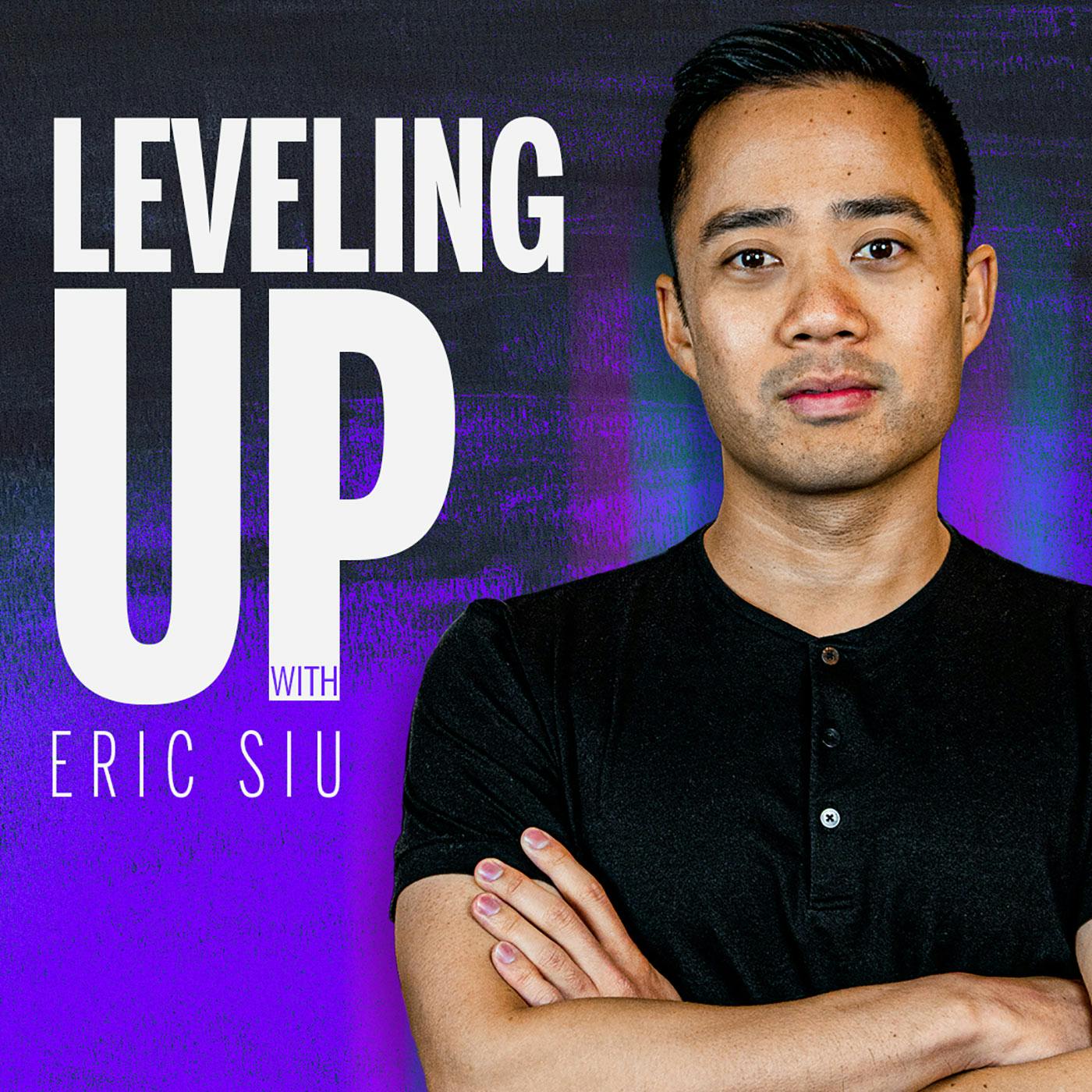
Leveling Up with Eric Siu
by Eric Siu
Leveling Up is a weekly interview series with entrepreneurs and marketers on the latest in business and marketing. Learn actionable strategies & tactics on how you can make your business grow and mistakes to avoid during your journey. Learn from individuals who have founded billion dollar companies to best-selling authors. Entrepreneur and host Eric Siu also shares insights and learnings along the way.
-
1000
The Single Brain Setup That Makes Teams 100x Faster
Most companies are using AI completely wrong. They use ChatGPT in isolation, run random prompts, and wonder why nothing compounds. In this video, I break down the exact Single Brain system we use to connect agents like OpenClaw, Hermes, and NemoClaw into one unified intelligence layer that helps teams move dramatically faster. We cover how these AI fleets plug into Slack, HubSpot, Salesforce, Google Search Console, analytics tools, ad accounts, and internal data systems to create a compounding workflow engine that actually generates revenue. I also walk through real examples including AI generated ad creatives, automated reporting, scaling top performing campaigns into hundreds of variants, reducing operational costs by $500,000, and how one person with agents can outperform entire traditional teams. If you want to understand where AI agents are actually heading and how businesses are using them to create leverage right now, this is the framework. Chapters: (00:00) Why most AI adoption fails (02:06) Connecting all your business tools into one brain (03:22) The AI org chart of the future (05:20) Why most teams are still using AI wrong (06:31) Human timelines no longer work (07:10) Building ad creatives with AI agents (08:06) Scaling campaigns into 200 variants automatically (08:47) How $7,500 in tokens saved $500,000 (10:02) Why AI agents will replace traditional workflows
-
999
How /goal Will Grow Your Revenues So Fast It's Unfair
Here’s why most AI agent systems break once they touch real business operations. The issue is not intelligence. The issue is control. Most companies are building disconnected prompts with no evaluation systems, no approval layers, and no recursive learning loops. That works for demos, but it falls apart when agents start touching production systems, ad spend, customer data, or outbound communication. The better approach is treating agents like an operational command system. Hermes becomes the control tower that launches goals, evaluates outputs, routes approvals, stores learnings, and continuously improves future execution while humans stay in the loop for anything high risk. In this video I break down how the AI optimization lab works, why recursive self improvement matters, how approval gates protect revenue and reputation, the difference between safe autonomy and dangerous autonomy, and how to structure agents that continuously move the business forward without creating operational risk. Chapters: (00:00) The real problem with AI agents (00:54) AI optimization lab explained (02:00) Hermes as the control tower (03:26) Safe autonomy for businesses (04:56) Why approval gates matter (06:01) Human approval for risky actions (07:42) Recursive self improvement loops (09:20) Scaling autonomous systems (10:31) Using Hermes to grow revenue faster
-
998
The One File That Makes AI Actually Understand Your Brand (And Drive More Sales)
Here’s why Google’s new design.md standard could completely change how brands create content with AI agents. Right now most brands exist in formats AI can’t consistently understand. Your landing pages, ads, decks, and creative assets are scattered everywhere with no persistent design memory. Google’s new design.md format changes that by giving agents a structured way to understand your visual identity and generate assets that actually stay on-brand. In this video I break down how design.md works, why Google is trying to make it the default standard for AI-generated design, how we’re using it internally with agents, and why this becomes massively important for marketing teams trying to scale creative output without losing consistency. Chapters: (00:00) Why AI currently cannot “see” your brand (00:22) Google’s new design.md standard explained (01:06) Why Google wants to own the format (01:37) Real examples using ClickFlow and Single Grain (02:21) How agents generate branded assets automatically (02:43) Why open standards matter more than lock-in (03:23) The massive impact on marketing teams (04:04) Sales decks and personalized design workflows (05:01) The GitHub repo with reusable design systems (05:24) Using inspiration from top-performing websites (06:13) Why design.md could become the industry standard (06:29) How revenue agents change creative production
-
997
OpenClaw Just Replaced My ENTIRE Cold Email Operation
Here’s how one person can now run cold email infrastructure that used to require an entire team. Most outbound systems break because there are too many moving parts. You need lead sourcing, email verification, inbox warmup, campaign management, copywriting, optimization, and reporting all happening at once. In this video I show how agents inside a “single brain” system handle most of that work end-to-end while a human stays focused on judgment, strategy, and approvals. I also walk through how we’re using OpenClaw, Instantly, Whisper Flow, and recursive scoring systems to rewrite campaigns, manage infrastructure, QA sequences, and launch campaigns in parallel without needing multiple operators. Chapters (00:00) Why cold email used to require a full team (00:32) How the “single brain” system works (01:18) Reviewing Instantly campaign performance (02:09) AI rewriting and scoring email sequences (03:06) Why humans still need to stay in the loop (04:21) Incentives, personalization, and reply rates (05:41) Running multiple campaign workflows in parallel (06:28) Managing lead distribution and infrastructure (07:07) Reviewing campaigns inside Instantly (08:05) Fixing ICP targeting and send settings (09:01) Live feedback and campaign optimization (10:07) Why one person can now operate like a full outbound team (10:49) How companies are building “world brains”
-
996
Is It Game Over For OpenClaw
Here’s the real state of OpenClaw right now. OpenClaw became a critical part of how our team operates, but over the last couple months the reliability has noticeably dropped. Messages fail, automations break, gateways hang, and teams start losing trust in the system when it stops responding consistently. In this video I walk through Peter Steinberger’s public apology, the exact issues we’re seeing inside Slack and Telegram, why reliability matters more than features, and how we’re thinking about Hermes vs OpenClaw moving forward. I also break down the “brain vs execution” model, why competition between the two is actually healthy, and why I still believe autonomous agents are the future despite the current issues. Chapters (00:00) Is it over for OpenClaw? (00:46) The reliability problems we’re seeing (02:08) Peter Steinberger’s apology (04:20) Why SSR matters (secure, stable, reliable) (05:05) The single brain + agent fleet setup (06:34) Real Slack failures inside our team (08:05) Telegram failures and broken responses (09:09) Hermes as the alternative (10:41) Brain vs execution model (12:03) Why OpenClaw still matters (13:34) Website deployed using OpenClaw (14:52) Final thoughts on the future of agents
-
995
This Happened 3 Times In 125 Years. AI Just Did It Again
Here’s why the “AI will cause mass unemployment” narrative is probably wrong. Every major wave of technology has triggered the same fear, and every time it’s played out differently. AI doesn’t just replace jobs, it shifts them. It removes repetitive work, increases productivity, and creates entirely new roles that didn’t exist before. In this video I walk through real historical data from radiology, agriculture, spreadsheets, and ATMs to show how job displacement actually works, why demand often increases, and how AI acts as a multiplier rather than a replacement. Chapters (00:00) The mass unemployment narrative(00:22) Radiology example (AI vs jobs)(01:08) AI as a demand multiplier(02:06) Drivers and task vs job thinking(02:28) Agriculture automation (tractor era)(03:46) Spreadsheets and job evolution(05:25) ATM prediction vs reality(05:42) Creative destruction explained(06:36) Why AI likely creates more opportunity
-
994
I Spent $7,500 on Claude Last Month (Here's The ROI)
Here’s why I spent $7,500 on AI tokens in a single month and why it was worth it. Most people hear that number and think it’s insane. But that spend replaced work that would’ve cost way more in headcount, made our team significantly more effective, and even uncovered $500K in savings that I acted on within days. This isn’t just “AI cost” it’s leverage across sales, coaching, product, and operations. In this video I break down what that spend actually gets you, real examples of how it’s used inside the company, the ROI behind it, and how to think about cost vs speed when choosing models. Chapters (00:00) Why I spent $7,500 on tokens(00:38) What that spend actually buys(01:41) Using AI to coach your team(03:23) ROI breakdown and savings(04:19) Product and dev leverage(05:07) What the first 3 months look like(05:41) The “single brain” effect(06:07) Frontier vs cheaper models(07:53) Why you need to start now
We're indexing this podcast's transcripts for the first time — this can take a minute or two. We'll show results as soon as they're ready.
No matches for "" in this podcast's transcripts.
No topics indexed yet for this podcast.
Loading reviews...
ABOUT THIS SHOW
Leveling Up is a weekly interview series with entrepreneurs and marketers on the latest in business and marketing. Learn actionable strategies & tactics on how you can make your business grow and mistakes to avoid during your journey. Learn from individuals who have founded billion dollar companies to best-selling authors. Entrepreneur and host Eric Siu also shares insights and learnings along the way.
HOSTED BY
Eric Siu
CATEGORIES
Loading similar podcasts...
URL copied to clipboard!