
PODCAST · education
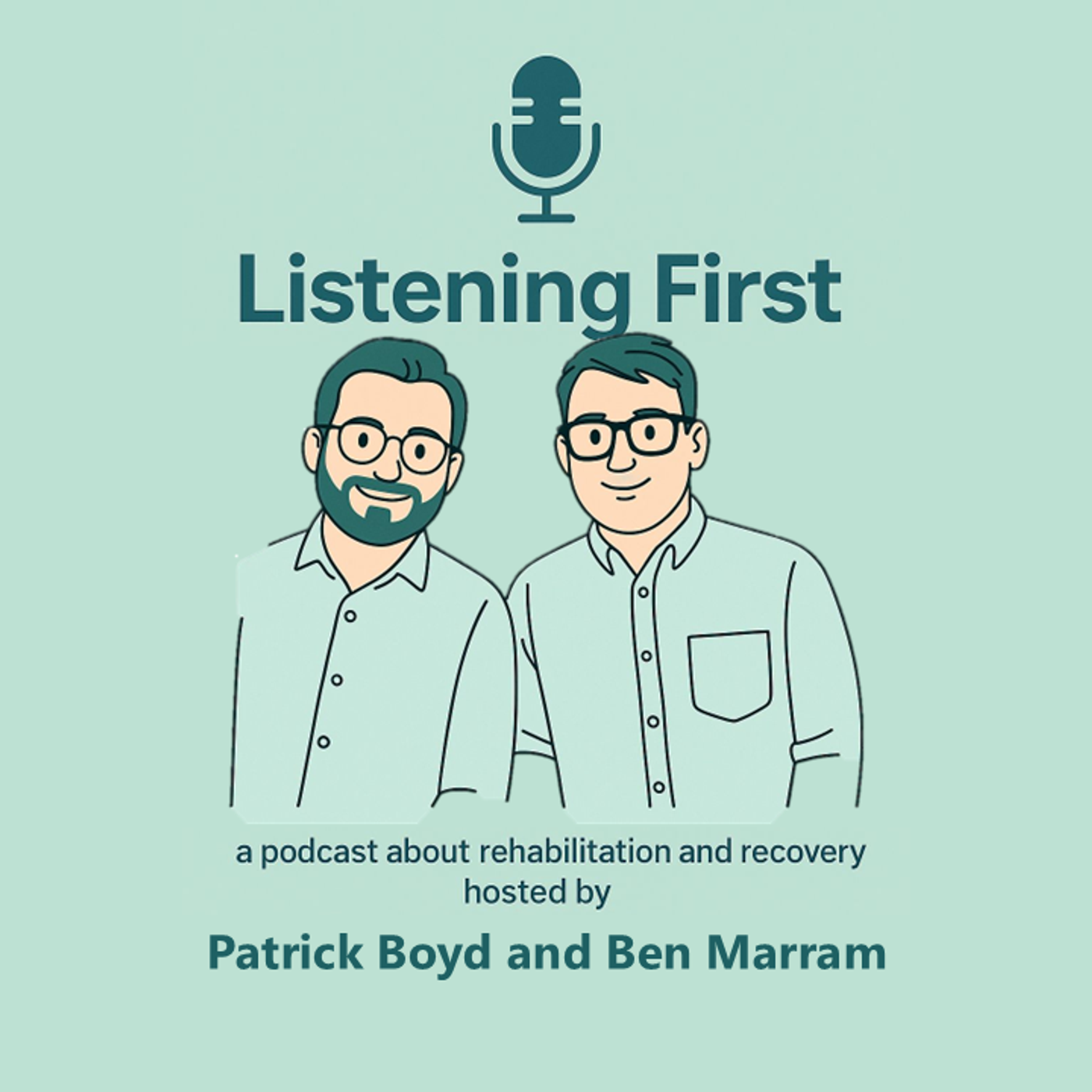
Listening First
by Patrick Boyd & Ben Marram
Listening First: The Podcast on Rehabilitation and RecoveryHosted by Patrick Boyd and Ben Marram, Listening First is a podcast dedicated to exploring the journey of rehabilitation and recovery. Taking a not-knowing position, Ben and Patrick approach each conversation with openness and curiosity, creating space for genuine dialogue and new perspectives.Each episode dives into the challenges, breakthroughs, and personal stories that shape the path back to health and independence. With a focus on empathy, expertise, and collaboration, Listening First brings listeners thoughtful conversations that inspire hope and highlight the human side of healing.Whether you’re a professional in healthcare, social care, law, someone on your own recovery journey, or simply curious about how people rebuild their lives, Listening First offers insight, support, and encouragement every step of the way.
-
9
Safeguarding: Whose Job Is It, Anyway? with Linda Sayers
Safeguarding - it is a daily, ongoing process, not just a one-time action; and in doing so, building connections and trust is more important than striving for perfection. These are just a couple of nuggets of safeguarding wisdom discussed in this episode of Listening First.Patrick and Ben speak with Linda Sayers, a social worker and safeguarding expert, discussing the evolving landscape of safeguarding in rehabilitation. Topics include the principles of safeguarding, legislation changes, collaboration between private and statutory sectors, and practical strategies for effective safeguarding practices.Chapters00:00 Introduction to the Podcast03:55 Linda Sayers: A Journey Through Social Work09:45 Understanding Safeguarding in Rehabilitation15:01 The Evolution of Safeguarding Legislation20:20 The Importance of Connection in Social Work27:22 Navigating Inconsistencies in Safeguarding Practices29:10 The Evolving Landscape of Safeguarding Legislation31:44 The Role of Private Sector in Safeguarding35:52 Building Effective Partnerships in Safeguarding46:22 Understanding Myths and Realities in Safeguarding50:33 The Essence of Rehabilitation and Recovery51:52 Introduction to Professional Curiosity and Safeguarding54:14 The Importance of Collaboration in SafeguardingResourcesSection 42 of the Care Act - https://www.legislation.gov.uk/ukpga/2014/23/section/42Working Together to Safeguard Children 2026 - https://www.gov.uk/government/publications/working-together-to-safeguard-children--2Frontal Lobe Paradox Field Guide by Ben Marram - https://theflpfieldguide.comLinda Sayers on LinkedIn - https://www.linkedin.com/in/linda-sayers-0bb66551/© 2026, Patrick Boyd & Dr Ben Marram. All Rights Reserved.
-
8
The Healing System, with David Kenny
In this episode, family therapist Dave Kenny joins Patrick and Ben to share insights into systemic psychotherapy, otherwise known as Family Therapy, its relevance in recovery and rehabilitation, and how understanding family dynamics can improve support systems. Discover practical techniques, the importance of trust, and how therapy adapts to individual family needs.Resources:Family Experience of Brain Injury by Mark HollowayAssociation of Family Therapy (AFT) - https://www.aft.org.uk/UK Council for Psychotherapy (UKCP) - https://www.ukcp.org.uk/Newby Psychological Services - https://www.newbypsychologicalservices.co.uk/© 2026, Patrick Boyd & Dr Ben Marram. All Rights Reserved.
-
7
The Cost of Dishonesty, with Lois Norris (Part 2)
In part 2 of this 2-part series, the conversation delves further into the complexities of fundamental dishonesty within the legal system, particularly in relation to rehabilitation and recovery. Lois Norris, a barrister, shares her insights on the importance of thoroughness, transparency, and integrity in clinical and legal practice. The discussion also highlights the challenges faced by clients in navigating their claims and the emotional toll of being accused of dishonesty. The episode emphasises the need for professionals to maintain a balance between scrutiny and support for their clients, ensuring that the process remains fair and just for all parties involved.Chapters00:00 Introduction to Part 201:33 Understanding Inconsistency and Honesty04:21 The Emotional Journey of Claimants07:47 Navigating Integrity and Transparency11:36 The Role of Scrutiny in Rehabilitation16:39 The Balance of Fairness in Legal Processes21:54 Future Directions in Addressing Dishonesty26:31 Rehabilitation as Evidence in Legal Cases31:22 Misconceptions About the Legal Profession36:27 Introduction to Thoroughness and Transparency37:19 The Role of Detail in Professional Practice38:22 The Importance of Authenticity and Integrity38:45 Reflections on Imposter Syndrome and Mentorship39:59 Closing ThoughtsCredits:Patrick Boyd - Co-host/ProducerDr Ben Marram - Co-host/ProducerLois Norris - Guest©2026 Patrick Boyd & Ben Marram. All rights Reserved.
-
6
The Cost of Dishonesty, with Lois Norris (Part 1)
In this episode of Listening First, Patrick and Ben speak with barrister Lois Norris for part 1 of their 2-part series which explores the complex topic of fundamental dishonesty in personal injury claims. Lois shares her insights on how dishonesty is defined within the legal framework (in the UK), referencing a landmark case involving edge sorting at a casino that reached the Supreme Court. The discussion delves into the nuances of what constitutes dishonesty, emphasising the importance of an objective standard based on societal perceptions. Lois explains the distinction between general dishonesty and fundamental dishonesty, highlighting how the latter can significantly impact the outcome of a claim, including the potential for dismissal and financial repercussions for claimants.Chapters00:00 Introduction to Lois Norris and Her Journey into Law06:52 Understanding the Role of Barristers vs. Solicitors09:33 Defining Dishonesty in Legal Terms12:41 The Concept of Fundamental Dishonesty15:43 Consequences of Fundamental Dishonesty17:39 Real-Life Implications and Case Examples20:49 The Impact of Memory and Inconsistency in Claims23:59 Social Media's Role in Perceptions of Dishonesty26:54 The Human Element in Rehabilitation and Recovery29:54 White Coat Syndrome and Its Implications37:56 Exploring Dishonesty in Law39:06 Anticipating the Role of a Barrister39:33 Outro/CreditsCredits:Patrick Boyd - Co-host/ProducerDr Ben Marram - Co-host/ProducerLois Norris - Guest©2026 Patrick Boyd & Ben Marram. All rights Reserved.
-
5
Music is Medicine, with Elizabeth Nightingale
"Music can do far more than you think." - Elizabeth NightingaleIn this episode, Ben and Patrick explore the transformative power of music therapy, particularly neurologic music therapy (NMT), in rehabilitation. Elizabeth Nightingale, a neurologic music therapist, shares her insights on how music can facilitate cognitive, emotional, and physical healing. The conversation delves into various techniques used in NMT, the neuroscience behind music's impact on the brain, and the importance of integrating music therapy within multidisciplinary teams. Elizabeth emphasises the significance of personalising music therapy to each client's unique experiences and cultural backgrounds, highlighting its role in fostering connections and enhancing overall wellbeing.Elizabeth is an experienced Neurologic Music Therapist, bringing over ten years of specialist clinical practice within acute, inpatient, and community neurorehabilitation. She has worked with both children and adults across a wide range of settings, and has expertise in acquired brain injury, cerebral palsy, disorders of consciousness, and aphasia. She is a registered Neurologic Music Therapy® Fellow affiliate of the Academy of Neurologic Music Therapy® and is trained in the Music Therapy Assessment Tool for Awareness in Disorders of Consciousness (MATADOC). Since 2018, Elizabeth has worked as an Expert Witness, drawing on her wide-ranging clinical experience to identify and cost appropriate NMT provision and specialist equipment for children and adults with neurological diagnoses. Alongside her clinical work, she actively contributes to the profession through several voluntary roles, including positions on the NMT™ Academy Advisory Council, Acquired Brain Injury London, and as Learning Disability Network Coordinator for the British Association for Music Therapy (BAMT).A few key links:Neurologic Music Therapy® website for those interested to learn more about NMT™, the research base, and training options: www.nmtacademy.coMusic and the Brain visual: https://www.merriammusic.com/research/the-neuro-plastic-side-of-melodies-how-music-rewires-the-brains-cognitive-sockets/Example video of NMT™ sensorimotor techniques in action for a patient who sustained a TBI: https://youtu.be/cq8fv3Hpoao?si=gWmgnB0I8yeNQ_drNightingale NMT™ website: www.nightingalenmt.co.ukNMT™ at the heart of rehab visual: https://www.instagram.com/p/DReX9bNDXoG/?igsh=MW83a3R1a3JuNmRweA==GuestElizabeth Nightingale, Neurologic Music Therapist, Nightingale NMTwww.listeningfirstpod.com© 2025 Patrick Boyd & Dr Ben Marram. All rights reserved.
-
4
Understanding Mental Capacity, with Dr Oli Bekarma and Eleanor Tallon
"Mental capacity is decision-specific."In this episode, Patrick and Ben explore the complexities of the Mental Capacity Act (UK) and its implications for rehabilitation and recovery, with guests Dr Oli Bekarma and Eleanor Tallon.They discuss the principles of the Act, the role of professionals in assessing capacity, and the impact of emotions on decision-making. The conversation emphasizes the importance of understanding mental capacity as decision-specific and context-dependent, while also addressing the challenges faced by practitioners in this field. The episode concludes with reflections on best practices and the need for continuous learning in mental capacity practice.Chapters00:00 Introduction to the Podcast and Guests03:38 The Role of Social Workers and Psychologists05:16 Defining Mental Capacity06:52 The Presumption of Capacity09:21 Unwise Decisions vs. Lack of Capacity11:18 Navigating Complex Decisions13:56 The Importance of Context in Assessments15:30 Building Rapport in Assessments16:42 The Impact of Executive Dysfunction18:55 Philosophical Considerations in Decision Making20:29 Conclusion and Reflections26:42 Emotional Influences on Decision-Making29:02 Navigating Assessment Anxiety30:54 The Role of Hope in Capacity Assessments33:11 Understanding Capacity: Beyond Binary Thinking36:58 The Burden of Decision-Making in Assessments39:57 Pet Hates and Pro Tips in Mental Capacity AssessmentsGuests:Dr Oliver Bekarma, Clinical Psychologist of Clarity PsychologyEleanor Tallon, Independent Social Worker of MCA Professionalwww.listeningfirstpod.com© Patrick Boyd & Dr Ben Marram. All rights reserved.
-
3
Unlocking Communication, with Matthew Nakonesky
"Therapy should be meaningful" - Matthew NakoneskyIn this episode of the Listening First podcast, hosts Patrick Boyd and Ben Marram welcome Matthew Nakonesky, Principal Speech and Language Therapist from Speech Therapy North East. The conversation explores the multifaceted role of speech and language therapists, particularly in the context of cognitive communication disorders. Matthew shares insights into his journey into the profession, the importance of real-life applications of therapy, and the innovative group therapy approaches he employs to help clients navigate communication challenges. The discussion highlights the significance of peer support, project-based group therapy, and the ongoing evaluation of client progress, all while emphasizing the need for meaningful and purposeful interventions in rehabilitation.Chapters:00:00 Introduction to Recovery and Rehabilitation Podcast01:09 Meet Matthew Nakonesy: A Journey into Speech Therapy02:57 Understanding the Role of a Speech and Language Therapist05:19 Cognitive Communication Disorders Explained08:11 The Importance of Real-Life Context in Therapy09:08 Innovative Approaches to Cognitive Communication Interventions11:46 The Role of Communication Groups in Rehabilitation14:14 Evidence-Based Practices in Group Therapy16:53 Purpose-Driven Therapy and Community Engagement20:11 Raising Awareness Through Education22:59 Monitoring Progress in Communication Groups26:13 The Power of Peer Feedback28:43 Navigating Group Dynamics31:41 Surprises and Learnings in Group Therapy34:36 Integrating Therapy with Multidisciplinary Teams38:34 Advice for Aspiring Speech TherapistsLinks:Herbie the Dinosaur video: https://youtu.be/328J0E8vq9gEpisode Credits:Patrick Boyd - Producer/Co-hostDr Ben Marram - Producer/Co-hostMatthew Nakonesy - Guest (Speech Therapy North East)For links to the following, please email [email protected]:Herbie the Dinosaur E-bookSTNE Getting Connected Group FlyerSTNE Social Communication Group FlyerCCCABI ChecklistModel of Cognitive Communication Competence© 2025 Patrick Boyd & Ben Marram. All rights reserved. This episode is protected by copyright. No part may be reproduced, distributed, or transmitted in any form without prior written permission from the copyright holders.
-
2
Hope Is Foundational, with Vicki Gilman
"Rehabilitation should blend with everyday life"In this episode of Listening First, hosts Patrick Boyd and Ben Marram engage in a deep conversation with Vicki Gilman, an expert in neuro rehabilitation and case management. They explore the complexities of rehabilitation, the importance of hope and empowerment for clients, and the role of technology in modern practices. Vicki shares her journey in the field, emphasizing the need for effective communication and trust within multidisciplinary teams. The discussion highlights the evolving nature of rehabilitation and the necessity of understanding individual needs and measuring progress for successful outcomes.Chapters00:00 Introduction to Listening First Podcast02:00 Vicki Gilman's Journey in Rehabilitation07:28 Defining Rehabilitation: A Complex Perspective14:07 The Role of Hope in Rehabilitation17:48 Navigating Expectations and Outcomes in Rehabilitation23:41 Nurturing Hope in Rehabilitation25:28 Empowerment Through Choice and Control27:10 Balancing Autonomy and Protection30:53 The Role of Communication in MDTs37:54 Technology's Impact on RehabilitationEpisode Credits:Patrick Boyd - Producer/co-hostDr Ben Marram - Producer/co-hostVicki Gilman - Guest
-
1
Introducing the Listening First Podcast
The first episode of the Listening First podcast introduces the hosts, Patrick Boyd and Ben Marram, who share their backgrounds in rehabilitation and recovery. They discuss the purpose of the podcast, which is to create a platform for open conversations about various topics in rehabilitation, featuring insights from professionals and individuals with lived experiences. The hosts express their excitement for upcoming episodes and encourage audience engagement.
No matches for "" in this podcast's transcripts.
No topics indexed yet for this podcast.
Loading reviews...
ABOUT THIS SHOW
Listening First: The Podcast on Rehabilitation and RecoveryHosted by Patrick Boyd and Ben Marram, Listening First is a podcast dedicated to exploring the journey of rehabilitation and recovery. Taking a not-knowing position, Ben and Patrick approach each conversation with openness and curiosity, creating space for genuine dialogue and new perspectives.Each episode dives into the challenges, breakthroughs, and personal stories that shape the path back to health and independence. With a focus on empathy, expertise, and collaboration, Listening First brings listeners thoughtful conversations that inspire hope and highlight the human side of healing.Whether you’re a professional in healthcare, social care, law, someone on your own recovery journey, or simply curious about how people rebuild their lives, Listening First offers insight, support, and encouragement every step of the way.
HOSTED BY
Patrick Boyd & Ben Marram
Loading similar podcasts...
URL copied to clipboard!