
PODCAST · government
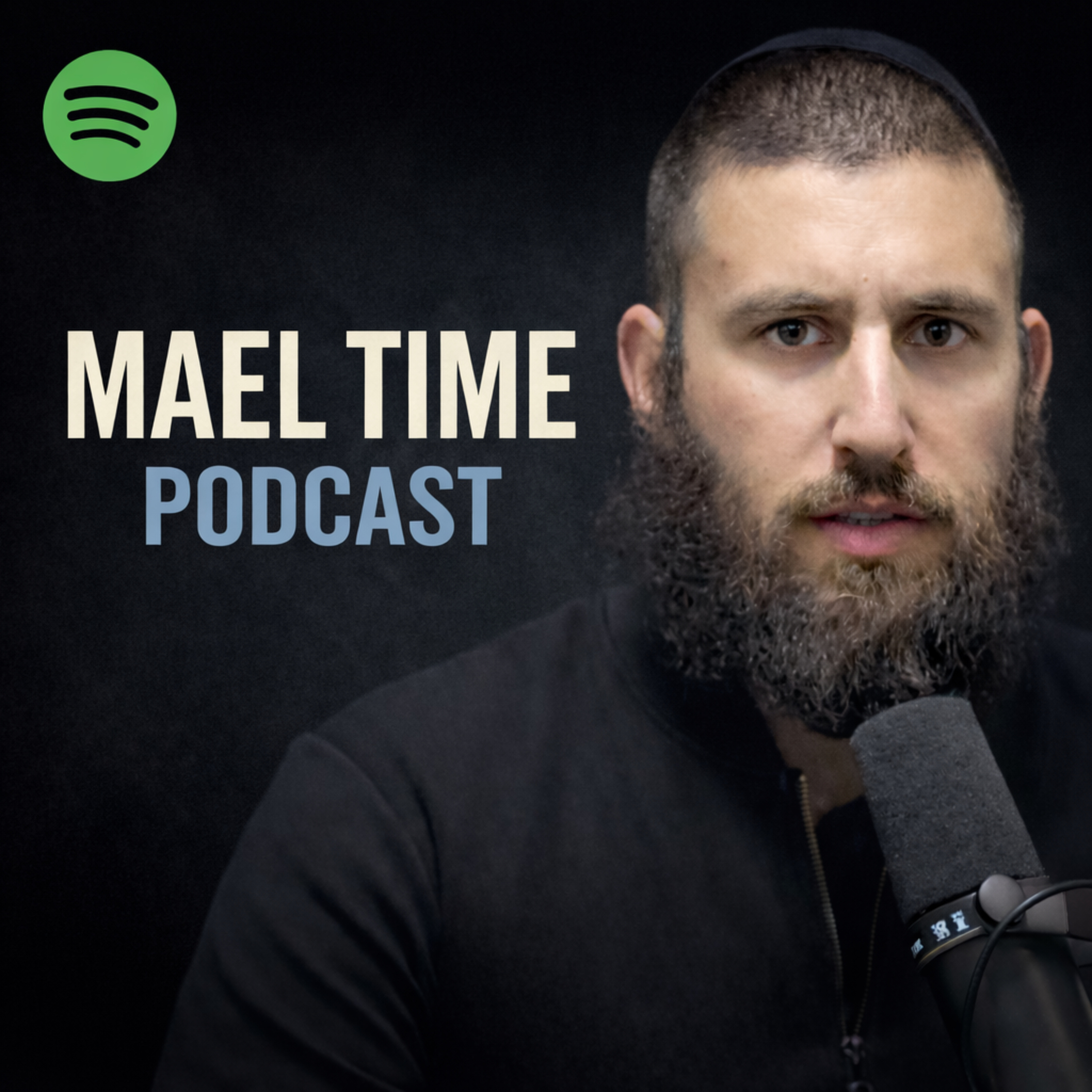
Mael Time With Daniel Mael
by Daniel Mael
Daniel Mael dives into the most pressing issues pertaining to Israel and the IDF in a post-10/7 world.Check out all of the episodes of the Mael Time Podcast here: https://bit.ly/3BWUASFCheck out Mael Time on Spotify: https://spoti.fi/41HyPPmJoin our Whatsapp Channel: https://bit.ly/4ilVnfB
-
178
A Murdered Supplier, a Stolen Goods Ring, and One Wrongfully Accused Family Man
Imagine waking up one day to find out your perfectly normal life is actually a crime scene. That is exactly what happened to Yosh Markel. He was just a regular guy in Florida, a former special-ed teacher who started flipping clearance items on Amazon to pay the rent and keep his wife home with their newborn. Fast forward a few years, and his little side hustle was pulling in a million dollars in sales. He was living the dream, providing for his three kids, and building a solid reputation in his community. But then, without warning, the state attorney general unsealed an indictment, and Yosh was suddenly staring down a $1.35 million bond and a 12-day stint in jail. His crime? Buying inventory from a supplier who, unbeknownst to him, was running a massive organized retail theft ring. He had no idea the goods were stolen, but the government decided he "should have known." What followed was a grueling two-and-a-half-year battle that cost him his life savings, his freedom, and almost his sanity. This is the story of how quickly the American dream can become a nightmare, and the incredible resilience it takes to survive it.Help Yosh: Helpyosh.com
-
177
When Evidence Stops Mattering
This solo discussion examines the growing collapse of consistent evidentiary standards in modern media coverage, particularly when Israel is involved. From post-MeToo reporting norms to high-profile allegations built on hearsay, anonymous claims, and emotional framing, the episode asks a difficult but necessary question: what happened to logic, corroboration, and accountability? The conversation explores how standards that once demanded forensic proof and rigorous scrutiny have increasingly given way to narrative-driven conclusions, and why abandoning rational analysis in favor of political emotion ultimately undermines justice itself. The episode challenges listeners to think critically, question assumptions, and apply the same standard of evidence to every side, regardless of ideology or public pressure.
-
176
The Collapse of Standards: Inside Kristof’s Israel Narrative
In this solo episode, Daniel Mael examines Nicholas Kristof’s explosive article on Israel and asks a question much of the media refuses to confront: do journalistic standards still exist when Israel is the subject? From unverified allegations to inconsistent evidentiary thresholds, Mael dissects how credibility, sourcing, and emotional narratives shape public perception in modern conflict reporting. The episode explores why truth cannot depend on politics, why media integrity matters most during war, and why applying different standards to different actors ultimately destroys public trust.
-
175
Tucker Carlson’s Transformation: What Happened to Conservatism?
“Tucker Carlson is not conservative.”That’s one of the major claims Professor Jeffrey Lax makes in this powerful interview analyzing Tucker Carlson’s recent New York Times appearance and the ideological shift reshaping modern political media.The conversation explores anti-Semitism, media influence, misinformation, Israel, online radicalization, and the growing power of influencers who build audiences through outrage, conspiracy, and political resentment.Professor Lax breaks down how media personalities shape public perception, manipulate narratives, and redefine political identity in the digital age — and why millions continue to follow them.
-
174
Inside the NGO Machine: NGO Monitor vs. the Global Narrative on Israel
In this sharp, fact-driven conversation, Professor Gerald Steinberg pulls back the curtain on the NGO ecosystem that influences how Israel and the Middle East are portrayed worldwide. From opaque funding streams to coordinated messaging campaigns, he explains how major organizations drive headlines, pressure governments, and set the tone for global discourse. The interview goes beyond criticism and focuses on strategy, laying out how misinformation spreads and what can be done to challenge it with data, accountability, and transparency.
-
173
Harvey Weinstein Is Back on Trial. Why?
Juda Engelmayer joins the podcast to discuss why Harvey Weinstein is back on trial once again, and what’s at stake in this latest chapter of a long-running legal battle. As Weinstein’s spokesman, Engelmayer explains why the case is being retried, how the legal strategy has evolved, and why he remains involved despite years of public scrutiny and prior convictions.The conversation also explores the role of media coverage, shifting public opinion, and the broader implications for high-profile criminal cases in the post-#MeToo era. Engelmayer offers a behind-the-scenes perspective on the intersection of law, reputation, and narrative, shedding light on how courtroom proceedings unfold under intense global attention.
-
172
Fighting the Woke Right: Saving Conservatism From Within
In a media ecosystem that rewards outrage over truth, Karys Rhea pulls back the curtain on a growing shift inside the American right: the rise of identitarian thinking, fueled not by traditional conservatism but by a new class of radical influencers and podcast personalities. What was once a movement rooted in principles is increasingly shaped by viral rhetoric, foreign and domestic propaganda, and a race for attention where due diligence is optional and decency is treated as weakness. From the influence of figures like Nick Fuentes and Tucker Carlson to the normalization of extreme narratives, the conversation exposes how quickly discourse can erode when clicks replace conviction. The result is a fractured landscape where misinformation spreads faster than accountability, and where the real challenge isn’t just political opposition, but whether conservatism itself can survive the forces reshaping it from within.
-
171
Accused Sex Trafficker Hana Boulos Breaks Her Silence on the Alexander Brothers Case
She is the woman at the center of one of the most disturbing scandals to hit the elite real estate world, but until now, she has remained completely silent. Hannah Boulos stands accused in a bombshell lawsuit filed by Lindsey Acree of acting as a "procurer" for the notorious Alexander brothers. According to the explosive court documents, Boulos allegedly lured Acree under the false pretense of a luxury Hamptons getaway, only to deliver her into a nightmare where she was drugged, trapped, and brutally assaulted by Tal Alexander and an unidentified associate. The lawsuit paints Boulos not just as a bystander, but as a calculated co-conspirator who even painted Acree's nails on the train ride there, fully aware of the trap she was setting. But today, the accused sex trafficker is finally speaking out. In this exclusive interview, Boulos fires back at the devastating claims, vehemently denying any involvement in a trafficking ring, disputing the timeline of that infamous Hamptons weekend, and insisting she is a victim of a massive misunderstanding rather than the architect of a horrific crime.
-
170
Silence Is Complicity: Why Jewish Institutions Are Failing Their Own People
A former congregant’s resignation letter delivers a direct and unflinching indictment of Central Synagogue and its leadership under Angela Buchdahl. It describes a breaking point where a community once seen as a source of moral clarity instead projected hesitation and selective outrage in the face of rising anti-Semitism. The letter reads not as a quiet exit, but as a principled protest, accusing leadership of prioritizing political alignment over the safety, dignity, and moral responsibility owed to its own congregants. It argues that silence and ambiguity in moments of crisis are not neutral acts but failures of leadership that leave Jews exposed and unsupported. In doing so, the resignation becomes more than a personal statement. It stands as a broader warning about what happens when institutions entrusted with communal protection lose the courage to speak with clarity when it matters most.
-
169
She's Accused of Trafficking a Woman to Tal Alexander. Where is Hana Boulos?
In one of the most confounding threads of the allegations surrounding Tal Alexander, the figure of Hana Boulos remains both central and elusive. Named in a civil lawsuit as the woman who allegedly trafficked Lindsay Acree, Boulos has not been located, served, or publicly heard from—despite sustained efforts to track her down. In a rare development, her ex-husband John appeared on the show to shed light on who she might be. What emerged was a portrait of a woman he claims lived almost entirely in fabrication: adopting false identities, inventing careers at institutions like the United Nations, and cycling through personas convincing enough to deceive even those closest to her. He described her as highly manipulative, capable of drawing people in quickly, and living a transient life often funded through others, with no stable employment or verifiable record. According to his account, even her name may not be real. Yet despite these explosive claims, there remains no confirmed digital evidence tying Boulos directly to Tal Alexander or the alleged co-defendants—no messages, no calls, no records. Investigators, attorneys, and journalists have all hit the same wall: a person accused of playing a critical role in a trafficking allegation who, years later, cannot be definitively located. The result is a case defined as much by absence as by accusation—raising a question that still has no answer: who is Hana Boulos, and where is she now?
-
168
He Survived War. PTSD Almost Killed Him: Yishay Ishi Breaking the Silence on PTSD: A Soldier’s Descent—and Recovery Story
In this powerful interview, Yishay Ishi Ron shares his journey from Israeli military service into the depths of PTSD and addiction, revealing how stigma and shame often prevent veterans from seeking help. He speaks candidly about self-medication, the long road to acknowledging trauma, and the turning point that led him toward recovery. Set against the backdrop of October 7th and its lasting psychological impact, the conversation expands beyond one man’s story to expose a broader societal crisis, making a compelling case for open dialogue, stronger community support, and a more honest understanding of what trauma does to those who survive it.
-
167
False ID: How Ohad Fisherman Was Falsely Accused—and What It Means for the Accuser’s Credibility
Ohad Fisherman was accused of taking part in a violent sexual assault.Yet when asked to identify him in a Zoom photo lineup, the accuser could not do so reliably.If her identification of Fisherman falls apart under scrutiny, it raises serious questions about the credibility of her broader allegations against Oren and Alon Alexander.
-
166
"Bella Koval" and the Alexander Brothers
Oren, Alon and Tal Alexander were convicted of two different charges involving the individual"Bella Koval."We examine what happened with Bella and the Alexander brothers.
-
165
Alexander Brothers Convicted: Analysis
Brian Tumara joins the show to discuss the federal trial of the Alexander brothers based on the evidence and the trial transcripts.
-
164
The Blog That Sunk the Alexander Brothers
Exploring "the blog" that tied together the Alexander brothers' conspiracy in federal court.
-
163
Alexander Brothers Convicted on 10 Counts - Immediate Reaction
Breaking down the conviction of Oren, Alon and Tal Alexander.
-
162
Shabbos Kestenbaum Unfiltered: On Anti-Semitism, Media Lies, and the Future of America
"It's a funny name, I wear the funny hat." With that, Shabbos Kestenbaum launches into a powerful and unfiltered conversation with Daniel Mael about the forces shaping American politics. They dissect everything from the Epstein files' political fallout to the media's role in manufacturing narratives and the difficult questions surrounding the legacy of conservative leaders. This episode is a crucial look at how disinformation and anti-Semitic conspiracies are not just political tools, but threats to the fabric of society itself.
-
161
Closing Arguments, Part Two: Inside the Trial That Redefined Sex Trafficking
In Part 2, we go deeper into the courtroom — picking apart the evidence gaps, the shaky legal interpretations, and the moments that could define this case long after the verdict. From the jury's perspective on what actually constitutes sex trafficking to the court's own acknowledgment of jury nullification, this episode pulls no punches. We break down why the statutory language at the heart of this case is far from settled law, examine the inconsistencies in the charges, and explore what a potential appeal could look like. If Part 1 set the stage, Part 2 is where the real legal battle begins.
-
160
Closing Arguments, Part One: Inside the Trial That Redefined Sex Trafficking
In this gripping first part of our analysis of the Alexander brothers' federal sex trafficking trial, we dissect the prosecution's closing arguments and the intricate legal strategies that defined the case. We explore how the prosecution built its narrative, comparing the defendants' online activities to Al-Qaeda's methods and arguing how a simple bus ride could constitute a federal crime. This episode breaks down the critical importance of precise legal definitions, such as what constitutes a "commercial sex act" under federal law, and examines the powerful impact of pattern evidence on the trial's outcome. Join us as we uncover the courtroom dynamics and prosecutorial tactics that could redefine the future of federal sex trafficking enforcement.
-
159
Rav Rimon: The Miracle of Unity That Saved Israel
🎧 In this powerful episode of the Mael Time Podcast, host Daniel Mael sits down with the esteemed Rabbi Rimon to discuss the incredible miracles, challenges, and profound sense of unity that have defined Israel over the past few years.Join us as Rav Rimon offers his unique spiritual insights into the recent events that have captivated the world. From astonishing military successes to the unbreakable spirit of the Israeli people, this conversation explores the hidden forces of faith and resilience that are shaping the nation's destiny.Discover the stories of sacrifice and unity that often go untold, and hear Rav Rimon's perspective on how these moments are paving the way for redemption (Geula). Is the coming of Mashiach closer than we think? This episode delves into the spiritual significance of our times and offers a message of hope, gratitude, and strength.👇 Key Topics Covered:The unbelievable miracles of the last 2.5 years in Israel."Am Yisrael comes first": The power of unity in overcoming adversity.Spiritual reflections on faith, redemption, and the future of the Jewish people.How biblical parallels can help us understand today's challenges.Initiatives and projects that are strengthening Israel from within.Sulamot - Educational Projects: https://sulamot.org"Yad Hashem in Milchemet HaTkuma" Booklet: https://example.com/yad-hashem-milchemet-hatkumaWebsite: https://sulamot.orgThis is a conversation you won't want to miss.Learn more about Rav Rimon's work:Follow Rav Rimon:
-
158
How Count 2 Imploded: The Alexander Brothers Trial's Biggest Evidentiary Disaster
Tal, Oren, and Alon Alexander are on trial in federal court facing sex trafficking charges that have dominated headlines for over a year. But buried inside this sprawling case is one charge that was supposed to be the government's clearest shot — Count 2. No conspiracy. No enterprise. Just one man, one woman, and one weekend in the Hamptons in 2011.That woman is Lindsey Acree. And her testimony was supposed to be the foundation of the government's case against Tal Alexander alone.It didn't hold.In this video, we go through the trial record piece by piece — the shifting timeline, the lease that proved the crime scene didn't exist, the second assailant who may not have been in the country, the email that said "it was a good time," and the story that kept adding new details right up until 72 hours before Acree took the stand.We also look at how Acree's admitted desire to "back up" fellow accuser Liz Kennedy's story raises serious questions about what motivated her to come forward — and whether that motivation shaped what she remembered.The judge said Acree's testimony was "somewhat all over the place." The defense proved the date had to be changed to avoid an alibi. And the only contemporaneous document in the case says the opposite of what the prosecution needed it to say.This is the full breakdown of how Count 2 imploded — and why the government's case against Tal Alexander may not survive it.——Topics covered:• The Alexander Brothers federal sex trafficking trial• Lindsey Acree's direct testimony and cross-examination• The date change from July 2011 to Memorial Day weekend• Erik Yehezkel and the alibi problem• The 26 On the Bluff lease and the missing crime scene• The New York Times vs. Miami Herald account discrepancy• New details added three days before trial• Liz Kennedy and the contamination question• Julia Baldwin's late-disclosed corroboration• Judge Caproni's on-the-record observation
-
157
Prosecutors Allege the Alexander Brothers Trafficked Women to Fyre Festival — Inside the Shocking Claim
This episode explores the complex case against the Alexander Brothers, linking their social media influence, the infamous Fyre Festival, and allegations of sex trafficking. We analyze key evidence, legal arguments, and the broader implications of the trial.
-
156
Jonathan Pollard Responds to Tucker Carlson
In a live video broadcast, host Daniel Mael engages in an in-depth conversation with Jonathan Pollard, the former U.S. intelligence analyst convicted of passing classified information to Israel, an allied nation, whose 1980s espionage case continues to spark intense debate. The discussion covers Pollard's decades in prison, his motivations, the personal costs endured, his perspectives on U.S.-Israel intelligence relations, loyalty, justice, and ongoing Middle East geopolitical issues. Shortly after this exchange gained attention, it intersected with broader controversy when Tucker Carlson, in a recent high-profile interview with U.S. Ambassador to Israel Mike Huckabee (released in February 2026), repeatedly labeled Pollard "America's greatest traitor" and an "American traitor," portraying his actions as emblematic of a problematic U.S.-Israel dynamic and questioning Huckabee's meeting with him. In response, Pollard issued a sharp public video statement calling Carlson a "contemptible anti-Semitic liar" and accusing him of spreading serious inaccuracies and outright lies about the case. Pollard rejected the "traitor" designation—arguing that treason legally requires aiding an enemy in wartime (which Israel was not), insisted he never spied against the U.S. but shared information that should have been provided anyway, and claimed to possess evidence backing his account. This rebuttal has intensified online debates, with some viewing Carlson's remarks as misleading or propagandistic, while others see them as raising valid espionage and loyalty concerns, though no independent sources have definitively verified specific falsehoods beyond the opposing narratives. The unscripted, candid format of Mael's interview provides raw insight into Pollard's enduring story and its continued relevance amid these fresh controversies.
-
155
Alexander Brothers - Federal Indictment Recap
What are Oren, Tal and Alon Alexander actually facing in federal court?
-
154
Beyond Reasonable Doubt: Resetting the Alexander Brothers Case
Evaluating the evidence put forth in the case of USA vs. Alexander after three weeks of trial.
-
153
Alexander Brothers Trial: Why Hasn't David Rabello Been Arrested?
What happened in the Hamptons on Memorial Day weekend of 2009?
-
152
Understanding the Federal Charges Against the Alexander Brothers
A quick walk through the latest federal indictment so people understand what Oren, Alon and Tal Alexander face in court.
-
151
How the Alexander Brothers Trial is Playing Out in Court
Continued coverage of the federal trial of Alon, Oren and Tal Alexander. The #AlexanderBrothers.
-
150
Inside the Courtroom at the Alexander Brothers Federal Trial
A few thoughts from inside the courtroom.
-
149
Bob Kraft's Super Bowl Ad - What Went Wrong
A quick rundown of what went wrong with the Blue Square Alliance's failed Super Bowl ad.
-
148
What Israel Must Learn from Hadar Goldin: A Conversation with Tzur Goldin
On this edition of the Mael Time Podcast, Daniel Mael speaks with Tzur Goldin about the long and painful journey to bring home the body of his brother, Hadar Goldin, and the lessons that journey has revealed. Beyond the personal story, the conversation focuses on clarity gained through hardship: how Israel can sharpen deterrence, restore moral consistency, and ensure that the principle of “no one left behind” is not just a slogan but a policy. Goldin offers a forward-looking framework for how Israel must reposition itself—strategically, diplomatically, and morally—so that fallen soldiers are honored not only in memory, but in action.
-
147
Inside the Alexander Brothers Trial: When Witness Trauma Meets the Burden of Proof
The Mael Time Podcast is joined by Lauren Conlin of Los Angeles Magazine for an on-the-ground breakdown of the Alexander Brothers trial. After spending multiple days inside the courtroom, Conlin brings a perspective that goes beyond headlines — how the testimony actually lands, the tone in the room, and the subtle moments jurors see that never make it into write-ups. Together with Daniel Mael, the conversation cuts through media narratives to examine witness credibility, coercion claims, and the real burden facing prosecutors in a case where perception and proof are constantly colliding.
-
146
Qatar, Iran, and Hamas: Inside Israel’s Hostage War and What Victory Really Means w/ FDD’s Jonathan Schanzer
On this episode of The Mael Time Podcast, Daniel Mael sits down with FDD’s Jonathan Schanzer for a clear-eyed conversation about Israel’s hostage war and the deeper question of what victory really means. They unpack Qatar’s pivotal role in hostage negotiations, Iran’s central responsibility for regional instability, and Hamas’s strategy of leveraging civilians and captives, while also exploring how hostage families influenced Israeli decision-making and how U.S. policy uncertainty shapes the battlefield. The discussion extends beyond Gaza to the cultural and narrative war playing out on social media, where Jewish identity in America is increasingly under pressure. This episode confronts a conflict fought on multiple fronts — military, diplomatic, and ideological — and asks the hardest question of all: how does a war like this actually end?
-
145
Who Actually Speaks for American Zionists and Who Controls the Money?
Herbert Block, executive director of the American Zionist Movement, joined the Mael Time Podcast for a wide-ranging conversation on how Zionist institutions actually function and why they still matter to Jews outside Israel. In a moment when the relationship between Israel and the diaspora is often discussed in slogans, Block offered a clear, grounded explanation of the American Zionist Movement as a grassroots umbrella that brings together a broad spectrum of Zionist organizations. He walked through how the Zionist Congress operates, why American Jews have real influence within it, and how budgetary priorities are set, while also addressing common misconceptions around “dual loyalty.” The discussion emphasized unity across ideological lines and underscored the continuing, often overlooked, connection between Zionist decision-making and Israel’s political system.
-
144
IDF Confirms 70,000 Dead in Gaza? W/ Andrew Fox
Understanding the "news" the IDF accepts the figure of 70,000 Gazans dead since 10/7.
-
143
Netanyahu Attacked Joe Biden. Now What?
Asher Guedalia joins the show to breakdown the latest spat between Israeli Prime Minister Benjamin Netanyahu and former US President Joe Biden.
-
142
Who Took Responsibility When IDF Soldiers Lacked the Basics?
In this episode of the Mael Time Podcast, Daniel Mael sits down with Dr. Tuvia Book to confront a question few leaders are willing to answer: who took responsibility when IDF soldiers went into Gaza without the basics? Drawing on Dr. Book’s new book Heroes of Palmar, the conversation explores how groundbreaking advances in combat medicine saved lives even as critical equipment was missing, forcing civilians and diaspora communities to step in where the system failed. Together, they examine the dangerous gap between frontline reality and political messaging, the culture of deflection that has replaced accountability, and the urgent need for an independent, neutral inquiry into Israel’s military preparedness. What emerges is a sobering but unifying message: the resilience of the Jewish people filled the void—but leadership must still answer for why that void existed at all.
-
141
Did President Biden Get IDF Soldiers Killed?
Responding to PM Netanyahu's statement regarding an arms embargo.
-
140
Ran Gvili is HOME. How should Israel define Victory?
A short attempt to tackle the issue of "victory" in Israel.
-
139
Ran Gvili Is Home. His Sister Never Stopped Fighting.
On the Mael Time Podcast, this conversation with Shira Gvili is about Ran Gvili the hero—and about what it means to love someone for 834 days without knowing if you will ever see them again. While Ran was held in Gaza, Shira lived in a suspended reality where time collapsed and hope became a daily discipline. She spoke about Ran’s bravery on October 7, the unbearable uncertainty that followed, and the moral weight of refusing to let his name fade as the world moved on. In telling Ran’s story, Shira became his voice—pressing leaders, rallying the community, and reminding us that remembrance is an act of responsibility, not emotion. Ran is home now. But as this conversation makes clear, heroes are not only forged in captivity—some are forged in the waiting, the faith, and the refusal to stop fighting until home is no longer a prayer, but a reality.
-
138
Keith Siegel on Kfar Aza: “We Will Rebuild”
On the Mael Time Podcast, Keith Siegel is joined by Alon Futterman for a powerful conversation centered on Kfar Aza and the unwavering commitment to rebuild. Together, they speak candidly about the trauma endured by the community, the ongoing anguish of families still waiting for loved ones, and the role of gratitude and solidarity in recovery. The discussion underscores that rebuilding Kfar Aza is not only about restoring homes, but about restoring safety, trust, and human connection—calling for partnership, philanthropy, and sustained support to ensure the community’s future.
-
137
Kfar Aza: The Day Terror Came Home | Part I
In this episode of the Mael Time Podcast, Gon Soussana and Rona Epstein share firsthand testimony from October 7, when terrorists infiltrated the kibbutz of Kfar Aza and turned a place that felt deeply safe into a battlefield. Gon recounts waking up with his wife and infant son before taking up arms to defend his community, while Rona reflects on the devastating personal loss her family endured that day. Together, they describe the chaos, fear, and courage that defined the hours of the attack, and the responsibility they now carry to rebuild what was nearly destroyed. This is Part I of a two-part conversation documenting what happened inside Kfar Aza, and why its survival matters not only to its residents, but to Israel’s future.
-
136
Mossad Insider: Iran’s Regime Is Running Out of Time
In this conversation, Sagiv Asulin, a former Mossad operative, argues that the Iranian regime is entering a clear and accelerating phase of collapse driven by internal decay rather than external military pressure. He points to unprecedented nationwide protests, a young generation that is increasingly secular and openly hostile to clerical rule, and a regime that is steadily losing legitimacy, cohesion, and fear-based control. Reflecting on the lessons of October 7, Asulin discusses how intelligence blind spots forced Israel to reassess long-held assumptions, while also correcting misconceptions about Mossad’s role and limitations. He highlights Qatar’s influence as a major driver of regional propaganda and instability, and concludes that shifts in leadership and strategic thinking are essential as Iran’s old order weakens and the end of the regime moves from speculation to a near-term reality.
-
135
Widows, Not a Spectacle: How the Widows of Warriors Project Is Rewriting Support After Loss
At a time when grief is too often turned into spectacle, the Widows of Warriors project offers a radically different model—one rooted in listening, restraint, and respect. In this conversation, Rabbi Moshe Rothschild explains why every decision begins with what the widows themselves ask for, not what looks compelling to donors or cameras. The project prioritizes dignity, mental health, and community, creating space for widows to share the stories of their heroic husbands on their own terms while building sustainable support for their children well into the future. It is a quiet, deeply human approach to healing and remembrance—proving that resilience is not built through display, but through care that lasts.
-
134
Who’s Watching the Money?
This episode examines why transparency and accountability are essential to the moral credibility of Jewish charitable organizations. Drawing on public financial filings and documented statements, it explains why asking hard questions is neither smearing nor anti-Jewish, but a necessary responsibility to the community. The discussion challenges the notion that good intentions excuse misleading practices, highlights the lack of consistent oversight in parts of the nonprofit world, and addresses the media’s reluctance to scrutinize influential charities. Ultimately, it argues that true tzedakah depends on honesty, clear governance, and accountability, because trust in charitable giving must be earned through facts, not assumed.
-
133
Josh Boone: A True Hero Worth of Har Herzl
It's the right thing to do.
-
132
After October 7th, Young Jews Are Coming Back — And Rabbi Mark Wildes Knows Why
In this episode, Rabbi Mark Wildes reflects on the mission of the Manhattan Jewish Experience and why Jewish engagement is resurging in the wake of October 7. He explores how moments of crisis have pushed many young, less-affiliated Jews to ask deeper questions about identity, tradition, and belonging, and why education—not slogans—is the key to meaningful connection. Wildes discusses the enduring power of prayer, the spiritual depth of Hebrew, the countercultural appeal of Shabbat as a break from constant technology, and the renewed interest in Kabbalah and mysticism among younger generations. Throughout the conversation, he emphasizes that concepts like Israel, Tikkun Olam, and Jewish unity only have substance when rooted in Jewish values and learning, offering a thoughtful, grounded vision for the future of Jewish life.
-
131
Shai Graucher Unfiltered: Can Publicity and Charity Coexist?
Rabbi Shai Graucher joins the Mael Time podcast for an unfiltered discussion about his war efforts and the public nature of giving charity.
-
130
Turning Mourning into Mission
Turning Mourning into Mission is not a slogan for the Goodman family; it is a lived commitment forged in loss. After the death of Yosef Goodman while serving in the Israeli army, his family confronted a question that haunts so many bereaved families: what comes after the shiva ends and the world moves on. Their answer became Just One Simcha, a quiet but powerful movement dedicated to ensuring that children who have lost a parent still experience the dignity, joy, and communal embrace of a bar mitzvah. In a country where grief is widespread but often carried privately, the Goodmans chose to transform personal mourning into public responsibility, insisting that remembrance must be active, not symbolic. Each bar mitzvah is more than a ceremony; it is a declaration that loss does not erase belonging, and that even in the shadow of tragedy, joy can be rebuilt—one simcha at a time.
-
129
October 7 Changed Everything—For Hostage Families, the IDF, and the Jewish Diaspora
On this episode of the Mael Time Podcast, Daniel Mael sits down with Ruby Chen, the father of fallen IDF soldier Itay Chen, for a raw, unsparing conversation about grief, truth, and moral responsibility after October 7. This is not a political talking-point episode. It is a reckoning. Ruby speaks with clarity about what hostage families endured, how political interests distorted their fight to bring loved ones home, and why unity among families mattered more than ideology. He confronts leadership failures head-on, calls for an independent investigation, and challenges both Israel and the diaspora to stop hiding behind slogans and start telling the truth. This is the voice of a father who lost everything—and still insists that Israel must be better than its excuses.Please visit this site to learn about Itay and how you can help honor his memory: www.rememberingitay.com
We're indexing this podcast's transcripts for the first time — this can take a minute or two. We'll show results as soon as they're ready.
No matches for "" in this podcast's transcripts.
No topics indexed yet for this podcast.
Loading reviews...
ABOUT THIS SHOW
Daniel Mael dives into the most pressing issues pertaining to Israel and the IDF in a post-10/7 world.Check out all of the episodes of the Mael Time Podcast here: https://bit.ly/3BWUASFCheck out Mael Time on Spotify: https://spoti.fi/41HyPPmJoin our Whatsapp Channel: https://bit.ly/4ilVnfB
HOSTED BY
Daniel Mael
CATEGORIES
Loading similar podcasts...
URL copied to clipboard!