
PODCAST · business
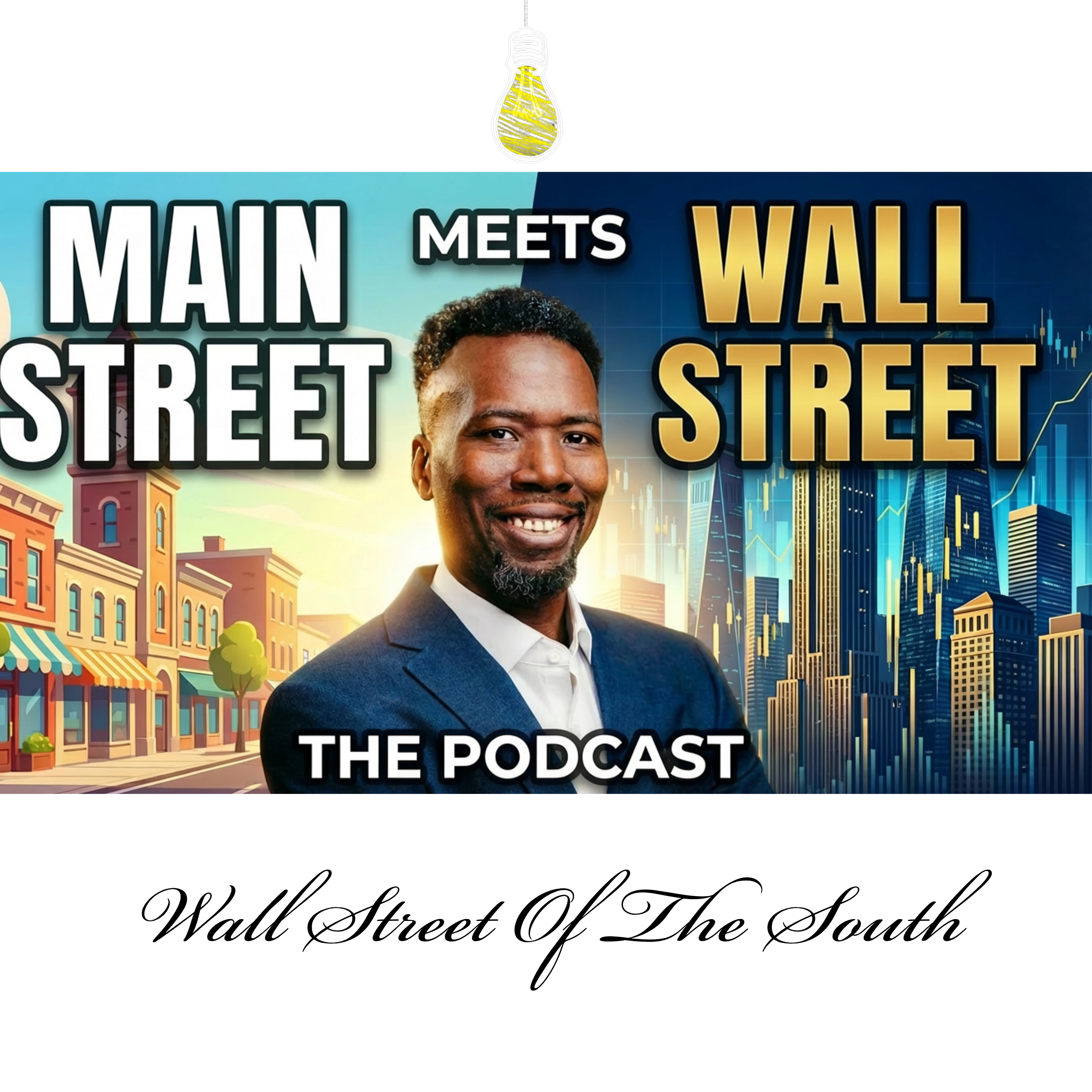
Main Street Meets Wall Street
by Marcus Sturdivant Sr.
Marcus is dedicated to helping "Main Street meet Wall Street." His expertise is frequently featured in global financial publications, such as The Wall Street Journal, Nasdaq, Business Insider, and Yahoo Finance, to name a few. Are you looking to master your money, understand economic headlines, and build lasting wealth? This channel is dedicated to providing clear, actionable financial education that empowers you to make smarter decisions for your future.Like and Subscribe! Join the community, ask questions, to start building the future you deserve today.#financialliteracy #Markets
-
28
Main Street Meets Wall Street: Is the Market Taking a Pitch on the War in Iran? Guest Kevin Thompson, Former New York Yankee
Is It Time to Take a Pitch in These Markets? (Part 1)Moving from the high-pressure mound of the New York Yankees to the complex world of financial strategy requires a specific kind of mental toughness. In Part 1 of this two-part series, I sit down with Kevin Thompson, founder of I-9 Financials, to discuss the "Logic of the Ledger" and how the discipline of professional sports translates into building long-term wealth.We are cutting through the noise of the OB VBA Bill and recent tax legislation to uncover what these changes actually mean for everyday Americans. Whether you are a W-2 employee or a business owner, understanding the true impact of these "Big Beautiful Bills" is essential for your financial survival.In This Episode, We Cover:Lessons from the Pros: How the discipline learned from professional baseball is applied directly to modern finance.Decoding Tax Legislation: Analyzing the impact of the "One Big Beautiful Bill" on American taxpayers.The Journey Over the Destination: Why the process of wealth building is more important than the result.Tax Realities: Why tax legislation often benefits business owners differently than W-2 employees.Infrastructure & Growth: Navigating the economic challenges and data center controversies in the Texas economy.Alternative Title SuggestionsIf you want to lean further into the baseball/finance crossover for better SEO and AEO reach, consider these:The Yankee Way to Wealth: Discipline, Tax Bills, and Market LogicTaking the Pitch: Why Being Passive is a Losing Strategy in Today’s Tax EnvironmentFrom the Bronx to the Bank: Kevin Thompson on Market Discipline and Tax LegislationDecoding the OB VBA Bill: A Financial Strategist's Guide to Recent Tax LawTimestamps:00:00 – Introduction to High-Pressure Performance04:47 – Lessons from Professional Sports07:57 – The Journey Over the Destination10:01 – Understanding the "One Big Beautiful Bill"12:47 – Tax Implications for Business Owners15:04 – The Reality of Tax Refunds18:03 – State and Local Tax (SALT) Deductions20:03 – Infrastructure Challenges in Texas25:00 – Data Center Controversies & Personal PerspectivesKey Takeaway:"The enemy of good is perfection." Kevin emphasizes that everyone's journey is unique and filled with minefields—the goal is to keep moving forward with a solid tax analysis as your foundation.Connect with the Community:Newsletter: Join over 1,200 professionals on The Wall Street South Journal via LinkedIn.Podcast: Subscribe to the Main Street Meets Wall Street podcast on all major platforms.https://open.spotify.com/show/7tv8lW6kHwnz8qRTkb6pQQ?si=FFXju7CyTPG0BI96MQ8aLgwww.youtube.com/@MarcusTheABCSquared#FinancialPlanning #TaxLegislation #KevinThompson #WealthManagement #InvestmentStrategies #TexasEconomy #RetirementPlanning #MainStreetMeetsWallStreet #NYYankeesChapters00:00 Introduction to High-Pressure Performance04:47 Lessons from Professional Sports07:57 The Journey Over the Destination10:01 Understanding the One Big Beautiful Bill12:47 Tax Implications for Business Owners15:04 The Reality of Tax Refunds18:03 State and Local Tax Deductions20:03 Infrastructure Challenges in Texas24:42 Living in Texas: A Personal Perspective25:00 Infrastructure Challenges and Data Center Controversies29:56 From Sports to Finance: A Personal Journey34:23 Market Insights and Portfolio Strategies40:40 The Importance of Tax Planning in Financial Advisory resourcesKevin Thompson's LinkedIn - https://www.linkedin.com/in/kevin-thompson/I-9 Financials - https://i9financials.comOB VBA Bill Analysis - https://www.congress.gov/bill/118th-congress/house-bill/03BTax Legislation Overview - https://www.irs.gov/newsroom/understanding-tax-lawKevin Thompson's LinkedIn - https://www.linkedin.com/in/kevinthompson/ guest linksLinkedIn - https://www.linkedin.com/in/kevin-thompson/
-
27
The $725B AI Stress Test: Federal Reserve Dissents, Private Credit Wars With Samuel O' Brient
The $725B AI Stress Test: Federal Reserve Dissents, Private Credit Wars, and Market ROIn this episode, we delve into the current financial landscape marked by high uncertainty, exploring the evolution of private credit, the implications of Fed dissent, and the resilience of the AI and software sectors amid turbulent times. Get insights from Samuel O'Brient and industry experts on what these shifts mean for investors.Key Topics:The high valuation concerns in the IPO market, especially for SpaceX and Anthropic, and historical performance post-IPO.The private credit landscape: Blue Owl's surprising earnings versus JP Morgan's bearish outlook, and the broader implications for liquidity and risk.Fed policy shifts: Kevin Warsh's unprecedented dissent, potential rate hikes, and the impact of political pressures on monetary policy.The ongoing AI and software industry recovery: earnings trends, the survival of the "SaaSpocalypse," and the coexistence of chips and software sectors.The influence of mega-cap tech companies like Alphabet and Meta on innovation and investment strategies.The upcoming IPO outlook, including high-profile offerings like Bill Ackman's Pershing Square and the significance of Nvidia's upcoming earnings.The impact of broad macroeconomic trends, including oil prices over 100 dollars and the implications for market sectors.Timestamps:00:00 - Market uncertainty amid high valuations and IPO outlook00:17 - Concerns over SpaceX and Anthropic valuations00:41 - The software sector's resilience post-earnings season01:00 - AI boom remains strong; chips and software coexist02:04 - Market stress test: rising AI arms race and private credit02:28 - Insights from Samuel O'Brient on private credit and big market players03:17 - The Fed's current stance: rate pauses and rising dissent03:57 - Kevin Warsh's challenges amidst unprecedented dissents04:57 - Private credit's role in funding AI data centers05:35 - The private credit saga: Blue Owl, JPMorgan, and investor caution07:12 - Sentiment on private credit as a potential market indicator08:03 - The disconnect between bank outlooks on private credit09:10 - The potential of private credit as a canary in the coal mine10:22 - Impact of Blue Owl earnings and investor confidence11:26 - Transition to discussions on IPO markets and high-profile offerings17:39 - Expectations for upcoming IPOs of SpaceX, Anthropic, OpenAI18:04 - The high valuation and creative strategies in tech IPOs20:02 - The Elon Musk vs. Sam Altman trial and its market significance22:04 - Other notable IPOs, including Bill Ackman's Pershing Square24:16 - The continued strength of the software sector post-SaaSpocalypse25:53 - The coexistence of chips and software in AI growth27:02 - Tech giants' in-house strategies and upcoming earnings clues28:36 - Surprises from recent earnings reports: Blue Owl, Nvidia, and the Mag-730:00 - Summary: Private credit, Fed dissent, and the AI sector—what investors must monitorepisodes where we continue dissecting the ever-changing market landscape.The market just shattered the S&P 7,000 milestone, but is the internal plumbing starting to crack? 🚨 Join Marcus Sturdivant Sr. for a high-intensity, 30-minute "Macro Blitz" with Business Insider’s Samuel O’Brient to dissect the $725 billion AI arms race, the private credit tug-of-war, and the mounting rebellion inside the Federal Reserve.The BreakdownIn this executive briefing, we move past the headlines and look at the "receipts." .Samuel O’Brient (Business Insider)—who has recently interviewed heavy hitters like Anthony Scaramucci, Danny Moses, Andrew Left, George Noble, Louis Navellier, and Grant Cardone—joins me to break down why the "Smart Money" is rotating while Main Street is still chasing yesterday’s winners.Key Topics Covered:The Blue Owl Tug-of-War: Why Blue Owl Capital surged 13% while JPMorgan slashed targets to $10.50.The IPO Keyhole: Why the exit w
-
26
What's Your Money Script Part 2: Stick to the Script, Doctors Orders!s Guest Yohance Harrison
The "Institutional Fog" is thickening. Following our Value Weekend megalaunch—which included over six hours of technical documentation in the War Report and the One Big Beautiful Bill (OBBBA) lookback—we are shifting from the geography of the crisis to the psychology of the recovery. In Part 2 of this conversation, Marcus Sturdivant Sr. and Yohance Harrison (Founder of Money Script Wealth Management) break down the "Behavioral Alpha" required to survive a global market shock. While the headlines focus on the Kevin Warsh Fed confirmation and $100+ Brent Crude, the real battle is happening between your ears. If you don't understand your "Money Script," you can't manage the math.In this briefing, we cover:Mental Guardrails: How to protect your portfolio from emotional sabotage during geopolitical shifts.The AI Edge: Leveraging tools like Hazel to enhance decision-making and client clarity.Niche Authority: Why specializing is the only way to survive the "Institutional Fog."Behavioral Alpha: Why you can't out-earn bad habits in a wartime economy.[CLICK TO SUBSCRIBE] for the Kevin Warsh Post-Vote Briefing coming tomorrow.00:00 Niche Marketing in Financial Services04:36 The Power of Asking for Help05:32 Building Connections in Professional Networks06:21 The Pharmaceutical Rep Strategy: Learning from Experience07:57 Full Circle Moments in Professional Relationships09:30 The Role of AI in Financial Advisory (Hazel AI)12:00 Enhancing Client Relationships with AI Tools13:19 Time Management & Efficiency in Financial Planning17:30 The Value of Time and Personal Fulfillment22:20 The Growth of a Financial Practice27:47 Sharing Stories: The Importance of Financial Literacy38:24 PREVIEW: The OBBBA Tax Shield with Kevin Thompson📈 MOMENTUM UPDATE⏳ CHAPTERS
-
25
The OBBBA Reconciliation: The Cannon, The Receipts, and The Trump Account Manual (Bonus Episode)
Most Americans are unaware that behind the headlines, policy isn’t just a set of laws it's a calculated transfer of wealth. In this explosive episode, a non-political, fact-based deep dive reveals how recent legislation, including the so-called "Big Beautiful Bill," directly impacts your financial future, often in ways the mainstream media won’t show you.Join us as we unpack the truth behind the policy shifts and explore the real game: a battle between institutional power and Main Street America. From the private credit pivot to the Year of the Retail Investor, discover how the government’s moves—like the Trump Baby Accounts and temporary tax benefits—are designed to shape our economy long-term. You’ll learn how these policies influence things like retirement savings, education funding, healthcare, and even your kid's future college expenses.You'll discover concrete insights on:How the permanent extensions of the 2017 tax cuts benefit middle-class families and who gets left behindThe structures and implications of innovative savings accounts, including the Trump Baby AccountsThe real impact of tariffs, trade negotiations, and supply chain disruptions on everyday costsThe shifting landscape of healthcare, Medicaid, and the rising costs that come with policy cutbacksThe role of AI in both government policy and the workforce, and how it might widen the gaps rather than close them Time is of the essence, and the stakes are high for families trying to navigate a complex, often opaque system.If you're a parent, small business owner, investor, or anyone seeking clarity in chaos, this episode is essential listening. We leave you with a sharp perspective: the real opportunity lies in how YOU interpret and use this knowledge to protect and grow your wealth. The game is changing—are you prepared?Connect with Marcus on LinkedIn or visit abcsquared.com for resources and personalized advice.Don’t let institutional policies catch you off guard—hit play now, and take control of your financial destiny.Main Topics:The "Big Beautiful Bill": A detailed review of key provisions, including tax cuts, child credits, and sunset clausesImpact on Families: How middle and lower-income families are affected by deductions, credits, and benefitsTariffs and Trade: The role of tariffs in deficit management, market reactions, and long-term economic implicationsThe "Trump Baby Accounts": Structure, benefits, and strategic importance for future generationsFinancial Strategies Today: Advice on investment resilience amidst policy and geopolitical shiftsAI in Legislation and Markets: Potential, risks, and the future role of artificial intelligence in policy execution and financial markets0:00 - Introduction to the institutional desk and policy as a wealth transfer.2:22 - Welcome to the first episode of "Policy for Normal People."4:02 - Introduction of Marcus Sturtevant and his mission.7:15 - Discussion on the impact of the "Big Beautiful Bill" on a typical family.11:54 - Explanation of the Trump Baby Accounts.15:07 - Discussion on tax deductions and credits.22:13 - Medicaid and healthcare funding debates.33:28 - Tariffs and trade negotiations.43:00 - Investment strategies amid policy changes.54:48 - The role of AI in policy and markets.1:01:29 - Federal Reserve independence and interest rate strategies.1:10:48 - Globalization and its impact on the middle class.1:21:18 - Details on the Trump Baby Account structure and benefits.1:42:15 - Year of the retail investor.2:04:32 - the Trump Baby Account tutorial.2:40:05 - Conclusion and global community message.Resources & Links:ABC Squared – Financial advisory and literacy servicesMain Street meets Wall Street Newsletter – Stay updated on market insights
-
24
Part 2 | The War Report: Documentation of a Wartime Economy "The Strait is not straight, and the Ledger is no longer balanced."
Part 2 | The War Report: Documentation of a Wartime Economy"The Strait is not straight, and the Ledger is no longer balanced."In Part Two of our special series, we move from the institutional deep dive with Stephen Davenport to a living, breathing documentation of the War in Iran. This session serves as a financial record of the escalation since our initial policy benchmarks were set on March 7th.With Brent Crude sustaining levels above $105–$120/bbl and the Strait of Hormuz remaining the focal point of a global energy blockade, we are no longer discussing "possibilities"—we are documenting the reality of a wartime economy.In this entry, we cover:The March 7th Baseline: A look back at our initial projections vs. the current reality of a $120 oil world.The Asian Frontline: Why the 17-year low of the Korean Won and the energy crunch in Japan and Vietnam are the "canaries in the coal mine" for global markets.The Fed’s Wartime Mandate: Why "Higher for Longer" is now a structural necessity to combat 1970s-style energy-driven inflation.Safe Haven Rotation: Documentation of the pivot into Gold and the US Dollar as the global supply chain for semiconductors and LNG faces a prolonged "force majeure."RESOURCES FOR THE FRONTLINES:Watch Part One (8:30 PM Live): [Link to 2-Hour Session with Stephen Davenport]Track Your Net Worth: During wartime volatility, precision matters. I use Monarch Money to track my portfolio in real-time: [Insert Link]The Podcast: Listen to Main Street Meets Wall Street on Apple & Spotify for the "commute-length" version of these reports.GLOBAL VIEWERS (Sunday Morning in Asia):To our community in Seoul, Tokyo, and Hanoi—this report is your Sunday briefing before the Monday market open. We are specifically looking at the currency pressures (Won/Yen) and the LNG supply disruptions impacting your local indices.JOIN THE DOCUMENTATION:We are documenting this war in real-time.Question of the Day: How has the energy spike since the March 4th blockade changed your "Main Street" spending or investment strategy?Subscribe and hit the bell to stay notified for next month’s entry of The War Report.#TheWarReport #WarInIran #Macroeconomics #StraitOfHormuz #Gold #OilPrices #FinancialLiteracy #MainStreetMeetsWallStreet
-
23
The WAR Report ECONOMIC FOG: The Iran War & The Global Market Shock (2-Hours) Part One
The first casualty of war is clarity. Some of the links in this description are affiliate links, meaning I may receive a small commission if you sign up or make a purchase through them, at no additional cost to you. I am a proud partner of Monarch Money and only recommend tools I personally use. This video is for educational and entertainment purposes only and does not constitute formal financial advice.https://monarchmoney.sjv.io/c/6934119/3777629/39024💸 Free 7-Day Trial — explore all of Monarch's features before committing💸 Built-in AI Assistant — ask anything about your money and get expert-informed answers in seconds, based on your complete financial picture💸 Built for Couples — collaborate with a partner on shared finances and goals — all at no extra cost💸 Syncs with 13,000+ Banks — see all accounts, budgets, and investments in one secure place💸 Credit Score Monitoring — track your score monthly, right in the dashboard, with no hard credit pull💸 No Ads or Data Selling — your financial information stays completely private As the conflict in Iran reshapes the "Master Ledger," Main Street is left navigating an unprecedented Economic Fog. This 2-hour definitive briefing from the Main Street Meets Wall Street Podcast provides a comprehensive record of the wartime economy, market mechanics, and the survival of the American household.In this deep-dive, Marcus Sturdivant Sr. (MBA) is joined by guest Stephen Davenport, Samuel O' Brient from Business Insider and Christy Amado. We cover everything from the gas pump to Trump Baby Accounts in this Masterclass breaks down the systemic shifts in private credit, the disruptive force of AI on employment, and the geopolitical tensions driving $120+ oil and systemic inflation. This is a "War Room" analysis for the informed investor who refuses to settle for soundbites.🕒 THE MASTER LEDGER: TIMESTAMPS[00:00 The First Casualty of War: Clarity02:00 Market Overview and Current Sentiments24:06 Private Credit Concerns30:40 Liquidity Issues in Private Credit36:17 AI's Impact on Employment and Economy49:41 Geopolitical Tensions and Market Reactions56:38 Market Sentiments and Political Influences59:08 Inflation, Tariffs, and Economic Predictions01:02:43 Retirement Planning and Social Security Challenges01:06:29 Government Stimulus and Economic Stability01:10:55 AI's Impact on the Future of Work01:14:27 Investment Strategies in Uncertain Times01:19:27 Looking Ahead: Optimism and Market Recovery01:26:29 Introduction and Market Overview01:27:41 Current Market Highlights and Sector Rotation01:28:29 AI Disruption in Legal and Fintech Sectors01:29:16 AI's Impact on Trucking and Supply Chain01:30:06 Investments in Data Centers and AI Infrastructure01:34:59 Effects of AI Investment on Retirement and Personal Finance01:36:46 Market Volatility and Geopolitical Factors01:40:08 Policy Update: Trump Baby Fund and Child Accounts01:47:11 Debate on Credit Card Rate Caps and Economic Impact01:54:30 Debt, Spending, and the Economy's Future01:59:15 Immigration, Wages, and Inflation02:08:00 Federal Reserve and Leadership Changes02:09:56 Conclusion: The Path Forward for America🔗 JOIN THE COMMUNITY & GET THE DATA📊 The Wall Street South Journal (LinkedIn): Join 1,200+ professionals for weekly deep-dives into the data behind these episodes.Subscribe on LinkedIn https://www.linkedin.com/build-relation/newsletter-follow?entityUrn=7430268734419742722 📣 ENGAGE WITH THE BRIEFINGI personally monitor and answer the comments on this channel. What part of the "Economic Fog" are you most concerned about? Drop your thoughts below—your questions drive our next live Q&A.Upcoming Drops:Tomorrow: The March Chokepoint BriefingSunday: The April Systemic Risk Update#IranWar #EconomicFog #MainStreetMeetsWallStreet #Finance #MacroEconomics #PrivateCredit #AI #MarketUpdate #MarcusSturdivant #Investing #WartimeEconomy
-
22
Main Street Meets Wall Street: What Is Your Money Script? Guest Yohance Harrison
Guest: Yohance Harrison, Founder and Managing Partner at Money Script Wealth ManagementHost: Marcus Sturdivant Sr.Duration: 35 MinutesIn the fast-paced world of finance, we are often told that success is purely a matter of math—calculating returns, balancing risk, and tracking indices. But what happens when the math meets human nature? In the first half of this exclusive two-part series, Marcus Sturdivant Sr. sits down with Yohance Harrison for an expansive 35-minute masterclass on the internal and external forces shaping today's financial landscape.This opening installment focuses on the "Main Street" reality: how individuals and families can navigate a market that often feels designed for institutional giants. Yohance Harrison, a veteran strategist who transitioned from the heights of Wall Street to founding Money Script Wealth Management, reveals why the most significant barrier to wealth isn't usually a lack of information—it’s the "scripts" we carry about what money represents.We open the dialogue by defining the "Money Script" philosophy. Yohance explains how our early experiences and societal narratives create a psychological blueprint that dictates every trade, every savings goal, and every fear-based exit from the market. We discuss how to identify these scripts to ensure they are working for your future, not against it.How does a holistic financial strategist look at the current market? Marcus and Yohance dive into the objective data driving today’s economy. They discuss the shift from traditional portfolios to more robust, data-backed strategies that incorporate modern market sectors.A core theme of this conversation is accessibility. Part 1 explores the tools and mindsets necessary to bridge the gap between the average consumer and high-level wealth management. Yohance shares his perspective on why transparency is the "new currency" in financial services and how investors can demand better data to drive their household decisions.Wealth management is often siloed into "investing" or "saving." Yohance challenges this by introducing a holistic framework that looks at the entire picture—from cash flow management to long-term legacy planning. We explore why a plan that only looks at numbers on a screen is destined to fail if it doesn't account for the life the numbers are meant to support..As the Founder of Money Script Wealth Management, Yohance Harrison has dedicated his career to empowering clients through a blend of technical expertise and behavioral coaching. His "client-first" methodology has made him a leading voice in holistic planning, known for turning complex market theories into practical, life-changing strategies for his clients.Deepen Your Analysis: Access exclusive market breakdowns and sector deep-dives at theabcsquared.com.Join the Community: Follow The Wall Street South Journal on LinkedIn for weekly updates that bring Wall Street clarity to your Main Street life.Modern Tools: Start organizing your financial world with Monarch Money, our preferred platform for tracking progress and optimizing cash flow.Part 2 Coming Soon: Don't miss the conclusion of this conversation, where we dive into specific asset classes, including private credit, SaaS trends, and the future of digital assets.The Psychology of Wealth: Bridging the Divide (Part 1)In This Episode (Part 1):The Foundation of the "Money Script"Main Street Strategy in an Institutional WorldDemocratizing Wall Street InsightsThe Role of Holistic PlanningChapter Markers (Part 1 of 2):About Yohance HarrisonConnect & Take ActionDisclaimer: Main Street Meets Wall Street is produced for educational and informational purposes. Marcus Sturdivant Sr. is a Registered Investment Adviser. This content does not constitute personalized financial advice. Investing involves risk, including the loss of principal. Always consult with your financial advisor regarding your specific situation.
-
21
Main Street Meets Wall Street: Inflation Explained: The Strategic Breakdown of CPI, PPI, and PCE
[BONUS] The Truth About Inflation: Protecting Your Purchasing Power in 2026Lead: In an era of manic markets, the greatest risk to a retirement portfolio isn't just volatility—it's the silent erosion of purchasing power. In this Strategic Breakdown, Marcus Sturdivant Sr. deconstructs the "Three P's" of inflation (CPI, PPI, and PCE) through the lens of long-term wealth preservation.What’s Inside for the Main Street Investor:The CPI vs. Your Reality: Why the government's out-of-pocket index often feels disconnected from your actual expenses.The Early Warning System: How the PPI signals price hikes 90 days before they hit the consumer.The Retirement Trap: Why a "Higher for Longer" interest rate environment requires a shift in how we view cash and fixed income.A Message to our Global Listeners: Why the US Federal Reserve's decisions are currently driving market moves from Charlotte to Southeast Asia.
-
20
Main Street Meets Wall Street: These Manic Markets with Marcus
Feeling the squeeze from the current market chaos? You’re not alone. In this episode, Marcus Sturdivant Sr. exposes how geopolitical tensions and inflation are affecting Main Street—and shares the critical moves you can make to safeguard your wealth.Most investors focus solely on stocks and bonds, but Marcus reveals the often-overlooked power of diversification and private credit to buffer against volatility. He dives into why owning a handful of household names can be riskier than you think, and how adding assets outside traditional stocks—like real estate, private credit, or even crypto—can protect you when markets turn sour.You’ll discover:How recent geopolitical events, from oil shocks to wars, have created new risks and opportunities in your portfolio.The truth behind correlation and diversification, and why they matter more than ever in today’s uncertain environment.The potential of private credit, what gates might restrict your access, and why this growing asset class could significantly boost your long-term returns.The impact of inflation on everyday expenses like food, energy, and housing—plus simple strategies to insulate yourself from its relentless climb.Why staying invested through volatility is your best shot at long-term gains—and how market timing often costs more than you think.The importance of understanding taxes, especially with recent meme-stock rallies and crypto gains—so you don’t accidentally give away more of your profits.Real-time insights from the front lines, Marcus cuts through the noise dismantling the myths and connecting the dots between global events and your financial future. He emphasizes that even in turbulent times, strategic diversification and disciplined investing remain your best tools for growth and protection. Perfect for investors feeling overwhelmed but eager to learn—whether you're a seasoned pro or just beginning your journey—this episode arms you with the knowledge to make smarter choices today, so your money works harder for you tomorrow. Don't let market chaos dictate your future—tune in now and discover the actionable steps that could transform your financial resilience.
-
19
Main Street Meets Wall Street: By George I Think We Got It! Part Two
Unlock the secrets behind the shifting tides of the financial world with insights from a seasoned investment strategist with over 45 years of experience. Imagine having access to the mindset, strategies, and foresight that have helped institutional investors outperform retail for decades—now, you can. Discover how expert investors leverage exclusive alternative assets, maintain a disciplined long-term perspective amid volatile markets, and rebalance intelligently to preserve wealth in uncertain times.In this episode of Main Street Meets Wall Street, George Hauptfuhrer, CFA, shares invaluable lessons from his extensive career—highlighting the importance of diversification, understanding market cycles, and recognizing red flags before bubbles burst. You'll uncover specific frameworks like the PEG ratio and learn how institutional players analyze data, think contrarian, and navigate market dips, including historic crashes like Black Monday of 1987 and recent tech rallies. George explains how recent market cycles mirror past bubbles, and offers practical advice on interpreting signals for today’s complex macroeconomic environment.We break down: the advantage institutional investors hold—including access to private equity and hedge funds—versus retail limitations; the importance of a long-term mindset, even during sharp downturns; and how to spot signs of overhyped trends like AI or Bitcoin. George discusses the upcoming Federal Reserve leadership, specifically Kevin Warsh’s potential approach amid geopolitical tensions, high national debt, and inflation challenges—delivering insights every investor needs to navigate this intricate macro landscape.This is essential listening for anyone committed to making smarter investment decisions, whether you're a financial advisor, a proactive retail investor, or someone planning for retirement. Missing out on these lessons risks falling prey to fear-driven reactions that can derail wealth building or cause costly mistakes. With his hands-on experience from firms like Invesco and Prime Buchholz, and mentoring generations of advisors, George explains how to think, act, and rebalance like the pros in today's unpredictable world.Prepare to rethink your assumptions, decode market signals, and position your portfolio for long-term resilience. From managing risks to seizing opportunities and understanding macroeconomic trends, this episode arms you with actionable insights from one of the most experienced minds in the field. Hit play now and elevate your investing IQ—because the smarter you are, the better your financial future.
-
18
Main Street Meets Wall Street: By George Do We Have It? Guest George Hauptfuhrer, CFA
Most investors stumble into the market believing they have all the tools to beat the pros—until they hear from George Haupthfuhrer CFA, a true veteran with over 45 years of navigating market cycles. In this episode, George unveils the insider strategies institutional investors use to outperform retail, from accessing exclusive alternative assets to thinking long-term amid volatility. His insights reveal how diversification, rebalancing, and understanding macro signals can safeguard your investments against the next market downturn—and why so many miss these cues until it’s too late.You’ll discover how institutional investors leverage private equity, hedge funds, and global diversification to build resilience. George breaks down the hidden lessons behind historic bubbles, from the dot-com crash to Black Monday, and explains what signals might hint we’re heading toward another cycle shift. He shares the impact of recent market dips, the future of AI and innovation, and the critical role of the Federal Reserve amidst geopolitical tensions and mounting debt.We break down:The advantages and limitations of institutional versus retail investing in today’s information landscape.How to rebalance intelligently and avoid common pitfalls, especially in volatile markets or when chasing hot sectors.Key indicators that signal whether the market is overheated or ripe for correction, informed by decades of experience.The importance of diversification and the safe “barbell” strategy for long-term wealth preservation.Practical tips for integrating dividend-paying stocks, avoiding concentration risks, and navigating taxes effectively.Why this matters:Ignoring these lessons can mean the difference between staying ahead or falling behind as markets evolve. Whether you’re a seasoned investor, financial advisor, or just getting started, George’s seasoned perspective helps you decode signals, sidestep pitfalls, and position for long-term growth—regardless of what the macro environment throws your way.This episode isn’t just a masterclass in investment psychology and macro analysis; it’s your roadmap to smarter, more resilient money management. Perfect for anyone who wants to think like a pro, understand market cycles, and navigate uncertainty with confidence.Tune in to expand your financial horizons—your future wealth depends on it.George Haupthfuhrer is a respected investment strategist and CFA Charterholder with leadership roles at Invesco and Prime Buchholz. He mentors future financial leaders and has decades of experience in market cycles, asset diversification, and macroeconomic trends.
-
17
The Truth About Investing in Crypto and Gold: How Geopolitical Risks Shape Market Movements Guest Clem Miller
SummaryIn this insightful interview, Clem shares his expertise on investing, geopolitical risks, and the dynamics of markets like crypto, gold, and stocks. He emphasizes the importance of skepticism, risk management, and understanding international factors that influence investment decisions.Key TopicsInvestment skepticism and risk managementImpact of geopolitical risks on marketsInternational business and investment strategiesSound Bites"Risk management is key, not trading daily.""Crypto's volatility makes shorting difficult.""Apply common sense to all your investments."
-
16
"Bitcoin: Digital Gold or Scam?" Main Street Meets Wall Street Guest Clem Miller
In this episode, Clem Miller, a retired trader and Georgetown professor, provides a skeptical perspective on cryptocurrencies, comparing them to traditional assets like gold and stocks. He discusses the nature of crypto, its lack of intrinsic value, and the geopolitical and systemic risks involved, offering valuable insights for Main Street investors.00:00 - Introduction and Guest Background01:16 -Crypto's Lack of Intrinsic Value03:24 - Crypto Marketing and Misconceptions05:48 - Fiat Currencies and Geopolitical Power09:10 - Bitcoin's Limited Supply and Promoters' Claims11:30 - Demand, Supply, and Price Fluctuations13:00 - Alternatives to Bitcoin and Crypto Tokens16:24 - Gold vs. Bitcoin as a Store of Value19:26 - Speculation and Demand in Crypto Markets22:23 - Forking and Creation of New Crypto Tokens25:33 -Crypto as a Large Cap and Small Cap Analogy27:46 - Risks and Regulation in Crypto Investments Clem's Takes. Crypto is not a real investment asset The geopolitical and systemic risks of crypto The nature of fiat currencies and Bitcoin's limitations The concept of supply and demand in crypto markets Risks of leverage and lack of regulation in crypto Skeptics Guide to Investing Podcast - https://podcasts.apple.com/us/podcast/skeptics-guide-to-investing/id123456789Clem Miller on LinkedIn - https://www.linkedin.com/in/clemmillerGeorgetown University - International Business Course - https://fss.georgetown.eduBitcoin Forking Explanation - https://en.wikipedia.org/wiki/Blockchain_forkSubscribe on LinkedIn https://www.linkedin.com/build-relation/newsletter-follow?entityUrn=7430268734419742722https://open.spotify.com/show/7tv8lW6kHwnz8qRTkb6pQQ?si=FFXju7CyTPG0BI96MQ8aLg
-
15
Main Street Meets Wall Street: The Hidden Risks and Opportunities of AI That Wall Street Won't Tell YouI I Do My Own Research Part Two With Guest Adam Parker
Most investors are missing one of the biggest shifts happening right now: AI's impact on markets and how it's fundamentally changing the way Wall Street and Main Street operate. Adam Parker, founder of Trivariant Research and a seasoned Wall Street strategist, exposes the disruptive patterns of AI that could leave traditional investors behind — unless you understand how to leverage this technology. In this eye-opening episode, Adam shares concrete insights on how AI automates data integration, accelerates analysis, and reveals opportunities most stay blind to. You'll discover how seasoned firms are using natural language processing and machine learning to predict market moves, assess corporate health, and drive portfolio management more effectively than ever before. We break down the quiet revolution reshaping everything from chip stocks to valuation methods, giving you an insider’s view of what’s next for the financial landscape.You'll learn about the specific sectors (like semiconductors, software, and legacy value stocks) most influenced by AI. Adam discusses the risks of ignoring this transformation, such as the potential for Main Street to fall behind Wall Street’s machine-driven evolution. This episode arms retail investors, entrepreneurs, and financial enthusiasts with actionable strategies to stay ahead, adapt to rapid technological change, and avoid common pitfalls.Perfect for those seeking to understand the future of investing, this episode makes complex AI-driven market shifts clear and accessible. Whether you're an experienced investor or just starting out, you'll leave with the knowledge, tools, and confidence to navigate the coming market shifts. Don’t get left in the dust—hit play now and future-proof your financial strategy.Adam Parker is the founder of Trivariant Research, an expert in quantitative analysis, and a former top semiconductor analyst at Morgan Stanley. His deep industry experience and focus on integrating macro, fundamental, and quantum variables make this episode essential listening in today’s high-speed data era
-
14
Main Street Meets Wall Street: US Debt Part 2 - The $164 Trillion Problem Nobody's Talking About Guest James Callahan
The $164 Trillion Tab: US Debt vs. Real ObligationsThink the $39 trillion national debt is scary? That’s only the beginning. In Part 2, we go below the surface to the number that actually matters: $164 trillion. This is the total cost to service the U.S. government’s existing debt plus its massive unfunded obligations for Social Security and Medicare.In this episode, we break down:The "Ghost" Debt: Why the official debt clock misses $125 trillion in future promises.The Demographics Trap: How an aging population is turning "obligations" into an inescapable fiscal cliff.The Servicing Nightmare: What happens to the U.S. economy when interest on these obligations starts consuming 50% of all tax revenue?It’s time to stop looking at the debt and start looking at the deficit of promises.www.youtube.com/@MarcusTheABCSquaredSubscribe on LinkedIn https://www.linkedin.com/build-relation/newsletter-follow?entityUrn=7430268734419742722
-
13
Main Street Meets Wall Street: I Do My Own Research Part One, With Guest Adam Parker
In this insightful interview, Adam Parker, a seasoned Wall Street analyst, shares his expertise on current market trends, AI's impact on finance, sector rotations, and investment strategies for Main Street investors. Discover how AI is transforming research, the importance of understanding industry cycles, and practical advice for retail investors. keywordsWall Street, AI in finance, market trends, sector rotation, investment strategies, retail investing, stock analysis, economic outlook, financial literacy key topicsAI's impact on financial research and analysisSector rotation and industry cyclesInvestment strategies for retail investors guest nameAdam S. ParkerTitlesHow AI is Reshaping Wall Street in 2024Top 5 Investment Insights from Adam Parker sound bites"AI is transforming research and analysis""Hunger and drive matter more than pedigree""Start with small, low-fee investments"Chapters00:00 Introduction to Main Street Meets Wall Street resourcesTriVector Research - https://trivectorresearch.comAdam Parker's CNBC Profile - https://www.cnbc.com/adam-parker
-
12
The Main Street Meets Wall Street Podcast: Unpacking US Debt Part One Guest James Callahan
Understanding US Debt and Economic Risks with James CallahanIn this episode, we explore the complexities of the US national debt, credit ratings, and economic sustainability with veteran credit research analyst James Callahan. Whether you're a Main Street investor or Wall Street professional, grasping these concepts is crucial to understanding the financial forces shaping our future.Key Topics Covered:The scale of US federal and unfunded liabilities totaling approximately 164 trillion dollarsHow debt levels compare to US assets and the implications for fiscal stabilityThe importance of debt ratings (AAA, AA, BBB) and the factors influencing these assessmentsThe relationship between debt, interest rates, inflation, and their impact on consumers and governmentAnalogs for household debt management and what the debt-to-GDP ratio signals about economic healthHow credit default swaps and bond spreads serve as risk indicatorsThe potential consequences of a sovereign default and the importance of prudent fiscal policyInsights into investment positioning, diversification, and understanding risk 00:00 - Introduction to US debt and its significance 02:45 - The total US liabilities: $164 trillion explained 04:12 - Comparing US debt to assets and what it means for taxpayers 05:11 - How debt servicing costs are rising and their economic impact 06:19 - Household debt analogy: buy now, pay later and sustainability 10:18 - The debt-to-GDP ratio and current US standing over 120% 12:13 - Credit ratings: from AAA to AA and what drives downgrades 13:40 - The role of strong balance sheets for governments and corporations 15:07 - The importance of a solid financial profile for sovereign and corporate debt 17:01 - Impact of interest rates and Fed policy on debt service and market stability 18:23 - Rating agencies' perspectives: how the US might be viewed in today's environment 20:48 - Addressing the US's debt challenges: political and fiscal considerations 22:55 - How monetary policy decisions influence the debt landscape 24:58 - Understanding Treasury securities: bills, notes, and bonds
-
11
Main Street Meets Wall Street: The Insider Episode: SCOTUS Rules on Tariffs, Market Moves, AI Disruption, and the New Fed with Samuel O'Brient
Main Street Meets Wall Street: The InsiderEpisode: Market Moves, AI Disruption, and the New Fed with Samuel O'BrientCan you navigate a market where the rules are rewritten every week? In this episode, Marcus Sturdivant Sr. sits down with Samuel O’Brient from Business Insider to break down the seismic shifts of 2026. From the "Kitchen Table" inflation impact of recent Supreme Court rulings to the new era of the Federal Reserve under Kevin Warsh, we bridge the gap between global macro-trends and your personal portfolio.[00:00] Intro: Is Water Wet? (The logic test)[05:46] Geopolitical Tensions & Oil: Iran’s leverage in 2026[12:03] Trade Policy & The Supreme Court: New inflation risks[17:41] The Warsh Fed: Market reactions & interest rate forecasts[23:45] Closing: Recession risks and the "Dead Money" rotationThe "Dead Money" Rotation: Why patient capital is finally winning.AI Structural Shift: Moving beyond the hype into financial service disruption.Energy Outlook: Why $100 oil is a persistent threat in the current climate.SAMUEL O'BRIENT (Business Insider)Samuel is a top-ranked markets reporter covering tech, policy, and finance.Read Sam’s latest at Business Insider: https://www.businessinsider.com/author/samuel-obrientConnect on LinkedIn: linkedin.com/in/samuel-o-brient MARCUS STURDIVANT SR. (The ABC Squared)The Wall Street South Journal: Subscribe on LinkedIn https://www.linkedin.com/build-relation/newsletter-follow?entityUrn=7430268734419742722Official Website: https://theabcsquared.comFollow on LinkedIn: https://www.linkedin.com/in/marcussturdivantsr/Join The Wall Street South Journal: Stay ahead of the curve with the premier financial news outlet for the Southeast. Subscribe for exclusive insights:Enjoyed the episode? Leave us a 5-star review and follow the show to get "The Insider" updates every week!50% off the first year of Monarch Money for your audience: https://monarchmoney.sjv.io/c/6934119/2395636/14860With this discount applied, the annual price drops to just $49.99/year or $4.17/month ... less than a cup of coffee for financial peace of mind!Some of the links in this description are affiliate links, meaning I may receive a small commission if you sign up or make a purchase through them, at no additional cost to you. I am a proud partner of Monarch Money and only recommend tools I personally use. This video is for educational and entertainment purposes only and does not constitute formal financial advice.#Finance #Investing #StockMarket #Geopolitics #AI #BusinessInsider #WallStreetSouth #MainStreetMeetsWallStreet
-
10
Main Street Meets Wall Street: We Have Options Guest Stephen Davenport
THE GREAT DIVIDE: MAIN STREET VS. WALL STREETFor decades, a massive wall has stood between the average investor and the sophisticated tools used by institutional hedge funds. On one side, "Main Street" is told to simply "buy and hold" and hope for the best. On the other side, "Wall Street" uses complex derivatives to hedge risk and manufacture income regardless of market direction.In this episode, we are tearing that wall down. We believe that options are not just for the suits in Manhattan; they are practical, mathematical tools that—when used conservatively—can completely change the financial trajectory of retirees and new investors alike.WHY THIS EPISODE MATTERS NOWWe are living through a unique economic era where traditional "safe" investments like bonds or high-yield savings accounts often struggle to keep pace with inflation. Many retirees are finding that their nest eggs aren't generating the monthly cash flow they expected. Simultaneously, new investors are entering a volatile market, afraid of "buying the top."This 72-minute deep dive is designed to bridge that gap. We move away from the "gambling" narrative of high-leverage trading and focus on option strategies for longevity, stability, and consistent growth.WHAT WE BREAK DOWN IN THIS EPISODE:1. FOR THE RETIREE: THE INCOME REVOLUTIONRetirees often face the "sequence of returns" risk—the fear that a market drop early in retirement will ruin their long-term plans. We discuss:The Synthetic Dividend: How to use "Covered Calls" to generate monthly checks from stocks you already own, essentially "renting out" your shares to the market.Lowering Volatility: Using options to smooth out the "bumps" in your portfolio so you can sleep better during market swings.Preserved Capital: Why income-generation is the ultimate defense in a sideways or "flat" market.2. FOR THE NEW INVESTOR: THE SMART ENTRYIf you are just starting out, simply hitting the "buy" button on a volatile stock can be intimidating. We explore:Getting Paid to Wait: The "Cash-Secured Put" strategy. Why buy a stock at market price today when the market will literally pay you to wait for a lower, better price?Cost Basis Reduction: How using options from day one allows you to start your investing journey with a "margin of safety."Defining Risk: Understanding exactly how much you can lose before you ever enter a trade.3. DEBUNKING THE MYTHSWe spend a significant portion of this episode clearing the air on why options have a "bad reputation." We discuss why most people lose money (hint: it's usually greed and excessive leverage) and how the Main Street approach differs by prioritizing capital preservation over "lottery ticket" wins.KEY TAKEAWAYS YOU’LL WALK AWAY WITH:A clear understanding of the difference between speculation and strategic income.Why "Time Decay" can be your best friend instead of your enemy.How to look at your brokerage account as a "business" that generates revenue, rather than a "betting slip."The exact mindset shift needed to move from a passive observer to an active manager of your own wealth.RESOURCES & LINKSWe want to help you stay skeptical, stay informed, and stay invested. For more deep dives into the world of finance without the Wall Street fluff, check out our resources below:LISTEN TO MORE EPISODES: https://skepticsguidetoinvesting.buzzsprout.com/PROFESSIONAL GUIDANCE: https://circap.com/DISCLAIMERThis podcast is for educational purposes only. Options involve risk and are not suitable for all investors. Before trading, please consult with a financial advisor or read the "Characteristics and Risks of Standardized Options" provided by the OCC."Options for retirees""Generate income from stocks""Investing for beginners""Conservative options strategies"
-
9
Main Street Meets Wall Street Podcast
Want to know how this podcast will help Main Street Meet Wall Street? Check out the trailer.
-
8
Year of the Retail Investor 2025 to 2026!
The 2026 January Market Shakeup: Why Gold is at $5,300, The 10% Credit Cap, and the "Big Beautiful Bill" Tax Reality.Some of the links in this description are affiliate links, meaning I may receive a small commission if you sign up or make a purchase through them, at no additional cost to you. I am a proud partner of Monarch Money and only recommend tools I personally use. This video is for educational and entertainment purposes only and does not constitute formal financial advice.0:00- New Era For FOMC1:00 - Big Topics, Gold, Bitcoin, FED, Kevin Warsh, Credit Card Cap, OBBBA2:00- Gold, Bitcoin, The Dollar4:00 Kevin Warsh, Fiscal View6:00 Banks, 10% Credit Card Cap9:50- Greenland11:30 - Trump Baby Accounts IRS Form 454715:00- OBBBA Impact On You Tax Deductions and Tax Credits16:00 - SALT Tax State And Local Tax20:00 - Connect With Marcus Sturdivant Sr The ABC SquaredJanuary 2026 has been a historic month for the U.S. economy. From the nomination of Kevin Warsh as the next Fed Chair to the territorial framework deal for Greenland, the rules of the game are changing. In this video, I break down my recent commentary in The Economic Times, Yahoo Finance, and the Charlotte Business Journal to show you how these headlines impact your net worth.In this video, we cover some articles with Marcus Sturdivant Sr's commentary:https://www.businessinsider.com/gold-silver-price-crash-outlook-buy-the-dip-analyst-predictions-2026-2The "Big Beautiful Bill": Why withholding errors could lead to your biggest tax refund ever.The Credit Crunch: Why the 10% interest rate cap proposal has Bank of America and others tightening their belts.Social Security vs. Medicare: The 2.8% COLA increase vs. the $202.90 Medicare Part B premium reality.Gold vs. Bitcoin: Why Gold hit $5,300 while Bitcoin struggles to hold $90k.🔗 My Featured Articles :The Economic Times: Trump’s Big Beautiful Bill: What it could mean for your tax refund this yearYahoo Finance: Experts warn consumers could pay the price for credit card interest rate capsCharlotte Business Journal: Bank of America and the Credit Card Cap Fight💰 Take Control of Your Wealth:I use Monarch Money to track my net worth, categorize my spending, and stay ahead of the "hidden inflation" we discuss in this video.👉 Get started with Monarch Money here: https://monarchmoney.sjv.io/c/6934119/2395636/14860📢 Professional Disclosure:Some of the links in this description are affiliate links, meaning I may receive a small commission if you sign up or make a purchase through them, at no additional cost to you. I am a proud partner of Monarch Money and only recommend tools I personally use to manage my finances. This video is for educational and entertainment purposes only and does not constitute formal financial advice.#FedChair #GoldPrice #TaxRefund2026 #MonarchMoney #KevinWarsh #FinanceNewshttps://monarchmoney.sjv.io/c/6934119/2395636/14860 https://www.gobankingrates.com/credit-cards/advice/experts-warn-consumers-could-pay-more-if-credit-card-cap-limits-rewards-raises-other-fees/ https://economictimes.indiatimes.com/news/international/us/trumps-big-beautiful-bill-what-it-could-mean-for-your-tax-refund-this-year/articleshow/127627437.cms https://www.msn.com/en-us/money/savingandinvesting/trump-s-plan-for-greenland-the-expected-economic-impact-on-the-american-middle-class-in-the-coming-months/ar-AA1V0oHghttps://youtube.com/playlist?list=PLyG35c6pJO823iQgfgSdXrFpTHaaKFUYC&si=i2heWwigGho9qYqV#gold #bitcoin #creditcard #finance #investing #fedchair #kevinwarsh
-
7
2026: The End of Software as a Service? The Dollar and Diversification? The Trillion-Dollar Pivot
The 2026 SaaSpocalypse: Why the Software Model Just BrokeFor twenty years, the "Per-Seat" subscription model was the holy grail of tech. But in February 2026, the floor fell out. As AI agents—led by the Anthropic "Claude Coworker" shock—begin to autonomously execute workflows, the need for human "seats" is evaporating.The Headcount Collapse: If 10 AI agents can do the work of 100 sales reps, a company doesn't need 100 Salesforce licenses anymore. They need 10. This volume collapse is why we’ve seen $300 billion in market cap vaporized this month alone.The 10-Year Treasury Gravity: With the 10-year yield anchoring around 4.2%, the "Growth at any cost" era is dead. High yields act like gravity for tech stocks; when you can get a guaranteed return on a bond, the "maybe" of a software company’s 2030 earnings becomes much less attractive.Despite the noise, the U.S. Dollar remains the world's Master Ledger. While people talk about "de-dollarization," the reality is that the new BIS Unified Ledger and the tokenization of real-world assets (RWA) are actually cementing the Dollar's status as the ultimate unit of account. We aren't moving away from the Dollar; we are moving into a more high-definition, digital version of it.One of the most historic policy shifts of 2026 is the launch of Trump Baby Accounts. This isn't just a stimulus; it's a "Starter IRA" designed to build a new generation of investors.Pro Tip: These accounts are "custodial-style" IRAs. The child owns the assets, but you act as the sole custodian until they turn 18. This is the first time the U.S. has institutionalized compounding interest for every newborn citizen.If the software business model is broken, where is the "Smart Money" going?Infrastructure & Power: As AI agents demand massive compute, the value has shifted from the "App Layer" to the "Power Layer."Hard Assets: Gold and Bitcoin have seen volatility, but they remain the primary hedges against the "Master Ledger's" expansion.Outcome-Based Software: Look for companies moving away from "seats" and toward "results-based pricing."In a market this volatile, visibility is your only protection. I use Monarch Money to track my traditional brokerage accounts, my crypto wallets, and now, my family’s Trump Baby Accounts, all in one dashboard. It’s the best way to see your "Net Worth" in real-time without the clutter.Get 50% off your annual plan here:https://monarchmoney.sjv.io/c/6934119/2395636/14860The "Master Ledger" & The U.S. Dollar’s Secret StrengthTrump Baby Accounts: The $1,000 JumpstartFeatureDetailsThe SeedA one-time $1,000 government contribution for children born 2025–2028.The LimitParents, relatives, or employers can contribute up to $5,000/year.The MathStarting with $1k and adding $5k/year at a 7% return = ~$303,800 by age 18.The PortalEnroll via IRS Form 4547 at trumpaccounts.gov.Strategic Diversification: The 2026 Survival MapAD: Organize Your 2026 Portfolio with Monarch Money
-
6
Is Your Portfolio Safe? What The Dow Transport Theory Reveals About Today's Market
Is Your Portfolio Safe? Dow Theory, AI Disruption, & The 2026 Market SelloffCan a 130-year-old theory predict the future of your 401(k)? Welcome to the debut episode of The Main Street Meets Wall Street Podcast with Marcus Sturdivant Sr. We are kicking off this series with a Master Class in market mechanics. If you've been watching the news and feeling the "SaaS Apocalypse" or wondering why the Dow Jones is bouncing at 50K, this episode is your roadmap. We’re bridging the gap between high-level Wall Street movements and the practical financial literacy you need to protect your wealth.We dive deep into the architects of the modern market. Ever wondered who actually started the "Dow Jones"? We explore the men behind the names—Charles Dow and Edward Jones—and more importantly, how their century-old Dow Jones Transport Theory remains one of the most accurate indicators of economic health in 2026.We also tackle the "SaaS Selloff"—analyzing how AI agents and tools like Claude are reshuffling the software-as-a-service industry. Is Salesforce or Adobe still a safe bet? We break down the "per-seat" revenue model and why it’s under fire.0:00 - Intro: The State of the 2026 Market Selloff.1:30 - The SaaS Apocalypse: Why AI is disrupting traditional software models.8:00 - AI & Software Evolution: The move from clerical work to AI agents.13:00 - Market Origins: Who actually started the Dow Jones Index?14:00 - Dow Jones Transport Theory: Why "moving goods" is the key to stock market health.17:00 - The History of Crisis: Lessons from 1907, 1929, 1987, 2001, 2008, and the Covid Crash.19:00 - Structured Notes & MBS: Understanding the ghosts of the 2008 Housing Crisis.22:00 - The Cost of Cheap Money: Why low interest rates eventually lead to massive inflation.25:00 - Investing vs. Trading: Why these two terms are NOT interchangeable.26:00 - Investing is Gardening: The patience required for long-term wealth.32:00 - The ABC Squared Mission: Closing the financial literacy gap for Main Street.34:50 - Macro Trends: How immigration and labor shifts are impacting your wallet.36:00 - The Toolbelt: How I use Monarch Money (AI-driven budgeting) to track success.I believe in using the best technology to manage your money. I am a proud partner of Monarch Money—the tool I personally use to track my net worth and manage my budget.👉 Claim your 7-day trial and 50% off your first year: https://monarchmoney.sjv.io/c/6934119/2395636/14860Financial literacy is the ultimate equalizer. If you want to master the markets and stop guessing with your investments, join the community.✅ YouTube: Subscribe for daily deep dives @MarcusTheABCSquared✅ Podcast: Follow Main Street Meets Wall Street on Spotify and Apple Podcasts."Investing is like gardening. You have to prep the soil, plant the right seeds, and have the discipline to let them grow. You can't just keep digging them up every two days to see if the roots are growing. That’s trading. If you want a harvest, you need a plan."https://www.gobankingrates.com/investing/strategy/things-to-do-with-your-money-right-now-after-dow-hit-50k/Disclaimer:Some of the links in this description are affiliate links, meaning I may receive a small commission if you sign up or make a purchase through them, at no additional cost to you. I only recommend tools I personally use. This video/podcast is for educational and entertainment purposes only and does not constitute formal financial advice. Always consult with a professional regarding your specific situation.#StockMarket2026 #DowJones #FinancialLiteracy #InvestingTips #SaaSSelloff #DowTheory #MarketHistory #MonarchMoney #MarcusSturdivant #MainStreetMeetsWallStreet #WealthBuilding📉 In This Episode:🕒 Episode Timestamps (Navigate the Master Class):🛠️ Financial Tools & Resources📈 Connect & Grow with The ABC Squared📝 Key Takeaway from Marcus:
No matches for "" in this podcast's transcripts.
No topics indexed yet for this podcast.
Loading reviews...
ABOUT THIS SHOW
Marcus is dedicated to helping "Main Street meet Wall Street." His expertise is frequently featured in global financial publications, such as The Wall Street Journal, Nasdaq, Business Insider, and Yahoo Finance, to name a few. Are you looking to master your money, understand economic headlines, and build lasting wealth? This channel is dedicated to providing clear, actionable financial education that empowers you to make smarter decisions for your future.Like and Subscribe! Join the community, ask questions, to start building the future you deserve today.#financialliteracy #Markets
HOSTED BY
Marcus Sturdivant Sr.
Loading similar podcasts...
URL copied to clipboard!