
PODCAST · history
MakingHistory
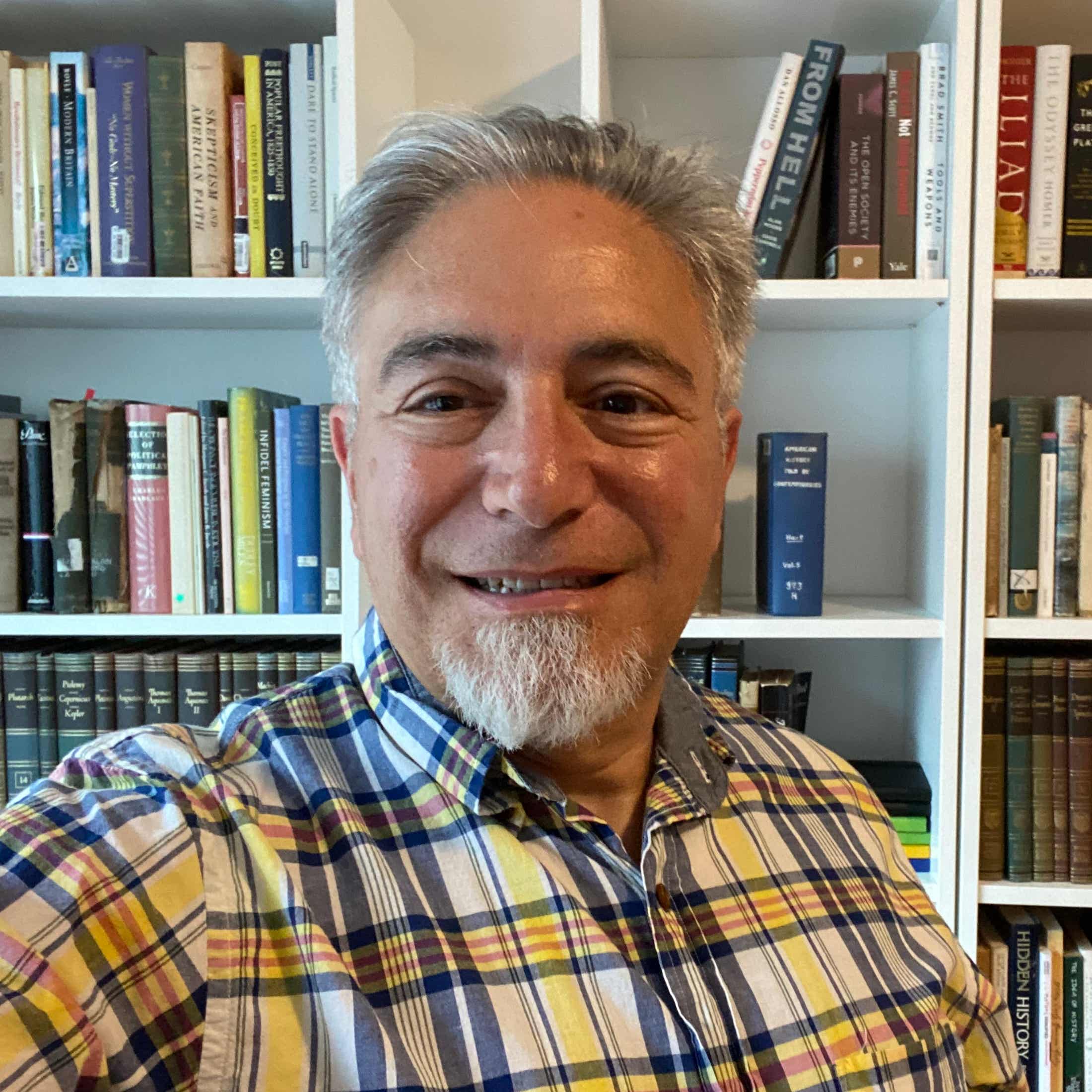
by Dan Allosso
Making History is the top-level thing I do, as a historian, teacher, and writer. I create content, based on either original primary research or to present the findings of other historians to my students. This channel will cover several topics (arranged in playlists) such as note-taking, research, and writing tools and techniques, history I'm teaching at Bemidji State University, research and writing projects I'm working on, Open Education techniques and resources I'm creating, and reflections on the ways that history helps us understand our current world. danallosso.substack.com
-
136
Channel Update
This is a public episode. If you'd like to discuss this with other subscribers or get access to bonus episodes, visit danallosso.substack.com/subscribe
-
135
Road to Serfdom Meeting #2
After a month off, we meet to discuss the first ten chapters of the influential Hayek book. This is a public episode. If you'd like to discuss this with other subscribers or get access to bonus episodes, visit danallosso.substack.com/subscribe
-
134
Plutocrats Meeting #5
This is a public episode. If you'd like to discuss this with other subscribers or get access to bonus episodes, visit danallosso.substack.com/subscribe
-
133
Plutocrats Meeting #4
This is a public episode. If you'd like to discuss this with other subscribers or get access to bonus episodes, visit danallosso.substack.com/subscribe
-
132
Reconstruction
Final lecture of my Spring 2025 course, US History 1. This is a public episode. If you'd like to discuss this with other subscribers or get access to bonus episodes, visit danallosso.substack.com/subscribe
-
131
King Cotton, Slavery, Annexation
And Manifest Destiny. Week 12 content for my US History 1 course. Students are also reading and annotating sixteen primary source passages, from an excerpt out of Dana’s Two Years Before the Mast describing California in 1840 to never-before-seen family letters of a young Yankee man visiting the South in 1850. Check them out! This is a public episode. If you'd like to discuss this with other subscribers or get access to bonus episodes, visit danallosso.substack.com/subscribe
-
130
Democracy in America
Chapter 11 lecture for my US History 1 course. This is a public episode. If you'd like to discuss this with other subscribers or get access to bonus episodes, visit danallosso.substack.com/subscribe
-
129
Caste Book Club, Meeting #4
This is a public episode. If you'd like to discuss this with other subscribers or get access to bonus episodes, visit danallosso.substack.com/subscribe
-
128
US History 2, Lecture 10
This is a public episode. If you'd like to discuss this with other subscribers or get access to bonus episodes, visit danallosso.substack.com/subscribe
-
127
Caste Book Club, Meeting #3
This is a public episode. If you'd like to discuss this with other subscribers or get access to bonus episodes, visit danallosso.substack.com/subscribe
-
126
US History 1, Lecture 9
In this one we look at the Alien and Sedition Acts of 1798, the Louisiana Purchase, and the beginnings of partisanship in American politics. This is a public episode. If you'd like to discuss this with other subscribers or get access to bonus episodes, visit danallosso.substack.com/subscribe
-
125
Caste Book Club, Meeting #2
This week we discuss part three, where Wilkerson compares American Jim Crow, Nazi propaganda, and Indian Varnas. This is a public episode. If you'd like to discuss this with other subscribers or get access to bonus episodes, visit danallosso.substack.com/subscribe
-
124
US History 1, Lecture 8
In this one, we look at the period between the end of the Revolutionary War and the Federalist administrations of George Washington and John Adams. Framing the Constitution, French Revolution, Illuminati Conspiracy, etc. This is a public episode. If you'd like to discuss this with other subscribers or get access to bonus episodes, visit danallosso.substack.com/subscribe
-
123
Caste Book Club, Meeting 1
First meeting to discuss the introductory sections of Isabel Wilkerson’s book Caste: The Origin of Our Discontents. Also a bit about this week’s politics. This is a public episode. If you'd like to discuss this with other subscribers or get access to bonus episodes, visit danallosso.substack.com/subscribe
-
122
Ultimate Hidden Truth, Meeting 5
Our final talk about Graeber’s book of essays. But mostly about the first month of the new administration and politics in America. This is a public episode. If you'd like to discuss this with other subscribers or get access to bonus episodes, visit danallosso.substack.com/subscribe
-
121
US History 1, Lecture 6
"Awakening" covers the middle of the eighteenth century, when American colonists experienced bot a religious revival and the beginnings of a rebelliousness that would culminate in the American Revolution. This is a public episode. If you'd like to discuss this with other subscribers or get access to bonus episodes, visit danallosso.substack.com/subscribe
-
120
Invitation to intentionality
Some thoughts prompted by a friend objecting to the idea of paying for my content. I think we’re entering a much less “mass market” and more intentional type of relationship with the content we consume and the producers who make it. So I’m not expecting my content is going to be valued and supported by everyone, but I am hoping to find some people who value it enough to support it. This is a public episode. If you'd like to discuss this with other subscribers or get access to bonus episodes, visit danallosso.substack.com/subscribe
-
119
Abhijit's US History
I've been a fan of Abhijit Chavda (https://www.youtube.com/@AbhijitChavda) for years now. Recently he has started making videos about American History, saying he's going to read a hundred books and use them to provide a better understanding of America for his million or so subscribers. I think this is brilliant and I'll be looking forward to seeing them all! I also think that as a US Historian, I may be able to help clarify some things. Since I assume that as a theoretical physicist and expert on India, Abhijit will be relying on the sources he chooses, I hope he won't be offended if I offer additional sources and their perspectives when they can enhance his story. I'm very happy Abhijit cares enough about these topics to devote such an effort to this. Maybe we'll be able to collaborate at some point! This is a public episode. If you'd like to discuss this with other subscribers or get access to bonus episodes, visit danallosso.substack.com/subscribe
-
118
US History 1, Lecture 5
Another chapter of my course this semester, to set the scene for a dozen Primary Sources covering the period from 1698 to 1740. This is a public episode. If you'd like to discuss this with other subscribers or get access to bonus episodes, visit danallosso.substack.com/subscribe
-
117
English Consolidation
This is the fourth “chapter” of my US History 1 course this semester, in which I tighten the focus a bit more to concentrate on some of the stresses that resulted in a consolidation of English colonial power at the end of the 17th century. This is a public episode. If you'd like to discuss this with other subscribers or get access to bonus episodes, visit danallosso.substack.com/subscribe
-
116
Webbed History
Each week during the semester, and often during breaks as well, I spend a fair amount of my time building stories to tell students. Narratives that connect a series of events or ideas that I want to impart in a course unit. As I do that, I'm typically trying to guide the story along a particular path that combines the basic stuff students are supposed to learn in history classes with additional items that I think correct or add to the students' understanding of the past. I think it's always useful for a historian to double-check (and cite) sources, especially because no one can know everything. Recently I was critical of Allen Guelzo's mistakes, when he claimed in his Great Courses lecture that both Ferdinand and Isabella and their daughter Joanna had both been the parents of a single child. this is wildly inaccurate, as well as being a sort-of pointless detour off his narrative. At first I thought this was just because he was outside his specialization (US Civil War history), but I later noticed that Guelzo had lifted whole passages from Alan Taylor's American Colonies, which is much closer to his field than Spanish dynastic details. That sort-of undermined the whole thing for me; although I will continue listening and reviewing the lectures. The lesson, I think, is to try to be humble. And to trust, but verify when compiling and synthesizing secondary material into a tertiary (textbook) document. But as I'm doing that, I'm also very aware of the artificiality of narrative and all the things I'm leaving out in connecting the particular dots I've chosen, out of the infinite number available. It's a bit like drawing constellations in the sky. What about all the stars you've ignored? Why does this particular one link to the next one in the pattern? In history, we sometimes convince ourselves that there's an inevitable logical order of causes leading to effects. But which causes and which effects? And even when we can agree that there are certain big events that ought to be featured in a story, there are almost always a lot of interesting details that we pass over. An alternative to this, which I've been pondering for a while, is to deconstruct the narrative a bit. Not to abandon the historian's job of interpreting the past, deciding what is most important and relevant, and presenting our findings and interpretations in an understandable (and hopefully interesting!) form. But perhaps to give the reader or student a bit more agency in deciding which elements of a slightly wider-angle depiction of the past is most interesting to them. Since I was working in the computer industry when the worldwide web became thing and since I remember early hypertext document systems like Bill Atkinson's Hypercard (released by Apple in 1987), I've always had a soft spot for branching, choose-your-own-story types of structures. I bought Eastgate's Storyspace about ten years ago, but the hypertext novel never really took off. Partly, I suspect, this was due to the extreme (even exponential!) additional work involved in building not just a single story that proceeds in a line of a curve from point A to point B, but instead a kind of web that a reader could travel in, experiencing different stories or the same story from different perspectives. History, on the other hand, seems like it might lend itself to this type of approach. There are events, and people, and places that we can locate in a sort of matrix, and then explore how they relate to each other. Especially as historians have become more interested in more points of view than just the "Great Men" on whom we used to focus, an opportunity to connect ideas together in a wider variety of ways might be valuable. It might also be satisfying for readers or students to pursue the links that interest them, rather than being constantly led by the nose to the next point the author thinks is most important. Again, authors are never really off the hook; they still have to choose a finite number of links and make the connections available and sensible to the user and relevant to the theme.There's also an ongoing question about the length of a card, which has been an ongoing feature of discussion in note-making circles and discussions of how some writers prefer a long-form, rambling, stream of consciousness while others thrive with outlines and "atomic" notes. I tend to be one of those people who often will just begin a Daily Note essay (like this one) and then keep typing for a while and see where it goes. Sometimes, as I did in this post, I'll have a new thought as I'm working out something, and start a new paragraph below the one I'm working on, with a thought I can expand on in its turn. This is helpful, because if I ignore that little brainstorm when it comes to me, it's often gone for good -- or at least it sinks back into the depths until a particular combination of thoughts trigger it again, but often much later. Long story, but the upshot is that I think the history that I think I'm going to write which will be my unique contribution to online education will be this type of thing. I've been writing these longish (45 minute to an hour) lectures for my students, and I'll continue doing that. But I'm also going to begin exploring how the ideas I present to the students can also be presented in a web that will allow them to not only follow a narrative arc I determine, but link to ideas related to what I'm describing. So a reader who was interested in the Atlantic Slave Trade or the development of Corporations or ideas that led to Democratic institutions in my US History, for example, could jump from point to point where those ideas enter the main narrative, rather than waiting patiently for the next mention of it in the narrative. In a sense, this is a digital index (I think nearly everything we do digitally has an analog in the analog world), but it's right there on each page, inviting the reader to explore. I've thought for a while that Obsidian Publish might be a tool I could use to achieve this type of webbed history. I've made some stabs at that already, with some success. I also tried Scrintal for a while, but there were some issues I had trouble resolving (I'll check in with them every once in a while to see if they've been resolved). I'll be continuing that work, hopefully in realtime as I continue making content for my courses this semester and this summer. I hope to be working again in the Minnesota State system in the fall, but I also hope to turn some of this material into free-standing learning content I can offer to Lifelong Learners. Stay tuned, I'll let you know how it goes! This is a public episode. If you'd like to discuss this with other subscribers or get access to bonus episodes, visit danallosso.substack.com/subscribe
-
115
Great Courses US History, Chapter 2
After a bit of a delay, here’s my review of the second chapter of the US History course produced a couple of decades ago for the Great Courses series. If you’d prefer to read instead of watching, the notes I used are below:Charles (Hapsburgh) had "much to gain from the grim reaper", according to professor Guelzo. The King of Spain. and Holy Roman Emperor, he continues, was the grandson of Ferdinand and Isabella. Then he says, "Christopher Columbus's royal patrons had only one child, Joanna, and she married into the most powerful ruling dynasty in Europe." It's true that Joanna did marry "Philip the Handsome", the Duke of Burgundy who became King of Castile briefly in 1506. But Joanna's sister Catherine married Arthur, Prince of Wales, and then when he died, his younger brother Henry (VIII). Ferdinand and Isabella's other surviving children were Isabella, who married Afonso, the Prince of Portugal; John, the Prince of Asturias; Maria, who married King Manuel I of Portugal. He goes on to say that Joanna only had one child also, Charles. This is also false. Joanna's children were Eleanor, Queen of Portugal and France; Isabella, Queen of Denmark; Ferdinand I, Holy Roman Emperor after the death of Charles; Mary, Queen of Hungary; and Catherine, who was also Queen or Portugal. Kind of a shaky start to this Great Courses lecture. The pompous-sounding voice he uses while reciting these errors doesn't help (although that may just be me). Guelzo does mention that Charles had a big problem with Martin Luther and the Protestant challenge to the Vatican. He also suggests that Charles was annoyed by the pretensions of commoners such as Cortés and Pizarro, and moved rapidly to demote them and take control of the territories they had conquered in America. The Spanish Crown did consolidate these regions into the Viceroyalties of New Spain and Peru, but the Spanish had a long tradition of hidalgo low-born gentlemen, who had ennobled themselves by military success. So I doubt the way he characterizes the motivations. Guelzo says that only 250,000 Spaniards came to the New World in the 1500s. This is a contextless number, though; he doesn't compare it to anyone else's colonization efforts. One thing about the Spanish conquest, of course, is that the majority of these immigrants were young men who took native wives or concubines and rapidly increased the population of *mestizo* people who had a higher social status than the natives (or later, Africans). These Spanish settlers founded hundreds of towns, Guelzo says, which is true. The repartimiento that followed the end of the encomienda gave Spaniards authority over native communities and a claim on their labor. He also mentions that one of the main achievements during this period was the extraction of 200 tons of gold and 16,000 tons of silver, which provided 3x to 5x the entire previous stock of precious metals in Europe. The professor then briefly explains the encomienda, which he calls the encomendero and seems to confuse with the later repartimiento. He doesn't mention the supposed spiritual responsibilities of encomenderos to christianize the natives, but instead jumps right to how the church destroyed native books and culture (which is true). To his credit, Guelzo reiterates that it was really the European diseases that did in native cultures, although he regrettably adds "the self-inflicted disease of alcoholism", which is a bit too blatantly racist and in any case inaccurate for the period of Spanish conquest he's discussing. Guelzo jumps to North America and says the east coast native population also was devastated by diseases, primarily by a series of contacts with Europeans. This is true, but another major spreader of disease among the Indians were the extensive trade and communication networks that existed in the native world. He lists a number of recorded outbreaks: smallpox in 1519 and typhus in 1531 and 1585, although he says these were only the largest and most visible. Another of course would be the result of De Soto's travels in the Southeast from 1539-42, which seems to have triggered a largely invisible population disaster among the southern remnants of the Mississippian culture. To his credit, the professor does describe this episode. He then tells the story of Cabeza de Vaca's and Esteban's travels as slaves and then healers in the Southwest. Spain, he concludes, could "no longer afford" the freebooters. The wealth was "too much of a good thing" that poisoned the Spanish economy. He talks about military adventurism in the Netherlands and 500% inflation. By the mid-1600s, he says, Spain had spent its wealth and lost its influence. This mostly benefited France, he says. Under Henry IV, religious civil wars ended and Samuel de Champlain established Quebec and New France in 1608. The French traded with natives for furs along the Saint Lawrence. He briefly describes the Iroquois/Huron rivalry and Champlain's intervention on the Huron's behalf. Iroquois enmity, he says, pushed the French westward rather than south, all the way to the Mississippi River, which LaSalle floated down and claimed Louisiana at its mouth. Guelzo blames Louis XIV's European adventurism for the lack of focus on America. And the French "cut off their nose to spite their face" by banning Huguenot emigration to America. The Protestant Dutch, on the other hand, hired Henry Hudson to find the Northwest Passage to the Pacific. What they got was fur trade with the Iroquois, the enemies of the Hurons and French. And because the Dutch put profit over religion, their colony became a cosmopolitan center where a visitor claimed 18 languages could be heard on the streets. This is a public episode. If you'd like to discuss this with other subscribers or get access to bonus episodes, visit danallosso.substack.com/subscribe
-
114
US History 1, Lecture 3
In this one we begin to zoom in on North America, looking at the earliest activities of the Spanish, French, Dutch, and English in regions that will later become parts of the United States. And at Native American reactions to these European activities. This is a public episode. If you'd like to discuss this with other subscribers or get access to bonus episodes, visit danallosso.substack.com/subscribe
-
113
US History 1, Lecture 2
This is the second lecture of my US History 1 course this semester. It covers what happens when Europeans first encountered the Americas. This is a public episode. If you'd like to discuss this with other subscribers or get access to bonus episodes, visit danallosso.substack.com/subscribe
-
112
African American History, Lecture 1
This is an informal (meaning no PowerPoint) lecture I did to clarify a couple of points in my African American History course. Among the points I thought needed attention: the Egyptians were Africans but Cleopatra was not. This is a public episode. If you'd like to discuss this with other subscribers or get access to bonus episodes, visit danallosso.substack.com/subscribe
-
111
US History 1, Chapter 1
My first lecture for my online US History course, setting the scene and briefly describing the Americas, Europe, and Africa before the “discovery” of America by the Europeans and subsequent collision of cultures. The narrative “chapters” serve as a jumping-off place for the primary sources the students read and discuss each week. This week there are a dozen, beginning with an account of Leif Erikson in Vinland and concluding with Richard Hakluyt’s advice to Queen Elizabeth about using America to “abase” Spain. This is a public episode. If you'd like to discuss this with other subscribers or get access to bonus episodes, visit danallosso.substack.com/subscribe
-
110
Happy Holidays 2024!
This is a public episode. If you'd like to discuss this with other subscribers or get access to bonus episodes, visit danallosso.substack.com/subscribe
-
109
Substack Changes; Paywall "Off"
I'm setting up a new hardware arrangement. I'll have an old iMac on the left side of my desk and the MacBook Pro with the addition al LG screen on the right. This should give me a lot of screen real estate on which to do a bunch of things simultaneously. I have also duplicated my big Obsidian vault and renamed it “2025 Master”. Time to start weeding, though. I'm also getting ready to start posting my blog on a Wordpress site that I own, in addition to on Substack. The advantage of Substack is that it aggregates a lot of blogs and produces a feed of them, that allows subscribers to see my posts in their inboxes as well as visiting my own page and seeing my recent posts in the order I posted them. And then to see some older posts that they would need to be contributors to access. I don't think a lot of people on Substack are really that interested in reading my old posts. Substack seems almost entirely focused on what's new today. This is a huge advantage for people who are posting news or commentary that deals with the most up-to-the-minute happenings. Or who are posting serialized content where one item naturally follows another. Not so much when the connections might be random and chaotic. I don't think Wordpress actually lends itself to this, either. But I might be more inclined to edit and insert links. And also to allow people to see 100% of the archive. Rather than requiring a subscription, I could just put the "Buy Me a Coffee" link in the sidebar. I don't think it's realistic to expect people to pay to read a blog. This was an element Substack used to attract bloggers: that there would be some type of peer appreciation and support in the form of subscriptions. But then they went and put the minimum annual subscription price at $50. While I understand it's expensive to process payments and Substack would probably lose money of people were running monthly subscriptions of a buck or two monthly, a full-on book generally only costs $10 to $20 new. So the idea that someone is going to pay $50 for a set of posts that maybe one day will get tidied up and edited into a book of essays (this was a typical path imagined by many authors) is a bit farfetched. It's great when people believe in you and want to encourage you to keep working—I certainly appreciate that from the people who've become contributors to MakingHistory and Lifelong Learning! But I also feel like I ought to be giving them more. The obvious solution seemed to be permanent access to the archive of all my content. I don't think this lacks value, but my thinking about it has changed based on the difficulty Substack seems to have making it easy and inviting to explore people's archives. So I think I'm going to shift focus and stop trying to get Substack to do something it really isn't designed to do. I think the format is useful for alerting people to new work I'm doing and probably also to providing snapshots and limited-duration full views of new content. But I don't think it makes sense to try to make this the place where I expect people to be able to engage with long-term evolution of trains of thought across numbers of posts where I return to an idea and look at it from different angles. That's something I'll be trying to really develop in 2025, as a thing I can put out in a public space. So stay tuned for that. An upshot of this is that I think that since it's such a chore navigating and reading it, the post archive should probably not ALSO be something people have to pay to access. So I'm going to turn off the paywall. I'm also going to NOT have a paywall in Wordpress, although I will invite people to Buy Me a Coffee. And I’m going to publish some digital content this year that’s complete, polished, and well-linked, and sell it like a book. This is a public episode. If you'd like to discuss this with other subscribers or get access to bonus episodes, visit danallosso.substack.com/subscribe
-
108
Retrenchments Continue at BSU!
I got an email end of last week from a friend who got me an adjunct teaching gig at the university where he works, in the Minnesota State system. He's a guy I've known for several years and I had collaborated with him, writing an open textbook for the course he got me a section of in his department to teach this semester. He said they had an opening for an American History professor coming open, due to a retirement. The way the system works, when there's an opening the university HR staff checks a list of retrenched faculty to interview first, and they found an American Historian who had been retrenched in 2023 from a different university in the system (they're all struggling). My friend said he ha asked HR about me, but he was told my name was not on the "retrenched" list. He was writing me partly to let me know. I responded to him that I assumed that was because I didn't have tenure. My Dean and Provost at BSU had urged me to apply for tenure during my final year, since I was eligible and had been planning to apply for tenure and promotion before I was retrenched. But then my union, the Interfaculty Organization (IFO), told me it wouldn’t count for any type of contractual claiming rights for other jobs in the system unless I already had been promoted and granted tenure before my separation date (May 7, 2024). And unfortunately the President of BSU declined to make a decision before the time he typically processed tenure and promotions in June. He was probably quite busy -- actually I'm being sarcastic here. He's pretty useless, incompetent, and uncaring. In any case, I didn’t get tenure.After all I did, above and beyond the call of duty, for BSU, I thought that was pretty shitty. Neither my Dean nor the Provost had the will or the political capital to do anything for me, which was disappointing. I don't blame the Dean; her job has been hell the past several years. And although I have a hard time believing the Provost was ever acting in good faith, he has subsequently resigned or perhaps has been forced out of BSU as a scapegoat, so I guess keeping his head down and choosing his battles didn't pay off for him. That said, the IFO didn’t exactly go to bat for me either, after all the membership dues I paid in. So maybe I'm better off not landing another job in a university in this system. Ironically, the IFO local president who really didn't go to bat for me is now facing the same situation I faced last year. He was informed before the start of the fall semester that he will be retrenched at the end of the academic year. After finding out he was being laid off, he wrote a letter to the editor of the Bemidji Pioneer, suggesting "Bemidji’s taxpayers should consider whether a university that spends only a third of its expenses on instruction is really prioritizing education." He also noted that after faculty came up with a reorganization that saved the university about $1 million, "All the money professors saved in instructional costs last year was entirely eaten up by uncontrolled spending on facilities, administration and athletics." So at least that particular MinnState university doesn't really seem focused on delivering learning to students. That said, the community colleges in the system seem to be a bit more stable and may be viable for the slightly longer term. I like the students and things seem to be going pretty well. I'm keeping busy and there seems to be a chance I'll continuing to be able to find history courses to teach in the next academic year. So although the work is a lot more contingent and gig-like, at least there's work! This is a public episode. If you'd like to discuss this with other subscribers or get access to bonus episodes, visit danallosso.substack.com/subscribe
-
107
Hobby Farm History
I’m visiting Northern Minnesota today, where I used to think I was going to live forever as a bobby farmer. To be truthful, I really hadn’t been keeping up with it as much as I probably should have, once I was working full-time at the University. I had already begun phasing out the annual batch of “broiler” chickens I used to raise, to fill the freezer. And then, of course, my life changed completely in 2024. I took a walk around the property on a mild, sunny Saturday morning. Sort of took stock of the whole experience. Maybe I’ll have more to say about that; in the meantime here’s a glimpse at what remains. This is a public episode. If you'd like to discuss this with other subscribers or get access to bonus episodes, visit danallosso.substack.com/subscribe
-
106
Can't Do Politics
I’m stepping back from the sort-of intense focus on political news I was contemplating, because I just don’t think I’d be able to stand it too long. Hopefully Substack will settle down as well, from the intensity that I’ve noticed surrounding the election. This is a public episode. If you'd like to discuss this with other subscribers or get access to bonus episodes, visit danallosso.substack.com/subscribe
-
105
"Heather Watch", 11-20-24
From “Letters From an American:. 11-11-24: - The Taliban congratulated Trump. The Taliban is bad. Trump began the withdrawal from Afghanistan. (QED?)- Rusia. Russia. Putin. Russia.- Trump "claims to have talked to about seventy world leaders since his reelection but has declined to go through the usual channels of the State Department." Heather says this show his "determination to reorganize the federal government around himself". It couldn't mean he doesn't trust the Biden State Department? - Elon Musk seems like a "shadow vice-president" according to someone at The Guardian. He has (gasp!) sat in on a few phone calls. Might have some influence on appointments. Hmm. The guy runs half a dozen companies doing breakthrough work. Maybe he knows a thing or two?- There's some jockeying over who is going to run the Senate. Oddly, Heather seems a bit wistful about Mitch McConnell. - The "Mandate" maybe wasn't. And Heather says voters both elected Trump and supported "Democratic" policies like abortion rights and a path to citizenship for immigrants. I think this is a very interesting development, but I don't think it means what Heather thinks it means. I suspect there may be a future where sensible measures could be pursued without painting them with a team color. 11/12: Another dig at Musk before a summary of a WSJ article sounding the alarm about a "purge" in the uppermost "brass" ranks of military leadership. HCR seems focused on the idea of "Trump loyalists" in high positions and compares this prospect of some firings to "Stalin's officer purges in early WWII". This is absurd. Stalin actually killed people; Trump is at this point talking about replacing some political appointees in top military leadership roles with people more to his liking. Sort of like what every incoming president does. She goes on to accusing Trump of planning to "drill baby drill" and "eliminate the Biden administration's policies to address climate change". But then she admits, "In fact, the production of oil and gas hit an all-time high during the Biden administration and the U.S. exports those products". So which is it? Heather expresses an academic's disdain for dumb people when she makes fun of SD governor Kristi Noem's mistaken claim that Texas was a signatory of the US Constitution. Texas became a state two generations later. I get it, but it'a a bad look. More concerning is the idea that an evangelical apocalypticist like Mike Huckabee is being considered for US Ambassador to Israel. HCR concludes by invoking the "Framers of the Constitution" who she says hoped the Senate would serve as a check on wannabe autocrats. This will be tested, she suggests, in the fight over recess appointments and the confirmation process. Her general approach seems to be that the results of small-d democracy represented by the MAGA victory need to be tempered by professionals and the "adults in the room". Unfortunately, in her mind that also seems to mean turning government over to Neocons of the career bureaucracy (AKA deep state).11-13: Heather remarks on the rift between the traditional Republicans in the Senate and the MAGA wing, which I think is interesting as well. I think she is right that the secrecy of the balloting for majority leader probably helped the Senate defy Trump's wishes a bit. So checks and balances (guardrails) aren't completely a thing of the past. Heather pushes this a bit far, I think, when she says that although Republicans have long wished to dismantle the activist government first created in the New Deal and maintained by both parties (she says until 1981), they have not previously tried to dismantle the "rule of law" or "rules-based" international order. So she's right back to that claim, which I think is a bit like Senator McCarthy and his list of 205 communists. "Trump has made it clear that his goal for a second term is to toss overboard the rule of law and the international rules-based order," Heather says. Show me the list.11-14: Heather again claims "President Joe Biden rejected the “neoliberalism” of the previous 40 years that had moved about $50 trillion dollars from the bottom 90% of Americans to the top 1%...Biden’s policies worked, enabling the U.S. to recover from the pandemic more quickly than any other country with a modern economy, sending unemployment to historic lows, and raising wages faster than inflation for the bottom 80% of Americans." She doesn't actually provide facts to back up these claims. The "Notes" section at the end lists a series of White House briefing statements and newspaper articles that seem to blur the line between reporting and commentary (hat-tip to Mary for explaining to me the difference!).11-15: The Biden administration did some good things for America's infrastructure. Then Heather launched into her typical daily feed: And then there is Trump’s tapping of former Hawaii representative Tulsi Gabbard to be director of national intelligence (DNI). Gabbard’s ties to America’s adversaries, including Russia’s president Vladimir Putin and Syrian president Bashar al-Assad, have raised serious questions about her loyalty. Making her the country’s DNI would almost certainly collapse ongoing U.S. participation in the Five Eyes intelligence alliance in which the U.S., the U.K., Canada, Australia, and New Zealand have shared intelligence since World War II. As former Illinois representative Joe Walsh wrote: “Donald Trump just picked someone to oversee our intelligence who, herself, couldn’t pass a security clearance check. She couldn’t get security clearance. She couldn’t get a job in our intelligence community. Because she’s too compromised by Russia. Yet Trump picked her to run the whole thing.Remind me again of the facts behind the statement about Gabbard's "ties"? Remind me again why Gabbard was placed on a "Quiet Skies" watchlist? Is there ANY evidence this wasn't politically motivated? Seems maybe Gabbard is in a good place to know something about the overreach of the surveillance establishment. Or, as Glenn Greenwald said on X, “If Tulsi Gabbard is a Russian asset, why has the US military allowed her to serve in it for 26 years, up to and including today as a Lt. Col. in the Army Reserve? It's rather to difficult to explain that except with the conclusion that the accusation is utter baseless b******t.” And finally, did Heather just come out as a FAN of the Five Eyes? This is a public episode. If you'd like to discuss this with other subscribers or get access to bonus episodes, visit danallosso.substack.com/subscribe
-
104
Globalization
Chapter 11 or Week 11 lecture for my Modern World History course. This is a public episode. If you'd like to discuss this with other subscribers or get access to bonus episodes, visit danallosso.substack.com/subscribe
-
103
Jon and Heather
Heather Cox Richardson appeared on Jon Stewart's Weekly Show podcast a few days ago and talked for about an hour. Thanks Mary, for letting me know! There were more things that I agreed with her on, in this one. Although I have to say, I agreed with Jon even more. Especially in the frame of mind that seems to have informed his questions. Jon actually began the whole thing, before introducing Heather, by acknowledging that Trump had won this election not by any trickery or intimidation or cheating, but by getting more votes. I think that was an important way to start. Jon went on to introspect a bit about "just what it was that made what you think your world is and the things that you were certain about, not certain." But (and this is why I'll always like Jon Stewart), he continued, "Man I still believe in this country and I believe in individuals. And I believe in the power of change, and organization, and goodness...competence." I do too, and I appreciate Jon's sincere desire to understand people rather than to demonize them for not behaving the way he had hoped they would.When she got on air, Heather got right to what I think is her main thesis about this election: that "we're in a swirl of disinformation in this country so that a lot of people who voted for Trump really truly voted for things that were the opposite of what they say they wanted." Heather's view of reality seems to be quite focused on particular items she says the media (and thus the people) have overlooked. I'm skeptical, but willing to be convinced. Fro example, Heather claimed that Joe Biden's administration had "deconstructed" Neoliberalism and focused on the effects of the national economy on working class and middle class Americans. Jon pushed back on this a bit and Heather responded that she was frustrated it wasn't more obvious. "Biden has been out there every day" working for the average American, she said, and the media had ignored that fact. Heather said that Americans have always been able to trust "the guardrails" that kept American democracy on track but that they are now gone. She tells Jon she'll come back to this...I don’t think she ever really did.Heather says this is the best economy America has had since the 1960s. Real wages are up, she says. I assume she has a Labor Department statistic to back this up, but I still insist that the economic issues need to be drilled down into in much more detail than the type of top-level aggregate measurements she's using. Her point seems to be that people are grabbing the statistics that suit their arguments to make "people" feel the economy is worse than it "really" is, "and every economist will tell you that's exactly backward" (really? Every economist?). This is a place where Jon's curiosity about why people feel the way they do might be valuable. Heather doesn't seem to want to consider this question; instead at this moment she introduces the Russian "technology" of getting people to vote for the candidate they want by skewing their perception of reality.Jon asks, what if we cite a bunch of statistics about how well the US economy is doing but people don't feel it in their personal lives and homes? He tries to get into the mindset of people who are feeling "the System is not delivering what they need." Heather countered that the system we have had in recent decades (Neoliberalism, from 1981-2021) was the problem (which I agree with, to an extent) and that Joe Biden "very deliberately deconstructed and replaced with the system we had had before that, that did work for everybody." I'd like to hear more about how she thinks Biden did this; maybe I missed something but the administration's economic policies didn't seem that deliberate or based on a new philosophy to me. Heather would be right to point out there's a lag and it's not really fair to credit or blame an administration for the economy it inherits, which could be years or decades in the making. But she says Biden has been running around "every day" trying to fix the economy and compare what he's doing to FDR, and it's the fault of the media that this message hasn't "cracked through". She also claims (as if its obvious and doesn't need proof) that the next administration will be autocratic and that Biden had worked against corruption and crony capitalism, which I found really odd in light of stories (suppressed in the mainstream media but visible nonetheless) about Biden family activities in places like Ukraine. Finally she sort of warned that the lesson people in power might be getting is, "don't do anything for the middle class because they won't appreciate it."Jon then brought up a moment that had confused him, when Trump was in a barber shop talking to regular people while Harris was embracing Dick and Liz Cheney. Heather countered that Trump hadn't told the barbershop owner he was filming a campaign promo (because the cameras and lights were so well hidden??) and then called the embrace of the Cheneys a bipartisan, Eisenhower-like or Teddy-Roosevelt-like coalition. Sometimes you have to rewind and listen twice to these types of statements that sneak into the conversation, and unpack them. She then praises Tim Walz's practical policies in Minnesota and says, "I think we have learned in this moment that that realistic approach to politics cannot stand against the modern techniques of propaganda that are enabled by social media." This position echoes her opening thought, that Americans have been bamboozled and may need to be protected from these forms of discourse that confuse them. But what just happened in the thirty seconds of her response? She conflated the embrace of the Cheneys with Walz's practical governance and tried to slip that bundle into the conversation as a positive future for the democrats or America.A bit later came the parts that I agreed a bit more with. Heather said the question of whether democracy is actually viable in a 21st-century America of 335 million diverse people, is a legitimate question. I think this is true. Heather suggested that the autocratic leaders of Russia and China are claiming democracy is a thing of the past. She also seems to believe the party that has just won the election agrees with them. Heather pointed to the capping of representation in the House in 1929 as an anti-democratic move. She also blamed Supreme Court Chief Justice John Roberts for systematically working to erode voting rights and undo the democratic (participation) gains of the 1960s. These are both interesting historical references that I'll investigate (they're probably in her latest book, which I'll get around to reading soon). Finally, she suggested that the newly-elected government will move to restrict freedom of speech. I sure hope not, but I find it odd she makes no mention of the current government's efforts to limit and punish speech. And where exactly is the destination of her critique of a media that has so confused the American people that they've begun voting against their real interests?Toward the end of the interview, the issue came up of local and state institutions and elections functioning as a protector of the democratic form. This was hopeful and reminded me a bit of David Graeber's ideas about different types of organizational ideas being used at different scales (we're all communists in our families, etc.). This is a public episode. If you'd like to discuss this with other subscribers or get access to bonus episodes, visit danallosso.substack.com/subscribe
-
102
Poverty, By America - Meeting 1
The first of four meetings devoted to the recent book, Poverty, By America, by Matthew Desmond. We only talked about the first chapter, which sort of set the scene. We also talked quite a bit about the election earlier in the week and a bit about note-making and sense-making in the current moment. This is a public episode. If you'd like to discuss this with other subscribers or get access to bonus episodes, visit danallosso.substack.com/subscribe
-
101
My Reaction to Heather's 11-6 "Letter"
This is my reaction to Heather Cox Richardson's "Letters From An American" 11/6/24 blog audio: Speaking on Wednesday, Heather mentioned that Trump had won by that time about 295 electoral votes to Harris' 226 and that the Republicans had taken control of the Senate. She went on to say "These results were a surprise to everyone. Trump is a 78-year-old convicted felon." She continued with a description of how Trump had launched "an unprecedented attack on the US Capitol". She also said Trump had committed to return America to the Neoliberal policies that Biden had "rejected in favor of investing in the middle class." Next, she said that "Russia set out to undermine the North Atlantic Treaty Organization, or NATO, that enforced the rules-based international order that stood against Russian expansion."Interesting points. Trump is 78 years old. Is age a problem, now that Biden is out of the picture? Personally, I DO think age is a problem and hope the gerontocracy comes to an end soon; but I find it funny that people who a few months ago complained about "ageism" are now beginning to hint that Trump is too old. Next, while there WAS an unprecedented attack on the Capitol, it is still unclear that Trump "launched" or led it. There's enough confusion and disagreement on evidence of agents provocateurs in the crowd and Twitter suppression of Trump tweets to his supporters to remain calm and peaceful, that I'd be very careful about claims of this nature. Next, the economic claims Heather makes require a lot of unpacking, both with respect to what she claims about Biden's achievements and Trump's threat. And finally, is advancing NATO to the Russian border, which the US was about to do in Ukraine when Russia invaded, really about enforcing a rules-based order to stand against Russian expansion?Heather then takes on Viktor Orbán's "illiberal" or "Christian Democracy", which she says "holds nominal elections, although their outcome is preordained" because Orbán "controls all the media and has silenced opposition." What exactly did the Democrats do, eschewing a primary, forcing Biden out of the race, and then presenting Harris as the acclaimed candidate? She criticizes Orbán's policy of "minority rule", but is that just because it's the wrong minority? From here she touts the great economic success of the Biden economic plan but complains this was "not enough to protect democracy." Which means what, exactly? Trump not only won the electoral college, he crushed Harris in the popular vote. The people Heather wants to rule America are supported by the minority. And how did Biden's purported economic success fail to "protect democracy"? Didn't people go to the polls and vote? Or does Heather have some inside information that leads her to believe democracy has now ended because the people voted for the "wrong" candidate?Heather correctly points out that Trump is wrong about tariffs. She's right, the cost of tariffs would be borne by US consumers. It is not a "tax" on China, although it would probably decrease Chinese imports. She then calls attention to Project 2025, which she ties to Orbán in Hungary. I'm not that familiar with this; I haven't read the document yet although I suppose now I'll have to. I'm not sure how much credence I want to give to a rando on social media who says "Yeah, it was real!", though; regardless of how many likes his tweet got. Finally, Heather concludes that the real cause of the Democrats' repudiation was "the flood of disinformation that has plagued the US for years now." She talks about "Russian Political Theorists", implying perhaps that this election or at least American popular discourse is being manipulated by the Kremlin? Really, again? Heather says the Russians have developed a number of techniques that they use against us, "but the key was creating a false narrative in order to control public debate." She calls this a "perversion of democracy", turning voters into people "rubber-stamping leaders they had been manipulated into backing". This seems a bit ironic to me, looking back on the last several years of the Biden administration's campaign of misinformation, disinformation, and projection (accusing the people questioning the official narrative of misinformation, disinformation, and malinformation and censoring them on social media). And rubber-stamping? What was the Harris campaign, again?At the very end, Heather mentions that Kamala Harris urged Americans to stay involved and engaged in the "fight" for the "future that we all know we can build together". This is the one part of the post with which I 100% agree; both with Kamala and with Heather. People need to stay engaged and keep pushing for the things they value. This is not a time when we can go to the polls every few years and then go back to sleep. It never was, really. But right now it's more important than ever. This is a public episode. If you'd like to discuss this with other subscribers or get access to bonus episodes, visit danallosso.substack.com/subscribe
-
100
The Wonder Years
Week and Chapter 10 of my US History 2 class. The growth of suburbs, the Baby Boom, Civil Rights. Eisenhower, Kennedy, and the Dulles Brothers. This is a public episode. If you'd like to discuss this with other subscribers or get access to bonus episodes, visit danallosso.substack.com/subscribe
-
99
Bob Doto Book, Meeting 3
In our final meeting to discuss the “Writing” section of A System for Writing, we disagree a bit but have a good conversation. We don’t decide what to read yet; I’ll announce that soon! This is a public episode. If you'd like to discuss this with other subscribers or get access to bonus episodes, visit danallosso.substack.com/subscribe
-
98
Cold War
Chapter 9 of my US History 2 content, about the Cold War and McCarthyism. This is a public episode. If you'd like to discuss this with other subscribers or get access to bonus episodes, visit danallosso.substack.com/subscribe
-
97
World War II
This is the lecture World War II I did for my US History 2 class. Next week I’ll be covering WWII in Modern World History, so you’ll be able to compare. This is a public episode. If you'd like to discuss this with other subscribers or get access to bonus episodes, visit danallosso.substack.com/subscribe
-
96
Modern Crisis
Chapter 8 of my Modern World History text and course. This is about the period between the two world wars, which in a variety of ways represented a crisis in western modernity. This is a public episode. If you'd like to discuss this with other subscribers or get access to bonus episodes, visit danallosso.substack.com/subscribe
-
95
Great Depression
Chapter 7 in US History 2, covering the Great Depression and the New Deals. This is a public episode. If you'd like to discuss this with other subscribers or get access to bonus episodes, visit danallosso.substack.com/subscribe
-
94
The Great War (again)
This is my World War I content for my World History course rather than the US History perspective I posted a week or so ago. Several of the points I make are the same (since the US was a significant participant in the war), but there’s a bit more attention to the rest of the world, I think. This is a public episode. If you'd like to discuss this with other subscribers or get access to bonus episodes, visit danallosso.substack.com/subscribe
-
93
The Roaring 20s
This is the sixth chapter or week of my US History 2 course. From here on, we’ll be covering more or less a decade per week. The twenties, I think, doesn’t get the attention it deserves. Most of the focus always seems to be on the flappers and speakeasies, but there’s a lot of change. This is a public episode. If you'd like to discuss this with other subscribers or get access to bonus episodes, visit danallosso.substack.com/subscribe
-
92
The Great War
My week 5 chapter in US History 2. The First World War, the “Spanish” Flu, Woodrow Wilson’s idealism (?), and Thomas Lamont. This is a public episode. If you'd like to discuss this with other subscribers or get access to bonus episodes, visit danallosso.substack.com/subscribe
-
91
Troubled 19th Century
The fifth week lecture for my Modern World History course. Industrialization, Guano, Opium Wars. This is a public episode. If you'd like to discuss this with other subscribers or get access to bonus episodes, visit danallosso.substack.com/subscribe
-
90
Cities and Progressives
This is week 4’s lecture for my online US History 2 course. This is a public episode. If you'd like to discuss this with other subscribers or get access to bonus episodes, visit danallosso.substack.com/subscribe
-
89
Early Globalization and Revolutions
The fourth chapter of my Modern World History course. This is a public episode. If you'd like to discuss this with other subscribers or get access to bonus episodes, visit danallosso.substack.com/subscribe
-
88
Zinn and Las Casas
As I've been sharing the Columbian Exchange with students in my Modern World History course this fall, one thing that has come up again in student questions and responses to the text, lectures, and primary sources is the vehemence of Bartolomeo de Las Casas in accusing the Spanish in the Caribbean of inhumanity. Las Casas had participated in the "pacification" of Cuba and in recognition of his contribution he received an encomienda, or a grant of territory and native workers. In Spain during the Reconquista, rewards of land taken back from the "Moors" had been a regular practice and a way that common men (hidalgos) could become aristocrats or even nobles. In Spain, the encomendero was entrusted with helping save the souls of the people living on the land. For centuries the Iberian peninsula had been a Muslim land, but as the Reconquista moved steadily southward over the centuries toward the final Muslim kingdom of Granada (which surrendered in 1492), residents of the recovered lands were not expelled. They were just required to convert to Christianity. The encomendero was responsible to ensure that these Conversos didn't backslide or secretly practice Islam in their homes while pretending to be good Christians in public. There was much less emphasis on spiritual responsibility in Caribbean encomiendas. They were much more about forced labor. Las Casas surrendered his grant and became a vocal critic of Spanish brutality on the islands. Undoubtedly, he was not wrong about the abuses he witnessed. I want to be clear that I don't disbelieve him when he says, to give just one example, that a couple of conquistadors came upon a couple of boys in the woods with colorful parrots on their shoulders, stole the parrots, and beheaded the boys. I agree, he was right to be appalled and to write to the King to try to stop the cruelty. But although Las Casas' descriptions of Spanish cruelty were probably accurate, that doesn't mean his conclusion was equally correct, that a combination of Spanish brutality and native despair (suicides and killing of children to protect them from a life under Spanish occupation) completely depopulated islands like Hispaniola and Cuba. These large Caribbean islands had both been full of people, with populations between one and two million each, when the Spanish arrived. Less than two generations later, all the Taino natives had disappeared. The Spanish had killed a lot. But a few hundred Spaniards had not been able to wipe out millions with guns and steel. This would also be the case in the Aztec Empire, which had a population of about 25 million in the empire and a couple million in the vicinity of Tenochtitlán when Cortés arrived. And the Inca Empire, which had about 11 million subjects when Pizarro arrived with his 80 soldiers. It wasn't guns or steel. Or horses or mastiffs. It was germs. Of course, like every other European, Bartolomeo de Las Casas had no inkling of the existence of viruses or bacteria. He saw how the Spanish colonizers treated natives and he saw native population crashing; he assumed the correlation was causal. And deliberate. It wasn't the only cause and it wasn't even that deliberate. The Spaniards were walking petri dishes, carrying all the diseases of the old world to the new. Although they didn't do it on purpose, they were quick to take advantage of the opportunities created by pandemic after pandemic after pandemic and the social chaos they caused. When Pizarro crossed the Andes with his 80 troops in 1532, the Inca Empire was already in chaos. Both the ruler and his crown prince (and an unknown number of their subjects) had died of a European disease five years earlier, and two younger sons were fighting a civil war for the throne. What an opportunity! Pizarro helped the younger son kill his brother, before assassinating him as well and taking control of the empire. So yeah, despicable. But not necessarily superhumanly effective on the battlefield. Las Casas can be excused for not understanding disease, I think. But why did it take until the late 1960s for a historian to say, "Wait a minute! How could a few hundred Spanish defeat empires?" The historian who finally asked that question was Alfred Crosby. In 1967 he published an article called "Conquistador y Pestilencia: The First New World Pandemic and the Fall of the Great Indian Empires". In 1972, Crosby followed the article with a book called The Columbian Exchange: Biological and Cultural Consequences of 1492. His thesis has become so well established that the term "Columbian Exchange" has become shorthand for the biological consequences of European colonization of the Americas. Staple crops like corn, potatoes, and manioc from the Americas eliminated famine in the old world and cattle, pigs, horses, sheep, and chickens thrived in the new (not to mention tomatoes, peppers, and quinine). But before any of that happened, European diseases killed between 90% and 95% of the people in the Americas. Thirteen years after Crosby's article and eight years after the book, Howard Zinn published A People's History of the United States. Somehow, Crosby's findings are completely missing from Zinn's depiction of the brutality of the Spaniards. As if Las Casas had been his only source. Actually, there is a bit of a precedent for the way Zinn seems to have leaned into the polemic in his narrative of the early Spanish conquest. When Las Casas wrote his impeachment of Spanish brutality, his goal had been to convince the King of Spain to intervene. He was somewhat successful and some policies were changed. The encomienda was discontinued, although it's a matter of debate whether what came next was any better. But also, Spain's enemies got hold of Las Casas' writing and amplified it. The sixteenth century was when the Protestant Reformation exploded on Europe and tensions were high. The Dutch were fighting a war for independence from Spain that lasted generations and the English were involved in a series of conflicts with Spain beginning with the annulment of Henry VIII's marriage to Ferdinand and Isabella's daughter Catherine and ending with the Spanish Armada. They grabbed Las Casas' descriptions of Spanish brutality and ran with them. This has become known as the Black Legend. Not all of it is legendary, but it's complicated. But apparently it wasn't that complicated for Zinn. I think there's a lot to appreciate about what he did in A People's History. It broke a lot of ground that needed to be broken. But did he have to double down on Las Casas' errors and perpetuate the legend? Why, when the book celebrated its 25th anniversary with a new edition, wasn't anything changed? Was it laziness? The idea that somehow the words were authoritative, because Zinn had said them and so many people had read them? This is not how knowledge works. Our ideas adjust to new evidence and arguments. To assume a story like Zinn's, about Columbus and the Spanish conquest, doesn't need to because it was so popular or because it did its job of impugning the myth of a heroic beginning to the colonial era, isn't that helpful, I think. Thankfully, it's much easier to update books today. I can add something like what I've written here to my Modern World History textbook, so my students can ponder on it. This is a public episode. If you'd like to discuss this with other subscribers or get access to bonus episodes, visit danallosso.substack.com/subscribe
-
87
Women in the Revolutionary Era
This is a video I made for my Women in US History course, to highlight some points made in the chapter we’ll be discussing this week. Among my notes, Loyalist women, enslaved mothers, some embarrassing moments for George and Martha Washington and Thomas Jefferson, the importance of education, and Mary Wollstonecraft’s book reaching America in 1792. This is a public episode. If you'd like to discuss this with other subscribers or get access to bonus episodes, visit danallosso.substack.com/subscribe
No matches for "" in this podcast's transcripts.
No topics indexed yet for this podcast.
Loading reviews...
ABOUT THIS SHOW
Making History is the top-level thing I do, as a historian, teacher, and writer. I create content, based on either original primary research or to present the findings of other historians to my students. This channel will cover several topics (arranged in playlists) such as note-taking, research, and writing tools and techniques, history I'm teaching at Bemidji State University, research and writing projects I'm working on, Open Education techniques and resources I'm creating, and reflections on the ways that history helps us understand our current world. danallosso.substack.com
HOSTED BY
Dan Allosso
CATEGORIES
Loading similar podcasts...
URL copied to clipboard!