
PODCAST · history
Marcus Aurelius: Rome's Philosopher King — Fexingo History
by Fexingo
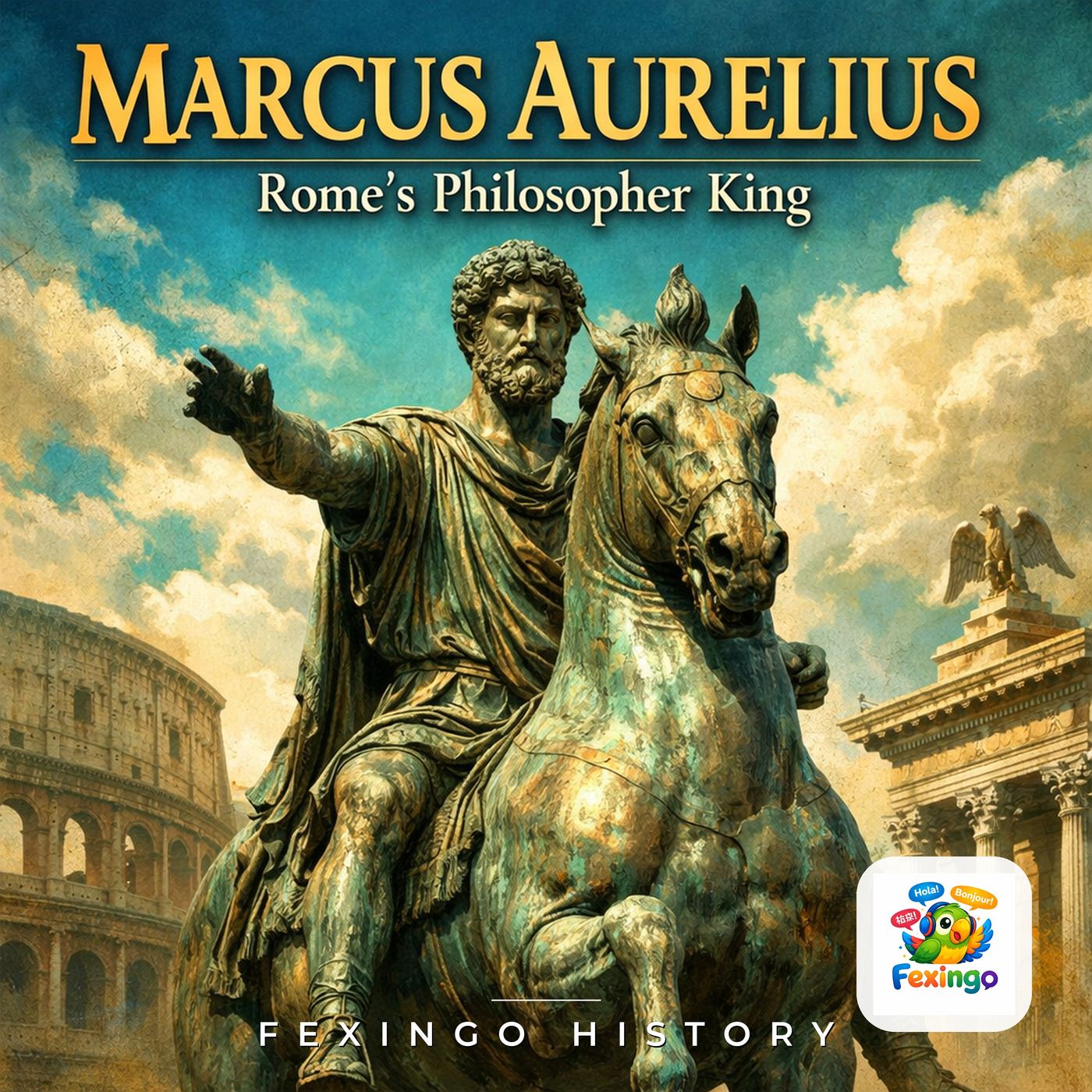
Marcus Aurelius is remembered as Rome's philosopher-king, but his reign (161–180 CE) was anything but serene. Lucas and Luna explore the life of the last of the 'Five Good Emperors,' a Stoic scholar forced to wage endless war on the Danube frontier. From the Parthian campaign that brought back plague to the Marcomannic Wars that strained the empire's resources, this show examines how Aurelius balanced governance, military crisis, and personal philosophy. They delve into his 'Meditations' — a private journal never meant for publication — and how its Stoic wisdom has echoed through the Enlightenment and into modern self-help culture. The conversation also covers his fraught succession by Commodus, the political machinations of Faustina the Younger, and the Antonine Plague that reshaped the ancient world. Was Aurelius a reluctant warrior or a calculating emperor? Did his philosophy help or hinder his rule? This show peels back the bronze layers of his equestrian statue to reveal a man wre
-
34
Marcus Aurelius Hadrian's Wall Frontier Policy — Fexingo History
In this episode of Fexingo History, Lucas and Luna explore Marcus Aurelius's frontier policy on the British frontier, focusing on Hadrian's Wall and the Antonine Wall. They discuss the strategic decisions behind maintaining Hadrian's Wall as the primary defensive line, the role of Legio VI Victrix, the Brigantes tribe, and the historical inscription from the builders of the Antonine Wall. Lucas explains how Marcus, amid the Marcomannic Wars and Antonine Plague, chose to consolidate rather than expand, reflecting his Stoic philosophy of duty and containment. The conversation touches on the daily life of soldiers at Vindolanda, the distinction between the two walls, and the broader implications for the empire's defensive strategy. Listeners gain insight into a lesser-known aspect of Marcus's reign—his pragmatic approach to the distant frontier of Britannia.#MarcusAurelius #HadriansWall #AntonineWall #RomanBritain #FrontierPolicy #LegioVI #Brigantes #Vindolanda #Stoicism #MarcomannicWars #AntoninePlague #Limes #RomanArmy #Britannia #PaxRomana #History #FexingoHistory #AncientRome #RomanEmpire #FiveGoodEmperorsBecome a supporter of this podcast: https://www.spreaker.com/podcast/marcus-aurelius-rome-s-philosopher-king-fexingo-history--6985281/support.
-
33
Marcus Aurelius and the Stoic View of Death — Fexingo History
In this episode, Lucas and Luna explore Marcus Aurelius' Stoic philosophy on death, as revealed in his 'Meditations'. They discuss how the emperor grappled with mortality amid war and plague, examining key passages where he reflects on the transience of life, the nature of the soul, and the acceptance of fate. The conversation touches on the influence of Epictetus, the concept of 'euthanasia' in Stoic thought, and how Marcus' personal losses—including the death of his wife Faustina and his co-emperor Lucius Verus—shaped his writings. Lucas explains the Stoic idea that death is a natural process, not an evil, and how Marcus used this belief to maintain composure in the face of constant peril. They also address the controversy over whether Marcus genuinely believed in an afterlife or viewed the soul as dispersing into the cosmos. This episode offers a intimate look at the personal struggles of a philosopher-king trying to live and die with dignity.#MarcusAurelius #Stoicism #Meditations #StoicPhilosophy #RomanEmpire #AntoninePlague #MarcomannicWars #Epictetus #FaustinaMinor #LuciusVerus #Euthanasia #Death #Mortality #AncientPhilosophy #RomanHistory #PhilosopherKing #FexingoHistory #History #FiveGoodEmperors #ParthianCampaignBecome a supporter of this podcast: https://www.spreaker.com/podcast/marcus-aurelius-rome-s-philosopher-king-fexingo-history--6985281/support.
-
32
Marcus Aurelius and the Stoic Governance of the Empire — Fexingo History
In this episode, Lucas and Luna explore how Marcus Aurelius applied Stoic philosophy to the practical art of governing the Roman Empire. Drawing on specific examples from the Meditations and historical records, they discuss the emperor's approach to justice, clemency, and rationality in law and administration. They examine his use of rescripts to settle legal disputes, his efforts to streamline the praetorian prefecture, and his attention to provincial governance even while campaigning on the Danube. The conversation also touches on the influence of his tutor Fronto and the tensions between Stoic ideals and the brutal realities of war and plague. No prior knowledge of Roman law is required—just curiosity about how a philosopher-king tried to rule wisely.#MarcusAurelius #Stoicism #RomanEmpire #Meditations #RomanLaw #PhilosopherKing #PaxRomana #Fronto #PraetorianPrefect #Rescript #Clemency #Equity #DanubeCampaigns #AntoninePlague #StoicGovernance #History #FexingoHistory #AncientRome #FiveGoodEmperors #MarcomannicWarsBecome a supporter of this podcast: https://www.spreaker.com/podcast/marcus-aurelius-rome-s-philosopher-king-fexingo-history--6985281/support.
-
31
Marcus Aurelius and the Stoic Art of Dream Interpretation — Fexingo History
In this episode, Lucas and Luna explore Marcus Aurelius's engagement with dream interpretation as a Stoic practice. They discuss the cultural context of dreams in the Roman world, including the second-century dream interpreter Artemidorus and his work the Oneirocritica. Lucas explains how the Historia Augusta records Marcus's dreams, including a prophecy of his future reign and a dream predicting the death of the usurper Avidius Cassius. They delve into Stoic views on divination, referencing Cicero's On Divination and Marcus's own Meditations, where he reflects on dreams as signs from the gods. The conversation also touches on Marcus's ancestor Annius Verus, who reportedly had a dream foretelling his own death. Lucas and Luna consider whether Marcus truly believed dreams were divine messages or saw them as psychological insights. They also relate dreams to Marcus's broader philosophical outlook, including his acceptance of fate and the interconnectedness of all things. Finally, they examine how later Stoics like Epictetus treated dreams as exercises in moral awareness. This episode offers a nuanced look at how a philosopher-king navigated the line between rational philosophy and popular superstition.#MarcusAurelius #Stoicism #DreamInterpretation #Artemidorus #Oneirocritica #HistoriaAugusta #AvidiusCassius #AnniusVerus #Epictetus #Cicero #OnDivination #Meditations #RomanReligion #SecondCentury #RomanEmpire #Philosophy #FexingoHistory #History #FiveGoodEmperors #MarcomannicWarsBecome a supporter of this podcast: https://www.spreaker.com/podcast/marcus-aurelius-rome-s-philosopher-king-fexingo-history--6985281/support.
-
30
Marcus Aurelius and the Stoic Court: Fronto's Letters — Fexingo History
In this episode, Lucas and Luna explore the intimate correspondence between Marcus Aurelius and his rhetoric tutor, Marcus Cornelius Fronto. These letters, rediscovered in the 19th century, offer a rare window into the philosopher emperor's private thoughts, health anxieties, and Stoic practice away from the battlefield. Lucas explains how Fronto, a celebrated orator and consul, mentored the young Marcus from boyhood through adulthood, teaching him Latin rhetoric while the future emperor studied Greek philosophy under other tutors. The discussion delves into the emotional honesty of their letters — from Marcus's complaints about sore throats to Fronto's fatherly concern — and how this correspondence complicates the austere image of Marcus from the Meditations. Luna asks about the tension between Fronto's rhetorical style and Marcus's Stoic ideals, and Lucas reveals that Fronto himself was deeply critical of Stoic philosophy, creating a fascinating intellectual friction between teacher and student. The episode also touches on how the letters reveal Marcus's character before the burdens of empire, his love for his family, and the eventual distance that grew between them as Marcus became emperor. This is a story of mentorship, love, and the quiet struggles of a man who would become a legend.#MarcusAurelius #Fronto #Stoicism #AncientRome #RomanEmpire #Meditations #LatinLiterature #Rhetoric #Letters #RomanHistory #MarcusCorneliusFronto #SecondSophistic #AntonineDynasty #PaxRomana #PhilosopherKing #FexingoHistory #History #ClassicalWorld #FiveGoodEmperors #MarcomannicWarsBecome a supporter of this podcast: https://www.spreaker.com/podcast/marcus-aurelius-rome-s-philosopher-king-fexingo-history--6985281/support.
-
29
Marcus Aurelius and the Stoic Body: Health, Vigor, and the Meditations — Fexingo History
In this episode of Marcus Aurelius: Rome's Philosopher King, Lucas and Luna explore a surprising dimension of the Stoic emperor's life: his preoccupation with physical health, bodily discipline, and the language of the body in the Meditations. Drawing on the Meditations themselves, Galen's medical writings, and the Historia Augusta, they examine Marcus's chronic ailments—from stomach troubles to insomnia—and how his Stoic philosophy shaped his attitude toward pain and mortality. They discuss the emperor's rigorous exercise regimen, his reliance on Galen, the court physician, and the tension between his fragile body and the immense demands of war and plague. The episode also considers how the body became a metaphor in Stoic thought, and what Marcus's personal struggles reveal about the intersection of philosophy, power, and human frailty. Featuring terms like pathos, pneuma, Galen, and hygeia.#MarcusAurelius #Stoicism #Meditations #Galen #RomanHealth #History #FexingoHistory #StoicBody #AntoninePlague #RomanMedicine #Philosophy #BodyAndSoul #Emperor #PaxRomana #AncientRome #Hygeia #Pathos #Pneuma #RomanEmpire #FiveGoodEmperorsBecome a supporter of this podcast: https://www.spreaker.com/podcast/marcus-aurelius-rome-s-philosopher-king-fexingo-history--6985281/support.
-
28
Marcus Aurelius and the Fate of the Marcomannic Captives — Fexingo History
In this episode of Marcus Aurelius: Rome's Philosopher King, Lucas and Luna explore a lesser-known but revealing chapter of the Marcomannic Wars: the fate of the thousands of Germanic captives taken during the campaigns along the Danube. Where did they go? How did the empire absorb them? Moving beyond the battlefield, we follow the captives' journey from the frontier to the slave markets of Rome, the imperial estates, and even the legions. We examine a specific rescript from Marcus himself, preserved in the Digest, that regulated the sale of war captives and reveals Stoic principles applied to the cruel realities of ancient warfare. We also discuss the archaeological evidence — from the so-called 'Marcomannic slaves' in Italian villas to the Germanic settlers who were given land as coloni, becoming a buffer against future invasions. This episode uses the Digest (Book 49, Title 15), inscriptions from the port of Aquileia, and the letters of Fronto to paint a vivid picture of what happened after the clashing of shields stopped.#MarcusAurelius #MarcomannicWars #RomanSlavery #WarCaptives #RomanEconomy #Stoicism #Digest #RomanLaw #DanubeFrontier #GermanicTribes #Aquileia #CorneliusFronto #Coloni #SecondCenturyAD #RomanHistory #FexingoHistory #AncientWarfare #History #RomanEmpire #FiveGoodEmperorsBecome a supporter of this podcast: https://www.spreaker.com/podcast/marcus-aurelius-rome-s-philosopher-king-fexingo-history--6985281/support.
-
27
Marcus Aurelius and the Legal Reforms of an Emperor-Stoic — Fexingo History
In this episode, Lucas and Luna explore Marcus Aurelius's profound impact on Roman law. They discuss how the philosopher-king applied Stoic principles to jurisprudence, reforming family law, slavery, and inheritance. Through the writings of jurists like Ulpian and Modestinus, they examine the emperor's efforts to humanize Roman law, including protections for slaves and children, and the creation of new legal offices. The episode also touches on the tensions between Stoic ideals and imperial power, and how Marcus's legal legacy influenced later Byzantine and Western law.#MarcusAurelius #RomanLaw #Stoicism #Jurisprudence #Ulpian #Modestinus #FamilyLaw #SlaveryInRome #InheritanceLaw #ByzantineLaw #AntonineDynasty #RomanEmpire #LegalHistory #SecondSophistic #PaxRomana #History #FexingoHistory #Podcast #FiveGoodEmperors #MeditationsBecome a supporter of this podcast: https://www.spreaker.com/podcast/marcus-aurelius-rome-s-philosopher-king-fexingo-history--6985281/support.
-
26
Marcus Aurelius and the Education of Commodus — Fexingo History
In this episode of Marcus Aurelius: Rome's Philosopher King, Lucas and Luna explore the upbringing of Commodus, the emperor's only surviving son and eventual successor. They discuss the tutors chosen by Marcus, including the famous grammarian Alexander of Cotiaeum and the rhetorician Anicetus. The conversation delves into the influence of the Greek doctor Galen, who was brought to court to attend to Commodus's health. Lucas explains how Marcus's own education under the tutelage of Fronto and Herodes Atticus shaped his expectations for his son, and why those expectations ultimately failed. They examine the tension between Stoic discipline and imperial indulgence, the role of the future emperor's companions, and the warnings that contemporaries like Cassius Dio later recorded. The episode also touches on the premature deaths of Marcus's other children, leaving Commodus as the sole heir. This is a focused look at the making — and unmaking — of an emperor through the lens of education and upbringing.#Commodus #MarcusAurelius #ImperialEducation #Galen #Stoicism #HerodesAtticus #AlexanderCotiaeum #Anicetus #CassiusDio #RomanEmpire #AntonineDynasty #PrincepsIuventutis #Paedagogium #RomanTutors #SecondSophistic #Meditations #History #FexingoHistory #FiveGoodEmperors #MarcomannicWarsBecome a supporter of this podcast: https://www.spreaker.com/podcast/marcus-aurelius-rome-s-philosopher-king-fexingo-history--6985281/support.
-
25
Marcus Aurelius and the Thundering Legion Miracle — Fexingo History
In this episode, Lucas and Luna explore the mysterious event known as the 'Miracle of the Rain' or the 'Thundering Legion' during the Marcomannic Wars in 172 AD. They examine the primary sources: Cassius Dio describes a torrential downpour that saved the Roman army from thirst and routed the Quadi, while later Christian writers like Tertullian and Eusebius claimed the rain was divine intervention in response to Christian soldiers' prayers. The episode unpacks the legend of Legio XII Fulminata (the Thundering Legion), the historical reality of the Twelfth Legion's involvement, and the ongoing debate among historians about what actually happened. Lucas and Luna also discuss how this event was later used in Christian apologetics to argue for the legitimacy of Christianity within the Roman Empire, and how Marcus Aurelius himself, despite his Stoic philosophy, likely saw it as a natural phenomenon or a sign from the traditional gods. The conversation touches on the emperor's Meditations, his policy toward Christians, and the lasting impact of this event on both pagan and Christian historical narratives.#MarcusAurelius #ThunderingLegion #MiracleOfTheRain #MarcomannicWars #LegioXIIFulminata #CassiusDio #Tertullian #Eusebius #Quadi #RomanEmpire #Stoicism #Meditations #EarlyChristianity #173AD #Carnuntum #ChristianApologetics #History #FexingoHistory #FiveGoodEmperors #ParthianCampaignBecome a supporter of this podcast: https://www.spreaker.com/podcast/marcus-aurelius-rome-s-philosopher-king-fexingo-history--6985281/support.
-
24
The Philosopher Emperor’s Inner Circle: Fronto, Faustina, and the Court of Marcus Aurelius — Fexingo History
Episode 12 of our Marcus Aurelius series zooms in on the people around the philosopher emperor: his wife Faustina the Younger, his tutor and confidant Cornelius Fronto, and the inner circle of the imperial court. We explore Fronto’s letters, which reveal a warm, sometimes anxious Marcus struggling with the burdens of rule, and examine Faustina’s controversial legacy—accused of adultery, complicity in Avidius Cassius’s rebellion, and even influencing Commodus’s rise. Lucas and Luna also discuss the court’s cultural life, the role of Greek and Latin learning, and how Marcus’s Stoicism played out in personal relationships. Drawing on the correspondence, the Historia Augusta, Cassius Dio, and modern scholarship, this episode paints a human portrait of the man behind the Meditations.#MarcusAurelius #CorneliusFronto #FaustinaMinor #AvidiusCassius #Stoicism #Meditations #RomanEmpire #AntonineDynasty #HistoriaAugusta #CassiusDio #RomanCourt #ImperialFamily #SecondSophistic #LatinLiterature #PaxRomana #PhilosopherKing #History #FexingoHistory #FiveGoodEmperors #MarcomannicWarsBecome a supporter of this podcast: https://www.spreaker.com/podcast/marcus-aurelius-rome-s-philosopher-king-fexingo-history--6985281/support.
-
23
Marcus Aurelius and the Parthian War 161-166 AD — Fexingo History
Long overshadowed by the Marcomannic Wars on the Danube, Rome's bitter conflict with Parthia in 161–166 AD was Marcus Aurelius's first major test as emperor. This episode explores the treacherous politics of the Near East, the shocking defeat of Roman forces at Elegeia, the brilliant but controversial general Avidius Cassius who sacked Ctesiphon, and the early stirrings of the Antonine Plague that Roman armies brought back from Seleucia. Lucas and Luna examine how this campaign shaped Marcus's approach to war, his reliance on trusted commanders, and the heavy cost — both human and financial — of maintaining Rome's eastern frontier. They also unpack the Parthian perspective, looking at the Arsacid dynasty and the competitive diplomacy over Armenia and Mesopotamia that ultimately led to war. A nuanced look at a conflict that is often reduced to a footnote in the reign of the philosopher emperor.#ParthianWar #AvidiusCassius #Elegeia #Ctesiphon #MarcusAurelius #Parthia #ArsacidDynasty #Armenia #Mesopotamia #Seleucia #AntoninePlague #LegioXIIFulminata #PaxRomana #RomanArmy #VologasesIV #LuciusVerus #FexingoHistory #History #Stoicism #RomanEmpireBecome a supporter of this podcast: https://www.spreaker.com/podcast/marcus-aurelius-rome-s-philosopher-king-fexingo-history--6985281/support.
-
22
Marcus Aurelius and the Marcomannic Settlement — Fexingo History
In this episode, Lucas and Luna explore Marcus Aurelius's vision for the Danube frontier after the Marcomannic Wars. They delve into the emperor's plan to create two new provinces, Marcomannia and Sarmatia, which would have redrawn the map of Europe. Lucas explains the geopolitical landscape, the resistance from the Senate and the Praetorian Guard, and the emperor's pragmatic approach to diplomacy with tribes like the Marcomanni and Quadi. They also examine the historical debate over whether this plan was a missed opportunity or an overreach, drawing on Cassius Dio's account and modern scholarship. The conversation touches on the emperor's philosophical ideals versus harsh frontier realities, the role of the Danube limes, and how Commodus reversed this policy. Specific details include the year 175 CE, the treaty terms, and the strategic importance of the March and Sarmatian lands.#MarcusAurelius #MarcomannicWars #Marcomannia #Sarmatia #Danube #CassiusDio #Commodus #RomanEmpire #Limes #Quadi #Marcomanni #Iazyges #PaxRomana #Stoicism #175CE #RomanProvinces #History #FexingoHistory #FiveGoodEmperors #MeditationsBecome a supporter of this podcast: https://www.spreaker.com/podcast/marcus-aurelius-rome-s-philosopher-king-fexingo-history--6985281/support.
-
21
Marcus Aurelius' Personal Wealth and the Imperial Economy — Fexingo History
In this episode, Lucas and Luna explore a side of Marcus Aurelius rarely discussed: his personal finances and the broader Imperial economy during his reign. Drawing on sources like the Historia Augusta, Cassius Dio, and the Digest, they examine how Marcus inherited a massive private fortune from Hadrian and Antoninus Pius, managed state funds through the fiscus and aerarium, and liquidated his own assets to fund the Marcomannic Wars. They discuss the sale of imperial art and slaves, the auction of palace treasures at Trajan's Forum, and the ethical contradictions of a Stoic emperor wielding vast wealth. The episode also touches on the economic strain of the Antonine Plague, Marcus's reforms to the alimenta system for orphan welfare, and how his financial policies foreshadowed the later crises of the third century. No prior knowledge of Roman economics is needed; the conversation assumes listeners have heard earlier episodes on the Marcomannic Wars and the Antonine Plague.#MarcusAurelius #RomanEconomy #HistoriaAugusta #CassiusDio #Fiscus #Aerarium #MarcomannicWars #AntoninePlague #Alimenta #Stoicism #ImperialFinances #TrajansForum #RomanSlavery #SecondSophistic #PaxRomana #Meditations #History #FexingoHistory #RomanEmpire #FiveGoodEmperorsBecome a supporter of this podcast: https://www.spreaker.com/podcast/marcus-aurelius-rome-s-philosopher-king-fexingo-history--6985281/support.
-
20
Marcus Aurelius and the Imperial Cult: Emperor as Divinity — Fexingo History
In this episode, Lucas and Luna explore Marcus Aurelius's relationship with the imperial cult — the practice of worshipping Roman emperors as gods. While earlier emperors like Augustus and Hadrian embraced deification, Marcus took a more reluctant stance, shaped by his Stoic philosophy. Lucas explains how the imperial cult functioned as a tool for political unity across the empire, especially in the Greek East, where cities like Ephesus and Smyrna competed for the honor of building temples to the emperor. Marcus allowed traditional honors but refused excessive flattery, viewing himself as a servant of the state rather than a divine figure. The conversation touches on the cult's origins with Julius Caesar and Augustus, the distinction between divus (deified) and deus (god), and how Marcus's refusal to be worshipped while alive contrasted with later emperors like Commodus, who demanded living godhood. Luna asks about the practical implications: how did provincial subjects reconcile monotheistic beliefs with imperial worship? Lucas discusses the Jewish and Christian dilemmas, noting that while Marcus never persecuted Christians for rejecting the cult, his reign saw local pressures. The episode ends with a reflection on the tension between philosophy and power, and how Marcus's legacy as a philosopher-king was partly shaped by his rejection of imperial divinity.#MarcusAurelius #ImperialCult #Stoicism #RomanReligion #EmperorWorship #Divus #Deus #RomanEmpire #PaxRomana #ProvincialCults #Ephesus #Smyrna #Commodus #Augustus #JuliusCaesar #AncientHistory #Rome #FexingoHistory #FiveGoodEmperors #MeditationsBecome a supporter of this podcast: https://www.spreaker.com/podcast/marcus-aurelius-rome-s-philosopher-king-fexingo-history--6985281/support.
-
19
Marcus Aurelius and the Rise of Christianity — Fexingo History
In this episode, Lucas and Luna explore Marcus Aurelius's complex relationship with early Christianity. While remembered as a philosopher-king, Marcus authorized persecutions that produced some of the Church's most famous martyrs, including Justin Martyr in Rome and the martyrs of Lyon and Vienne in Gaul. What did Stoicism, the state religion, and the emperor's own philosophical commitments have to do with it? Lucas unpacks the legal basis for persecution under Roman law, the charges of atheism and immorality leveled against Christians, and how Marcus's Meditations reveal a man who likely never gave the sect a second thought—yet whose reign marked a turning point. The episode also touches on the Antonine Plague's role in fueling apocalyptic Christian rhetoric and the contrasting view in the so-called 'Thundering Legion' miracle, which some later Christians claimed Marcus himself attributed to Christian prayer. A nuanced look at faith, empire, and unintended consequences.#MarcusAurelius #EarlyChristianity #RomanEmpire #Stoicism #JustinMartyr #MartyrsOfLyon #PaxRomana #AntoninePlague #Meditations #RomanReligion #Persecution #ThunderingLegion #Vienne #Lyon #GauleRomaine #HistoryOfChristianity #FexingoHistory #AncientRome #FiveGoodEmperors #MarcomannicWarsBecome a supporter of this podcast: https://www.spreaker.com/podcast/marcus-aurelius-rome-s-philosopher-king-fexingo-history--6985281/support.
-
18
Marcus Aurelius and the Mysteries of Mithras — Fexingo History
In this episode of Marcus Aurelius: Rome's Philosopher King, Lucas and Luna explore the emperor's surprising connection to the secretive cult of Mithras. While Marcus is famous for his Stoic philosophy, his reign coincided with the rapid spread of Mithraism among Roman soldiers and officials. How did the emperor, a man of reason, engage with this mystical, blood-centered religion? The conversation travels from the bull-slaying iconography in Mithraea to the rituals of initiation, and examines whether Marcus ever took part in the cult himself. Along the way, we meet the tauroctony, the twins Cautes and Cautopates, and the mysterious rock-birth of Mithras. Lucas unpacks the social function of the cult for legionaries stationed on the Danube frontier, especially during the Marcomannic Wars, and notes the tensions between Mithraic fatalism and Stoic ethics. The episode also touches on the archaeological evidence at Carnuntum and the possible influence of Persian Zoroastrianism. By the end, listeners will understand why Marcus Aurelius—despite his philosophical commitments—could not ignore the power of Mithraism in the Roman world.#MarcusAurelius #Mithras #Mithraism #RomanReligion #Stoicism #DanubeFrontier #MarcomannicWars #Carnuntum #Tauroctony #Zoroastrianism #RomanSoldiers #SecondSophistic #PaxRomana #AntonineDynasty #RomanHistory #History #FexingoHistory #Podcast #RomanEmpire #FiveGoodEmperorsBecome a supporter of this podcast: https://www.spreaker.com/podcast/marcus-aurelius-rome-s-philosopher-king-fexingo-history--6985281/support.
-
17
Marcus Aurelius and the Senate: A Delicate Dance — Fexingo History
Lucas and Luna explore Marcus Aurelius's relationship with the Roman Senate, a critical but often overlooked aspect of his reign. Despite his reputation as a philosopher-king, Marcus faced significant senatorial opposition, particularly over his decision to elevate his son Commodus to power. The episode delves into the causes of this tension, including the precedent set by previous emperors, the pressures of the Marcomannic Wars, and the Antonine Plague. Lucas explains how Marcus's attempts to balance senatorial privileges with military necessity led to a fragile peace, and how his death marked a turning point in the empire's governance. Specific figures like senator Cassius Dio and the historian Herodian provide firsthand accounts of the growing rift. The conversation also touches on the legal status of the Senate under Marcus, the role of the Praetorian Guard, and the contrast between Marcus's philosophical ideals and the political realities of running an empire. Listeners come away with a deeper understanding of the political challenges behind the facade of the Pax Romana.#MarcusAurelius #RomanSenate #Commodus #MarcomannicWars #AntoninePlague #CassiusDio #Herodian #PraetorianGuard #PaxRomana #Stoicism #RomanHistory #AncientRome #Empire #PhilosopherKing #SenatorialOpposition #SuccessionCrisis #History #FexingoHistory #RomanEmpire #FiveGoodEmperorsBecome a supporter of this podcast: https://www.spreaker.com/podcast/marcus-aurelius-rome-s-philosopher-king-fexingo-history--6985281/support.
-
16
The Antonine Plague: Marcus Aurelius and Rome's First Pandemic — Fexingo History
In 165 CE, as Roman legions returned from sacking Seleucia, they brought home more than plunder. A devastating disease—likely smallpox—swept through the empire, killing millions and earning the name the Antonine Plague. In this episode, Lucas and Luna explore how the pandemic shaped Marcus Aurelius's reign, from the frontlines of the Marcomannic Wars to the emperor's own philosophical writings. They discuss the plague's origin in the Near East, its impact on military recruitment and the economy, and the contested evidence from ancient sources like Galen and Cassius Dio. Lucas explains how the outbreak forced Rome to integrate Germanic peoples into its armies and undermined the Pax Romana. Luna asks whether Marcus's Stoicism helped or hindered his response. They close by considering the pandemic's role in the empire's long-term decline—and what it reveals about the limits of even a philosopher king.#AntoninePlague #MarcusAurelius #RomanEmpire #Galen #CassiusDio #MarcomannicWars #Stoicism #Smallpox #Seleucia #PaxRomana #MilitaryHistory #PandemicHistory #AncientRome #SecondSophistic #DanubeFrontier #Commodus #FexingoHistory #History #FiveGoodEmperors #MeditationsBecome a supporter of this podcast: https://www.spreaker.com/podcast/marcus-aurelius-rome-s-philosopher-king-fexingo-history--6985281/support.
-
15
Marcus Aurelius and the Antonine Constitution: Citizenship for All — Fexingo History
In this episode, Lucas and Luna explore Marcus Aurelius's role in one of the most transformative legal acts of the Roman Empire: the Antonine Constitution. While often attributed to his son Commodus, evidence suggests Marcus laid its groundwork. The constitution granted Roman citizenship to nearly all free inhabitants of the empire, reshaping identity and law. We delve into the legal statuses before the edict—Latin rights, peregrini, Junian Latins—and how the constitutio Antoniniana emerged from the pressures of war and plague during Marcus's reign. The conversation examines the papyrus fragment P.Giss. 40 I, which preserves the edict's text, and questions why Marcus, a Stoic emperor, might have championed such a radical expansion. Could it have been a practical move to boost tax revenue and military recruitment? A philosophical commitment to cosmopolitanism? We also consider the edict's impact on Roman law, culminating in the Corpus Juris Civilis, and its dark irony: unifying the empire legally while persecution of Christians intensified. A nuanced look at how a philosopher-king reshaped the ancient world's most powerful institution.#MarcusAurelius #AntonineConstitution #ConstitutioAntoniniana #RomanCitizenship #Stoicism #RomanLaw #PGiss40 #Peregrini #LatinRights #Caracalla #Commodus #RomanEmpire #PaxRomana #AncientHistory #RomanIdentity #Edict #2ndCentury #FexingoHistory #FiveGoodEmperors #MeditationsBecome a supporter of this podcast: https://www.spreaker.com/podcast/marcus-aurelius-rome-s-philosopher-king-fexingo-history--6985281/support.
-
14
The Marcomannic Wars: Marcus Aurelius on the Danube — Fexingo History
This episode dives deep into the Marcomannic Wars, the brutal frontier conflict that dominated the later years of Marcus Aurelius's reign. Lucas and Luna explore the causes of the war, the Germanic and Sarmatian tribes involved, the devastating plague that crippled Rome, and Marcus's personal struggles as he wrote his Meditations on campaign. They discuss key battles like the 'Miracle of the Rain' at Carnuntum, the logistical challenges of fighting beyond the Danube, and the emperor's controversial decision to raise legions from slaves and gladiators. The episode also examines the political fallout, including the usurpation of Avidius Cassius in the East and the shaky peace that Marcus brokered before his death. Through it all, Lucas brings out the human side of the philosopher-king—a man trying to live up to Stoic ideals while wielding immense power in a time of crisis.#MarcomannicWars #MarcusAurelius #DanubeFrontier #Quadi #Marcomanni #Iazyges #MiracleOfTheRain #Carnuntum #AvidiusCassius #AntoninePlague #SecondSophistic #Stoicism #RomanEmpire #PaxRomana #GermanicTribes #Sarmatians #History #FexingoHistory #FiveGoodEmperors #MeditationsBecome a supporter of this podcast: https://www.spreaker.com/podcast/marcus-aurelius-rome-s-philosopher-king-fexingo-history--6985281/support.
-
13
Marcus Aurelius: Rome's Philosopher King — A New Kind of Emperor — Fexingo History
Step into the winter of 180 CE, where a dying emperor on the Danube frontier reflects on a life of duty, philosophy, and war. This episode introduces Marcus Aurelius — not just a Roman emperor but a Stoic philosopher whose private writings, the Meditations, still speak to us today. We explore his upbringing in a world of political intrigue, his adoption by Antoninus Pius, and the unique education that fused power with philosophy. What made a man who hated war spend his final years fighting Germanic tribes? How did the Pax Romana create the conditions for such a ruler? And why does a man who wrote about death and virtue still matter 1,800 years later? Lucas and Luna set the stage for a series that will follow Marcus from the Palatine Hill to the frozen Danube, from the comfort of his library to the chaos of the battlefield. Along the way, we meet key figures like Hadrian, Antoninus Pius, and the corrosive influence of Commodus. This is the story of a man who wanted to be good, who was forced to be great, and who left us a manual for how to live.#MarcusAurelius #Stoicism #RomanEmpire #PaxRomana #Meditations #AntoninusPius #Hadrian #Commodus #DanubeWars #PhilosopherKing #AncientRome #StoicPhilosophy #MarcomannicWars #LuciusVerus #PalatineHill #AntonineDynasty #History #FexingoHistory #FiveGoodEmperors #ParthianCampaignBecome a supporter of this podcast: https://www.spreaker.com/podcast/marcus-aurelius-rome-s-philosopher-king-fexingo-history--6985281/support.
No matches for "" in this podcast's transcripts.
No topics indexed yet for this podcast.
Loading reviews...
ABOUT THIS SHOW
Marcus Aurelius is remembered as Rome's philosopher-king, but his reign (161–180 CE) was anything but serene. Lucas and Luna explore the life of the last of the 'Five Good Emperors,' a Stoic scholar forced to wage endless war on the Danube frontier. From the Parthian campaign that brought back plague to the Marcomannic Wars that strained the empire's resources, this show examines how Aurelius balanced governance, military crisis, and personal philosophy. They delve into his 'Meditations' — a private journal never meant for publication — and how its Stoic wisdom has echoed through the Enlightenment and into modern self-help culture. The conversation also covers his fraught succession by Commodus, the political machinations of Faustina the Younger, and the Antonine Plague that reshaped the ancient world. Was Aurelius a reluctant warrior or a calculating emperor? Did his philosophy help or hinder his rule? This show peels back the bronze layers of his equestrian statue to reveal a man wre
HOSTED BY
Fexingo
Loading similar podcasts...
URL copied to clipboard!