
PODCAST
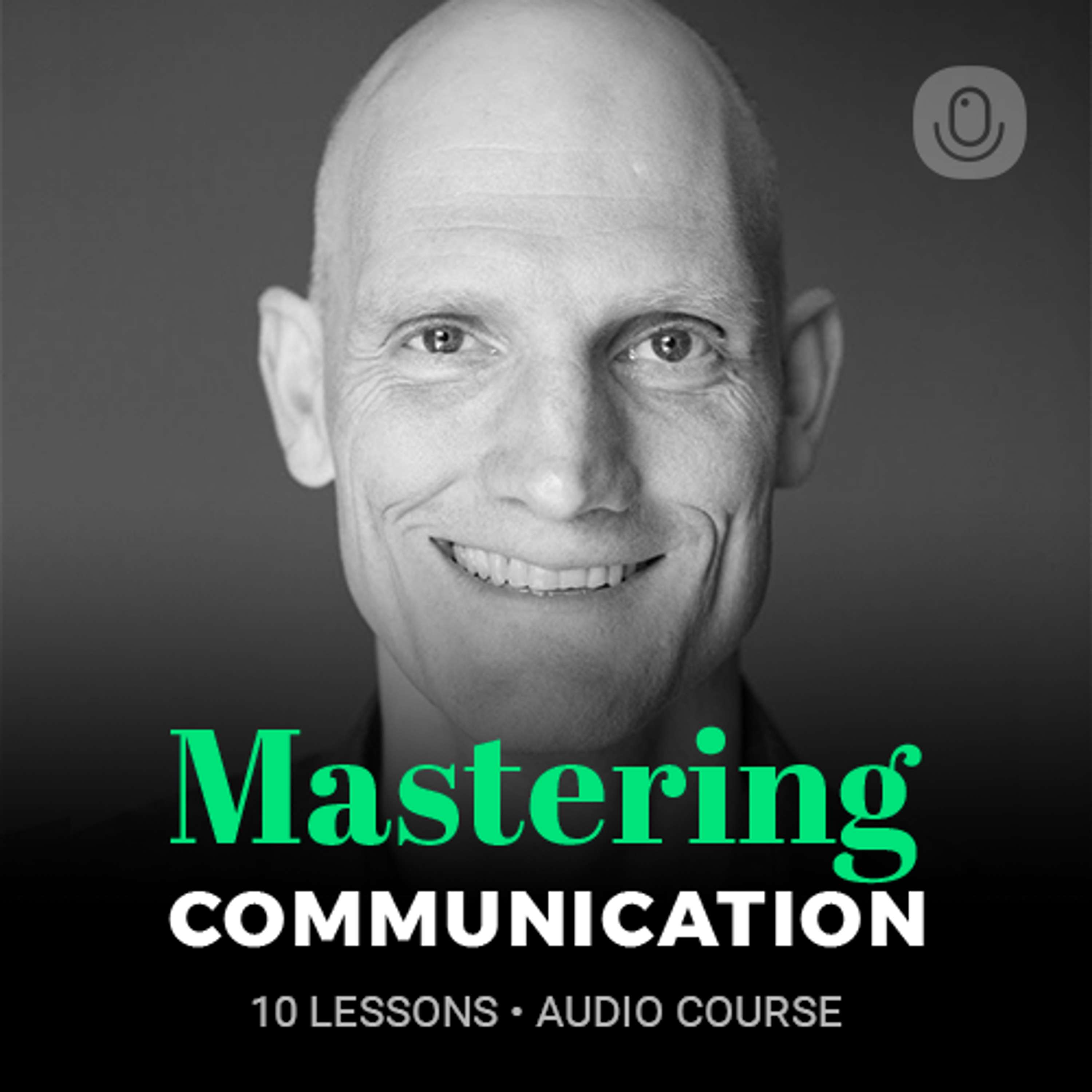
Mastering Communication
by Podcast App
Podcast App presents an original audio course on Non-Violent Communication.Learn the top communication framework that has been adopted by thousands of individuals and organizations in more than 100 countries, helping parents better communicate with their children; couples with each other; staff with bosses; and teachers with students. It’s the same method that Microsoft’s CEO Satya Nadella, used to transform Microsoft’s culture from cutthroat to creative, helping it become one of the most valuable companies in the world.This communication framework is called NVC for Non-Violent Communication and has been adopted by a wide-ranging set of environments: from Fortune 500 companies, government offices, schools, hospitals, university MBA and communication curriculum, community mediation centers, to anger management programs, inmate rehabilitation programs and more.The Podcast App presents Mastering Communication, an original audio course on NVC taught by Newt Bailey, an expert mediator
-
11
Lesson 10. NVC in Action - At Work
You’ll learn how NVC can be applied in the workplace through an example. In this final lesson, Newt is joined by collaborator Ali Miller, to enact a difficult conversation between two coworkers: Jolie and Kent. Kent is Jolie’s manager, and why he knows NVC, Jolie is not a practitioner. This is an uninterrupted conversation, but you will be able to identify the progress on each side. Here are the topics covered in this lesson: The conversation: Jolie gives Kent some feedback. Development of the first issue: acknowledging ideas. Development of the second issue: worrying about the team. Closing. Assignment: An invitation to revisit and practice these skills. Contact us with any feedback or questions: [email protected] @newtbailey
-
10
Lesson 9. NVC in Action - At Home
You’ll learn how NVC can be applied with a romantic partner through an example. In this lesson, Newt is joined by collaborator Ali Miller, to enact a difficult conversation between the members of a couple: Alex and Chris. The example will illustrate how a couple can use NVC to recover after an argument and reconnect. Here are the topics covered in this lesson: The initial argument. Alex practicing self-connection. Chris practicing self-connection. Alex and Chris reconnecting and using the different skills and components. Contact us with any feedback or questions: [email protected] @newtbailey
-
9
Lesson 8. Expressing Yourself
You’ll learn how to put everything together and express yourself with NVC. In this lesson, Newt will explain in-depth the third and final core NVC skill: Expressing Yourself. You’ll learn how to put the NVC toolkit into practice, both in pen and spirit. Speaking strictly in NVC terms may present challenges when the other person is not familiar with NVC. Here are the topics covered in this lesson: NVC as a template to organize your thoughts, not necessarily your speech. How to find a suitable language for each situation. How to tailor your NVC language to different scenarios. Common pitfalls when using NVC for the first time. Assignment: experiment and analyze with someone how you may apply NVC to different situations. Contact us with any feedback or questions: [email protected] @newtbailey
-
8
Lesson 7. Listening
You’ll learn how to be more present and listen with empathy.In this lesson, Newt will explain in-depth the second core NVC skill: Listening. You’ll learn how to listen with the intent to understand, instead of to reply. You’ll discover tools to be more present, listen with empathy to feelings and needs, which is key for achieving meaningful connection.Here are the topics covered in this lesson:Listening with empathyListening to identify other people's feelings and needs.The invisible shelf tool, and how to use it.Supercharge your listening with empathy guesses.Examples of empathic listening applied.Contact us with any feedback or questions:[email protected]@newtbailey
-
7
Lesson 6. Connecting with Yourself
You’ll learn and start practicing the skill of connecting with yourself.In this lesson, Newt will explain in-depth the first of the three core NVC skills: Connecting with yourself. You will learn the importance of connecting with yourself in order to later connect with others, as well as the importance of empathy in the process.Here are the topics covered in this lesson:Empathy, how seeing the world through someone else's eyes, can be the key to unlock deep connectivity.How to develop the habit of Connecting with Yourself. The power of asking yourself “How do I feel?”, to cut through the storm of thoughts in turbulent situations.Dealing with the feeling of pride: you will have to choose between being right or happy. You don't get to be both.Assignment: Not only try to apply what you have learned so far, now if you feel willing: turn your attention to the feelings and needs of others. Contact us with any feedback or questions:[email protected]@newtbailey
-
6
Lesson 5. Requests
You’ll learn how to make clear requests allowing everybody's needs to get met.In this lesson, Newt will explain in-depth the fourth and last component of NVC: Requests. You will learn the importance of using specific language, so your requests meet your needs, and also elicit full-hearted and enthusiastic responses.Here are the topics covered in this lesson:Example: the couple, Alex and Chris, illustrating what conflicting requests look like.The advantages of using actionable language and positive framing.The importance of seeking confirmation that the request is being well received.Are you making a request or demand? Are you open to a “No” as a response?What to do when you hear “no” or “maybe” to a request? What’s the path forward?Do you always need to make requests?Assignment: checking your language and practice the structure you learned in this lesson.Contact us with any feedback or questions:[email protected]@newtbailey
-
5
Lesson 4. Needs
You’ll learn about the fundamental universal needs, and how to identify them in your day-to-day.In this lesson, Newt will explain in-depth the third component of NVC: Needs. You will learn to identify the universal needs that drive your behavior and that give meaning to your life. And to connect with others by the needs you share. Here are the topics covered in this lesson:The difference between a need, and a strategy to fulfill that need.How conflict occurs in the level of strategies, and not in the level of needs.Being aware of your own needs, and avoid disconnection by imposing change in others.Strategies: finding ways to meet your needs while considering the needs of others.Example: the couple, Alex and Chris, talk about their different needs.Contact us with any feedback or questions:[email protected]@newtbailey
-
4
Lesson 3. Feelings
You’ll learn to get in touch with the emotions we usually ignore or dismiss. In this lesson, Newt will explain in-depth the second component of NVC: Feelings. You will learn how to read emotional signals and notice your own feelings and those of others. You’ll obtain the skill of unpacking the information behind the emotions you’ve identified.Here are the topics covered in this lesson:How to discover the feelings that are hidden in your thinking.The common pitfalls of using the phrase “I feel”.What are “finger-pointing” and “umbrella” feelings?Why are we frequently disconnected from our feelings?Using the vocabulary of feelings to look inside and know yourself in greater depth.Assignment: developing greater sensitivity towards your emotions.Contact us with any feedback or questions:[email protected]@newtbailey
-
3
Lesson 2. Observations
You’ll learn about the power of speaking with observations and without judging.In this lesson, Newt will explain in-depth the first component of NVC: Observations. You will learn about the difference between observation and evaluation language.Here are the topics covered in this lesson:How to observe without judging, by speaking accurately and avoiding divisive language.Observations as a tool for bringing up sensitive issues in a safer way.How to avoid triggering a defensive response in others.Example: a couple argues over a missing charger.How to convert evaluation language to observations.Where does evaluation language come from?Homework: getting in the habit of listening for your evaluation language.Contact us with any feedback or questions:[email protected]@newtbailey
-
2
Lesson 1. Welcome to the Course
Your instructor, Newt Bailey, will introduce you to Nonviolent Communication (NVC).In this lesson, you’ll meet your instructor Newt Bailey, who will introduce you to Nonviolent Communication (NVC), the tool you’ll be learning to use. You’ll learn about its history and creation by Dr. Marshall Rosenberg, and get a first look at its components and skills.Here are the topics covered in this lesson:Introduction to Marshall Rosenberg and NVC. Disconnecting vs connecting modes of communication.Introduction to the 4 components: Observations, Feelings, Needs, Requests.Introduction to the 3 skills: Connecting with Yourself, Listening, Expressing Yourself.Contact us with any feedback or questions:[email protected]@newtbailey
-
1
Introducing: NVC Audio Course
Podcast App presents an original audio course on Non Violent Communication.
We're indexing this podcast's transcripts for the first time — this can take a minute or two. We'll show results as soon as they're ready.
No matches for "" in this podcast's transcripts.
No topics indexed yet for this podcast.
Loading reviews...
ABOUT THIS SHOW
Podcast App presents an original audio course on Non-Violent Communication.Learn the top communication framework that has been adopted by thousands of individuals and organizations in more than 100 countries, helping parents better communicate with their children; couples with each other; staff with bosses; and teachers with students. It’s the same method that Microsoft’s CEO Satya Nadella, used to transform Microsoft’s culture from cutthroat to creative, helping it become one of the most valuable companies in the world.This communication framework is called NVC for Non-Violent Communication and has been adopted by a wide-ranging set of environments: from Fortune 500 companies, government offices, schools, hospitals, university MBA and communication curriculum, community mediation centers, to anger management programs, inmate rehabilitation programs and more.The Podcast App presents Mastering Communication, an original audio course on NVC taught by Newt Bailey, an expert mediator
HOSTED BY
Podcast App
Loading similar podcasts...
URL copied to clipboard!