
PODCAST · health
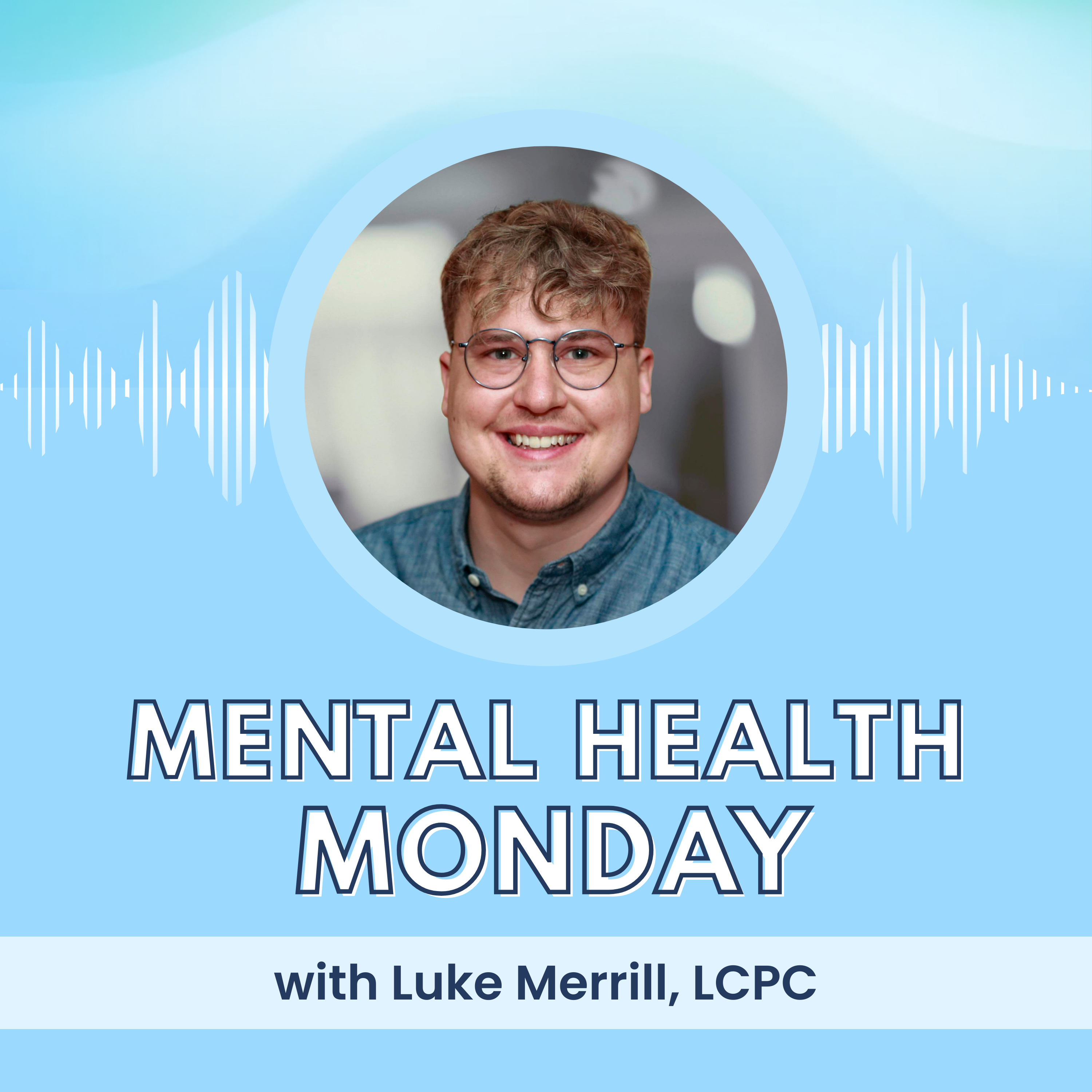
Mental Health Monday
by Luke Merrill
Mental Health Monday is a faith-based podcast hosted by Luke Merrill, LCPC. Each episode offers practical mental health tools, biblical encouragement, and honest conversations to support emotional and spiritual growth. New episodes every Monday.
-
14
Parenting Episode 3: Boundaries That Build (Not Break) Your Kids
Happy Mental Health Monday 😊Episode Summary: In this episode, we wrap up the parenting series by talking about why boundaries are essential for raising emotionally healthy kids. When your child pushes back, it doesn’t mean you’re failing—it means the boundary matters. We explore how giving in might feel like peace in the moment but actually creates anxiety over time.This conversation will help you understand how to hold boundaries with both confidence and compassion, so your kids feel secure, not controlled.Key Takeaways:* Structure creates security—consistency builds trust and reduces anxiety* Empathy + limits = healthy discipline (firm AND loving)* Boundaries prepare your kids for real life and future responsibilityListen + Follow: New episodes drop every week.You can find more resources, counseling support, and content at: 👉 lukemerrill.me
-
13
Parenting Episode 2: What They See Is Who They Become
Happy Mental Health Monday 😊Episode Summary: In this episode, we talk about the powerful role of modeling in parenting and how your daily behaviors shape your child’s emotional world. We explore how kids imitate the way you handle stress, why apologizing builds trust instead of weakening authority, and how growth matters more than perfection.This conversation is designed to help you become more aware of the example you're setting and give you practical ways to model emotional health in your home.Whether you're feeling the pressure to “get it right” as a parent or simply want to raise emotionally healthy kids, this episode will help you lead with intention, humility, and growth.Key Takeaways:* Your response to stress becomes your child’s blueprint for handling life* Apologizing models emotional maturity and builds trust* Growth and consistency matter more than being a perfect parentListen + Follow: New episodes drop every week. You can find more resources, counseling support, and content at: 👉 lukemerrill.me
-
12
Raising Healthy Kids: Calm Over Control
Happy Mental Health Monday 😊🎙️ Raising Healthy Kids: What Actually Works (and What Doesn’t) Episode 1: Calm Over Control: Why Regulation Changes EverythingMost parents feel pressure to fix behavior in the moment. But during a meltdown, your child doesn’t need control—they need calm. In this episode, we unpack how co-regulation, emotional awareness, and your own steady presence shape your child’s ability to regulate.In This Episode:* Why co-regulation comes before self-regulation* How “Name it to Tame it” reduces emotional overwhelm* The powerful role you play as your child’s emotional “thermostat”Faith Connection: “ The Lord is compassionate and gracious, slow to anger, abounding in love.” – Psalm 103:8 God meets us with calm and compassion—and we’re called to reflect that to our kids.Practical Takeaway: Pause before reacting. Take a breath. Regulate yourself first—your calm is the pathway to their calm. 🌐 Website: https://lukemerrill.me
-
11
The PEPPERS Checklist: 7 habits for better mental health
Happy Mental Health Monday 😊Feeling stuck, unmotivated, or just off? This episode introduces a simple but powerful tool I use in counseling and in my own life: the PEPPERS Checklist. It’s a practical way to identify what might be missing in your daily rhythms when your mental health starts to slip.Rooted in 1 Corinthians 6:19–20, we’re reminded that caring for your mental health is also a way of honoring God with your body. Healing isn’t just spiritual or emotional. It’s deeply connected to the small, consistent choices you make each day.The PEPPERS framework walks through seven key areas that support mental wellness. From connection with others, to movement, to rediscovering purpose, to rest and serving others, each piece plays a role in helping you move forward when you feel stuck. You don’t need to overhaul your life overnight. You just need one small, intentional step in the right direction.Key Takeaways:* Isolation fuels depression, but connection helps break it* Small actions build momentum and challenge negative beliefs* Your purpose isn’t gone, even if it feels unclear right now* Taking care of your body is part of honoring God* Serving others can gently lift you out of inward-focused struggles* Take a moment today to reflect: which part of the PEPPERS checklist has been missing in your life lately? Start there. Keep it simple. One step is enough.Start your week off with confidence. Listen now.🎧www.lukemerrill.me
-
10
Depression Episode 3: Hope Is a Muscle
Happy Mental Health Monday 😊Depression Series – Episode 3: Hope Is a MuscleStart your week off with confidence.Depression often steals one thing first: hope. When everything feels gray, it can feel impossible to imagine things getting better. But hope isn’t just a feeling that appears when life improves. Hope is something we practice and strengthen.Psalm 42:5 says, “Why, my soul, are you downcast? Why so disturbed within me? Put your hope in God, for I will yet praise Him.” Notice that word “yet.” The psalmist acknowledges the pain but still chooses to anchor himself in God.Depression can dampen the brain’s reward system, which is why things that once brought joy can feel flat. Practicing gratitude, focusing on God’s promises, and taking small steps forward can slowly begin to reignite hope.Sometimes we also borrow hope from others. Community matters. When your faith feels weak, the people around you can remind you of God’s goodness and help carry you through the darkness.Reflection Exercise: The “Yet” PracticeDraw a line down the middle of a page.On the left side, write an honest struggle: “I feel anxious.” “I don’t see change.”On the right side, respond with a faith-based “yet”: “Yet I trust God is with me.” “Yet I will take one healthy step today.”You’re not denying the struggle. You’re anchoring it to truth.Sometimes the smallest word in the room, “yet,” becomes the strongest.For more resources on faith and mental health, visit lukemerrill.me.
-
9
Depression Episode 2: Walking Through the Valley
Happy Mental Health Monday 😊Episode Title: Depression Episode 2: Walking Through the ValleyEpisode Summary: What do you do when depression lingers and you feel stuck in the valley? In today’s episode, we explore the slow, heavy terrain of depression and how healing often happens through small, intentional steps rather than giant leaps. If you feel like life is moving in slow motion, this conversation will remind you that even in the mud, you are still moving forward and you are not walking alone.Key Verse: Psalm 23:4 — “Even though I walk through the valley of the shadow of death, I will fear no evil, for you are with me.”Big Idea: Depression wires the brain for shutdown, not motivation. The way through the valley is not by forcing yourself to sprint but by taking small, faithful steps, trusting that God walks with you in the slow and heavy places.In This Episode, We Cover:1. The Neuroscience of the Valley Depression impacts the brain’s motivation and planning center, making everyday tasks feel overwhelming. This is not laziness or a moral failure but a biological reality. Understanding this helps reduce shame and invites compassion for yourself as you move through the valley.2. Small Steps, Big Impact Healing often begins with tiny, manageable actions. Standing up, taking a shower, or drinking water can help gently re-engage the brain and restore a sense of agency. Galatians 6:2 reminds us to carry one another’s burdens, and sometimes that support looks like simple encouragement from a friend.3. Your Feelings Aren’t the Full Truth Depression can distort perspective and whisper lies of hopelessness. Feelings are real but not always factual. God sees beyond the valley and walks with you through it. Holding onto His promises helps anchor you when your emotions feel overwhelming.Stay Connected:New episodes release every week on Mental Health Monday.To connect, learn more about counseling, or access additional resources, visit:Lukemerrill.me
-
8
Episode 5: Depression Isn’t a Faith Failure
Happy Mental Health Monday 😊Hook Depression is not a faith failure. God draws near to you in the middle of it.Episode Summary In this episode, we talk about the connection between faith and depression. Many believers quietly wonder if their sadness means they’re spiritually weak. This conversation reframes that lie with truth and hope. Depression is real, common, and treatable. More importantly, it does not separate you from God. We explore what depression actually is, how Scripture shows faithful people experiencing deep sorrow, and how God provides both comfort and practical support through community and care.Verse Anchor “The Lord is close to the brokenhearted and saves those who are crushed in spirit.” Psalm 34:18In This Episode, You’ll Learn* Why depression is more than just feeling sad* How faithful believers in Scripture experienced deep emotional pain* Why depression is not a spiritual failure* Practical ways God brings healing through support, therapy, and daily rhythmsKey Takeaway Your struggle with depression does not disqualify you from God’s love or presence. He is especially close to you in it.Reflection Question What heavy feeling are you carrying right now, and what might God want to speak into that place?Connect Visit: lukemerrill.me New episodes every Monday.
-
7
God still heals today
Happy Mental Health Monday 😊Hook God still heals, still speaks, and is still with you.Episode Summary In this episode, we sit in the middle of real pain and real hope. If you’ve been walking through conversations on anxiety and depression, this message meets you there. We talk about three steady truths: God still heals today, God still speaks today, and God is still with you. Healing does not always look instant or easy, but hope is still alive and present.Verse Anchor “The Lord is close to the brokenhearted and saves those who are crushed in spirit.” Psalm 34:18In This Episode, You’ll Learn* Why God’s healing power did not stop in biblical times* How God continues to guide, comfort, and speak today* Why healing can be instant, gradual, or layered* How God’s presence remains even when healing takes timeKey Takeaway We believe in a God who can heal in an instant and trust a God who stays when healing takes time.Reflection Question Where might God be bringing healing, speaking gently, or reminding you of His presence right now?Connect Visit: lukemerrill.meNew episodes every Monday.
-
6
Anxiety Episode 3: Training Your Brain for Peace
Happy Mental Health Monday 😊Big IdeaAn anxious brain can learn new patterns. God designed your mind to change.HookPeace isn’t found by accident in this world. It’s something you practice on purpose with Jesus.Verse AnchorRomans 12:2“Do not conform to the pattern of this world, but be transformed by the renewing of your mind…”1. Your brain learns by repetitionAnxiety strengthens certain neural pathways through repetition.The more often a thought is rehearsed, the stronger it becomes.The same is true for calm, truth, and peace.What you practice, your brain prioritizes.2. Renewing your mind is both spiritual and practicalPaul didn’t say “empty your mind” — he said renew it.This looks like replacing catastrophic thoughts with grounded ones, pairing prayer with intentional thinking, and letting truth interrupt fear.CBT calls this cognitive restructuring. Scripture calls it transformation.3. Small practices lead to lasting peacePeace grows through daily rhythms, not one-time breakthroughs.Simple practices like breath prayer, writing worries down, and limiting “what-if” spirals don’t remove anxiety instantly — they retrain your response over time.Practice This WeekBreath prayer: “God is here. God is peace.”New episodes every Monday.Learn more at lukemerrill.me
-
5
Episode 2: Anxiety Is Information, Not Instruction
Happy Mental Health Monday 😊Hook Just because anxiety is loud doesn’t mean it’s right.Episode Summary Anxiety isn’t the enemy — but it isn’t the leader either. In this episode, we explore how anxiety sends signals without giving commands, how to separate thoughts from truth, and how to respond with wisdom instead of fear.Verse Anchor “Above all else, guard your heart, for everything you do flows from it.” Proverbs 4:23In This Episode, You’ll Learn* Why anxiety makes suggestions, not decisions* How to tell the difference between possibility and probability* Why thoughts are not always facts* A simple three-step way to respond to anxious thoughts with wisdomKey Takeaway Anxiety gives information — not instruction. You can listen without obeying.Reflection Question Is the anxious thought you’re listening to giving you information… or giving you orders?Connect Visit: lukemerrill.meNew episodes every Monday.
-
4
Episode 1: Anxiety Isn’t the Enemy
Anxiety feels like the enemy. But what if it’s actually a messenger trying to get your attention?Episode Summary: In this first official episode of Mental Health Monday, Luke explores a new way to understand anxiety. Rather than seeing it as weakness or failure, anxiety can be understood as part of the brain’s protective design. You’ll learn how anxiety functions as an alarm system, how your brain can change the way it responds, and why experiencing anxiety is a normal part of being human. This episode offers practical insight, hope, and a more compassionate way to relate to anxious thoughts and feelings.Verse Anchor: “Do not be anxious about anything, but in everything, by prayer and petition, with thanksgiving, present your requests to God.” — Philippians 4:6In this episode, we explore: • Anxiety as the brain’s built-in alarm system • The role of the amygdala in detecting threat • Why anxiety doesn’t mean you’re weak or broken • How the prefrontal cortex helps regulate anxious responses • The brain’s ability to grow, adapt, and form new patterns • Why anxiety is a normal human experience, including for people of faithBig Idea: God designed our brains to feel anxiety — and to learn how to navigate it.Key Takeaways: • Anxiety is information, not the enemy • Understanding anxiety reduces shame • You are not stuck with anxious reactions • The goal is wisdom, not anxiety-free livingReflection Exercise: Name one worry you have today. Now name one small thing you can control.Small steps matter.Closing Encouragement: Anxiety isn’t the enemy. When you understand it, you can work with your brain instead of fighting it.Connect: Website: lukemerrill.meNew episodes every Monday.
-
3
Episode III: Why Mental Health and Faith Matter
Mental health isn’t a trend. It’s part of being human. And faith has something meaningful to say about it.Episode Summary: In this episode of Mental Health Monday, Luke explores why the conversation around mental health and faith matters more than ever. Mental health is not separate from our humanity or our spirituality. It includes our emotions, stress, trauma, personality, and the way we’re wired. Faith doesn’t erase struggle, but it can reframe it, give it meaning, and offer support along the way. When faith and mental health work together, healing becomes more holistic and growth becomes sustainable.In this episode, we explore: • Mental health as a core part of being human • How emotions, stress, trauma, and personality shape our inner world • Why faith doesn’t remove struggle, but helps us understand it • What happens when faith and mental health work together • How this integration reduces shame and supports long-term growthWhy this conversation matters: When faith and mental health are seen as partners rather than opponents, healing becomes holistic, shame loses its power, and growth becomes more sustainable.Reflection Question: Where have you noticed a connection between your faith and your mental health?Closing Encouragement: God cares deeply about your inner world. Seeking help, support, or growth is not a lack of faith.Close: Thanks for listening to Mental Health Monday — helping you step into your week with confidence.Connect: Website: lukemerrill.meNew episodes every Monday.
-
2
Episode II: What Mental Health Monday Is (and What It’s Not)
There’s a lot of noise online about mental health. This podcast is meant to be a calm, steady voice in the middle of it.Episode Summary: In this episode, Luke explains the heart behind the Mental Health Monday Podcast. You’ll hear what this space is designed to be, what it isn’t, and how to use each episode in a simple, sustainable way. This podcast isn’t about intensity or quick fixes. It’s about steady growth, practical tools, and showing up for your mental and emotional health one week at a time.In this episode, we explore: • What Mental Health Monday is: faith-informed, practical, and grounded in real life • What this podcast is not: a replacement for therapy, shallow positivity, or a debate between faith and psychology • How to use this podcast in your daily life • Why consistency matters more than intensity when it comes to growthHow to use this podcast: Each week, focus on: • One idea • One simple practice • One small step forwardWho this podcast is for: Anyone who wants a thoughtful, balanced approach to mental health and faith. If you’re looking for encouragement, practical skills, and a steady rhythm for emotional growth, this space is for you.Reflection Question: What is one small emotional habit you want to grow this season?Closing Encouragement: Growth doesn’t happen through intensity. It happens through consistency. Think of this podcast as a weekly check-in for your mind, heart, and faith.Connect: Website: lukemerrill.meNew episodes every Monday.
-
1
Episode I: Who I Am, Why I Care, and Why I’m Here
Have you ever wondered, “Why do I feel this way… and what do I do with it?” You’re in the right place. I’m Luke Merrill, and on this podcast, we’re going to figure this out together.Episode Summary: Welcome to the very first episode of the Mental Health Monday Podcast. In this opening conversation, I introduce myself, share my story, and explain why I believe mental health and faith belong in the same sentence. You’ll hear why I became a counselor, what I’ve learned from sitting with people in pain, and who this podcast is for. My hope is that this space becomes a place of honesty, practical growth, and lasting hope.In this episode, we explore: • My story and journey into counseling • How faith and mental health intersect in real life • Why I care so deeply about emotional healing • Common struggles people bring into counseling • What you can expect from future episodesWho this podcast is for: Anyone wrestling with anxiety, heavy emotions, shame, or the feeling of being “too much” or “not enough” Parents, teens, young adults, and believers who want practical tools and biblical encouragementReflection Question: What is one small thing you can do this week to care for your mental health? Keep it simple.Closing Encouragement: This space is about honesty, hope, and practical growth. You’re not alone, and I’m grateful you’re here.Connect: Website: lukemerrill.meNew episodes every Monday.
No matches for "" in this podcast's transcripts.
No topics indexed yet for this podcast.
Loading reviews...
ABOUT THIS SHOW
Mental Health Monday is a faith-based podcast hosted by Luke Merrill, LCPC. Each episode offers practical mental health tools, biblical encouragement, and honest conversations to support emotional and spiritual growth. New episodes every Monday.
HOSTED BY
Luke Merrill
Loading similar podcasts...
URL copied to clipboard!