
PODCAST · business
MindMakers
by Sendbird
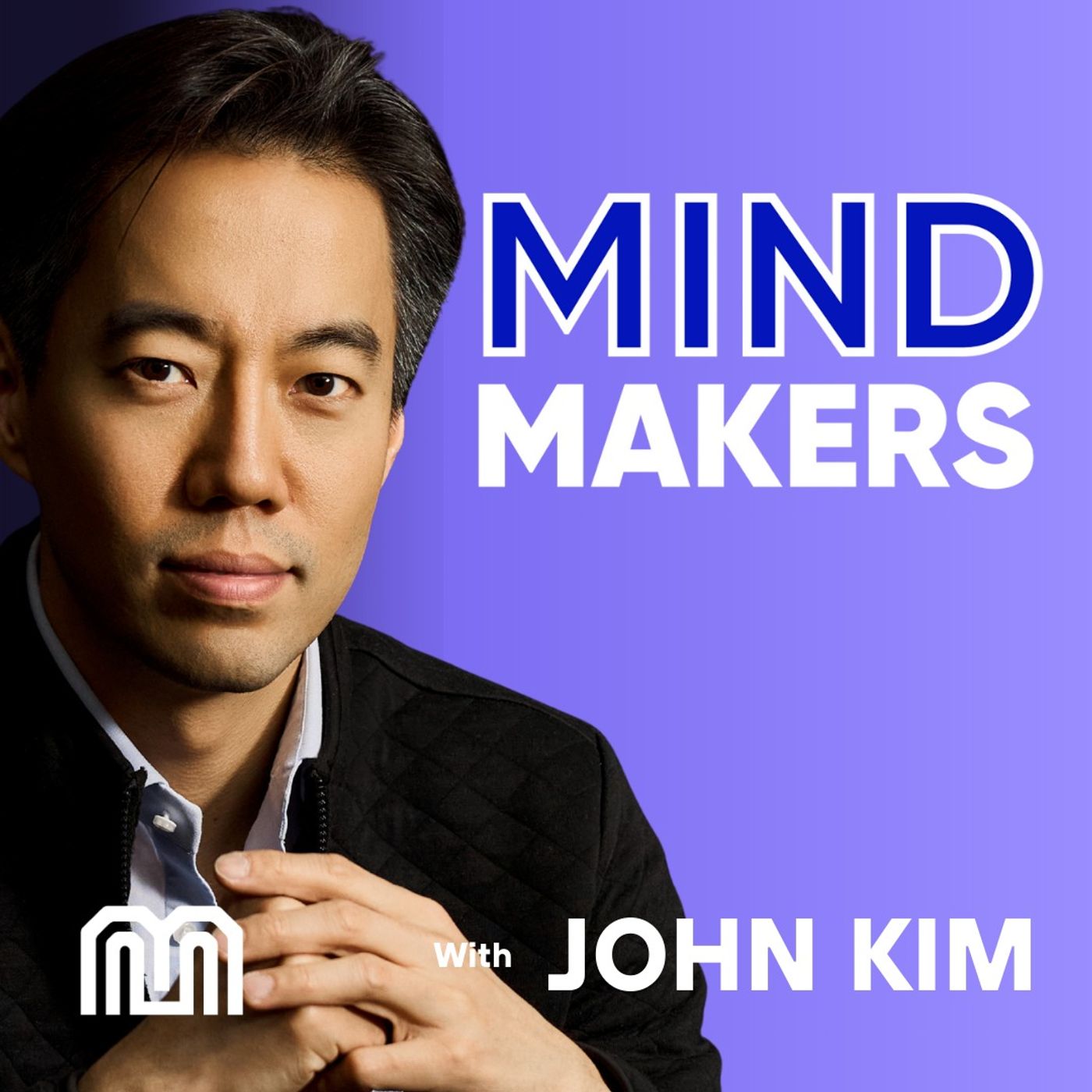
MindMakers is a podcast about the architects of artificial intelligence.Hosted by Sendbird CEO John Kim, it features conversations with the founders and executives turning ambitious visions into transformative technologies. These are the leaders reimagining how we communicate, create, and connect in an age of intelligent machines.From startup ideas to tech revolutions, MindMakers offers a clear lens into the minds behind AI—and the choices that define the future.
-
10
Why Memory Is AI's Most Underestimated Layer
Storage used to be an afterthought. In the era of trillion-parameter models and agent swarms consuming millions of tokens per session, it has become one of the most strategically critical layers in the AI stack. On this episode of MindMakers, John Kim is joined by Val Bercovici, Chief AI Officer at WEKA, the AI storage and memory systems company. Val brings a rare vantage point of two decades across NetApp, SolidFire, and early Kubernetes development to explain why memory architecture is the defining challenge of this moment in AI. He breaks down the gap between what models can theoretically do and what infrastructure actually allows, introduces WEKA’s concept of a "token warehouse," and explains how the shift from prompt engineering to context engineering is changing the way teams build and scale AI systems. Val also shares a candid take on the Chief AI Officer role and whether it's built to last, his read on the cultural and competitive differences between Anthropic and OpenAI, and why the most durable business model in AI may ultimately come down to who sells the tokens. For anyone building or leading at the infrastructure layer of AI, this episode offers both the technical depth and the strategic clarity to think several moves ahead. — Guest Bio Valentin (Val) Bercovici is the chief AI officer at WEKA. He has extensive experience in the data infrastructure industry, having previously been the CTO at NetApp/SolidFire, where he drove innovation in cloud storage and data management solutions. Val co-authored the Windows Shadowcopy snapshots and has made significant contributions to the storage standards community. As co-chair of the Storage Networking Industry Association's (SNIA) Solid State Storage Initiative, Val helped to establish the first NAND Flash SSD storage standards. Additionally, Val served as the chair of the SNIA Cloud Storage Initiative (CSI), where he led the development of the international S3 standard CDMI (ISO 17826). He was also a founding member of the Kubernetes Cloud Native Computing Foundation’s Governing Board, helping to shape the global direction of container orchestration. Val holds patents in AI agent smart contracts, streaming data integrity, and augmented reality (AR) for data center maintenance. His work continues to push the boundaries of what’s possible at the intersection of AI, cloud, and emerging technologies. — Guest Quote "The biggest value of memory today is without any additional expense, without more CAPEX or energy OPEX, you can have a high level of concurrency... Even at a modest scale, we're seeing 6.5x, another way of saying it is 550% more concurrent tokens without latency sacrifice, without any more GPU spend or any more energy spend." – Val Bercovici — Time Stamps [00:49] Welcoming Val to the show [01:02] Val's background pushing innovations [02:58] Are Chief AI Officers here to stay? [08:40] How WEKA delivers for clients [12:16] Unlocking memory architecture bottlenecks [18:53] Where memory impacts the bottom line [24:51] The future of reliably stored context [28:29] Keeping up with AI research [31:47] The power of being an early adopter [34:19] Who is winning the AI code battle? [39:15] Are we heading into a SaaS apocalypse? [44:31] Val's Human Prompt — Links Connect with Val Bercovici on LinkedIn Check out WEKA Connect with John Kim on LinkedIn Check out Sendbird Hosted by Simplecast, an AdsWizz company. See pcm.adswizz.com for information about our collection and use of personal data for advertising.
-
9
How Fireworks AI is Powering the Inference Layer of the AI Economy
As the bottleneck for AI innovation shifts away from the training layer, what will power the next wave of widespread enterprise implementation? On this episode of MindMakers, John Kim is joined by Fireworks AI’s Co-Founder, Benny Yufei Chen, to explore why inference has become the most critical layer in the AI stack. Drawing from his experience on the PyTorch team at Meta and building large-scale production systems, Benny shares why his team set off to found Fireworks AI on what many initially saw as a contrarian belief. Today, as companies consume trillions of tokens and race to automate workflows, this episode dives into why cost efficiency, model evaluation, and reinforcement learning are becoming strategic advantages. Benny also explains why open source models are here to stay, how reinforcement learning with verifiable feedback lowers the barrier to customization, and why trust may be the most durable moat in an increasingly competitive AI landscape. If you’re building AI infrastructure, scaling agent-driven products, or leading an organization toward AI-first operations, this episode provides a deep view on the economic and architectural realities behind sustainable generative AI. — Guest Bio Benny Yufei Chen is a technology professional with significant experience in software engineering and development. As a Co-Founder of Fireworks AI since November 2022, Benny has been instrumental in driving innovation in the industry. Prior to this role, Benny spent over eight years at Facebook, progressing from an intern in 2013 to a Principal Software Engineer. During tenure at Facebook, Benny contributed to the Ads Integrity team, where efforts focused on ensuring compliance and quality of advertisements. Previous roles include Lead Backend Engineer at talkways, where infrastructure setup and design were key responsibilities, and a Student Developer position at CCLE, specializing in PHP development. Benny earned a degree in Computer Science and Engineering from UCLA in 2015. — Guest Quote “We're here to help businesses scale so they don't scale into bankruptcy. We are all running so fast and we're trying to find product market fit very quickly, [but] as these businesses try to automate more of their processes, it is very difficult to scale on top of frontier models. They're so expensive and for us to help the businesses flourish, we have to bring down their total cost of ownership.” — Time Stamps [00:49] Welcoming Benny on the show [2:56] How far along are customers in this AI first world? [3:57] The massive surge of token usage this year [7:27] Benny's journey from PyTorch to Fireworks AI [12:18] Building a strong technical culture [15:10] From experimentation to certainty with open-source [19:00] Where Fireworks AI helps businesses most [21:37] Tailwinds from the rise of this sector [22:48] What is Eval Protocol [30:36] Trust as a lasting business moat [33:40] How prepared companies are for this tidal wave of AI innovation [39:12] Enabling your teams to embrace this tech [46:52] Benny's Human Prompt — Links Connect with Benny Yufei Chen on LinkedIn Check out Fireworks AI Connect with John Kim on LinkedIn Check out Sendbird Hosted by Simplecast, an AdsWizz company. See pcm.adswizz.com for information about our collection and use of personal data for advertising.
-
8
How TwelveLabs Helps Enterprises Transform Video Content Into Competitive Edge
What will unlock real-world AI beyond chatbots and copilots? On this episode of MindMakers, host John Kim speaks with Jae Lee, CEO and Co-Founder of TwelveLabs, to explore how video is defining the next wave of artificial intelligence.Drawing from his background as a cybersecurity leader in the Korean military and his work pioneering video understanding models, Jae shares how TwelveLabs is building infrastructure for what they call video superintelligence. You’ll hear how enterprises across industries such as media, sports, and defense are using TwelveLabs to index petabytes of video and unlock semantic search, highlight generation, and autonomous analysis. Jae also shares why they had to build their own inference stack from scratch, how they think about long-term memory in multimodal systems, and what makes video the richest and most underutilized data source in AI today. If you’re building AI infrastructure, leading digital transformation, or preparing your organization for agentic workflows, this episode offers an inside look at the technical and strategic challenges behind enterprise-scale video intelligence.—Guest BioJae Lee is the visionary Co-Founder and CEO of TwelveLabs, an industry-leading AI company transforming video search and understanding. Under his leadership, TwelveLabs has pioneered the development of advanced multimodal video foundation models that empower businesses and developers to extract deep, context-rich insights from video content with near-human intelligence.Harnessing cutting-edge generative AI and machine learning technologies, TwelveLabs is redefining next-generation video processing, retrieval, and interactive question-answering capabilities. By seamlessly integrating visual, audio, and textual data, their models capture the full spectrum of meaning embedded in video content—setting a new standard for scalable, personalized and intelligent video experiences across media, security, sports analytics, and enterprise intelligence.Jae also serves on the board of the Republic of Korea Foundation Model Association, collaborating with influential leaders from South Korea's largest conglomerates, including Samsung, SK, and LG, to shape the future of AI. He holds a BSc in Electrical Engineering and Computer Science from UC Berkeley.—Guest Quote“We need to really ask ourselves: what can humans uniquely do? I think this tech will probably help us understand who we are better. Because we need to know what we are uniquely good at, what we are uniquely capable of doing, to find something that can’t be displaced. It’s a deeper challenge for humanity.”—Time Stamps 00:00 Episode Start01:00 Jae's background and early career04:45 The idea that sparked TwelveLabs07:30 Why video models are so powerful11:20 Real world applications of TwelveLabs14:00 Building your own infrastructure17:45 Unlocking productivity across industries21:05 TwelveLabs’ workflow23:30 Hiring top talent to scale your teams28:25 Driving adoption in regulated sectors34:00 How to stay ahead in the world of AI36:00 Where to build the best tech38:15 The future of TwelveLabs41:00 Clearing up misconceptions45:00 Jae's Human Prompt—LinksConnect with Jae Lee on LinkedInCheck out TwelveLabsConnect with John Kim on LinkedInCheck out Sendbird Hosted by Simplecast, an AdsWizz company. See pcm.adswizz.com for information about our collection and use of personal data for advertising.
-
7
How the Founder of Coactive AI Is Bridging the Gap Between Human and Machine
What if your most valuable data isn’t in text, but in images, video, and audio you can’t yet search? On this episode of MindMakers, host John Kim is joined by Cody Coleman, CEO and Co-Founder of Coactive AI, to explore how enterprises can finally make sense of their image, video, and audio content. Coactive AI was born ahead of the AI revolution in 2021, and their platform can instantly search, organize, and analyze unstructured visual content to help businesses make faster, better decisions. While most of the AI world today is still focused on text, Cody and the team have their eyes set on the future.Cody shares how his journey from foster care to Stanford and Silicon Valley shaped his belief in accessible, impactful technology. He and John dive into the untapped potential of unstructured data, why multimodal AI demands new tools, and how companies like Comcast, Fandom, and Thomson Reuters are turning visual content into searchable, actionable intelligence.If you're working with rich media, rethinking AI infrastructure, or searching for signals in a sea of content, this episode reveals what it really takes to operationalize visual-first AI.—Guest BioCody Coleman is the Co-Founder and CEO of Coactive AI. He is also a Co-Creator of DAWNBench and MLPerf, a founding member of MLCommons, and his work spans developing standards and benchmarks for high-performance deep learning to data-centric AI. He holds a PhD in Computer Science from Stanford and MEng and BS degrees in Electrical Engineering and Computer Science from MIT.—Guest Quote“The pace of the field is only going to accelerate. We're only going to continue to see more improvements in foundation models and multimodal AI. That’s why we designed the system to be model agnostic, so people can ride that wave of progress instead of getting locked into any one approach. We want them to keep up, not fall behind.”—Time Stamps 00:00 Episode Start01:30 Cody's unconventional path to Silicon Valley06:25 Blurring of digital & physical worlds08:55 Early exposure to machine learning and AI13:10 The inspiration that led to Coactive AI16:40 Who benefits most from multimodal tech20:50 Balancing your product for a wide range of technical abilities26:25 Coactive AI's value prop28:40 The potential when you move beyond text34:35 Innovating ahead of the curve41:00 Connecting storytelling to AI45:15 Ensuring your AI projects bring ROI50:20 Cody's Human Prompt—LinksConnect with Cody Coleman on LinkedInCheck out Coactive AIConnect with John Kim on LinkedInCheck out Sendbird Hosted by Simplecast, an AdsWizz company. See pcm.adswizz.com for information about our collection and use of personal data for advertising.
-
6
How Augment Code is Redefining Developer Velocity with AI
What’s really driving the next leap in AI for software development? On this episode of MindMakers, host John Kim sits down with Guy Gur-Ari, the Co-Founder of Augment Code, to unpack why the future of enterprise engineering isn’t just AI-generated code, it’s agentic systems that understand context at scale.Guy shares how Augment is helping large teams move beyond code completions into autonomous workflows, from feature builds to production incident response. You’ll hear why adoption isn’t just a tooling challenge but a behavioral shift, what most leaders misunderstand about “vibe coding,” and how the right context engine changes everything.Whether you’re deploying AI across a legacy codebase or rethinking developer velocity with agents, this conversation offers sharp insight into the real opportunities and hidden obstacles enterprises face ahead.—Guest BioGuy co-founded Augment Code after a stint at Google where he led a research team that focused on understanding and improving deep learning systems. He holds a Ph.D in theoretical physics from the Weizmann Institute of Science.—Guest Quote“As the cost of code generation goes to zero, do we still live in a world where you need one company to build an app for millions of users to use, or can it become a lot more customizable? Maybe I can now create my own apps, or maybe take some sort of template of an app, but do a lot of customization on it to suit exactly my needs.”—Time Stamps 00:00 Episode start01:05 Augment Code's Origins02:20 The new age of AI coding assistants05:05 How Augment Code stands out09:25 Overcoming developer hesitations14:30 Staying ahead in a rapidly evolving industry19:20 Tackling security risks28:05 What's next with agentic platforms40:05 Largest misconception about vibe coding43:25 Changing mindsets45:40 Guy's Human Prompt—LinksConnect with Guy Gur-Ari on LinkedInCheck out Augment CodeConnect with John Kim on LinkedInCheck out Sendbird Hosted by Simplecast, an AdsWizz company. See pcm.adswizz.com for information about our collection and use of personal data for advertising.
-
5
Reltio’s CEO & Founder on Turning Data Chaos Into AI Advantage
What’s holding back widespread, successful AI adoption? Today on MindMakers, host John Kim is joined by the CEO, Founder and Chairman of Reltio, Manish Sood, to explore how the real unlock isn’t just better models, but better data.Having founded Reltio in 2011, Manish shares how Reltio went from solving data sprawl to powering real-time Agentic AI at global scale. You’ll hear how companies like Liberty Mutual are using unified data to cut call response times from seconds to milliseconds and why speed must be priority number one in this ecosystem. John and Manish also discuss what most enterprise buyers get wrong about AI, why customer collaboration is critical for finding your next use case, and what the future of SaaS looks like now that AI tools are being leveraged across the globe. If you're building B2B AI, leading digital transformation, or trying to get real ROI from enterprise workflows, this episode is full of hard-won insights from the front lines.—Guest BioManish is the CEO, Founder and Chairman of Reltio, the first cloud-native, software-as-a-service (SaaS) data platform. An entrepreneur with a vision of the big-picture ways data can drive business and industry transformations, Manish founded Reltio in 2011 to help organizations accelerate the value of their data and deliver on business outcomes. Since its inception, Manish has led Reltio’s evolution from the concept stage to a high-growth company with more than $150 million in annual revenue.Manish previously led product strategy and management for the Master Data Management (MDM) platform at Informatica and Siperian. During his career, Manish has architected some of the largest and most widely used data management solutions used by most Fortune 500 companies today. Manish holds a bachelor’s degree in mechanical engineering from Andhra University College of Engineering.—Guest Quote“Time is going to be the only moat. So who can move faster? If anything was described as a software problem, given enough time you could solve it. But now those timeframes are going to get compressed dramatically as compared to what we have seen before.” – Manish Sood—Time Stamps 00:00 Episode start01:05 Reltio's beginnings04:55 The rise of Agentic AI07:15 How Reltio connects data within the enterprise10:00 Focusing on ROI amidst all the hype12:15 Humans in the loop15:40 Unexpected effects of AI adoption19:30 Misconceptions Manish sees in the market23:30 Overcoming fears and hurdles28:20 Acting as an AI advisor30:30 Is SaaS dead?38:35 The future of UI with AI41:35 Manish's thoughts on the future44:30 Lessons from Reltio's scale47:10 Manish's Human Prompt—LinksConnect with Manish Sood on LinkedInCheck out ReltioConnect with John Kim on LinkedInCheck out Sendbird Hosted by Simplecast, an AdsWizz company. See pcm.adswizz.com for information about our collection and use of personal data for advertising.
-
4
Moveworks’ Founder & CEO Bhavin Shah on Speed, Scale, & Surviving the Hype Cycle
With every new startup announcement containing “AI” somewhere in the headline, how do you build a differentiated product that stands the test of time? In this episode of MindMakers, host John Kim sits down with Bhavin Shah, CEO & Founder of Moveworks, for a thought provoking discussion on what it really takes to move beyond hype and into real business transformation. Bhavin shares the evolution of Moveworks, from its origins as a narrow IT help desk solution to the full-fledged AI agentic platform it is today. He walks through the technical and strategic inflection points that unlocked growth and proved stickiness, from early statistical models to the game-changing impact generative AI. But what really sets this conversation apart is Bhavin’s view on the business discipline behind the tech.Together, John and Bhavin unpack why AI doesn’t just accelerate workflows, it accelerates the market itself. In today’s environment, startups no longer have five years to figure things out as AI forces a faster reckoning. You either prove product-market fit early and build real distribution, or the window closes.Whether you're building in B2B SaaS, navigating the AI hype cycle, or trying to future-proof your organization, this episode is packed with strategic insight on what it takes to build AI that sticks and scales.—Guest BioBhavin Shah has spent 25+ years taking companies from inception to scale. Prior to Moveworks, he was CEO of Refresh.io, which was acquired by LinkedIn in 2015. He has an MA in Education, Technology & Business from Stanford University and a BS in Computer Science from UCSD.—Guest Quote“People think founding a company is about being a visionary. On some level it is, but most of it's execution. You can't have the right to think big unless you can execute in a local fashion. That’s how you earn the right to scale.” – Bhavin Shah—Time Stamps 00:00 Episode start02:15 Moveworks’ evolution from IT help desk to AI agent platform06:45 Solving messy problems at scale10:00 From BERT to ChatGPT13:00 Product-market fit metrics that matter17:00 Scaling with ServiceNow20:45 Weak vs. strong ROI in Enterprise AI25:30 How to transform business workflows30:20 AI’s opportunity in the public sector34:40 What it takes to survive as a modern startup38:00 The cost of inference and the new competitive landscape42:00 Bhavin Shah’s Human Prompt—LinksConnect with Bhavin Shah on LinkedInCheck out MoveworksConnect with John Kim on LinkedInCheck out Sendbird Hosted by Simplecast, an AdsWizz company. See pcm.adswizz.com for information about our collection and use of personal data for advertising.
-
3
Inside the Next Era of Healthcare AI with Ferrum Health’s Co-Founder Pelu Tran
Hospitals are flooded with AI pilots, but very few ever become real, scalable solutions. In this episode of MindMakers, host John Kim sits down with Pelu Tran, Co-Founder $ CEO of Ferrum Health, to unpack why AI in healthcare so often fails to move beyond the demo phase, and what it really takes to deploy with impact.With years of experience deploying clinical AI in some of the most complex, risk-sensitive environments, Pelu argues that the real challenge isn’t in the models themselves, it’s in the infrastructure. He walks through Ferrum’s approach to building with standardized onboarding, secure deployment, and unified oversight, enabling hospitals to adopt AI safely, at scale.John and Pelu dig into the reasons most hospitals can only support a handful of AI tools per year despite demand from clinicians for hundreds, and why point solutions are rarely sustainable in highly regulated systems. They also explore how Ferrum protects patient data while still driving innovation, the growing problem of Shadow AI, and how new roles like Chief AI Officers are reshaping the org charts of modern healthcare systems.This episode offers hard-earned lessons for anyone trying to deploy AI in highly-regulated environments where safety and trust are not optional. If you’re thinking about long-term infrastructure, compliance, or the future of strategic AI adoption, you won’t want to miss it.—Guest BioCofounder and CEO of Ferrum Health, Pelu Tran is a serial healthcare entrepreneur living in San Francisco. Pelu studied both medicine and engineering at Stanford University and was four months away from receiving his MD when he dropped out to start his first company. As founder of Augmedix, now a publicly traded company, Pelu led the product and commercial teams, growing the company to over 1,000 employees in five countries and $20M in annual revenue from over half of the largest health systems in the US. After watching his uncle pass away from a preventable medical error, Pelu founded Ferrum Health, an enterprise AI deployment platform with the mission of improving patient outcomes by democratizing health systems’ access to the most innovative and impactful clinical AI technologies from around the world.In his travels working with health systems around the world, you can find him learning about local cultures by trying the street food, listening to local musicians, and skiing, hiking, and diving any wilderness he can find.—Guest Quote“You’re never gonna be able to get people to stop adopting technologies that they want to use. So the reality of this is that the job of hospital AI administrators, IT teams, clinical leadership even, is to figure out which tools your doctors need to use to do a good job. And find a way to enable them to use them that is safe, compliant, and secure.” – Pelu Tran—Time Stamps 00:00 Episode Start00:45 The unique challenges and opportunities of AI in healthcare05:25 Roadblocks to widespread AI adoption07:25 Where regulation fits in to the equation09:50 The reality that startups and hospitals face today14:30 What Ferrum is doing differently18:00 Solving the workforce shortage with AI22:15 Often overlooked assumptions in regulated AI24:35 Pelu's lessons for other AI innovators26:45 Seizing this rare opportunity29:35 Pelu's Human Prompt—LinksConnect with Pelu Tran on LinkedInCheck out Ferrum HealthConnect with John Kim on LinkedInCheck out Sendbird Hosted by Simplecast, an AdsWizz company. See pcm.adswizz.com for information about our collection and use of personal data for advertising.
-
2
What WRITER’s CSO Kevin Chung Has Learned from Hundreds of Enterprise AI Deployments
Is it possible to drive real businesses transformation with AI amidst reports that 95% of enterprise projects have been failing? On the debut episode of MindMakers, host John Kim is joined by Kevin Chung, Chief Strategy Officer of WRITER, to unpack what it really takes to scale enterprise AI efforts successfully.Kevin shares how WRITER evolved from a niche translation tool into the full-stack AI agent platform it is today. Together, he and John offer their own insights on the widespread MIT / NANDA report. You’ll hear why so many AI deployments stall in the “last mile” and what the most successful companies do differently. These are the organizations seeing real ROI, launching hundreds of AI agents, and reclaiming tens of thousands of hours in productivity.Throughout the episode, Kevin and John explore how AI is shifting from tool to teammate, why treating AI like a new hire changes everything, and how WRITER builds trust through a hands-on approach with their partners.Whether you're building AI tools, leading digital transformation, or just trying to make your org more efficient—this episode is packed with insight on getting real results from AI at scale.—Guest BioKevin is the Chief Strategy Officer of Writer, the leading generative AI platform for enterprises. He is an accomplished technology leader with over 20 years of experience in Silicon Valley. Kevin has led GTM and product teams through some of the world’s most disruptive digital transformations, including mobile payments (Google), cloud storage (Dropbox), visual collaboration (Miro), and now generative AI (Writer). Kevin is a recipient of Singapore’s Overseas Networks & Expertise (ONE) Pass, a designation given to the top global talent in business, arts & culture, sports, academia and research. Kev currently splits his time living/working in San Francisco and Singapore.—Guest Quote“Number one, you gotta get your people empowered. Number two, you actually have to start promoting the people. And promoting in a sense of [not just] giving them the tools, but actually finding those champions who can be your AI advocates, right? The AI leaders in the organization that are gonna drive forward those initiatives.” – Kevin Chung—Time Stamps 00:00 Episode Start02:00 WRITER – From translation tool to AI platform06:30 Unpacking the MIT Report on AI ROI10:45 The importance of customization and last-mile AI15:30 Building enterprise strategy: trade-offs and focus20:20 Hands-on AI deployment25:15 AI’s role in upskilling vs. replacing the workforce30:40 Misconceptions about LLMs and enterprise readiness34:00 Treating AI as a digital employee, not just a tool38:30 Measuring real ROI42:00 The journey from SF to Singapaore44:05 Kevin Chung’s Human Prompt—LinksConnect with Kevin Chung on LinkedInCheck out WRITERConnect with John Kim on LinkedInCheck out Sendbird Hosted by Simplecast, an AdsWizz company. See pcm.adswizz.com for information about our collection and use of personal data for advertising.
-
1
Introducing MindMakers with John Kim
AI is moving fast, but the real story isn't in the headlines, it's in the builders MindMakers is a show about the people turning bold ideas into working AI. The founders launching what's next. The investors shaping the ecosystem. The technologists changing how we live, work and connect. This is about what's happening behind the scenes. What's real, what's coming, and who's making it happen.Hosted by John Kim, Co-Founder and CEO of Sendbird, MindMakers will feature the architects of artificial intelligence for mission-driven, unfiltered conversations about startups, infrastructure, deep tech, and the choices defining the next decade. If you want to understand the future of AI, don't just watch from the sidelines. Listen in. This is my MindMakers. Brought to you by Sendbird. Hosted by Simplecast, an AdsWizz company. See pcm.adswizz.com for information about our collection and use of personal data for advertising.
We're indexing this podcast's transcripts for the first time — this can take a minute or two. We'll show results as soon as they're ready.
No matches for "" in this podcast's transcripts.
No topics indexed yet for this podcast.
Loading reviews...
ABOUT THIS SHOW
MindMakers is a podcast about the architects of artificial intelligence.Hosted by Sendbird CEO John Kim, it features conversations with the founders and executives turning ambitious visions into transformative technologies. These are the leaders reimagining how we communicate, create, and connect in an age of intelligent machines.From startup ideas to tech revolutions, MindMakers offers a clear lens into the minds behind AI—and the choices that define the future.
HOSTED BY
Sendbird
CATEGORIES
Loading similar podcasts...
URL copied to clipboard!