
PODCAST · society
Needs Editing Podcast
by Sarah Katz
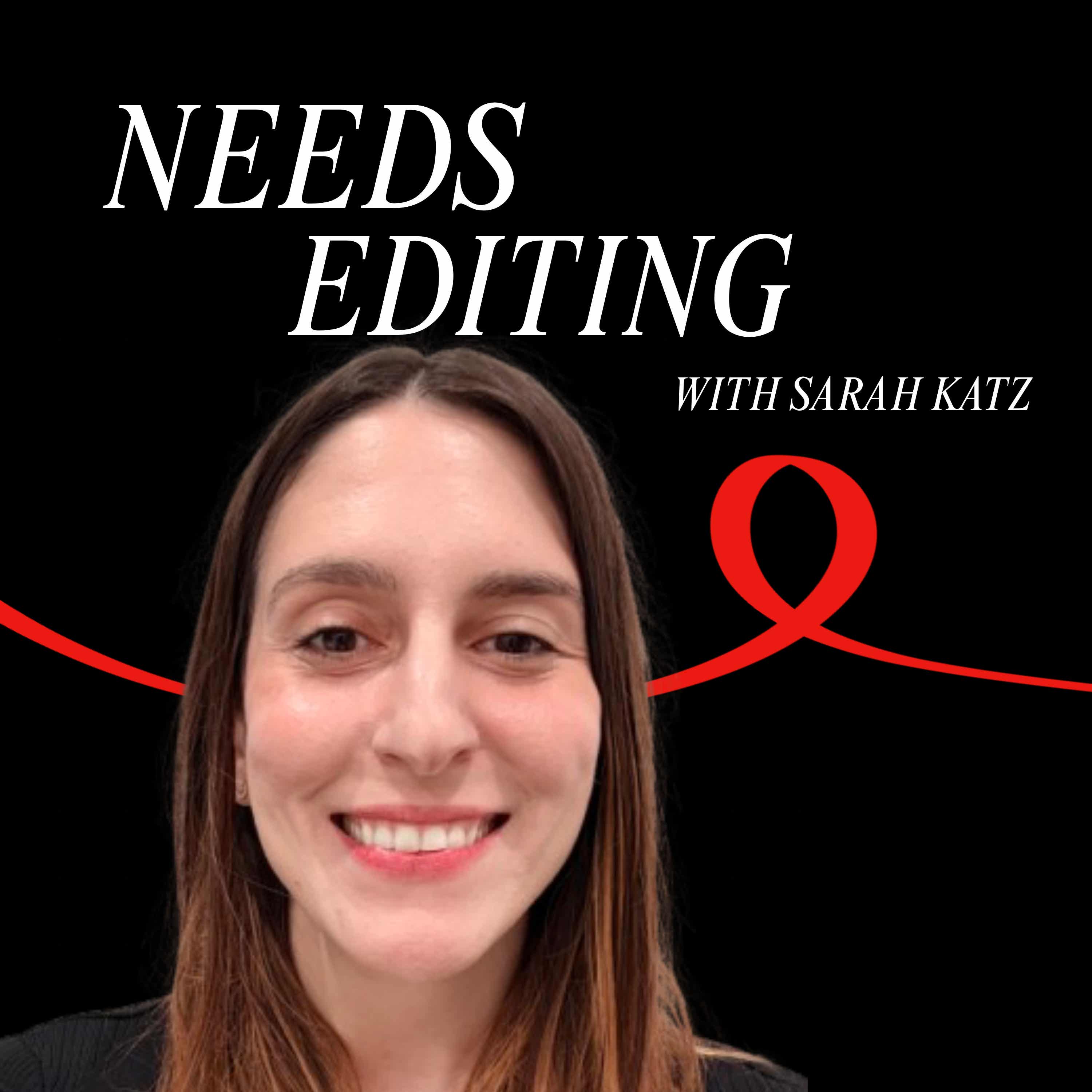
Needs Editing is a podcast hosted by the deaf poet, essayist, and journalist Sarah Katz that explores the deaf experience—particularly from the perspective of someone who uses Cued Speech to communicate—and the language we use to talk about it. needsediting.substack.com
-
2
Episode 1: Life with Jonathan, my hearing husband
My husband Jonathan is hearing, and he learned Cued Speech because he liked me.In this first episode of Needs Editing, we talked about our first date, Dinner Table Syndrome, COVID being the pivotal moment that made him decide to start cueing more often with me, and about why we’ve committed to cueing 100% of time before our daughter arrives in a few weeks.It’s ultimately a conversation about clear and effective communication, and why it’s so important for deaf and hard of hearing people—and anyone, really!—to have it.Thanks for watching, and please feel free to share it with others. Transcript is below, and apologies if it or the captions are a little wonky—I’m still working that part out!Transcript:Sarah (00:00:03):Hey, so I’m Sarah.Jonathan (00:00:06):I’m Jonathan.Sarah (00:00:08):And this is the first episode of my new podcast, Needs Editing, which for now is going to explore the deaf experience broadly. And Jonathan, you’re my husband. And so we met in 2011 and I’m deaf and you’re hearing. And I didn’t tell you that before our first date. I just showed up.Jonathan (00:00:45):But I think I sort of knew I think I like Googled you and saw you were like connected to some like deaf board or group or something. And so I had like an inkling. I wasn’t totally surprised. I didn’t know, but I wasn’t like totally surprised.Sarah (00:01:14):Okay. It’s funny because we’ve been married for like 15 years and I’m still learning things. Not married but together for fifteen years. What?Jonathan (00:01:27):I’ve definitely told you that before.Sarah (00:01:30):Okay, whatever. But yeah, I was really young. I was 22 and I’m 37 now. I remember I was really nervous and I was oversharing about everything. And that was partly because... I was such an anxious person, but also because I wanted to filter out anyone who maybe weren’t (sic) serious. And so it worked. I charmed you.Jonathan (00:02:13):That makes sense. You were very charming. I remember I got us lost on the way to a gelato shop. I didn’t look at the map and I was just like, I’m a man, I can find it.Sarah (00:02:31):I remember that.Jonathan (00:02:33):But it took us like hours because I was so lost.Sarah (00:02:38):Yeah. So what was your first impression of me? Like, so you knew I couldn’t hear very well — or was it more like something you realized gradually, or?Jonathan (00:02:58):Well, I mean, as soon as we met, I realized that you were deaf and I had never really interacted with a deaf person before. I mean, I’m sure I’ve met deaf people, but I’ve never like really closely interacted. So I didn’t know much about, well, I knew nothing about the culture. And I didn’t really know much about accessibility. I remember I asked if you wanted to see a movie. And you said yes. And I was telling someone later about that. And they were like, well, how could she enjoy that? And I was like, oh, well, she just reads lips. But I didn’t think about how in a movie, you’re not always seeing a person’s face head on. Even if you were the best lip reader in the world, you couldn’t watch a movie that way. So I never thought about those things. And getting to know you was very educational for me on a lot of those issues.Sarah (00:04:29):And I remember during that date, I initially said yes. But then I later was like, actually, I can’t. Yeah. Because I won’t understand the movie.Jonathan (00:04:42):Right. Which is good. I’m glad you told me that. I think you actually told me that like 15 minutes.Sarah (00:04:51):I know.Jonathan (00:04:51):Before the end of the movie. And I was like, but I want to see. Yeah. Well. We went. We went. And it was like this. Yeah, yeah, yeah, yeah, yeah. We went. And it was this super tense foreign. Oh, it was a foreign film. So it was subtitled. Never mind. And maybe this was later on. I don’t remember. But I remember you being like, I’m bored. Let’s go. And it was like 10 minutes left in the movie. And I wanted to see what happened. But I was like, Okay, we can go. Yeah.Sarah (00:05:36):We haven’t explained to anyone that we’re using Cued Speech as a visual communication method that some deaf and hard of hearing people use to communicate. And it shows spoken languages visually. So, can you remind me — I don’t remember, um, how you started learning to cue? Did I teach — did I tell you to do it, or did you volunteer, or what?Jonathan (00:06:14):So I had never heard of it, as most hearing people haven’t. I had, of course, heard of ASL and just assumed that every deaf person wants to use ASL. So I think you told me about Cued Speech like right away or on our first or second date, like it was soon. And you never asked me, but I wanted to learn it because I liked you. So I wanted to learn it. Right away. And you taught me some. I studied a lot — I was taking the bus to work back then, so I would study on the bus. And I memorized the placements and positions pretty quickly. I always like to tell this story, as you know, but for the viewers, Sarah told me when we first met a person with average intelligence can become fluent in cueing in 48 hours. And so it’s now 15 years later, and I’m still not fluent. So that tells you about my intelligence levels. But... But my point is that it is very easy to learn the basics but it takes a long long time to get to a point where you can do it quickly enough for it to really work as a main mode of communication. I should say that part of that is me not practicing as much as I could have or should have. Like, I didn’t really start practicing super diligently until COVID. COVID, Sarah, you had to go to the hospital and I was not allowed to visit. And the only way we could communicate was through your phone on video chat and you could not hear a thing. So I had to cue to talk to you and that was the motivation I needed to really like bear down and practice a lot. I mean, I should have done it much sooner. But I always felt that you could understand me pretty well. And I think one of the things you and I are both realizing now or lately is that a lot of times like hearing people will decide what accessibility is necessary. And that’s really wrong. We hearing people need to listen to deaf people about what they need and you are a very kind and agreeable person and you never strongly advocated for me to get a lot faster or better. Because I would cue like with my family and you’d get so frustrated, because I was so slow, you’d be like, just don’t even worry about it. But that’s on me, because I needed to put in the extra work to get there for you, and I always told myself you didn’t really need that, but I should have listened to you more.Sarah (00:10:25):Well, I mean, I should also add that I’ve been very like wishy-washy about that. Like I haven’t, I’ve spent a lot of years just not owning my accessibility needs. And it’s only until recently that we started cueing all the time. And it’s made such a difference in terms of not just my access, but feeling like, um, like I’m cared for like that. Like that balance of communication is not out of whack. And I’ve always felt cared for by you, but it’s a different level.Jonathan (00:11:16):Yeah.Sarah (00:11:17):Yeah. And I’m sorry I’ve told you that you’re too slow, because that didn’t—Jonathan (00:11:25):I was and am, so I’m still trying to get better.Sarah (00:11:31):You’re pretty good.Jonathan (00:11:35):It’s a work in progress. If I have a drink or two, okay, this is an argument we have a lot. I believe that I cue much better when drunk because I’m not thinking as much about it. But Sarah, you’re like, no, you cue much worse. So maybe it’s just in my head. Or maybe I’m really fast when I’m drunk, but the signs are all wrong. The cues are all wrong because I’m drunk. I don’t know. But that should be studied, I think, in a lab.Sarah (00:12:20):Oh, definitely. So we’re having a baby soon.Jonathan (00:12:27):We are.Sarah (00:12:28):A few weeks. And so we’ve decided that we’re going to cue 100% of the time so that she knows Cued Speech. Why is it important to you that she learn to cue?Jonathan (00:12:51):Well, I mean... It’s not really that important for me. It’s important for me to have you be able to communicate with her like completely fluently. She needs that from her mom, and you need that from your daughter. So it is important to me for that reason, but it’s on behalf of your relationship with her. I mean, there are other benefits. I do believe like even if we were both hearing, I think cueing is probably a great tool, a literacy tool for young kids because it helps teach phonics, I imagine. So I’d probably be in favor of it just for that reason, too. But, I mean, it’s really important that you feel included in everything that she says, you know, from the start.Sarah (00:14:10):Yeah, I agree. And I’m glad that we came to this conclusion now before she arrived so that there’s no confusion.Jonathan (00:14:24):Yeah, and we’re going to sign as well. Yeah. Which is cool because I don’t know many signs at all. So I’m going to learn along with her. I just have to stay one step ahead of an infant.Sarah (00:14:48):You do? Yeah, we both do. So...Jonathan (00:14:57):Well, do you want to talk about the challenges of being married or dating a hearing person? And how we’ve navigated that? I mean, I know it hasn’t always been easy.Sarah (00:15:23):I mean, I know when we’re with your family, particularly your mom and sister, I really struggle a lot with following them sometimes, both of you, because they do speak primarily. And I’m looking at you sometimes, but I’m often tuning out. I do that in a lot of hearing settings. I just kind of tune out, and it’s called Dinner Table Syndrome, where deaf and hard of hearing people just feel disconnected from their hearing environment. And that’s one of the challenges.Jonathan (00:16:15):Yeah.Sarah (00:16:17):Yeah. Yeah. We haven’t really navigated that much yet, you know, in terms of, because I haven’t seen your mom and sister in a while.Jonathan (00:16:34):Yeah. Well, yeah, those situations can be tough, I know. And sometimes my mom is immunocompromised, so I will wear a mask. Around her often when we’re indoors and that makes it even harder because you can’t see my lips if I’m trying to transliterate for them They never worked. We tried clear masks but they would get foggy really quickly and they would slip out of position and I’m not even sure if they’re really like medically sound. But, I mean, it was a good, it was necessary during the pandemic because so much of the world was masked. You were really at a difficult position then. Yeah.Sarah (00:17:52):Okay.Jonathan (00:17:58):I thought you had like a list of questions.Sarah (00:18:01):I did. I had a lot of questions and we went through them.Jonathan (00:18:04):You did?Sarah (00:18:06):We did.Jonathan (00:18:07):Oh, okay. Cool.Sarah (00:18:11):One question is, uh, what do you wish people knew about Cued Speech or about loving someone who cues or anything related to cueing?Jonathan (00:18:27):So I think that cueing is amazing. It allowed us to get to know each other much faster, like to communicate. I mean, we’ve never... Had too much trouble in like quiet one-on-one situations not to say it that doesn’t still require you to do extra work I know it does but it has never been like an insurmountable barrier but noisy situations We could not navigate without cueing or unless I became really good at signing quickly, which I’m not very good at languages. Um so having cueing was really helpful um for us as a as a way to bridge our uh gap um especially early on um in the relationship um you were able to teach me right away um and I was able to learn fairly quickly um So I think it’s a great system. I wish more people used it and knew about it. But I also do understand that it’s controversial in the deaf community because it was invented by a hearing person and has associations with kind of oral traditions. And I don’t want to kind of gloss over those difficulties. It’s easy for me as a hearing person to say everyone should learn Cued Speech when I’m a beneficiary of that. And again, it’s not really about me. It should be about the people who need the accessibility to incorporate into their daily life, not my comfort levels. So I’m sensitive to that. But I do think that as we talked about a little the literacy uh benefits and the um the way that um oh I I wanted to talk about this like Cued Speech gives you access to the sound of language language the the musicality of language and I know that signing has its own musicality and beauty, not saying it doesn’t, but spoken English and other spoken languages certainly do too. Deaf people should be able to access those things if they choose. And you in particular have a very advanced oral proficiency, or I don’t know if it’s just a talent or a knack for oral language, in poetry and music and lyrics, and that only became accessible to you through cueing. So I feel like there may be countless Deaf people in the world who might have those same talents and proclivities that will never be able to, will never know or realize it because they lack the technology of accessing those sounds without hearing.Sarah (00:22:37):Well, I mean, I do think that we can be a little too over-focused on sound. Like there’s a whole world of language out there other ways of existing in the world and being in the world.Jonathan (00:22:56):For sure.Sarah (00:22:57):And that while there are certainly benefits to accessing musicality and language, like you said, there’s a musicality in ASL. I don’t think, I think it’s important to I don’t know, not state it as a lack necessarily, but just as an opportunity.Jonathan (00:23:24):I think it’s a bonus. I mean, like you can live a perfectly happy life, never tasting pizza, but pizza is amazing and everyone should get the opportunity to enjoy it. So I feel it’s like that.Sarah (00:23:45):There are many ways to enjoy a pizza, you know?Jonathan (00:23:50):I mean, like looking at it, smelling it, those are okay, but you want to eat it because it’s so good. I mean, you don’t need it. You can get, there are many other pleasures in life, but why not give people access to something that brings joy to many and spoken language does. And especially like you have always loved the sounds of poetry and, you know, some of them.Sarah (00:24:29):I do want to emphasize, though, that Cued Speech is not giving access to sound. It’s giving, it’s clarifying sound, but you can enjoy spoken language without hearing it. Right. And so I think that’s an important distinction.Jonathan (00:24:56):No, no, no. I mean, I’m saying as a deaf person, the only way to enjoy spoken language is without hearing it. Right. Like. I mean, I know that you have some hearing and most deaf people do, but sort of definitionally, as a deaf person, you’re trying to enjoy spoken language without having that hearing aspect. That’s what Cued Speech allows that wouldn’t be possible, I think, without it, unless there are other modalities that I’m unaware of. Like maybe we watched that video of a person who held a ball and felt the vibrations in the ball. So maybe there are other ways like that. This is a very kind of straightforward way for Deaf people to get access to those phonemes and be able to play with those lyrically, which can be fun.Sarah (00:26:22):Yeah, I agree. But I also think we have to be careful of being too limited in our thinking about what can be enjoyed.Jonathan (00:26:39):Yeah. Well, I mean, you could say all the same things about signing. There’s just as much beauty and poetry in signing, and I’m just not fluent in it, so I can’t appreciate it. And you could say that’s like my pizza, right? Like I’m missing out on that. But there’s a way for me to access that, which is learning sign. Most, many, I shouldn’t say most, but many people do not know that there’s a way to access spoken language as a deaf person using Cued Speech. And I think that’s the shame is that people shouldn’t. Shouldn’t be forced or coerced to use it or learn it, but they deserve to know it’s there if they choose to. That seems to me like the value of broader awareness of it is giving deaf people the option, letting them decide if that’s something they’re interested in, just as a hearing person can decide for themselves if signing is something they want to learn. And many hearing people do. I think you told me that signing is like the most common foreign language studied in the university now or one of, which is really cool. A lot of hearing people do want to learn it and they should definitely have that option.Sarah (00:28:18):I also, to your point, I think also, you know, I am contemplating getting my cochlear implant removed. I know I still have to get a second opinion from another cochlear implant surgeon. So I have a cochlear implant in my left ear and a hearing aid in my right, and I got it in 2022. About four years ago. And unfortunately, I’ve been having pain where the cochlear implant is at night when I’m asleep. And I wake up and I’m like, oh my gosh, it’s so painful. And it’s really severe pain, like not just a little pain, which, you know, is making me think like I might just be deaf in that ear. And I haven’t been wearing my cochlear implant that much. But like here I was someone who got a cochlear implant and was trying to make it easier for me to communicate with hearing people and navigate the hearing world. But now I might be taking a few steps back So it makes the cueing even more important.Jonathan (00:29:49):Well, it’s funny because I was just saying dumbly, there’s no other technology I’m aware of that. Yeah, cochlear implant. Now, I would say that You should have the option to enjoy the spoken language without having to have cranial surgery, which is a pretty extreme intervention. But... That’s another technology that is very popular, and a lot of people like it and some people don’t. I feel bad that you didn’t get from it what you hoped for, even without the pain, which is obviously not OK. I don’t think you really got what you hoped from it, which is probably just a function of people reacting differently to it. You know, bad luck.Sarah (00:31:01):Yeah, I mean, for me, the cochlear implant has been just too loud. I’ve worn it. I did wear it consistently for about two years. And then after two years, I started wearing it less. And I never quite adjusted to it. I have worn it daily for about five hours a day. And then, just like over the last year or so...Jonathan (00:31:40):So this is how Sarah wears the implant. As long as there’s perfect silence in our house, she will wear it. But as soon as like I make like one sound, she’s like, that’s it. It’s coming off.Sarah (00:31:58):It’s so loud. And maybe it’s just because we’ve been married for so long.Jonathan (00:32:06):I’m just teasing. Yeah, I know.Sarah (00:32:11):I’m saying that jokingly.Jonathan (00:32:15):I’ve got a question for you. If our daughter were born deaf, which I know you’re still hoping happens, would you at all consider a cochlear implant at a young age before the age of her being able to make that decision?Sarah (00:32:41):Think so I mean just based on my own negative experience with it and also I want her to make her own decisions about that because it’s such a it’s kind of a traumatic experience like like you’re you’re having to adjust toJonathan (00:33:06):But it it becomes more traumatic the longer you wait probably right um and so and then the question becomes like what age is she really able to make that just like you can’t like 18 like 18 adult and at that point You’re going to she’s going to have a difficult time adjusting. So, I mean, I think I’m not saying I would be in favor of it either. I’m just saying I think the argument would be from those who would support that is that you do it young to prevent the difficult transition later in life.Sarah (00:33:55):Yeah, I mean, we would be offering her a fully accessible environment. She would certainly experience challenges in life because of the world we live in being inaccessible, but I do think it’s possible and I’ve seen my deaf and hard of hearing friend be able to succeed without the program. Right. I think it’s certainly possible. It just requires commitment to creating an accessible environment at home and making sure that she would get a strong language foundation.Jonathan (00:34:50):Would you be amenable to her going to a like ASL only school, like a residential school? I’m just, no. I mean, it’s interesting because, sorry. No, no, no, answer. You go ahead.Sarah (00:35:14):Good question. I’m not sure. I don’t think so. I mean, in my ideal world, she’d go to a bilingual cueing, signing school where she had access to both, but that’s not a world we live in. So I’m not sure, but I can’t imagine sending my daughter to a school and not having her be with me all the time. So I think I would, you know, in that hypothetical situation where we had a deaf daughter, which we don’t know what we’re going to get. Um, I think I would try to create a condition, similar conditions of exposure to ASL in different ways. Like, I don’t know.Jonathan (00:36:17):Like, I don’t know what yet, but.Jonathan (00:36:17):Yeah, that makes sense. I think there are still some cueing programs in Fairfax County, is that right? And maybe fewer in Montgomery County.Sarah (00:36:41):County yeah and you know I have been writing about my experiences growing up in a program in a mainstream school setting, and I haven’t quite articulated my thoughts about that yet. So I’m not going to comment yet on how I feel about that yet.Jonathan (00:37:09):Sure. That’s fair. Well, I appreciate you having me on the podcast. I’m a big fan. First time caller. Long time listener.Sarah (00:37:24):Thank you for following along. Bye. Bye. Get full access to Needs Editing at needsediting.substack.com/subscribe
No matches for "" in this podcast's transcripts.
No topics indexed yet for this podcast.
Loading reviews...
ABOUT THIS SHOW
Needs Editing is a podcast hosted by the deaf poet, essayist, and journalist Sarah Katz that explores the deaf experience—particularly from the perspective of someone who uses Cued Speech to communicate—and the language we use to talk about it. needsediting.substack.com
HOSTED BY
Sarah Katz
Loading similar podcasts...
URL copied to clipboard!